Back to Don's Maps
 Mousterian (Neanderthal) Sites
 Back to the review of hominins
Chapelle-aux-Saints - the Neanderthal / Neandertal skeleton

The cave is the one furthest to the left, near the fence going up the hill. The plaque marking the site can just be seen through the fence.
Photo: Don Hitchcock 2008
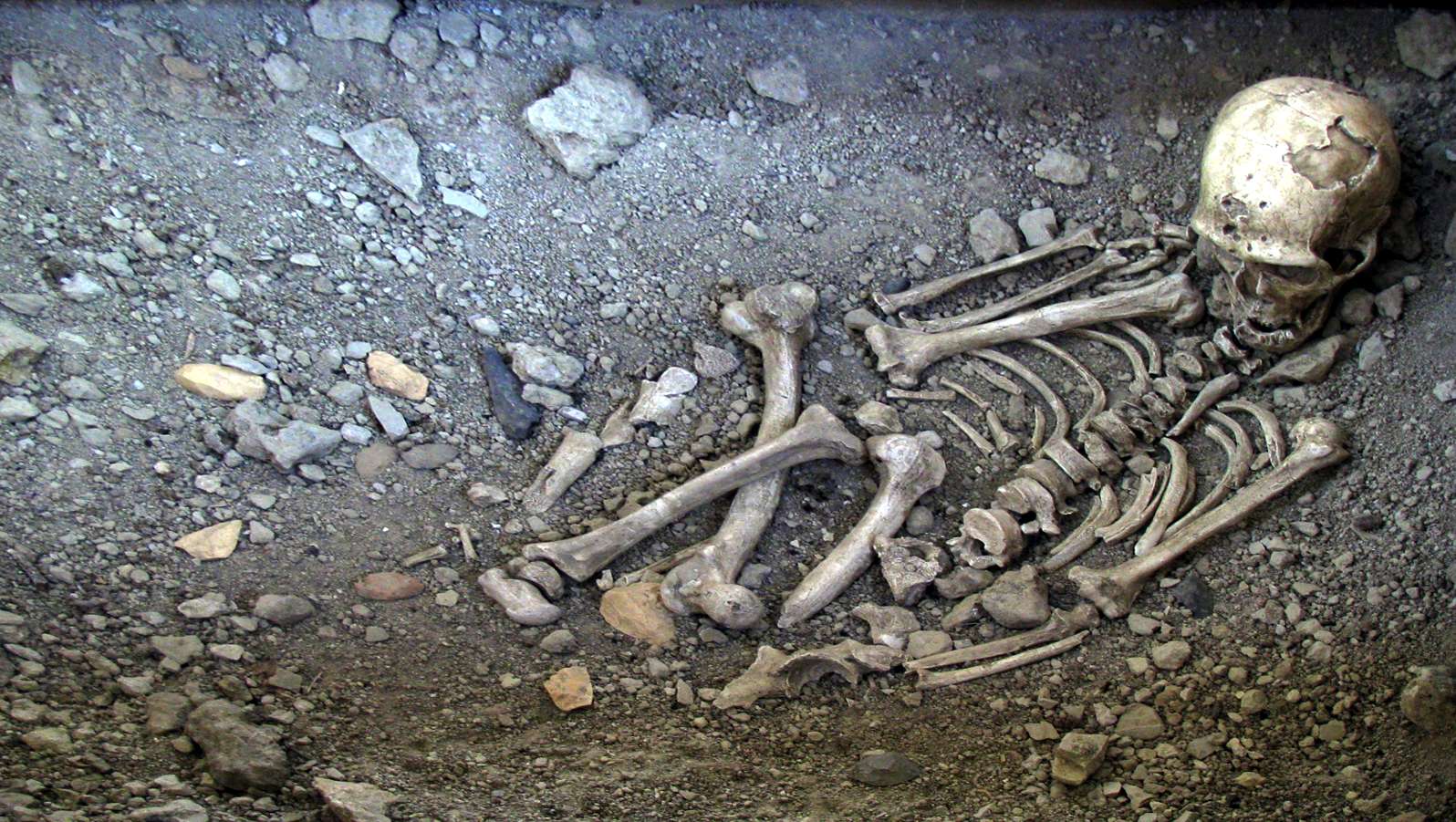
Photo: Don Hitchcock 2008
Source: Display at le musée de l'Homme de Néandertal, La Chapelle-aux-Saints
Homo neanderthalensis
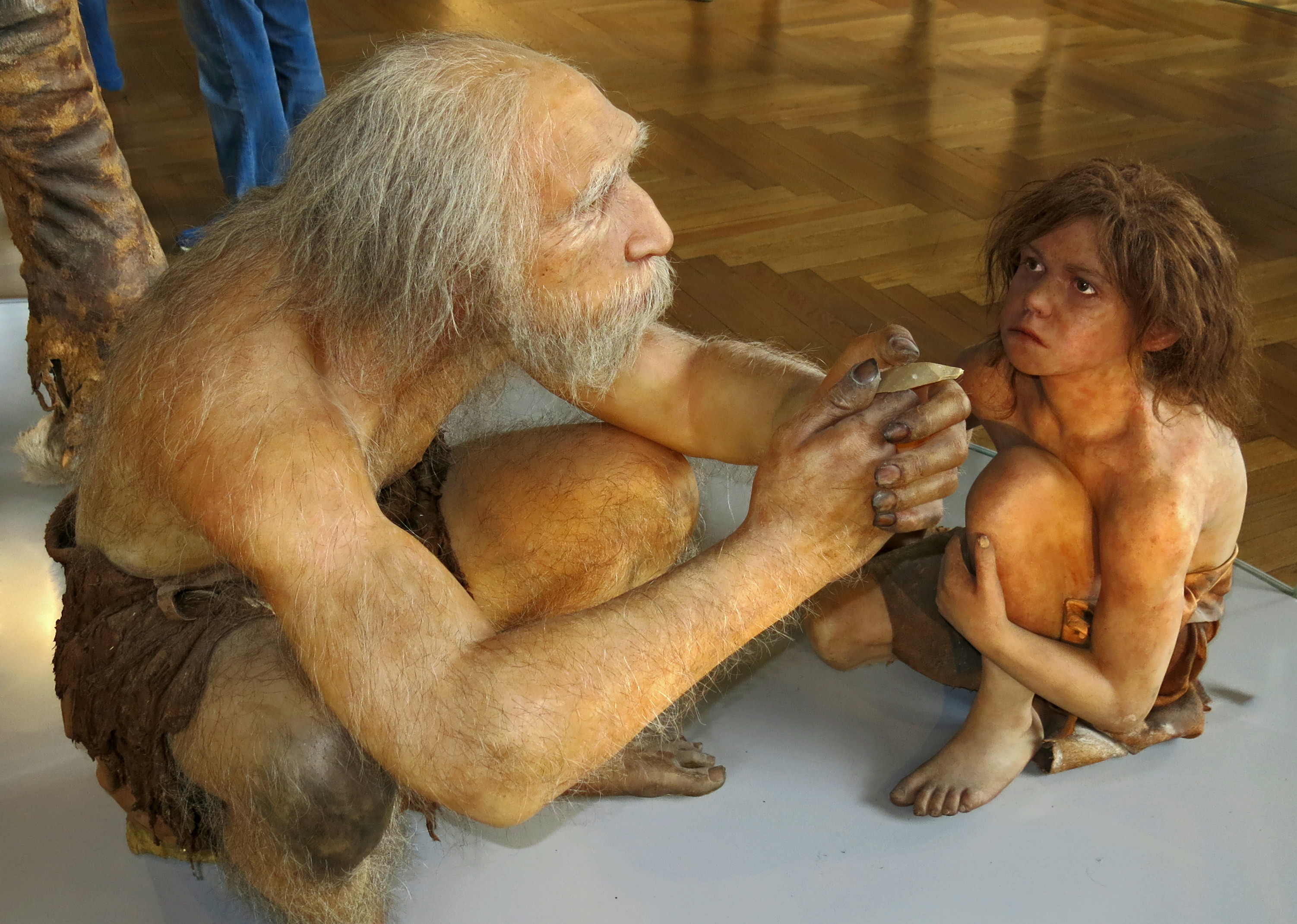
A delightful cameo of the old man of La Chapelle-aux-Saints telling stories to a young child, by the master of the genre, Élisabeth Daynès.
(left) Soft tissue reconstruction based on the skeleton of a Neanderthal male (La Chapelle-aux-Saints 1, France), circa 50 000 BP.
(right) Soft tissue reconstruction based on the fossil of a Neanderthal child (Gibraltar 2, Devil's Tower, UK), circa 50 000 BP - 30 000 BP.
Photo: Don Hitchcock 2015
Sculptor: Atelier Élisabeth Daynès, Paris
Source and text: Facsimile, Vienna Natural History Museum, Naturhistorisches Museum Wien
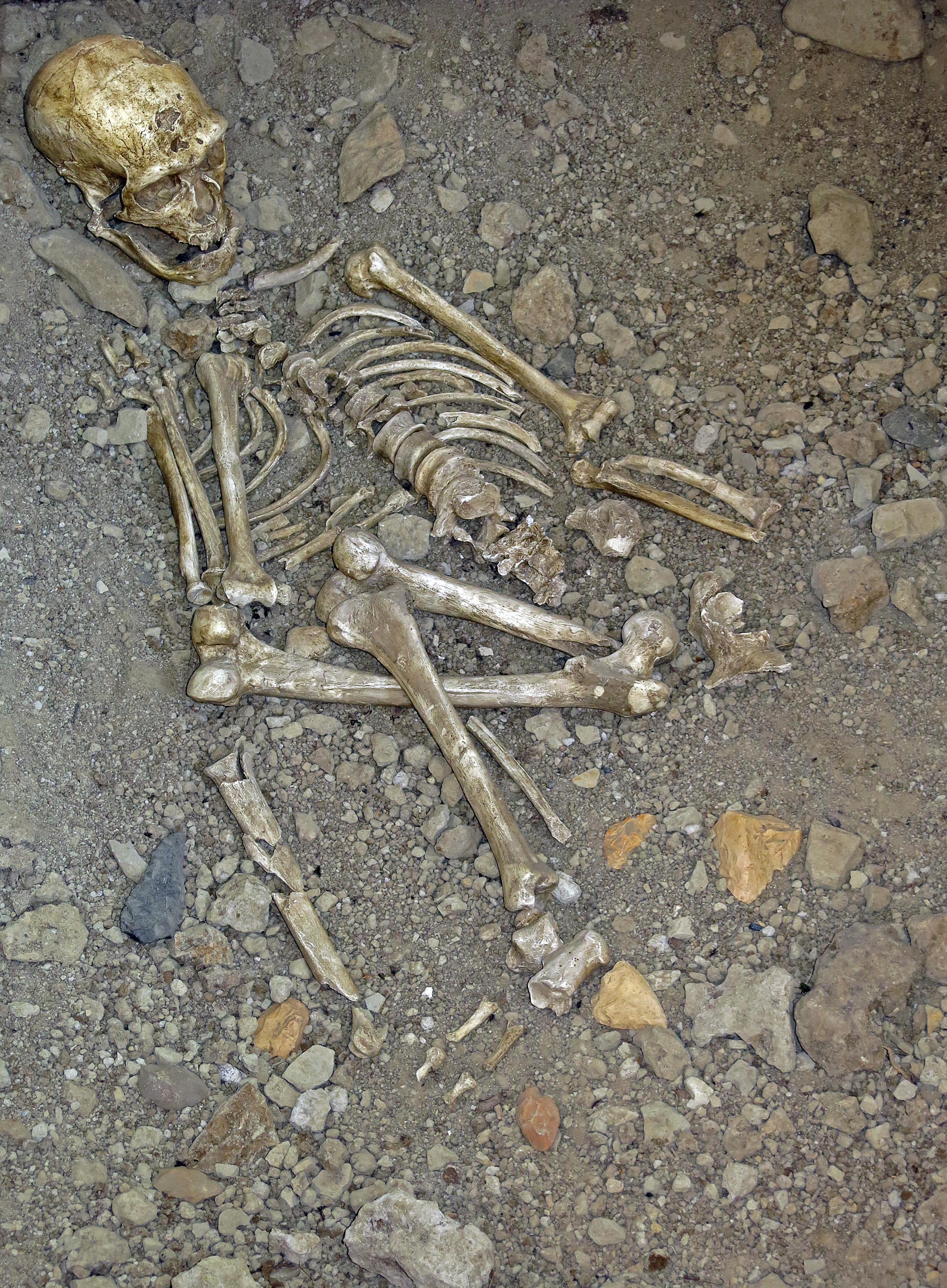

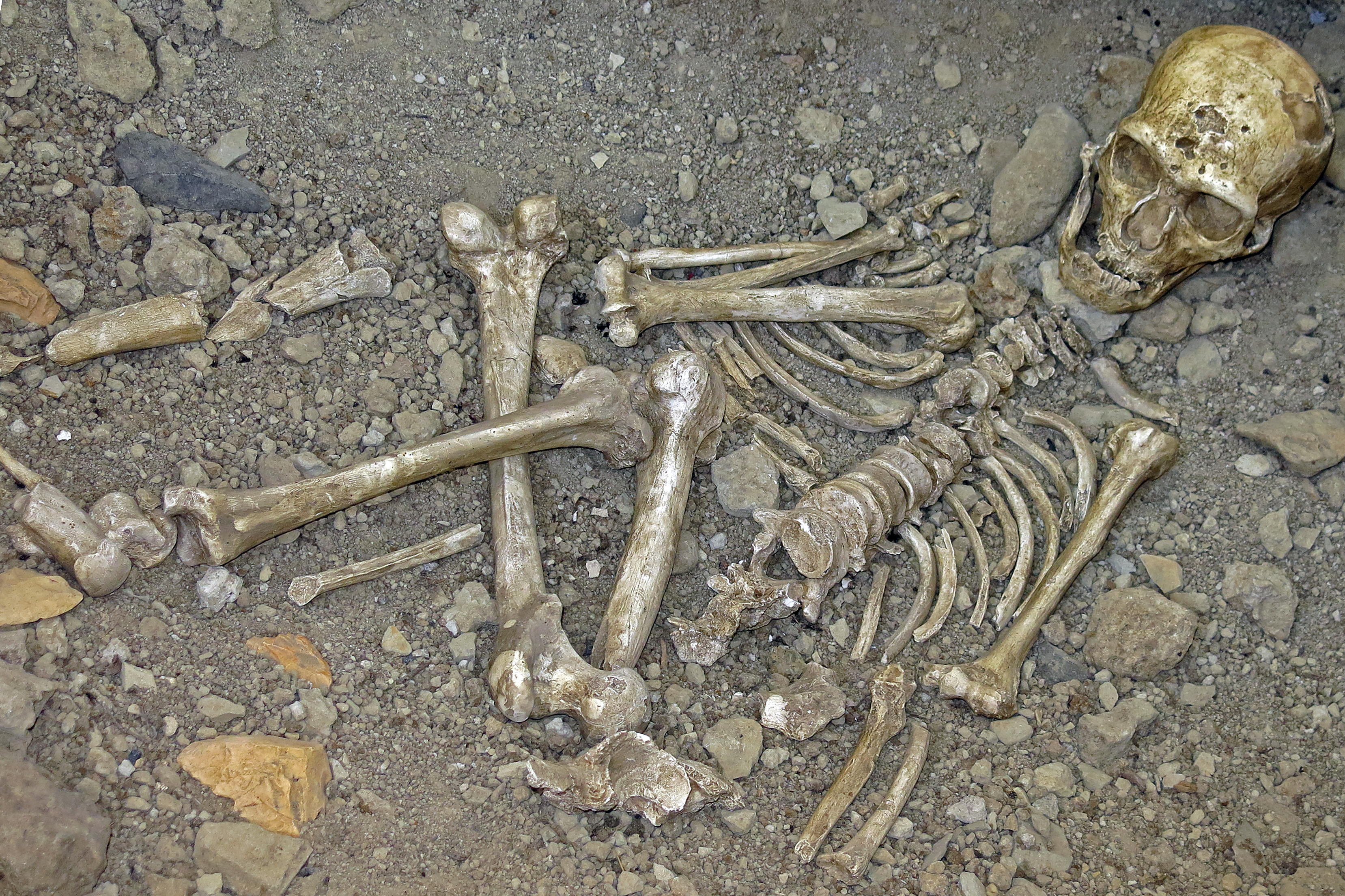

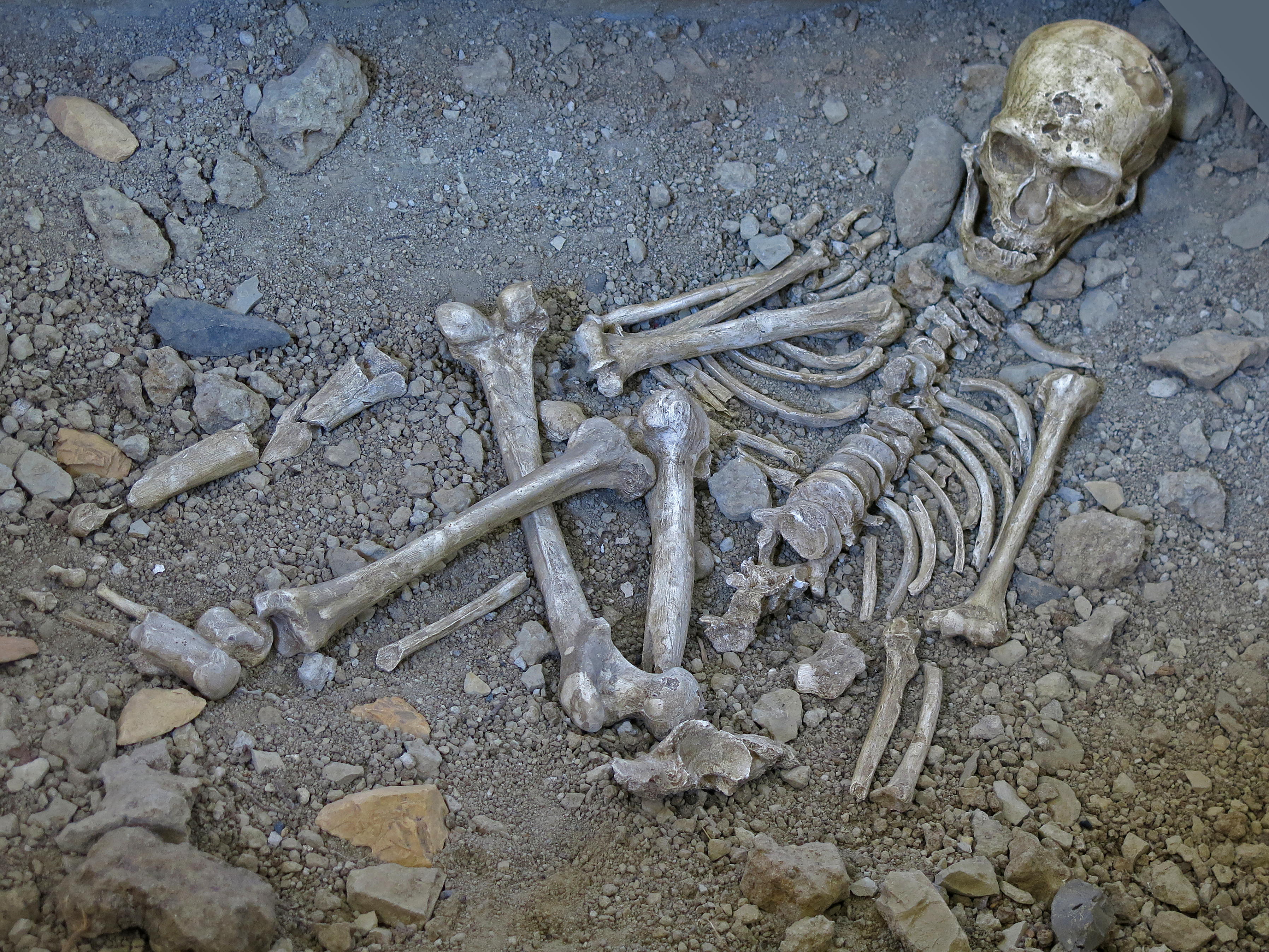
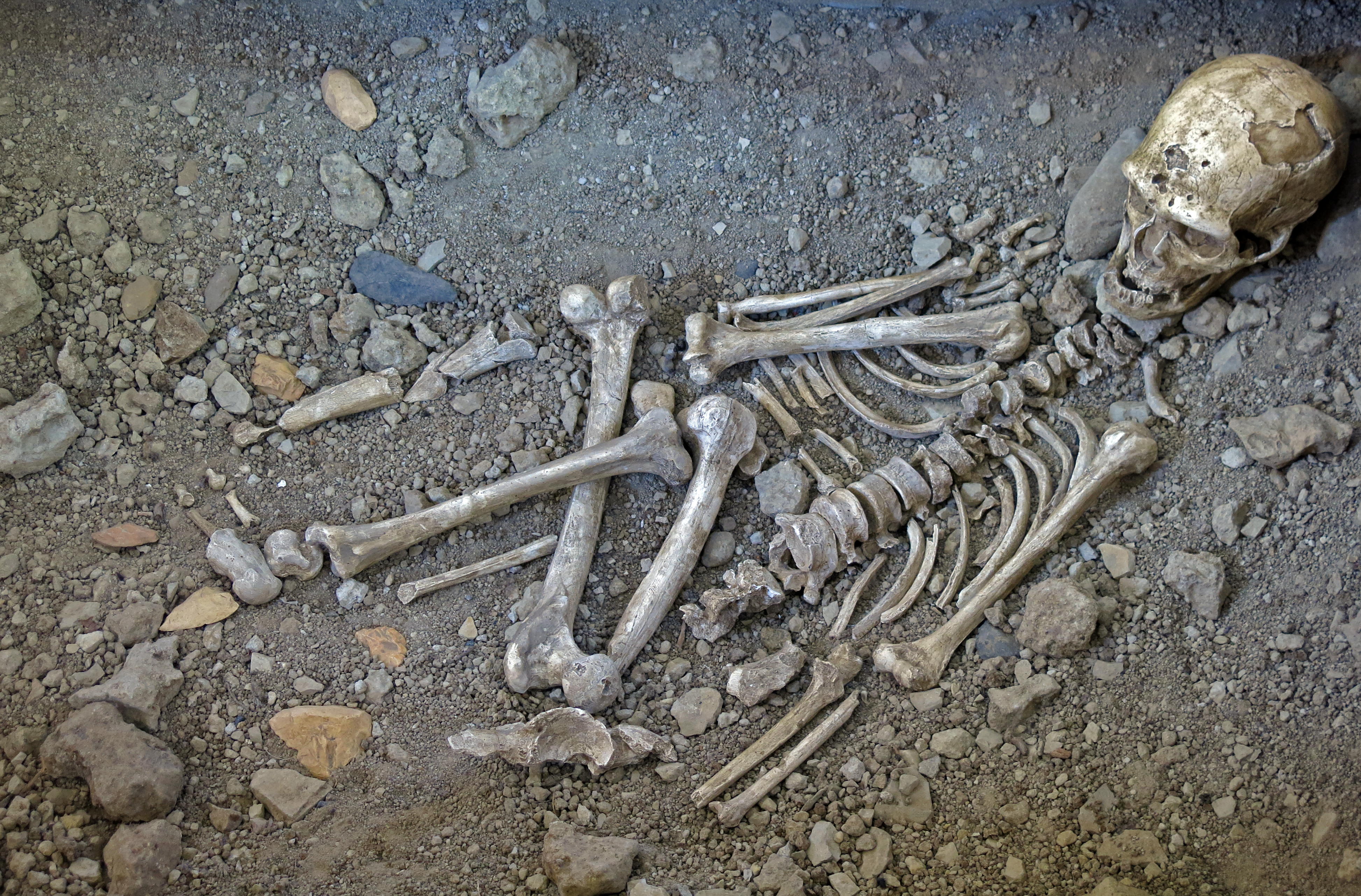
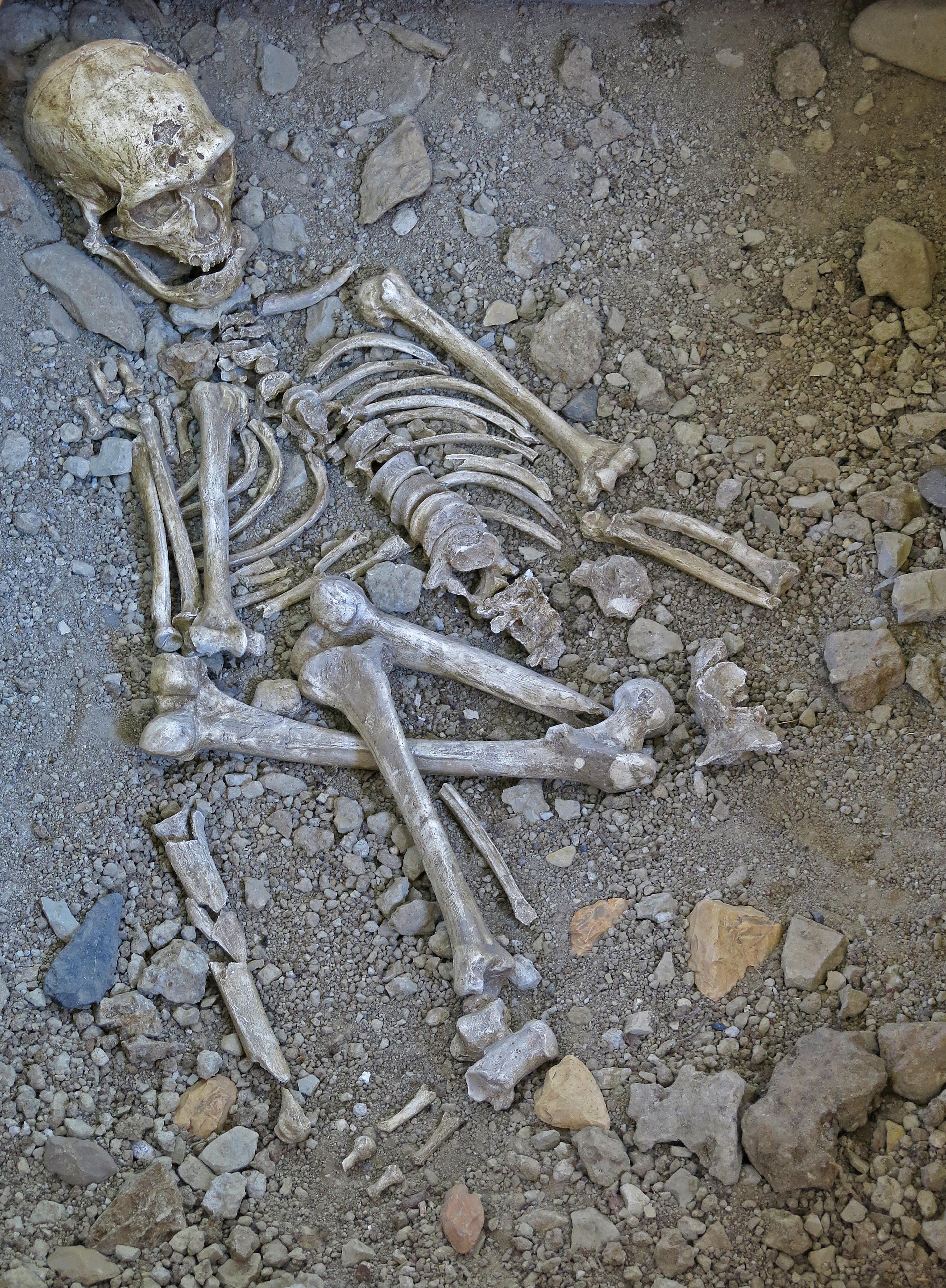
A recreation of the skeleton as found at Chapelle-aux-Saints.
Photo: Don Hitchcock 2014
Source: Facsimile, display at le musée de l'Homme de Néandertal, La Chapelle-aux-Saints

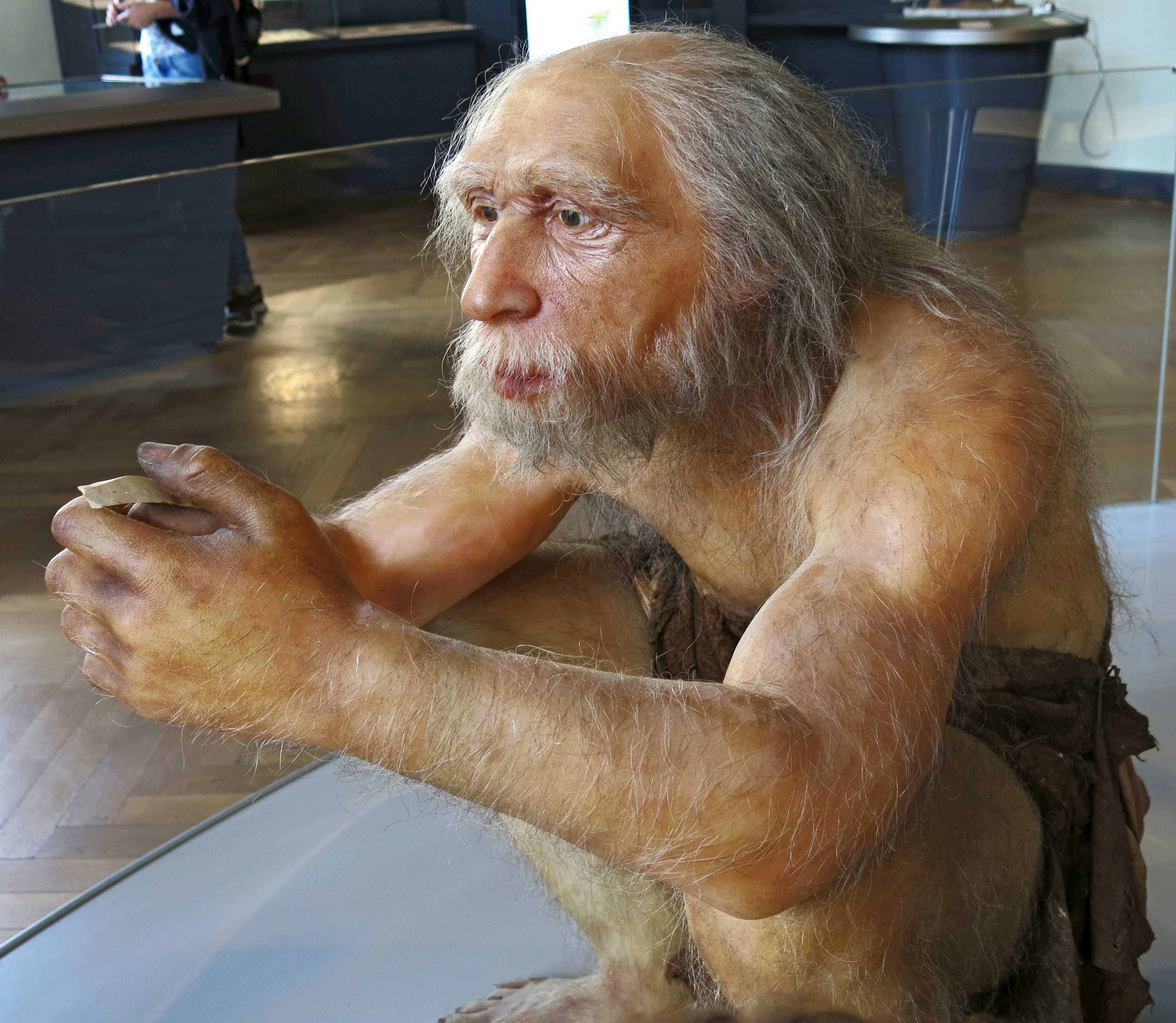
Homo neanderthalensis
The old man of La Chapelle-aux-Saints.
Photo: Don Hitchcock 2015
Sculptor: Atelier Élisabeth Daynès, Paris
Source and text: Facsimile, Vienna Natural History Museum, Naturhistorisches Museum Wien
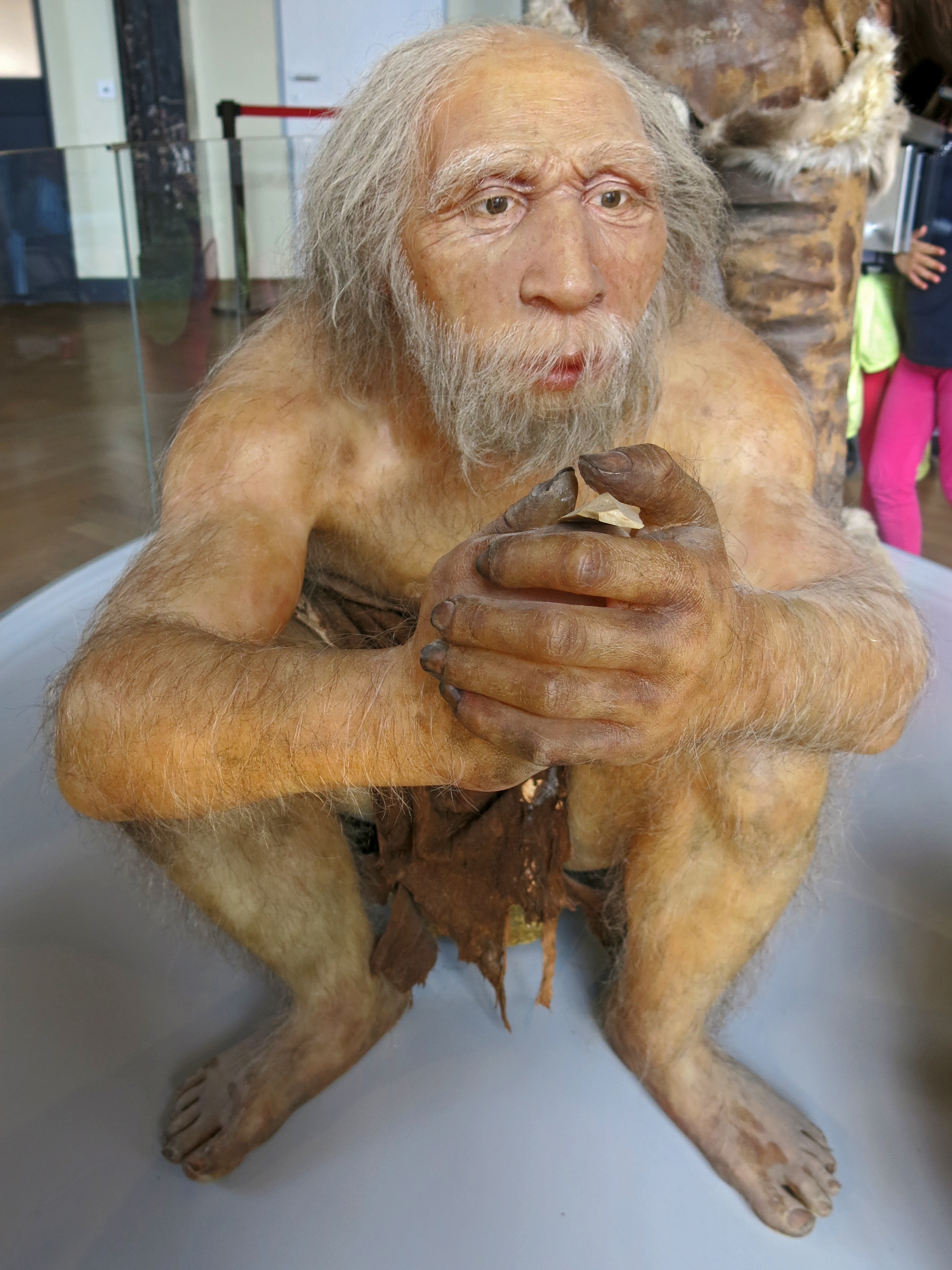
Homo neanderthalensis
The old man of La Chapelle-aux-Saints.
Photo: Don Hitchcock 2015
Sculptor: Atelier Élisabeth Daynès, Paris
Source and text: Facsimile, Vienna Natural History Museum, Naturhistorisches Museum Wien
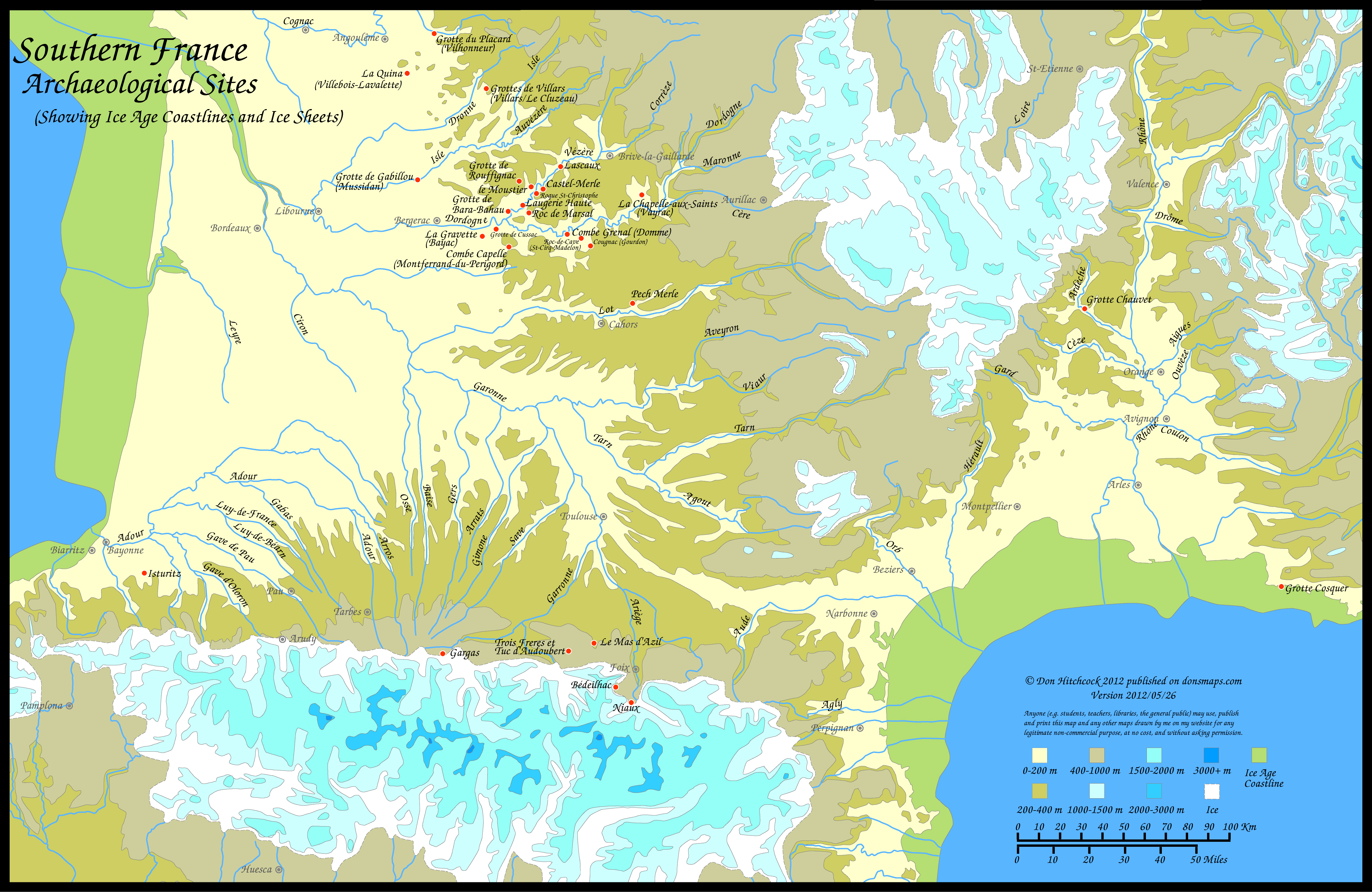
Note - Use the pdf file, version 2012/05/26 if you wish to print this on a single sheet of paper.
Photo: Don Hitchcock version 2012/05/26
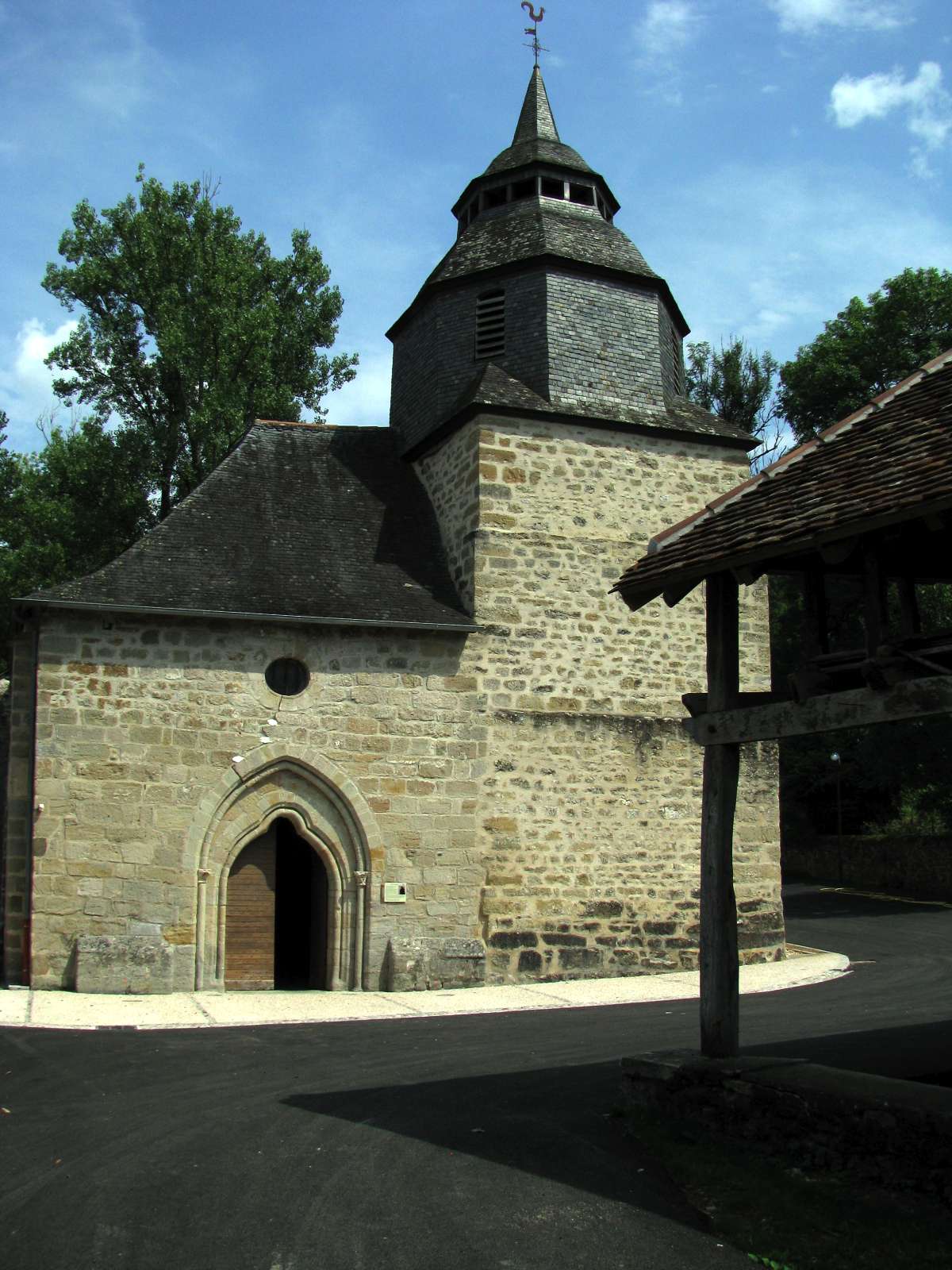
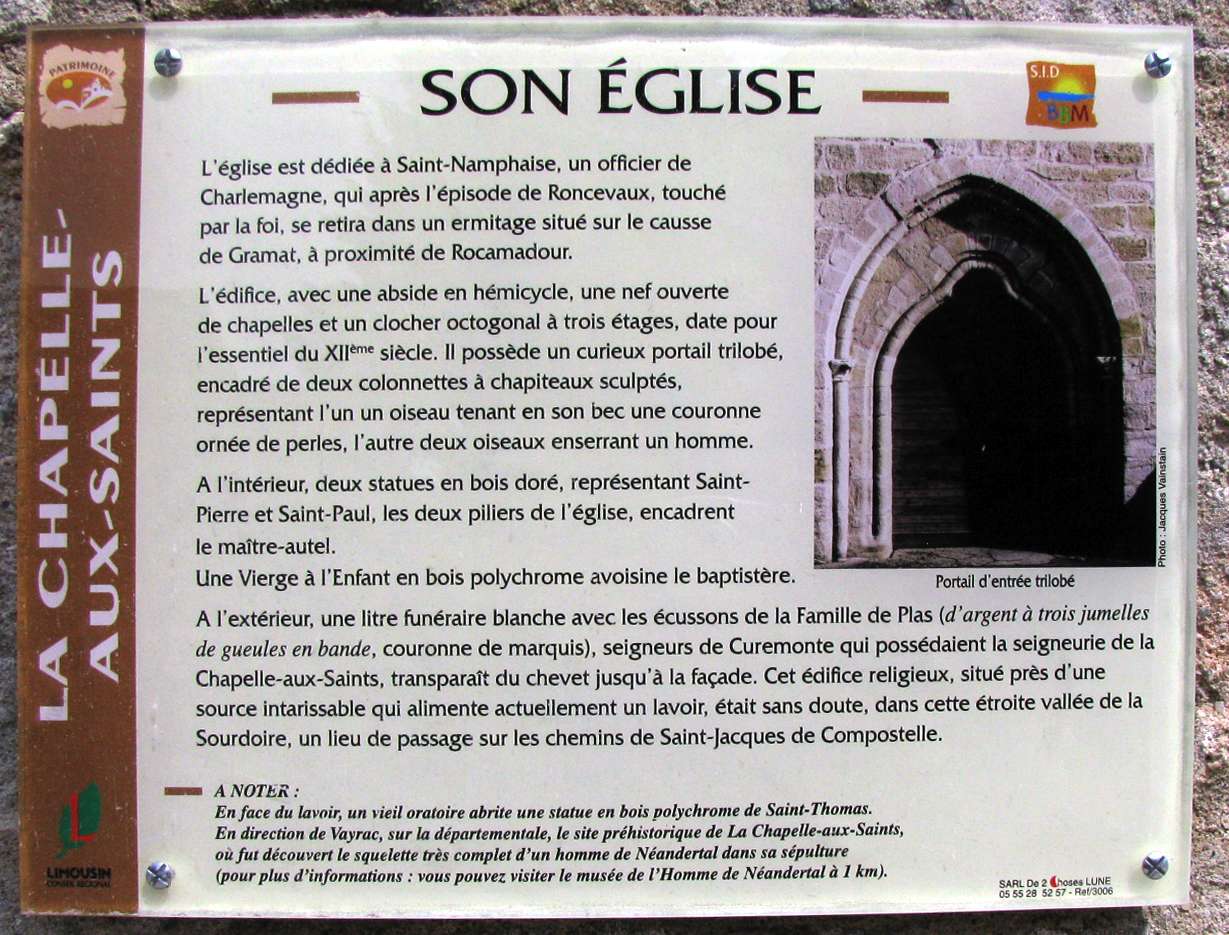
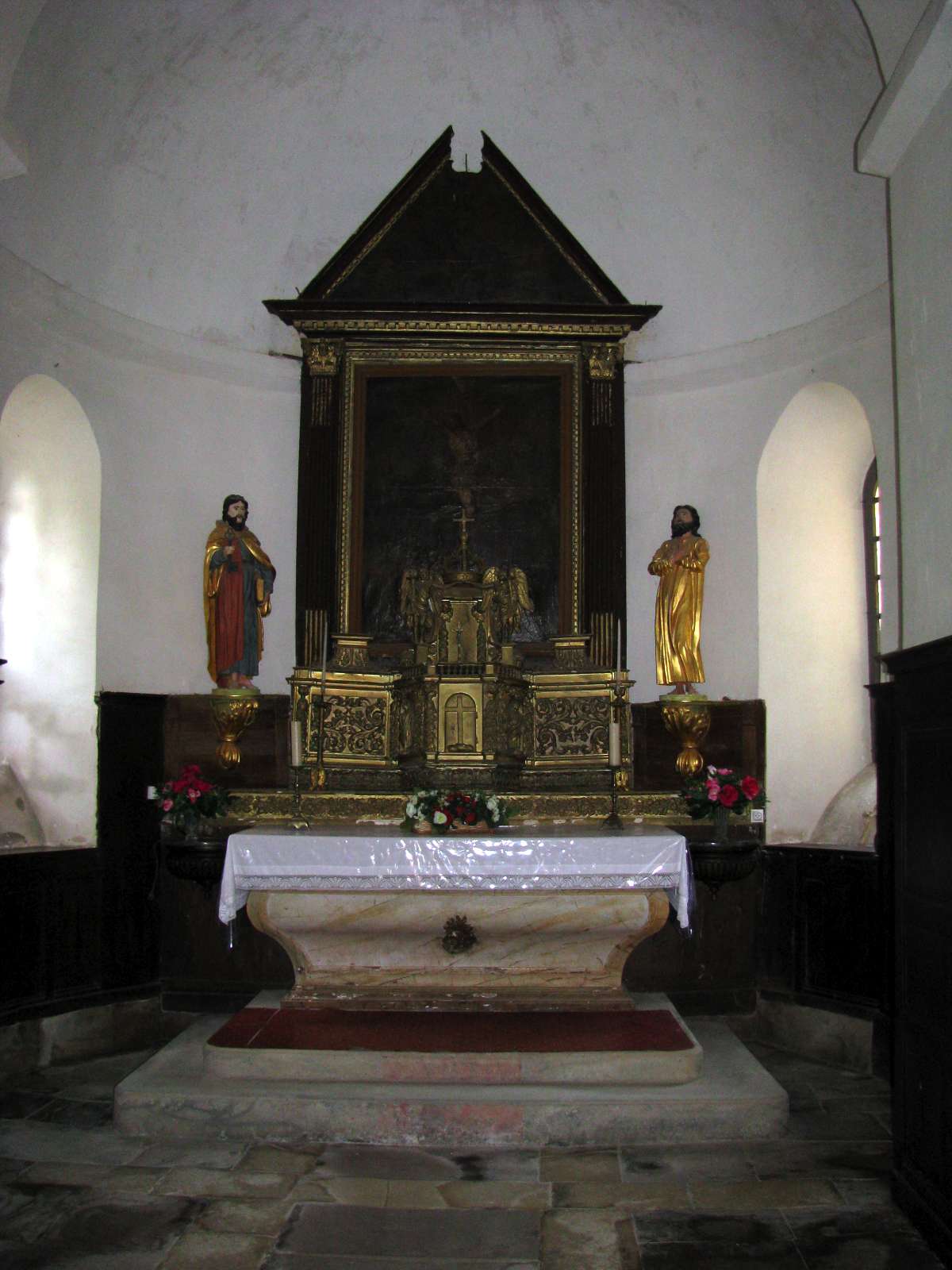
The 12th Century church of La Chapelle-aux-Saints, near which the Neandertal skeleton was found, with a jaunty rooster weathervane on top.
Photo: Don Hitchcock 2008
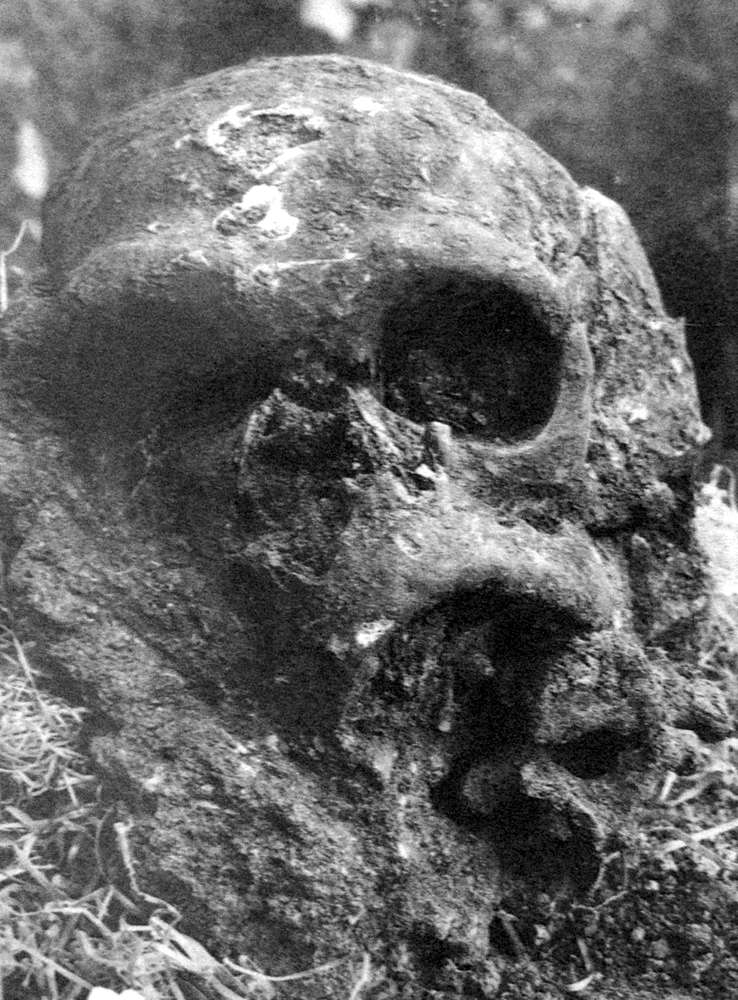
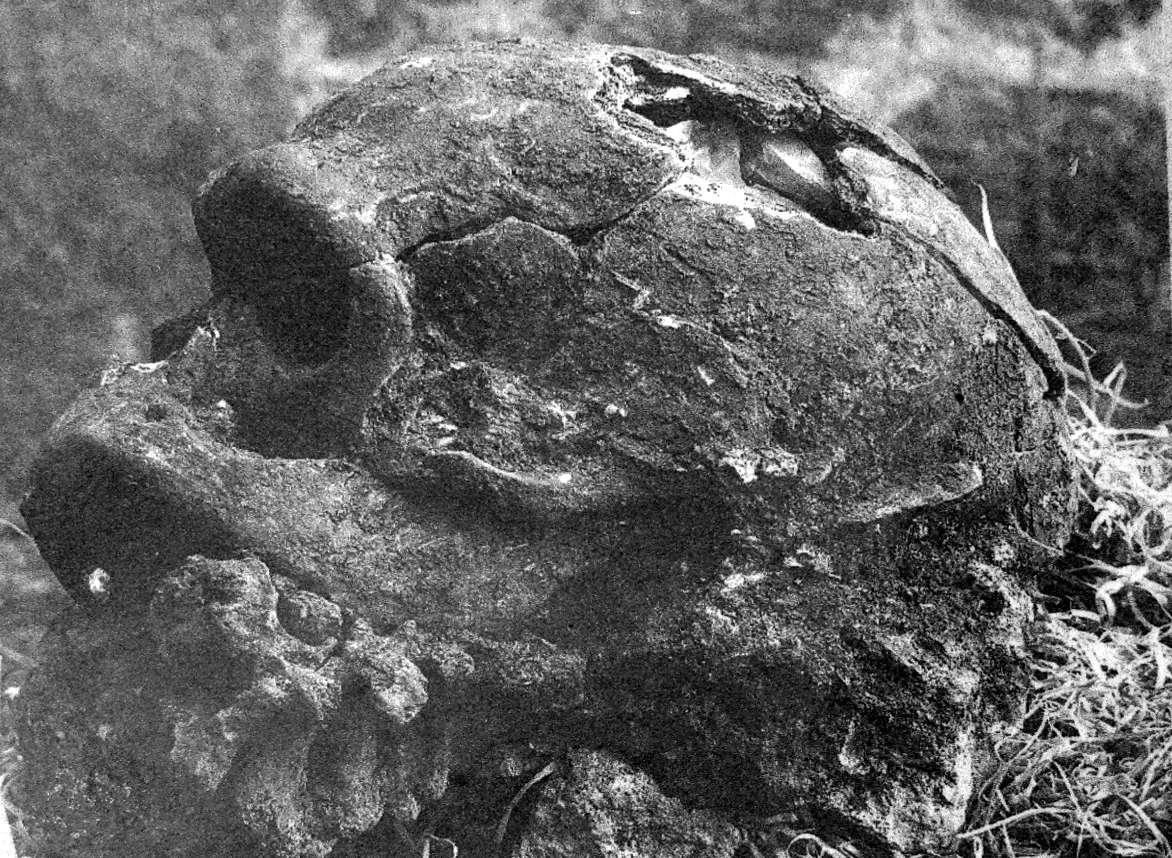
The Neanderthal skull found at Chapelle Aux Saints in situ.
Photo: Don Hitchcock 2008, original photograph by l'abbé Jean Bouyssonie
Source: Display at le musée de l'Homme de Néandertal, La Chapelle-aux-Saints
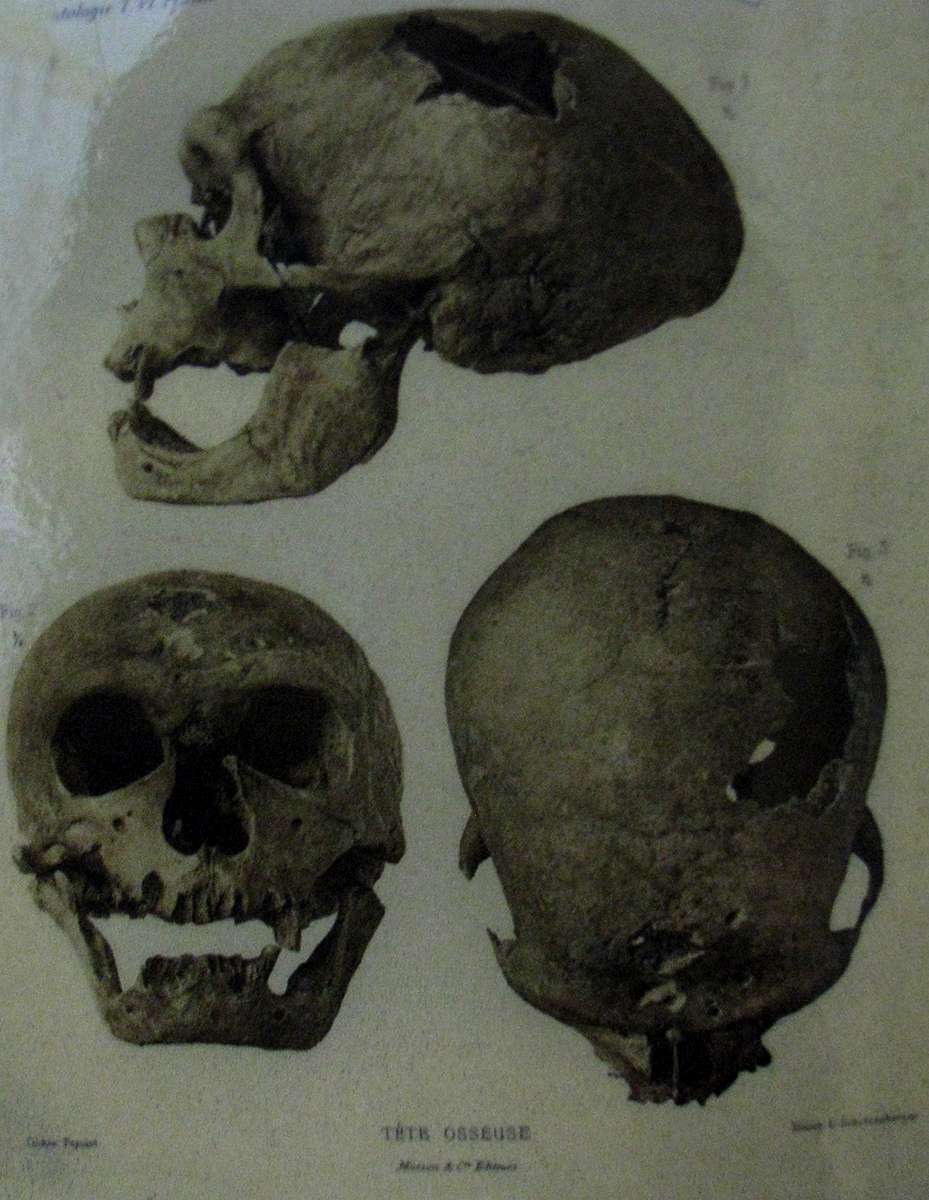
Views of the skull found at Chapelle Aux Saints after the discovery was published.
Photo: Don Hitchcock 2008
Source: Display at le musée de l'Homme de Néandertal, La Chapelle-aux-Saints
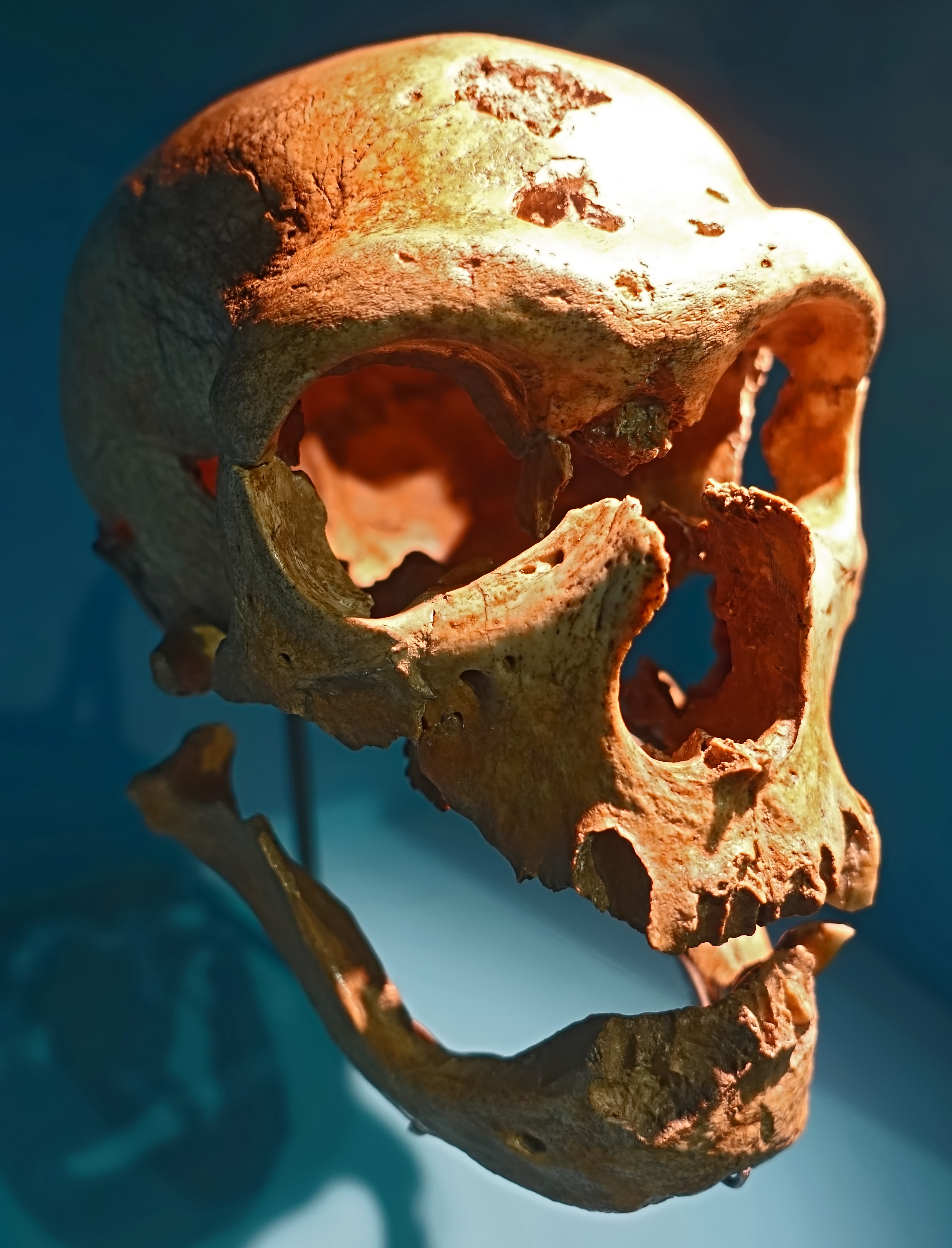
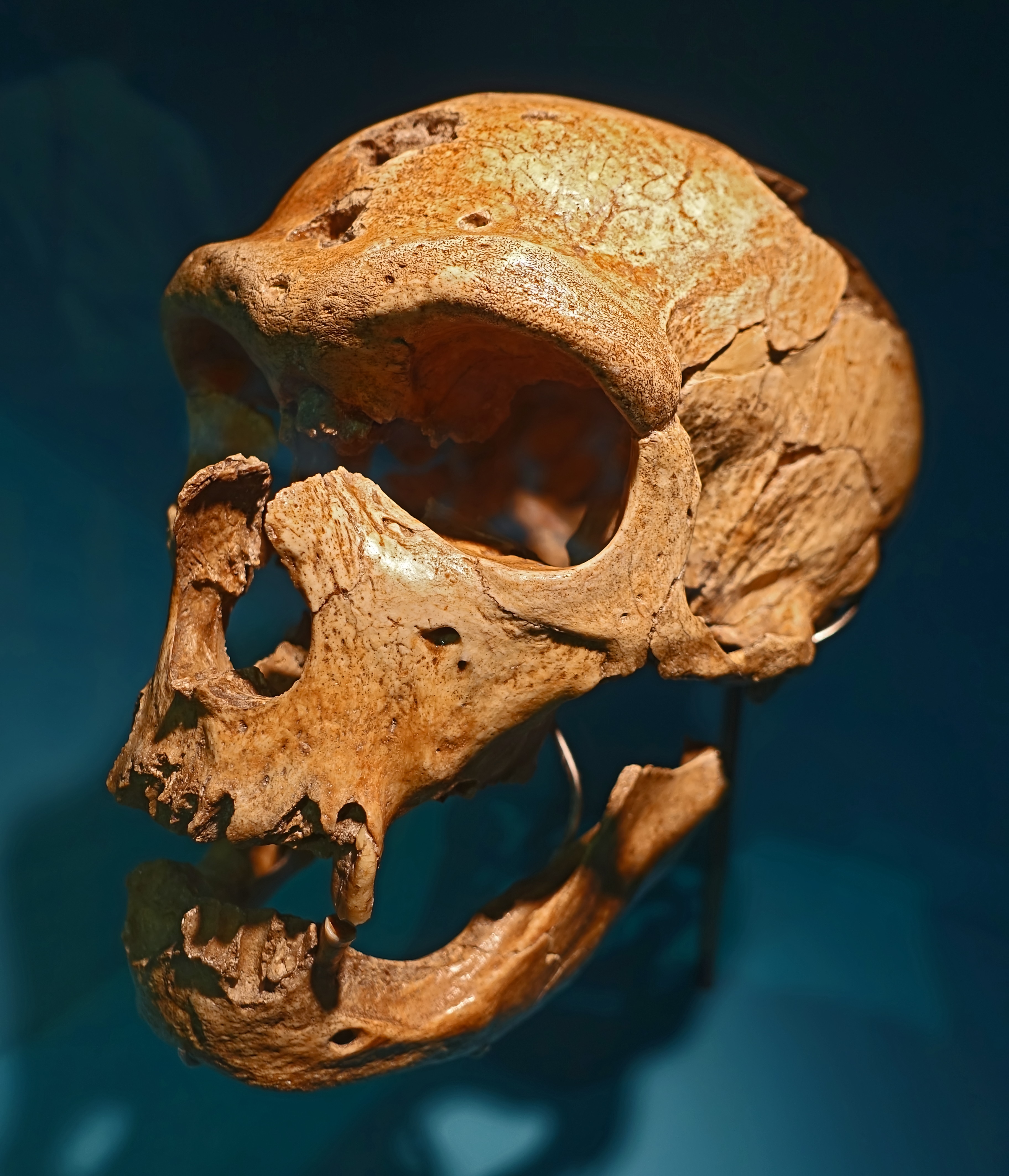
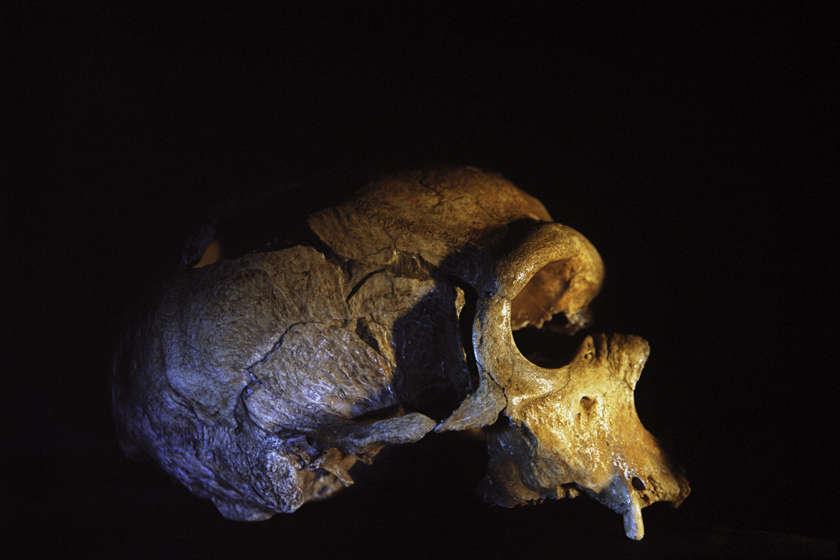
Chapelle Aux Saints skull.
Original, circa 57 000 BP - 45 000 BP.
Photo: Don Hitchcock 2018
Collections du Muséum national d'Histoire naturelle, Paris.
Source and text: Musée de l'Homme, Paris

The old man of Chapelle aux Saints
(note that this photo hase been altered from the original superb work of art by Claire Artemyz.
Here is the original - Don )
Photo: © Claire Artemyz, http://www.bradshawfoundation.com/memoires/index.php
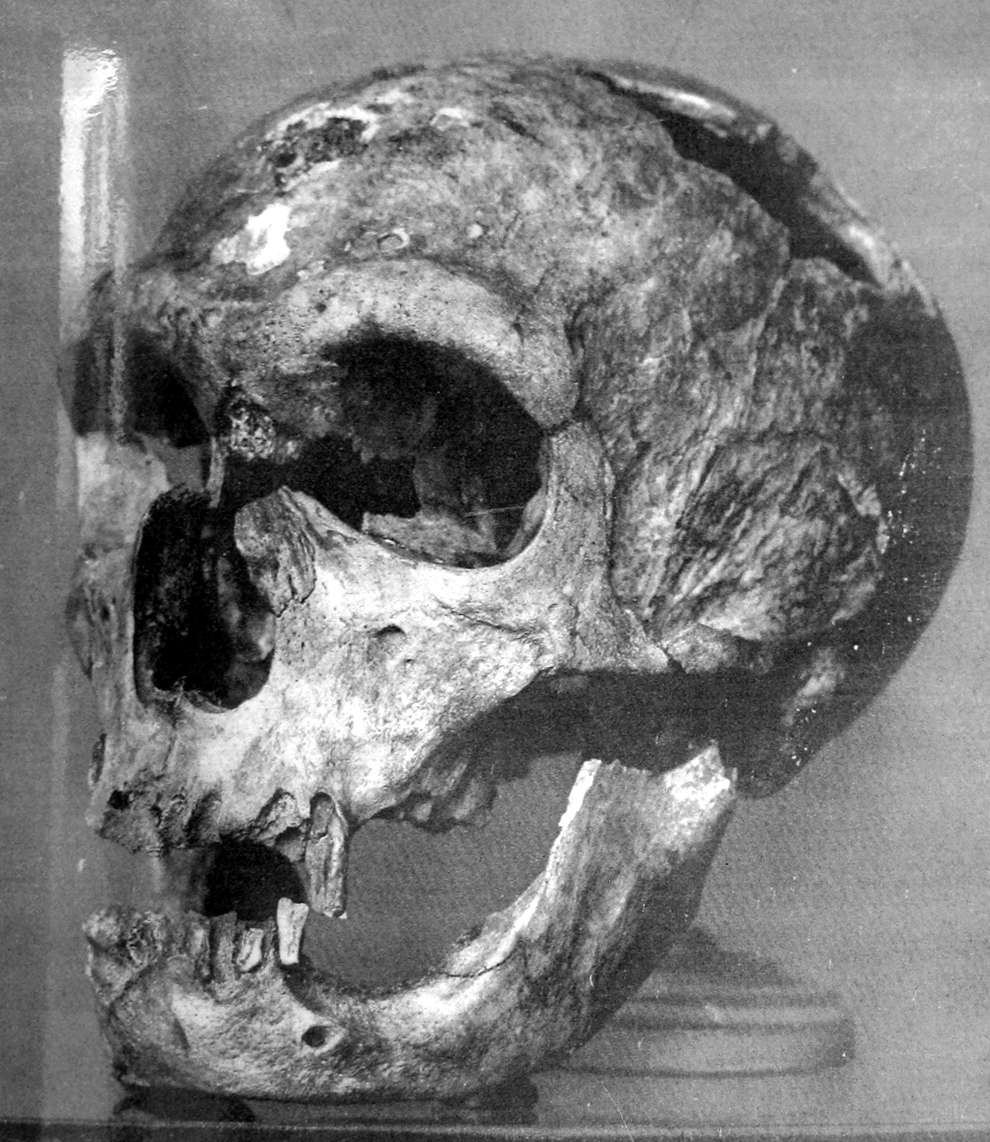
Photograph of the original skull on display at the Museum.
Photo: Don Hitchcock 2008
Source: Photograph on display at le musée de l'Homme de Néandertal, La Chapelle-aux-Saints
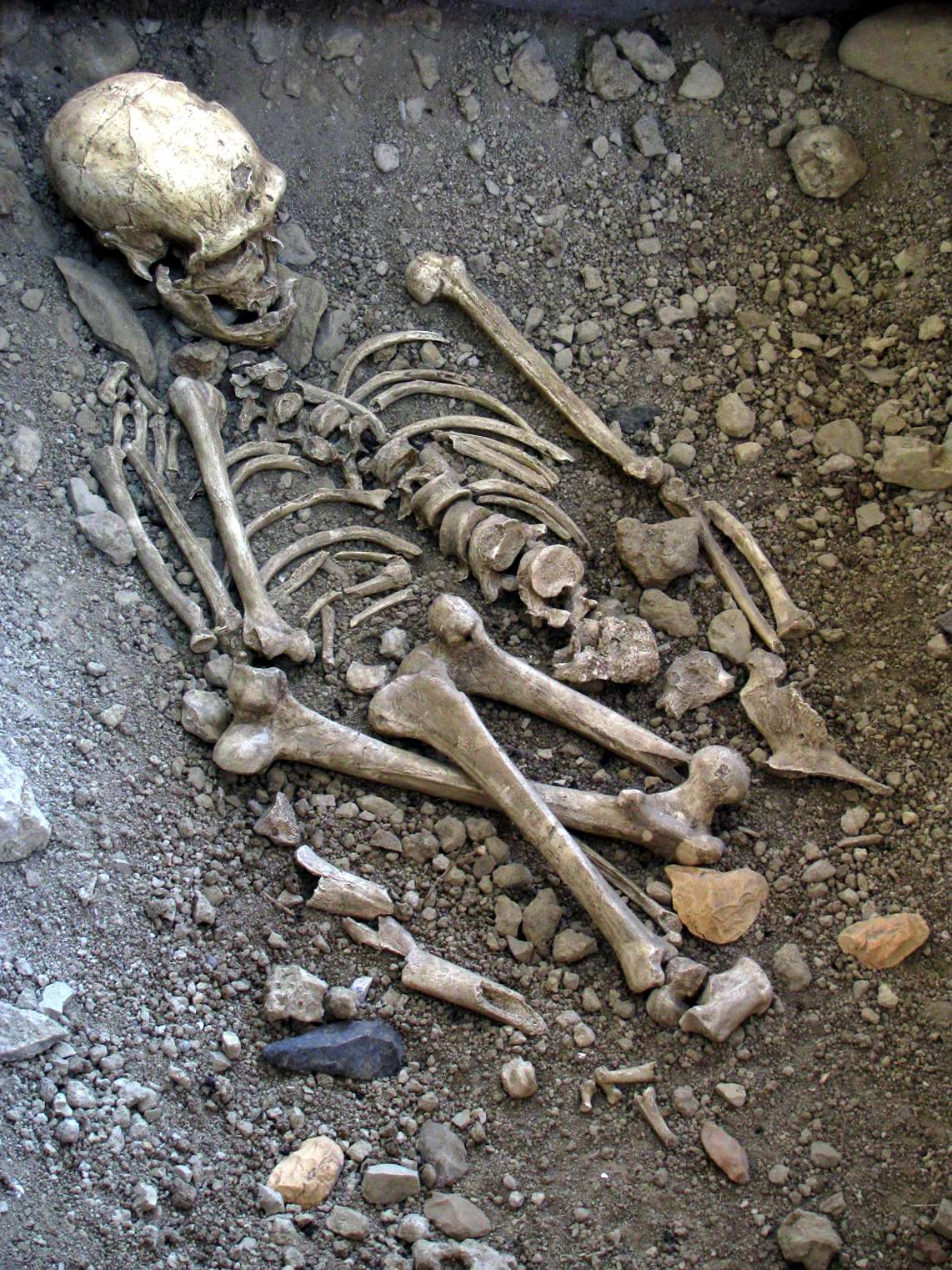
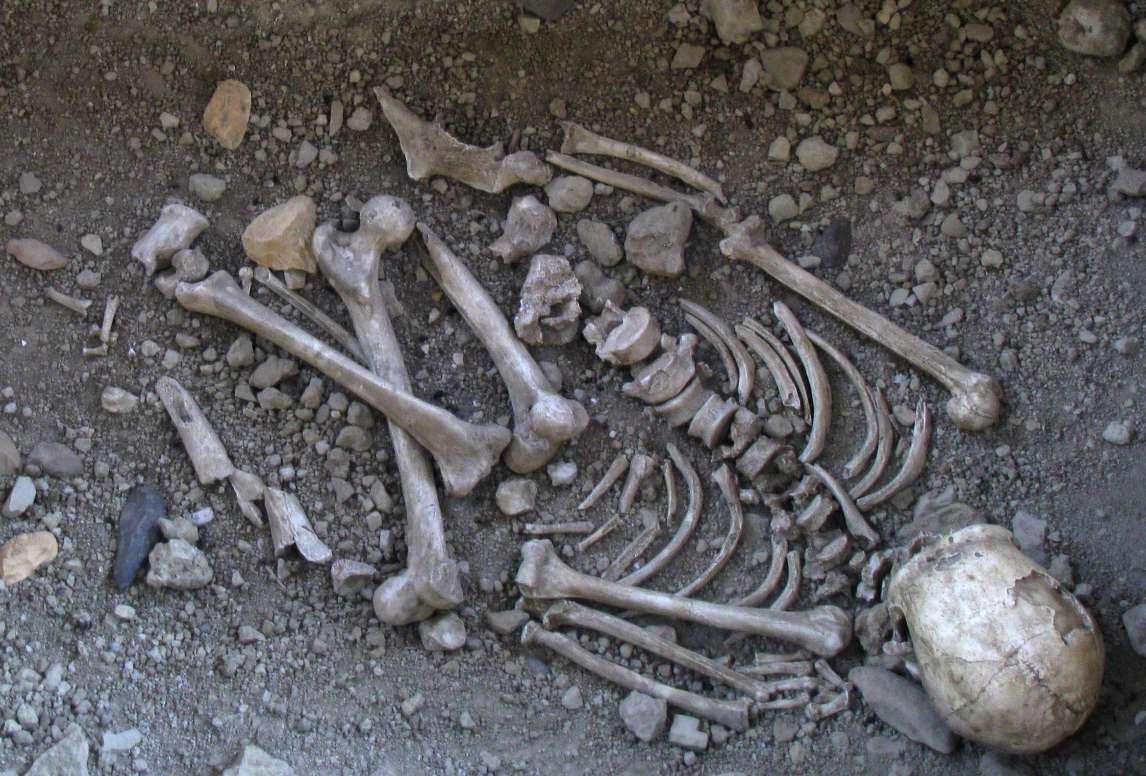
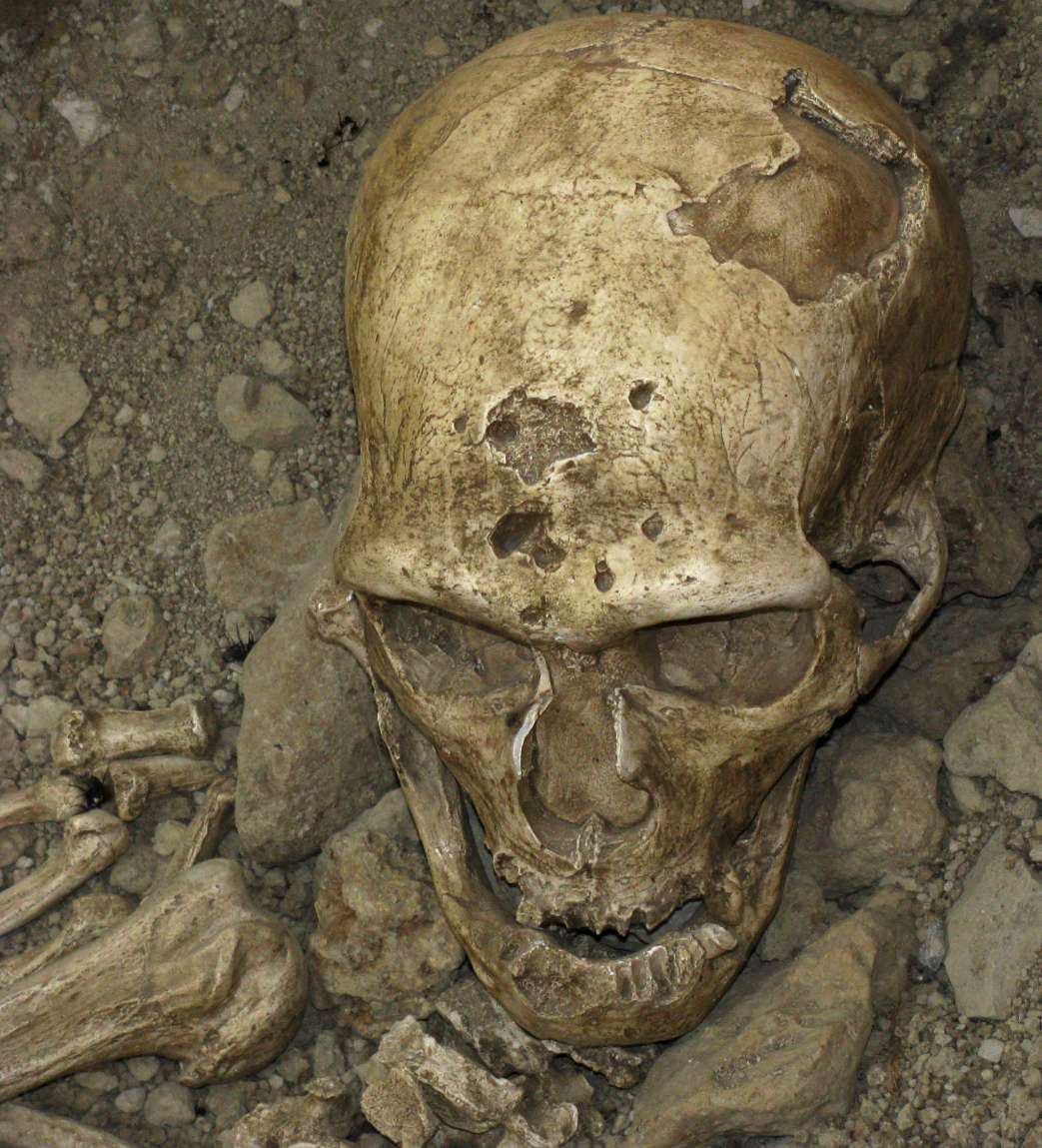
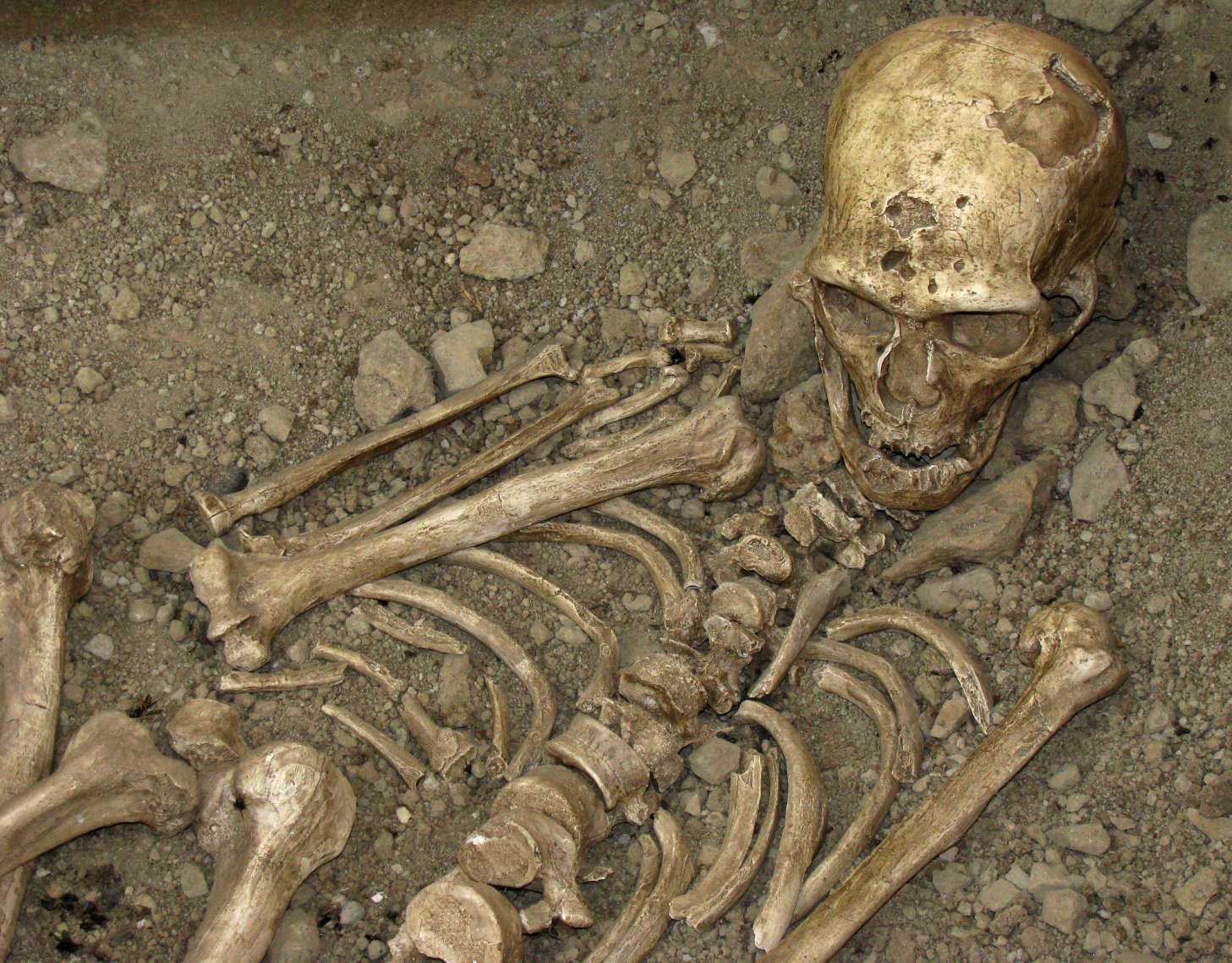
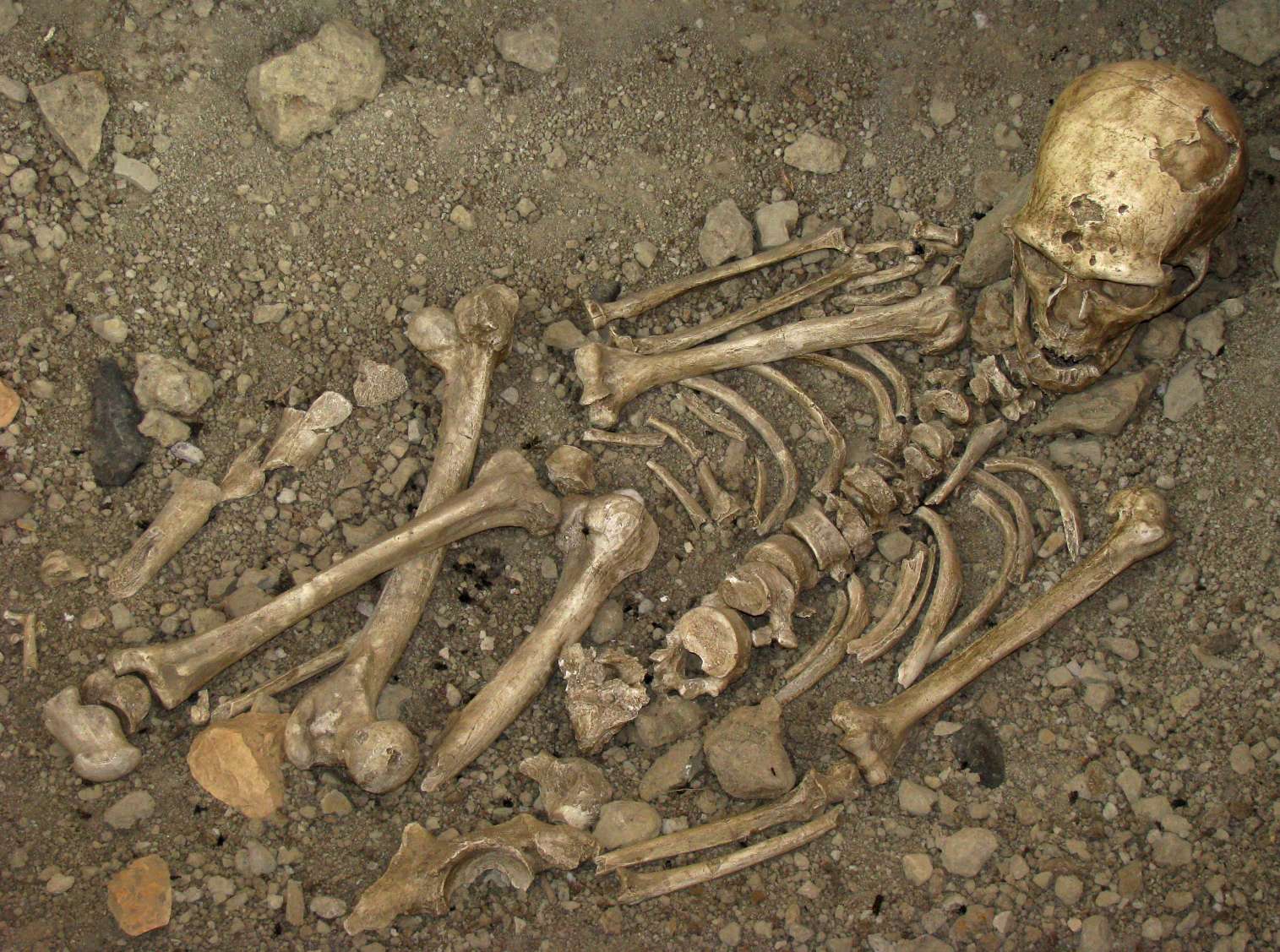
A recreation of the skeleton as it was found, using facsimiles.
Photo: Don Hitchcock 2008
Source: Display at le musée de l'Homme de Néandertal, La Chapelle-aux-Saints

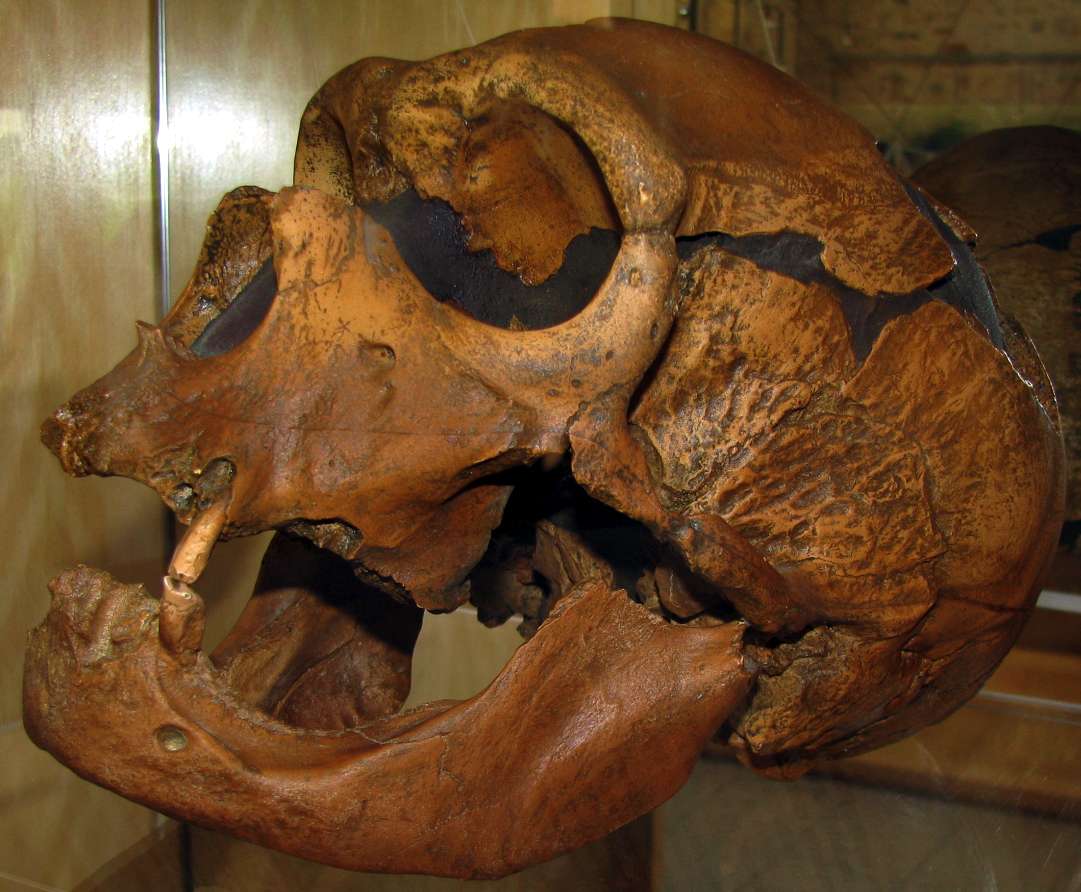
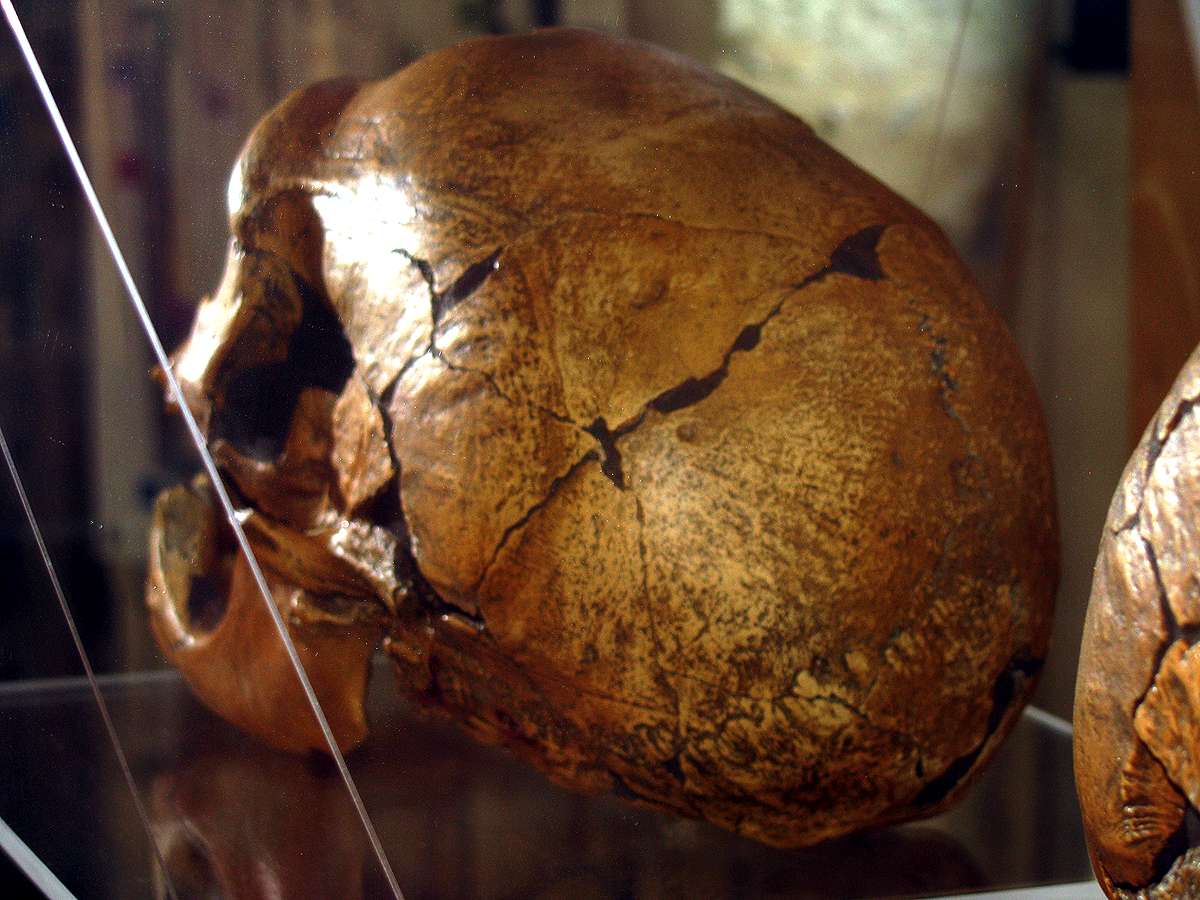
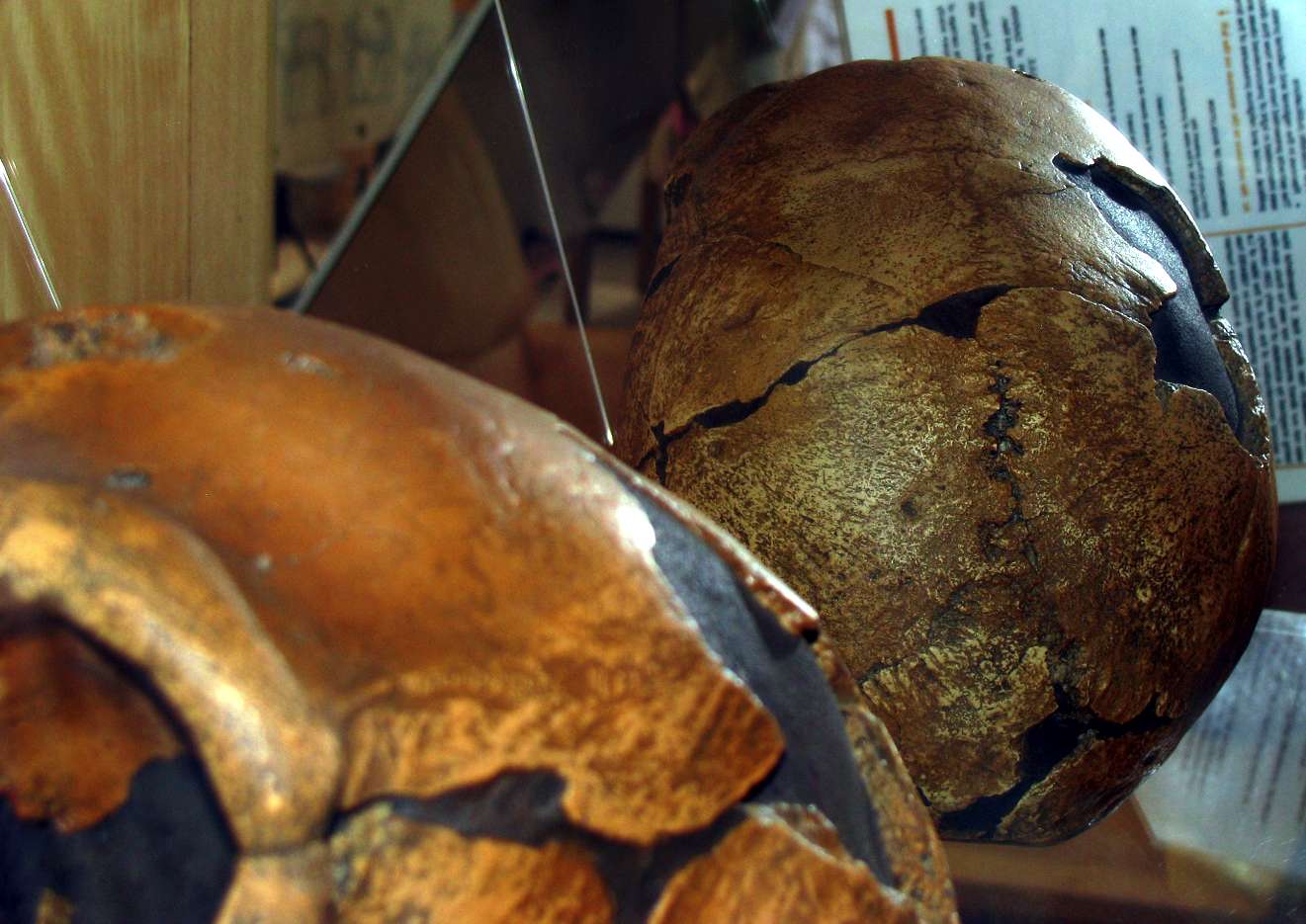
A museum quality facsimile of the skull of the old man of La Chapelle-aux-Saints
Photo: Don Hitchcock 2008
Source: Facsimile on display at le musée de l'Homme de Néandertal, La Chapelle-aux-Saints

Homo sapiens neanderthalensis
50 000 BP
La Chapelle-aux-Saints, France.
Photo: Don Hitchcock 2015
Source: Facsimile, LVR-Landesmuseum Bonn, Germany
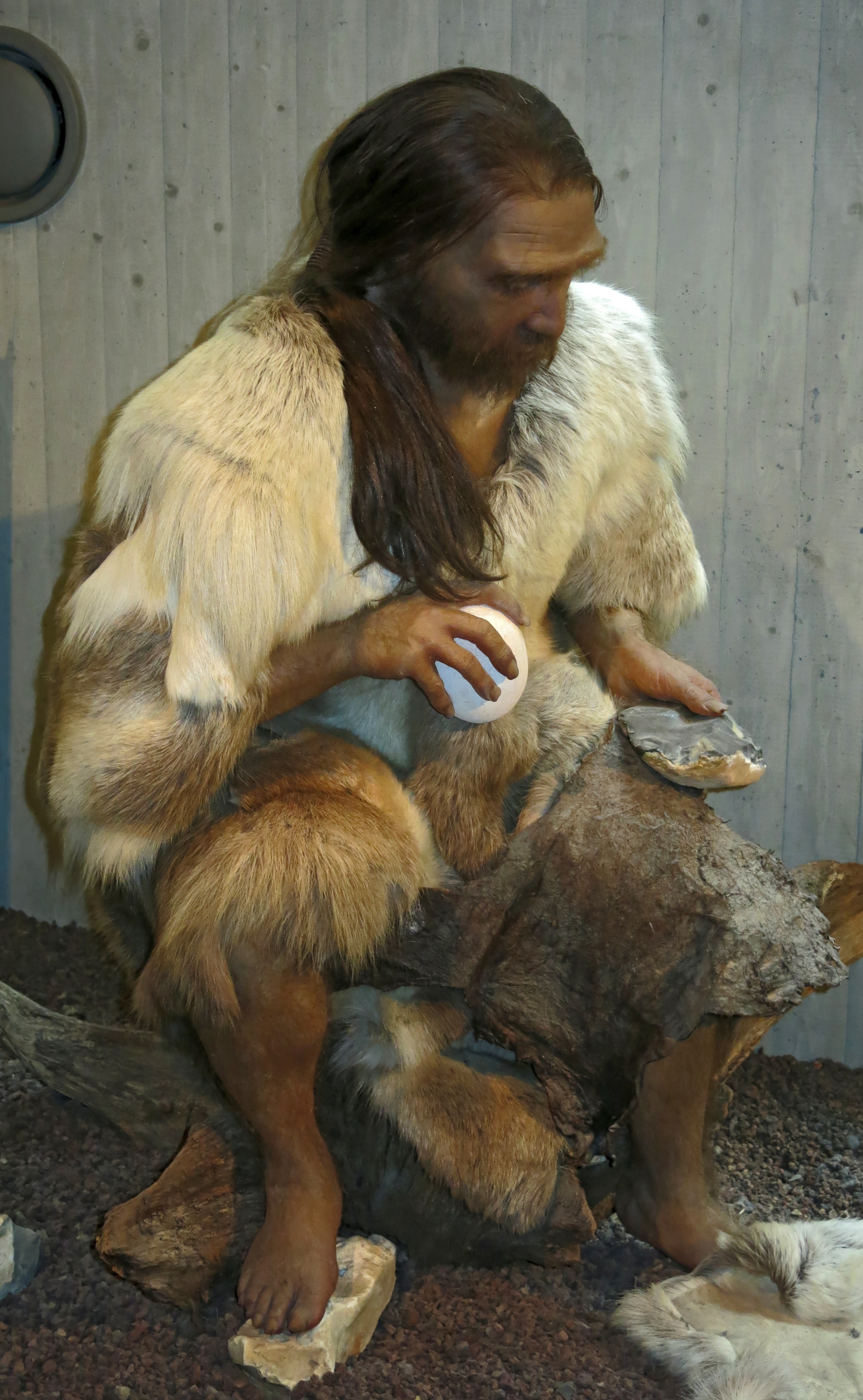

Homo sapiens neanderthalensis
La Chapelle-aux-Saints, France.
50 000 BP
Reconstruction by Élisabeth Daynès
Sculptor: Atelier Élisabeth Daynès, Paris, for the Neanderthal Museum, 1996.
Photo: Don Hitchcock 2015
Source and text: Neanderthal Museum, Mettmann, near Düsseldorf, Germany.
Recent study of the La Chapelle-aux-Saints skeleton showed that he walked upright, just as modern humans do
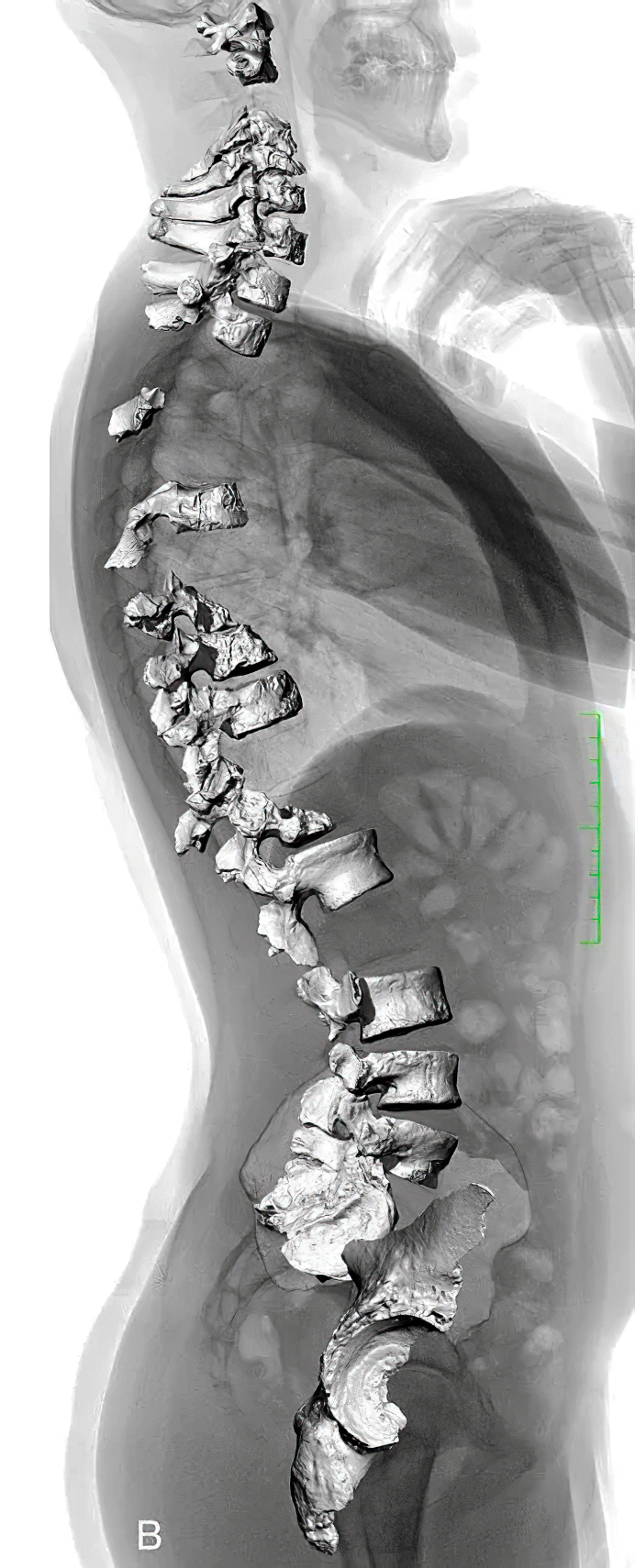
Virtual reconstruction of the spine of the Neanderthal skeleton from La Chapelle-aux-Saints.
Photo: Martin Häusler, UZH
Source: https://www.wissenschaft.de/geschichte-archaeologie/neandertaler-von-wegen-gebeugte-haltung/
Our archaic cousin's image has changed significantly in recent years. But what about posture? Did Neanderthals walk upright like we did? Examination of a very well-preserved skeleton contradicts the assumption that the primitive people had a rather flat back and a rough-looking movement. Apparently they also had a pronounced double S-shaped spine and were therefore as upright as the anatomically modern person.
How much did the Neanderthals differ from us humans today? Researchers have been asking this question for a long time. It seems clear: These were closely related, but still different species of the genus Homo. Since the discovery of Neanderthal fossils, characteristic anatomical features of our archaic cousin have been the basis for the differentiation from Homo sapiens. This also related to properties of the spine. We are straight and well balanced on two legs - this characteristic is characteristic of modern humans, it clearly distinguishes us from the monkeys. It was therefore reasonable to assume that upright posture was even less pronounced in older people. The first reconstructions showed the Neanderthals at the beginning of the 20thCentury only half upright. This extremely primitive idea of posture was disproved as early as the 1950s, but certain differences were still assumed. More recent studies have also deduced from the shape of individual vertebrae that the Neanderthals have not yet had a well-developed, double S-shaped spine that shapes our posture.
However, an international team of researchers led by Martin Häusler from the University of Zurich also cleared up this assumption. Their results were based on the examination of a particularly well-preserved Neanderthal skeleton from the La Chapelle-aux-Saints cave in France. On the basis of high-resolution 3D surface scans of the vertebrae and pelvis, they created and evaluated a virtual reconstruction of the spine of this Neanderthal.
As the researchers report, the same orientation of the sacrum as in Homo sapiens emerged in the area of the pelvis. As they explain, this suggests a well-developed lumbar curve. The picture was then completed when they put together the individual lumbar or cervical vertebrae. There were close contacts between the processes of the vertebrae and pronounced signs of wear, which were also caused by the curvature of the spine. The bottom line is that Neanderthals showed a curvature of the spine that corresponds to that of anatomically modern humans, the scientists sum up.
A comparable posture is emerging According to them, the upright posture comparable to that of modern humans was also reflected in the analysis results of the signs of wear in the hip joint of the skeleton of La Chapelle-aux-Saints: 'The strain on the hip joint and the alignment of the pelvis was no different than ours' says Häusler. According to him, this finding coincides with results from other Neanderthal skeletons with remains of vertebrae and pelvis.
'Overall, there is hardly anything that indicates a fundamentally different anatomy of the Neanderthals compared to anatomically modern humans,' summarizes Häusler. 'It is therefore time to recognize the basic closeness of the two human forms and to focus on the subtle changes in the biology and behavior of the Ice Age,' says the scientist.
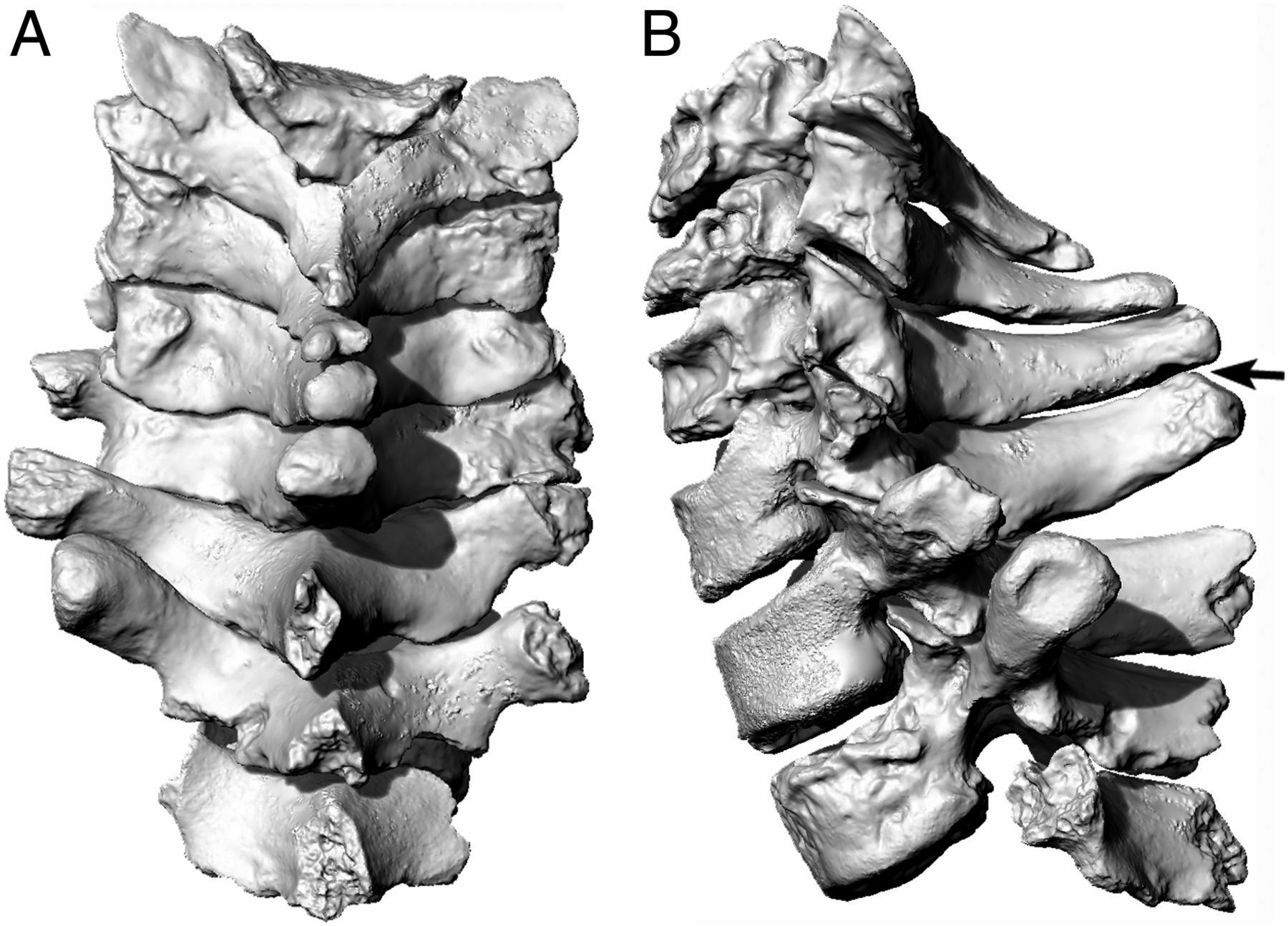
The articulated cervical and upper thoracic series C4-T3 of La Chapelle-aux- Saints 1, surface-scanner generated models. (A) dorsal view, (B) lateral view.
Note Baastrup disease of the spinous processes C6-C7 (arrow) and the mild degenerative scoliotic misalignment.
( Baastrup's Disease (Baastrup syndrome) is a relatively common pathology affecting the vertebral column. First formally described by Christian Ingerslev Baastrup in 1933, the disorder is characterised by the close approximation and contact of the spinous processes of adjacent vertebrae in the setting of degenerative spine disease. As a product of the radiological findings of this process, the syndrome is often referred to as the 'kissing spine' syndrome. The impingement of these hypertrophied spinous processes may yield a reactive sclerosis, remodeling, and further spinal degeneration.
Academically, Baastrup's Disease is a well-documented cause of low back pain, with some studies reporting an incidence as high as 81% in patients older than 80 years, though the actual prevalence is unknown. Although it is by no means a rare disorder, Baastrup syndrome is frequently missed by clinicians due to lack of knowledge or poor imaging technique. As a result, this relatively common pathology is largely underdiagnosed and subsequently mistreated )
( note also that a reassessment of the age-at-death of La Chapelle-aux-Saints using the best preserved age indicator (the right iliac auricular surface) provides an age in the sixth or even seventh decade, as reported by Häusler et al. (2019) - Don )
Photo and original paper: Häusler et al. (2019)
Source and text: https://www.wissenschaft.de/geschichte-archaeologie/neandertaler-von-wegen-gebeugte-haltung/
Additional text: https://www.ncbi.nlm.nih.gov/pmc/articles/PMC4762769/
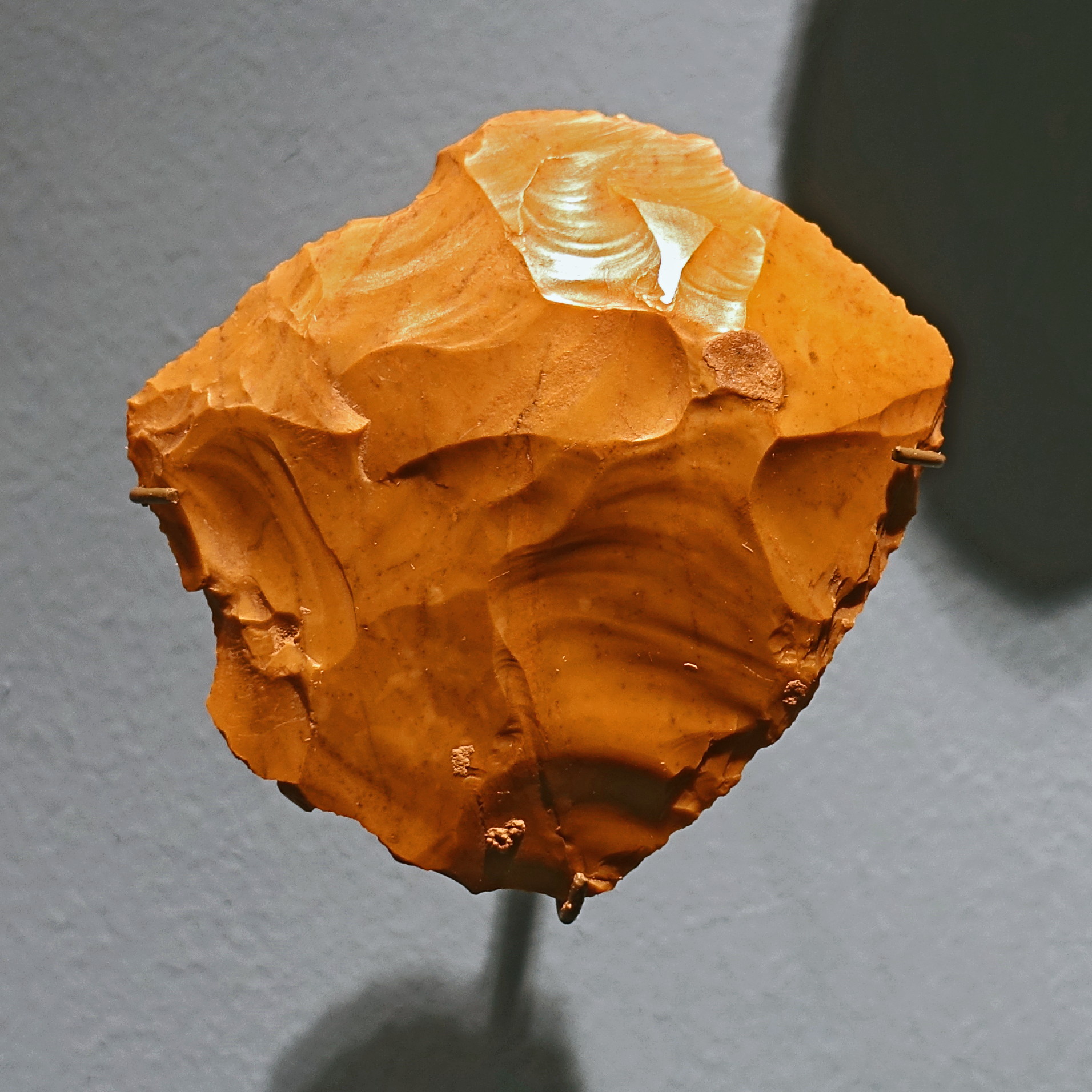
Thick racloir (scraper) in flint.
Circa 55 000 BP - 39 000 BP
Photo: Don Hitchcock 2018
Collections du Musée national de Préhistoire, Les Eyzies-de-Tayac
Source and text: Musée de l'Homme, Paris


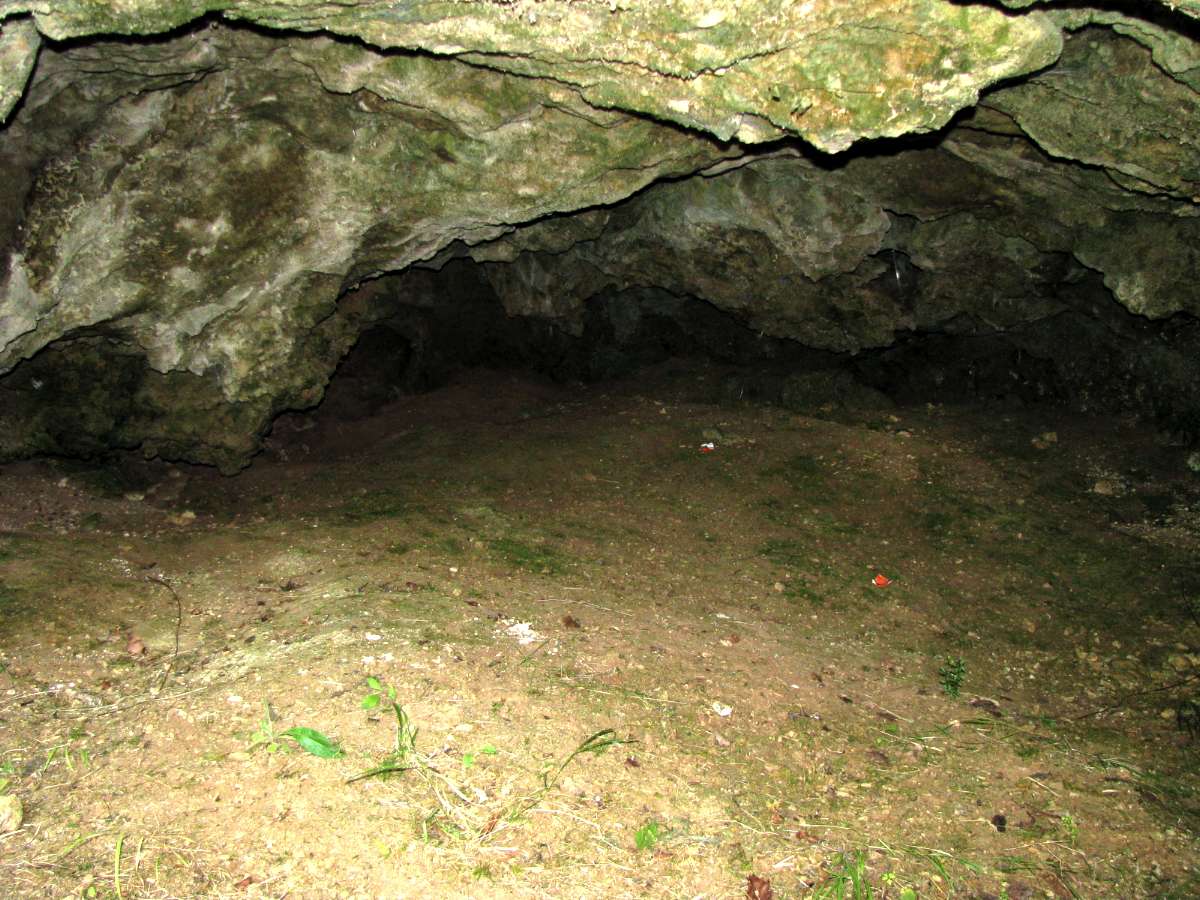
The cave in which the Neanderthal was found, from the outside (left, left centre) at the entrance (right centre) and further in (right).
Photo: Don Hitchcock 2008
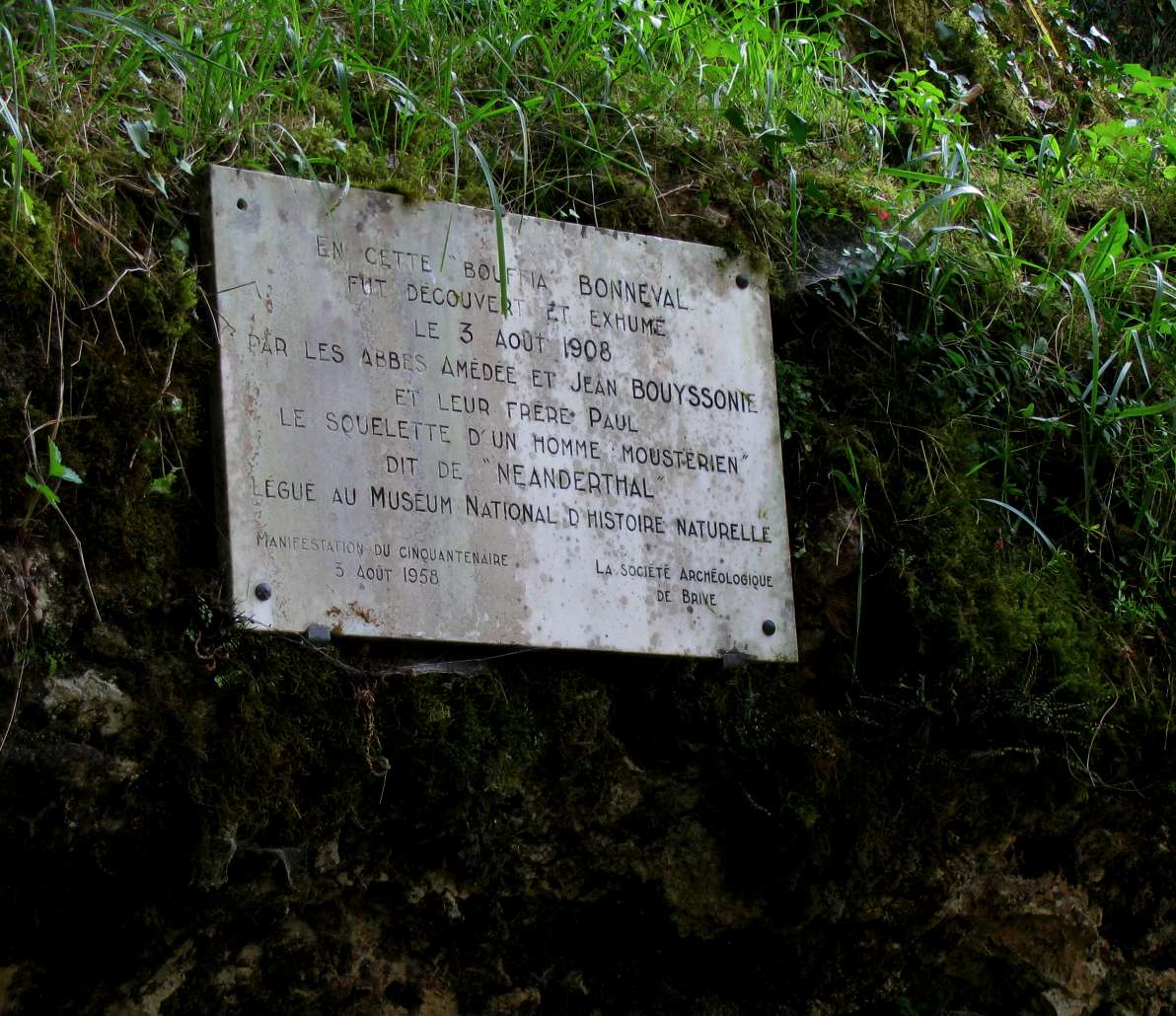
The plaque at the entrance to the cave.
Photo: Don Hitchcock 2008
The plaque reads:
Fut découvert et exhumé
Le 3 Août 1908
Par les Abbés Amédée et Jean Bouyssonie
Et leur frère Paul
Le squelette d'un homme "Moustérien"
Dit de "Néanderthal"
Legue au Museum National d'Histoire Naturelle
Manifestation du Cinquantenaire
3 Août 1958
La Societé Archéologique
de Brive
"Bouffia" means limestone cave in the local patois. The site still belongs to the Bonneval Family. The area is a National Monument now officially known as "Bouffia Bonneval".
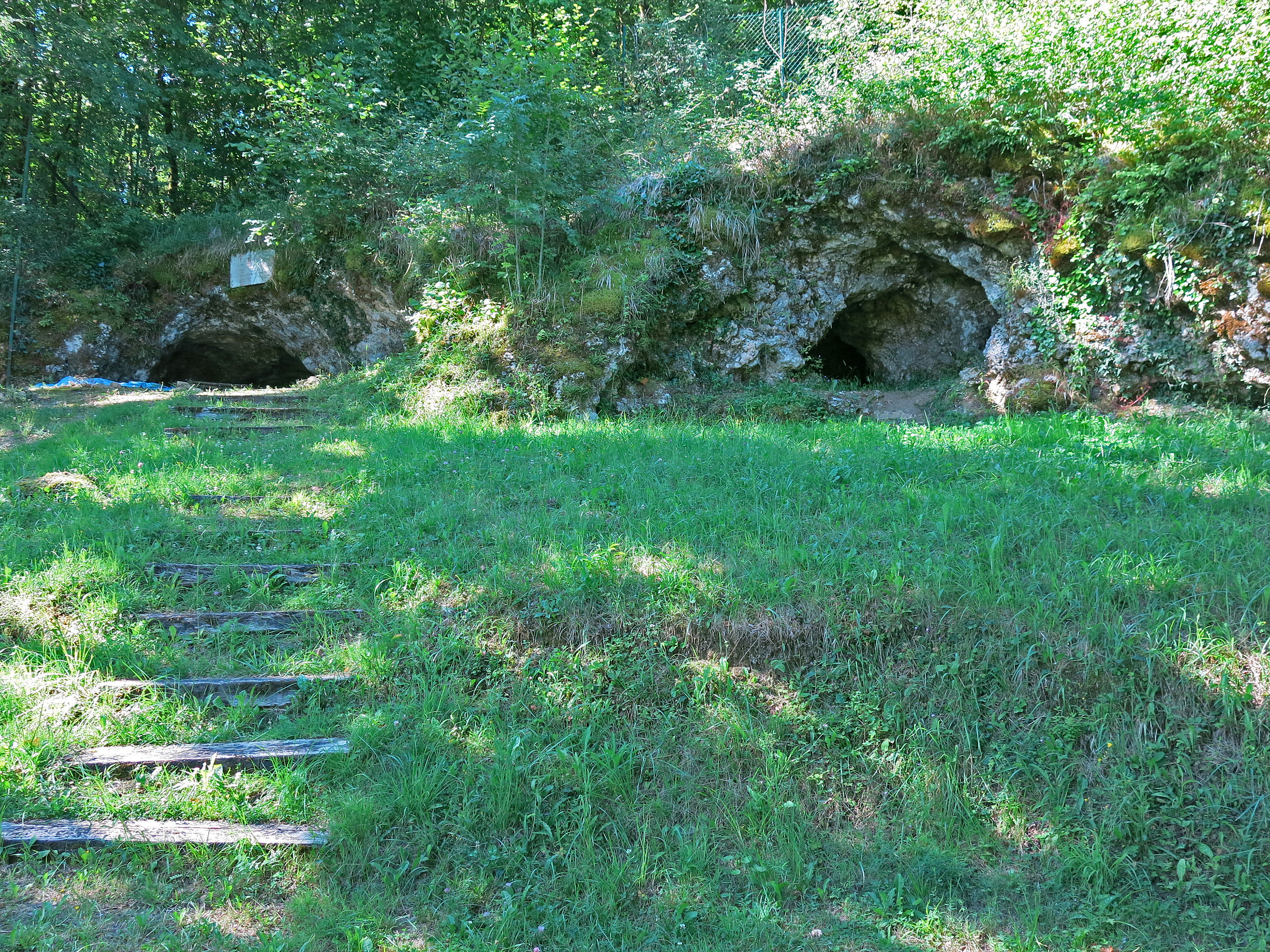
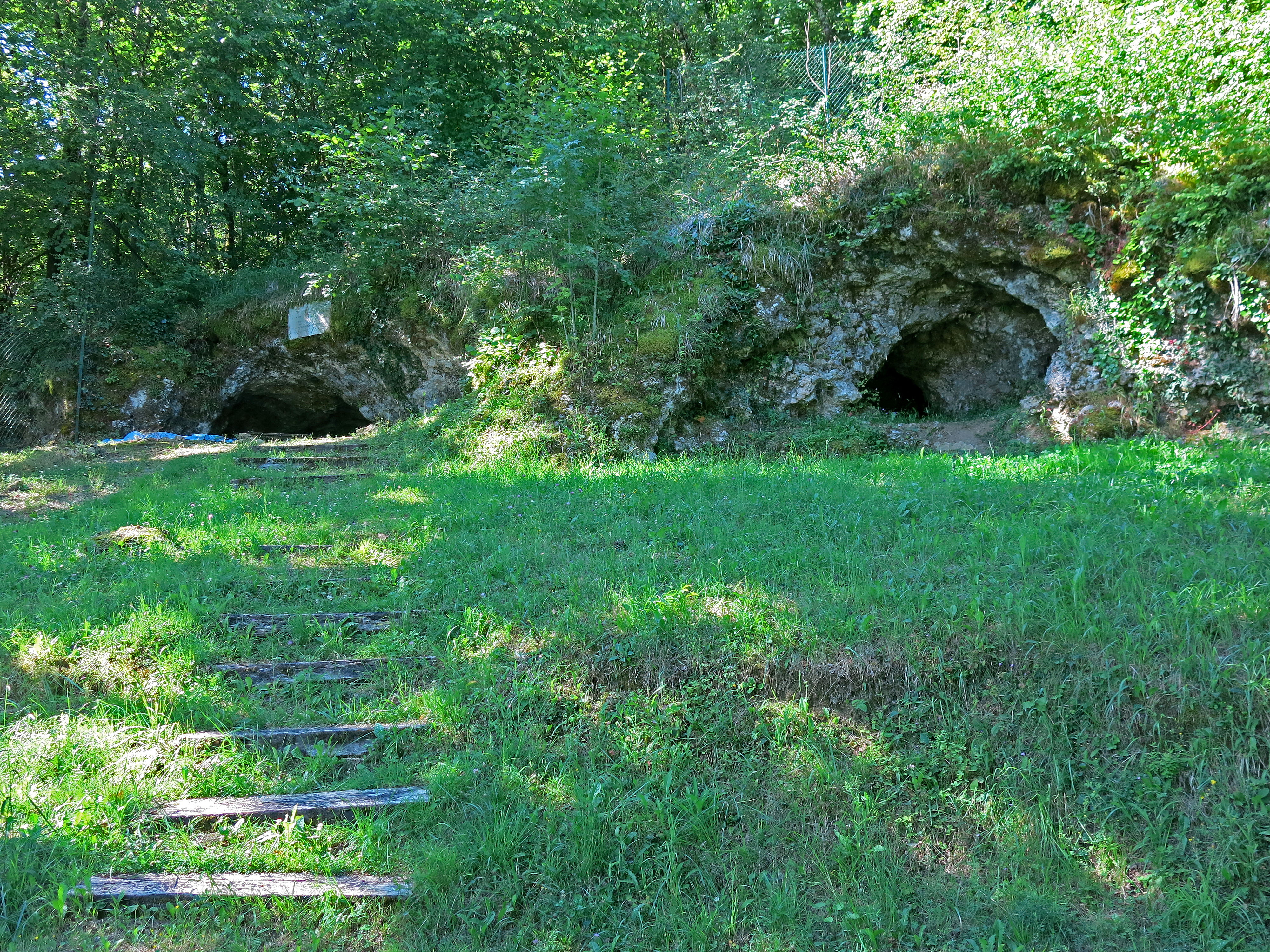
There are two main caves, the one on the left is the one in which the old man of Chapelle Aux Saints was found.
Photo: Don Hitchcock 2014
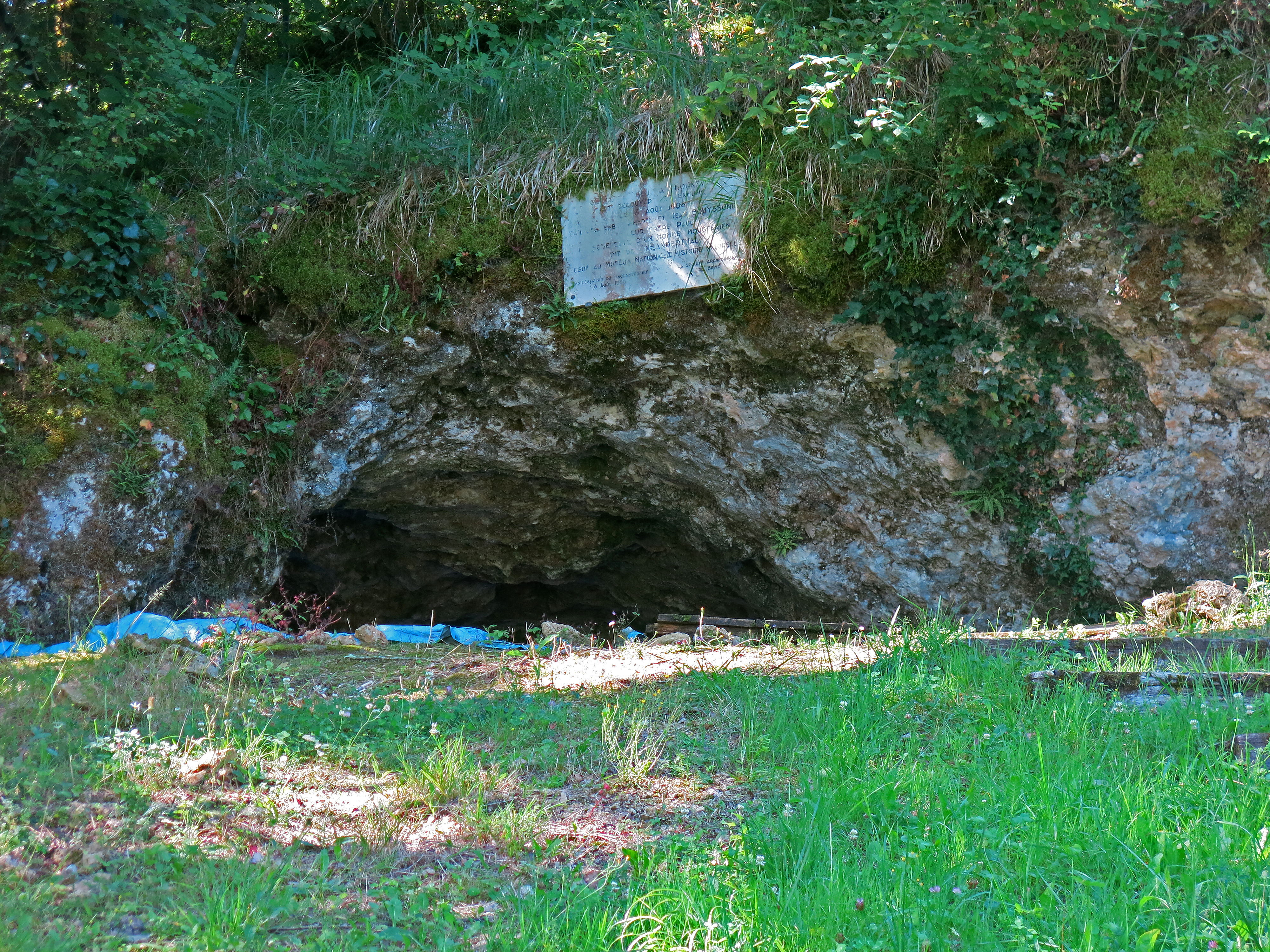
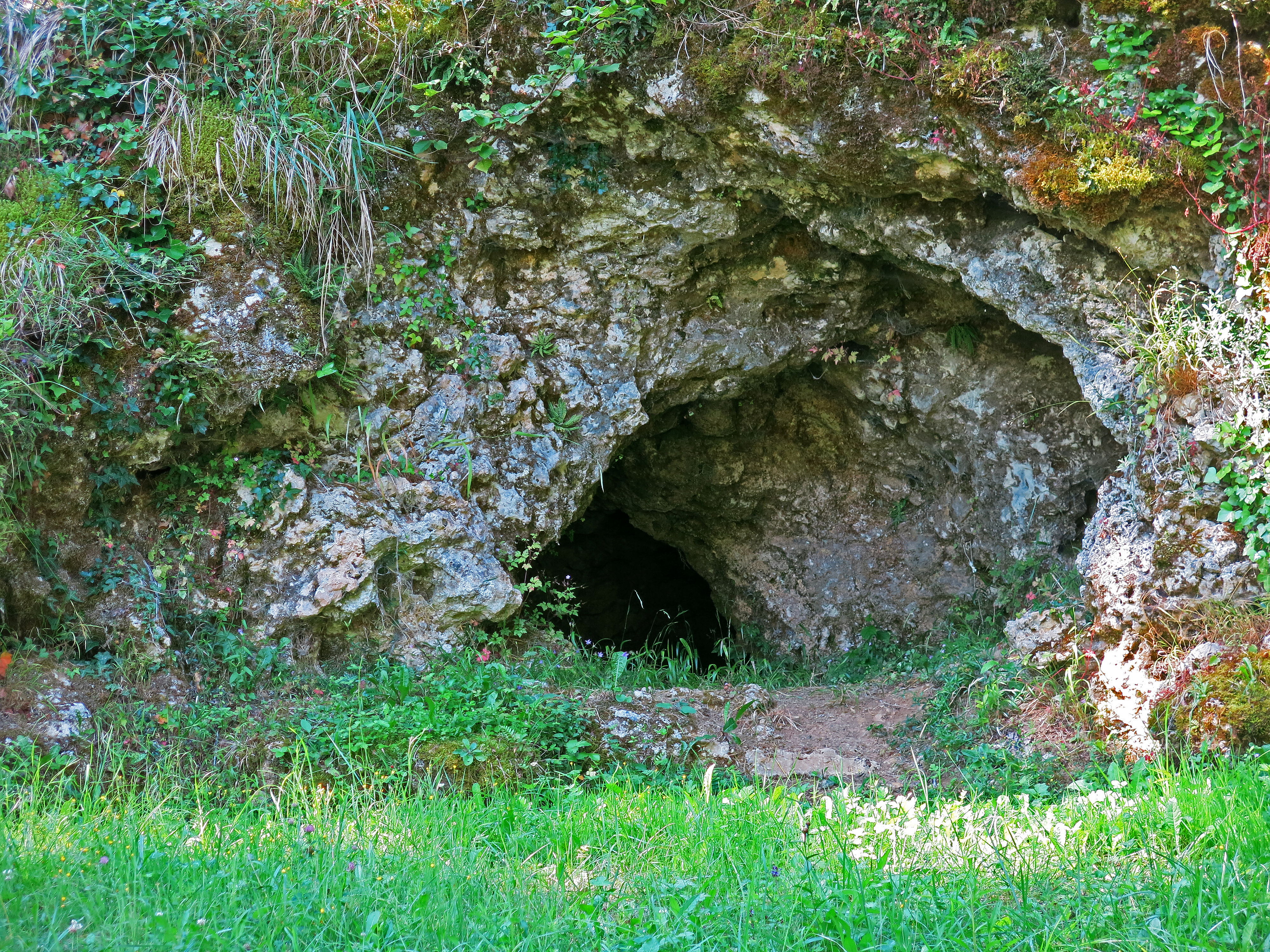
(left) Close up of the cave on the left in the photos above.
(right) Close up of the cave on the right in the photos above.
Photo: Don Hitchcock 2014
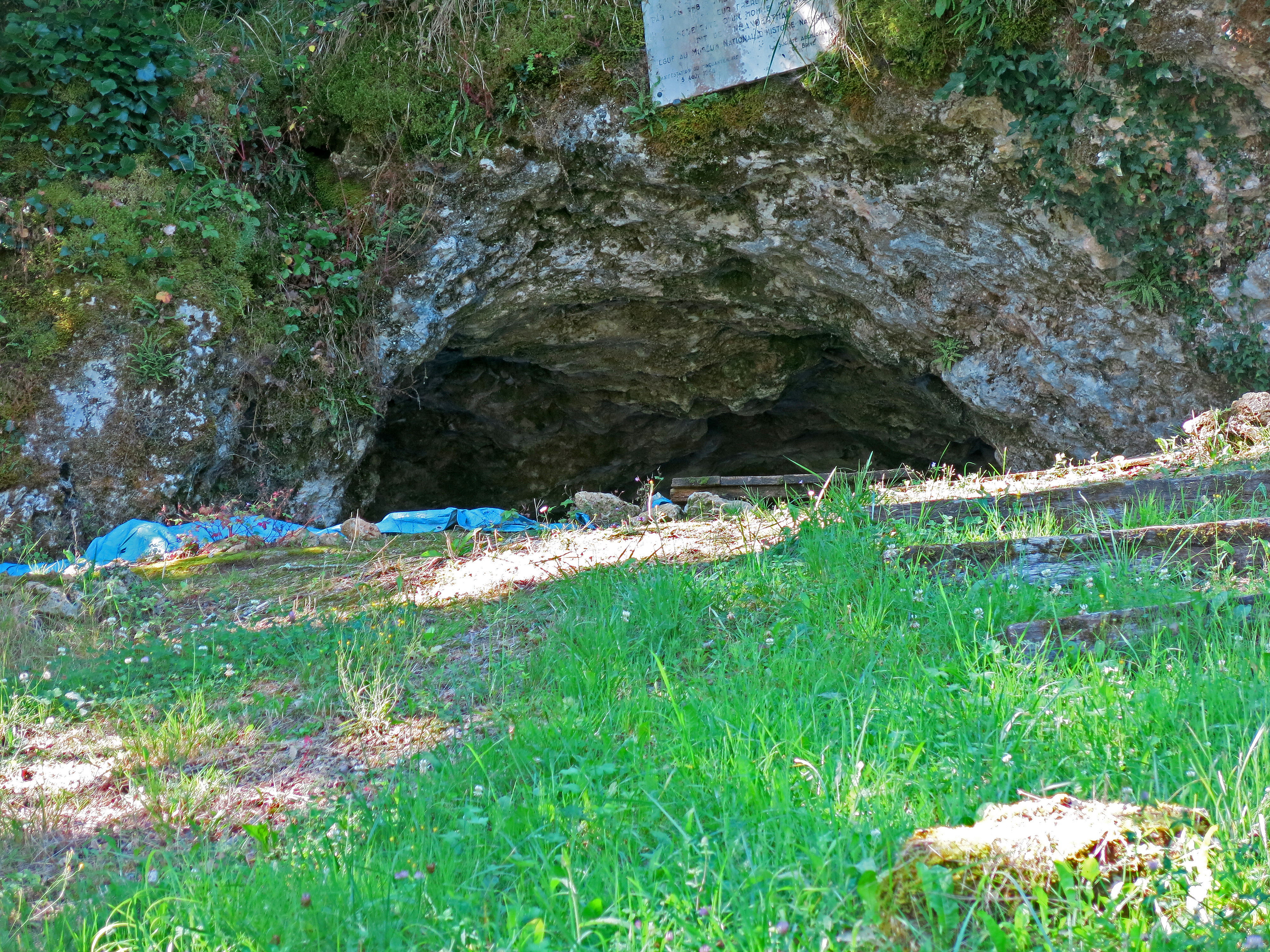
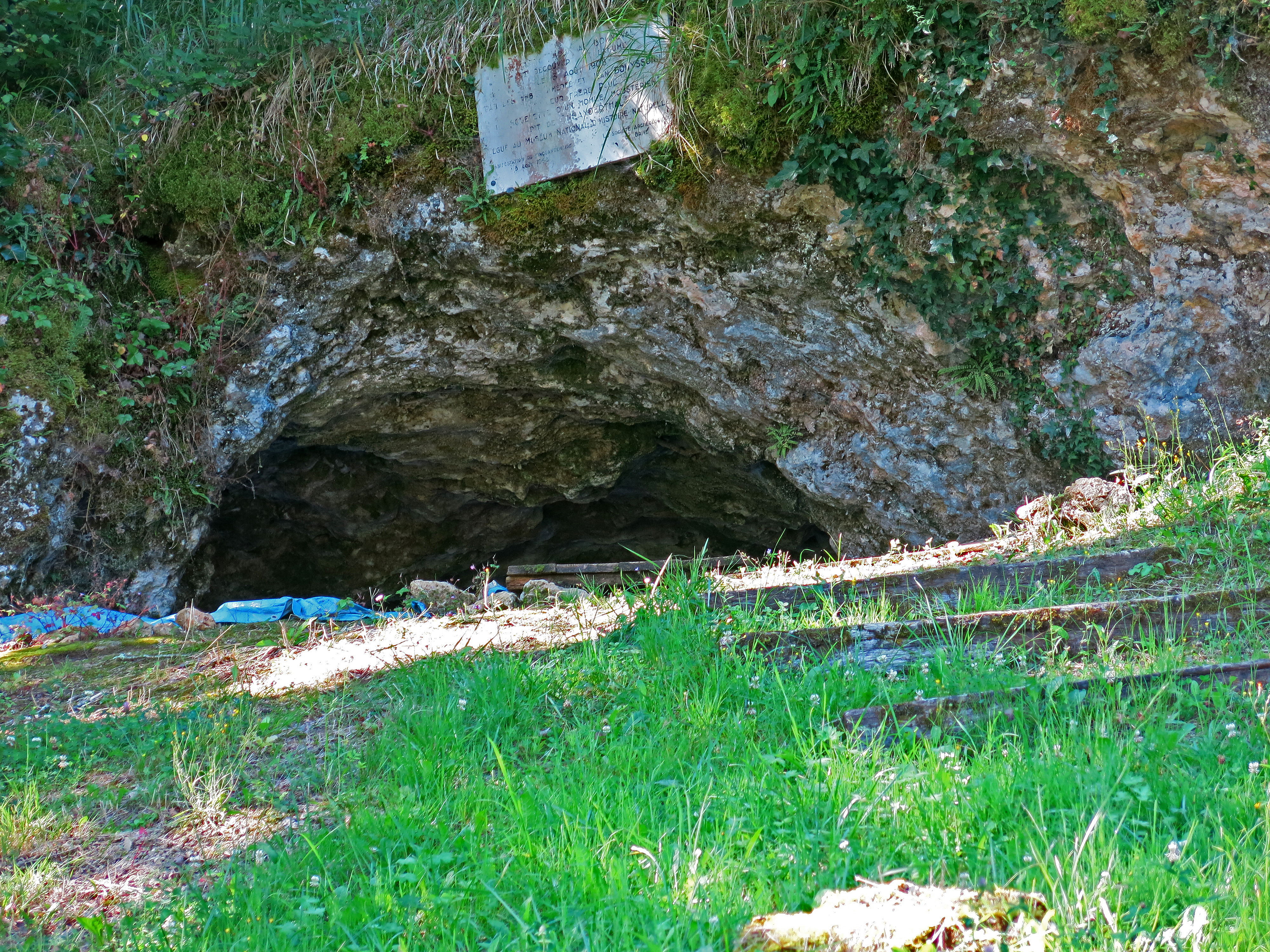
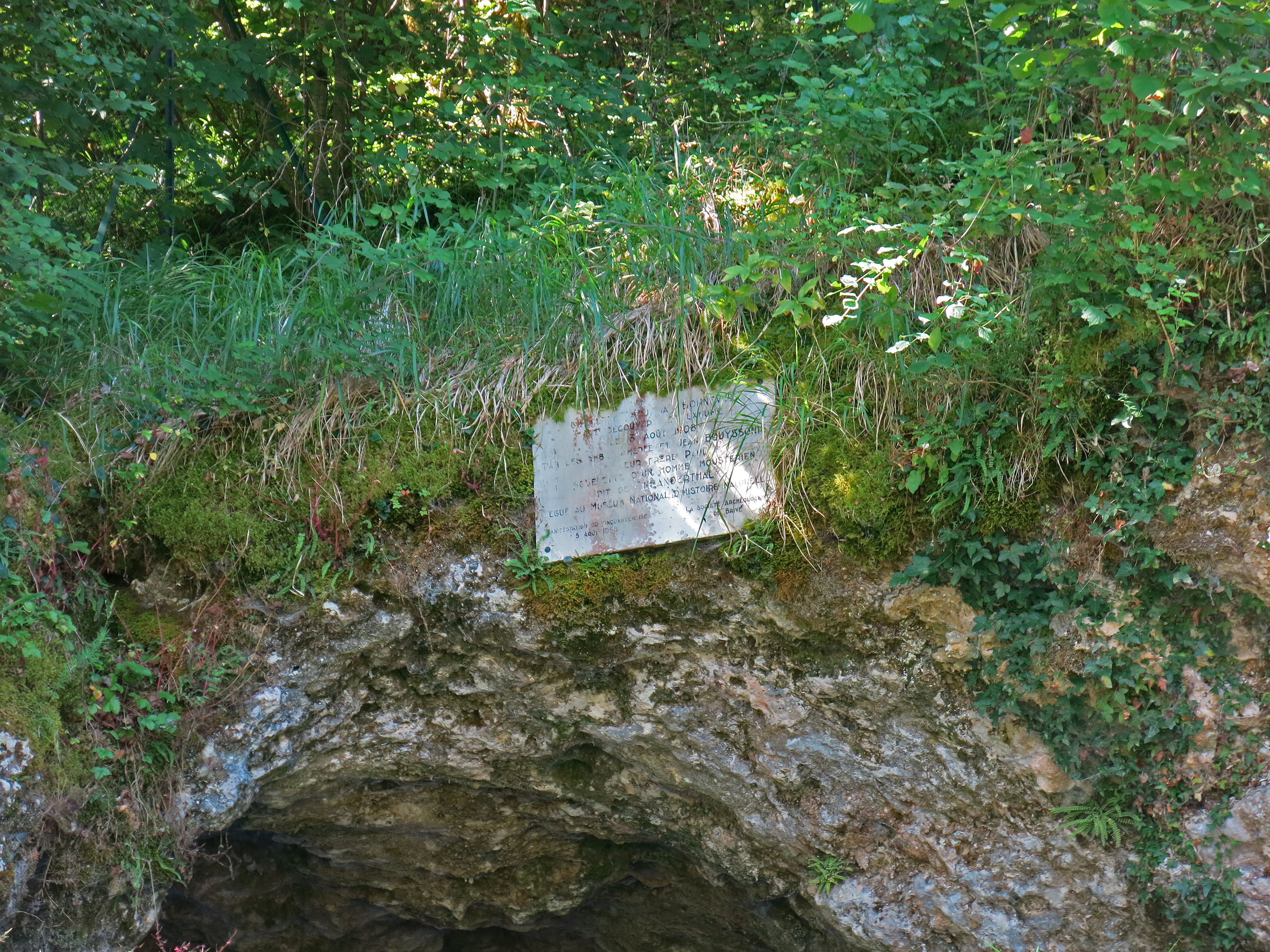
Photos of the main cave.
Photo: Don Hitchcock 2014
The images and text below presumably came from the original scientific journal paper or book describing the discovery.
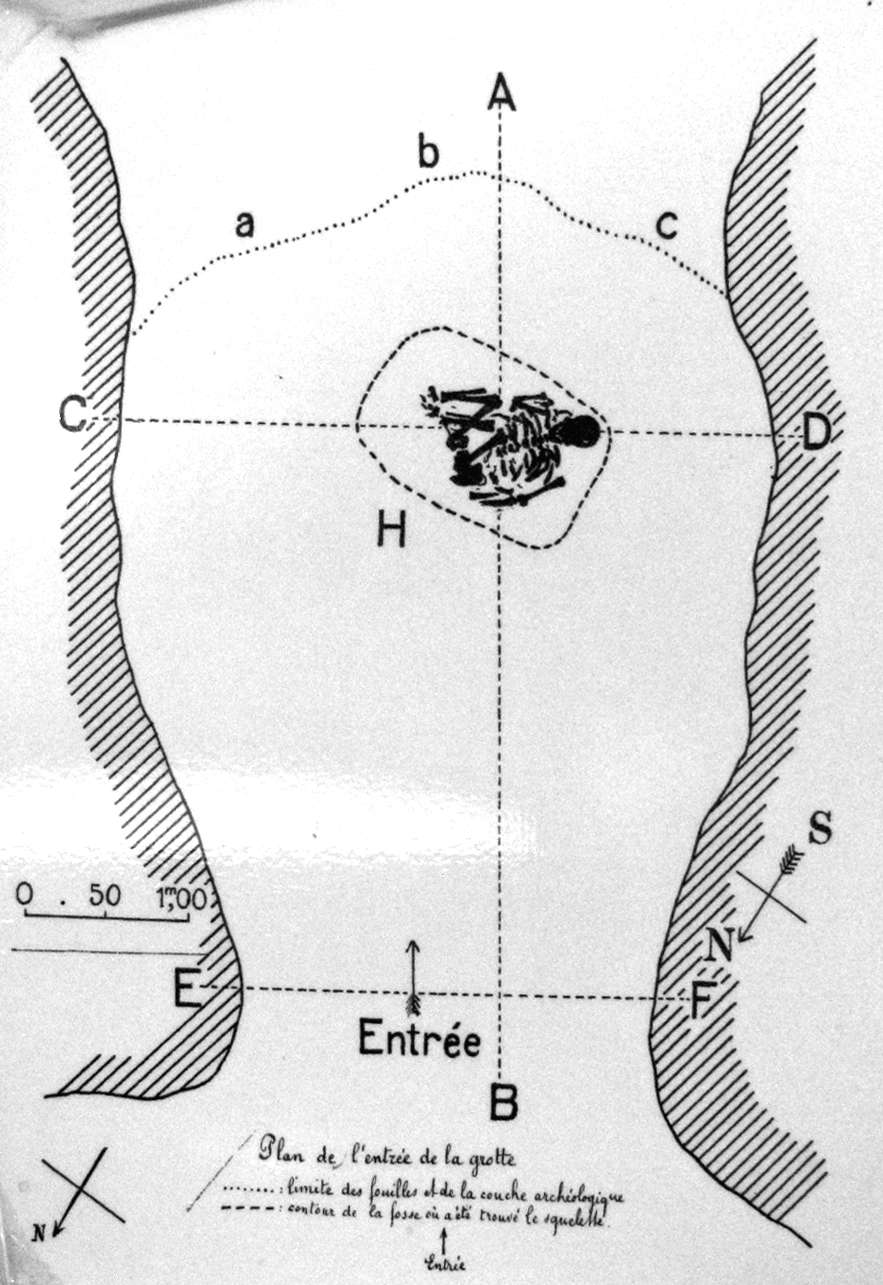
Fig. 1 (?)
Plan de l'entrée de la grotte
.......... limite des fouilles de la couche archéologique
------- contour de la fosse où a été trouvé le squelette
Plan of the entrance to the cave
.......... limits of the excavation of the archaeological layer
------- edge of the pit in which the skeleton was found
Photo: Don Hitchcock 2008
Source: Display at le musée de l'Homme de Néandertal, La Chapelle-aux-Saints
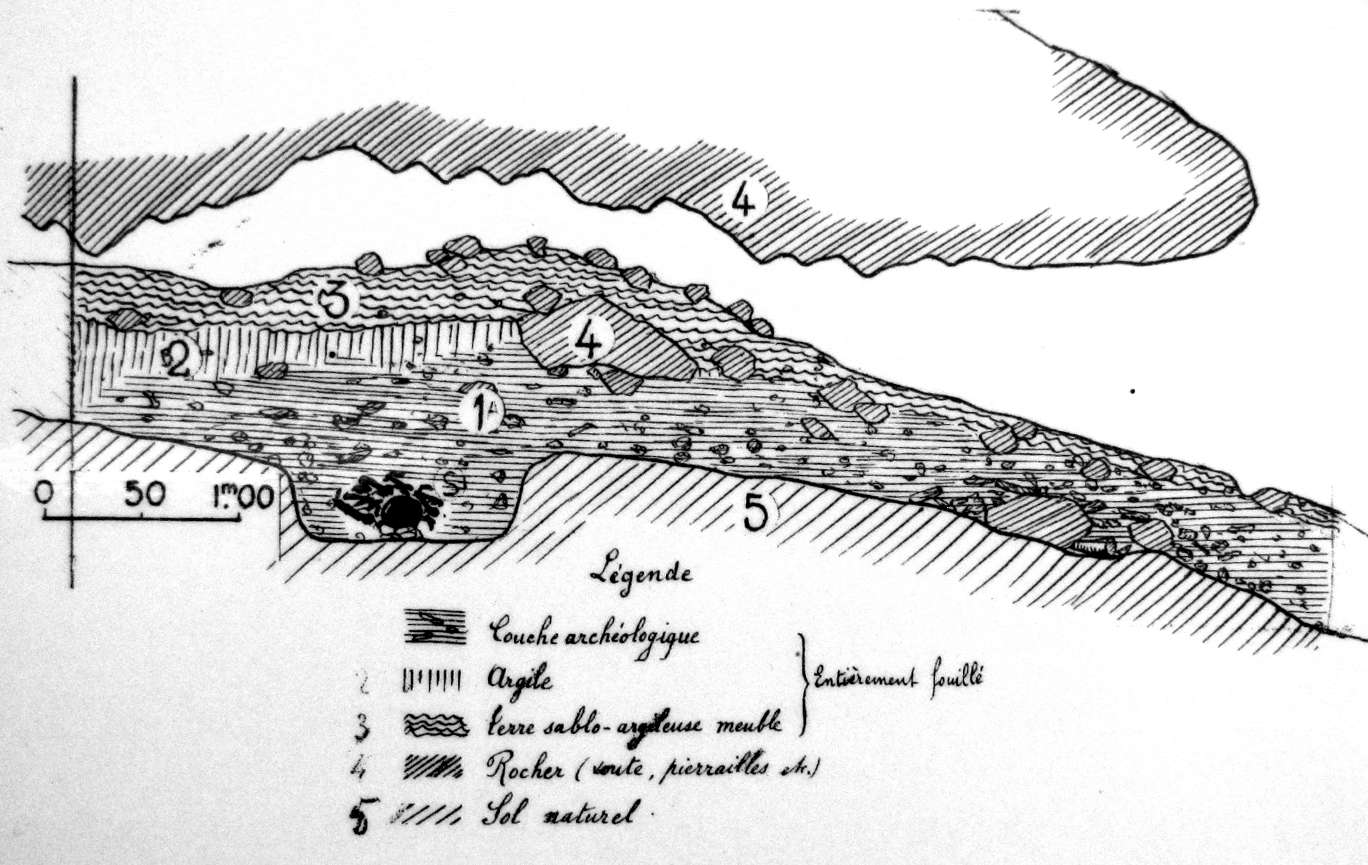
Fig. 2 (?)
Cross Section labelled A - B in the plan above.
Légende
1 - Couche archéologique
2 - Argile
3 - Terre sablo-argileuse meuble
4 - Rocher (verite, pierrailles etc)
5 - Sol naturel
S - Squelette
1, 2, 3 Entièrement fouillé.
Legend
1 - Archaeological layer
2 - Clay
3 - Earth - loose sandy clay
4 - Rock (Rock forming the cave, large rocks, small stones etc.)
5 - Original soil, bedrock
S - Skeleton
1, 2, 3 fully excavated.
Photo: Don Hitchcock 2008
Source: Display at le musée de l'Homme de Néandertal, La Chapelle-aux-Saints
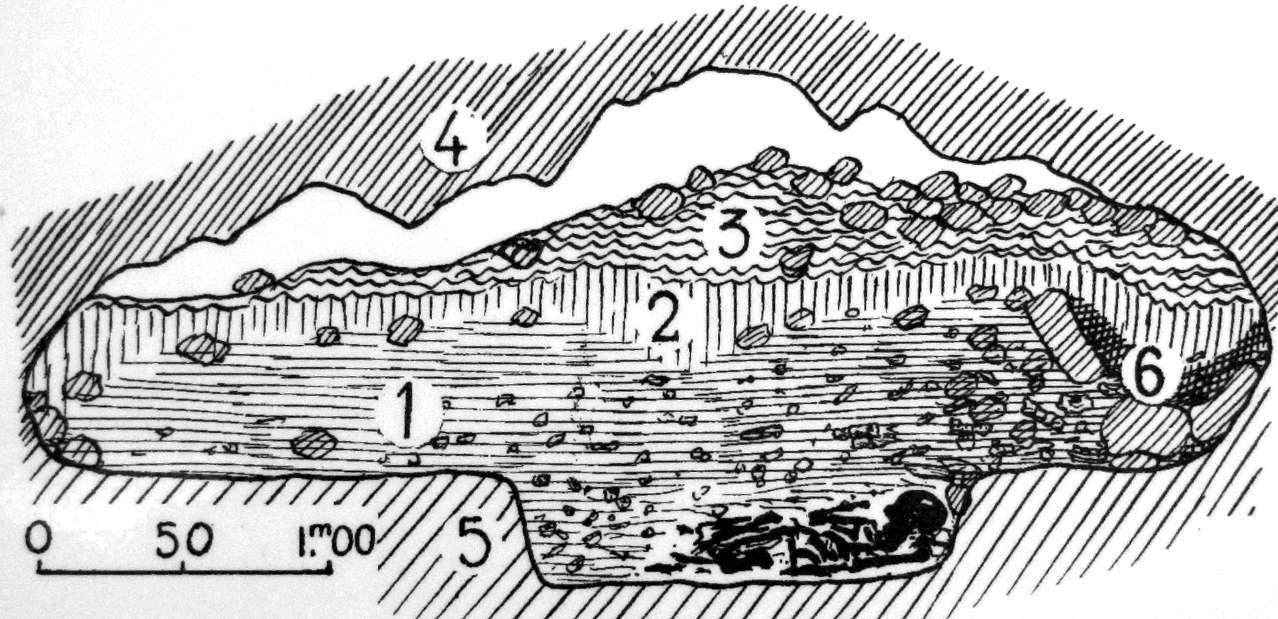
Fig. 3 - Coupe suivant CD. Mème légende que pour le plan, et, en plus, 6, couche de terre brûlée.
Cross Section labelled C - D in the plan above, with the same legend, but as well, 6, a layer of scorched earth.
Photo: Don Hitchcock 2008
Source: Display at le musée de l'Homme de Néandertal, La Chapelle-aux-Saints
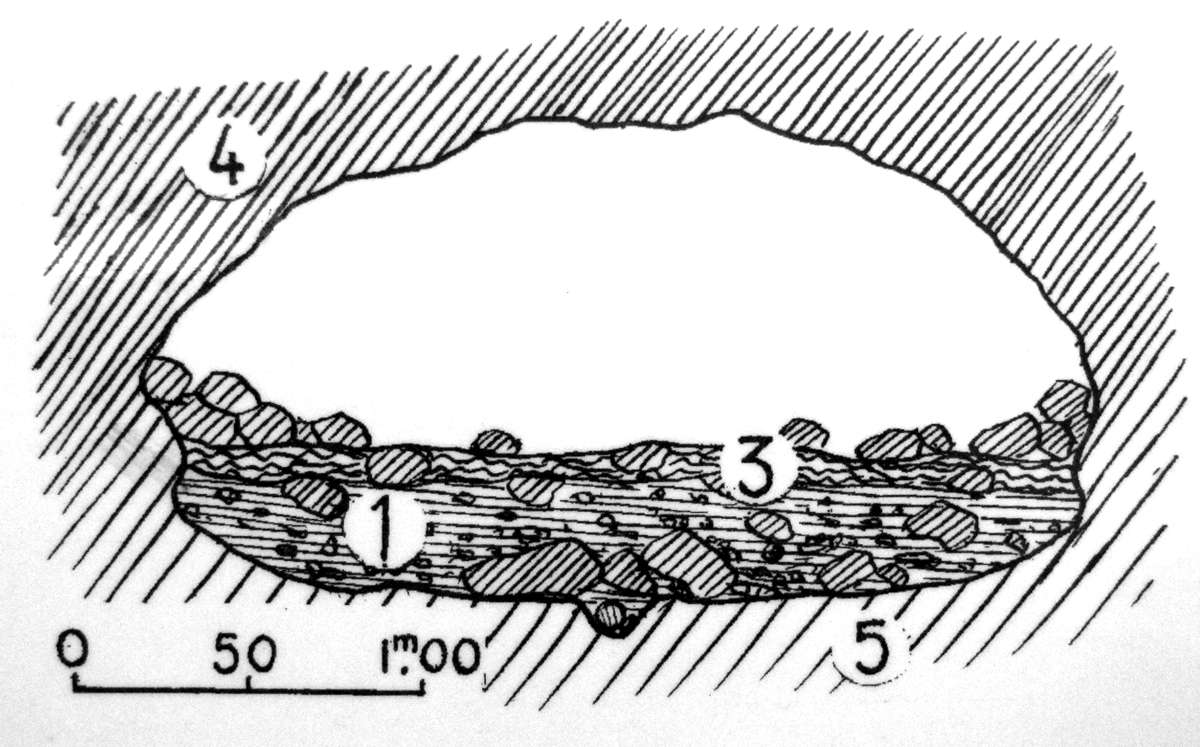
Fig. 4 - Cross Section labelled E - F in the plan above.
Photo: Don Hitchcock 2008
Source: Display at le musée de l'Homme de Néandertal, La Chapelle-aux-Saints
En avançant dans l'intérieur de la grotte, nous avons essayé de voir s'il y avait une variation dans l'outillage ou la faune. Nous avons simplement remarqué ceci: tout à l'entrée, dans une petite fosse creusée, semble-t-il, intentionnellement (fig 2 et 4), et sous des blocs gisait une corne de grand Bovidé, et, au-dessus ou autour, beaucoup de grands fragments d'os longs, de crâne et de vertèbres du même animal (un atlas complet, d'après M. Harlé); en arrière il n'y avait guère que du Renne, plus loin enfin, au-dessus de l'Homme, de nouveau du grand Boeuf. Puis la couche archéologique allait s'affaiblissant pour s'éteindre bientôt.
L'homme que nous avons trouvé a été intentionnellement enseveli. Il gisait au fond d'une fosse creusée dans le sol marneux de la grotte; ce sol de couleur blanche et dur à entamer, faisait contraste évident avec la couche archéologique. Cette fosse (fig 1, 2 et 3) était à peu près rectangulaire, large de 1 mètre, longue de 1m,45, profonde de 30 centimètres environ.
Le corps y était orienté à peu près E.-O., couché sur le dos, la tète à l'ouest, appuyée contre le bord de la fosse dans un coin et calée par quelques pierres. Le bras droit était probablement replié, ramenant la main vers la tête; le bras gauche était étendu. Les jambes aussi étaient repliées, et renversées sur la droite.
Au-dessus de la tête, étaient placés trois ou quatre grands fragments plats d'os longs; plus au dessus il y avait, encore en connexion, l'extrémité d'un métatarsien de grand Bovidé, les deux premières phalanges, et une deuxième. Preuve évidente que la patte avait été posée là avec sa chair - peut être pour la nourriture du mort - (preuve aussi que la couche n'a jamais été remaniée).
Il y avait autour du reste du corps un grand nombre d'éclats de quartz, de silex parfois bien travaillés, quelques fragments d'ocre, des os brisés, etc. comme dans le reste de la couche archéologique sans rien de bien caractéristique. Sur l'aire comprise entre le bord ouest de la fosse et la paroi, nous avons rencontré assez grande abondance de grands fragments d'os, des màchoires, des vertèbres, de Renne en connexion; une vertèbre de grand Bovidé et de très belles pièces de silex, sous des blocaux de rochers. Enfin tout contre la paroi, au-dessus de ces blocs, la terre avait subi l'action du feu, à en juger par sa couleur noire (fig. 3, no 6), mais il n'est pas absolument prouvé que ce foyer soit ancien, quoique plusieurs os et pierres fussent engagés dans l'épaisseur de la terre noire et calcinés en partie. Ces foyers, au nombre de deux, étaient en forme de fond de bateau; mais dans l'intérieur de cette sorte de cuvette, il n'y avait qu'une terre rougeâtre sans rien de caractéristique ou à peu près.
Notons pour terminer qu'aucun os ne présente de traces d'utilisation, comme celles par exemple des os de la Quina et de Petit-Puymoyen (Charente) alors que les outillages ont tout à fait la même physionomie.
Il semble que cette grotte a été non un lieu d'habitation, mais un tombeau, où l'on serait venu faire de nombreux repas funéraires.
My translation of the above text:
As we advanced into the cave, we tried to see if there was a variation in the remains of plant or wildlife.
All we noticed was this: At the entry, in a small pit, it seems, intentionally (fig 2 and 4), and under blocks were lying the large horn of an aurochs, and, all around, many large fragments of long bones, skull and vertebrae of the same animal (a complete atlas bone, according to M. Harlé). Behind that there were some small reindeer bones. Finally over the skeleton of the man, again aurochs bones. Behind that, the archaeological layer petered out.
The man we found was intentionally buried. The skeleton lay at the bottom of a pit in the marly (derived from limestone and clay) floor of the cave, a deposit of white limestone hard to break open, in marked contrast with the archaeological layer. This pit (fig 1, 2 and 3) was roughly rectangular, 1 metre wide, 1.45 metres long, and 0.3 metres deep.
The body was oriented virtually east - west, lying on its back, head to the west, leaning against the edge of the pit in a corner and on a few stones. The right arm was probably folded, bringing the hand towards the head, the left arm was extended. The legs were also bent and doubled over on the right.
Above the head were placed three or four large fragments of flat bones and moreover there was, still in a connected state, the end of a large bovid metatarsal, the first two phalanges, and a second phalange. This is evidence that the leg was placed there still with its meat - perhaps as food for the dead - This is also proof that the layer has never been disturbed.
There were, around the rest of the body, a large number of fragments of quartz and of flint, sometimes worked well, a few fragments of ochre, broken bones, etc., as in the rest of the archaeological layer, with nothing typical. In the area between the western edge of the pit and the wall we found a relatively high abundance of large fragments of bone, jaw, vertebrae of reindeer still connected, a large bovid vertebra and beautiful pieces of flint beneath rocks. Finally, against the wall, above these blocks, the land had seen the action of fire, judging by its black color (Fig. 3, No. 6), but it is not absolutely proven that this fireplace is old, although many bones and stones were burnt, judging by the thickness of the partly burnt black soil. These fireplaces, two in number, were dish shaped, but in the interior of this kind of bowl, there was only red soil without any distinguishing characteristics.
Note finally that no bones showed any traces of use, such as those from the bones of the Quina and Petit-Puymoyen (Charente) have, while the tools are very similar to those found in those areas.
It seems that this cave was not a place of residence, but a tomb, where people came to many funeral meals.
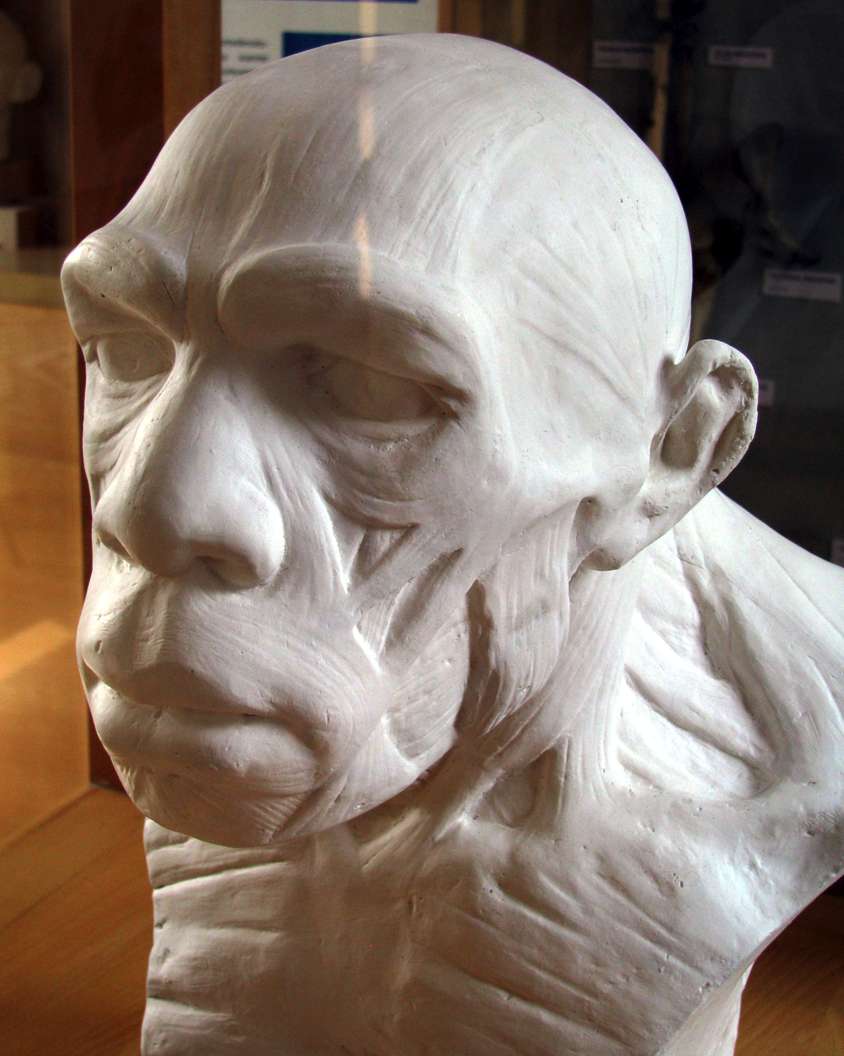
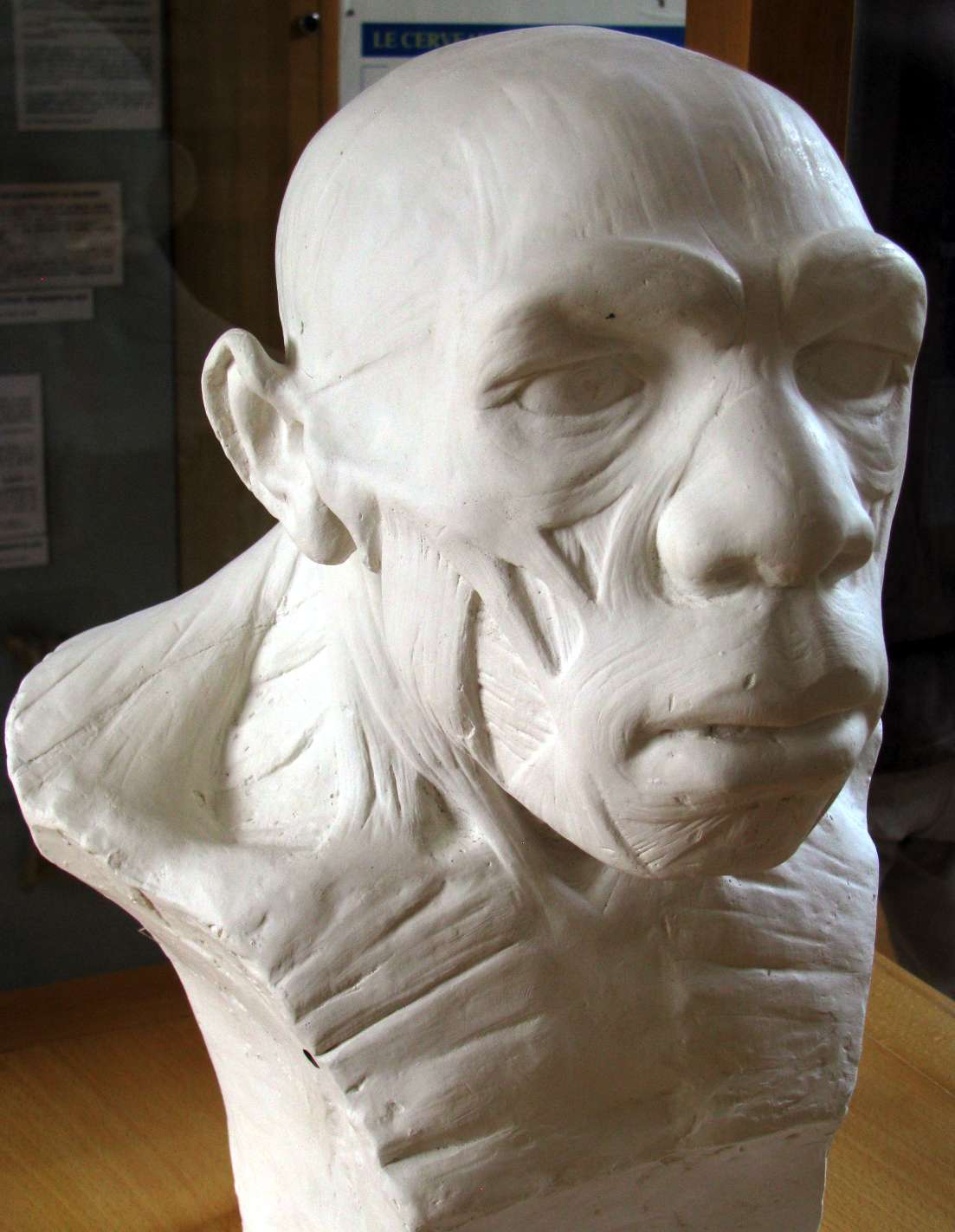
Réconstitution de la musculature faciale de l'homme de la Chapelle-aux-saints
D'après Marcellin Boule (1911 - 1913)
Reconstruction of the facial musculature of the man of La Chapelle-aux-Saints
After Marcellin Boule (1911 - 1913)
Photo: Don Hitchcock 2008
Source: Display at le musée de l'Homme de Néandertal, La Chapelle-aux-Saints
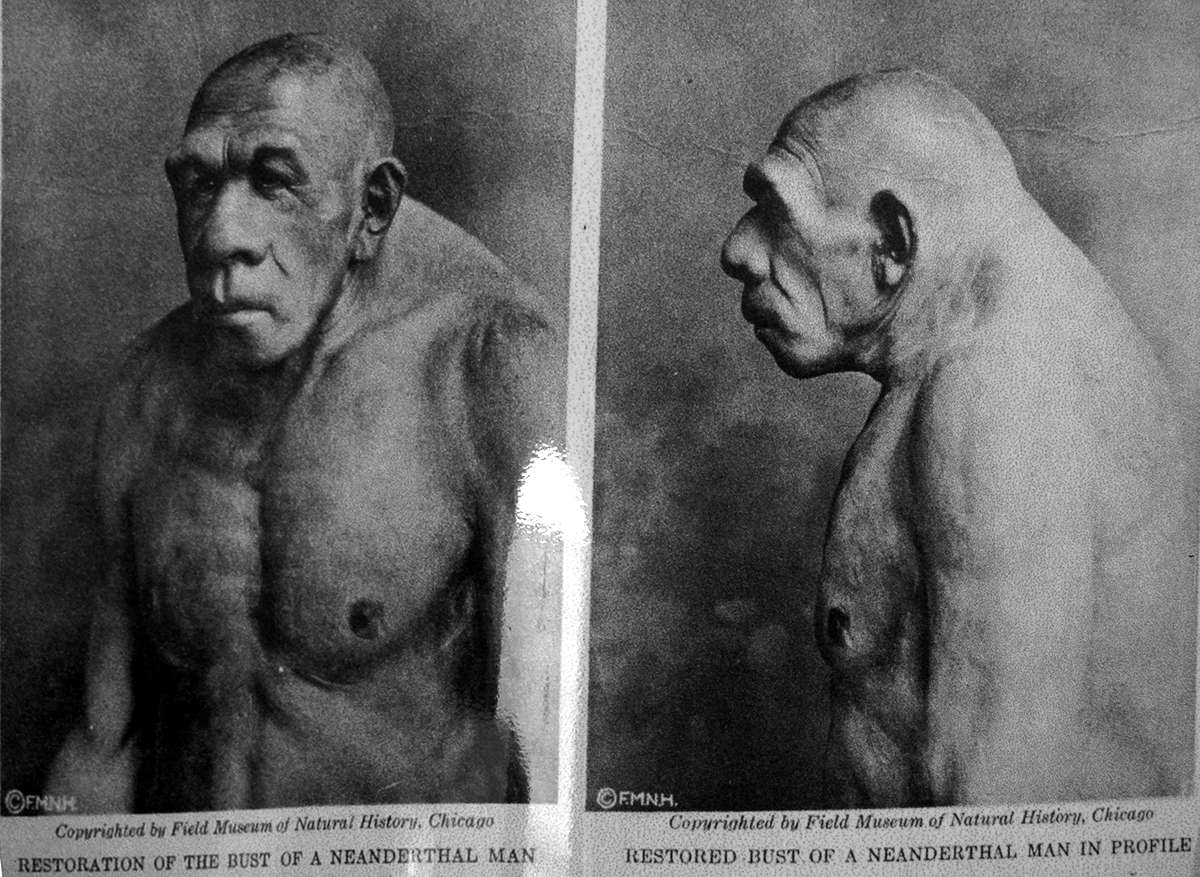
Restoration of the bust of a Neanderthal man
© Field Museum of Natural History, Chicago
Photo: Don Hitchcock 2008
Source: Display at le musée de l'Homme de Néandertal, La Chapelle-aux-Saints

Another version of the restoration of the bust of a Neanderthal man
Frederick Blaschke, supervised by Henry Field, “Restoration of the Bust of a Neanderthal Man,” between 1927 and 1929, Chicago, Field Museum of Natural History.
© Field Museum of Natural History, Chicago
Photo: Don Hitchcock 2008
Source: http://www.artsetsocietes.org/a/a-hurel.html
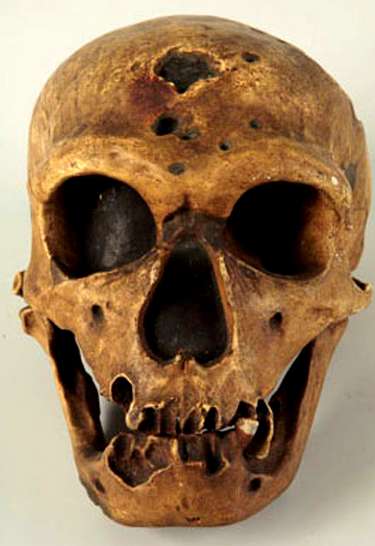
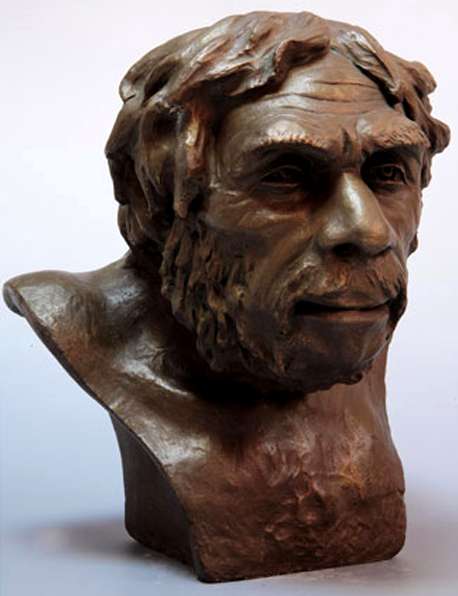

Reconstruction of the face of the old man of La Chapelle-aux-Saints from a plaster cast of the original skull, by M.M. Gerasimov.
Photo: http://www.mae.nw.ru/en/temporary_exhibitions/virtual/gerasimov/05/
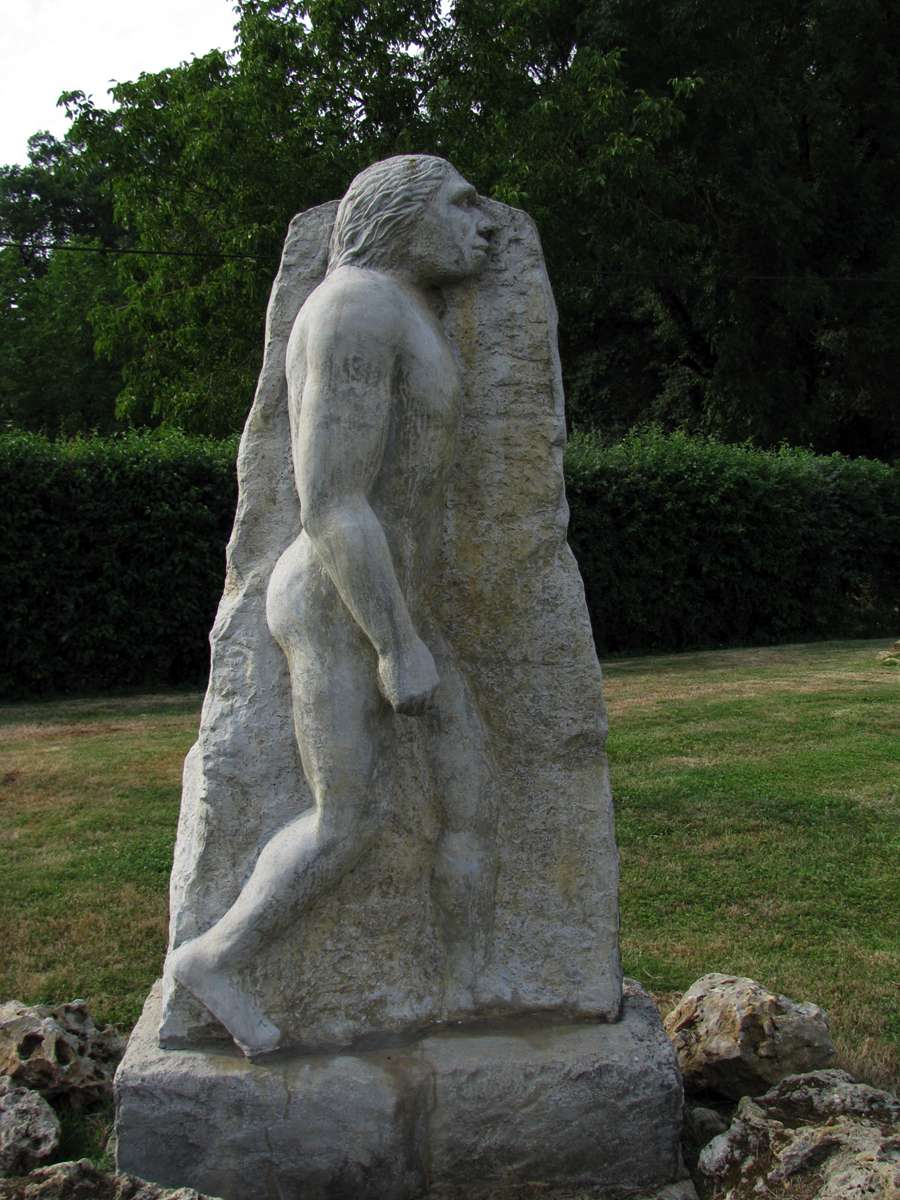
Statue of a Neanderthal in the grounds of le musée de l'Homme de Néandertal, La Chapelle-aux-Saints
Photo: Don Hitchcock 2008
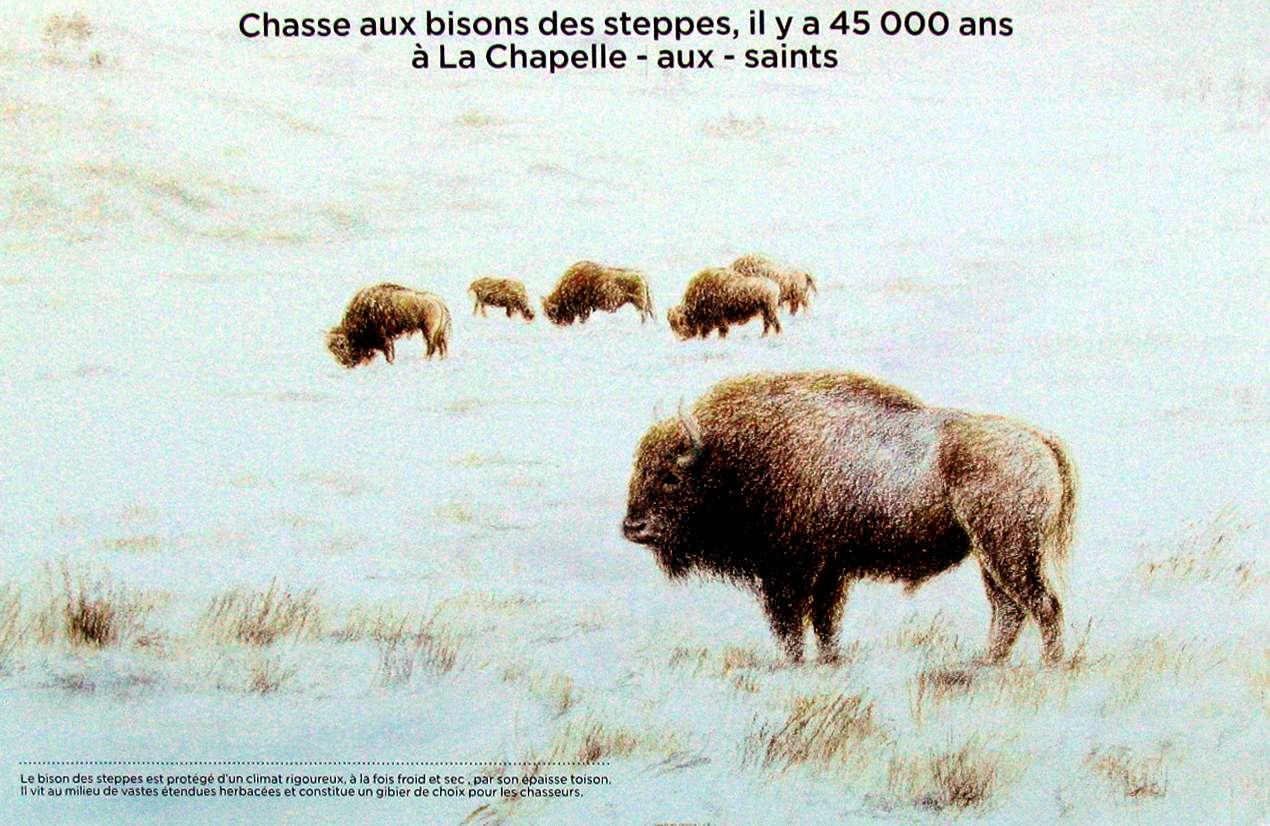
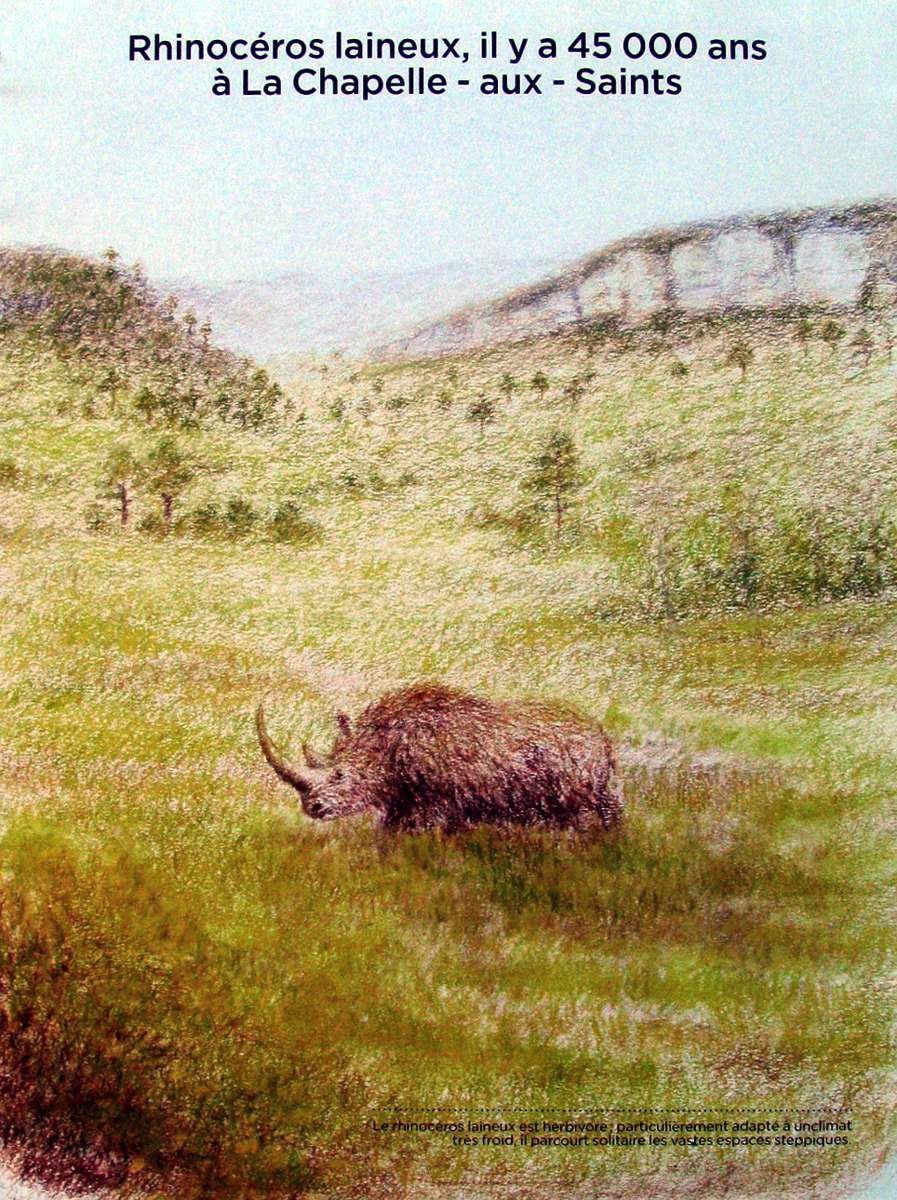
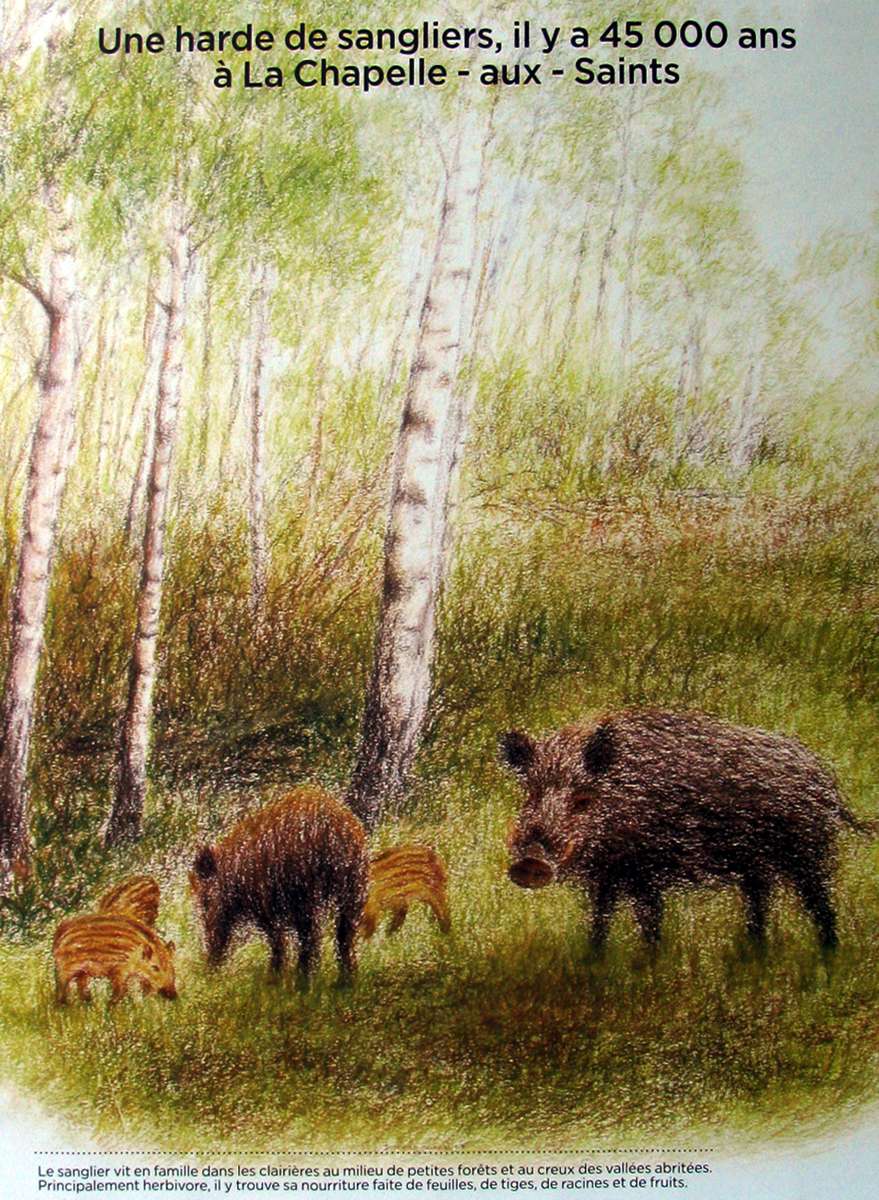
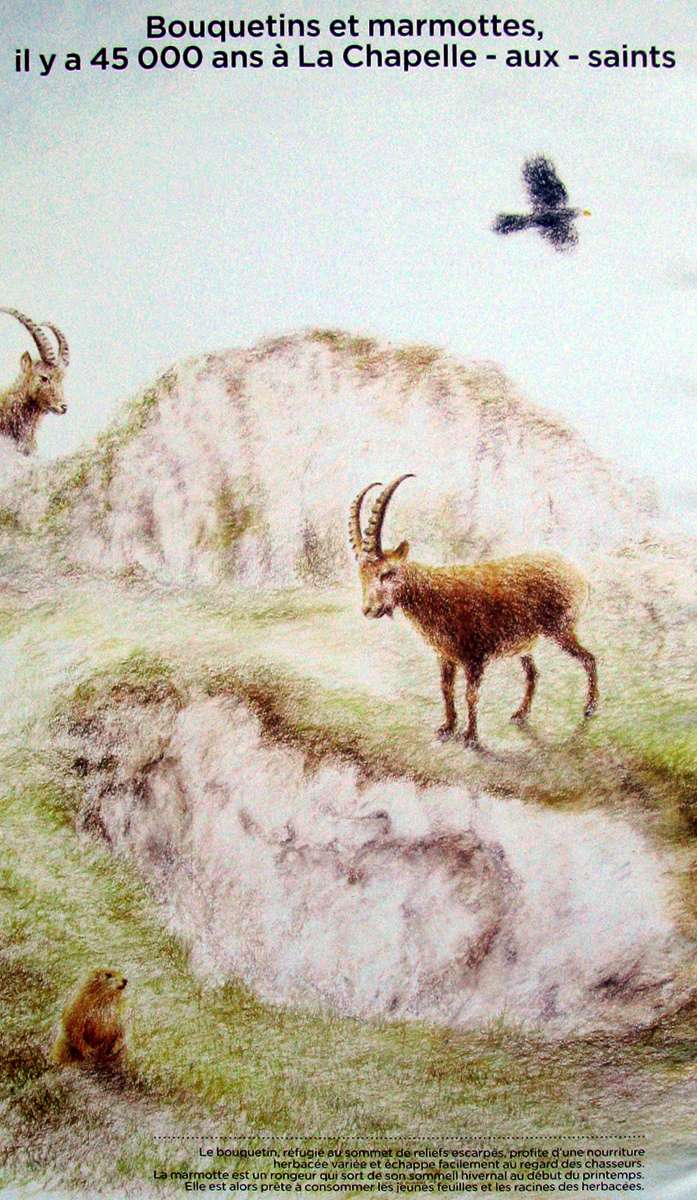
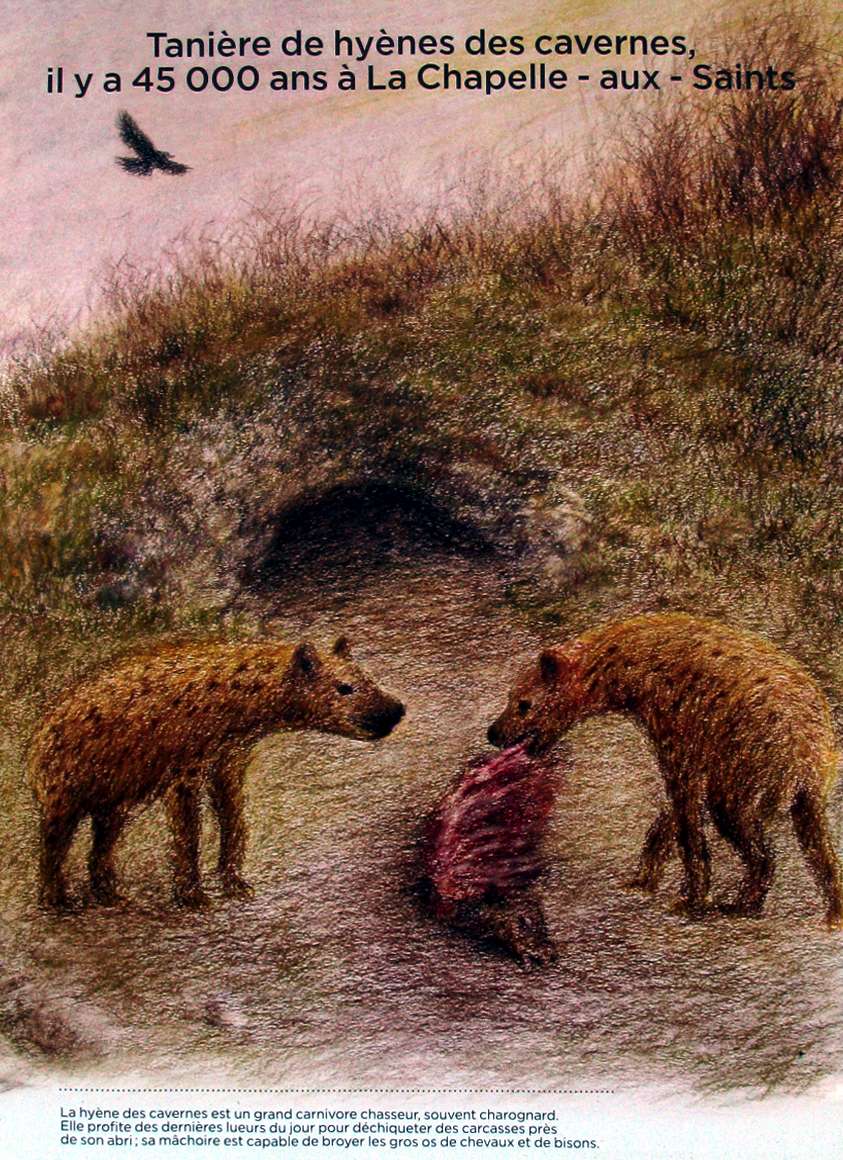
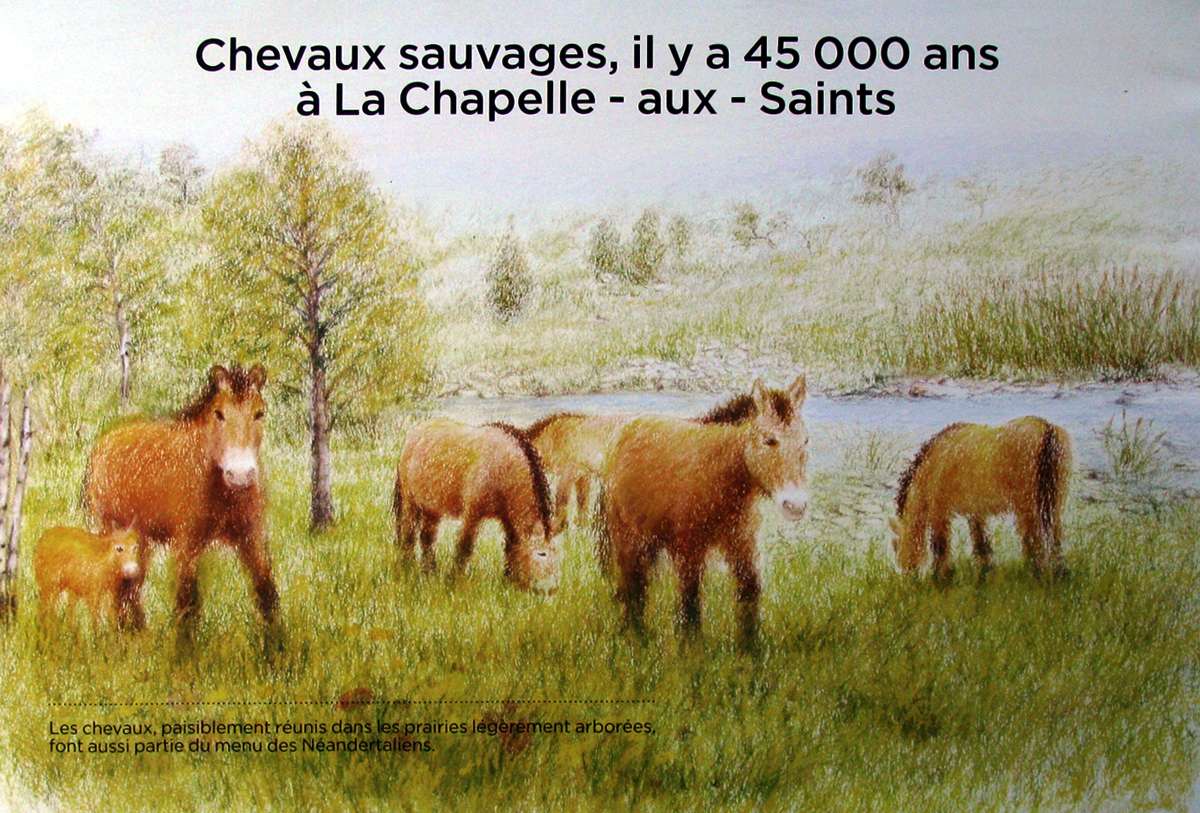
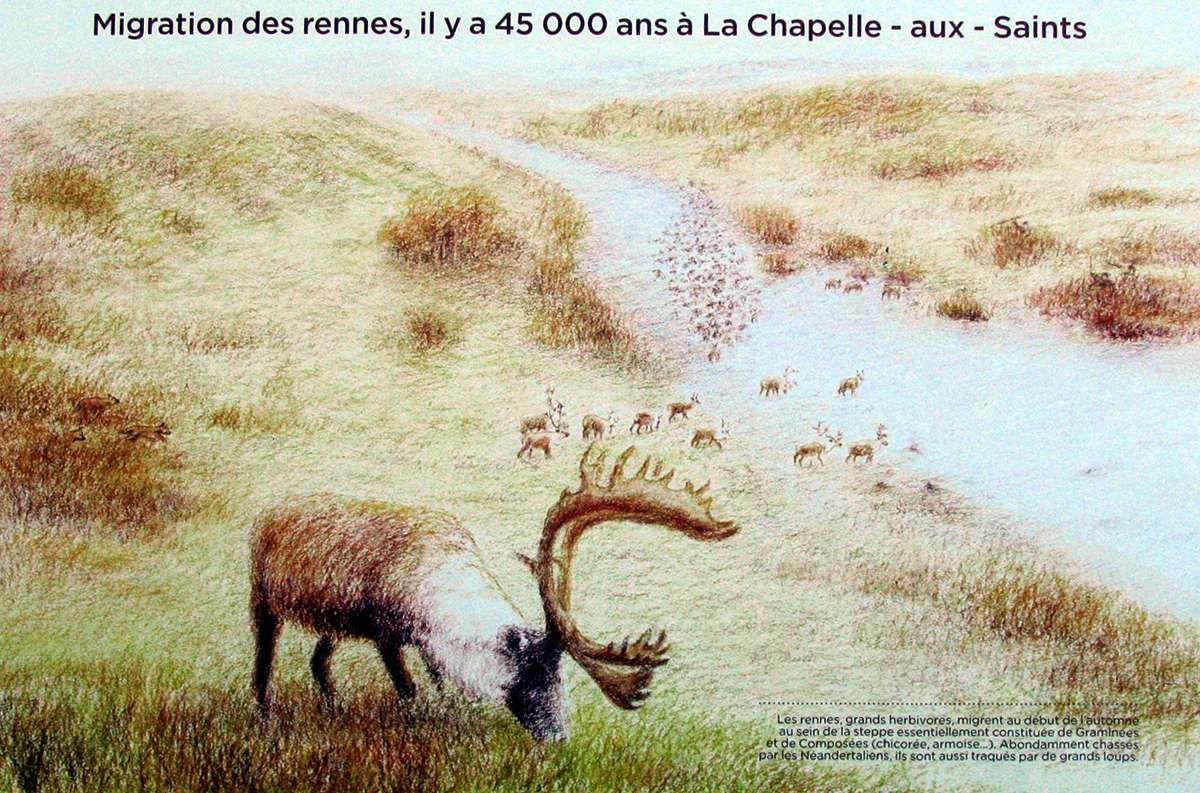
This was a fine outdoor display of the conditions and the animals at La Chapelle-aux-Saints at the time the Neandertals were living here. The display was very well presented.
One of the small limestone caves in the line of caves shown in photos on this page was used by hyenas, and this can be recognised as the inspiration for the painting of hyenas by the unknown artist.
Photo: Don Hitchcock 2008
Source: Outdoor display at le musée de l'Homme de Néandertal, La Chapelle-aux-Saints

Marcellin Boule (1 January 1861 — 4 July 1942) was a French palaeontologist.
He studied and published the first analysis of a complete Homo neanderthalensis. The fossil discovered in La Chapelle-aux-Saints was an old man, and Boule characterized it as brutish, bent kneed and not a fully erect biped. In an illustration he commissioned, the Neanderthal was characterized as a hairy gorilla-like figure with opposable toes, according to a skeleton which was already distorted with arthritis. As a result, Neanderthals were viewed as highly primitive creatures in subsequent decades.
Boule also helped to inform the public about the hoax known as "Piltdown man". As early as 1915, Boule recognized that the jaw belonged to an ape rather than an ancient human.
Photo: Don Hitchcock 2008
Source: Photo from the display at the Museum of La Chapelle Aux Saints, text from Wikipedia
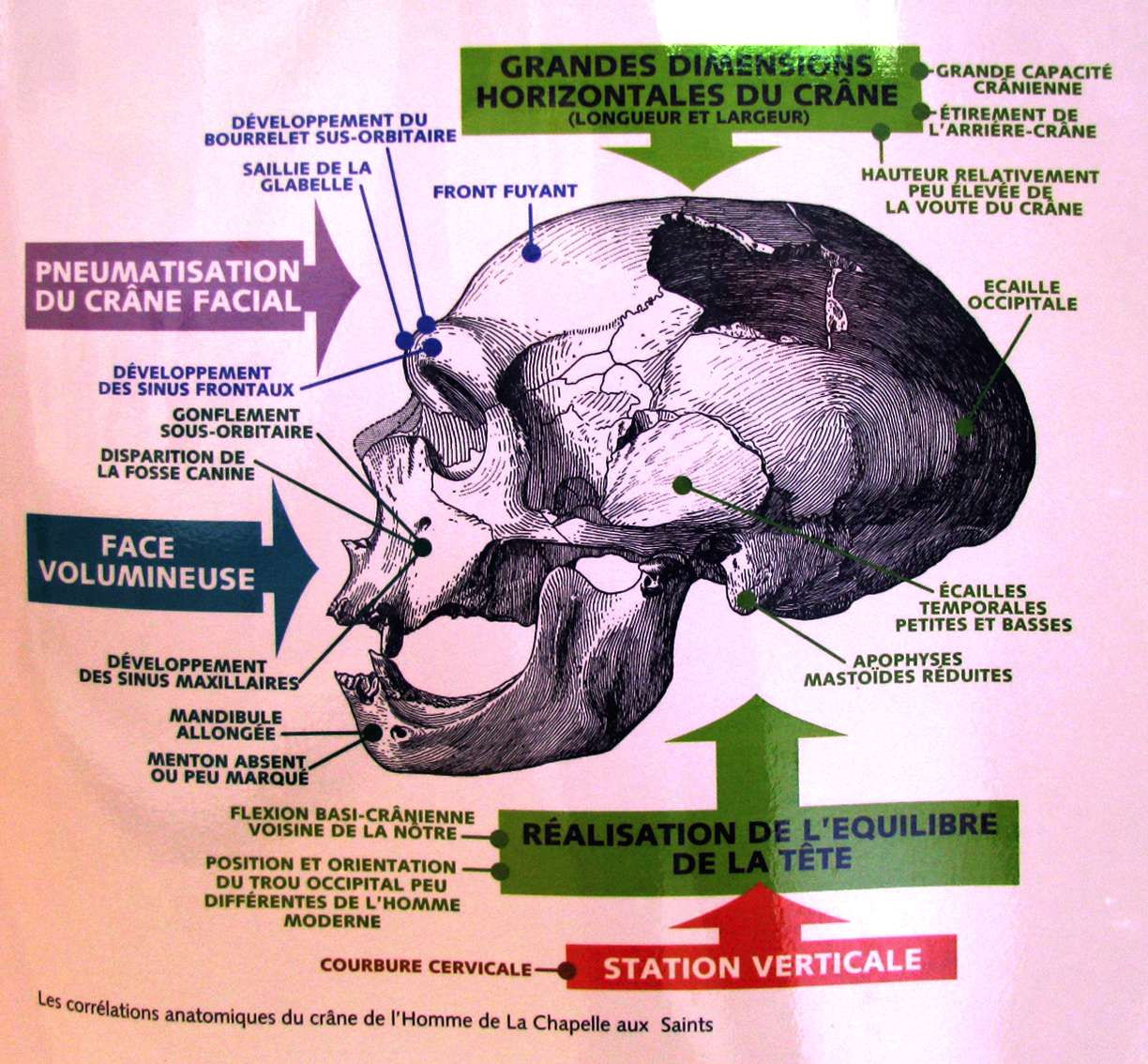
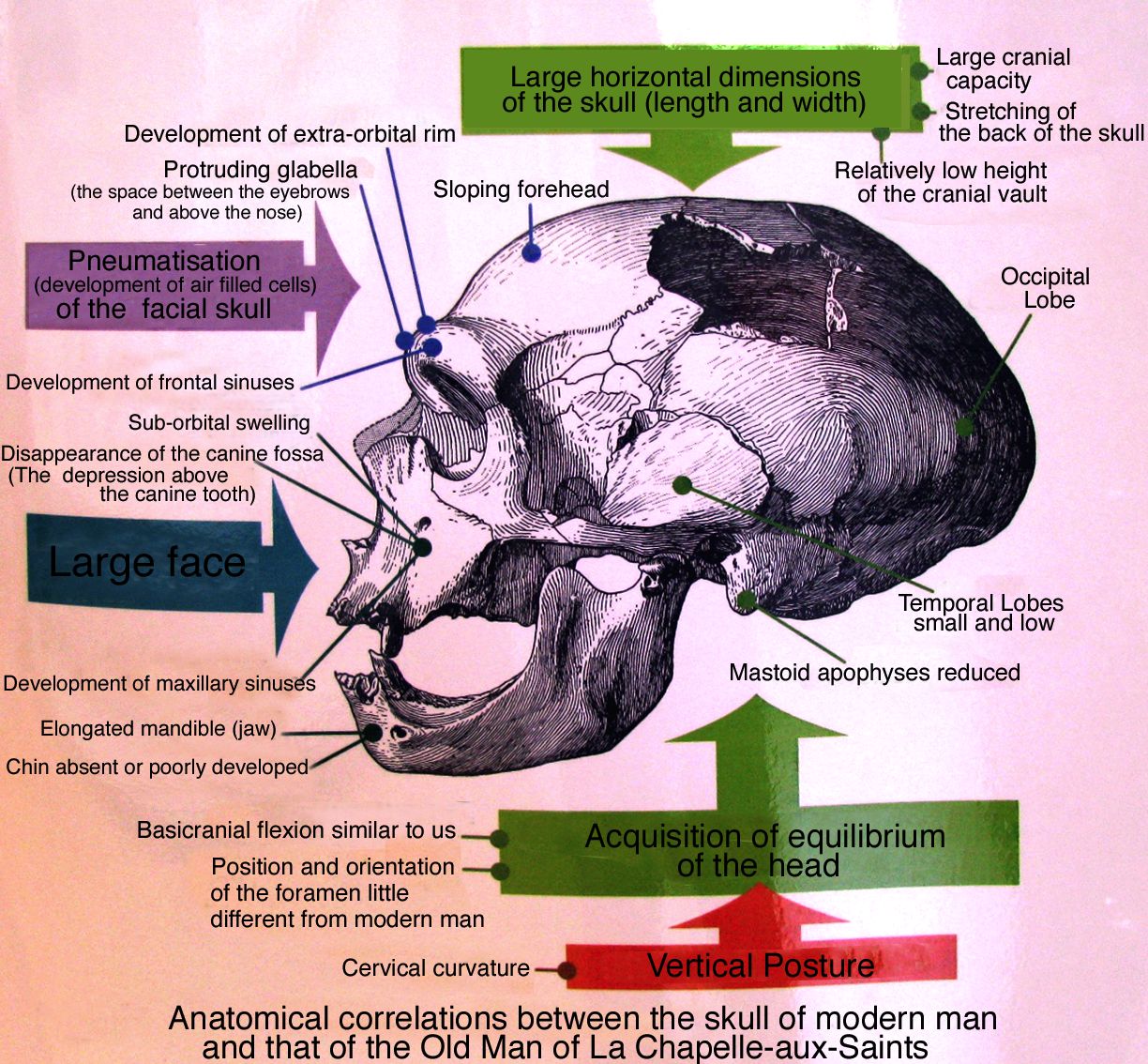
Les corrélations anatomiques du crâne de l'Homme de la Chapelle-aux-Saints - Anatomical correlations between the skull of modern man and that of the Old Man of La Chapelle-aux-Saints.
Grandes dimensions horizontales du crâne (longueur et largeur) - Large horizontal dimensions of the Neandertal skull (length and width)
Front fuyant - Sloping forehead
Développement du bourrelet sus-orbitaire - Development of extra-orbital rim
Saillie de la glabelle - Protruding glabella (the space between the eyebrows and above the nose)
Pneumatisation du crâne facial - Pneumatisation (development of air filled cells) of the facial skull
Développement des sinus frontaux - Development of frontal sinuses
Gonflement sous-orbitaire - Sub-orbital swelling
Disparition de la fosse canine- Disappearance of the canine fossa (The depression above the canine tooth)
Face volumineuse - Large face
Développement des sinus maxilaires - Development of maxillary sinuses
Mandible allongée - Elongated mandible (jaw)
Menton absent ou peu marqué - Chin absent or poorly developed
Flexion basi-crânienne vousube de la notre - Basicranial flexion similar to ours
Position et orientation du trou occipital peu différentes de l'homme moderne - Position and orientation of the foramen magnum little different from modern man
Courbure cervicale - The cervical curvature (of the cervical vertebrae) forms after birth as a result of lifting the head
Réalisation de l'equilibre de la tête - Acquisition of equilibrium of the head (the idea that the head should sit stably on the spinal column when in an upright, standing position without undue reliance on muscles to keep the head in position)
Station verticale - Vertical posture
Apophyses mastoïdes réduites - Mastoid apophyses reduced. (The mastoid apophysis, or mastoid process is an outgrowth of the temporal bone behind the ear at the base of the skull. This process serves for the attachment of some of the muscles of the neck)
Écailles temporales petites et basses - Temporal lobes small and low.
Écailles occipitale - Occipital lobe
Hauteur relativement peu élevée de la voute du crâne - Relatively low height of the cranial vault
Étirement de l'arrieère-crâne - Stretching of the back of the skull
Grande capacité crânienne - Large cranial capacity
Photo and translation into English: Don Hitchcock
Source: Display at le musée de l'Homme de Néandertal, La Chapelle-aux-Saints
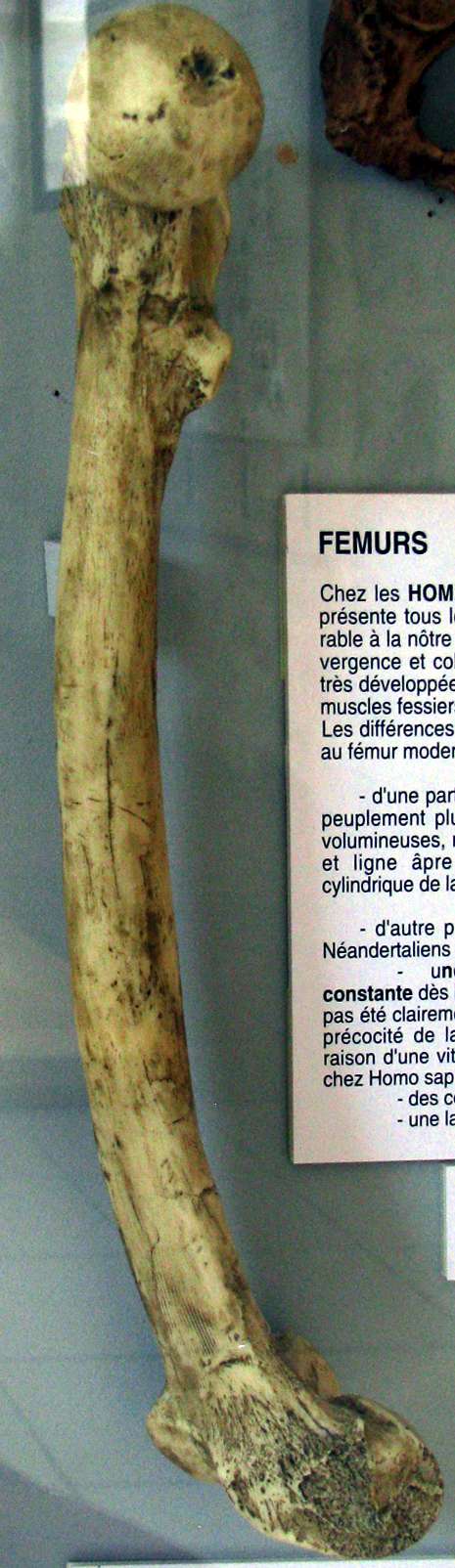
Fémur Néandertalien
(La Chapelle-aux-Saints, fémur droit)
Chez les hommes de Néandertal, le fémur présente tous les caractères d'une bipédie comparable à la nôtre tels que les angles de torsion, de divergence et collo-diaphysaire et une crête glutéale très développée confirmant le rôle prépondérant des muscles fessiers.
Les différences qui opposent le fémur néandertalien au fémur moderne sont:
-d'une part des traits archaïques hérités d'un peuplement plus ancien: extrémités massives et volumineuses, notamment la tête fémorale; pilastre et ligne âpre peu accentués d'où la section cylindrique de la diaphyse.
-d'autre part des caractès propres aux Néandertaliens à savoir:
- une courbure antéro-postérieure constante dès l'âge de 7 mois et dont la fonction n'a pas été clairement établie. Elle pourrait être liée à la précocité de la marche chez le jeune enfant en raison d'une vitesse de croissance plus rapide que chez Homo sapiens;
-des condyles saillants et sub égaux;
-une large échancrure inter-condylienne.
Neanderthal femur
(La Chapelle-aux-Saints, right femur)
In Neanderthals, the femur presents all the characteristics of a bipedalism comparable to ours, such as torsion angles, divergence and collodiaphyseal (pertaining to the neck and shaft of a long bone, especially the femur) and a well developed gluteal ridge (which the muscles of the gluteus maximus are attached to) confirming the role of the gluteal muscles.
Differences between the Neanderthal femur and a modern femur:
One of the archaic traits inherited from older predecessors: heavy and large extremities, including the femoral head;
-Other characteristics unique to Neanderthals include an antero-posterior curvature (i.e. from the front to the back) constant from the age of 7 months, and whose function has not been clearly established. It could be related to the precocity of walking in young children due to a growth rate faster than in Homo sapiens.
Photo: Don Hitchcock 2008
Source: facsimile and text on display at the Museum of Chapelle-aux-Saints

Tibia Néandertalien
(La Chapelle-aux-Saints, tibia gauche)
Le tibia est robuste et relativement court.
- Le plateau tibial est incliné en bas et en dedans par suite de l'abaissement de la cavité glénoïde interne traduisant un rapprochement des genoux suite à la largeur du bassin et l'obliquité des fémurs, fait d'ailleurs compensé par l'élargissement de l'espace inter-glénoïdien lié à l'écartement des condyles fémoraux;
-les 2 plateaux tibiaux forment une même saillie vers l'arrière;
la malléole tibiale est déjetée en dedans ce qui, en raison de l'orientation inverse de la malléole péronière, entraîne un évasement caractérstique de l'articulation tibio-péronéo-astragalienne.
Neanderthal Tibia
(La Chapelle-aux-Saints, left tibia)
The tibia is robust and relatively short.
Photo: Don Hitchcock 2008
Source: facsimile and text on display at the Museum of Chapelle-aux-Saints
Comment estimer l'âge d'un homme fossile.
En comparant son squelette avec celui d'un homme actuel supposé du même âge:
- ordre d'éruption des dents (dents de laits, dents permanentes....).
- soudure ou non des extrémités et des corps des différents os post-crâniens,
- modifications de la symphyse,
- ossification complète de la clavicule,
- début et fin de fermeture des sutures crâniennes..
De tous les hommes fossiles connus actuellement, les Néandertaliens sont les mieux représentés en fonction du sexe (hommes-femmes) et de l'âge (foetus, nouveaux-nés, enfants, adultes et viellieards). Les enfants représentent près de la moitié des restes connus.
Les résorptions osseuses au niveau des orbites de l'Homme de La Chapelle-aux-Saints (phénomène apparaissant chez l'homme moderne vers 70 ans) permettent d'estimer qu'il s'agissait d'un "viellard", au sens néandertalien du terme (plus de 60 ans)!
How to estimate the age of a fossil human
By comparing the skeleton with that of a human supposed to be of the same age:
- Order of eruption of teeth (milk teeth, permanent teeth ....).
- The "welding" or not of the extremities and of the various post-cranial bones,
- Changes in the symphysis, a permanent cartilaginous joint.
- Complete ossification of the clavicle,
- The beginning and end of closure of cranial sutures ..
Of all currently known human fossils, the Neanderthals are the best represented as a function of sex (males and females) and age (foetuses, newborns, children, adults and the elderly). Children account for nearly half of the remains known.
The bone resorption at the level of the orbits of the eyes of the Man of La Chapelle-aux-Saints (a phenomenon occurring in modern man from 70 years old) allows us to estimate that he was an "old man" within the meaning of the term when applied to Neanderthals (over 60!).
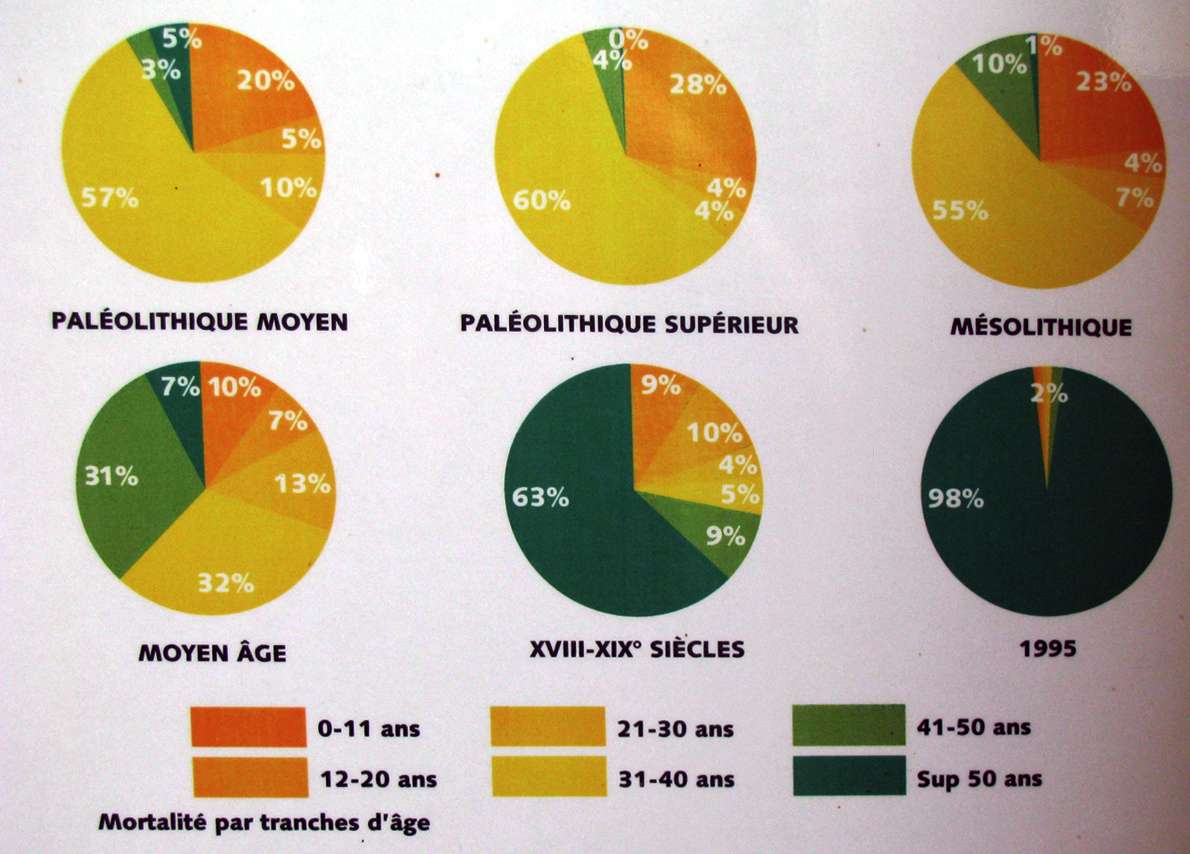
A fascinating comparison of the average age at death for various times in human history and prehistory.
It is especially interesting that there were twice as many people living to more than forty years old in the Middle Paleolithic than in the Upper Palaeolithic. It would be good to know why.
Photo: Don Hitchcock 2008
Source: Display at le musée de l'Homme de Néandertal, La Chapelle-aux-Saints
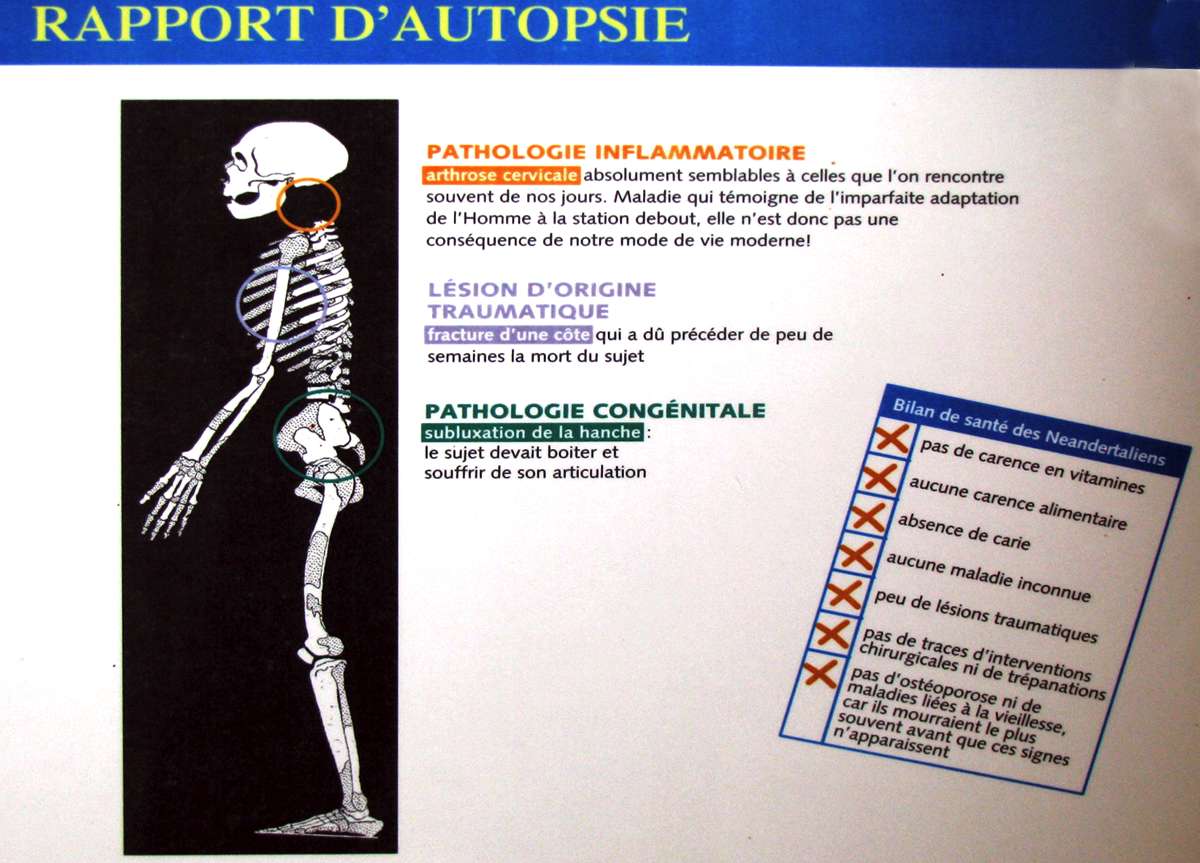
Rapport D'Autopsie
Pathologie Inflammatoire
arthrose cervicale absolument semblables à celles que l'on rencontre souvent de nos jours. Maladie qui témoigne de l'imparfaite adaptation de l'Homme à la station debout, elle n'est donc pas une conséquence de notre mode de vie moderne!
Lésion d'Origine Traumatique
Fracture d'une côte qui a dû précéder de peu de semaines la mort de sujet
Pathologie congénitale
Subluxation de la hanche
Le sujet devait boiter et souffrir de son articulation
Autopsy Report
Inflammatory disease
Cervical osteoarthritis completely similar to that encountered frequently nowadays. It is a disease that reflects the imperfect adjustment of humans standing upright, it is not a consequence of our modern lifestyle!
Traumatic injury
Fracture of a rib which preceded death by a few weeks.
Congenital disease
Partial dislocation of the hip - the ball of the hip joint is only partially in the socket.
The subject was limping, with hip pain
| Bilan de santé des Néandertaliens | |
|---|---|

| pas de carence en vitamines |
| | aucune carence alimentaire |
| | absence de carie |
| | aucune maladie inconnue |
| | peu de lésions traumatiques |
| | pas de traces d'interventions chirurgicales ni de trépinations |
| |
pas d'ostéoporose ni de maldies liées à la vielliesse, car ils mourraient le plus souvent avant que ces signes n'apparaissent |
| Bill of Health for the Neandertals | |
|---|---|
|
| No vitamin deficiency |
| | No nutritional deficiency |
| | absence of tooth decay |
| | No unknown diseases |
| | Little trauma |
| | No traces of surgery or skull surgery |
| |
No osteoporosis or other age related diseases because they most often die before these signs appear |
Photo: Don Hitchcock 2008
Source: Display at le musée de l'Homme de Néandertal, La Chapelle-aux-Saints
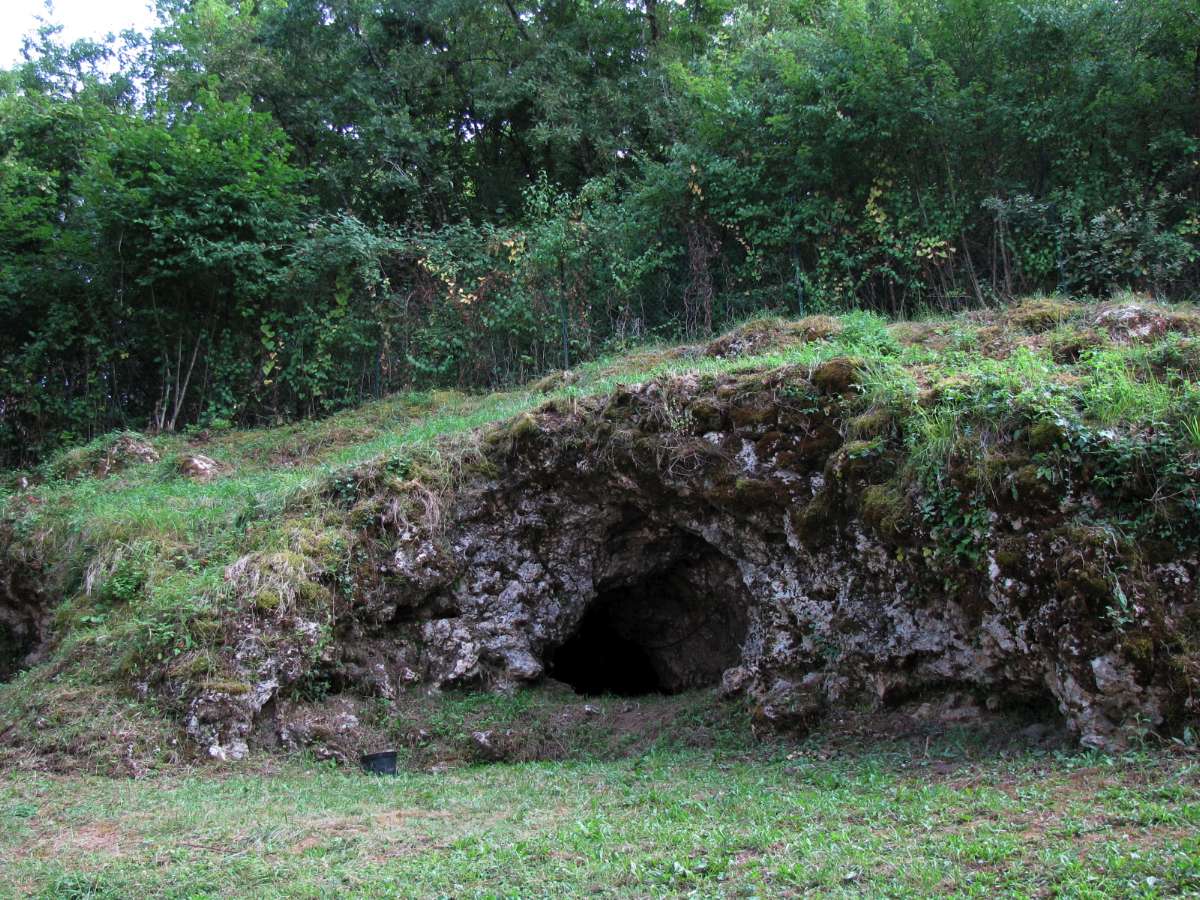
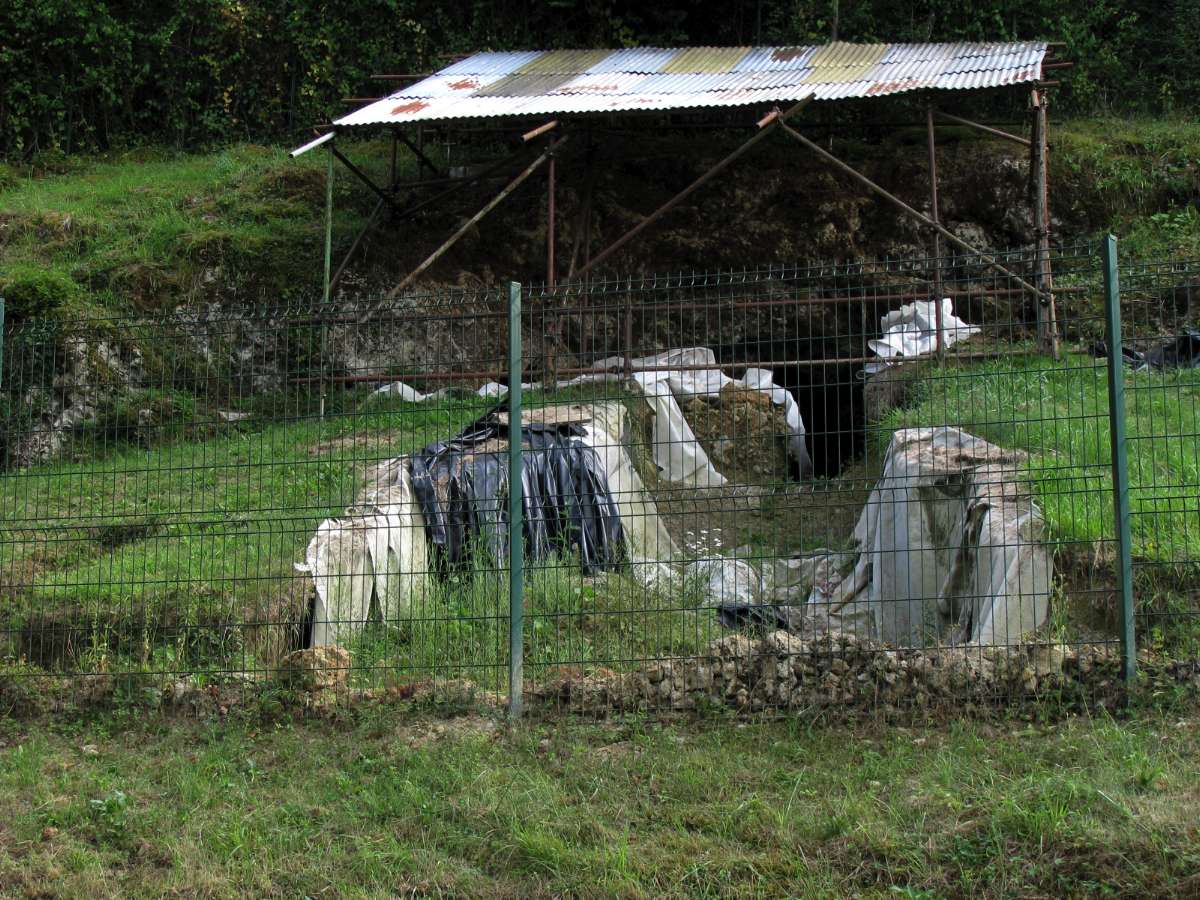
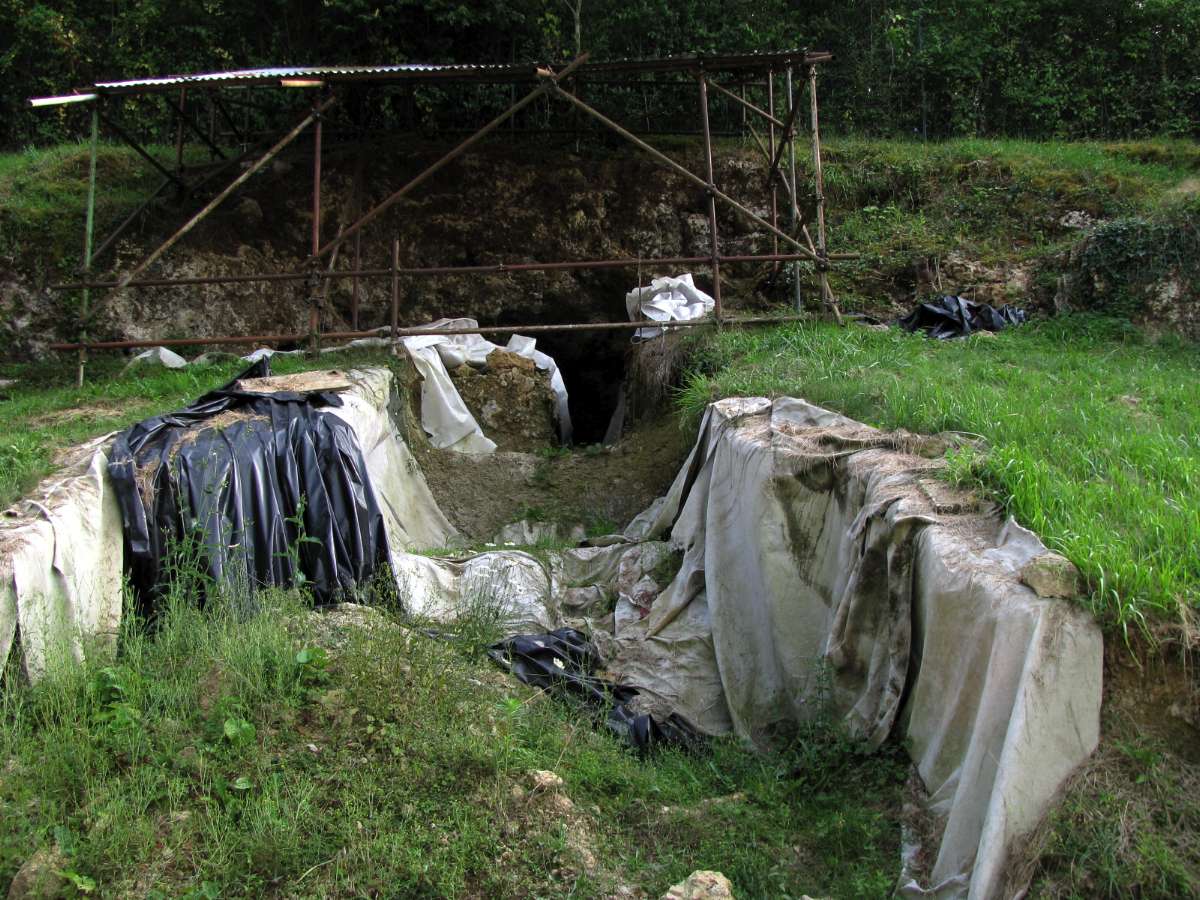
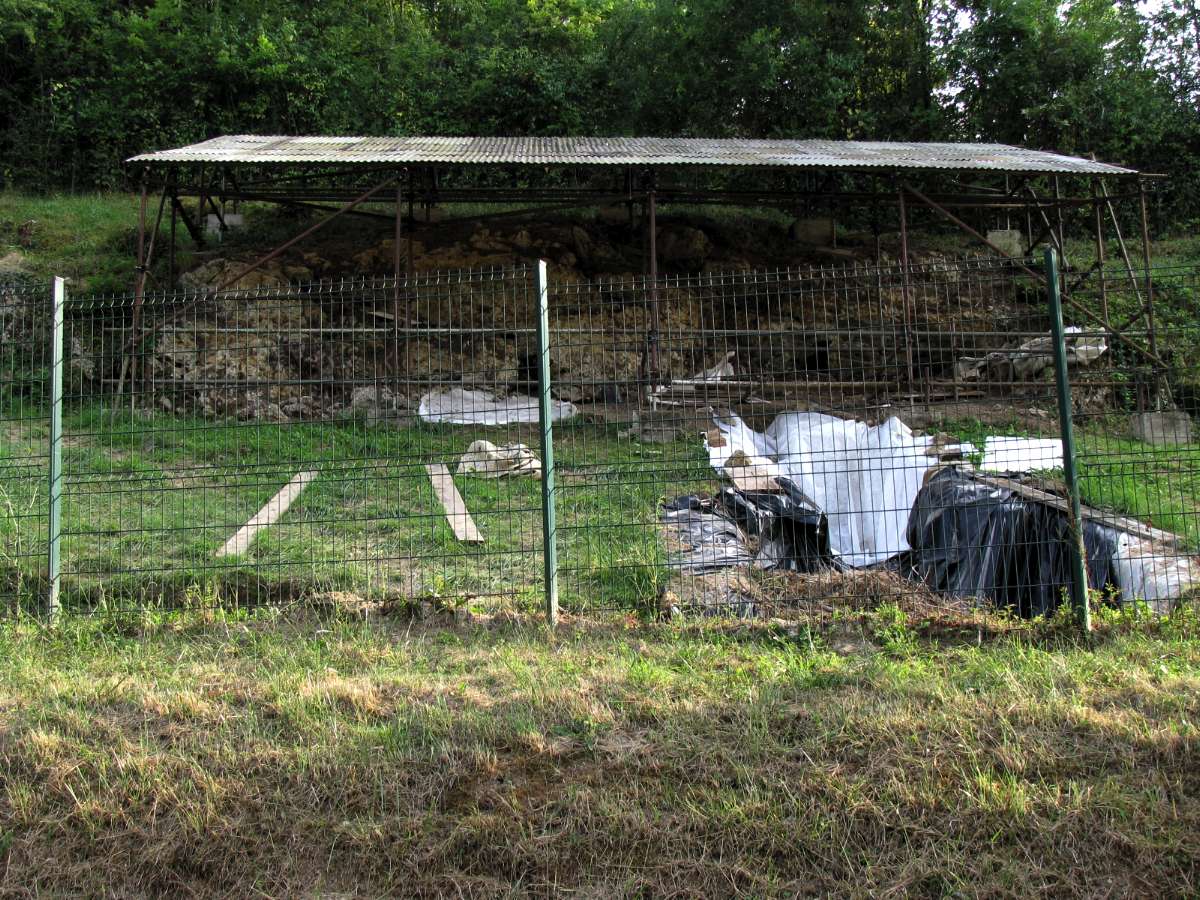
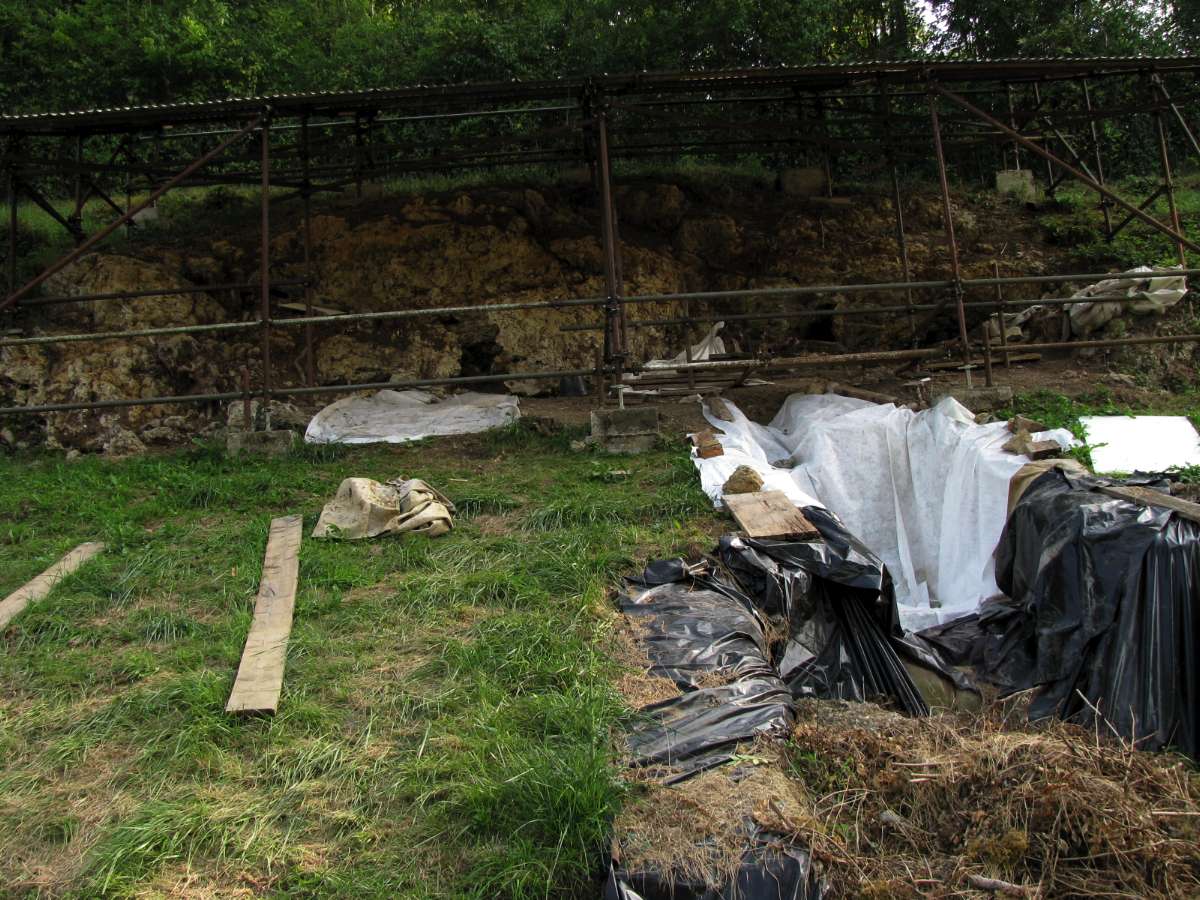
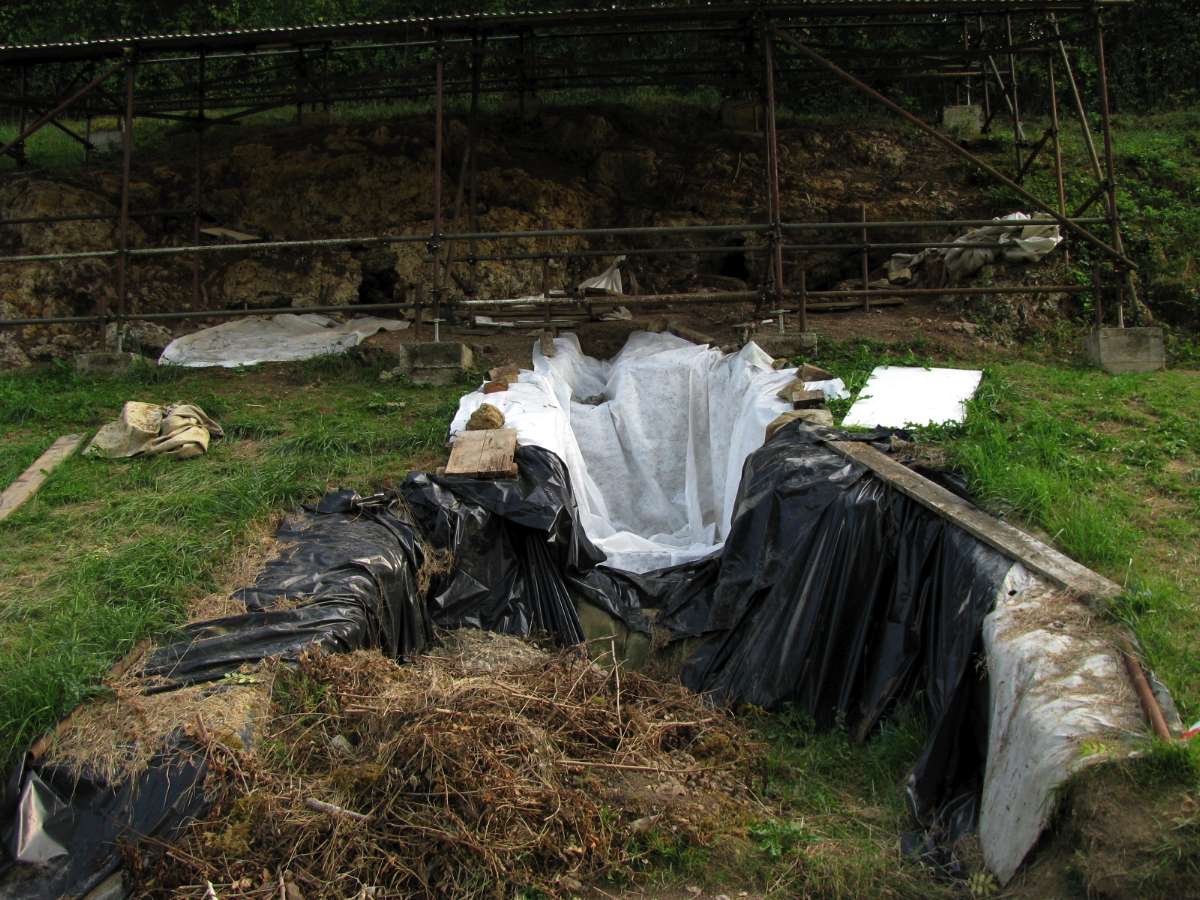
A number of other caves in a line along the slope of the hill are being investigated.
Photo: Don Hitchcock 2008
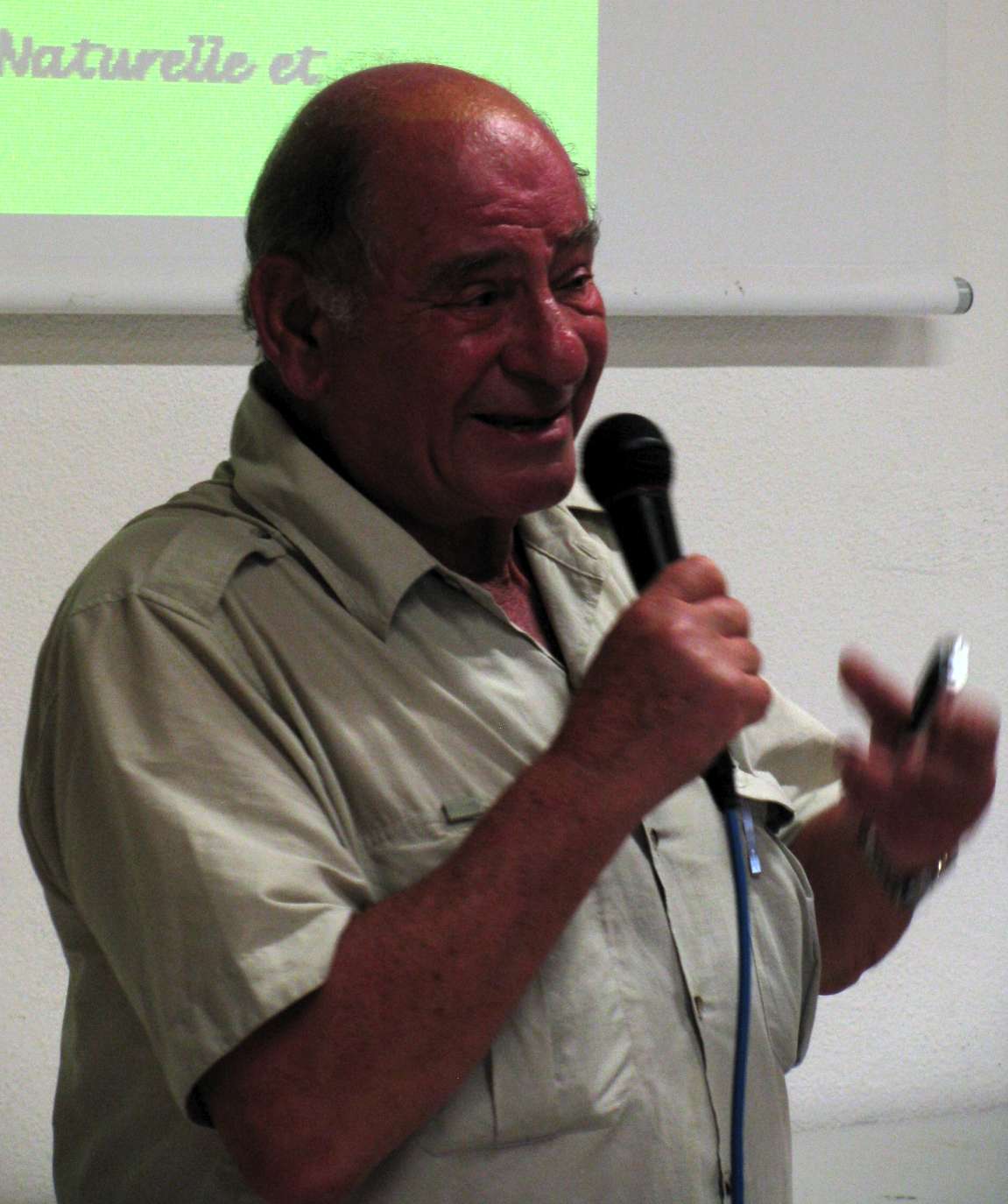
Professeur Jean-Louis Heim, Professeur au Muséum National d’Histoire Naturelle, Département de Préhistoire, Musée de l’Homme, Paris, delivered an erudite and well received lecture on Neandertals when I was there on Wednesday, 30th July 2008, at a conference on the occasion of the centenary of the discovery of the old man of La Chapelle-aux-Saints in 1908.
Photo: Don Hitchcock 2008

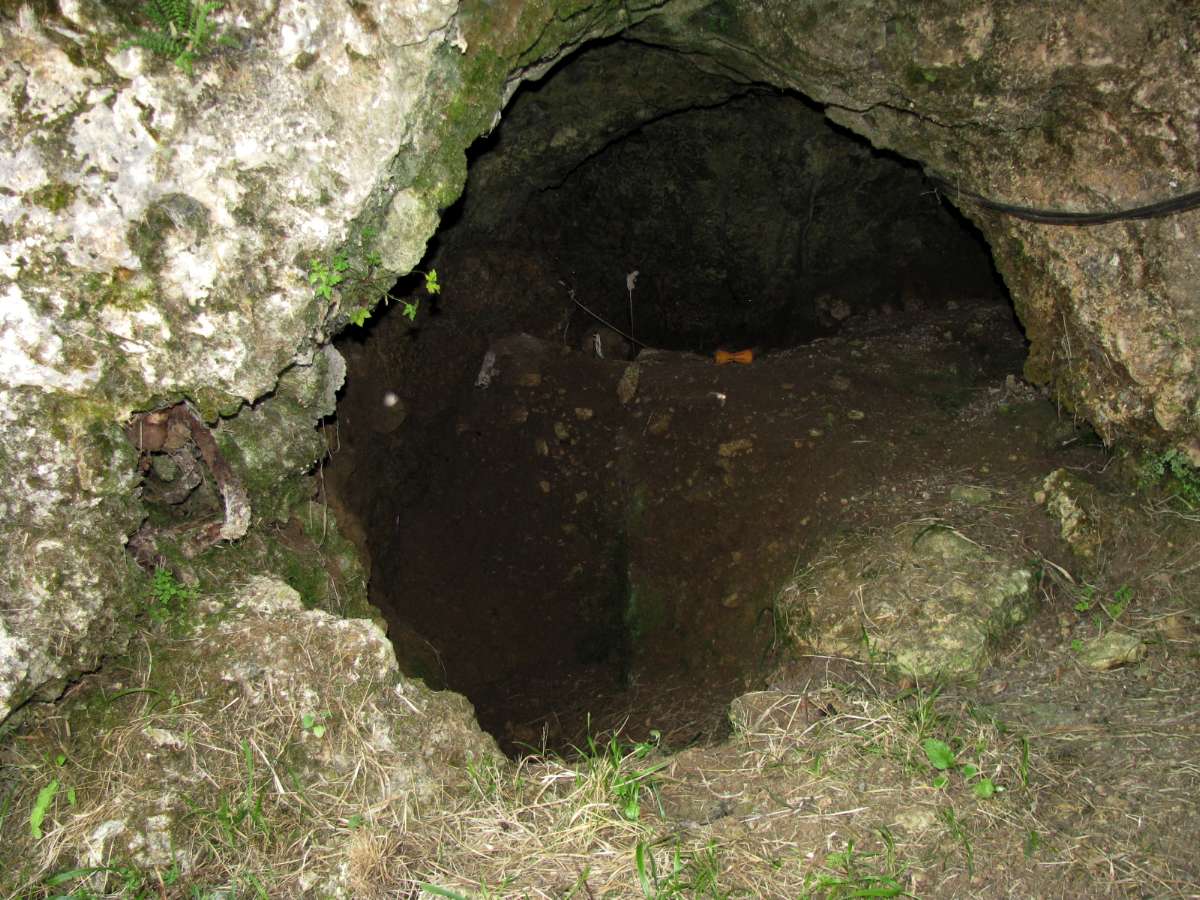
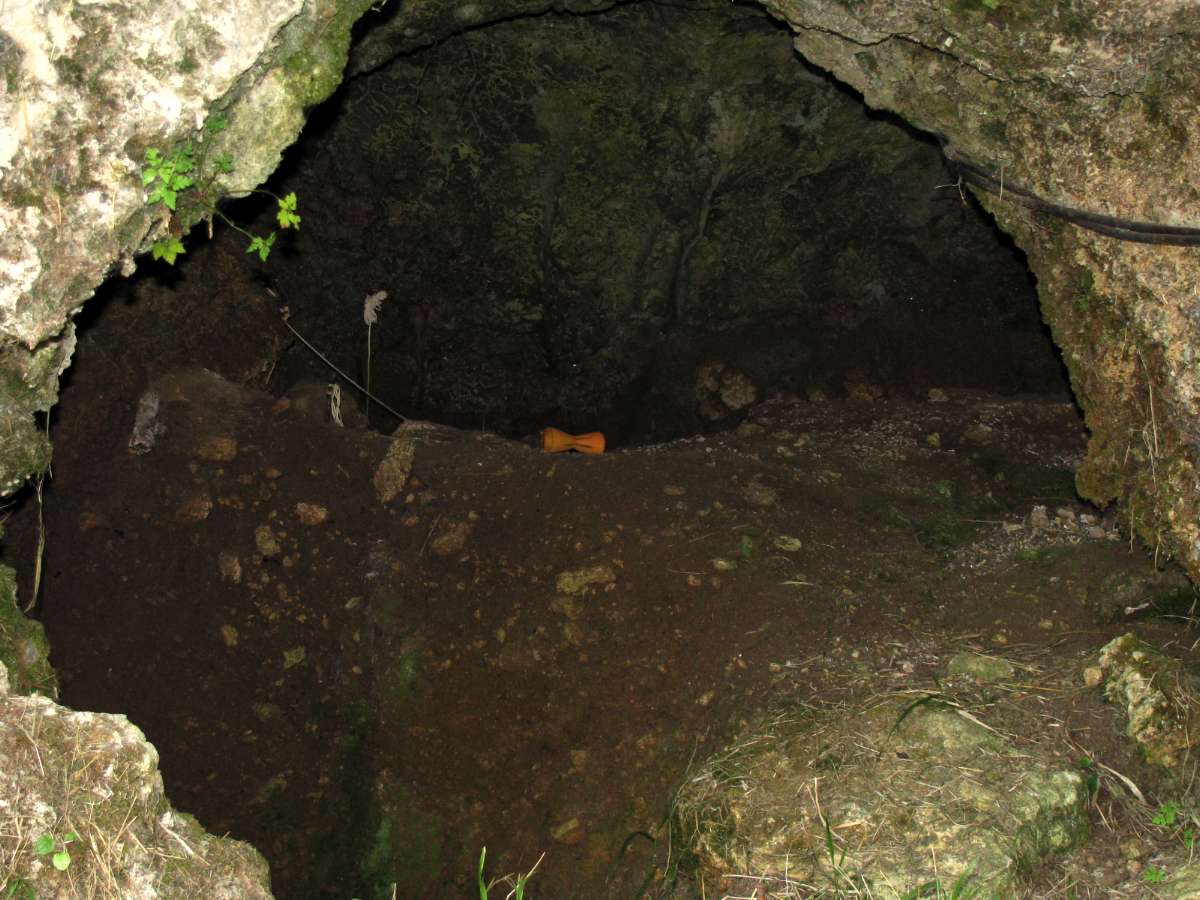
This cave has been excavated and mostly filled in.
Photo: Don Hitchcock 2008
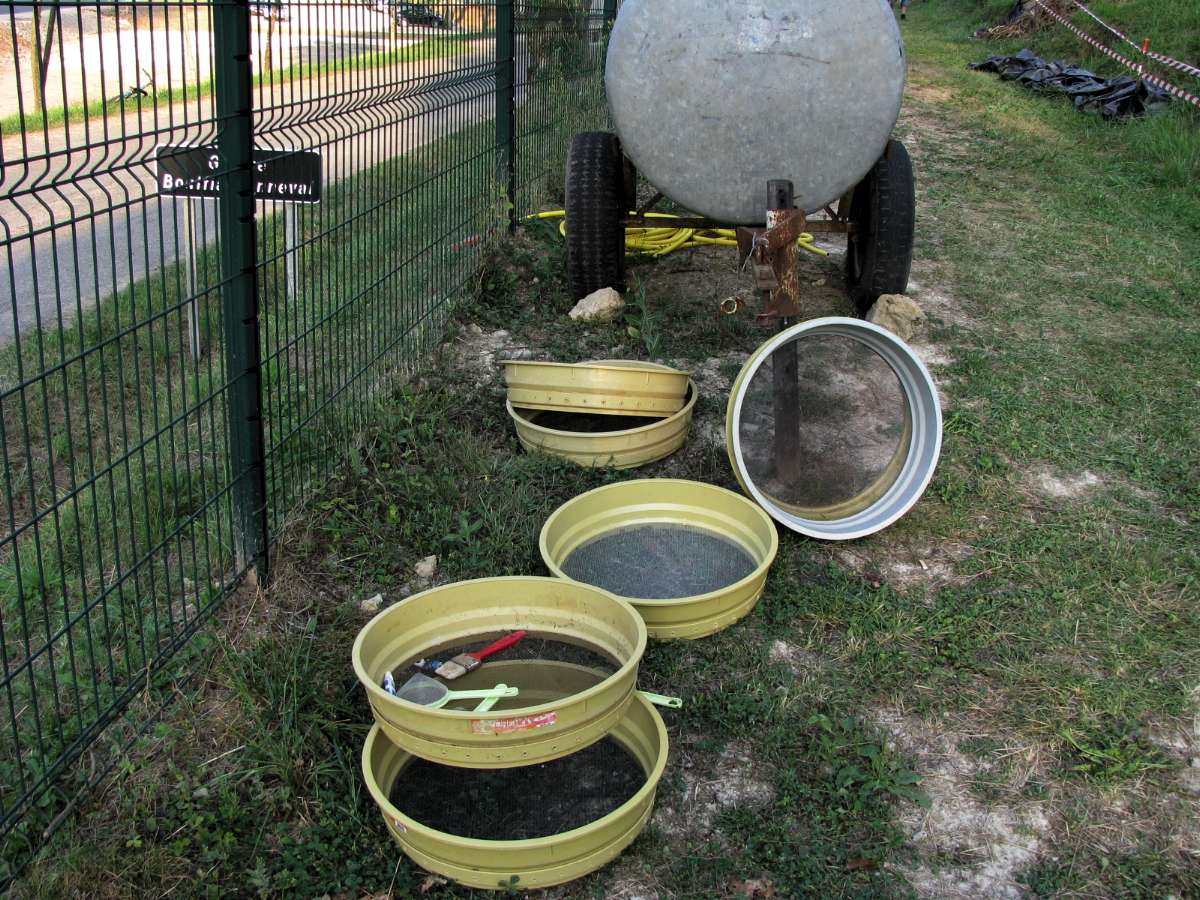
These are the tools of trade for archaeologists, left outside a shelter to dry at the Chapelle-aux-Saints site. When I got to the site in the afternoon, there were a group of graduate students at the site working on the excavated deposits.
Photo: Don Hitchcock 2008


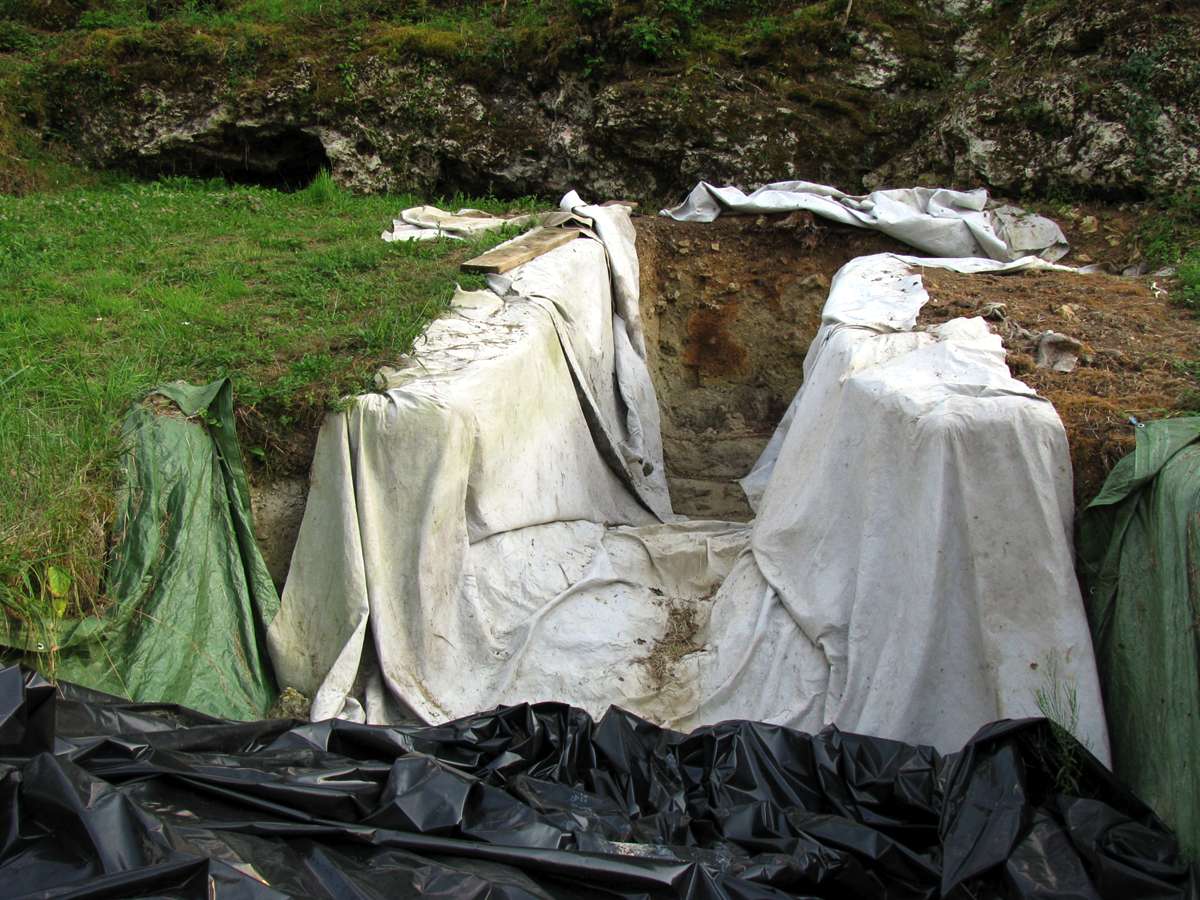
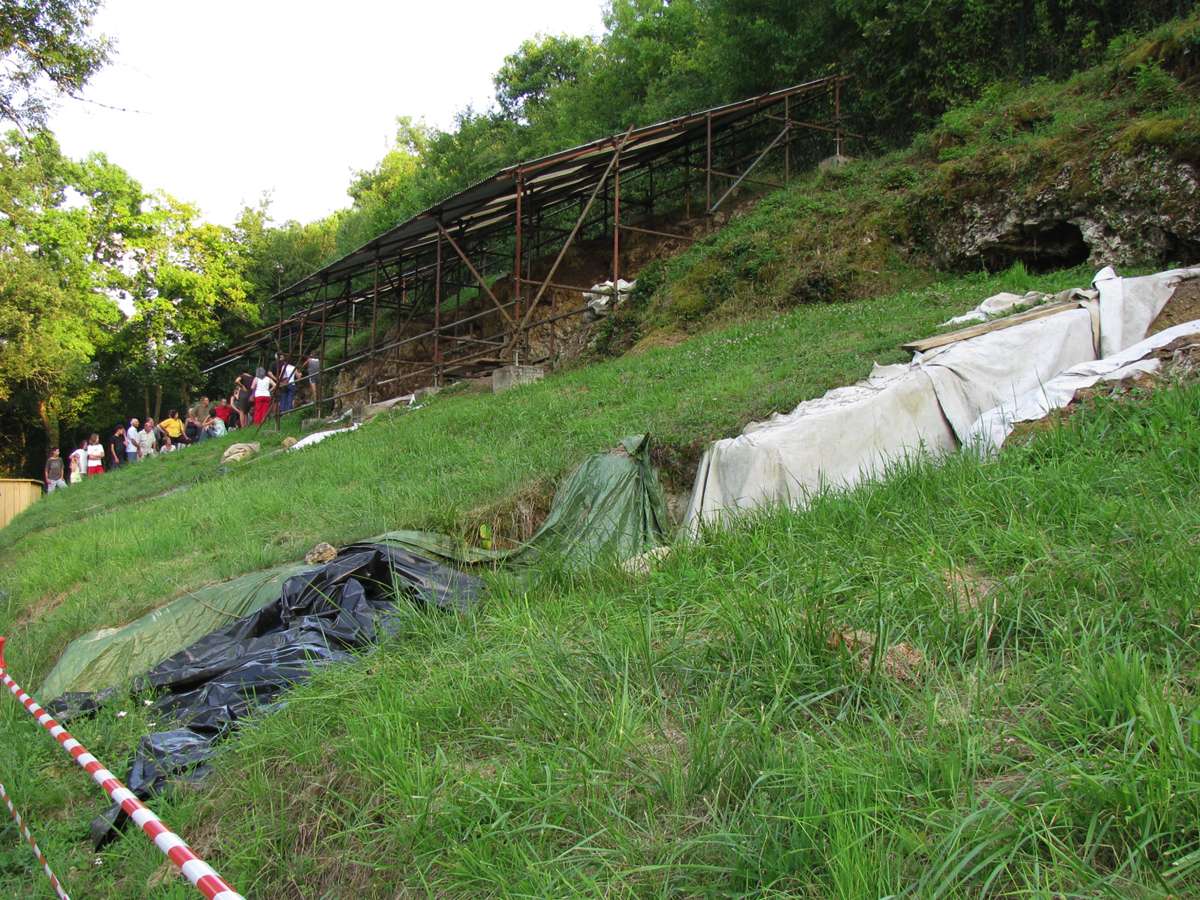
At the time I was there, after the lecture at the museum by Professor Heim, the conference attendees then inspected the site.
Photo: Don Hitchcock 2008
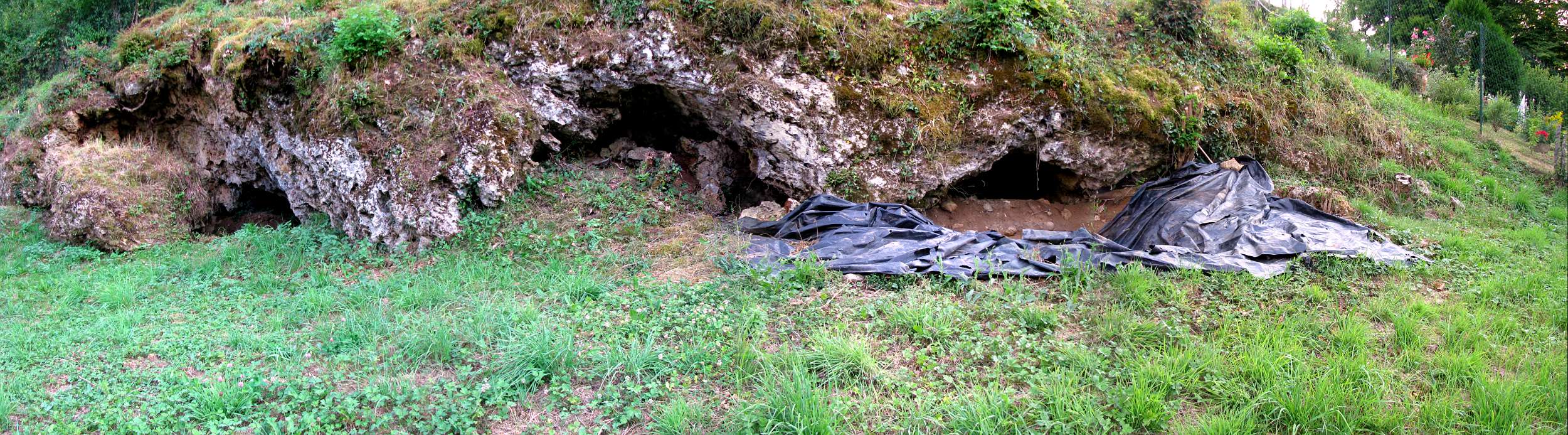
Panorama of the far right hand side of the line of limestone caves.
Photo: Don Hitchcock 2008
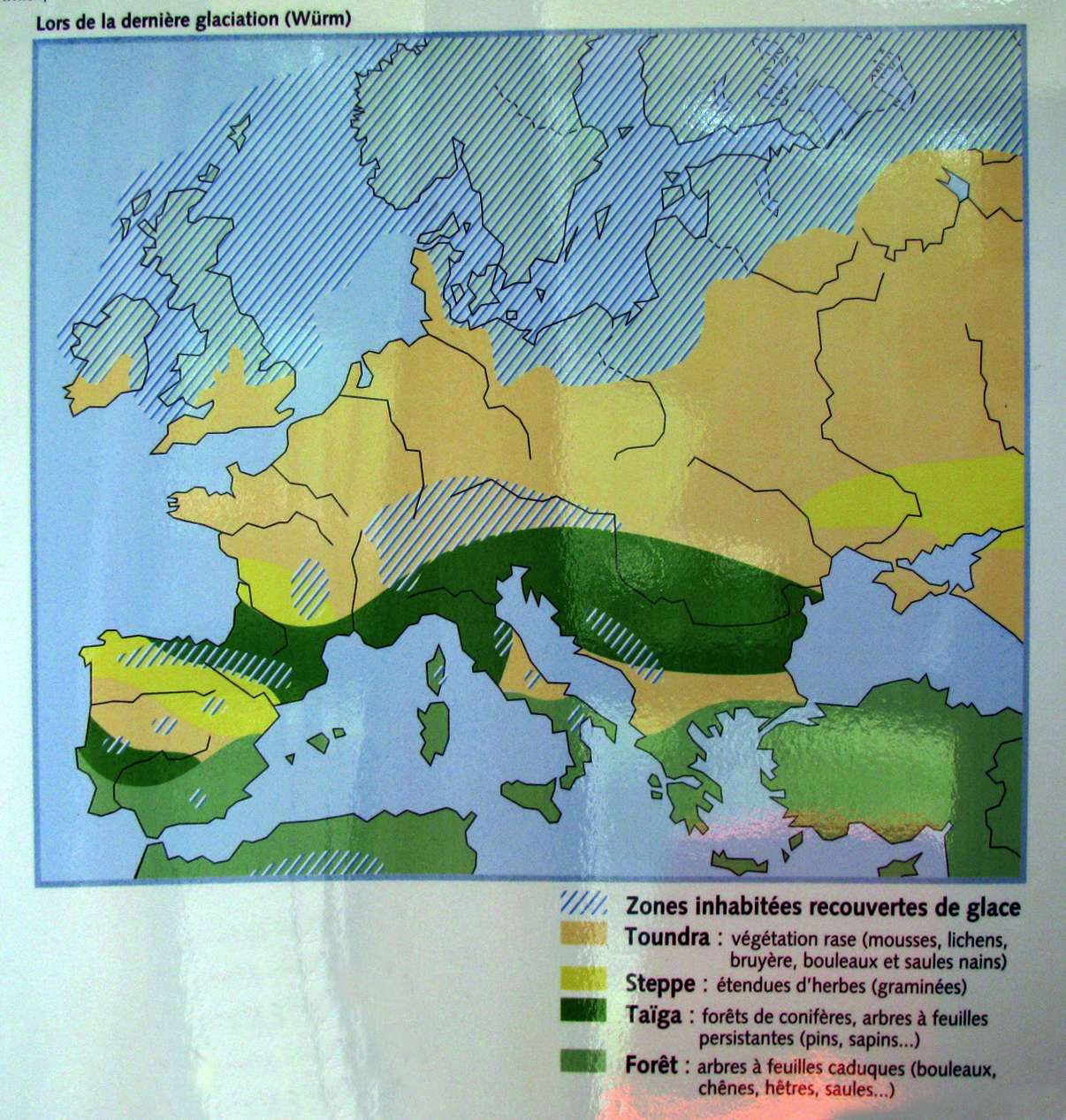
Vegetation zones during the last (Würm) glaciation.
Zones inhabitées recouvertes de glace
Toundra: végétation rase (mousses, lichens, bruyère, bouleaux et saules nains)
Steppe: étendues d'herbes (graminées)
Taïga: forêts de conifères, arbres à feuilles persistantes (pins, sapins...)
Forêt: arbres à feuilles caduques (bouleaux, chênes, hêtres, saules...)
Uninhabited areas covered with ice.
Tundra vegetation (mosses, lichens, heather, dwarf birch and willow).
Steppe: herbs and grass.
Taiga: Conifer forests (pine, fir ...).
Forest: deciduous trees (birch, oaks, beeches, willows ...).
Photo: Don Hitchcock 2008
Source: Display at le musée de l'Homme de Néandertal, La Chapelle-aux-Saints

Des Climats Variés
Les Neandertaliens ont vécu dans trois types successifs de climats:
-50 000 à -30 000
Froid Sec (glaciaire)
Prairies et steppes
Animaux des Espaces
Découverts et Arctiques
(renne, mammouth, rhinocéros laineux, boeuf musqué)
-70 000 à -50 000
Froid Humide (glaciaire)
Paysages Arborés/Prairies Steppes
Animaux Forestiers et Animaux des Espaces Découverts
(cheval, bison des steppes, boeuf primitif, antilope saïga)
-130 000 à -70 000
Tempéré et Humide
(interglaciaire)
Paysages arborés
Animaux Forestiers
(sanglier, cerf, chevreuil)
Photo: Don Hitchcock 2008
Source: Display at le musée de l'Homme de Néandertal, La Chapelle-aux-Saints
A Varied Climate
Neanderthals lived in three successive types of climates:
-50 000 to -30 000 BP
Cold and Dry (ice age)
Prairies and steppes
Animals of the extensive, open, cold grasslands
(reindeer, mammoth, woolly rhinoceros, musk ox)
-70 000 to -50 000 BP
Cold and Wet (ice age)
Treed landscapes / Prairies and Steppes
Animals of the Forests and Plains
(horses, steppe bison, aurochs, saiga antelope)
-130 000 to -70 000 BP
Temperate and Humid (interglacial)
Treed Landscape
Forest Animals
(wild boar, deer, roe deer)
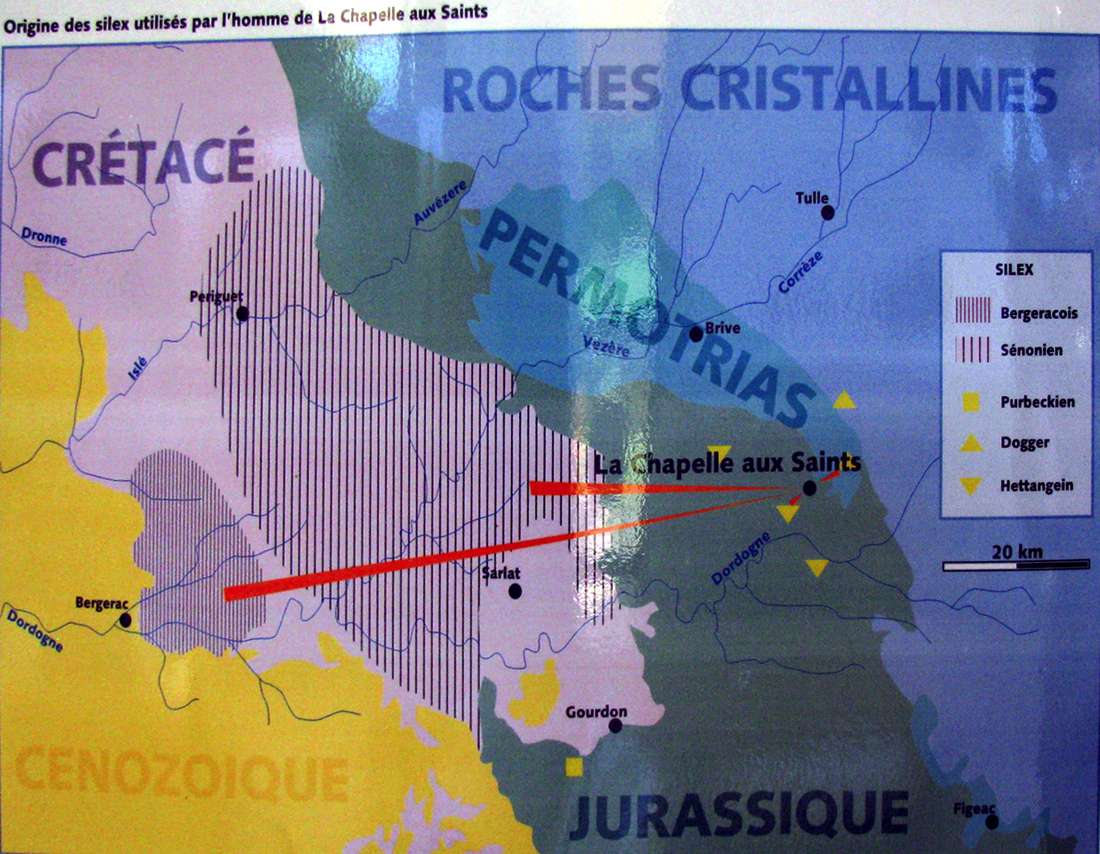

Origin of the flint (silex) used for tools at La Chapelle-Aux-Saints.
Good flint was often carried considerable distances, testifying to its importance for hunting and other uses.
However it may have moved these distances by way of trade at the boundaries of several groups of hunters, rather than being the result of single journeys out and back by those looking for good material for tools. In any case, the amount of flint from close by was always far in excess of that carried a long distance.
Photo: (left) Don Hitchcock 2008
(right) The Neanderthal Legacy Paul Mellars (1995)
Source: (left) Display at le musée de l'Homme de Néandertal, La Chapelle-aux-Saints,


2300 armes et outils en pierre taillée ont été recueillis dans la grotte où se trouvait la sépulture!
Les racloirs (50% des instruments trouvés)
Description:
éclats parfois épais, dont le bord le plus long porte une retouche ...., souvent écailleuse et presque verticale.
Méthode:
Ces éclats ont été détachés par percussion de blocs de matière premiére, appelés nucleus, à l'aide d'un "marteau naturel" ou percuteur, par exemple un galet de quartz. La série de petits enlèvements qui forme la retouche caractéristique du racloir a pu être réalisée en utilisant comme percuteur de grosses esquilles d'os ou des phalanges d'herbivores.
Utilisation:
Travail du bois et beaucoup plus rarement de l'os ou de la peau.
Ces observations permettent d'imaginer la place importante que tenait le bois et les instruments en bois dans la vie quotidienne des Néandertaliens. Malheureusement le bois ne s'est pas conservé.
2300 weapons and stone tools have been collected in the cave where the burial was found!
Scrapers (50% of the instruments found)
Description:
sometimes thick flakes, with the longest edge heavily retouched.
Method: These chips were detached by percussion from blocks of raw materials, called a nucleus, using a "natural hammer" or "striker", such as a pebble of quartz. The series of small chips that form the retouch feature of the scraper were made using as a striker large bones or the phalanges of herbivores.
Use:
Woodworking and less often the working of bone or hides.
These observations allows us to realise the important place held by the and wooden tools in the daily life of Neanderthals. Unfortunately the wood has not been conserved.
Photo: Don Hitchcock 2008
Source: Display at le musée de l'Homme de Néandertal, La Chapelle-aux-Saints
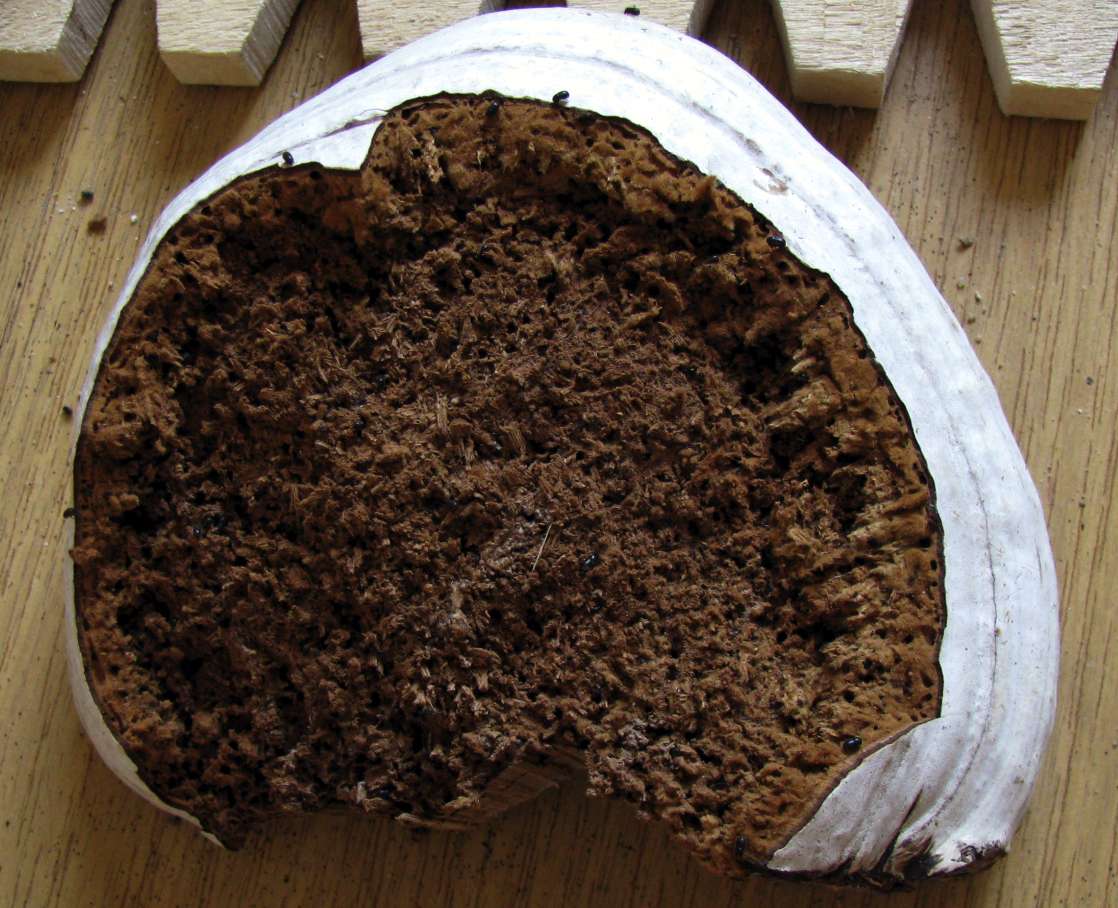


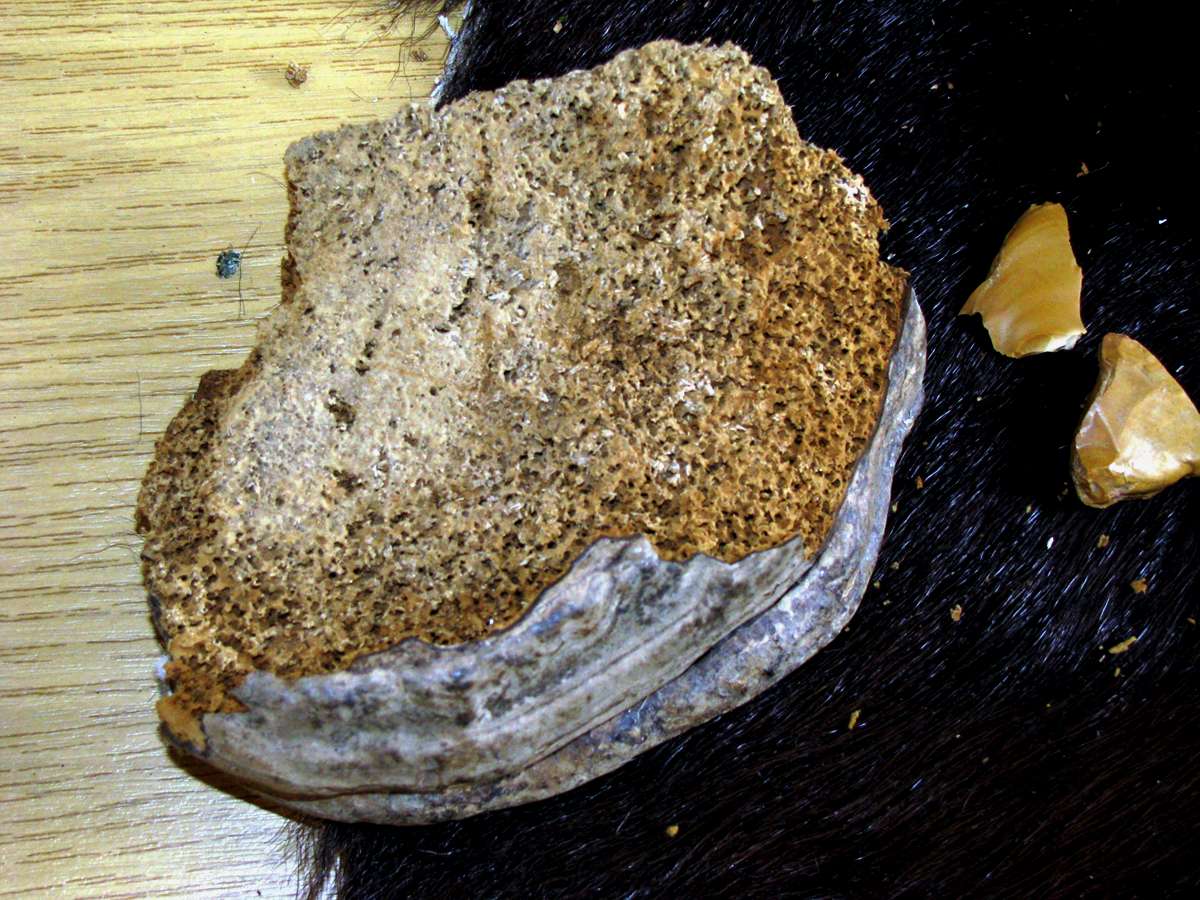
Horseshoe fungus, used as tinder in the making of fire and as a way of keeping a fire going over the period of a day or so. I understand it is a good idea to boil the fungus in water, then dry it before use. Fungal spores can be a health hazard.
Photo: Don Hitchcock 2008
Source: Display at le musée de l'Homme de Néandertal, La Chapelle-aux-Saints
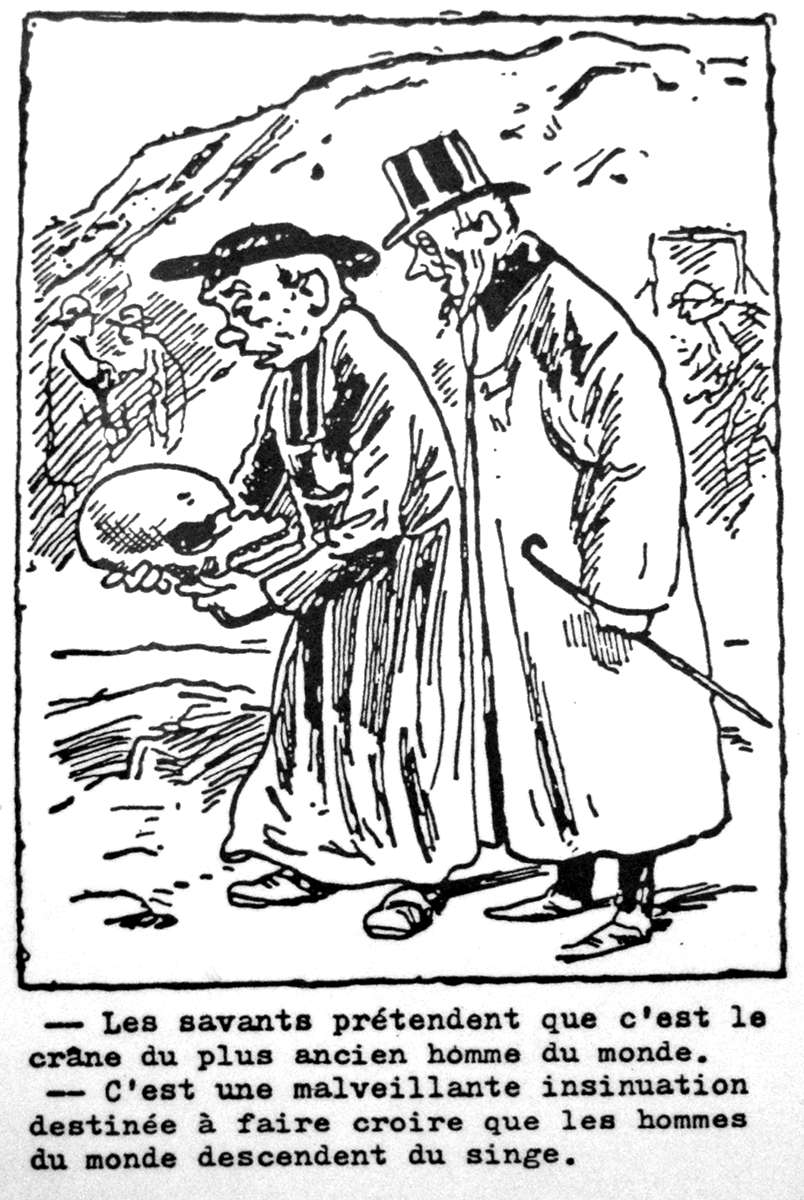
Les savants prétendent que c'est le crâne du plus ancien homme du monde.
C'est une malveillante insinuation destinée à faire croire que les hommes du monde descendent du singe.
Scientists claim it is the skull of the oldest man in the world.
It is a malicious insinuation aimed at making people believe that we descended from monkeys.
( I am indebted to M. S. Jourdan, who informs me that the joke is more subtle than it appears. The first man, a priest, speaks of the first man in the world, but the second, in English 'a man of the world', understands that he is speaking of the colloquialism, 'hommes du monde', which means members of high society, of which he is a member, based on his clothing and demeanour - and he takes this unkindly! - Don )
Photo: Don Hitchcock 2008
Source: Display at le musée de l'Homme de Néandertal, La Chapelle-aux-Saints
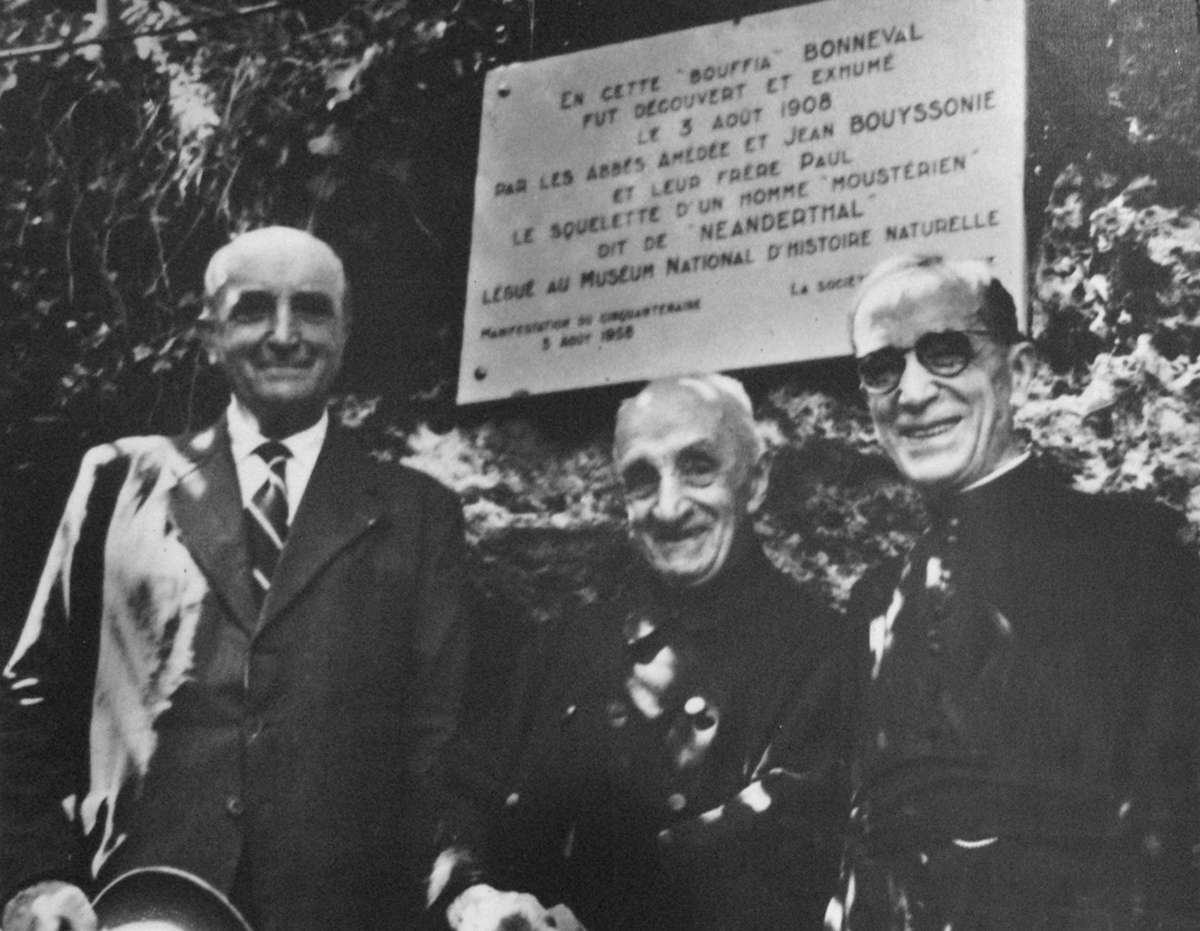
A photo of the three discoverers of the Neandertal at La Chappelle Aux Saints on the occasion of the fiftieth anniversary of the event.
Photo: Don Hitchcock 2008
Source: Display at le musée de l'Homme de Néandertal, La Chapelle-aux-Saints
The plaque reads:
Fut découvert et exhumé
Le 3 Août 1908
Par les Abbés Amédée et Jean Bouyssonie
Et leur frère Paul
Le squelette d'un homme "Moustérien"
Dit de "Néanderthal"
Legue au Museum National d'Histoire Naturelle
Manifestation du Cinquantenaire
3 Août 1958
La Societé Archéologique
de Brive
Translation:
In this Bouffia Bonneval (the name now of the national monument - Don) was discovered and exhumed on 3 August 1908 by the Abbés Amédée and Jean Bouyssonie and their brother Paul the skeleton of a "Mousterian" man called "Neanderthal".
Held by the Muséum National d'Histoire Naturelle
On the occasion of the fiftieth anniversary of the discovery
3 August 1958
"Bouffia" means limestone cave in the local patois. The site still belongs to the Bonneval Family.
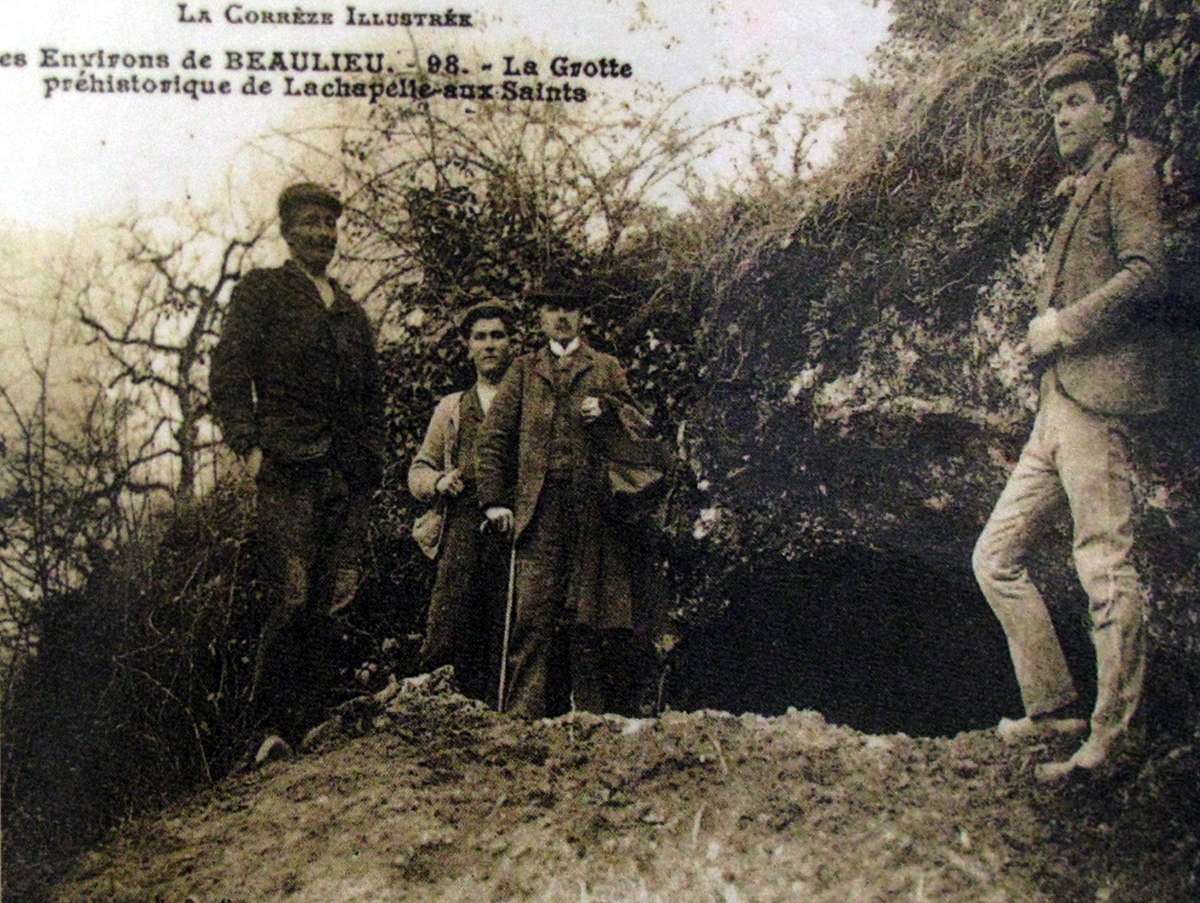
Postcard - La Grotte Préhistorique de La Chapelle-aux-Saints.
Photo: Don Hitchcock 2008
Source: Display at le musée de l'Homme de Néandertal, La Chapelle-aux-Saints
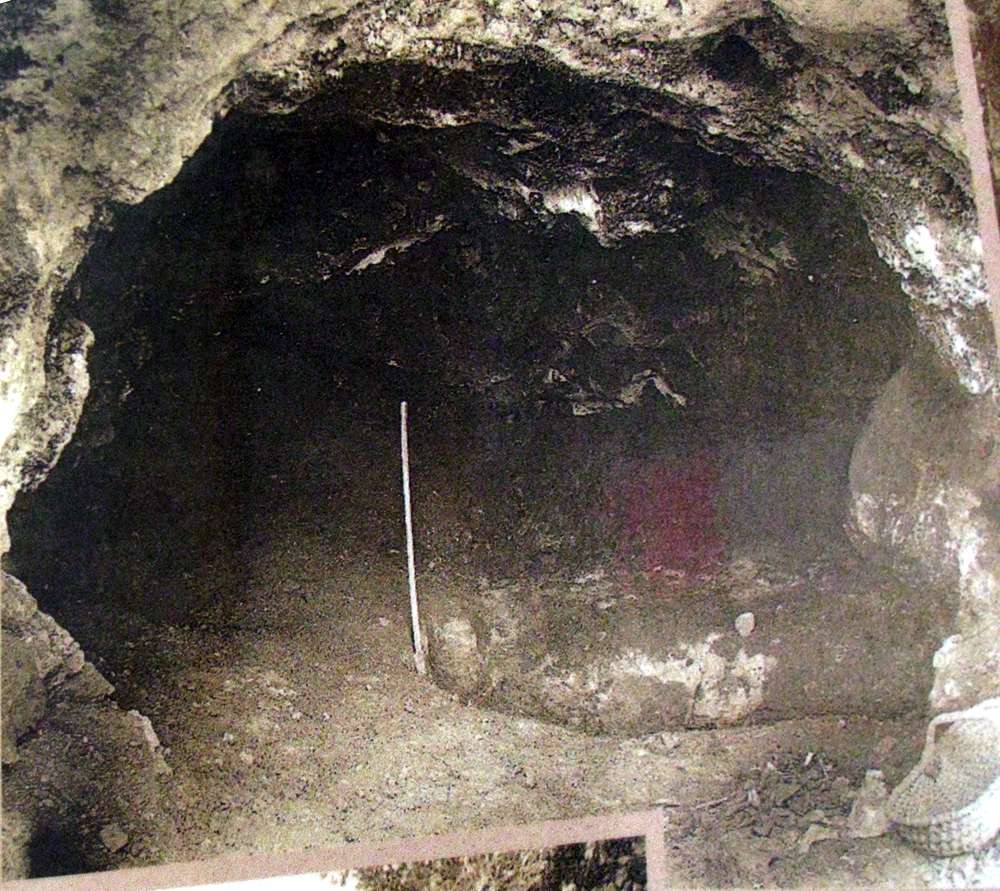
La Grotte Préhistorique de La Chapelle-aux-Saints.
I suspect that this is a photograph taken immediately after the exhumation of the skeleton of the old man of La Chapelle-aux-Saints.
There is an excavation in the floor of the cave, and it was common practice at that time to put a stick or some other marker such as a cloth at the place where an important find had been made, for the purposes of a photograph for posterity.
Photo: Don Hitchcock 2008
Source: Display at le musée de l'Homme de Néandertal, La Chapelle-aux-Saints
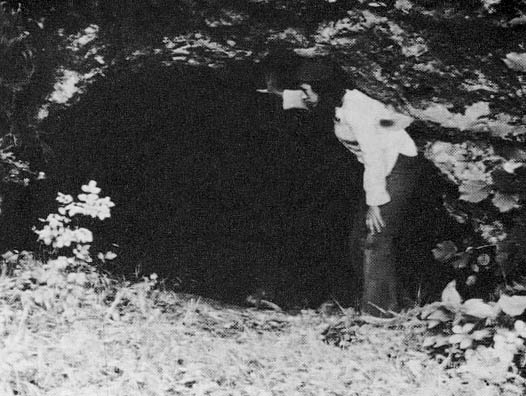 Photo: Secrets of the Ice Age by Evan Hadingham, 1980
Text adapted from this book and from the Smithsonian site:
http://www.mnh.si.edu/anthro/humanorigins/ha/lachap.htm
Human remains were found in a burial excavated into the limestone bedrock in the floor of a small cave near La Chapelle-aux-Saints, France, by A. and J. Bouyssonie and L. Bardon, on 3rd August 1908. The find comprised a nearly complete skeleton of an adult male of the species Homo neanderthalensis, aged about fifty. The man had been buried on his back, head facing the west, with the right arm bent and the legs drawn up toward the body. Around him lay numerous fragments of quartz, flint, ochre, and animal bones, but since the soil around the grave pit also was littered with such objects, it is difficult to know if they were deposited intentionally as offerings at the old man's burial. There were hearths inside the cave and many animal bones, including those of reindeer, bison, horse, and ibex, which must represent the remains of a number of meals. Today, the cave is an unpleasant, musty cavity; its ceiling is too low to allow one to stand upright, and this convinced the original excavators that it was "not a habitation place but a tomb, where people would have come to make many funeral feasts." (Bouyssonie, A. and J., and Bardon, L., as quoted by Vandermeersch, B., in Lumley, H. de, ed., 1976. La Préhistoire Française, CNRS, Paris, p. 725.)
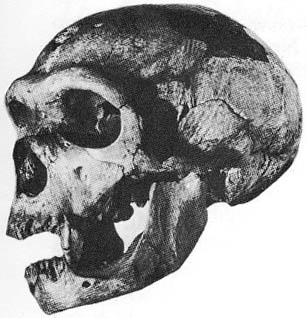 Photo: Secrets of the Ice Age by Evan Hadingham, 1980
The recovered remains included a well-preserved skull and mandible, most of the vertebrae, several ribs, most of the long bones of the arms and legs, plus some of the smaller bones of the hands and feet.
Many of the teeth were missing, and the bone that had surrounded these teeth showed evidence of healing after tooth loss. This means that the individual lived for a considerable time after losing many of his teeth. In all, the teeth lost during life included all of the check teeth on the right side of the lower jaw, the molars on the left, and at least the molars of the upper jaw. While the remaining teeth were probably sufficient for chewing, it is likely that this individual was supported by others in his final years.
The "Old Man of La Chapelle-aux-Saints" was the first relatively complete skeleton of a Neanderthal individual. The original reconstruction, which was made by the noted paleontologist Marcellin Boule, influenced the perception of Neanderthals in paleoanthropology and popular culture for many years.
Recent dating of this site has yielded an age of around 60 000 years old.
References
- Keith, A. , 1915: The Antiquity of man, Philadelphia: J.B. Lippincott company; London: Williams and Norgate
- Häusler M. et al., 2019: Morphology, pathology, and the vertebral posture of the La Chapelle-aux-Saints NeandertalProceedings of the National Academy of Sciences, Mar 2019, 116 (11) 4923-4927; DOI: 10.1073 / pnas.1820745116