Back to Don's Maps
Back to Venus figures from the Stone Age
The Venus of Willendorf
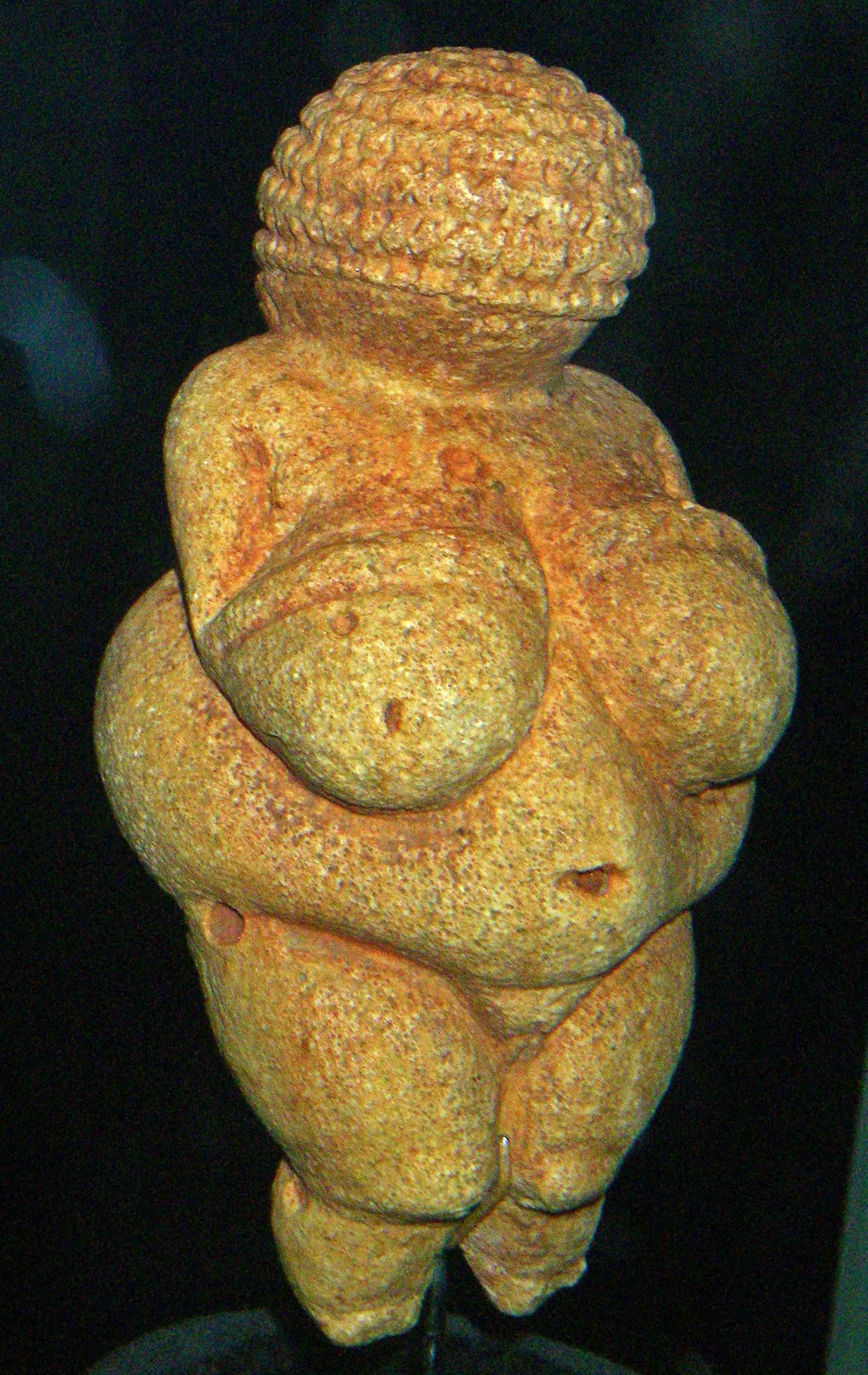
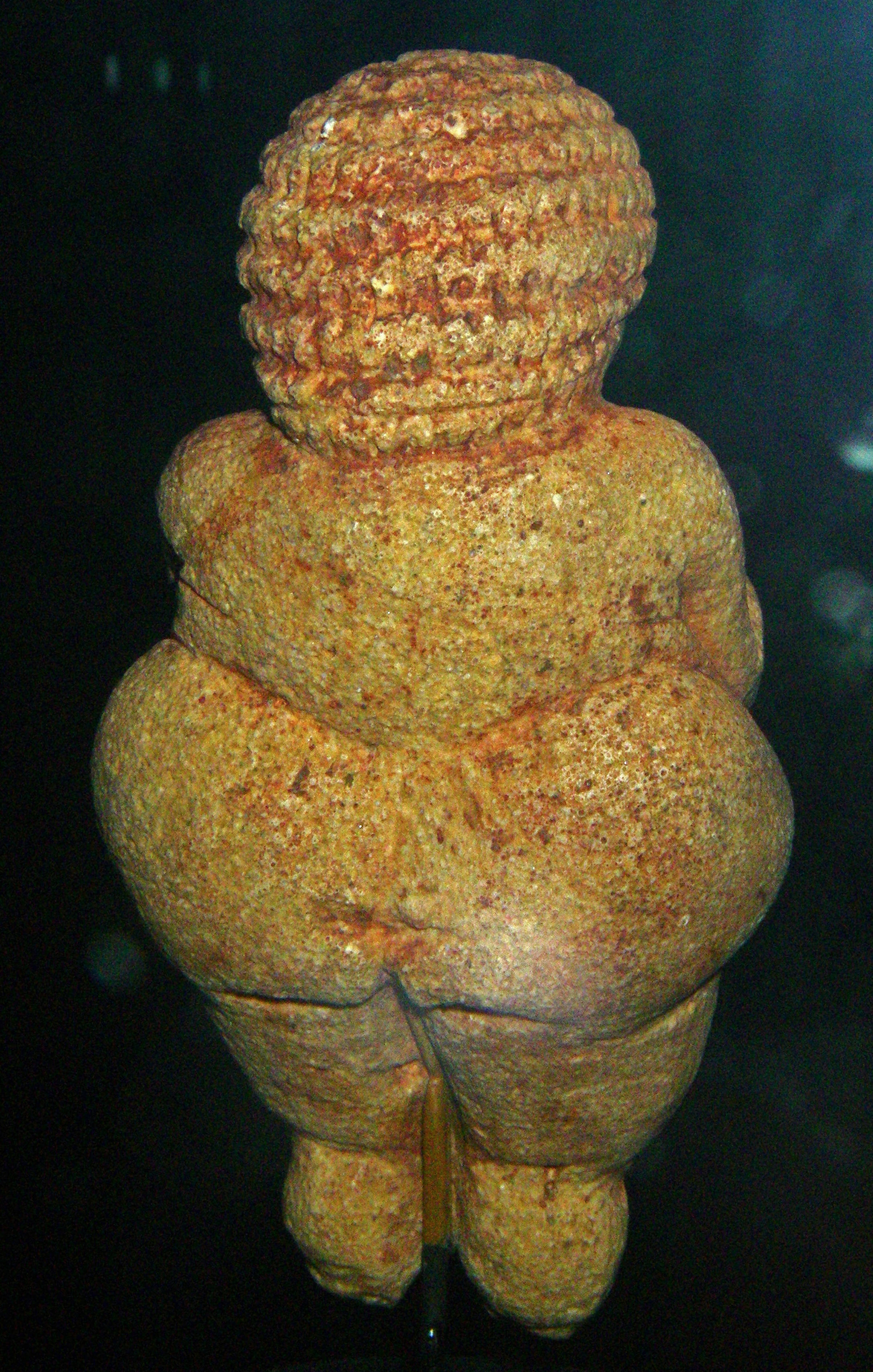
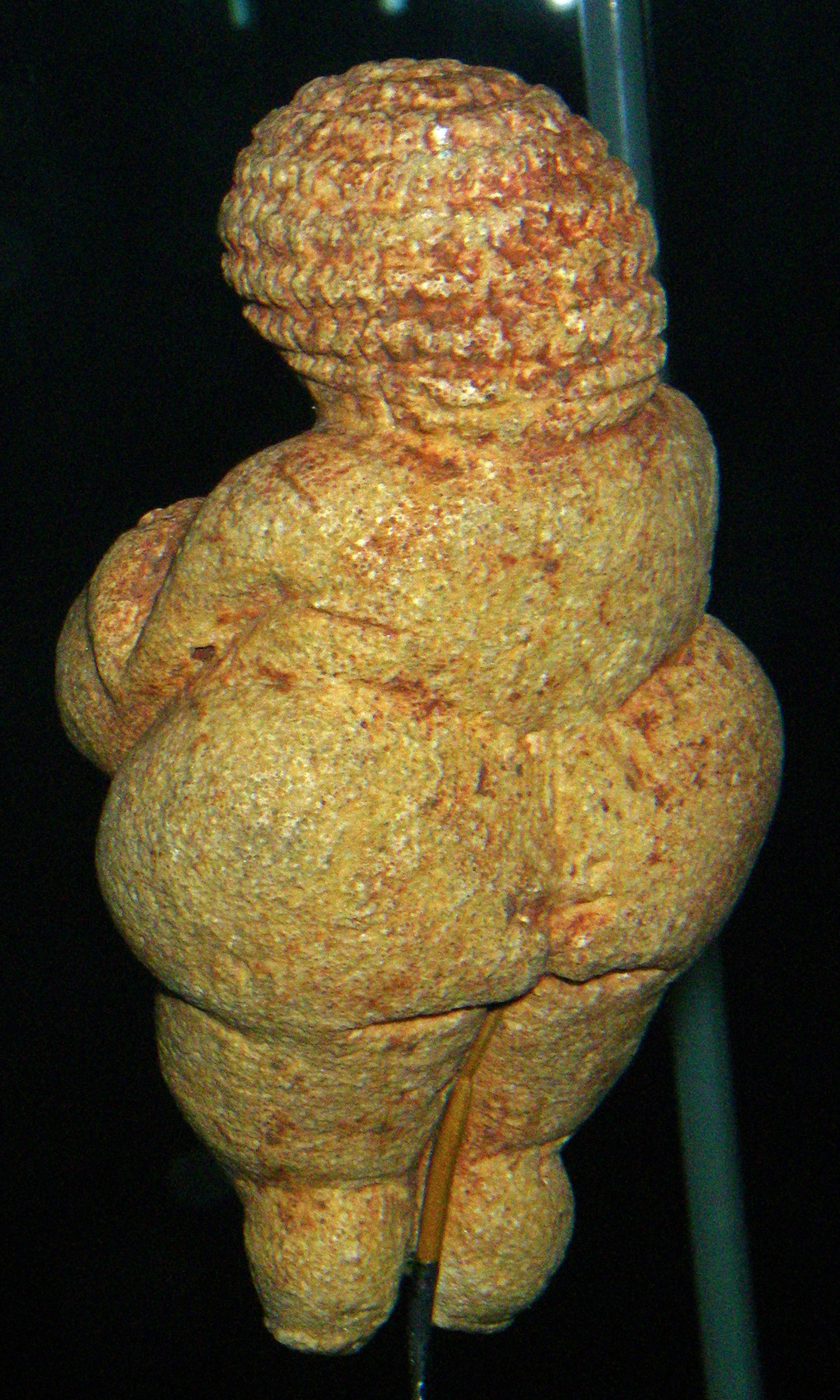
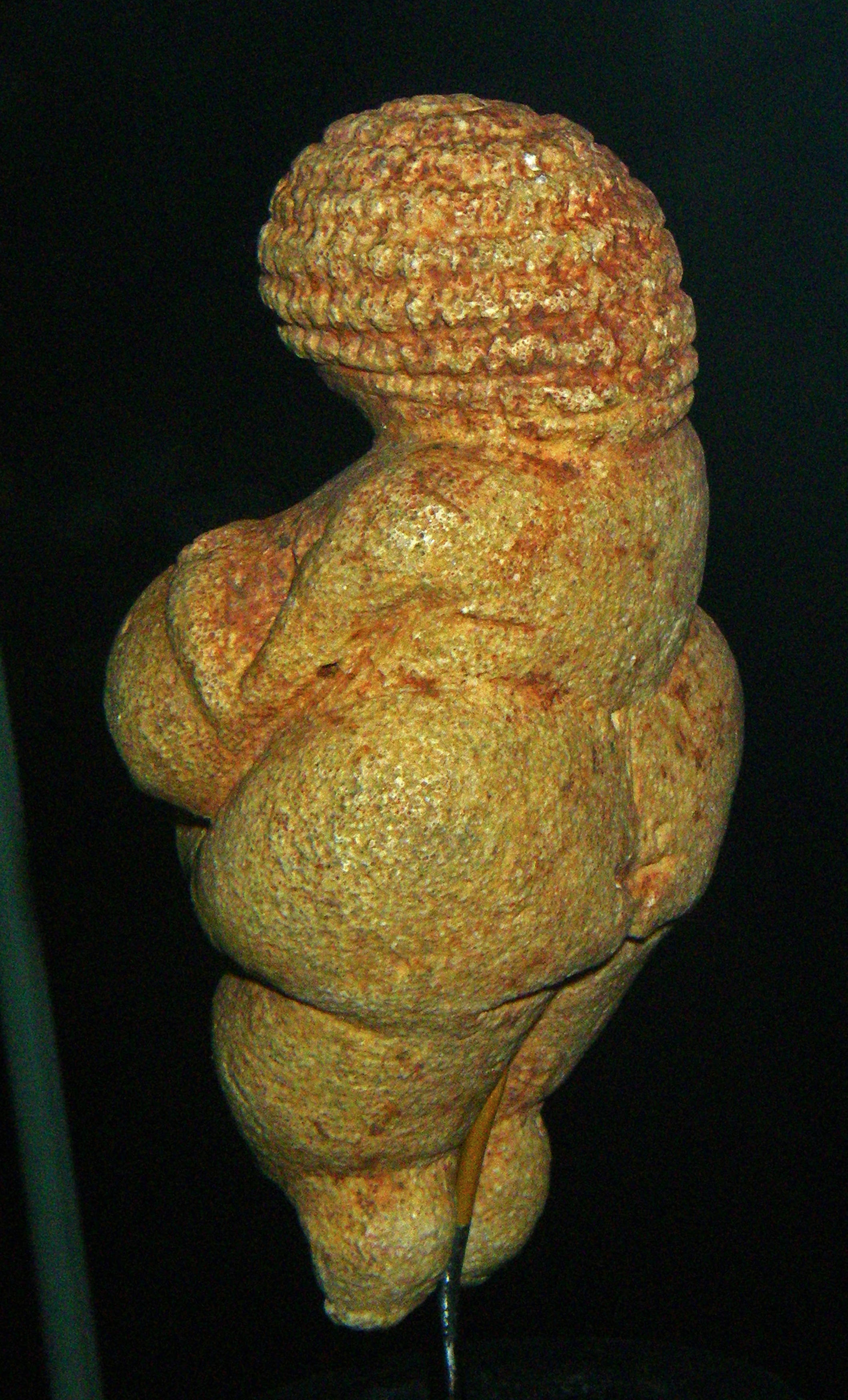
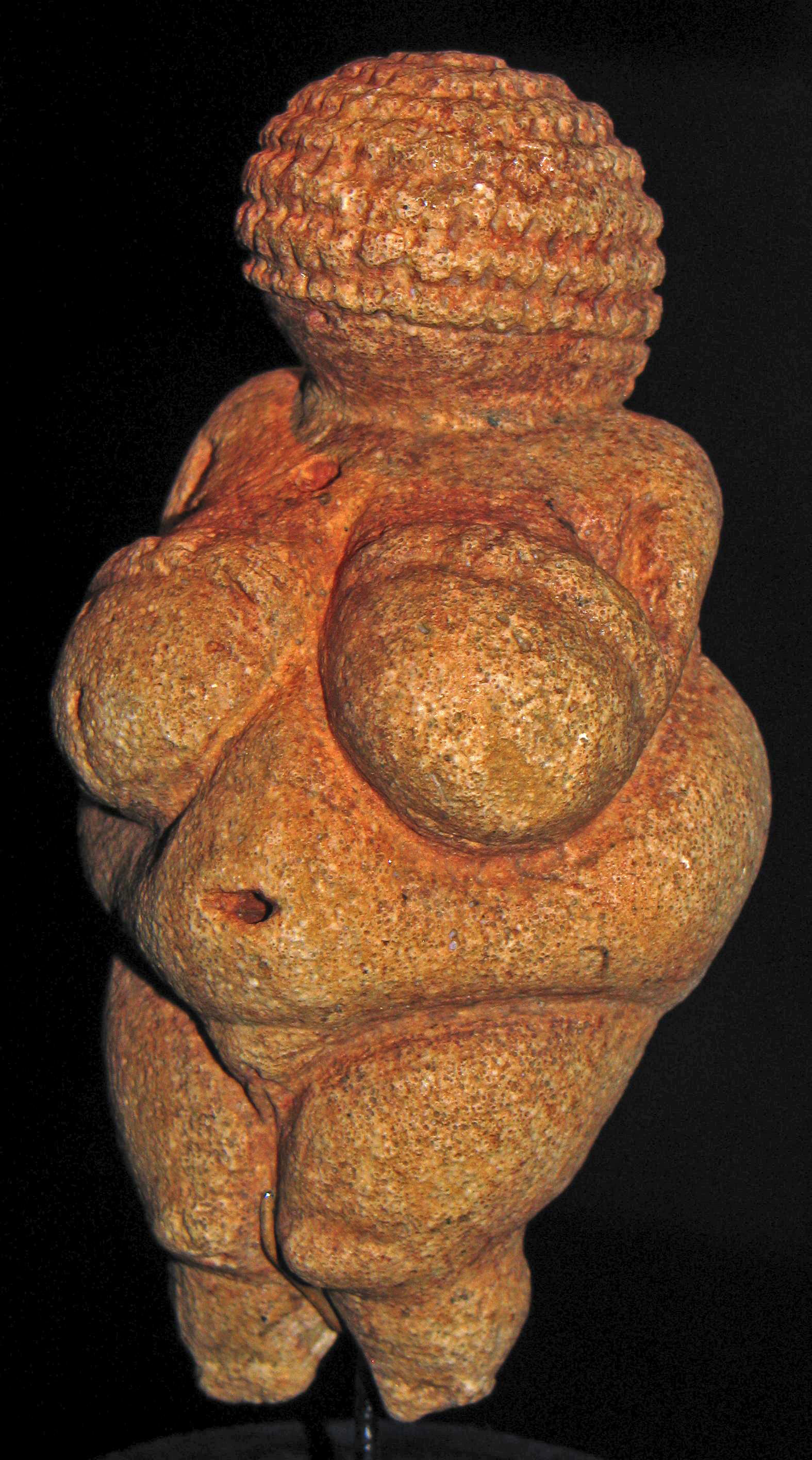
The Venus of Willendorf is a superbly crafted sculpture of a naked obese woman from the stone age. It is made of oolitic limestone, and was covered with red ochre when found. The vulva is particularly well carved, by someone with a good knowledge of anatomy. The feet are rendered as very small, with no indication of ankles. Opinion is divided about the pattern around the head. Some say it is braided hair, others say it is a woven (or crocheted) hat pulled low over the face. There is evidence for woven textiles from that time. It could also be basketry.
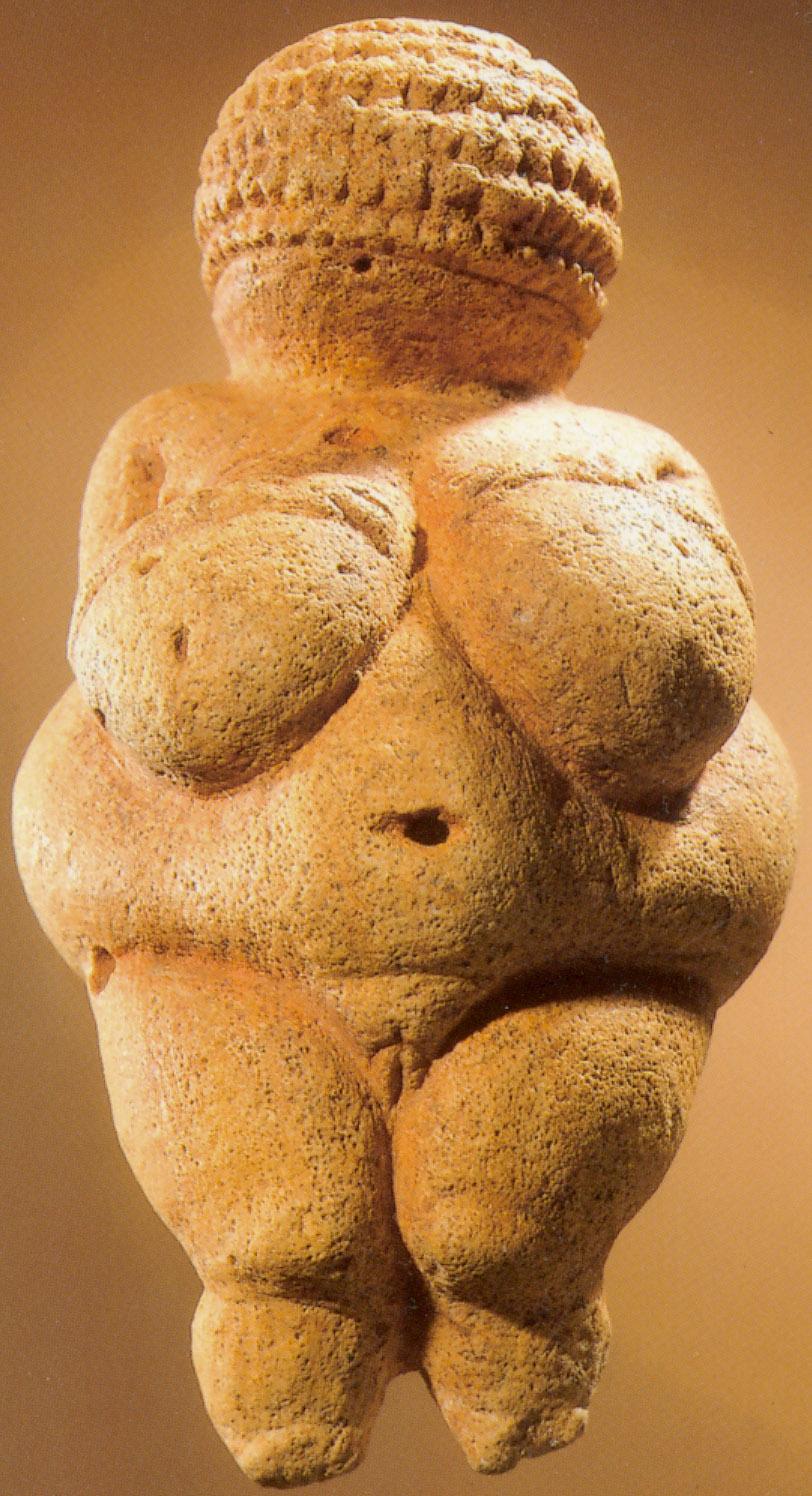
The Venus of Willendorf was carved from oolitic limestone, and was covered with a thick layer of red ochre when found. The figurine was unearthed during the Wachau railway construction
in 1908.
Age: 29 500 cal. BP
Photo: Vienna Natural History Museum Postcard

I spent some time in the Vienna Natural History Museum one day in September 2008. This is the best image of the Venus of Willindorf from that session.
Opinion is divided about the pattern around the head.
Some say it is braided hair, others say it is a woven (or crocheted!)
hat pulled low over the face. There is evidence for woven textiles
from that time. It could also be basketry. Note the "golf ball" venus (at the bottom of the page on the link) from Kostienki, which is a head totally covered with basketry, and the
similar full figure with the head almost covered in a similar texture.
But all agree that it is deliberate, to hide the face. The question is, why?
All sorts of theories have been put forward - that it is an anonymous
female, or that it is the earth mother, whose face not only cannot
be seen, but must not be seen.
All conjecture, and your guess is as good as anyone else's.
The thick circles at the top of the breasts of the Willendorf venus
are vestigial arms. If you look at the figure closely, you can see the
matchstick arms starting at the shoulders, and continuing down the
body and across the breasts. Look closer still, and you can see
bangles or arm ornaments at the wrists. Even hands with fingers are
indicated.
Depending on your browser, you may have to click on this image a couple
of times to see it at full magnification.
Photo: Don Hitchcock, 2008
Source: Original in the Vienna Natural History Museum
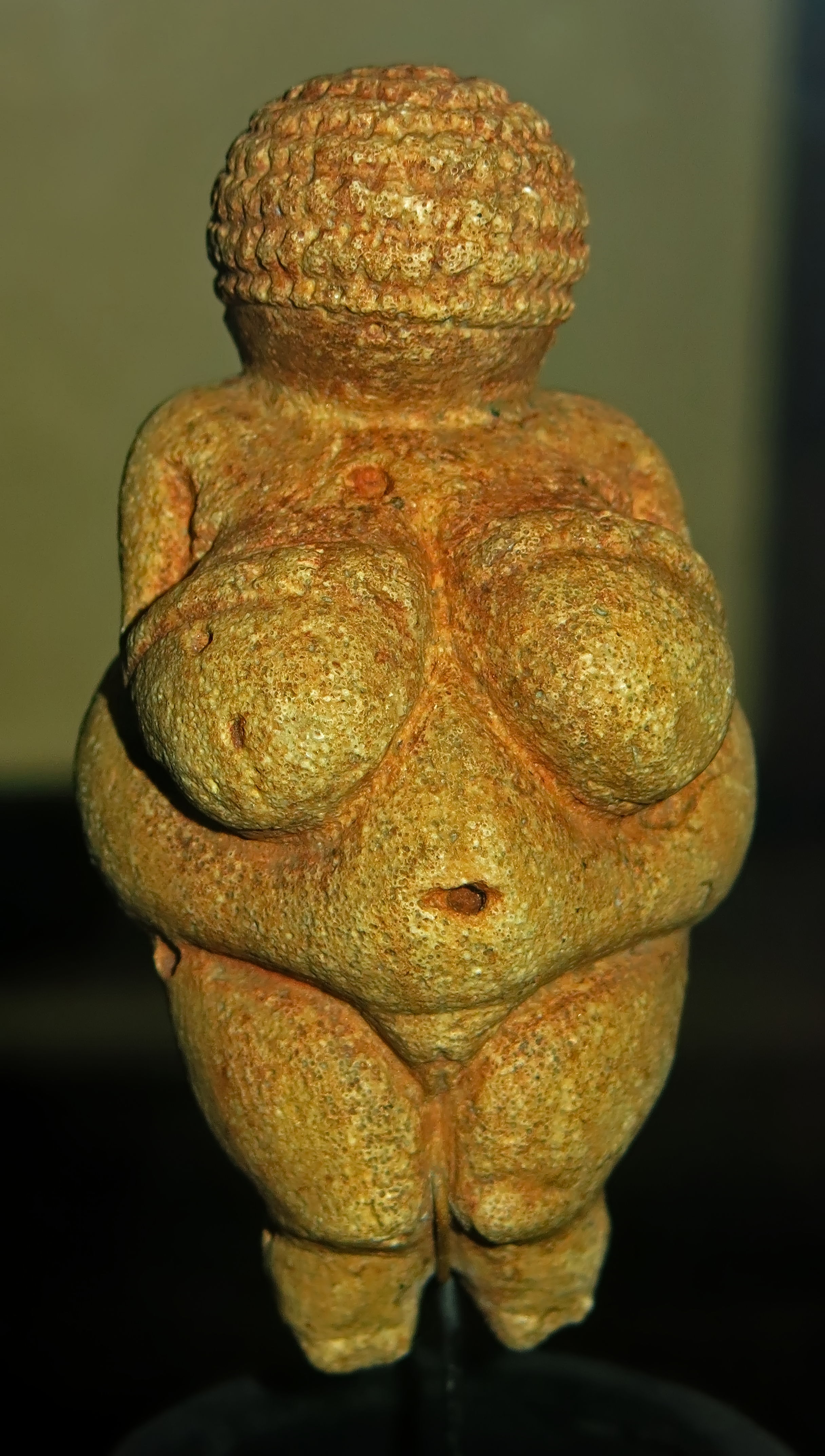
Venus of Willendorf.
Photo: Don Hitchcock, 2015
Source: Original in the Vienna Natural History Museum

View from the site of the discovery of the Venus of Willendorf, Willendorf II. The Venusium museum is the red walled, dark tiled roof structure below the railway track on the right.
Photo: Don Hitchcock 2008
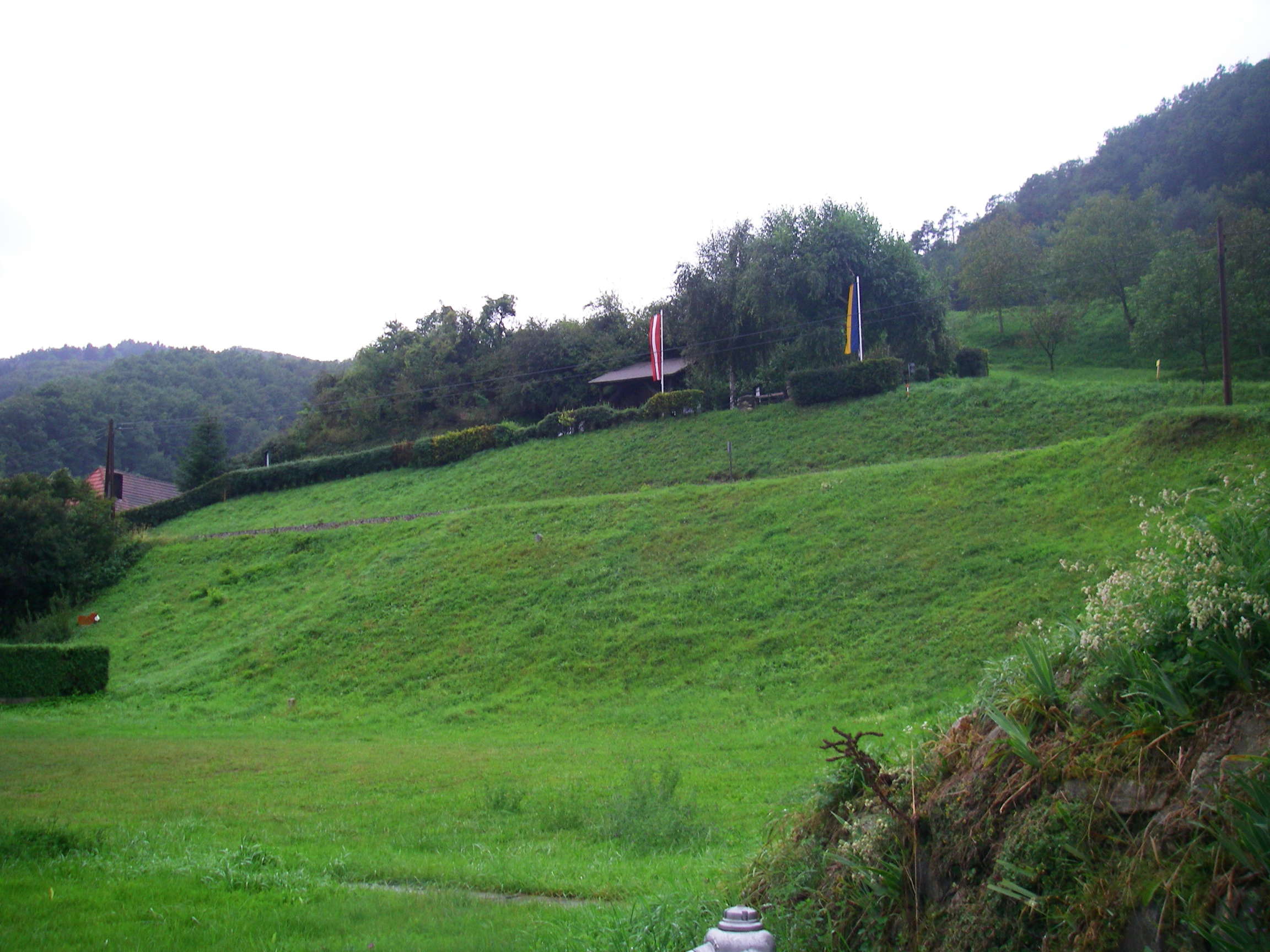
View of the Willendorf II site, from the cycle track, the Radweg, along the Danube.
From this viewpoint we can see the flags that mark the spot, and the shelter for the information boards and the actual profile cut into the loess.
The railway line may be seen a little below the flags and shelter.
Photo: Don Hitchcock 2008

Willendorf on the Donau, where the Venus of Willendorf was discovered, viewed from a ship on the Donau.
Photo: Don Hitchcock 2000
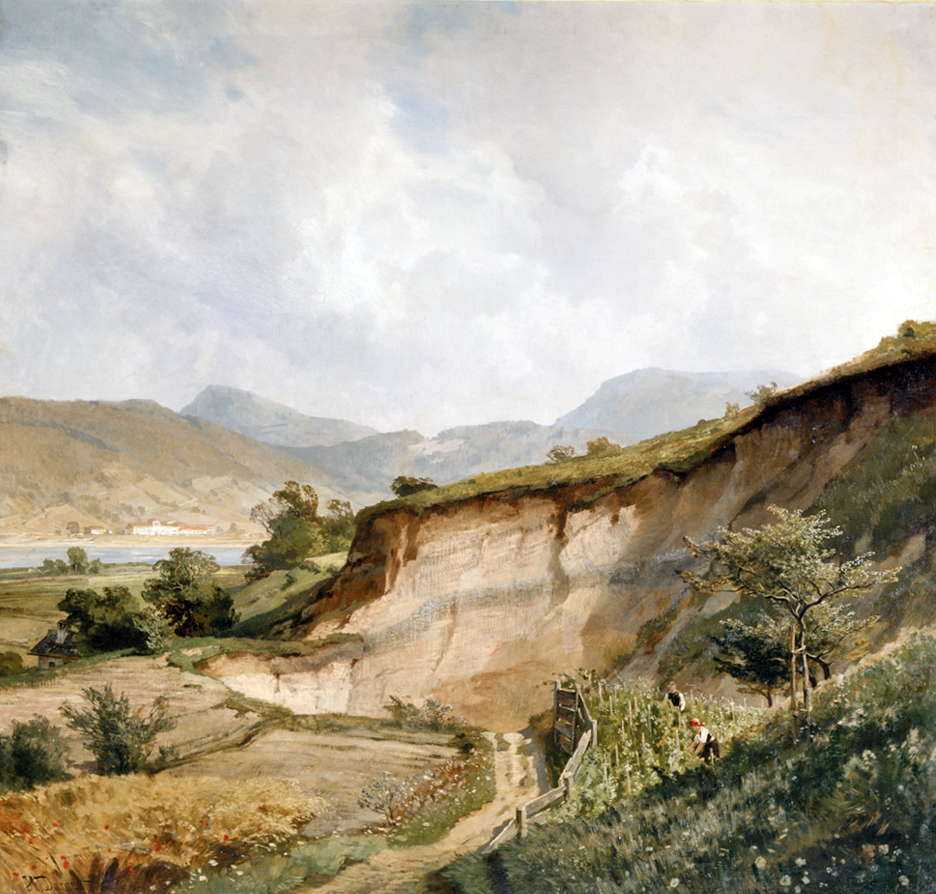
'Lösswand bei Willendorf' (Loess cliff at Willendorf), a painting of Willendorf on the Danube by Hugo Darnaut before the railway was constructed, and before the venus was discovered.
Photo: Antl-Weiser (2008a)
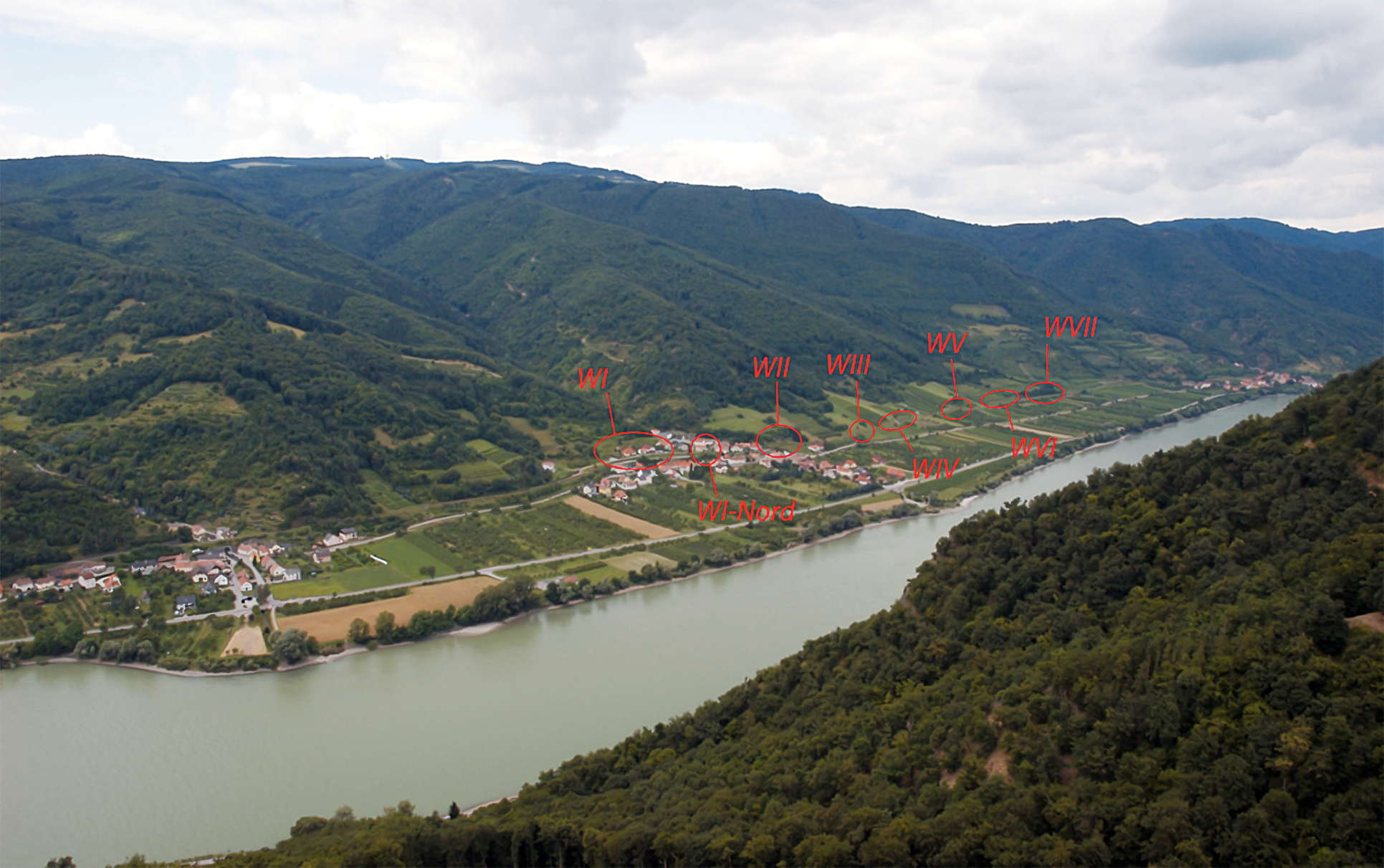
View of the Wachau valley in the Willendorf area, view from southeast. Indicated in red are the sites:
Willendorf I (WI), Willendorf I Nord (WI-Nord), Willendorf II (WII), Willendorf III (WIII), Willendorf IV (WIV), Willendorf V (WV), Willendorf VI (WVI), and Willendorf VII (WVII).
Photo: T. Bence Viola, Graphic: Philip R. Nigst
Source and text: Nigst et al., 2008
The eastern bank of the Danube Valley is formed by cliffy and steep slopes. The western bank shows flatter slopes because of the loess accumulation in the lee of the dominating winds from the west.
Further, large alluvial fans, formed by streams from the hinterland (e.g. Willendorfer Bach) transporting large amounts of material into the Danube Valley, are recognised on this western bank. The deposits of the site Willendorf II are lying on top of a lower terrace of the Danube.
The Palaeolithic layers are found in the upper half of the about 20 metre thick deposits. The site is part of the Willendorf site cluster, a total of 8 sites are known: Willendorf I, Willendorf I North, and Willendorf II to VII.
Text above: Nigst et al., 2008
During the Upper Palaeolithic, ice age hunters used the slopes of the Danube valley repeatedly. The area around the left bank of the Danube between Aggsbach and Krems along with the tributary valleys to the west and north of the Danube valley was an important habitat for ice age man living in the east of what is now Austria. The Palaeolithic settlements between Willendorf and Schwallenbach are located in a somewhat broader section of the Wachau on the west bank of the Danube. Nussberg, the hill to the west, sheltered the settlement near Willendorf from westerly winds. From very early on, the Danube connected eastern and western Europe and was of particular significance for cultural contacts and the ongoing development of Palaeolithic cultures.
The four lower excavation levels at Willendorf reveal early Upper Palaeolithic or Aurignacian settlements, while the five levels above originated in the Mid-Upper Palaeolithic period during the Gravettian culture. Both of these cultures are named after archaeological sites in France.
Text above from a display at the Venusium, the Museum at Willendorf devoted to the Venus of Willendorf and its discovery.
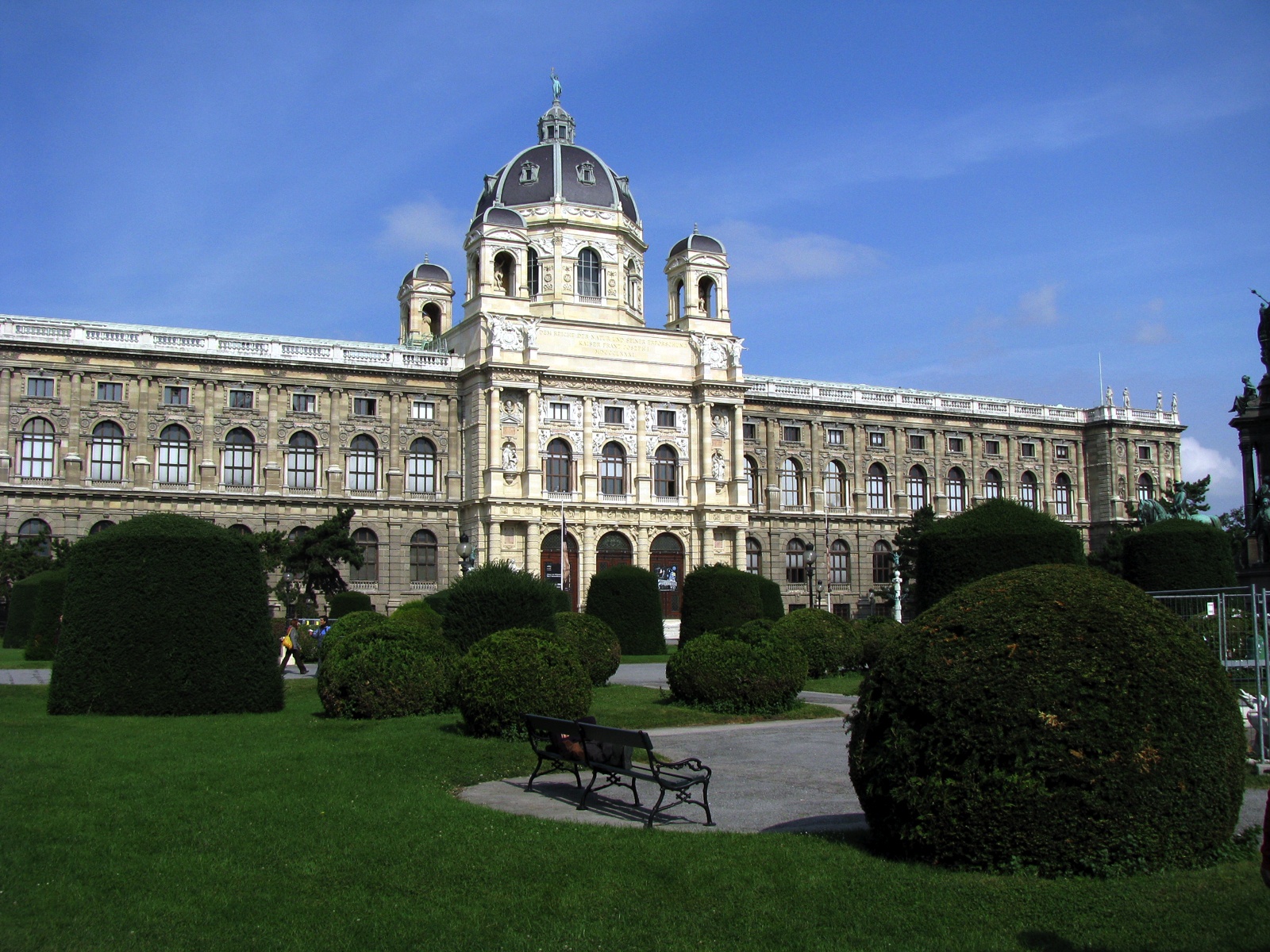
The Vienna Natural History Museum, in which the Venus of Willendorf is on display.
Photo: Don Hitchcock, 2008
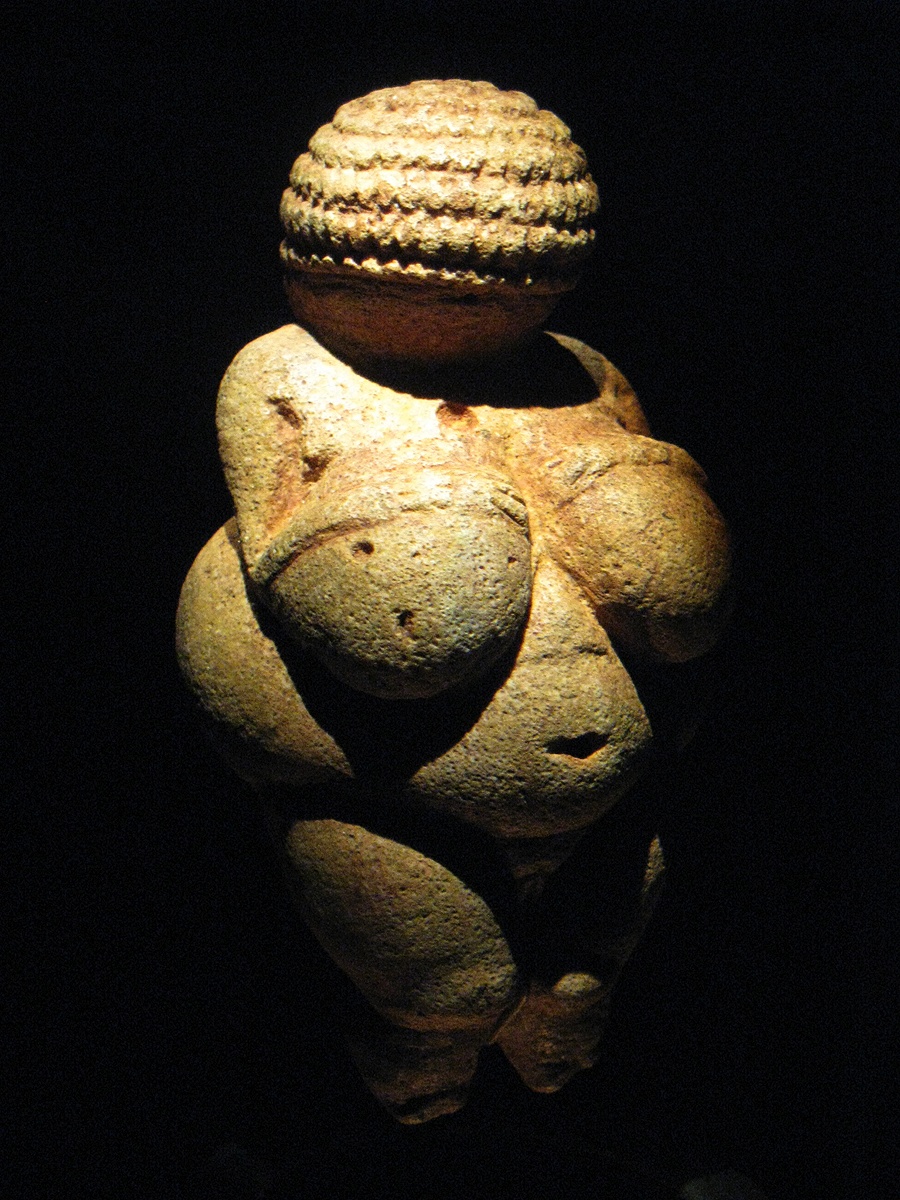


Although available light does not give good resolution, it shows sculptural forms clearly.
Photo: Don Hitchcock 2008, Canon, available light
Source: Original in the Vienna Natural History Museum
A series of photographs in rotational sequence
Source: Original in the Vienna Natural History Museum

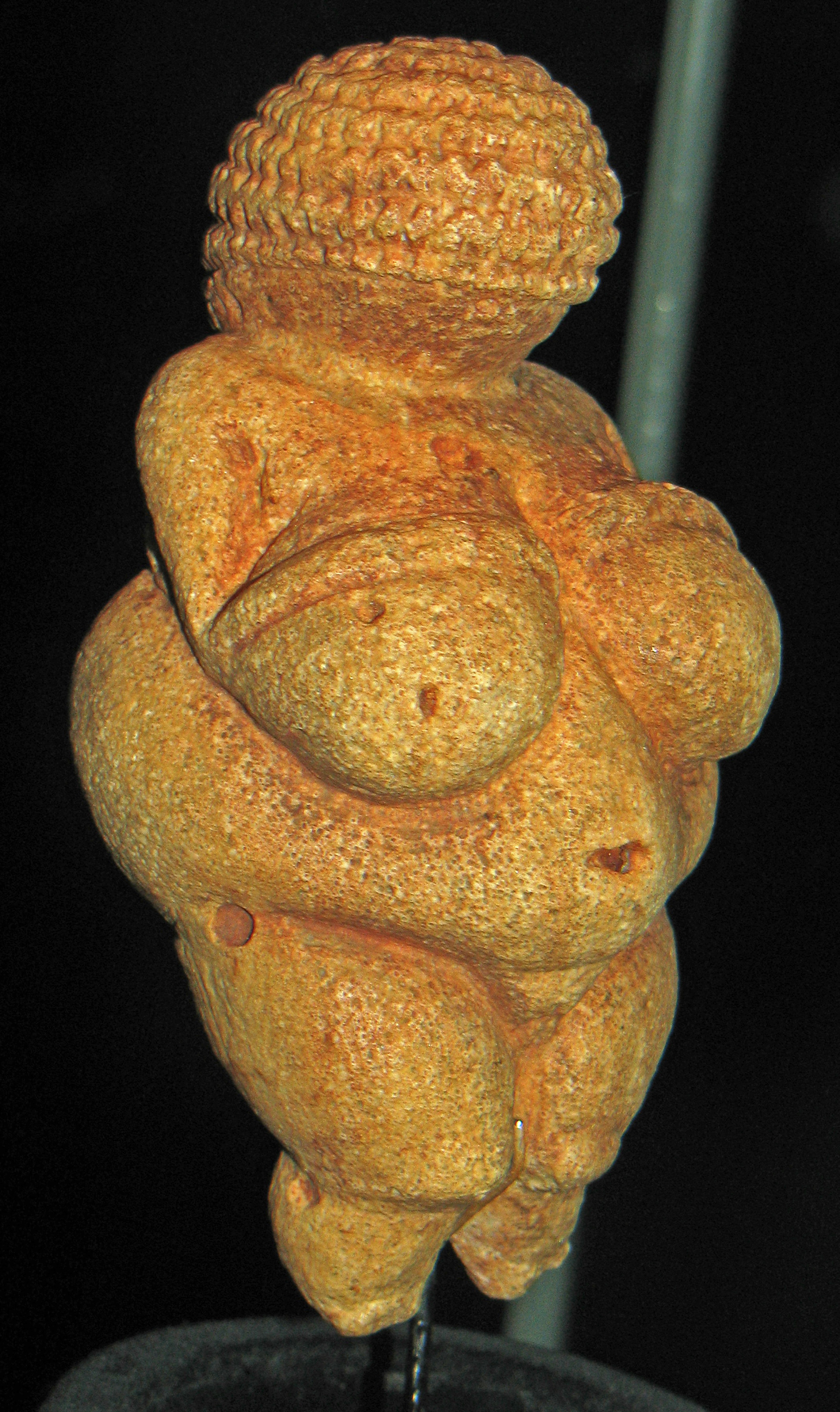
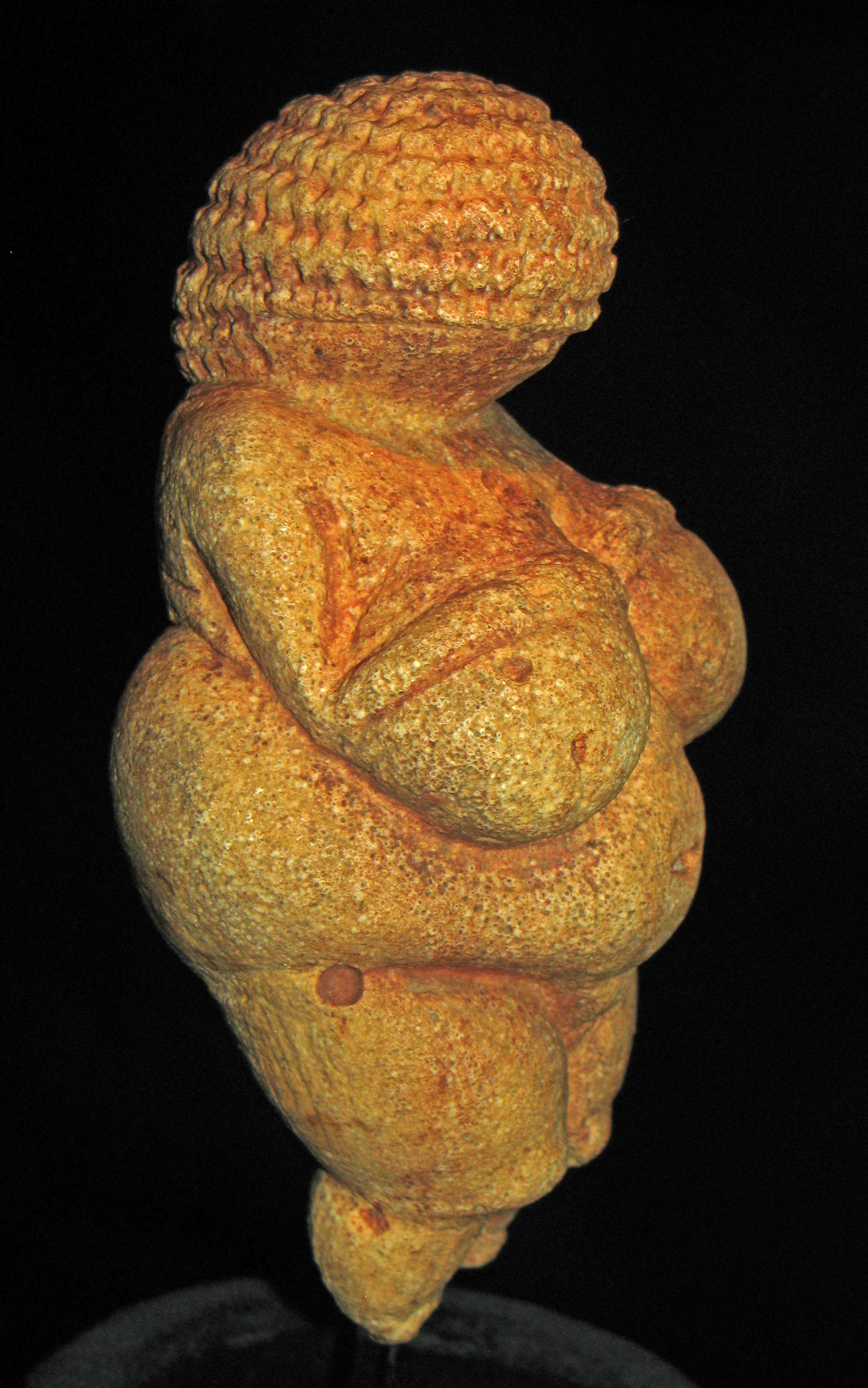
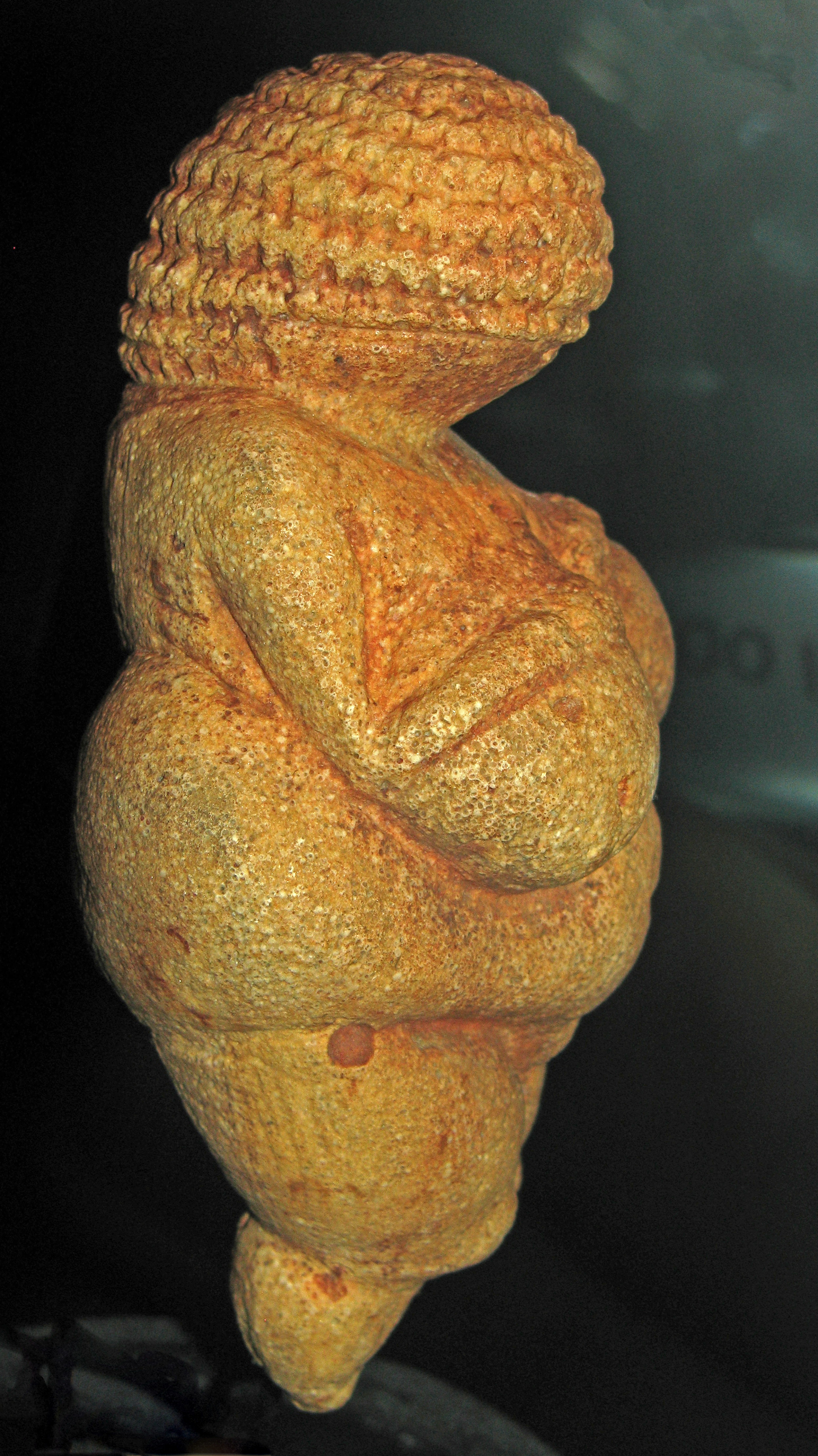
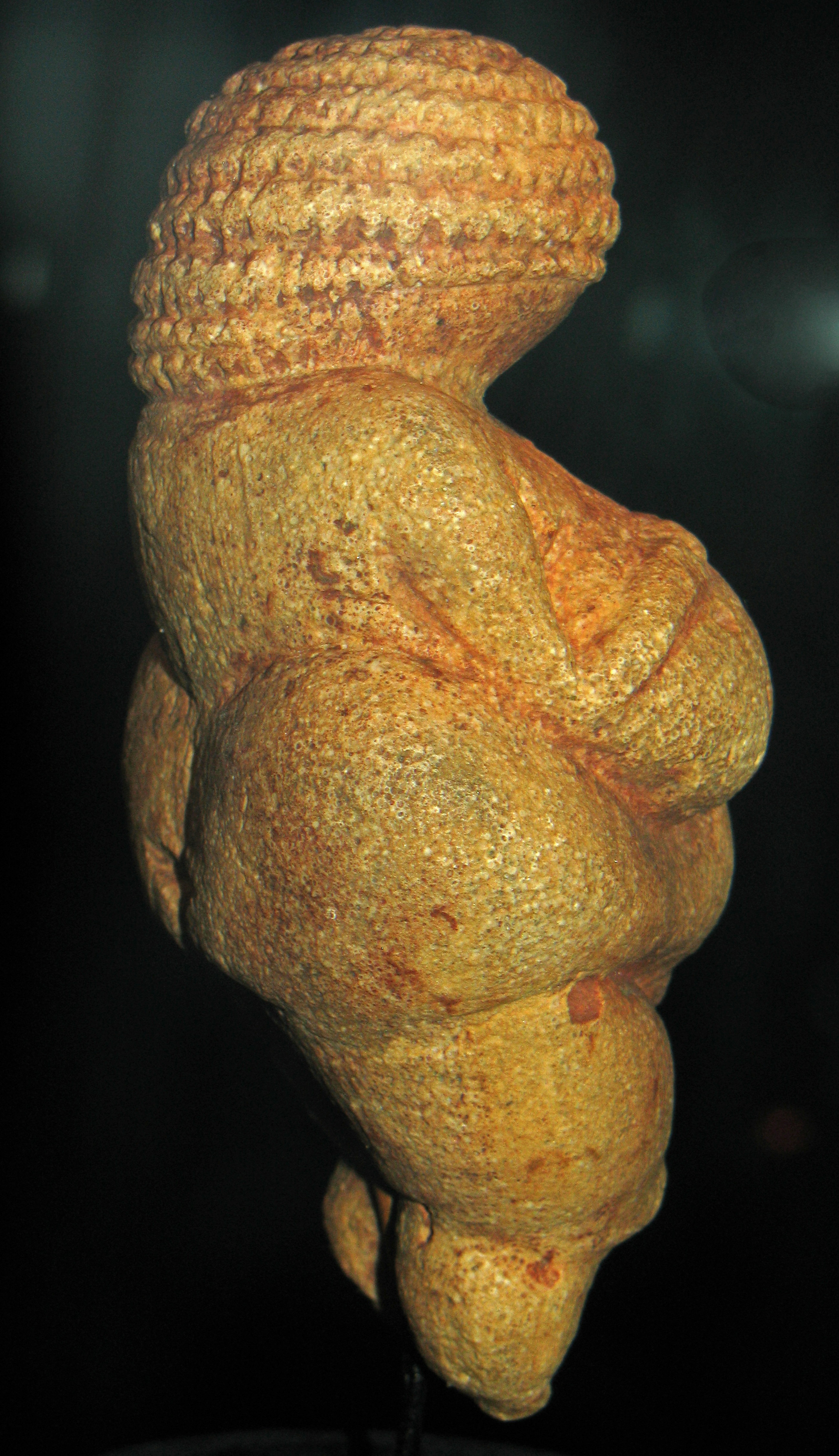
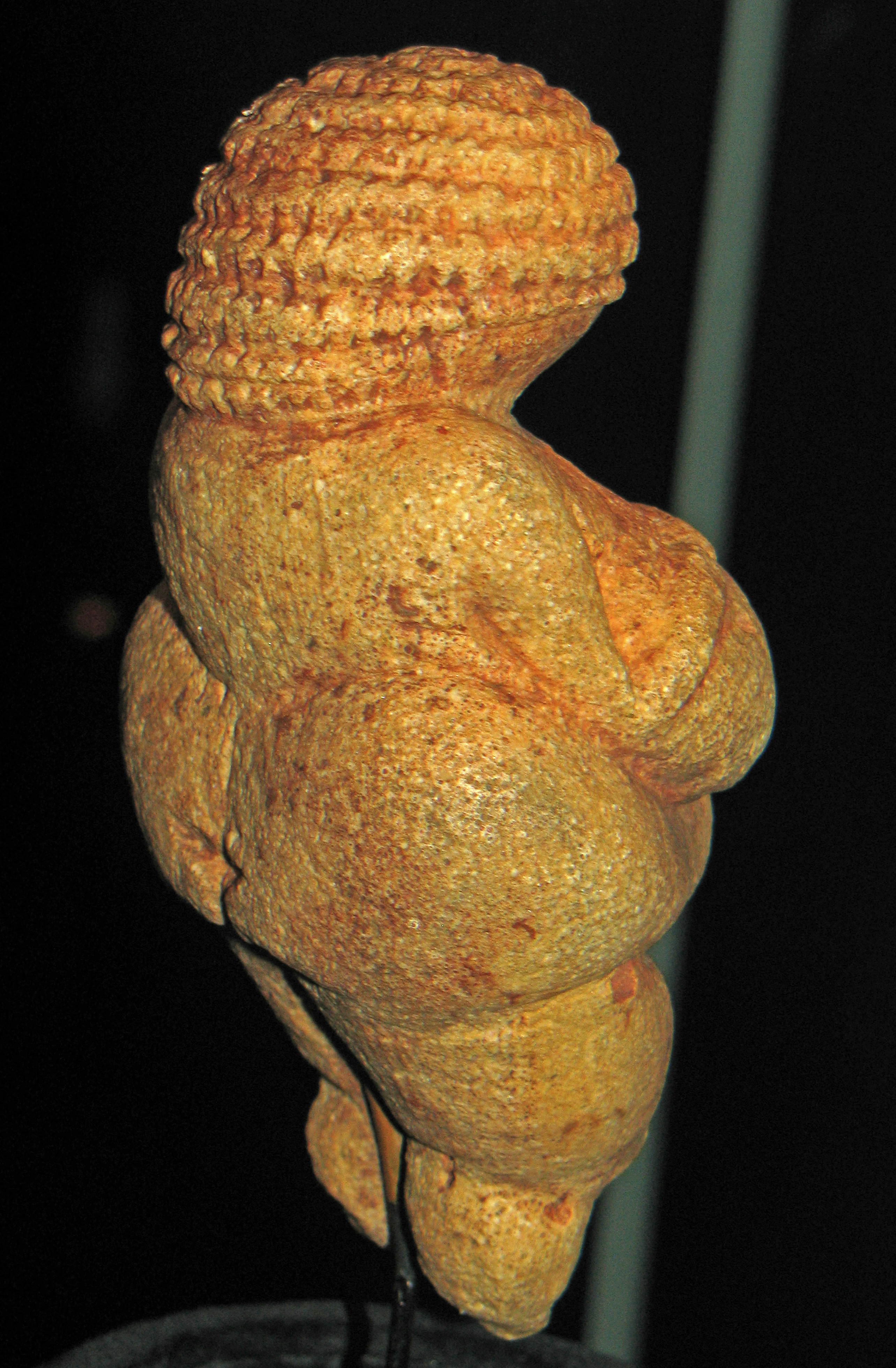
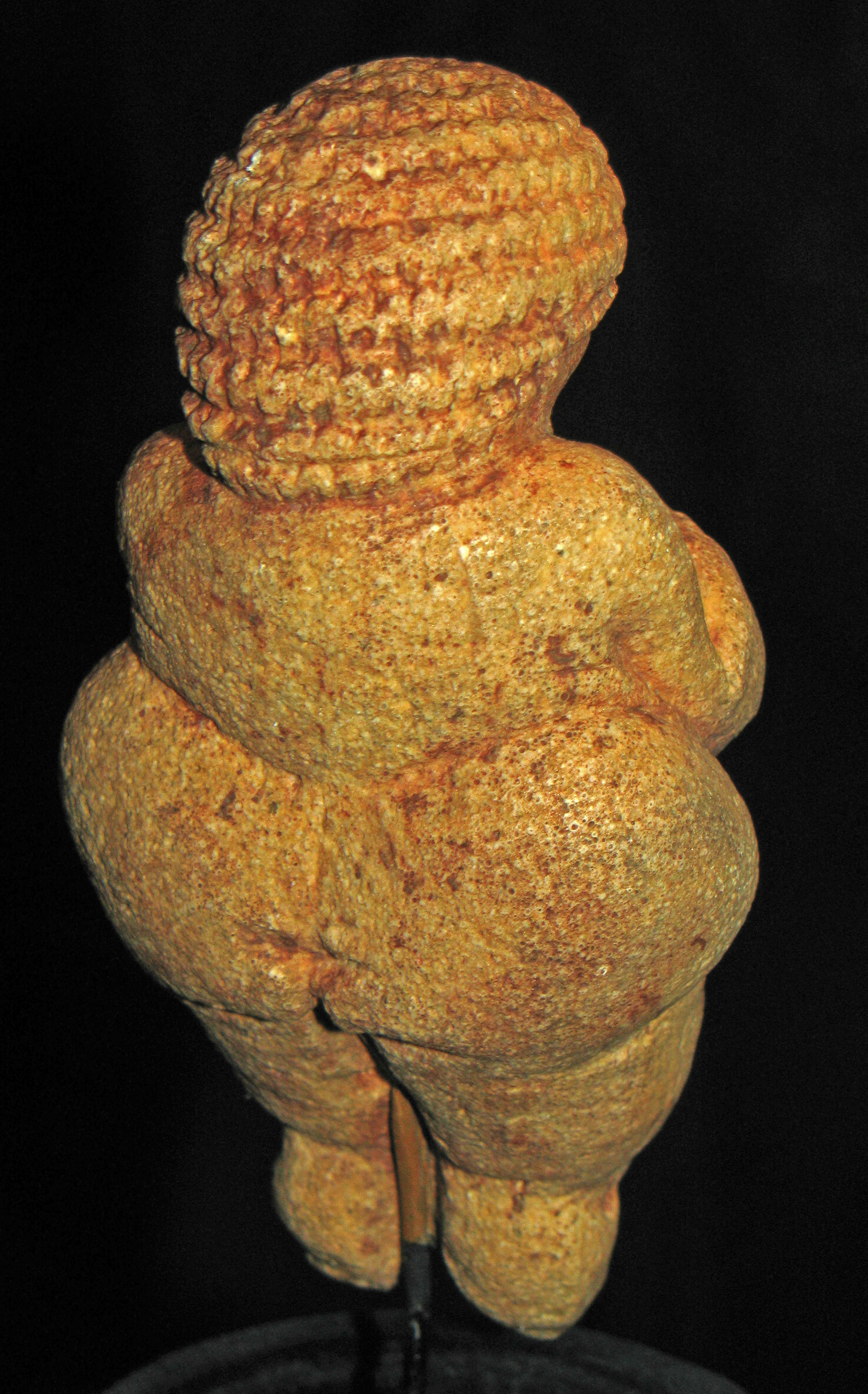
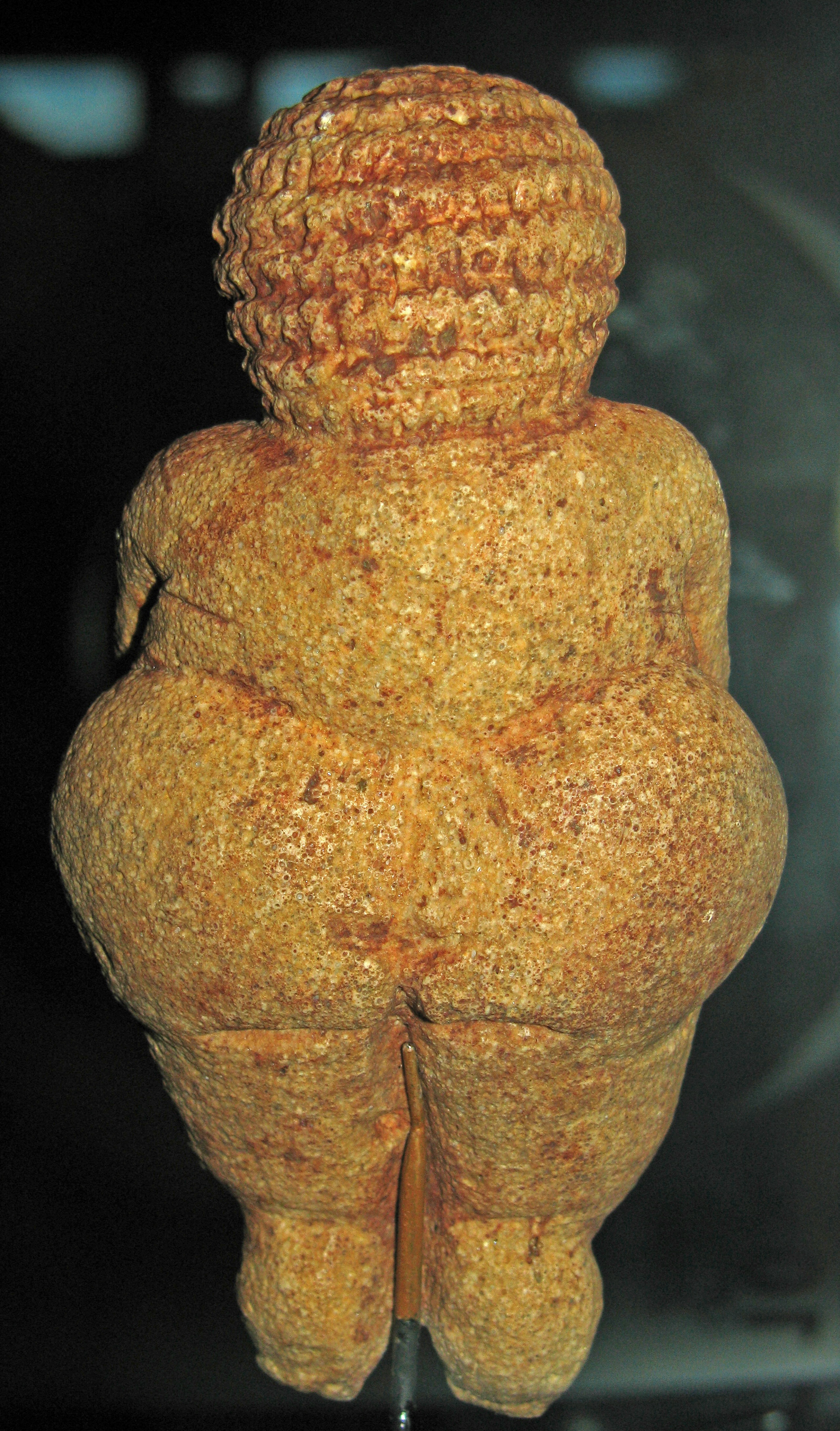

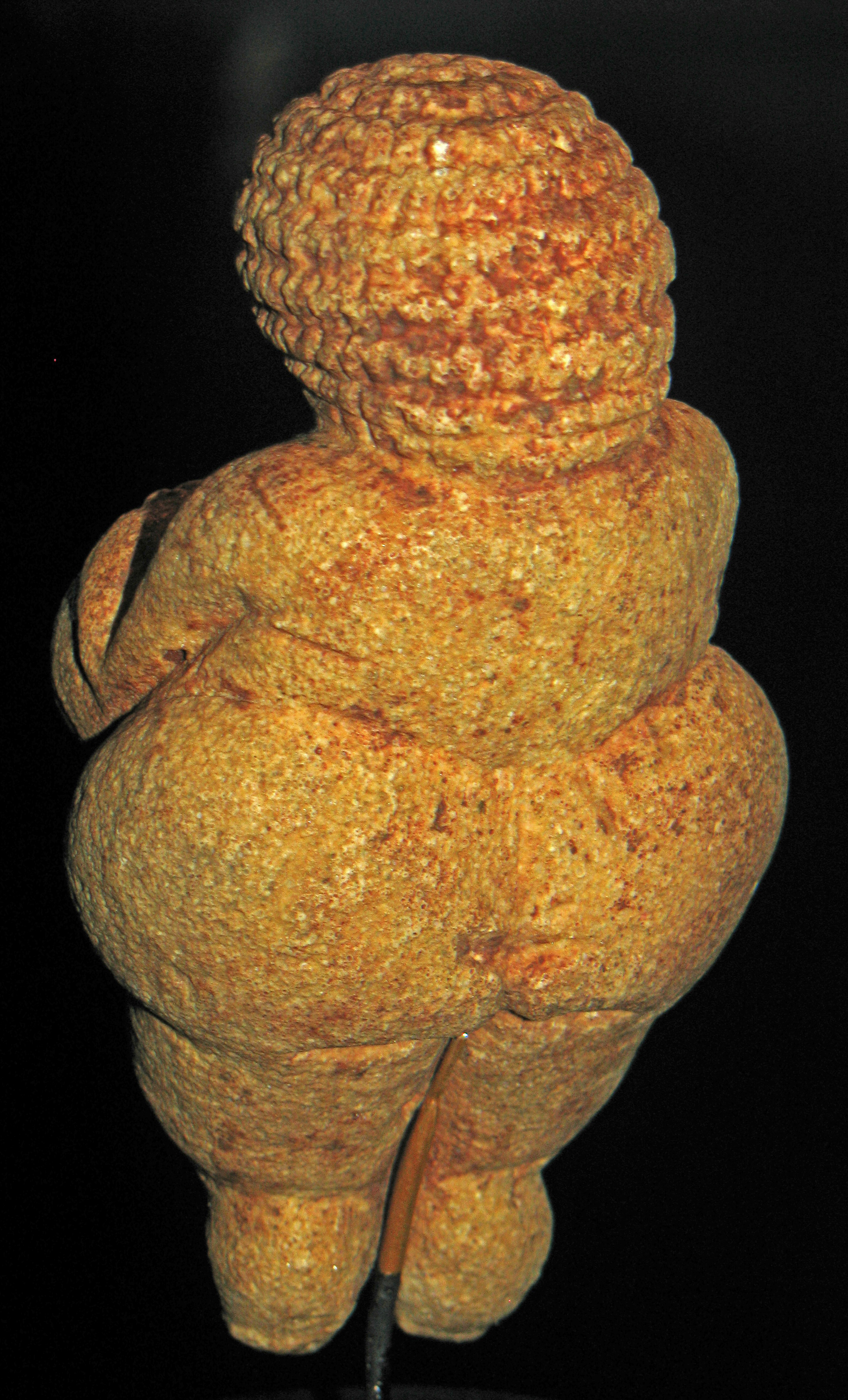
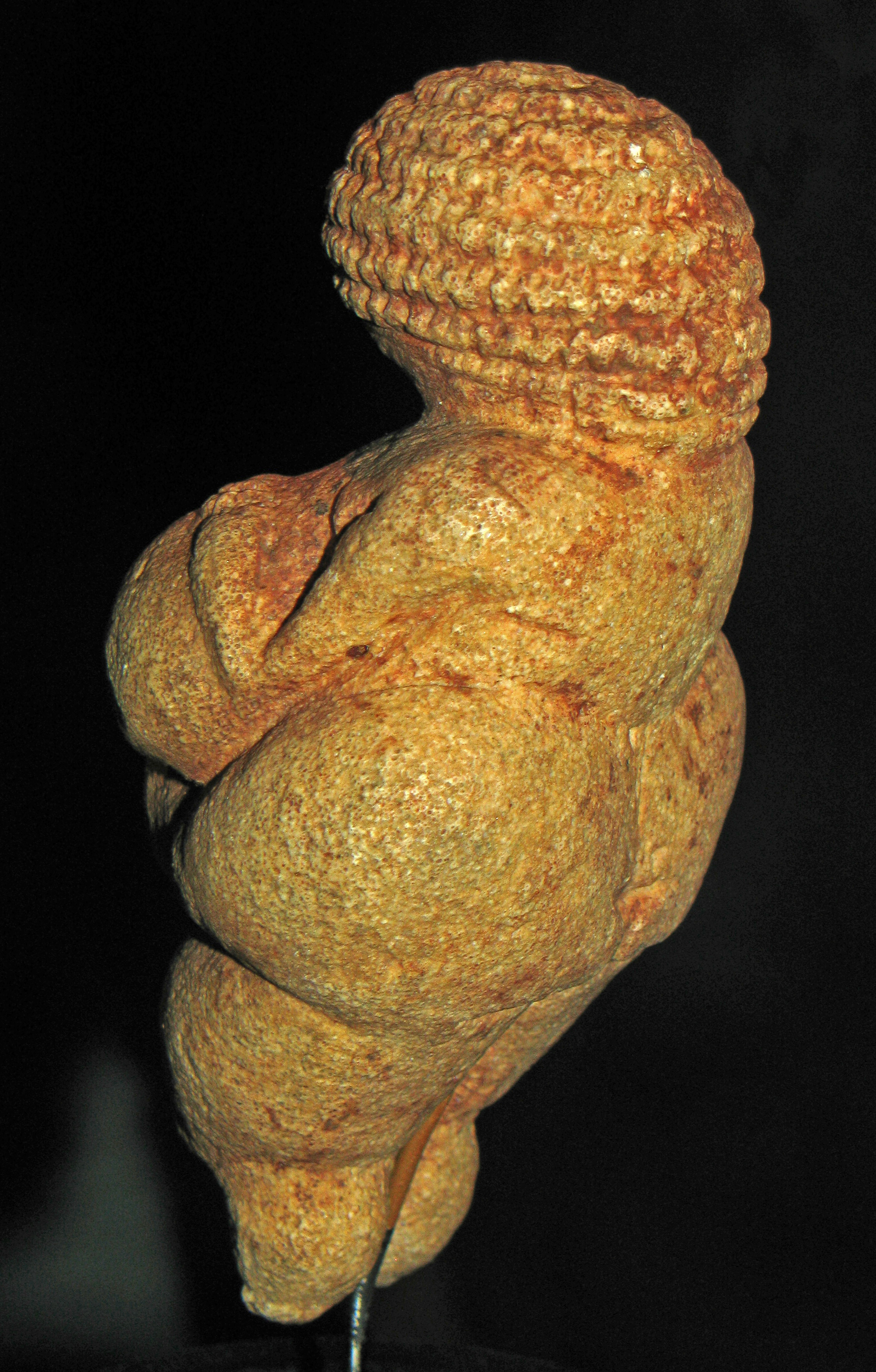
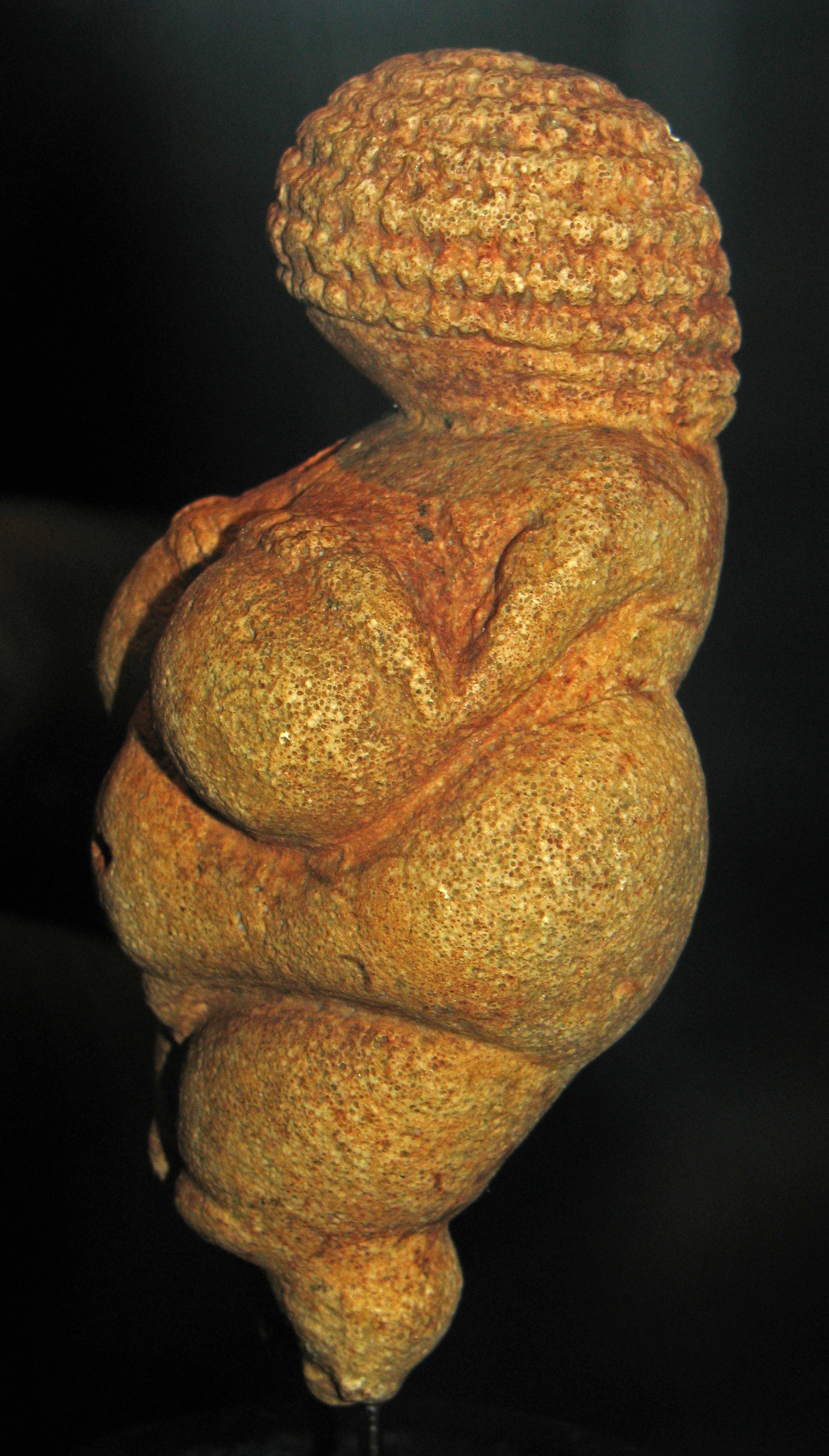
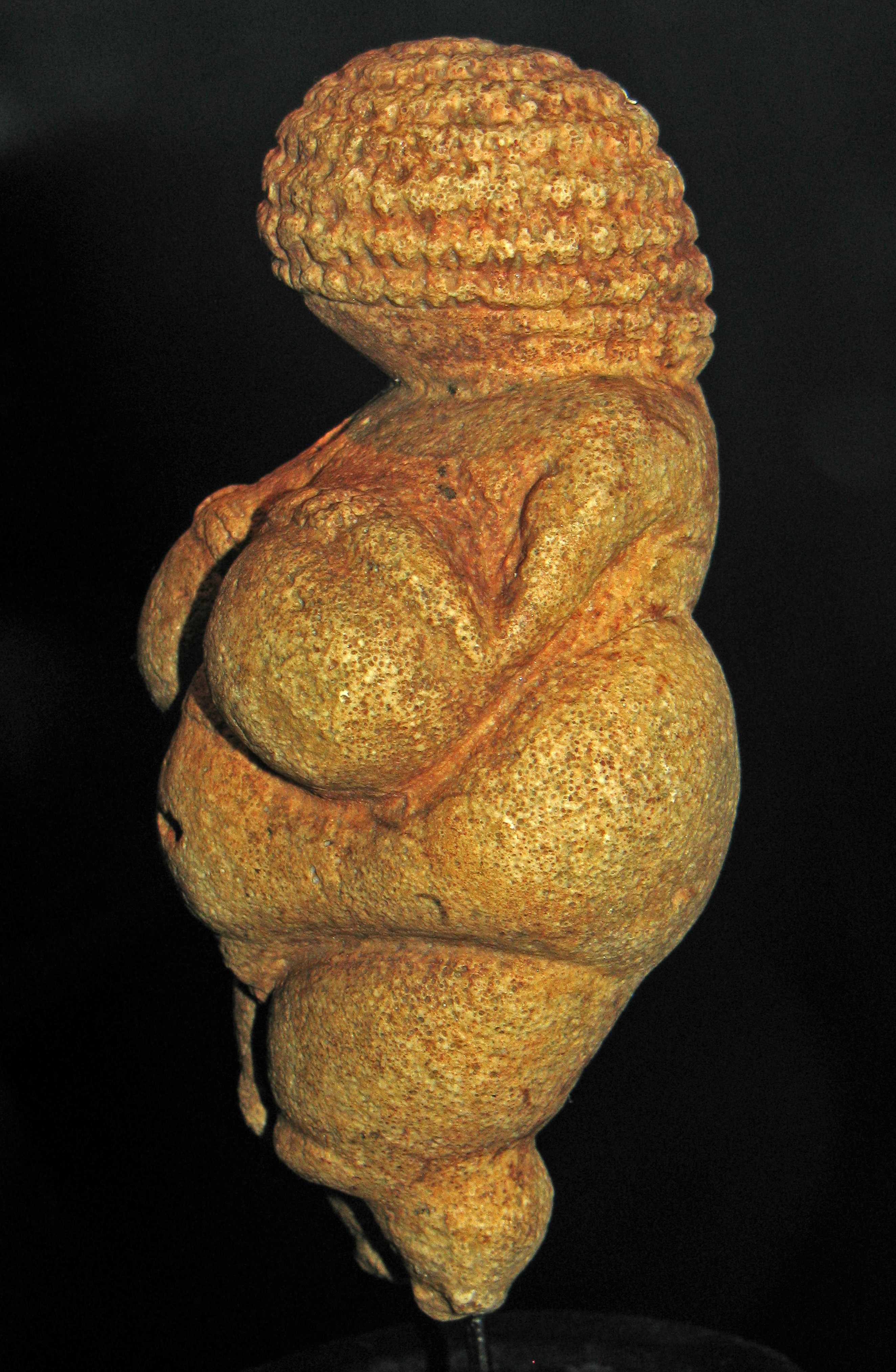
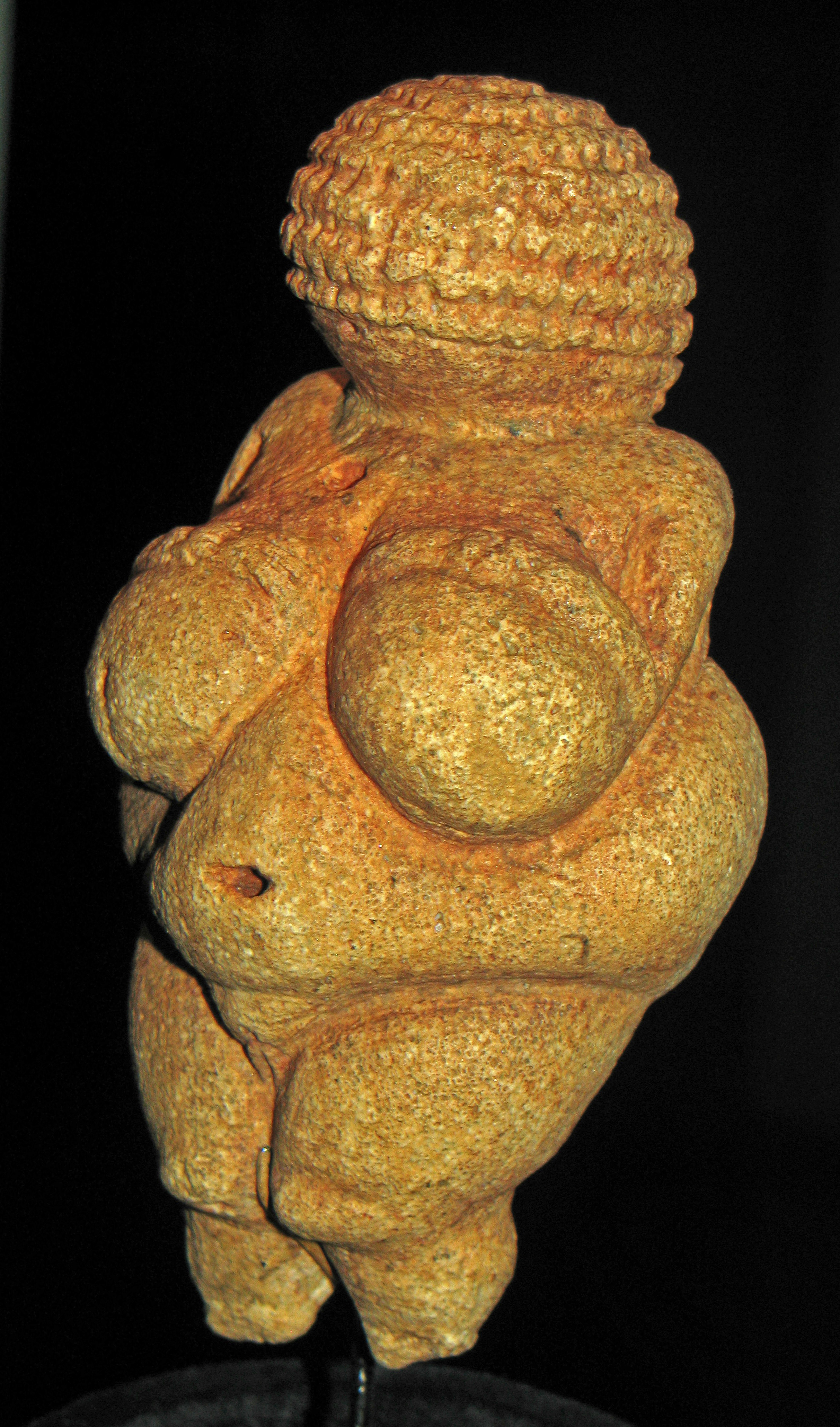


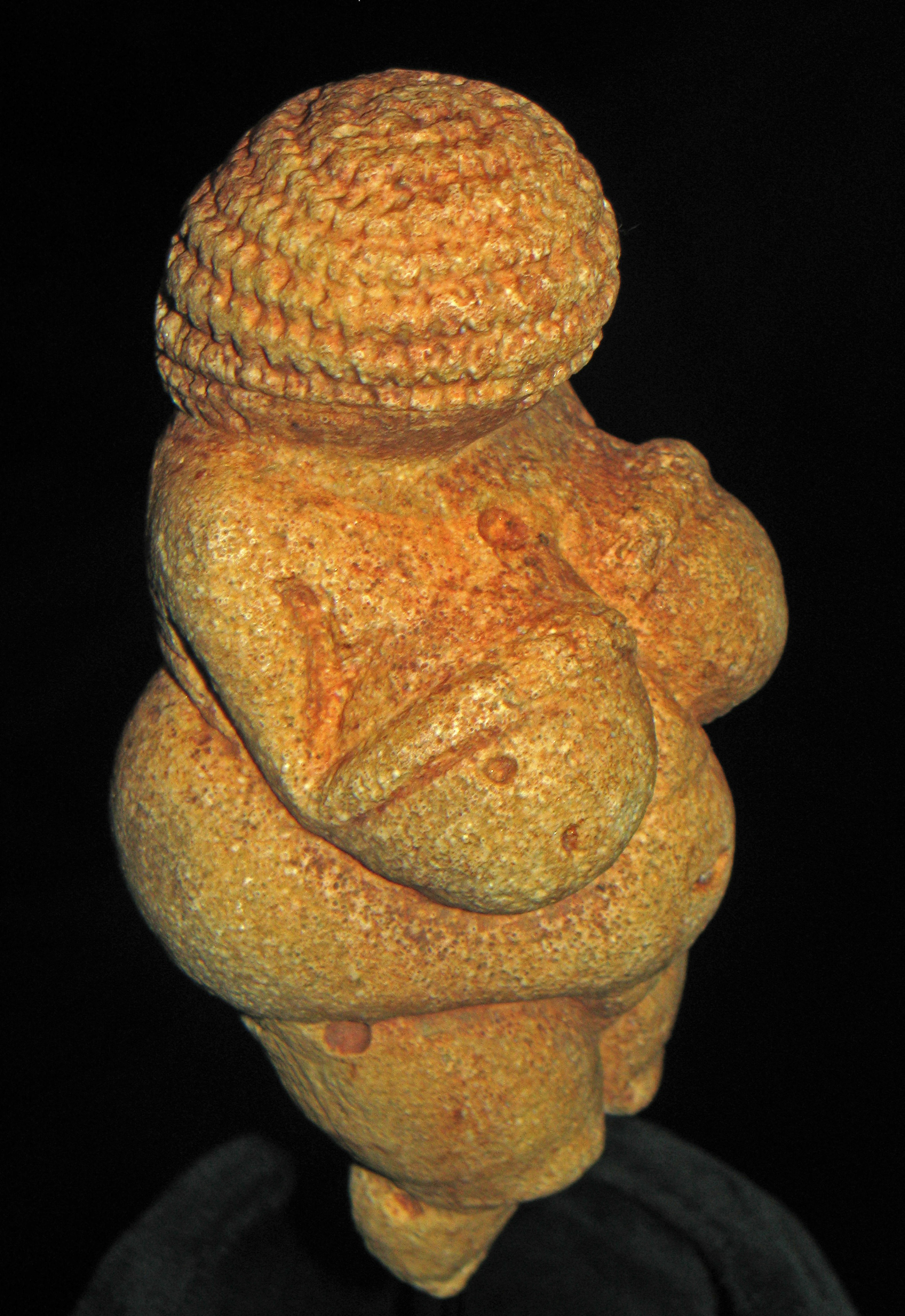
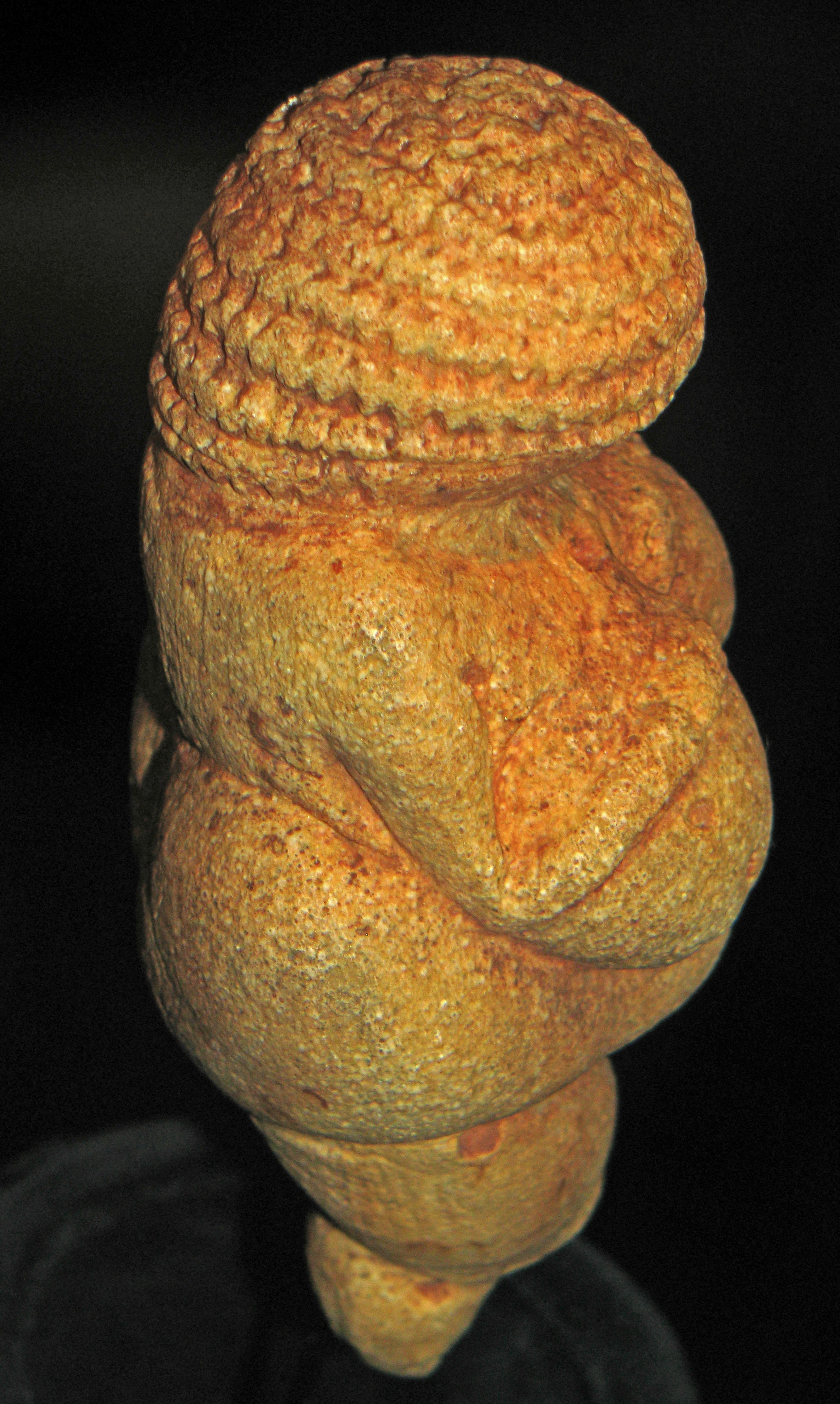

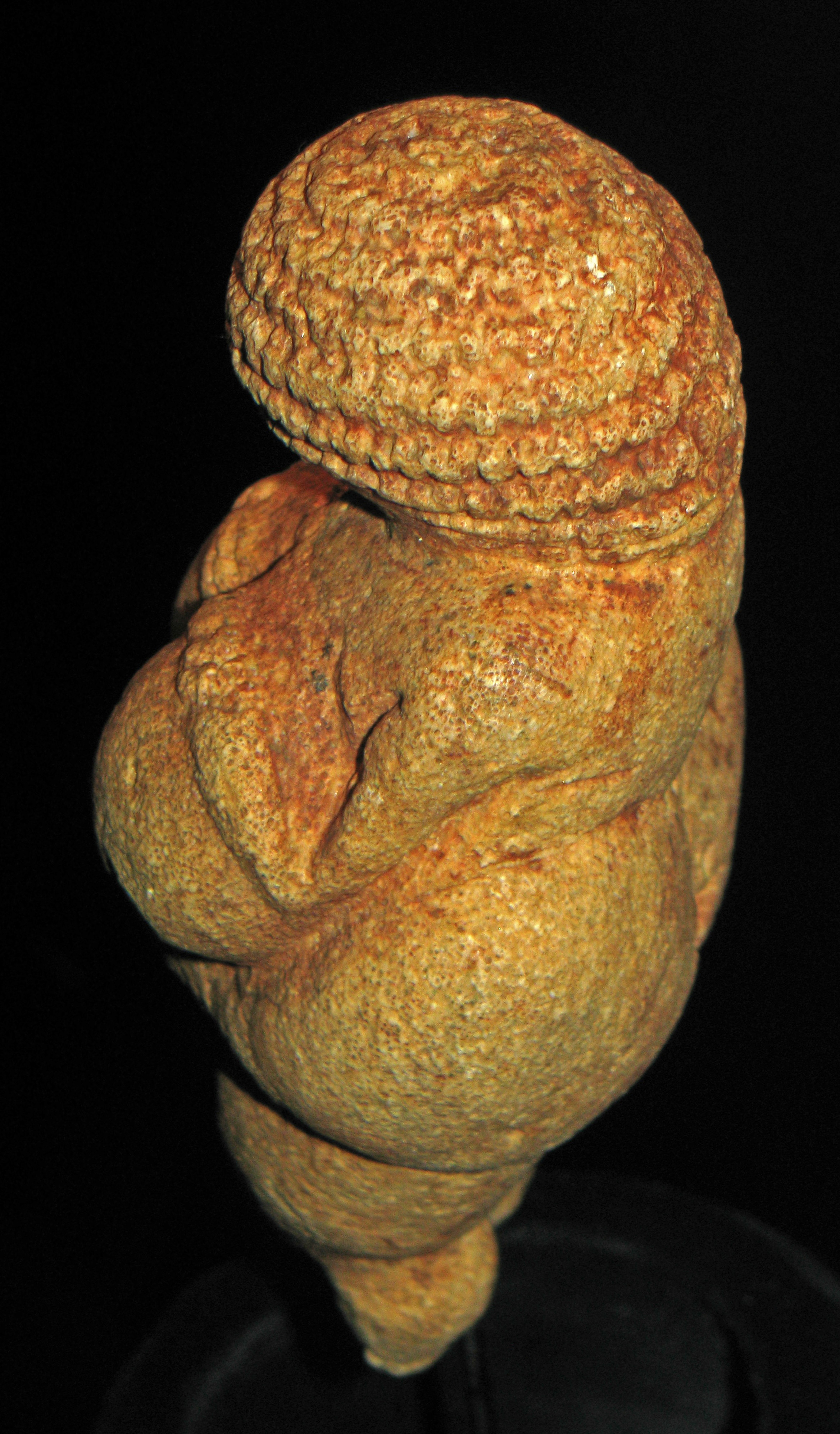
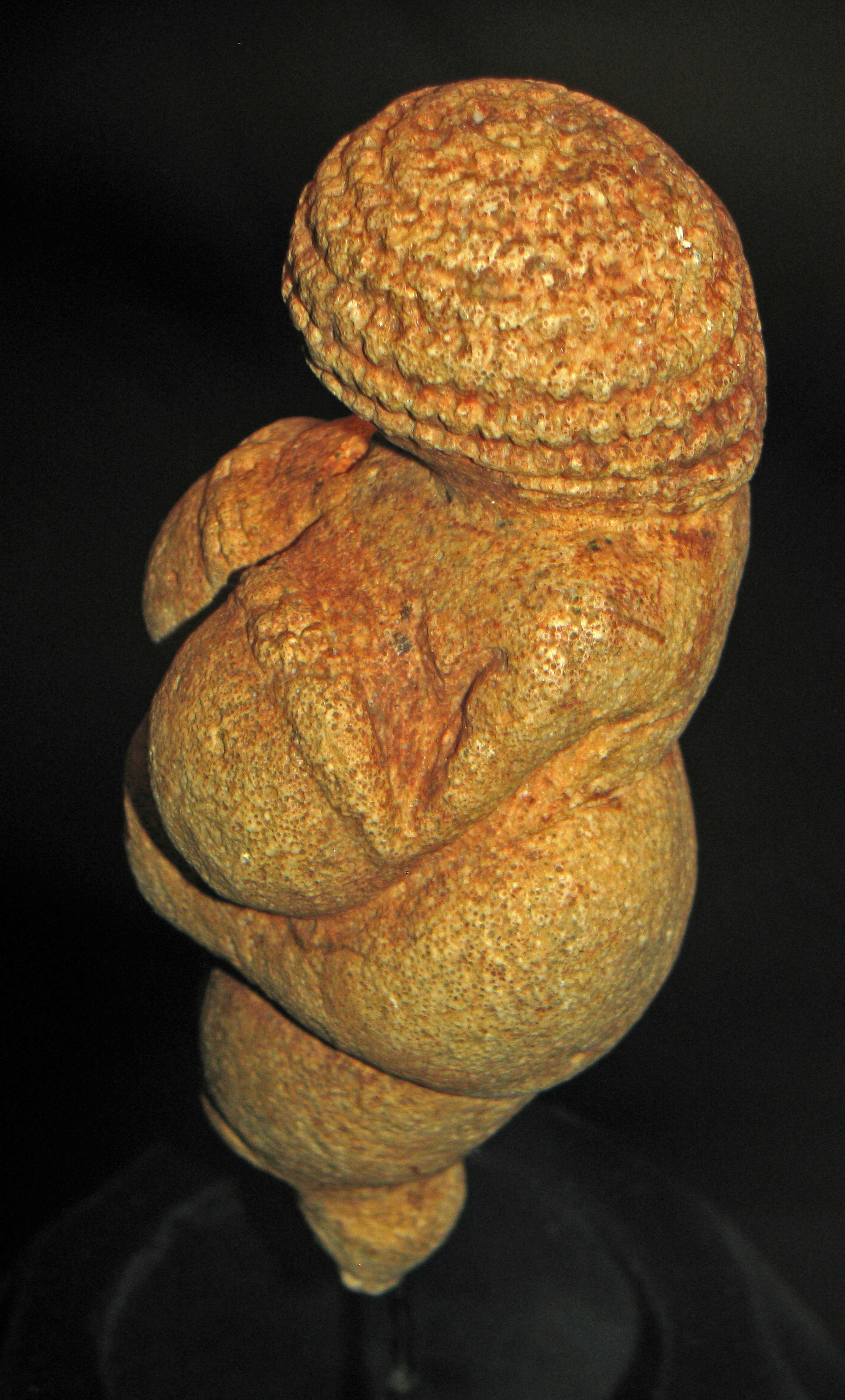
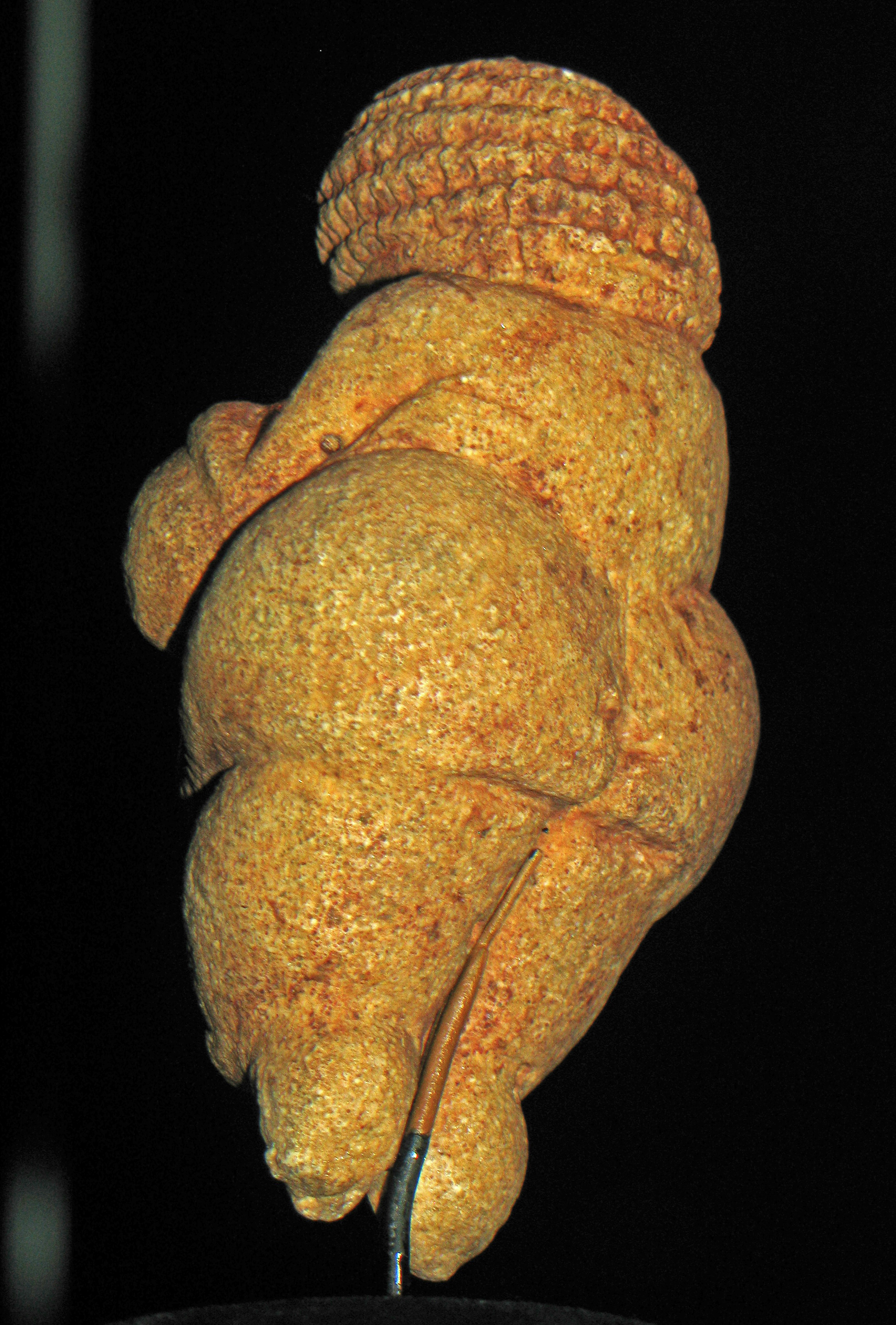
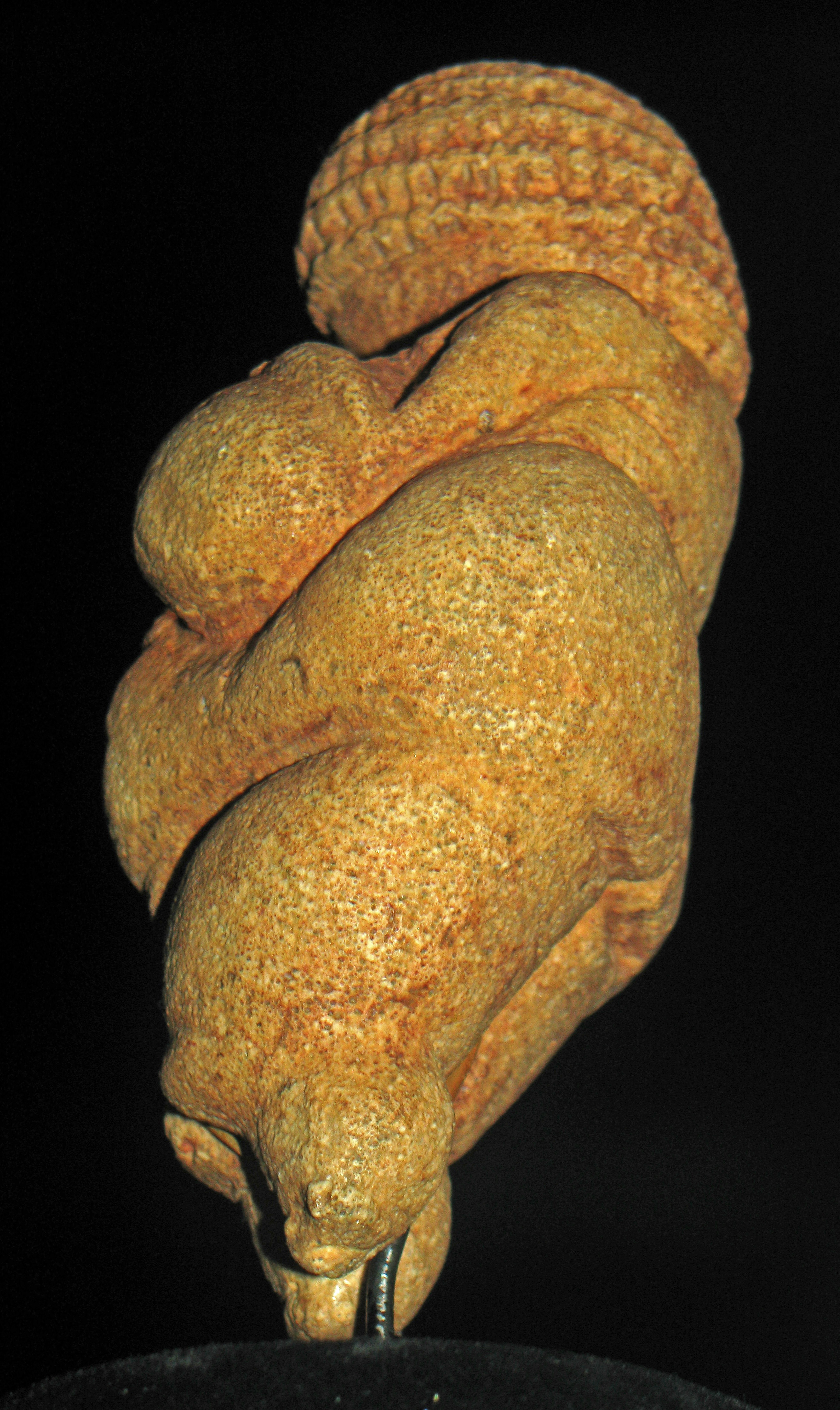
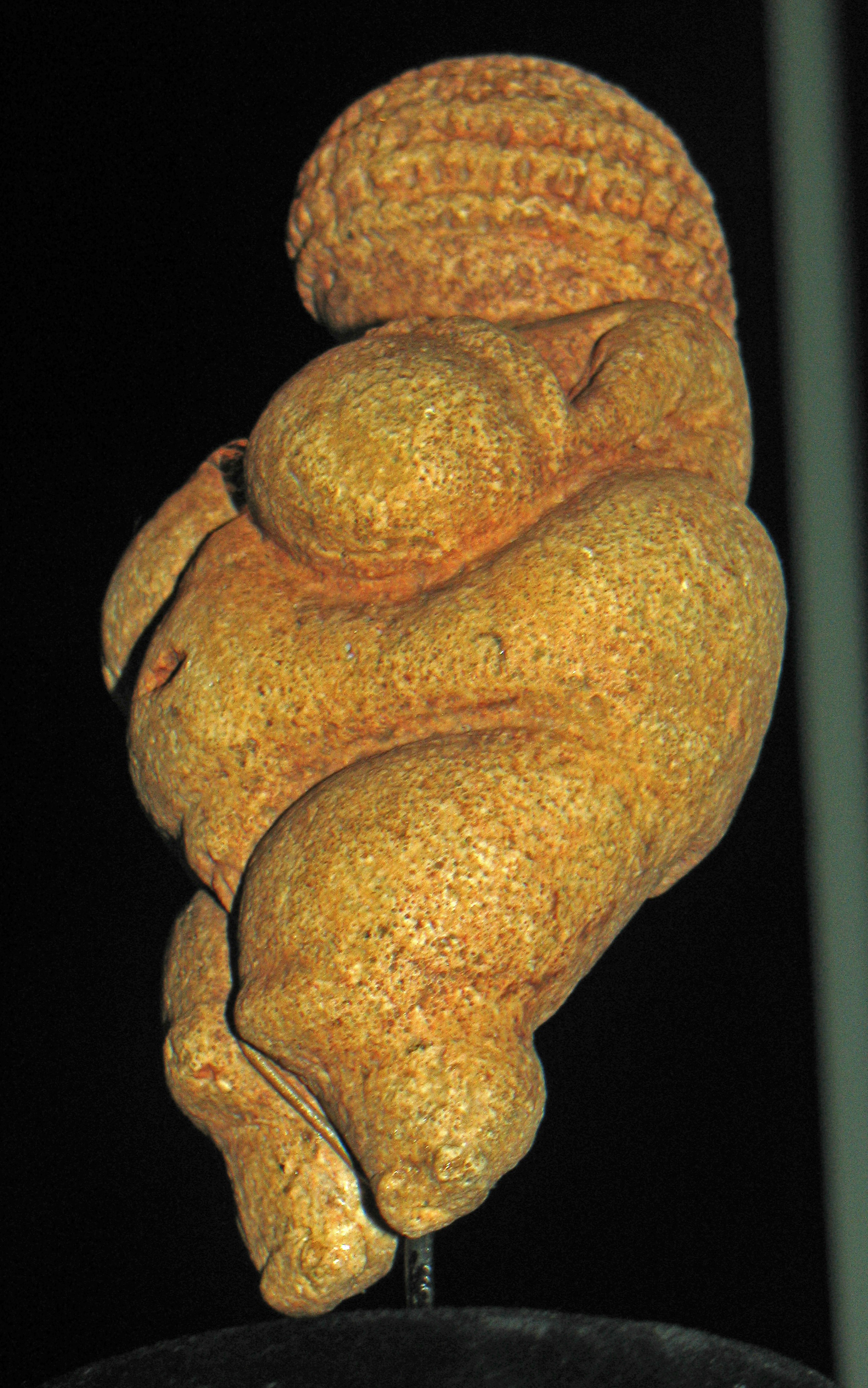
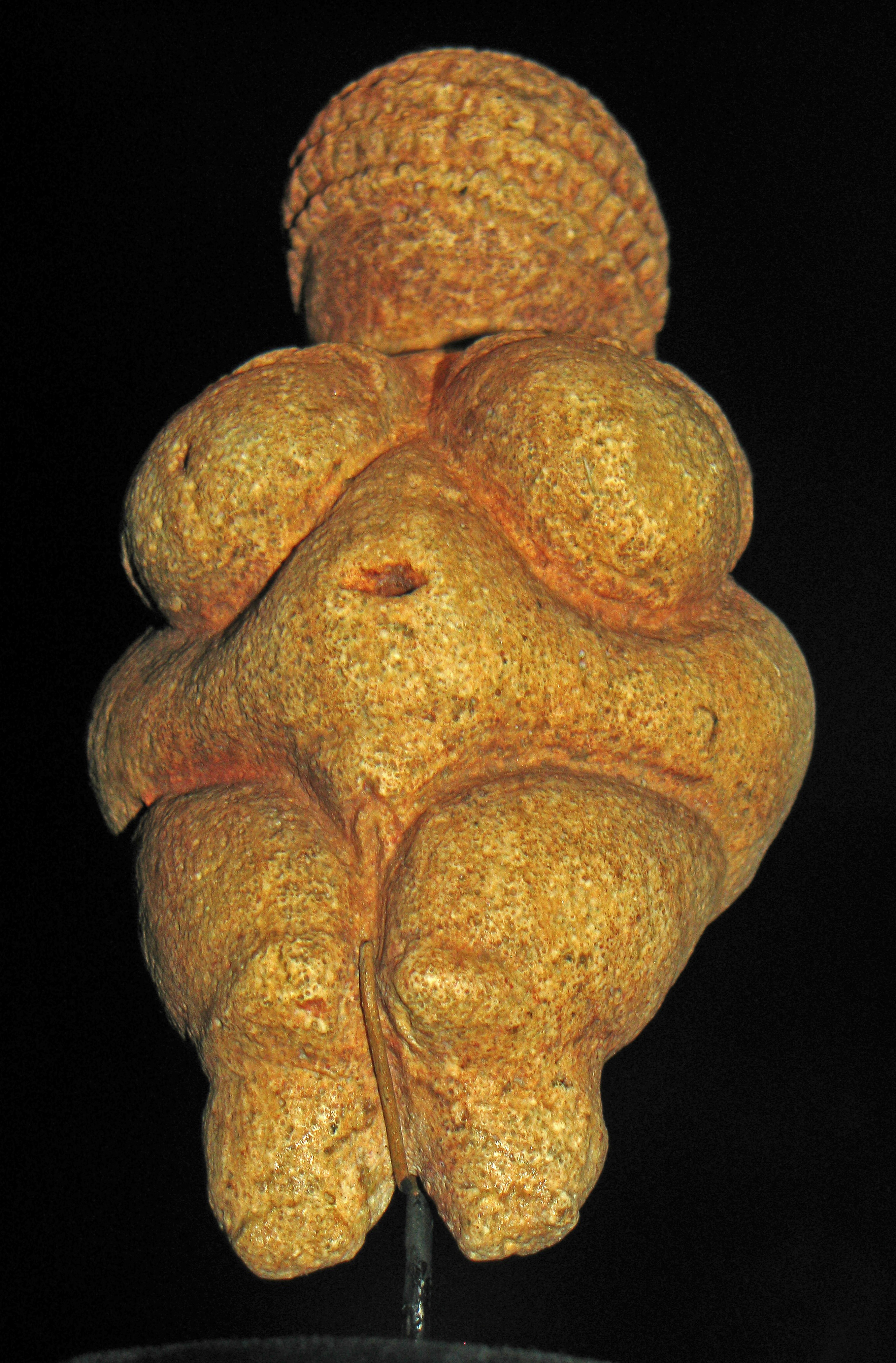
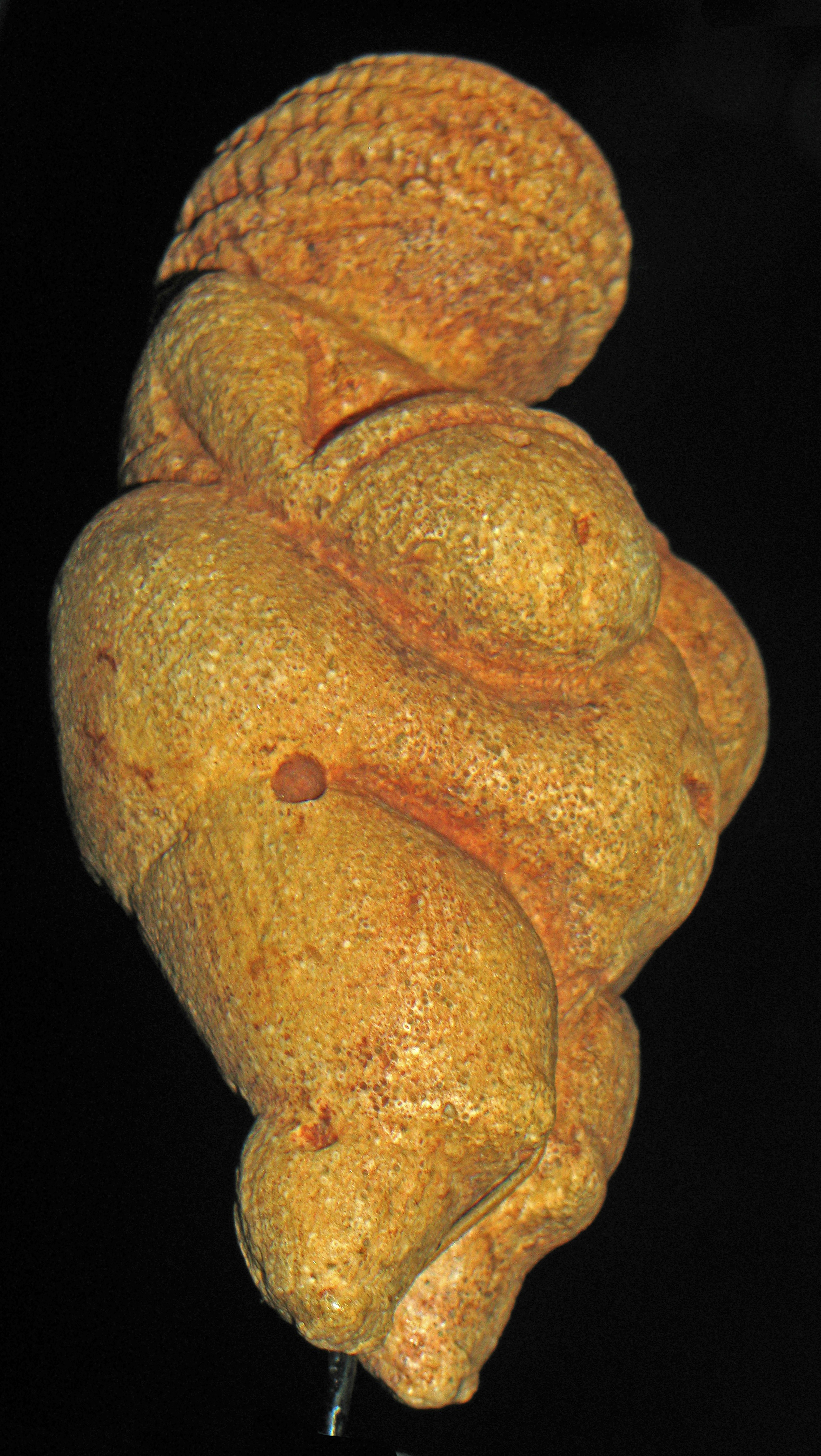
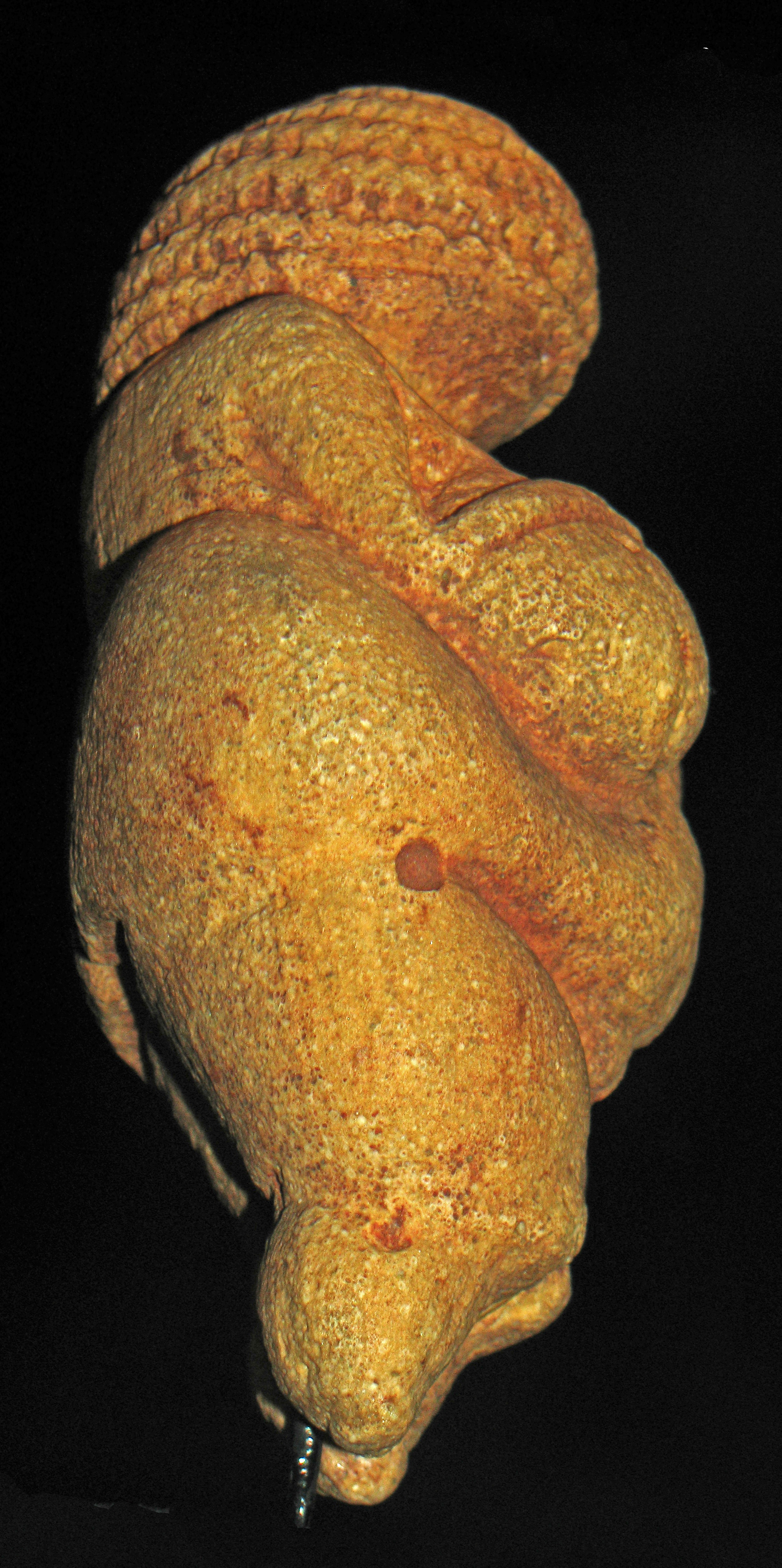
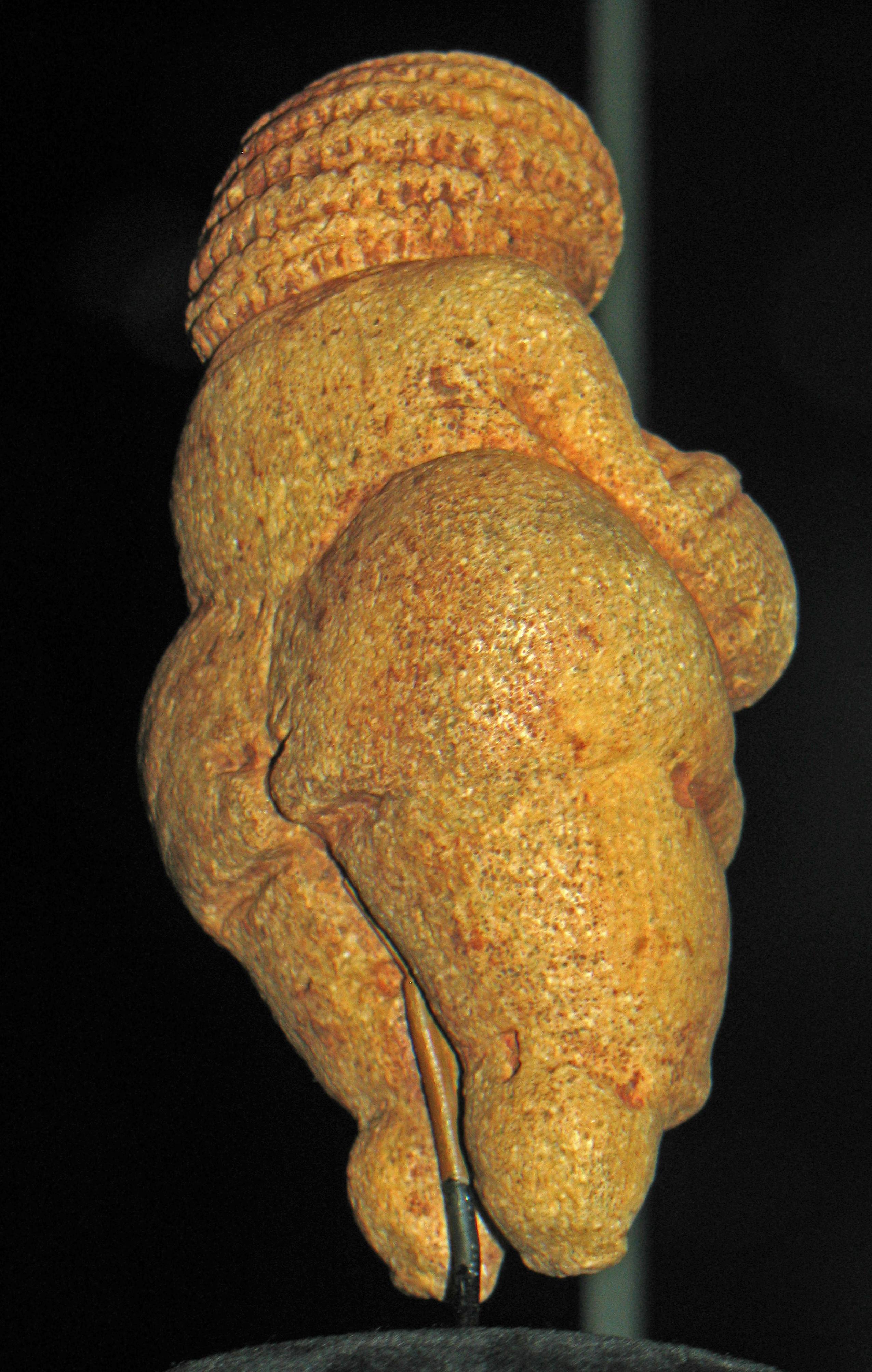
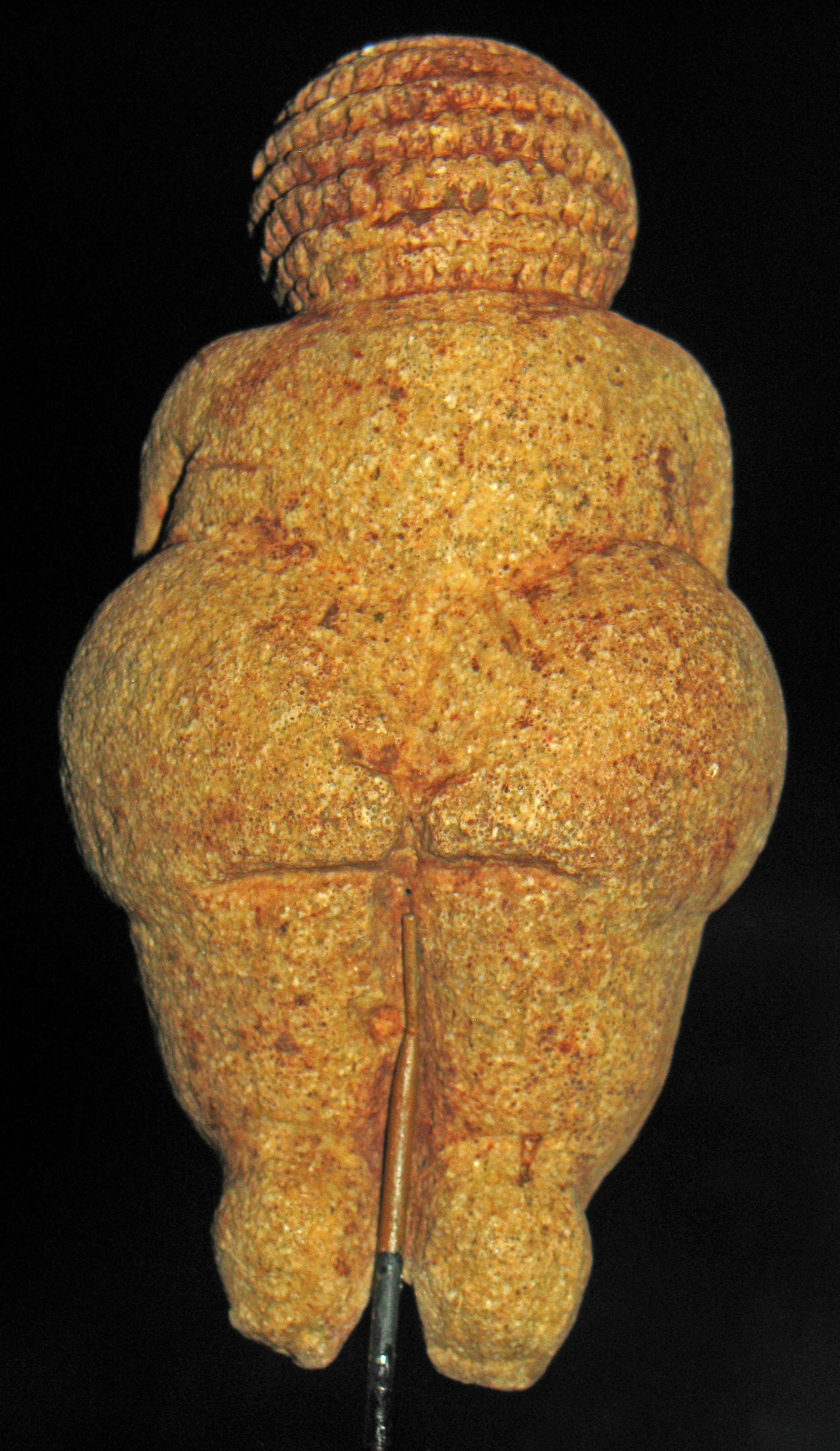
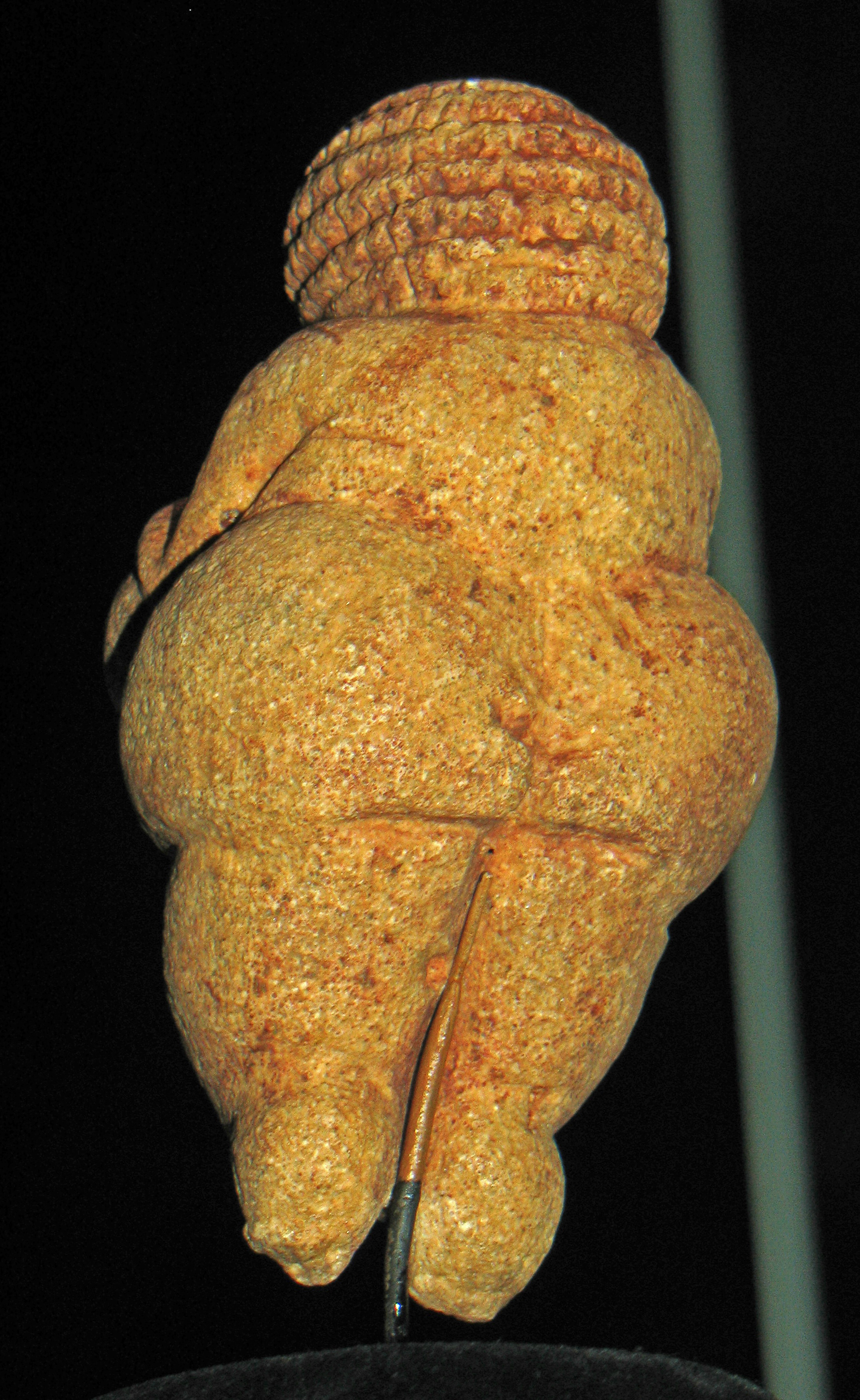
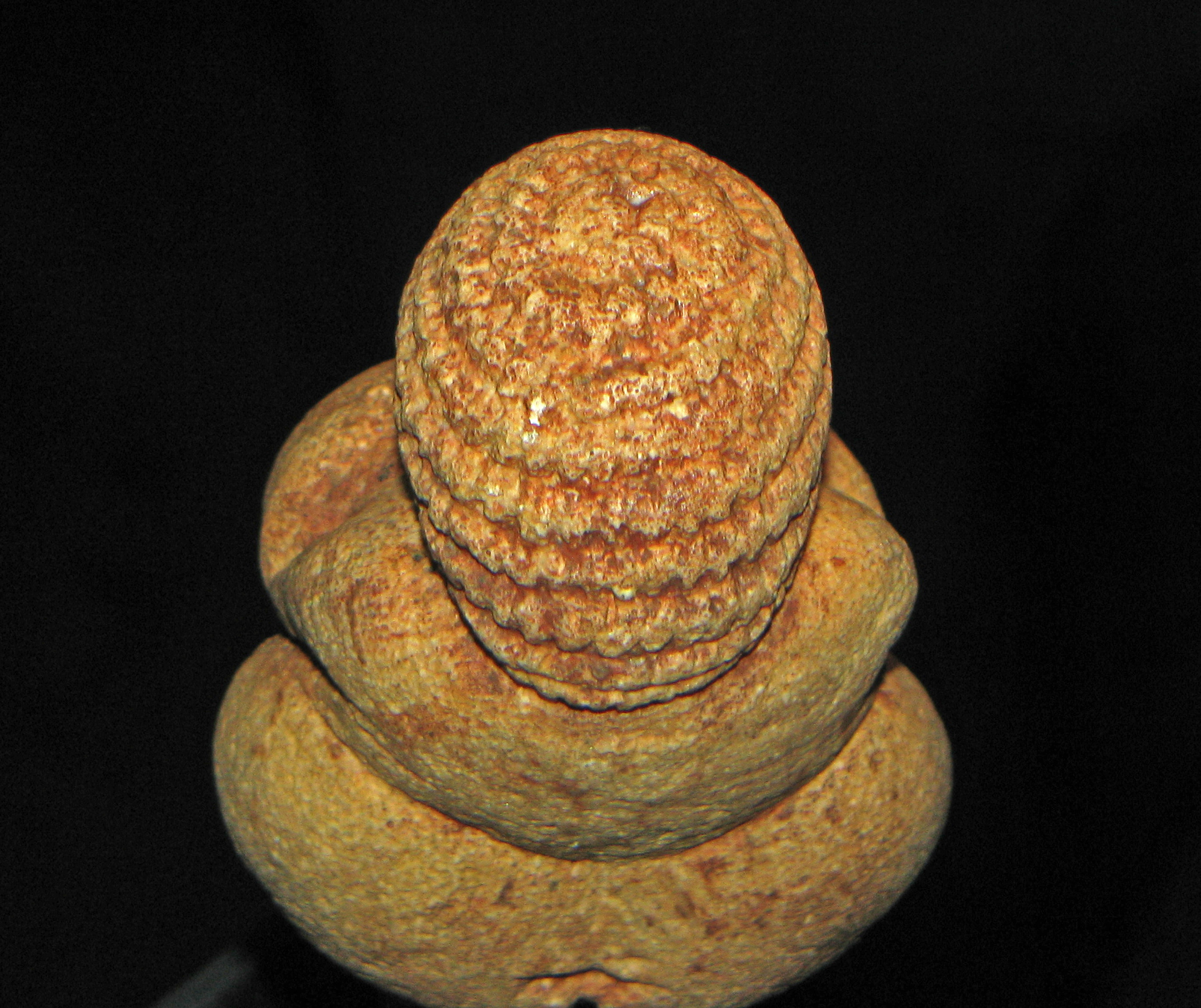
Showing the decoration on top of the head.
Smaller photographs

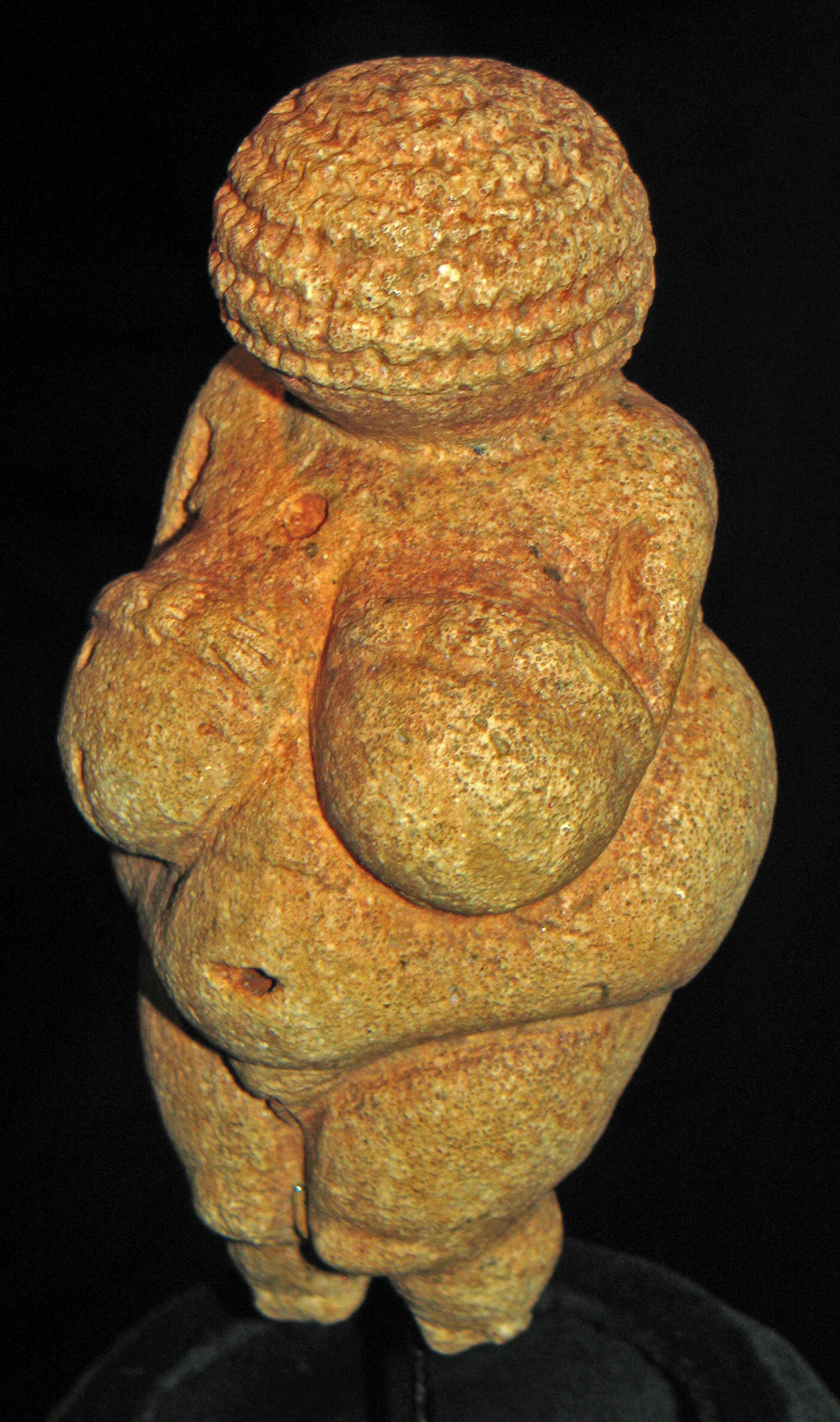
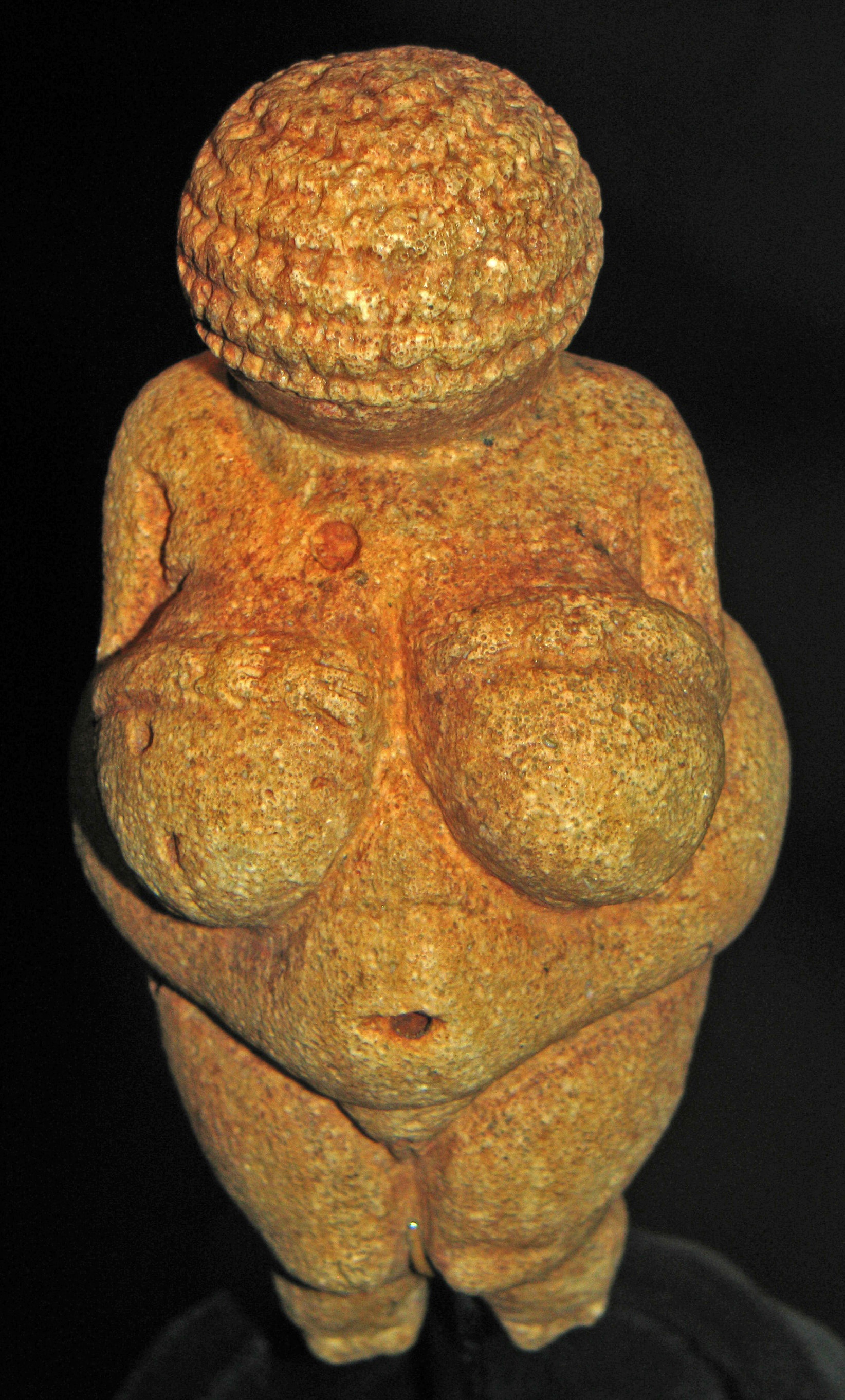

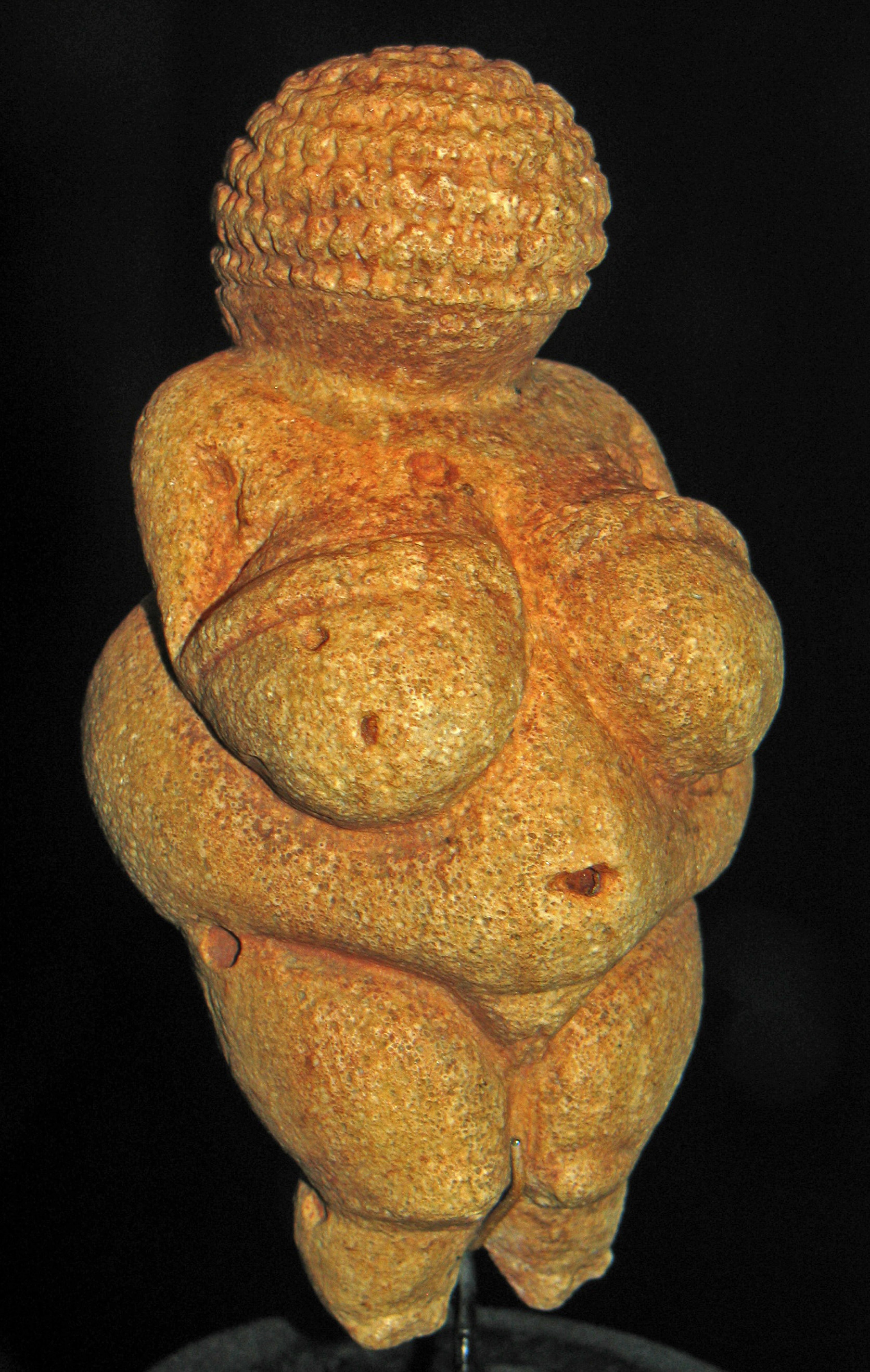
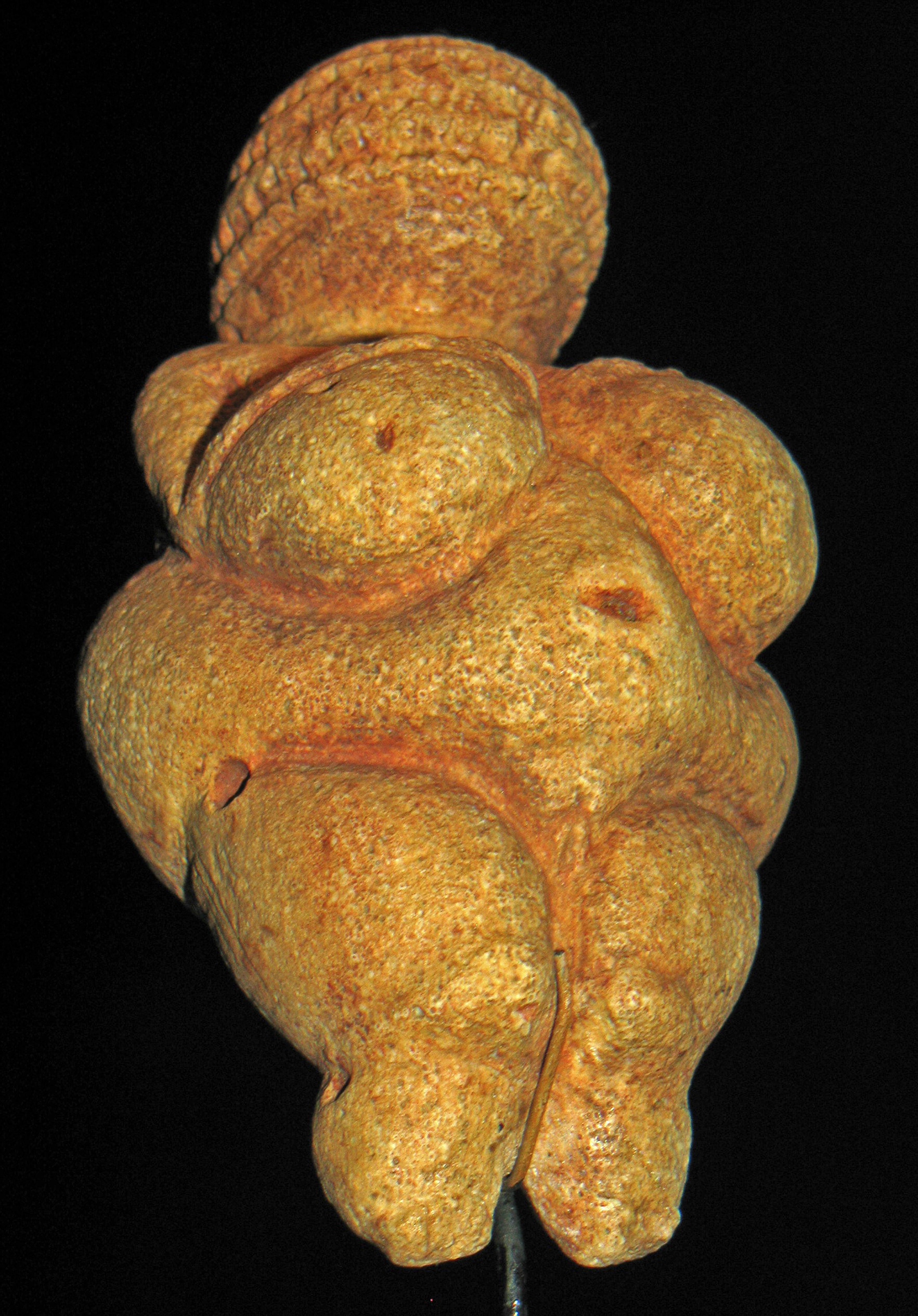
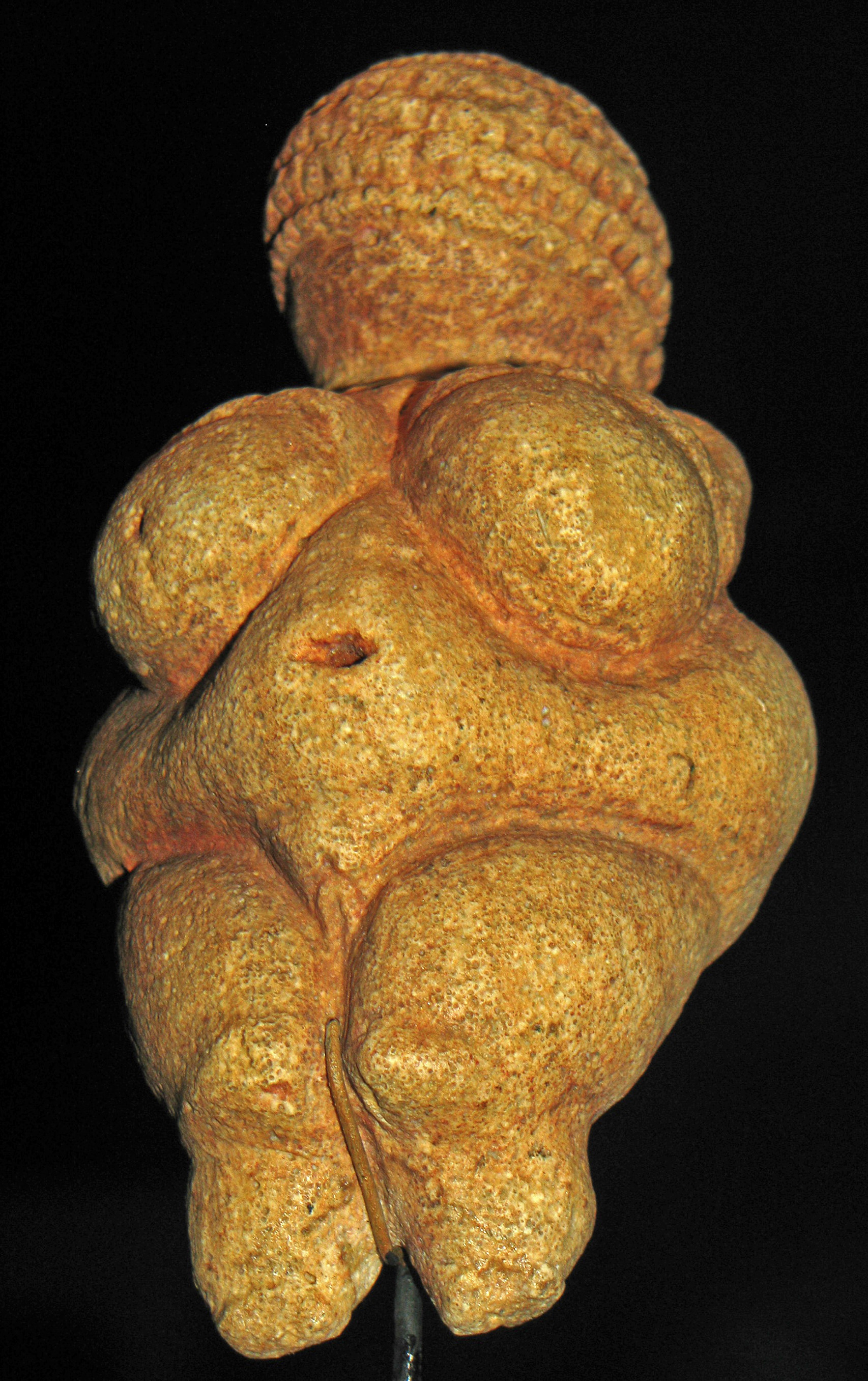
Images with good depth of field, but with less detail
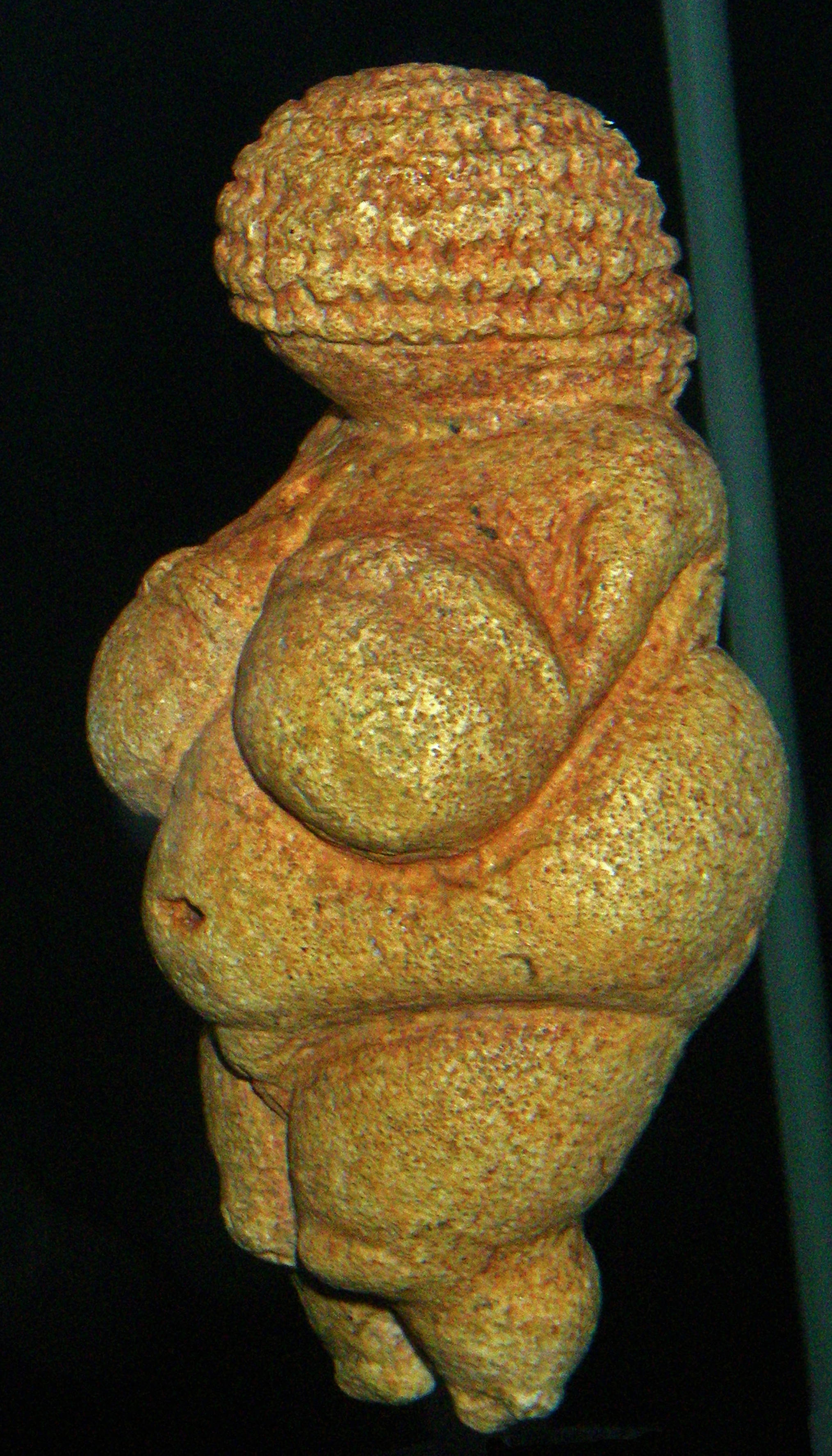
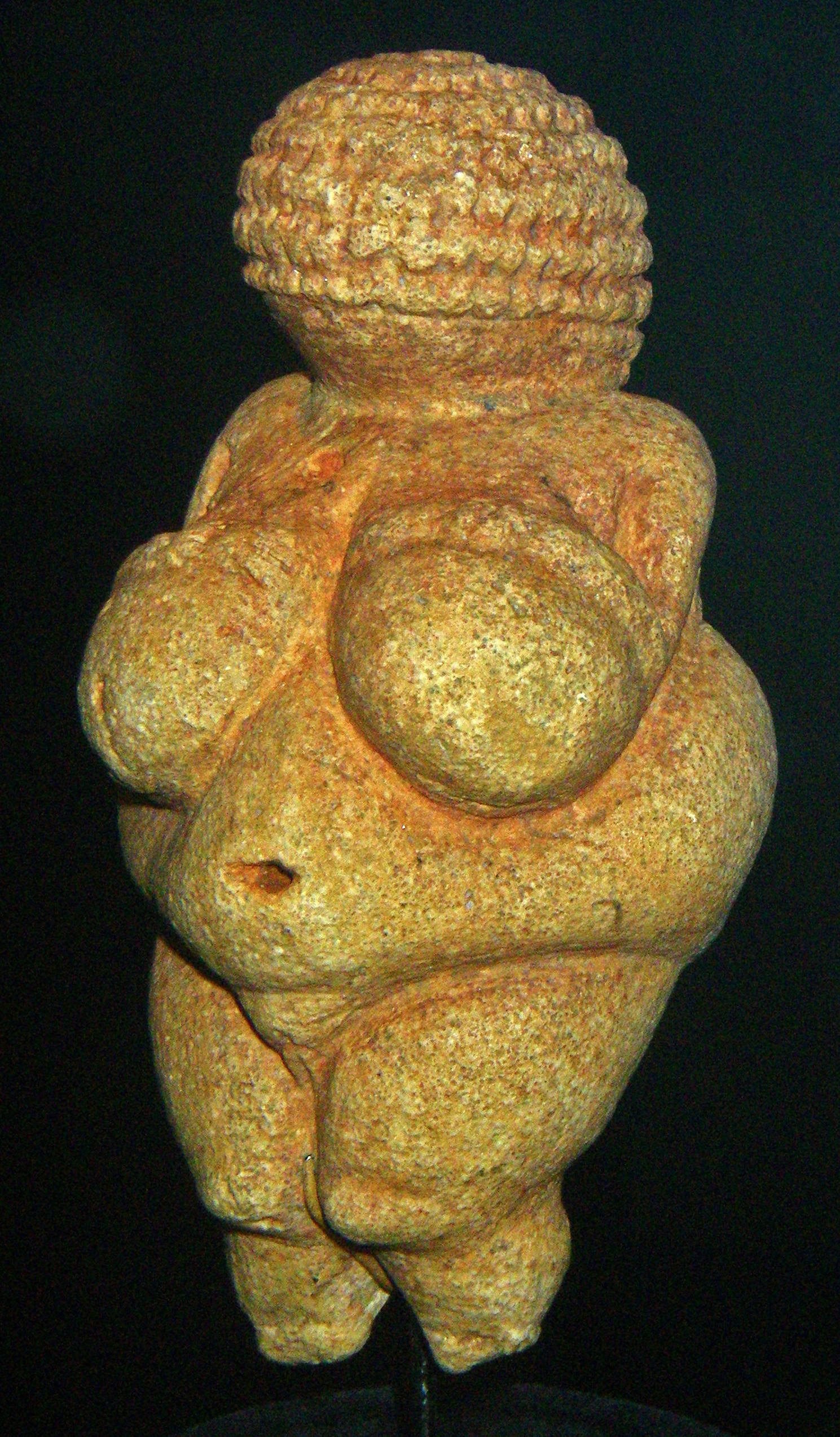
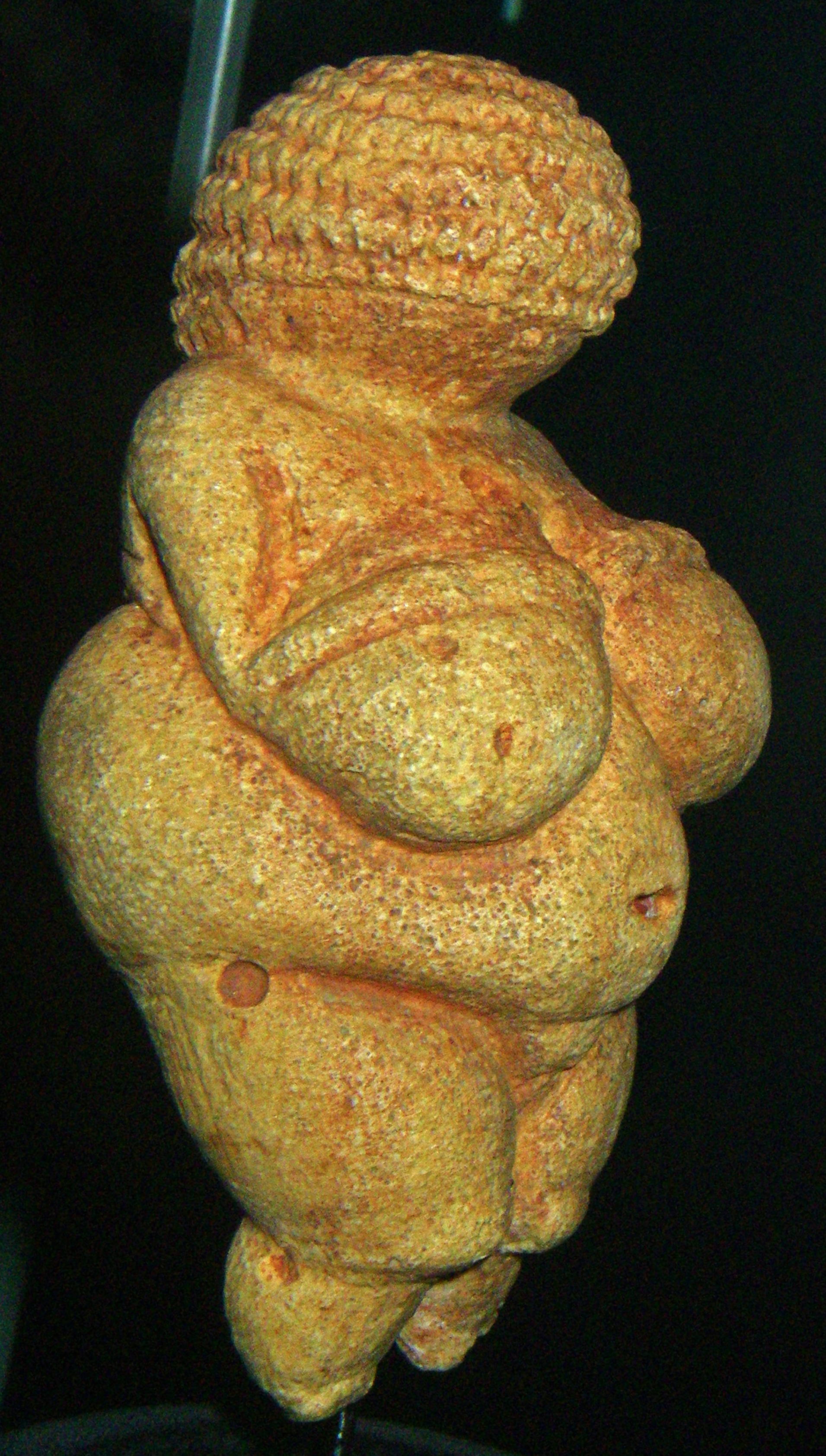
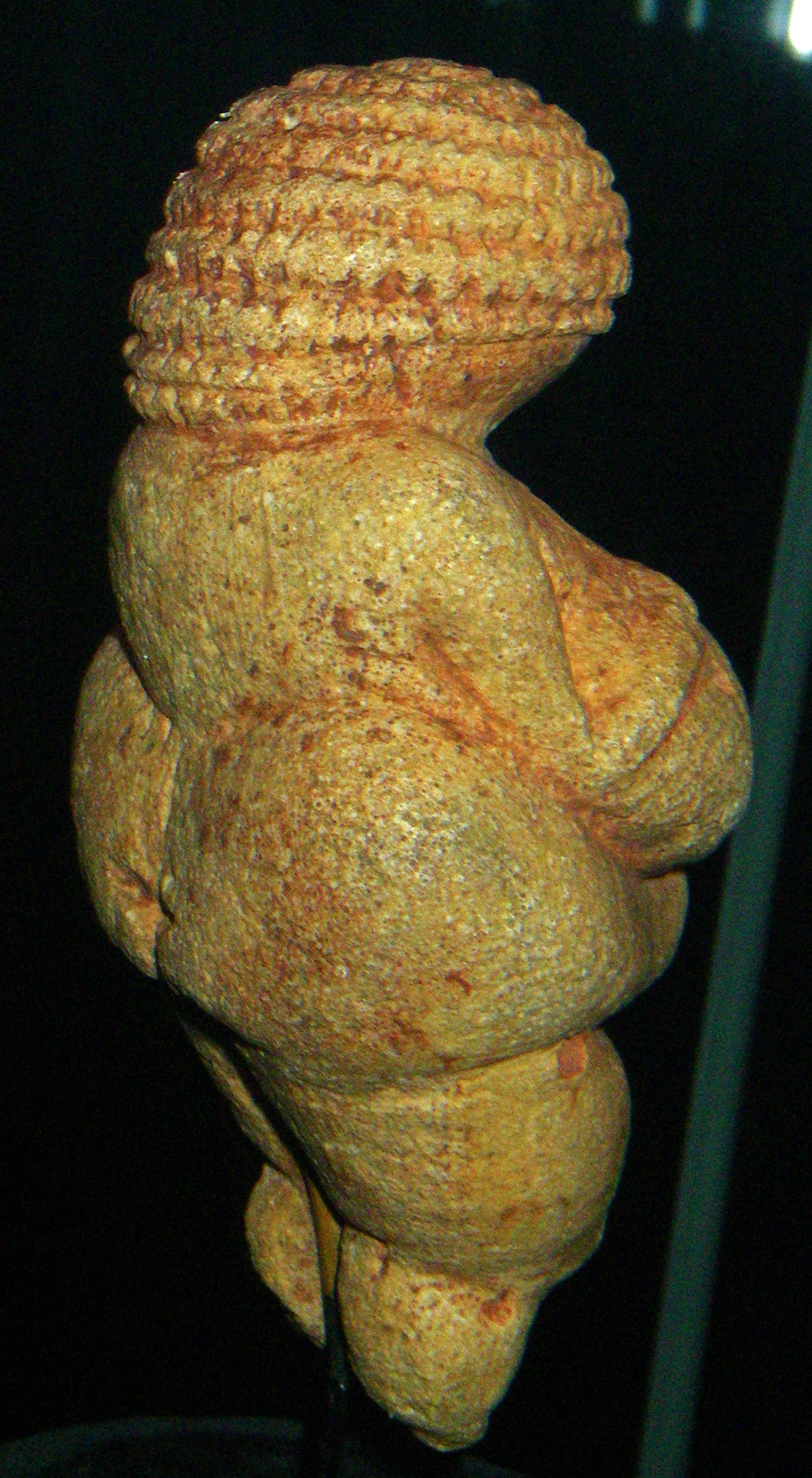
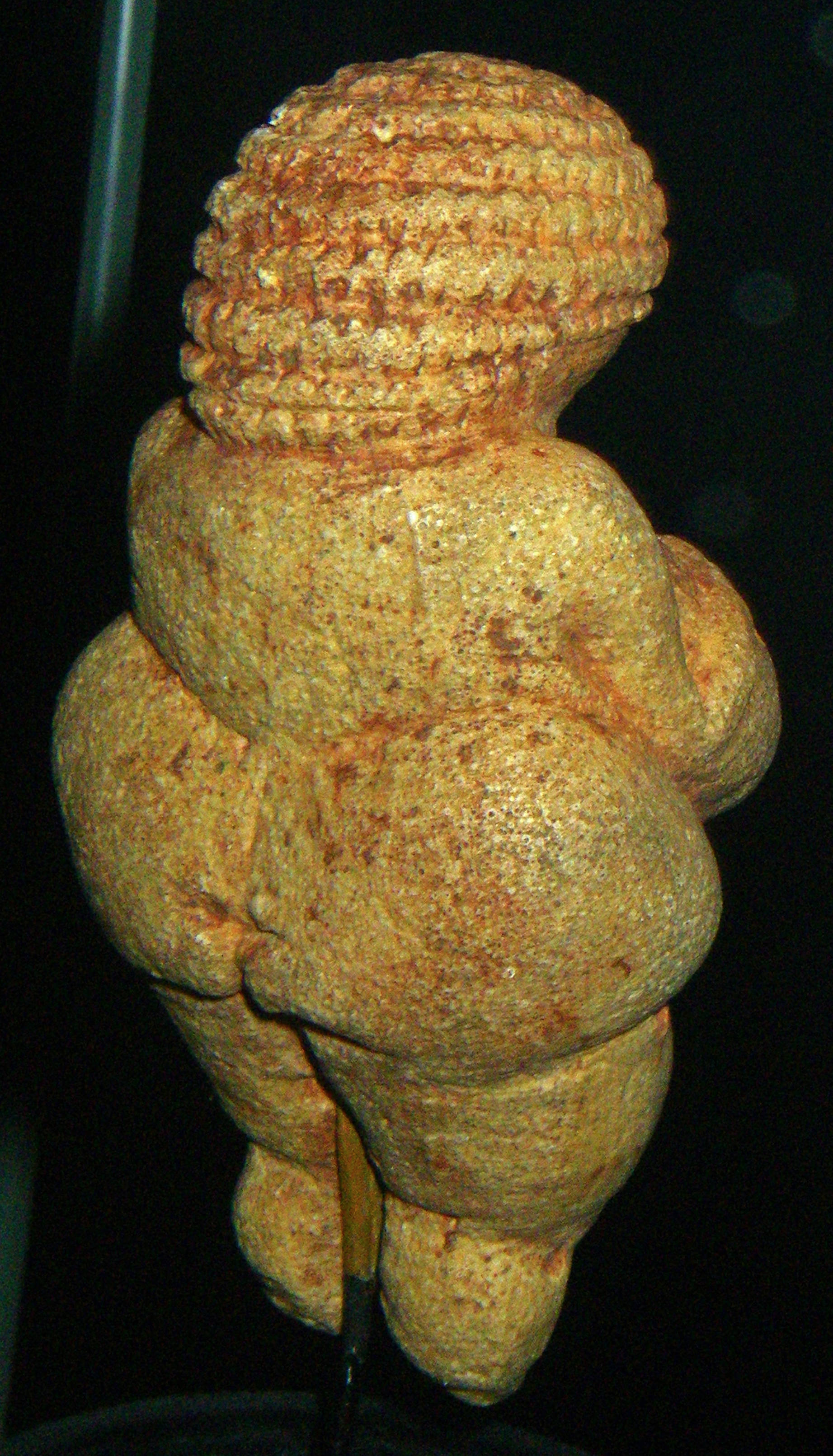

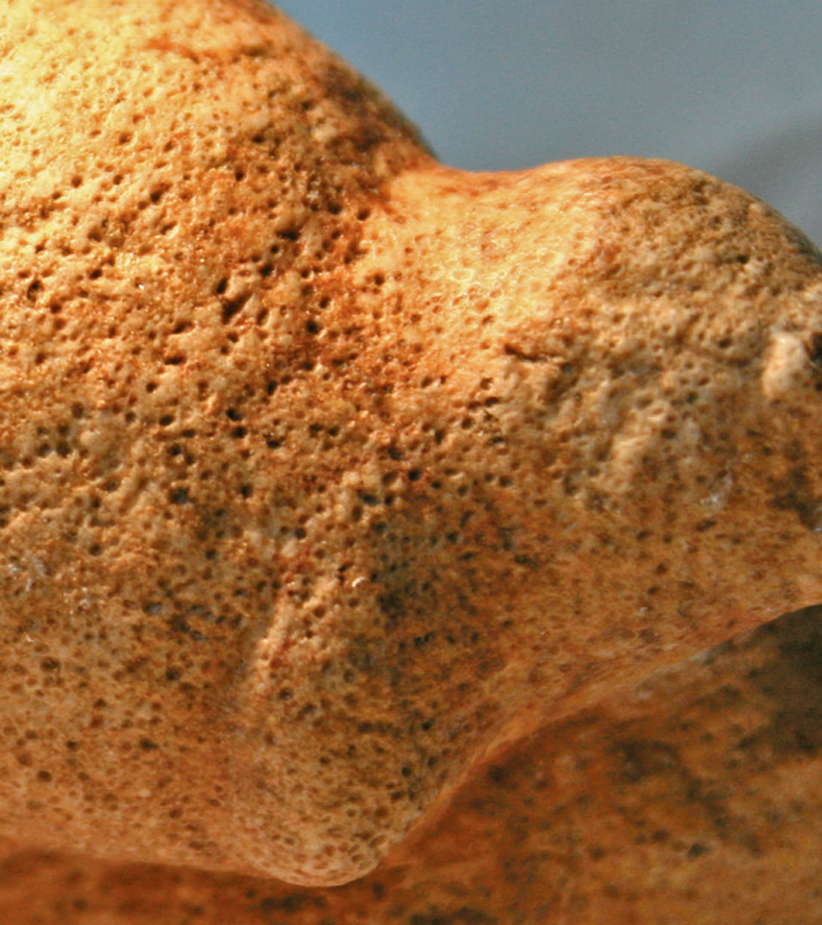
Working traces between belly and thighs
At the middle of the body it appears that breast, belly and the thighs were first modelled by deep vertical scratching. These scratches were smoothed by horizontal scraping. At the thighs horizontal traces are overlain by vertical ones.
A view of the Venus of the left thigh shows scraping traces at the breast as well as the horizontal traces on the belly and the vertical ones on the thighs.
Photo and text: Antl-Weiser (2008a)
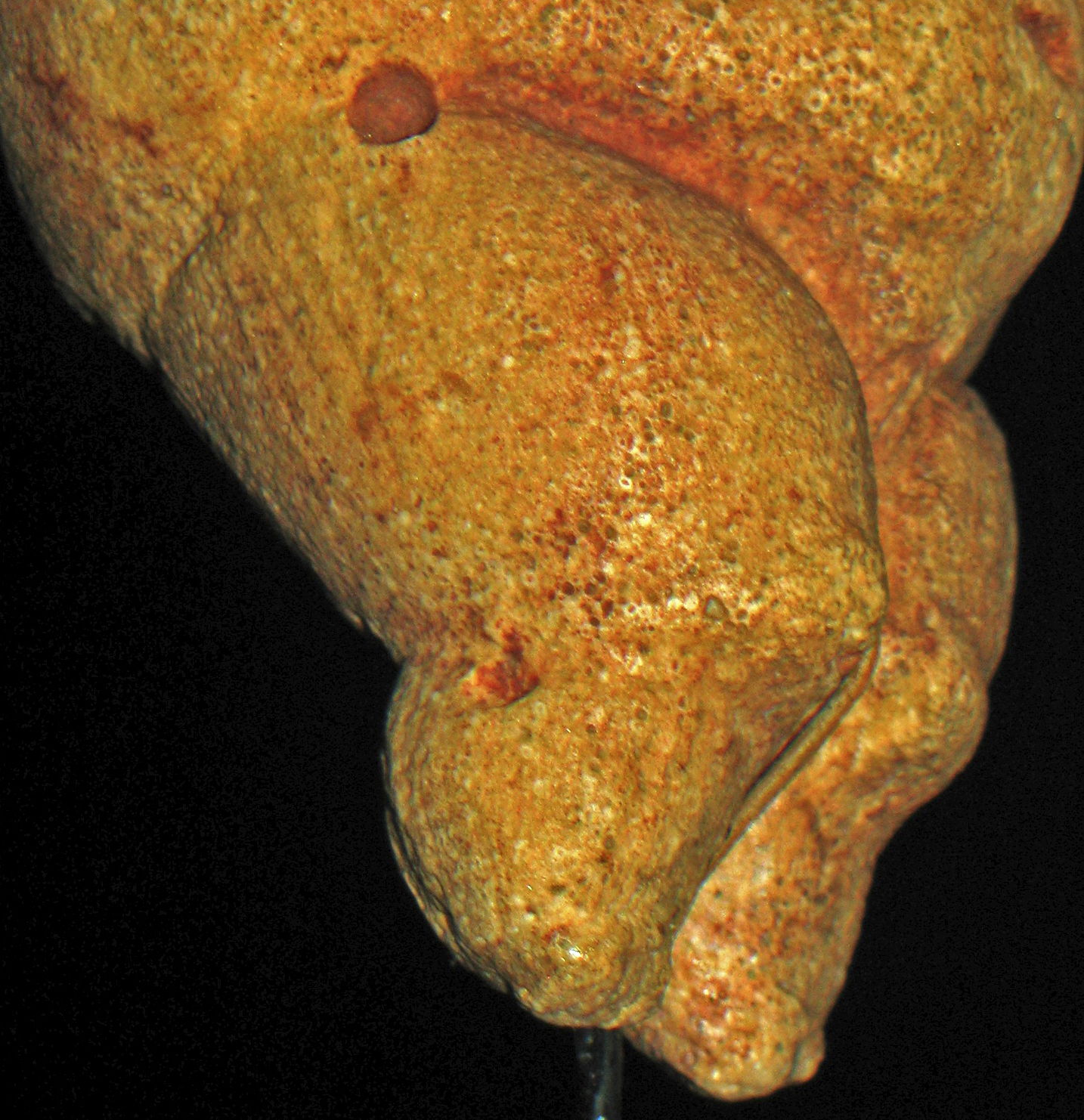
The working traces on the thigh are more easily seen on this photograph of the right thigh.
Photo: Don Hitchcock 2008, Canon, img_1472
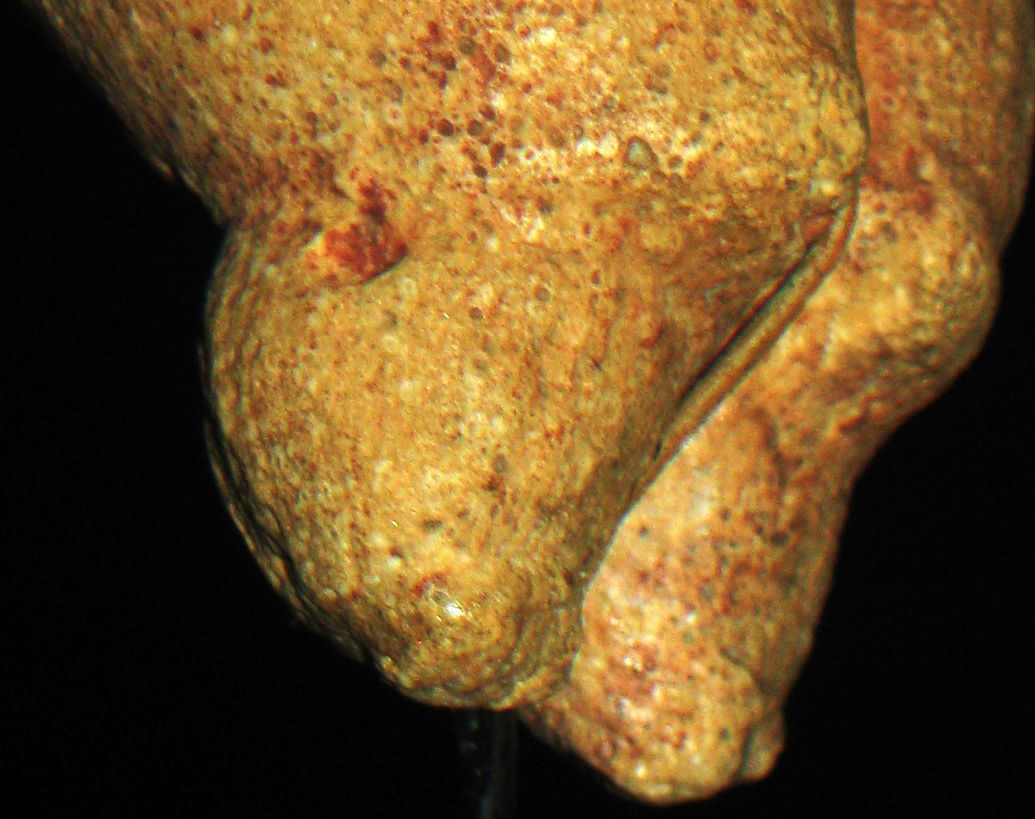
The knee was produced by vertical scratching which first diminished the size of the thighs. There is an overlay of clear horizontal scratches.
Beneath the knee there are again vertical scratches
Photo and text: Antl-Weiser (2008a)
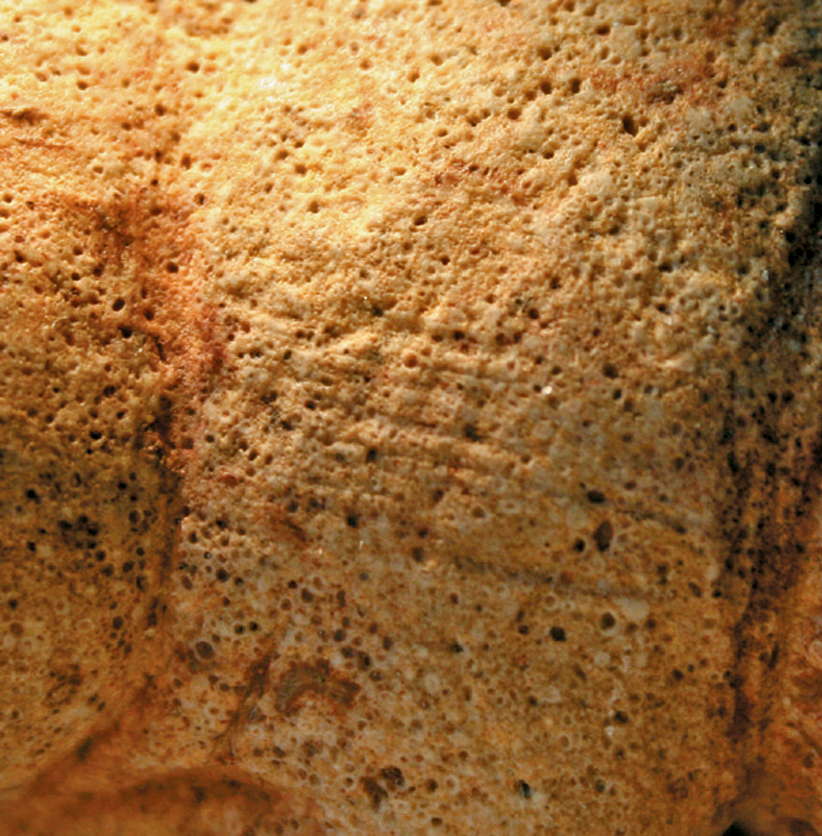
These vertical scratches below the knee on the calf may be more easily seen in this photograph.
Photo: Don Hitchcock 2008, Canon, img_1472
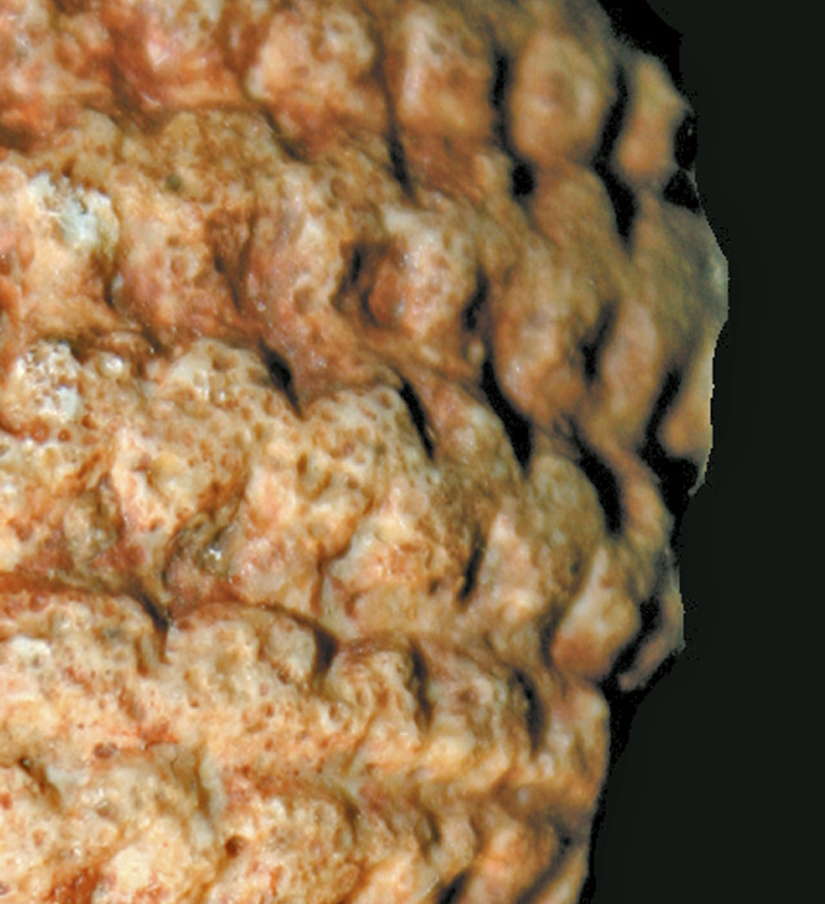
Crossing traces of working at the back.
A view to the back of the figurine shows traces of horizontal smoothing and parts where horizontal traces are overlain by vertical ones. The same scheme is to be seen at the back side of the thighs.
Photo and text: Antl-Weiser (2008a)
The venus of Willendorf was once covered with red ochre, and presumably it was removed during the process of 'cleaning up' for display in a museum.
Here we can see traces left, especially in the depressions left in the head ornamentation, and in the grooves outlining parts of the figurine.
Photo(left): Antl-Weiser (2008a)
Photo (right): Don Hitchcock 2008, Canon
Source: Original in the Vienna Natural History Museum
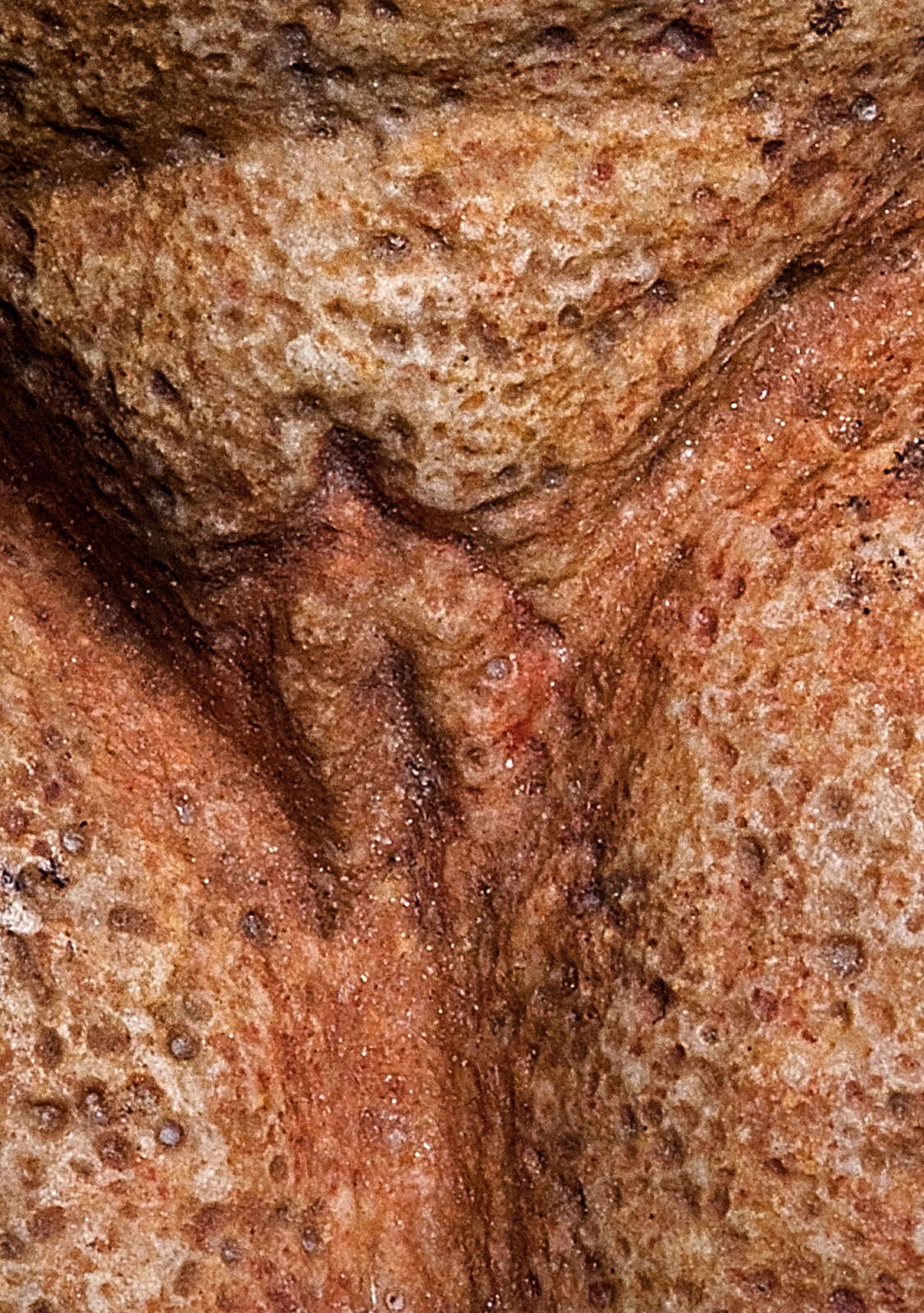
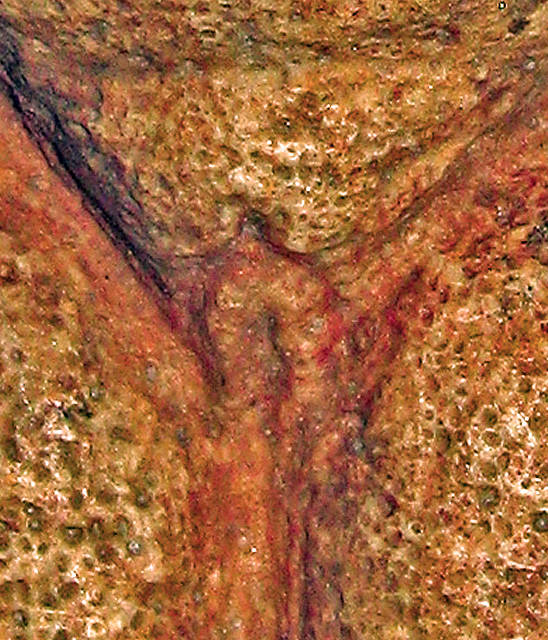
The vulva is well defined in the figurine, though not grotesquely enlarged as in some other venus figurines such as Monpazier.
Photo: (left) Kern et al. (2008)
Photo: (right) Don Hitchcock 2008
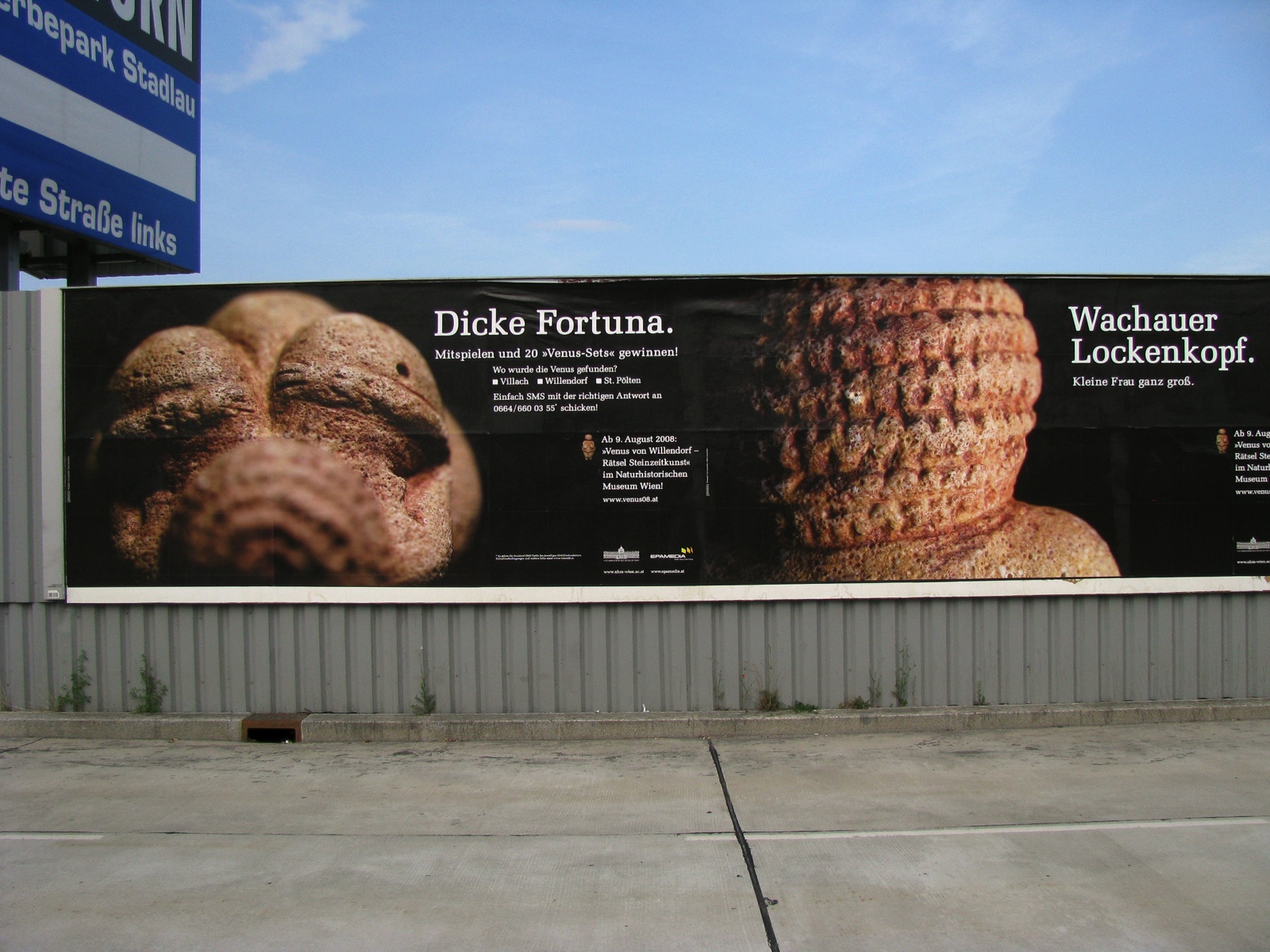
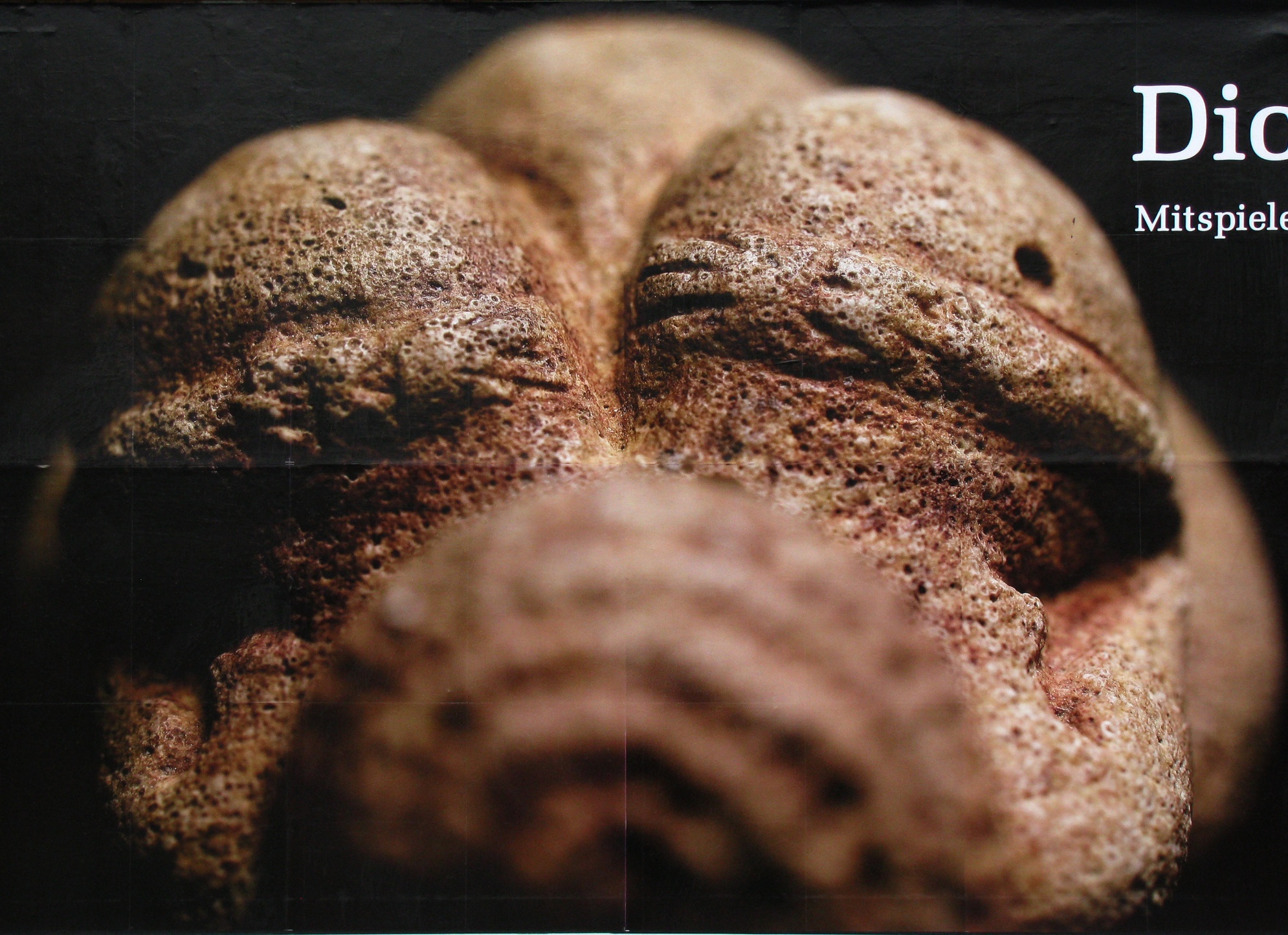
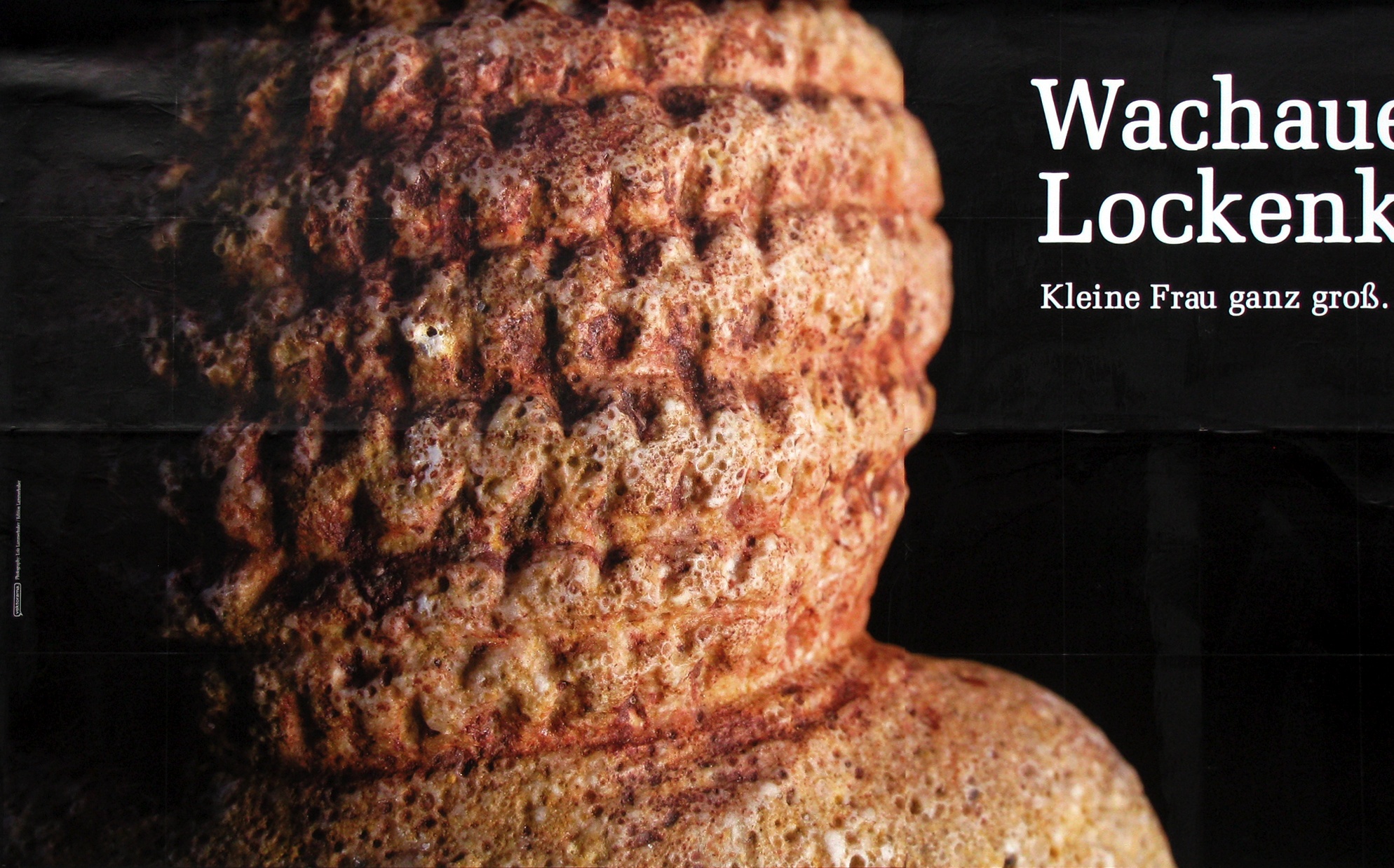
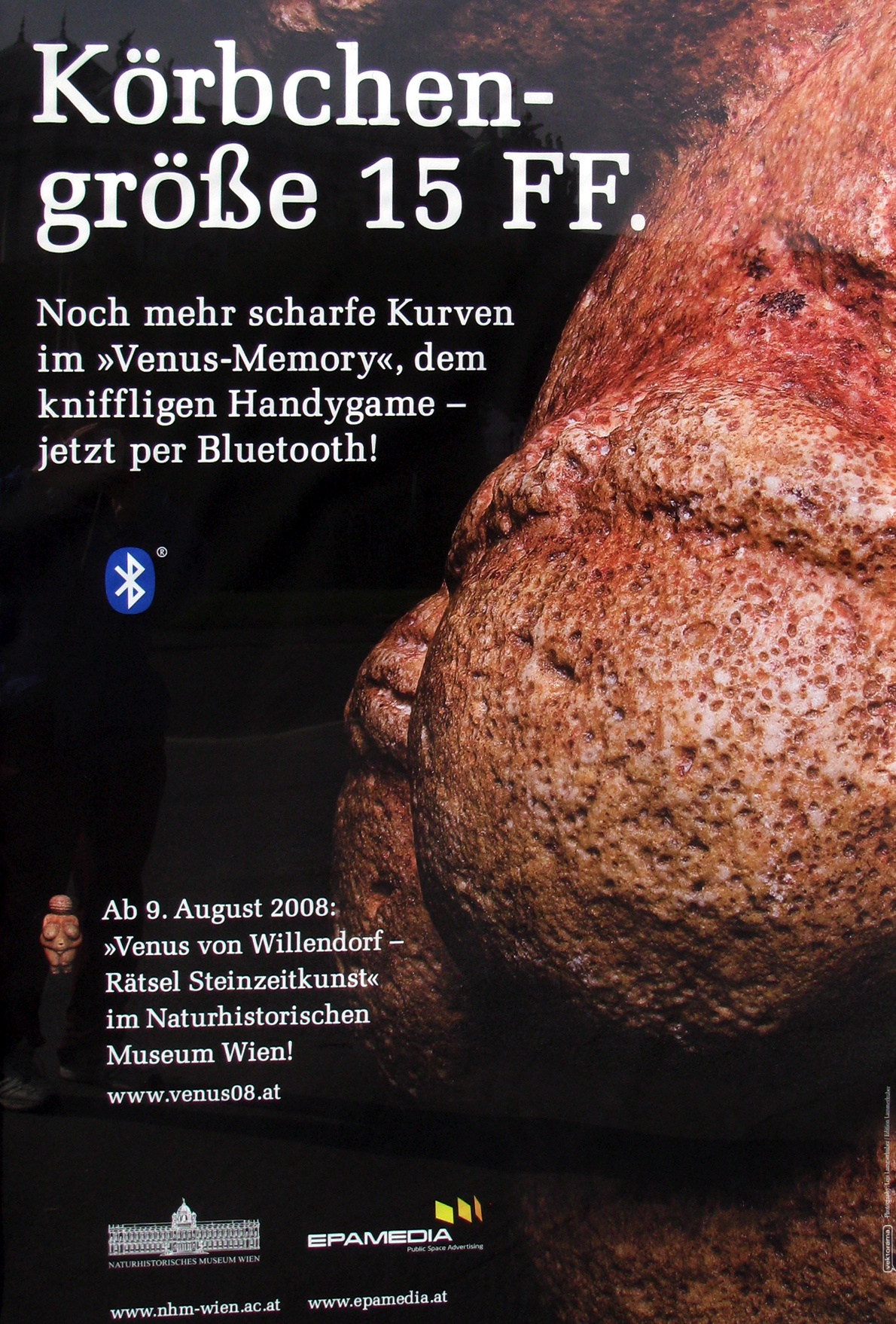
Venus of Willendorf posters. When I arrived in Viena in September 2008, there were posters advertising the Venus of Willendorf everywhere.
Photo: Don Hitchcock 2008, Canon
Origin of the stone used for the Venus of Willendorf
Text below adapted from Weber et al. (2022)The Venus of Willendorf is made of a rock called oolite, a form of limestone that is not found in or around Willendorf. A research team led by the anthropologist Gerhard Weber from the University of Vienna have now found out with the help of high-resolution tomographic images that the material from which the Venus was carved likely comes from northern Italy. This sheds new light on the remarkable mobility of the first modern humans south and north of the Alps.
The Venus von Willendorf is not only special in terms of its design, but also in terms of its material. While other Venus figures are usually made of ivory or bone, sometimes also of different stones, oolite was used for the Lower Austrian Venus, which is unique for such cult objects. The figurine found in the Wachau in 1908 and on display in the Natural History Museum in Vienna has so far only been examined from the outside. Now, more than 100 years later, anthropologist Gerhard Weber from the University of Vienna has used a new method to examine its interior: micro-computed tomography. During several passes, the scientists obtained images with a resolution of up to 11.5 micrometers - a quality that is otherwise only seen under a microscope. The first insight gained is: 'The venus does not look at all uniform on the inside. This is a special property that could be used to determine its origin' says the anthropologist.
The team procured comparative samples from Austria and Europe and evaluated them. It was a complex project: Rock samples from France to eastern Ukraine, from Germany to Sicily were obtained, sawn up and examined under a microscope. The team was supported by the state of Lower Austria, which provided funds for the time-consuming analyses.
The inside also gives information about the outside. The tomographic data from the Venus showed that the sediments were deposited in the rocks in different densities and sizes. In between there were also small remnants of shells and six very dense, larger grains, so-called limonites. The latter explains the previously mysterious hemispherical cavities on the surface of Venus with the same diameter: 'The hard limonites probably broke out when the creator of the Venus was carving it' explains Weber. 'In the case of the Venus navel, he then apparently made it a virtue out of necessity.'
Another finding: The Venus oolite is porous because the cores of the millions of globules (ooides) of which it is comprised had dissolved. This is a great explanation for why the resourceful sculptor chose this material 30 000 years ago: It is much easier to work with. The scientists also identified a tiny shell remnant, just 2.5 millimeters long, and dated it to the Jurassic period. This ruled out all other potential deposits of the rock from the much later Miocene geological era, such as those in the nearby Vienna Basin.
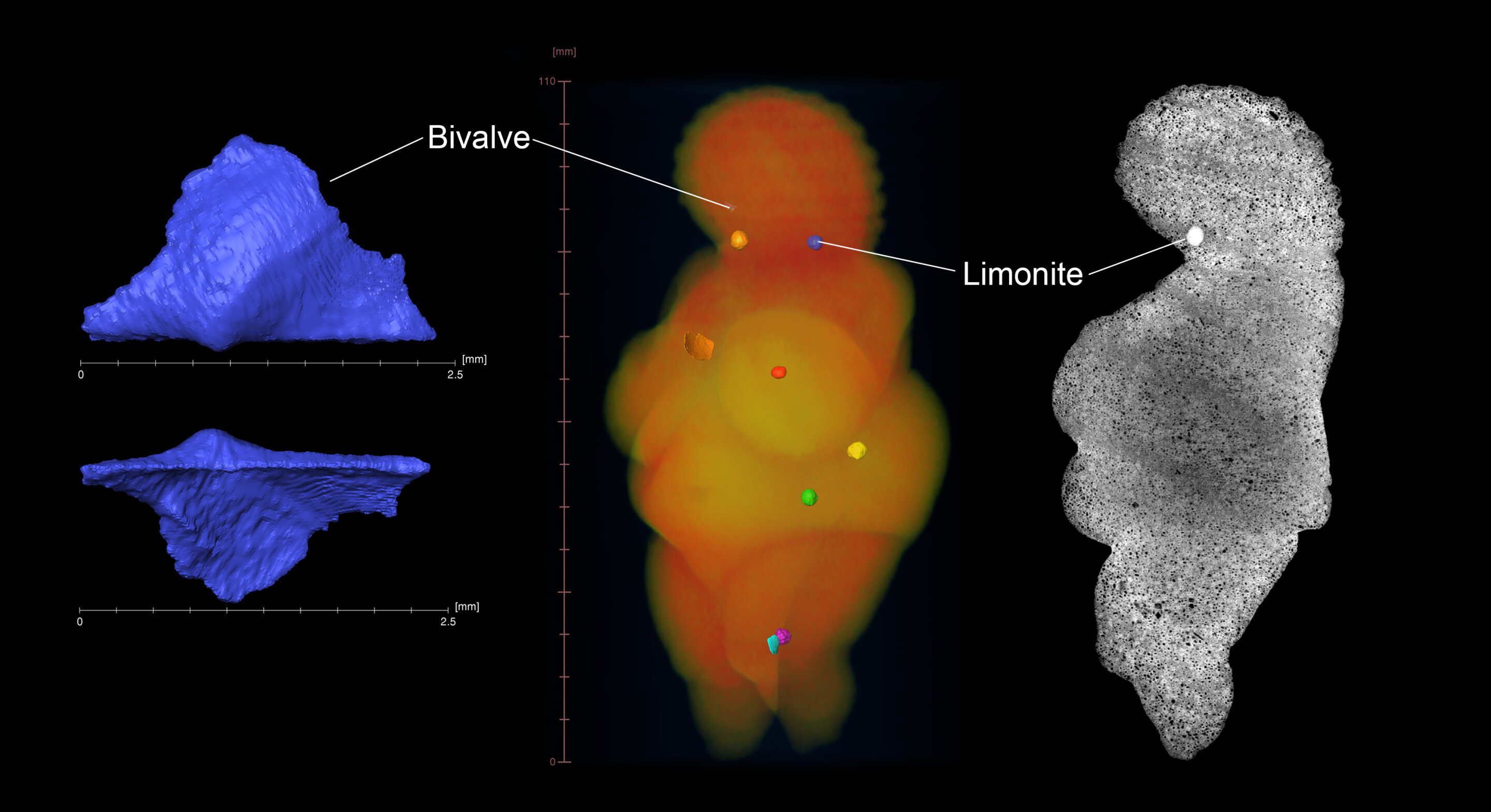
Pictures derived from micro-computed tomography scans of the Venus.
Left: Segmented bivalve (Oxytomidae) that was located on the right side of the Venus head; scan resolution 11.5 μm; characteristic features are the umbo and the wings.
Centre: Volume rendering of the virtual Venus; six embedded limonite concretions: neck right (orange), neck left (blue), breast left (red), belly left (yellow), hip left (green), leg left (purple); three mollusc fragments: bivalve head right (blue, only 2.5 mm long, see white line from label 'Bivalve' for position), shell breast middle (orange), shell leg left (turquoise).
Right: Single μCT-slice showing the porosity and layering of the oolite; note the relative density of the limonite concretion; scan resolution 53 μm.
Photo: Gerhard Weber, University of Vienna
Source: Weber et al. (2022)
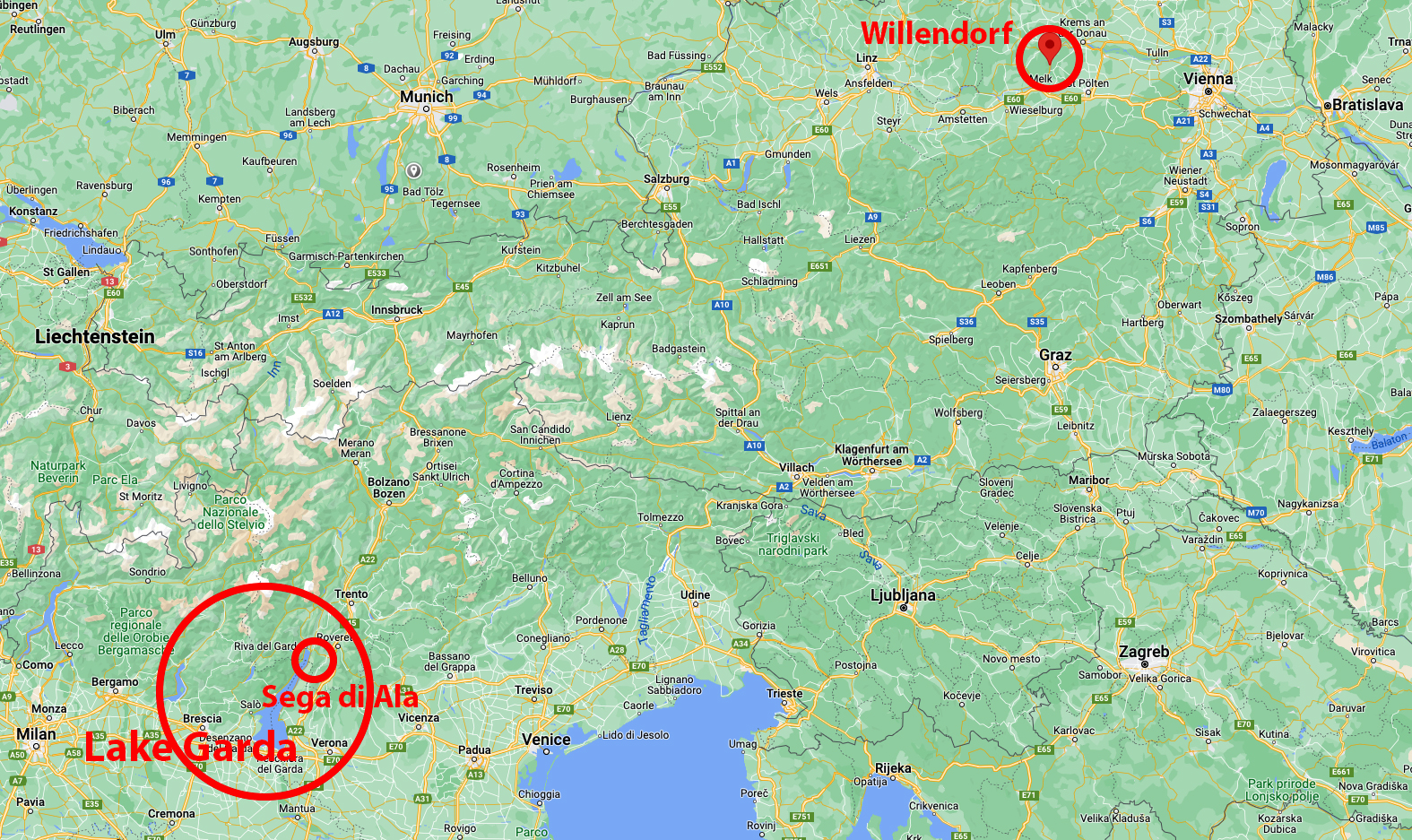
A long way for that period
The research team also analysed the grain sizes of the other samples. Hundreds, sometimes even thousands of grains were marked and measured with image processing programs or even manually. None of the samples within a 200-kilometre radius of Willendorf even remotely matched. The analysis finally showed that the samples from the Venus were statistically indistinguishable from samples from a location in northern Italy near Lake Garda, Sega di Ala, which is located in a side valley of Lake Garda. This is remarkable because it means that the Venus (or at least its material) started a journey from south of the Alps to the Danube north of the Alps.
'People in the Gravettian — the tool culture of the time — looked for and inhabited favourable locations. When the climate or the prey situation changed, they moved on, preferably along rivers,' explains Gerhard Weber. Such a journey could have taken generations.
One of the two possible routes from the south to the north would lead around the Alps and into the Pannonian Plain (the plains of Hungary) and was described in simulations by other researchers a few years ago. The other way to get from Lake Garda to the Wachau would be via the Alps. Whether this was possible more than 30 000 years ago is unclear due to the climate deterioration that began at that time. This would be a rather improbable variant if there had already been continuous glaciers to traverse. However, the 730 km long path along the Etsch (Adige), the Reschenpass, the Inn and the Danube is mostly below 1 000 metres above sea level, with the exception of a 35 kilometre stretch at 1 500 metres altitude at Lake Reschen, or Reschensee.
Possible, but less likely, connection to eastern Ukraine
The statistics clearly point to northern Italy as the origin of the Venus oolite. Nevertheless, there is another interesting place for the origin of the rock. It is in eastern Ukraine, more than 1 600 kilometres linear distance from Willendorf. The samples there do not fit as clearly as those from Italy, but better than all the rest of the samples. There is an interesting connection here: Venus figures were found in nearby southern Russia, which are somewhat younger, but look very similar to the Venus found in Austria. Genetic results also show that people in Central and Eastern Europe were connected to one another at this time.
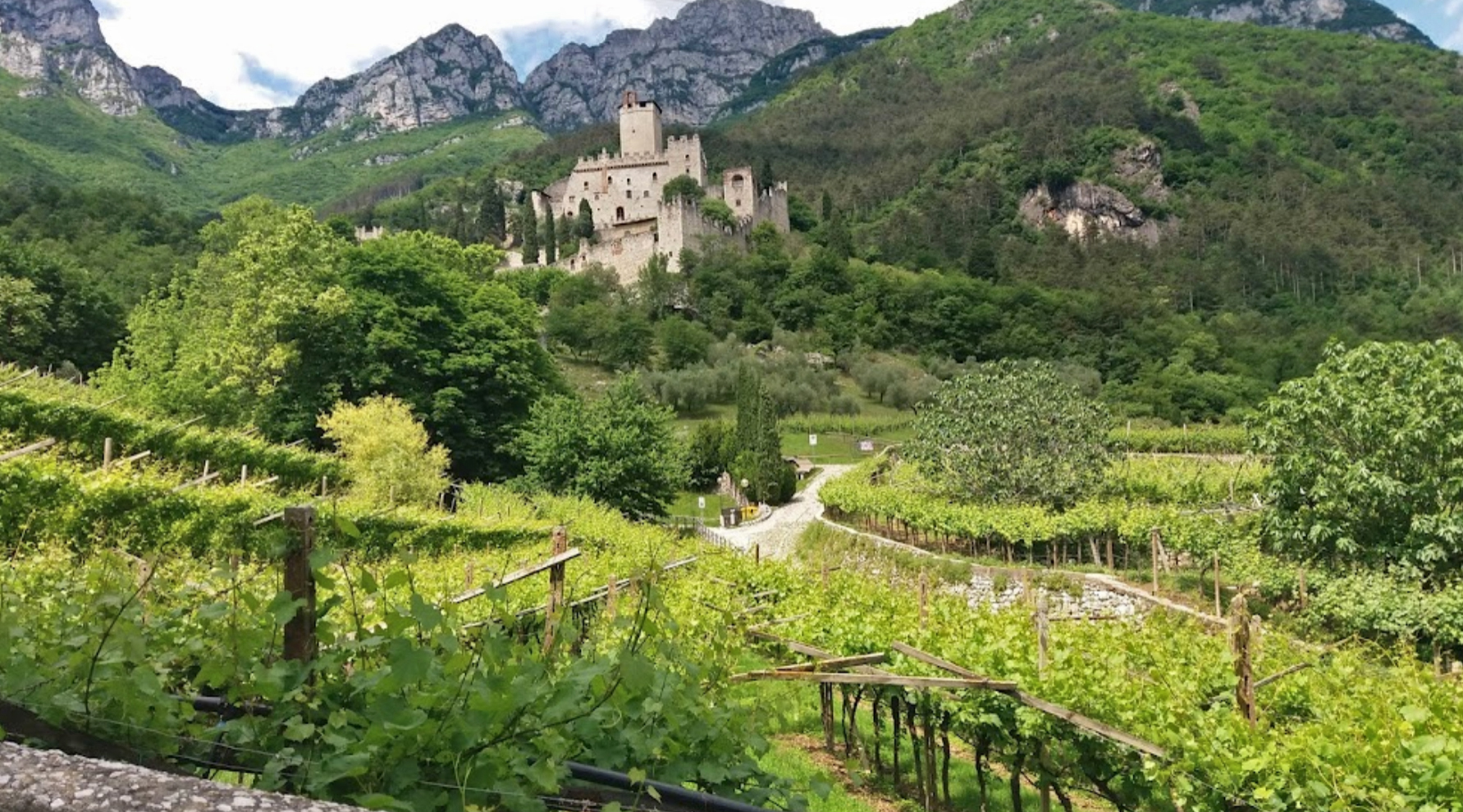
The region of Sega di Ala is located in a side valley of Lake Garda, and the limestone from there is indistinguishable from that used for the Willendorf venus.
Text: Weber et al. (2022)
Photo: © Davide Fanfoni
Location: Manco Stefano, Avio, Autonomous Province of Trento, Italy
Source: Google Earth Photos
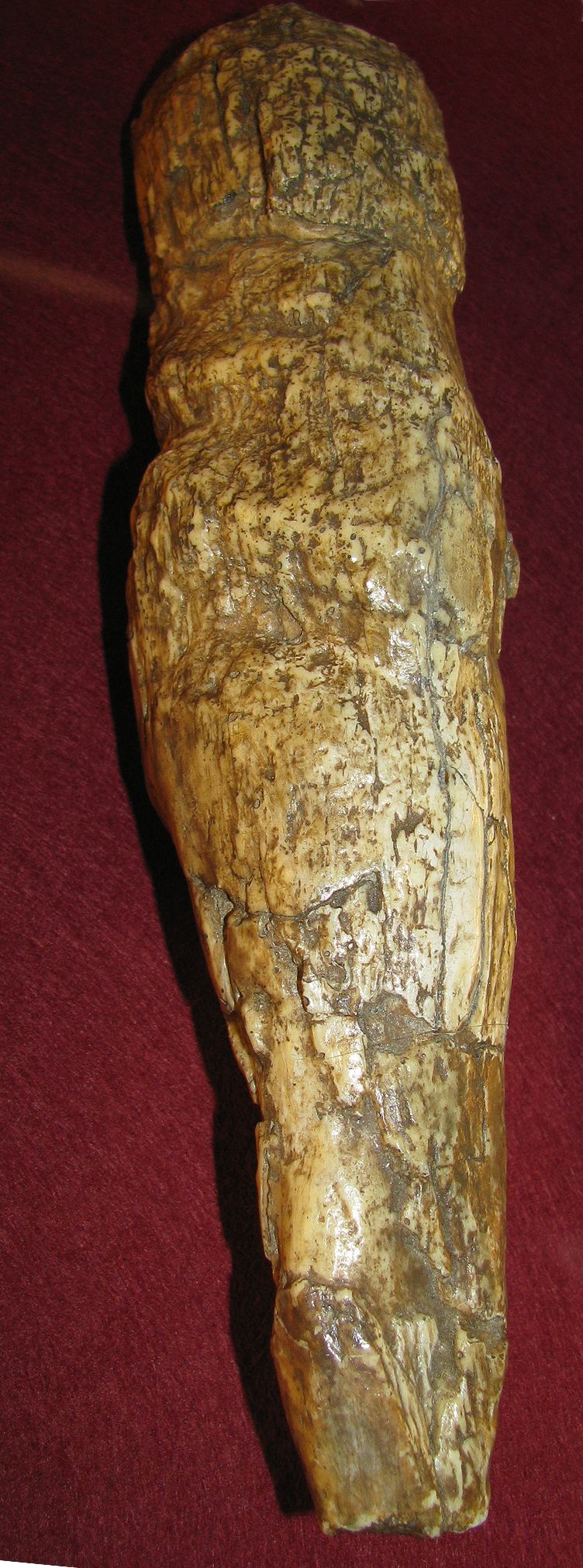
Venus of Willendorf II
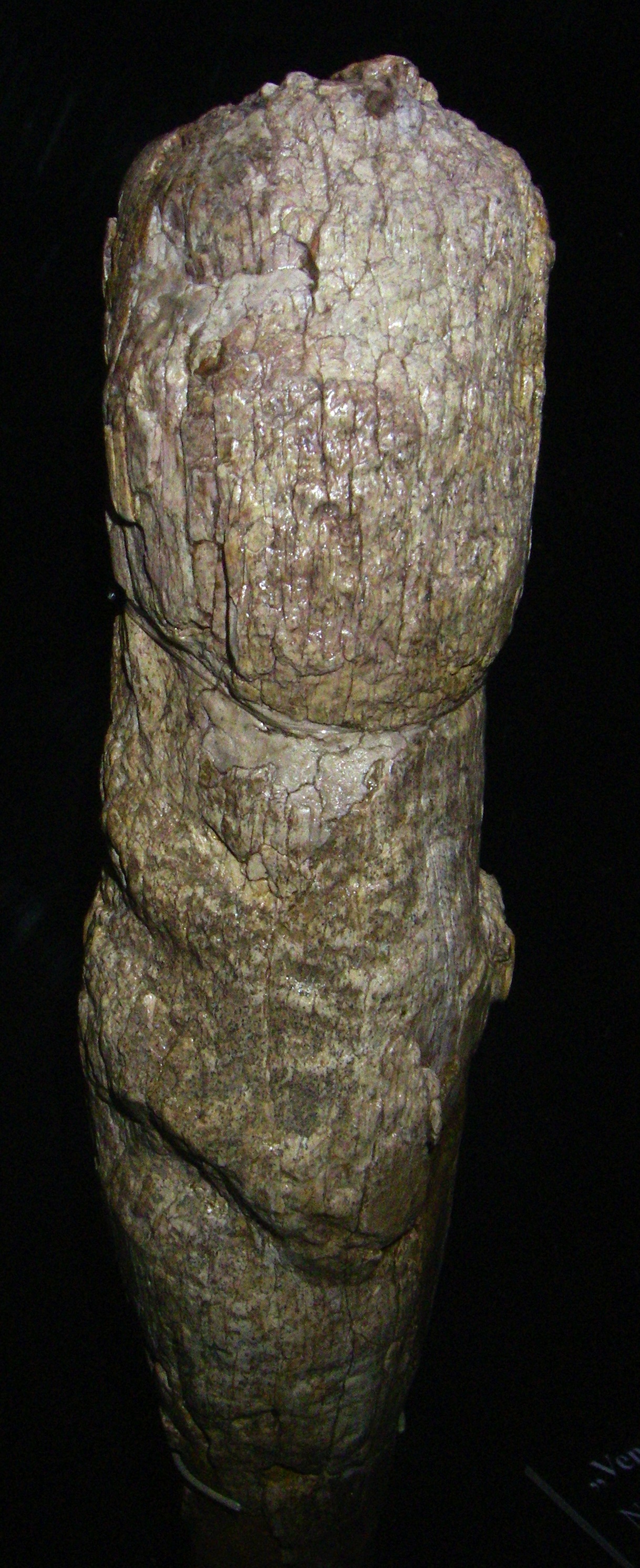
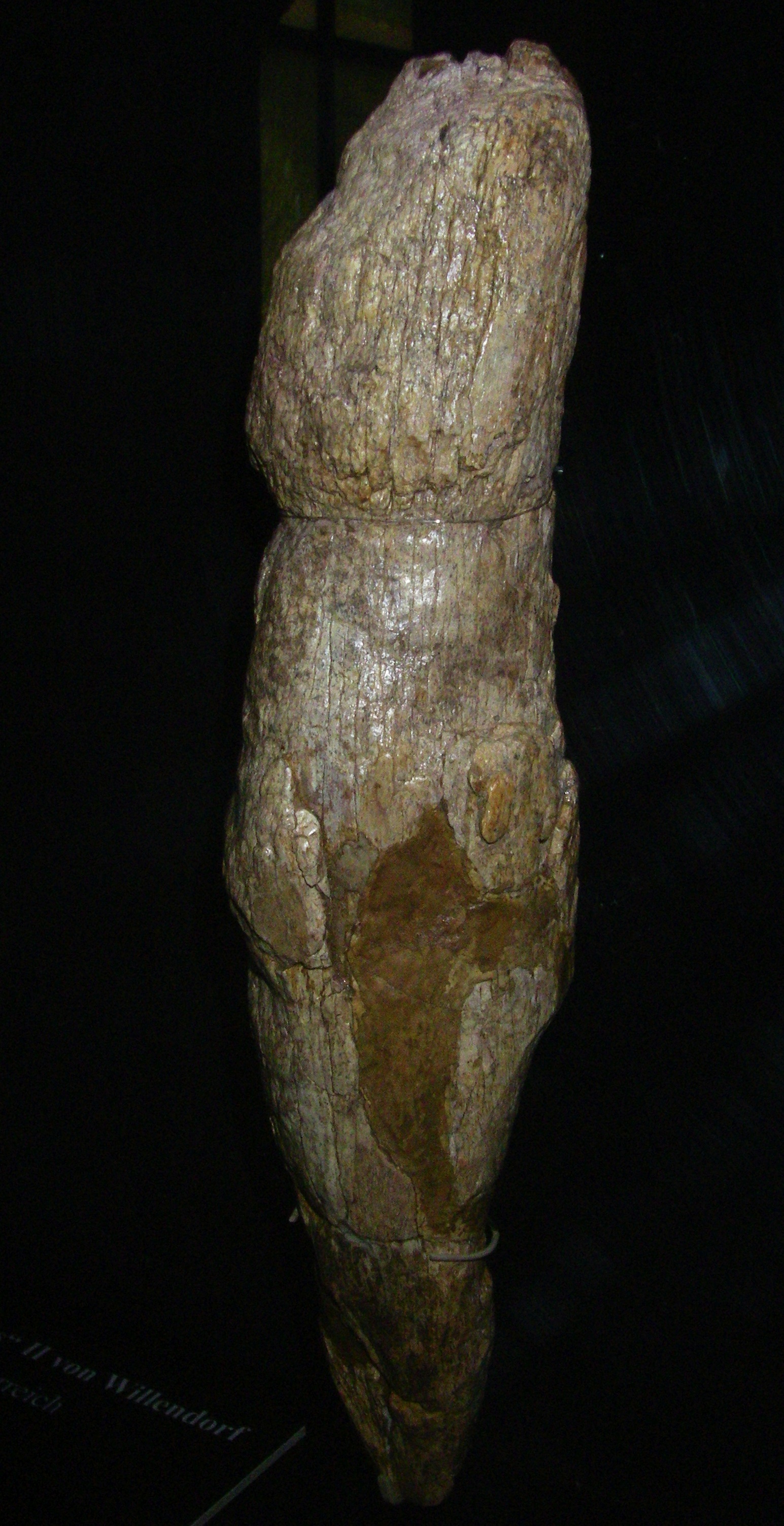
Venus of Willendorf II
Photo: Don Hitchcock 2008, Pentax
Source: Original in the Vienna Natural History Museum
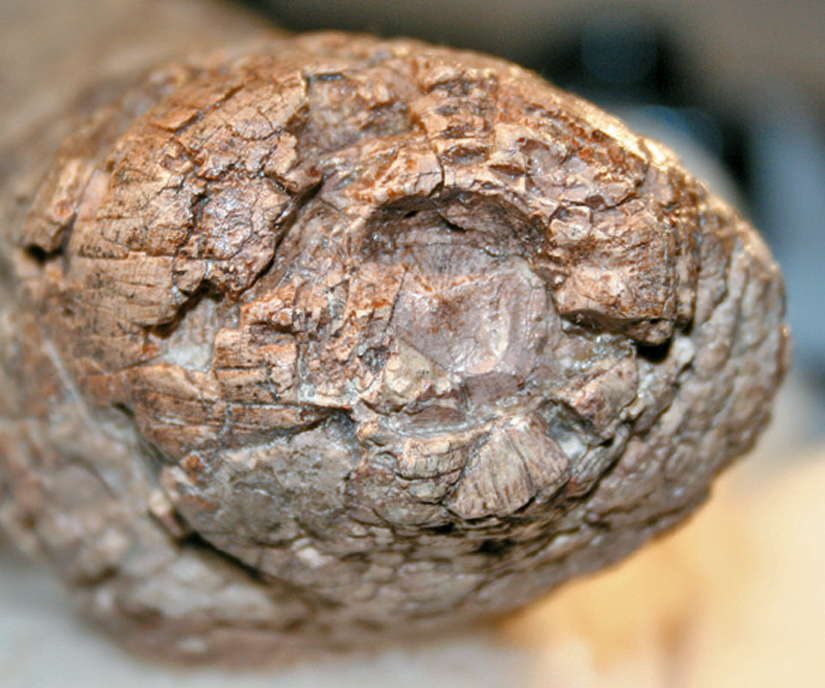
In 1926 Bayer found the Venus II from Willendorf in a hole which had been dug into the sequence of cultural layers by clandestine excavators. In 1927 he made a systematic excavation on this spot.
In the course of this excavation he found the evidence of a deep pit which was dug from layer 9 down to layer 5. The pit contained bones from mammoth and a jaw of a mammoth.
Bayer (1930)) reports that the original position of the ivory figurine Venus II was on top of the jaw. The head of the only roughly cut figurine is broken off.
Photo and text: Antl-Weiser (2008a)
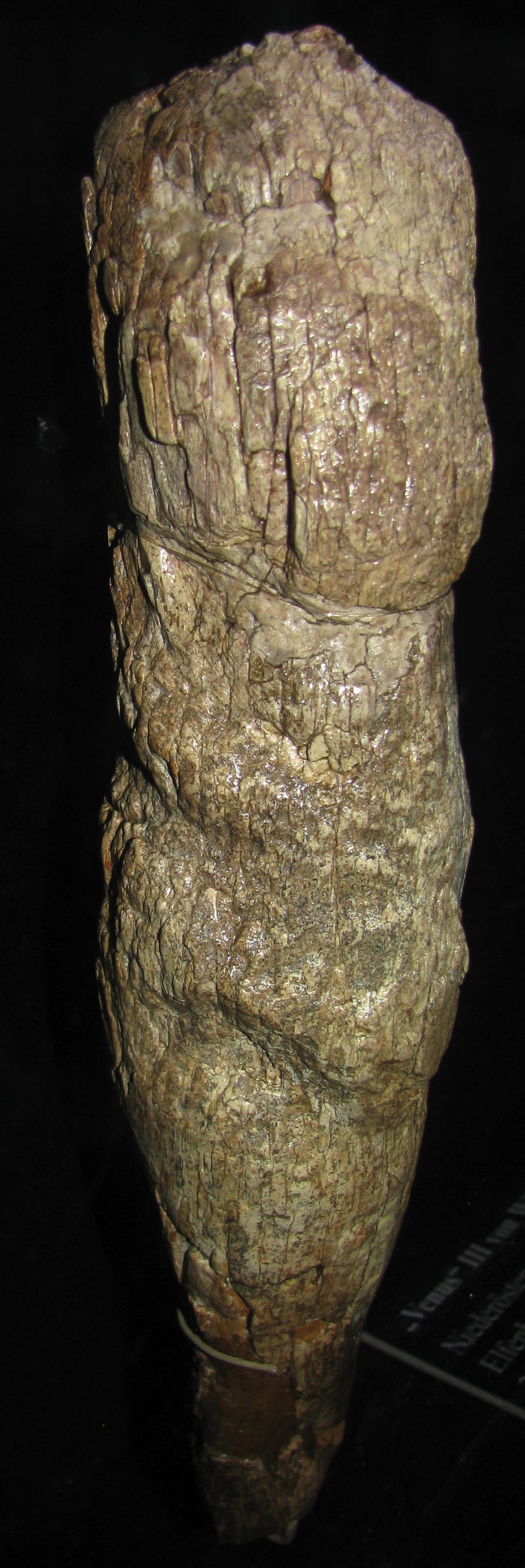
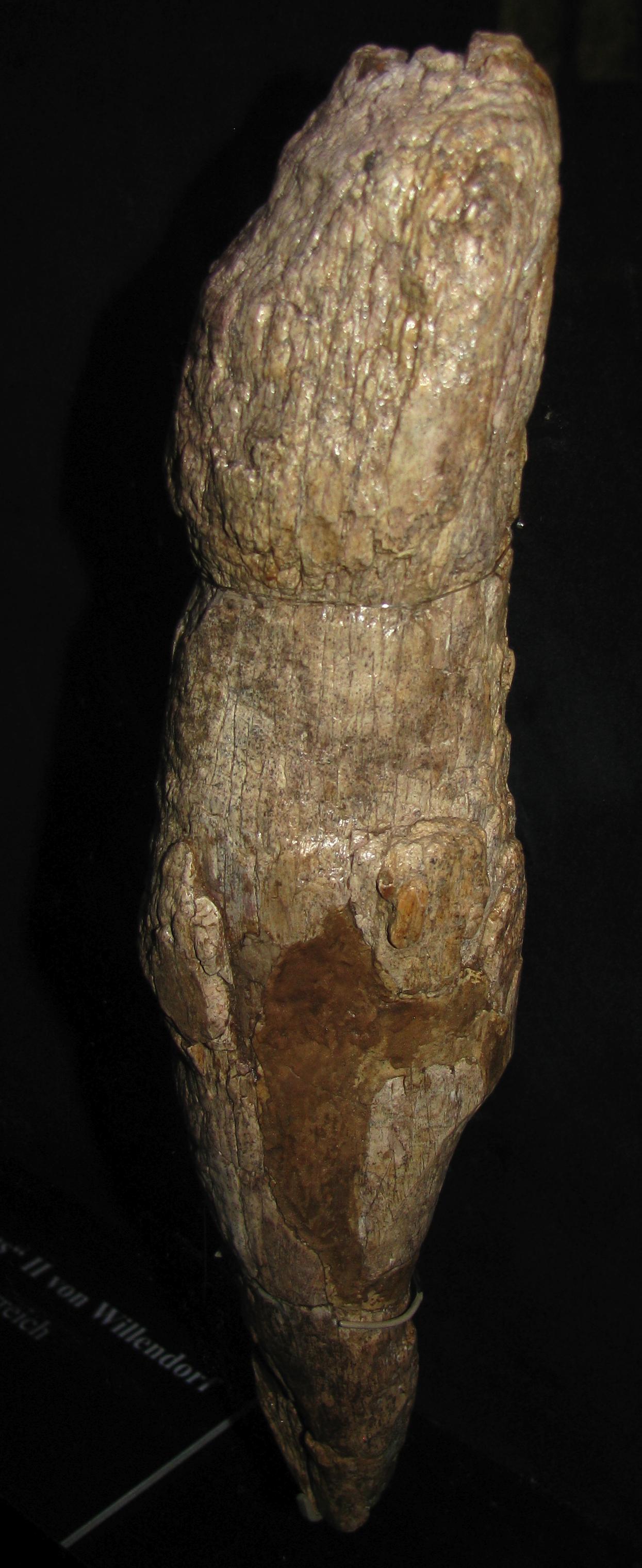

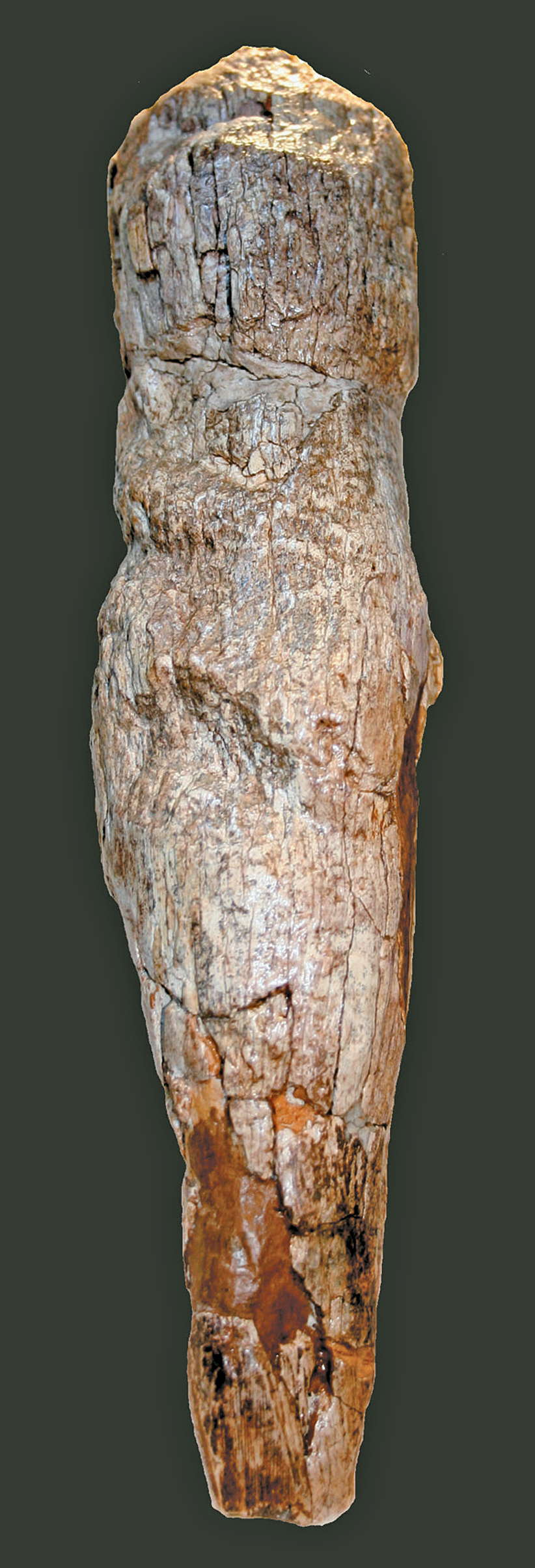
Venus of Willendorf II
Photo: Don Hitchcock 2008, Canon
Source: Original in the Vienna Natural History Museum
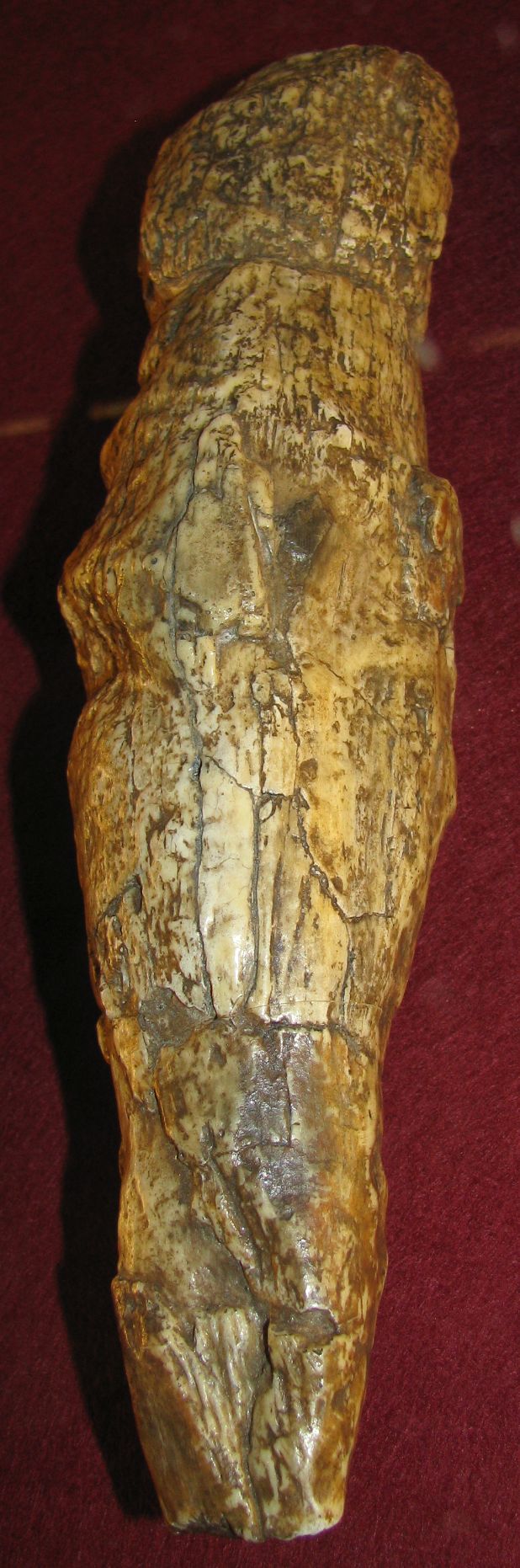
Venus of Willendorf II
Photo: Don Hitchcock 2008, Canon
Source: Facsimile in the Vienna Natural History Museum
Side View.
The front view shows that the sculpture is slightly twisted in the middle of the body. The area of the shoulder is well modelled. Below the neck on the left side of the breast there is a rather indistinct structure possibly representing the left arm.
Between belly and thighs there is only a roughly cut depression. The back of the figurine seems unmodified, only the transition from the bottom to the legs is clearly cut. In the area of the shanks the separation between left and right leg is clear.
The Venus II is rather roughly cast in most parts, only the shoulders and the legs seem well modelled. Perhaps it was left unfinished when the head broke off.
Photo and text: Antl-Weiser (2008a)
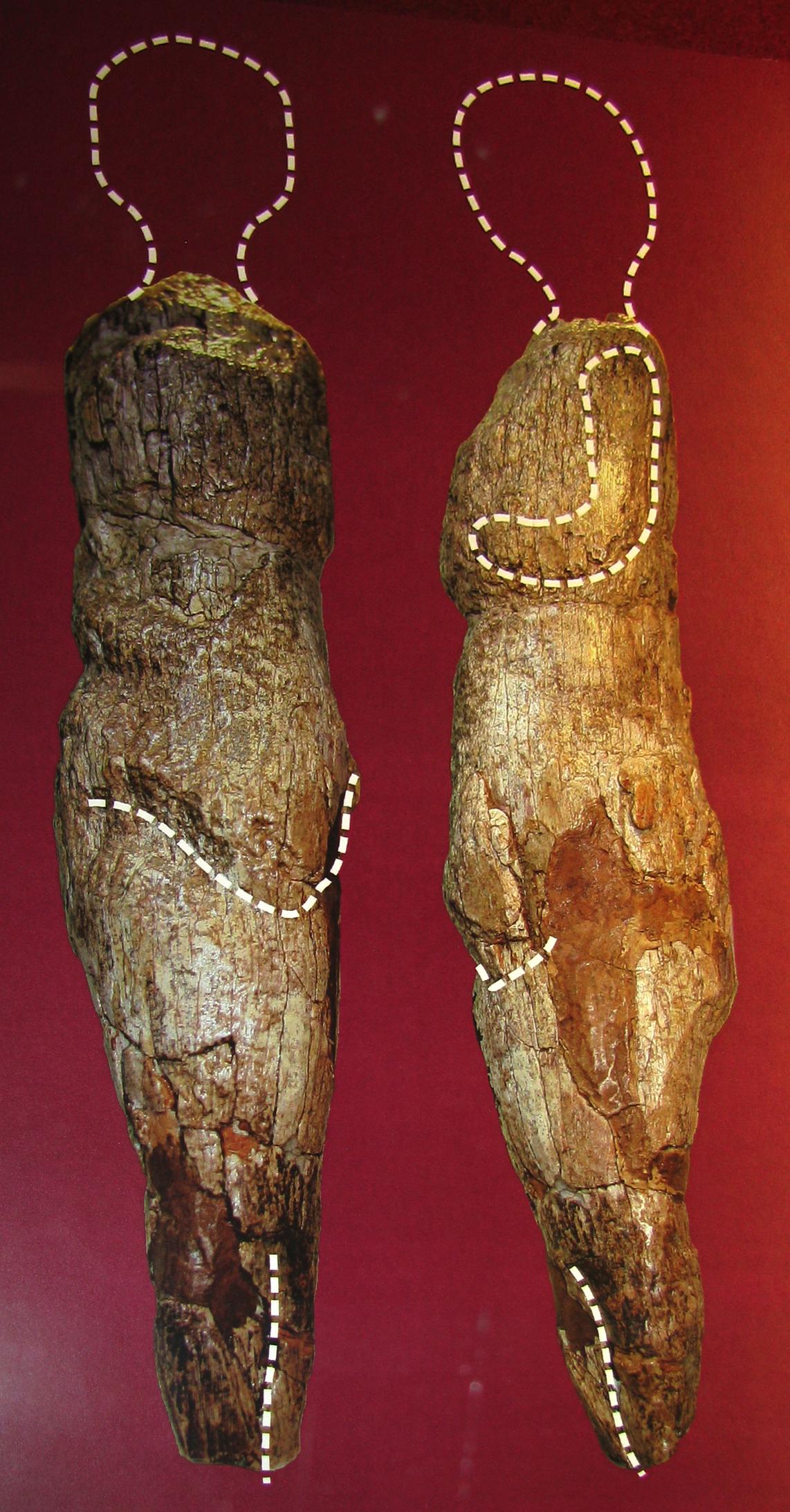
Venus of Willendorf II reconstruction.
Photo: Don Hitchcock 2008, Canon
Source: Vienna Natural History Museum
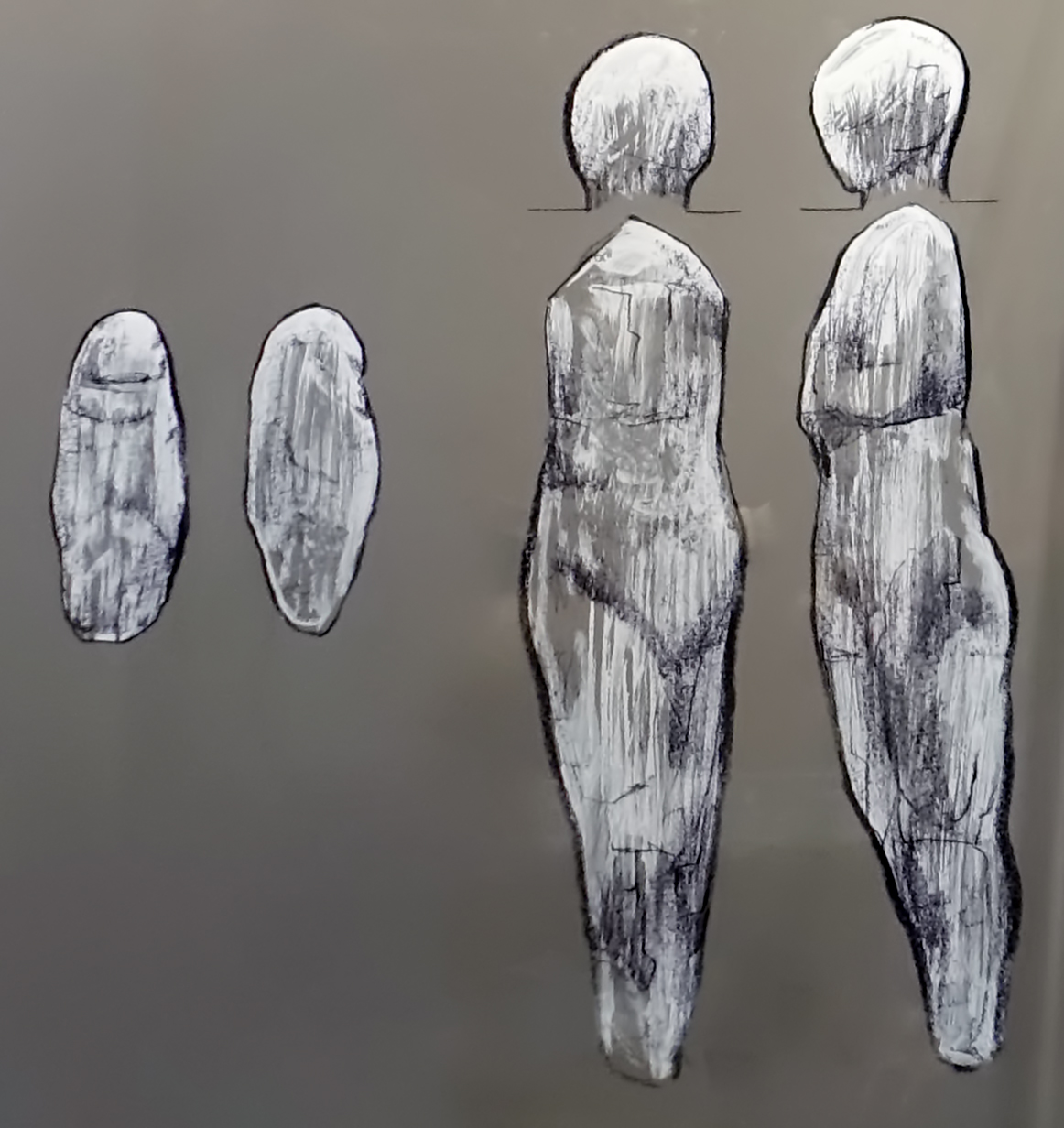
Venus of Willendorf II and III reconstruction.
Venus III (left, two views) is a complete though enigmatic piece, while Venus II (right, two views) is complete except for the head.
Photo: unknown artist, poster in the Vienna Natural History Museum
Rephotography: Don Hitchcock 2018
Source: Vienna Natural History Museum
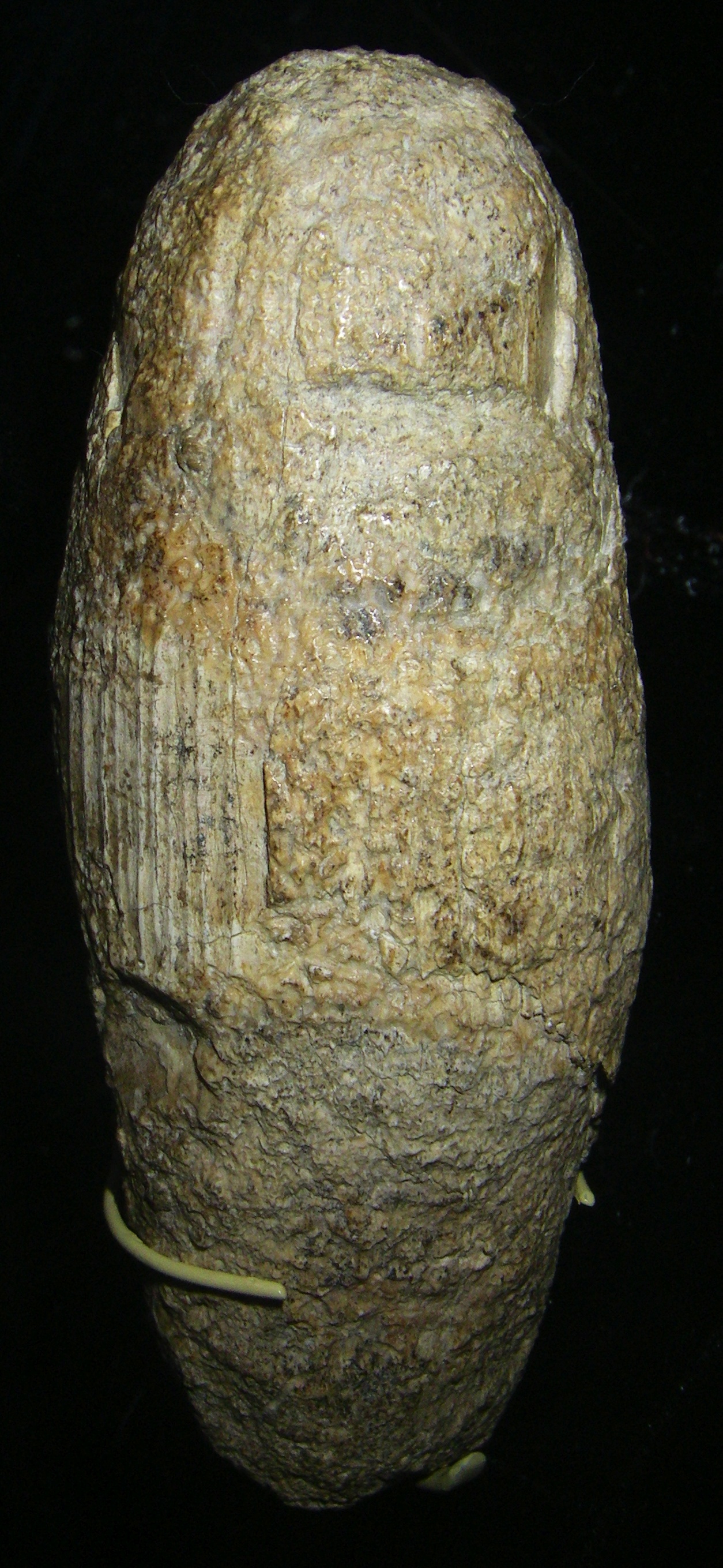
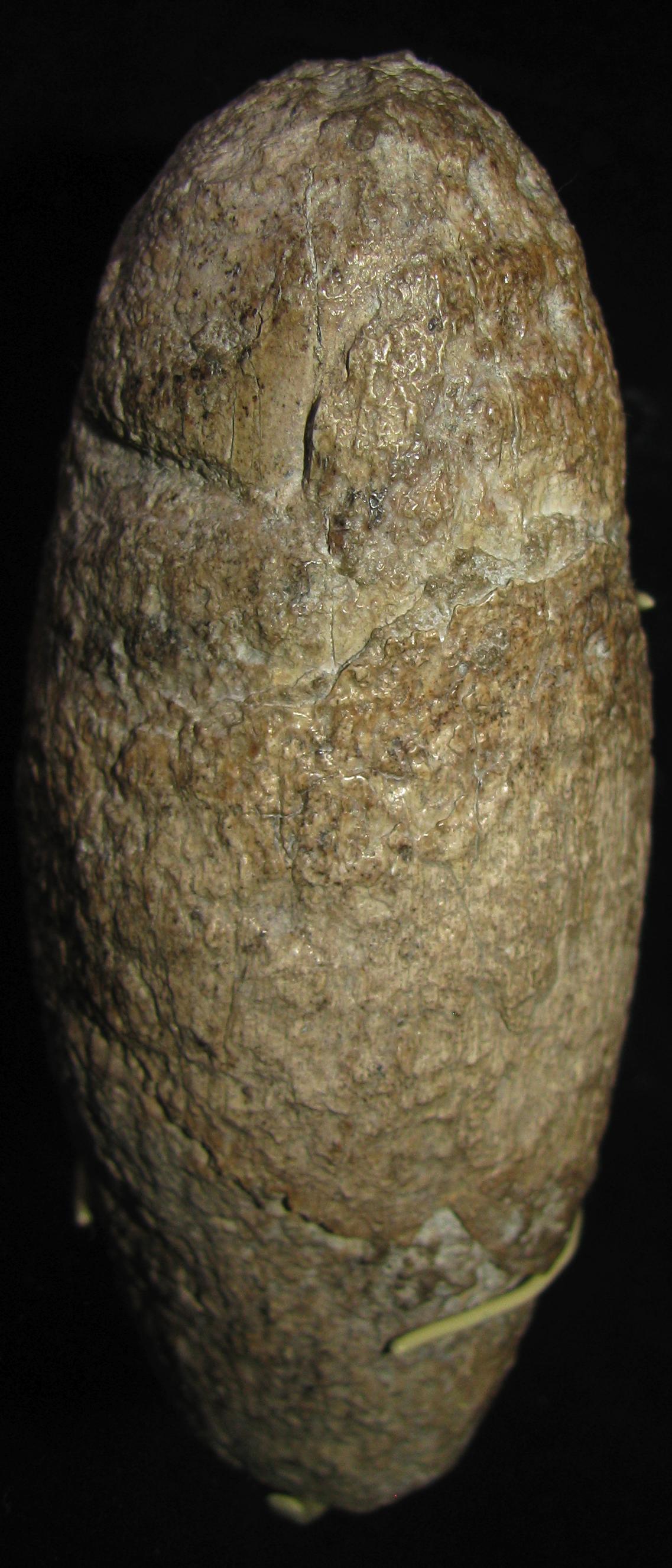
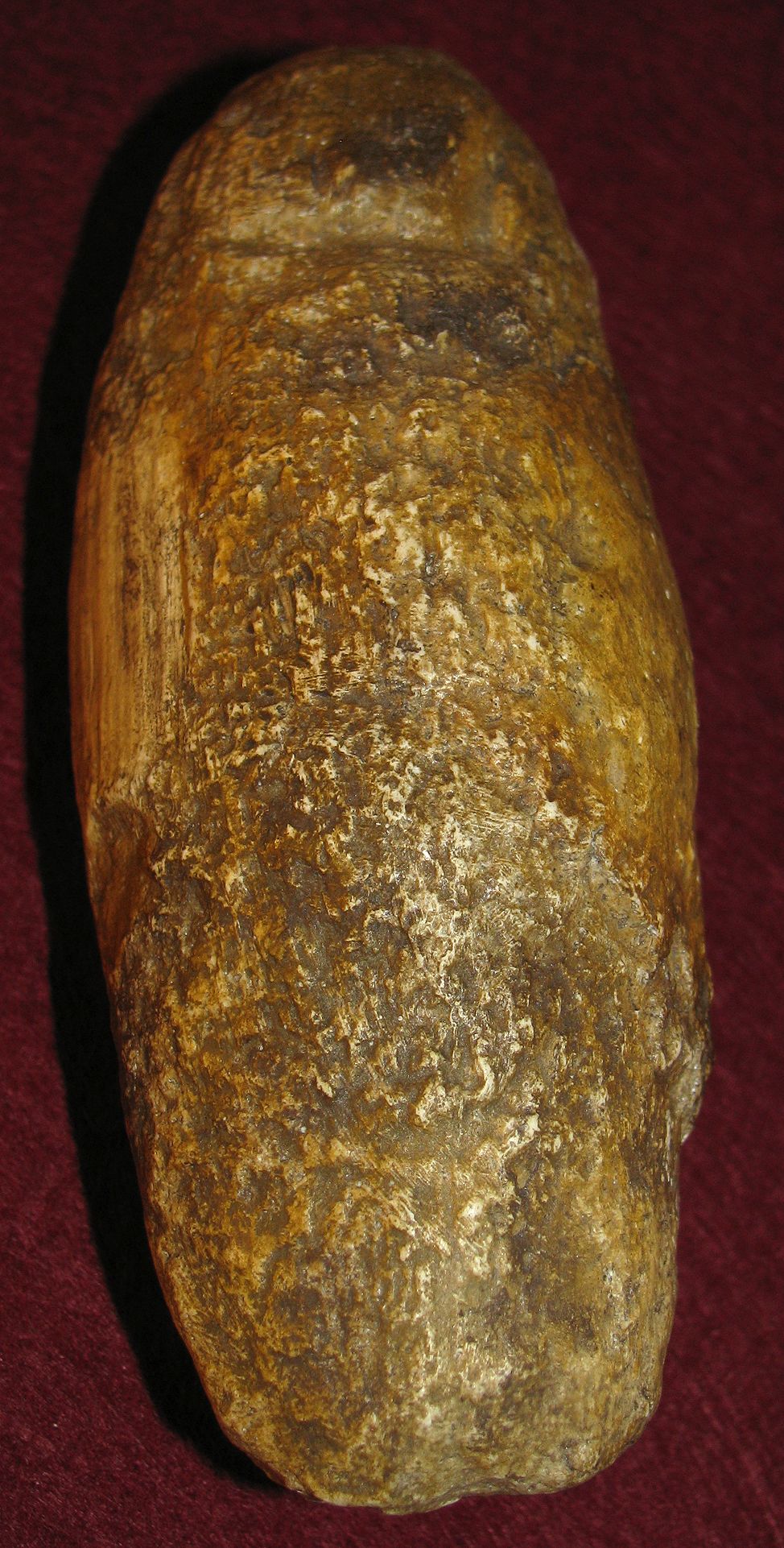
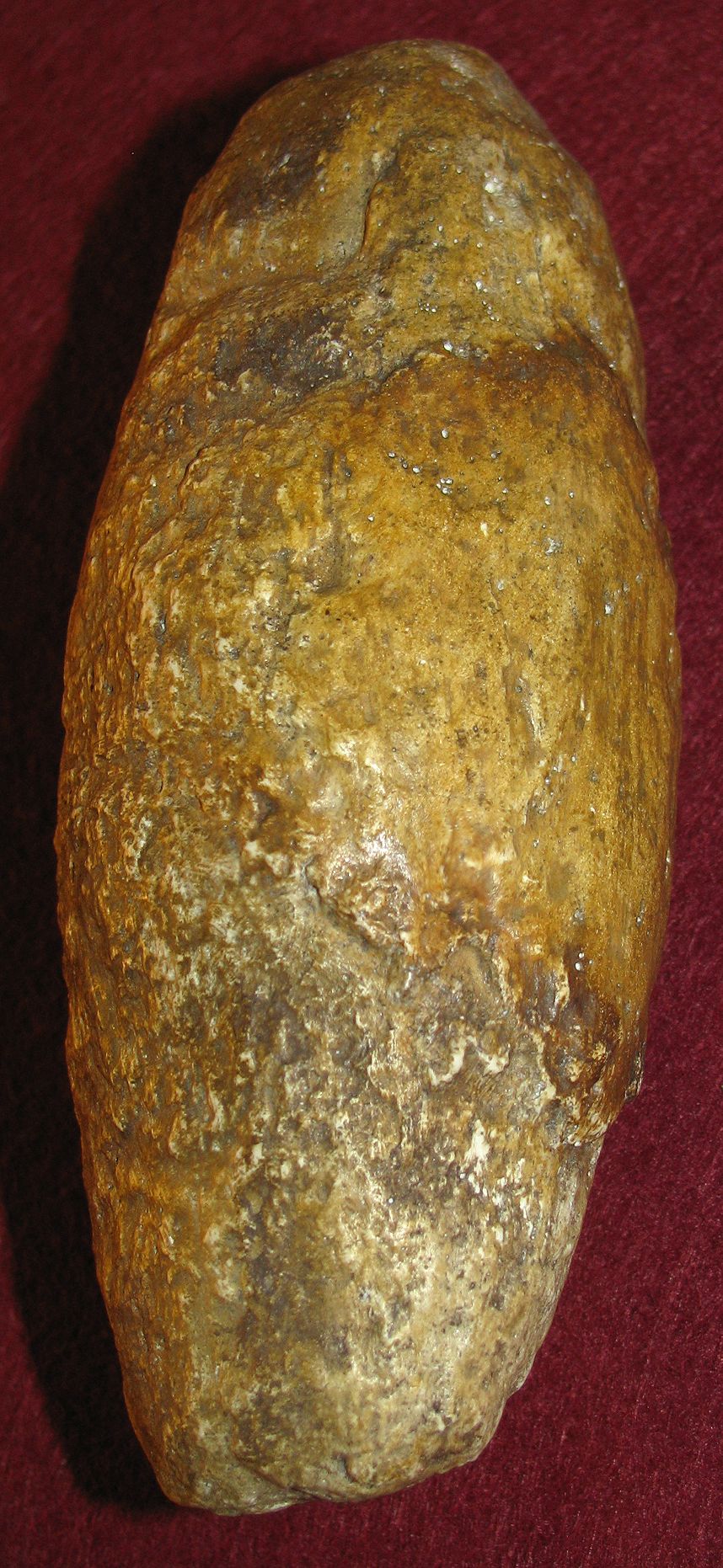
Venus of Willendorf III

The so called Venus III from Willendorf is certainly a modified piece of ivory but was often doubted to be a figurine . Only the side view gives an illusion of the shape of a human sculpture possibly with head, bottom, feet, belly and neck.
In ethnological contexts wooden pieces are used as puppets but would never be recognised as such without a description. Thus we cannot be sure what the piece meant to the ice age hunter, although there are too few indications to classify the piece as figurine from a formal point of view.
Photo and text: Antl-Weiser (2008a)
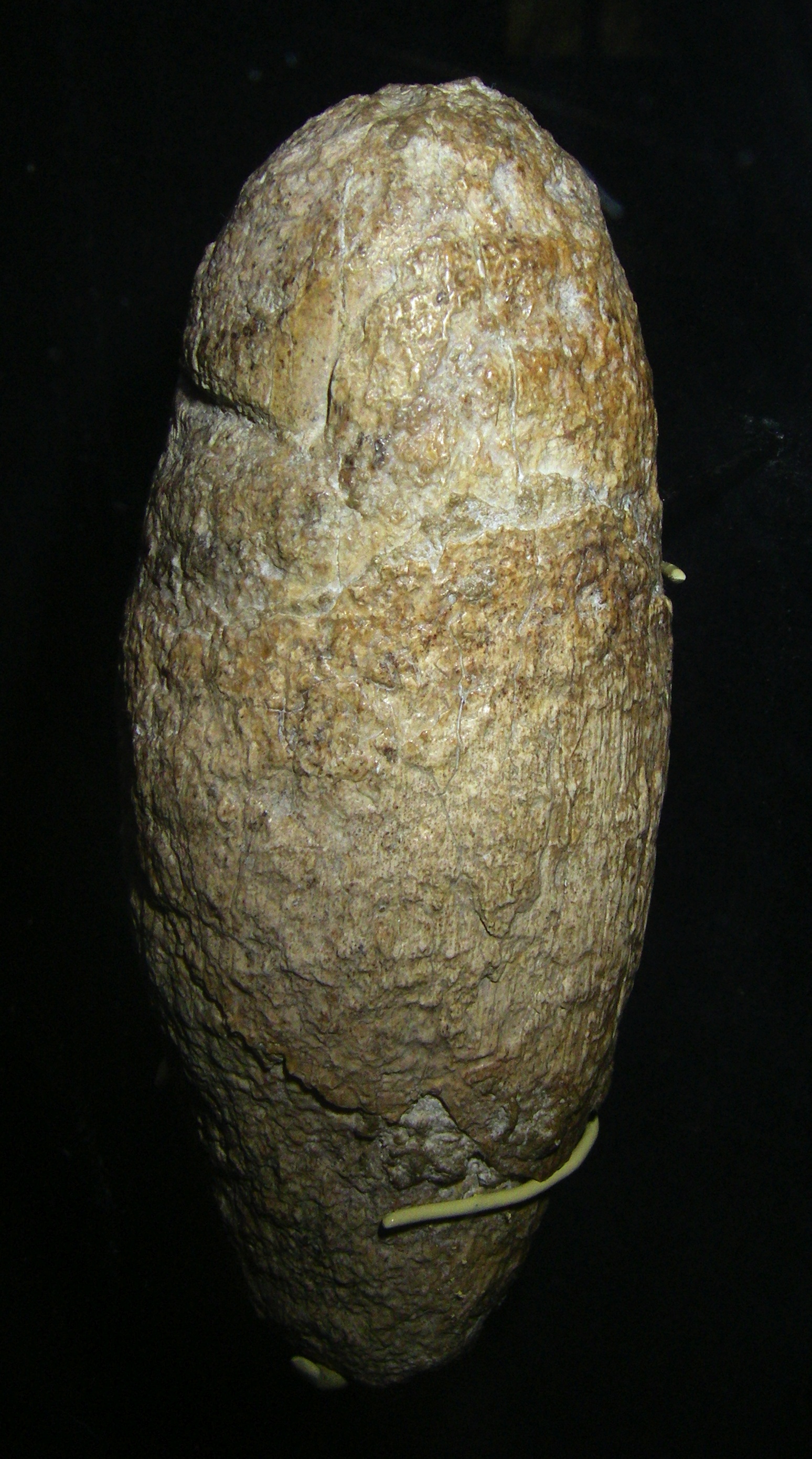
Venus of Willendorf III
Photo: Don Hitchcock 2008, Pentax
Source: Original in the Vienna Natural History Museum

Venus of Willendorf III
Photo: Don Hitchcock 2008, Canon
Source: Original in the Vienna Natural History Museum
Venus of Willendorf III
Photo: Don Hitchcock 2008, Canon
Source: Facsimile in the Vienna Natural History Museum
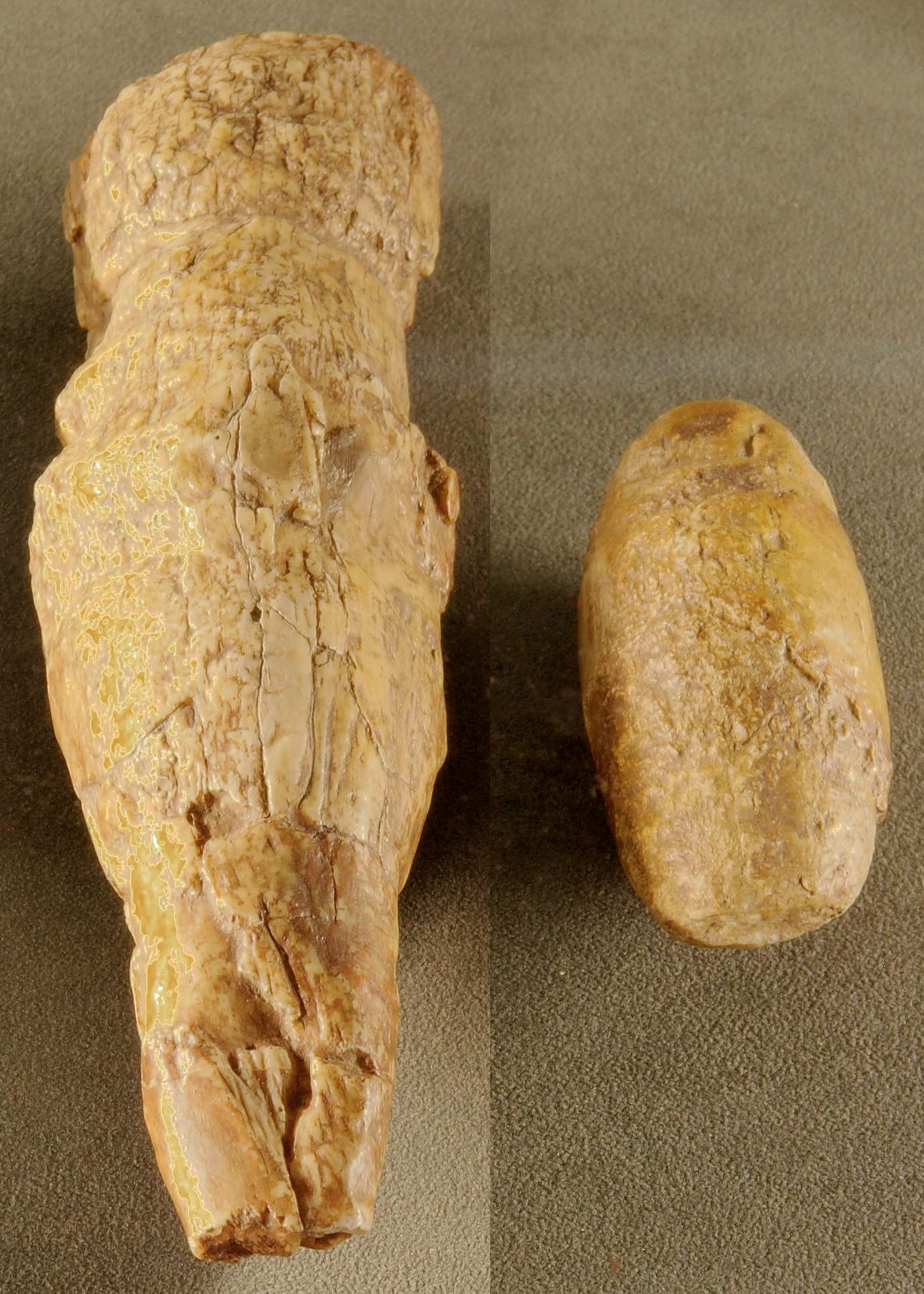
Venus of Willendorf II and III
Photo: Matthias cable
Date: 14th January 2007
Permission: GNU Free Documentation License
The stone used for the Venus of Willendorf
The dumpling in the ice
The geologist Alexander Binsteiner made a thorough study of the venus of Willendorf and the stone used to make it.
Five times the precious object was removed from its alarmed display case and placed under the microscope.
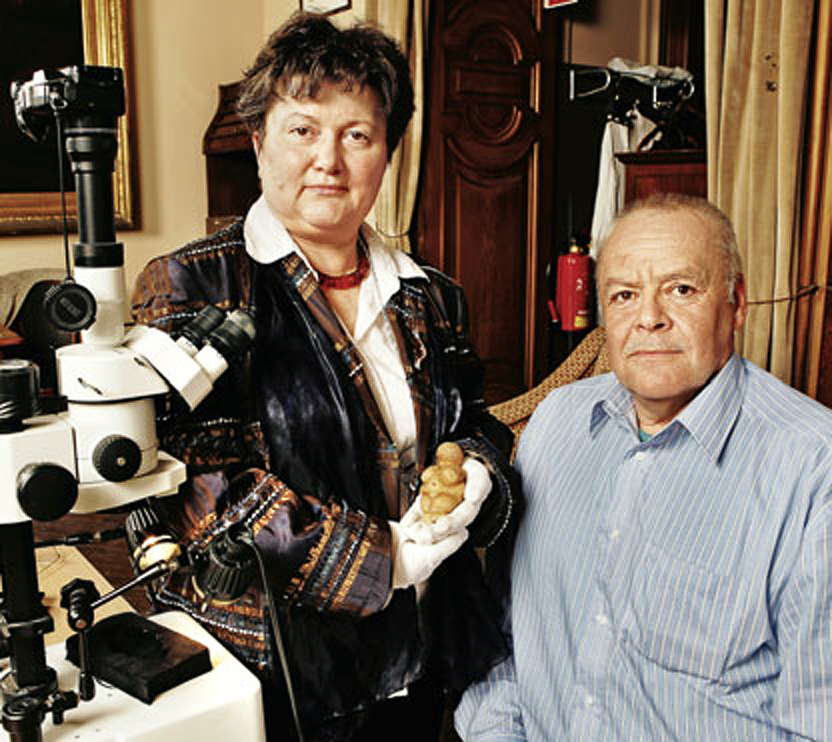
Researchers Antl-Weiser and Binsteiner with the Venus of Willendorf.
Photo: Schulz (2008)
Scratches and the traces of tools show that the nearly 11 cm high statuette was shaped with a flint tool. A hair net or braided cap covers her head. On the upper right arm are horizontal notches. Traces of colour show that she was originally covered with red ochre, which had ritual significance, since the dead were routinely covered in the same substance.
The piece is made of a rare oolitic (stone eggs) limestone. The structure of this material means that sometimes small round pock marks appear on the surface when one of the spheres falls out.
'One of these unsightly dents has been skilfully used by the artist to indicate a navel' said Binsteiner, and the sculpture was, for him, a 'brilliant performance'.
Particularly striking was that even the quarry from which the sculptor once took the stone for the figurine was eventually able to be found after a long search.
The raw material came from Stránská skála.
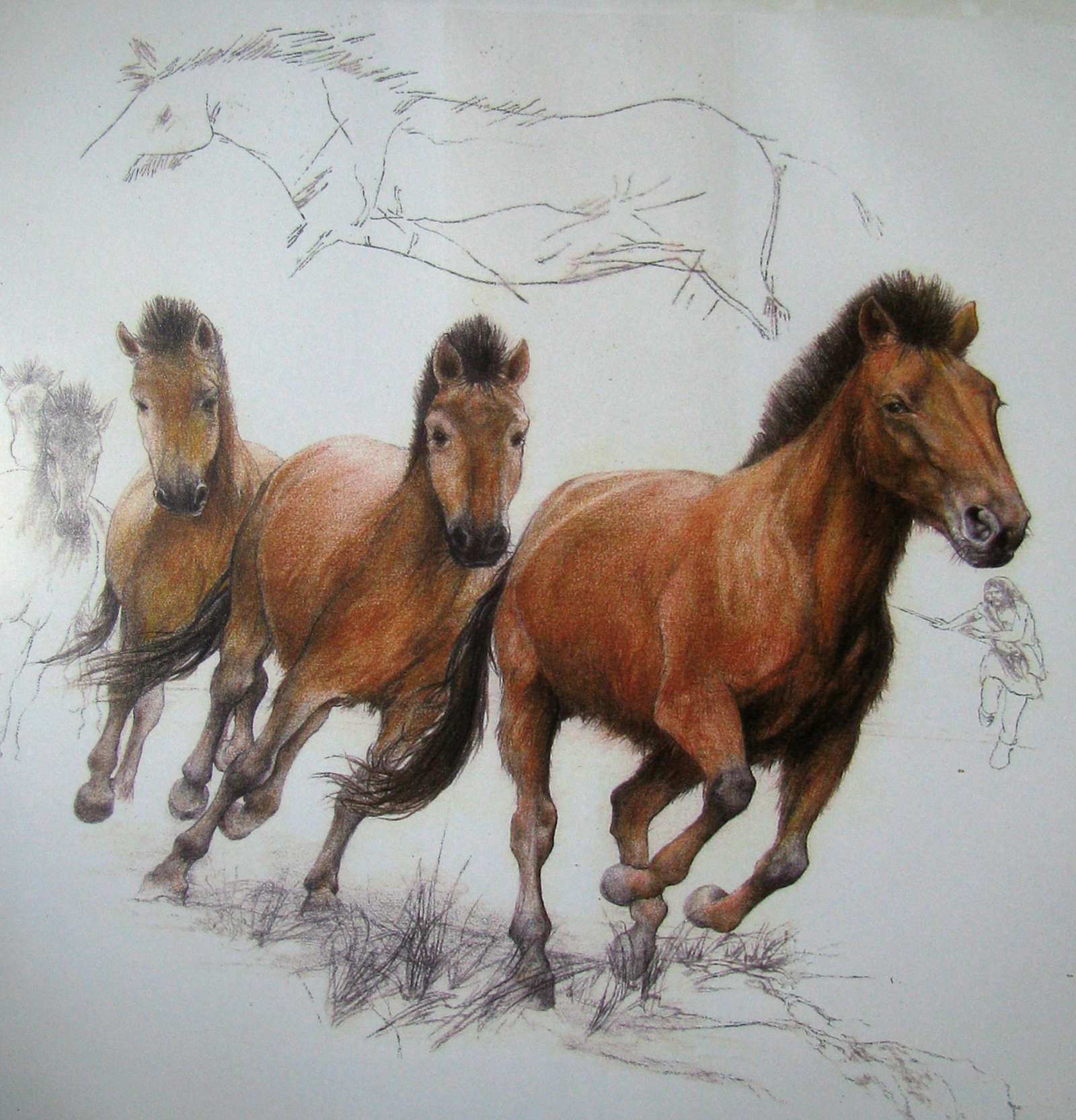
When hunting horses before 18 000 years ago, hunters used the steep north walls and the gradual slope on the other side of Stransky rocks, Stránská skála, near Brno, to drive the horses over the cliff. At that time Dolní Věstonice was not inhabited.
Source: Display, Dolní Věstonice Museum
Artist: Unknown
Text: Translated and adapted from the display.

Stránská skála is an isolated limestone hill, situated about 5 km north and east of the centre of Brno. It is 1.5 km long, almost 400 m wide, and lies 310 m above sea level. While the southeastern slope is quite moderate, and passes gradually into a plain, the northwestern boundary is steep, the limestone walls falling vertically into the valley.
Text accompanying the photo above is adapted from Musil (1968)
Photo: Onovy
Permission: GFDL and cc-by-sa-2.5
Source: Wikipedia
On the hilltop, as large as a child's head, lie boulders of oolitic limestone. One of these was picked up to make the Venus.
Binsteiner estimated that the time needed to make the venus was about 10 to 20 hours. 'From there, the small sculpture was taken 130 km to the Danube near Willendorf. Such distances were not unusual for the nomads of the Gravettian.
In parkas and shoes cushioned with grass, they trudged through the icy landscape. They were armed with spear throwers, and long stone blades hung from their belts.
Climatic data from Greenland ice cores show that the hunting band initially lived in abundance. The weather was cold but dry. A treeless tundra stretched before them. At the end of March the rain melted the thin layer of snow, and fresh green shoots of grass and herbs sprang up. This provided an abundance of food for large herds of mammoth and bison, giant deer and saiga antelope. What a meat supply!
The groups were partially settled, with women, infants and craftsmen in one location, while the hunters spread over large areas of the landscape looking for game. In the settlements the venus figures were found. Many were hidden in the dwellings, some were buried in small pits. But what ceremonies lie behind the fat women? The artists showed them naked, sometimes with jewellery such as necklaces or bands of clothing, sometimes with bangles on their arms. The statues were not erotica for lonely men. Not all were portrayed as provocative and naturalistic. Many were quite abstract in style. Who or what were they intended to evoke?
The Venus of Lespugue in southern france is particularly interesting in this respect. The globular, large breasts dangle from the body, the buttocks are like footballs. The work could have come from a modern artist, and it was obviously not about prurient sex, but about reproduction.
The Site of the Discovery of the Venus of Willendorf
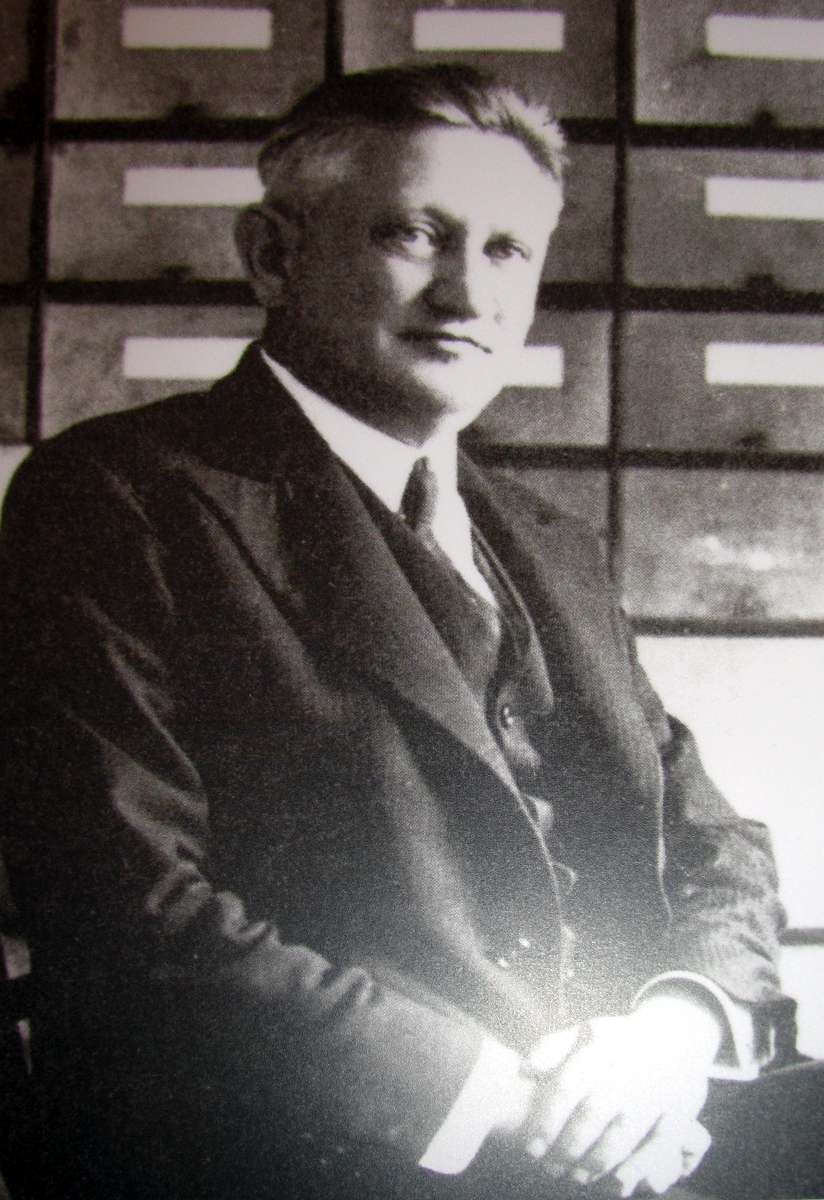
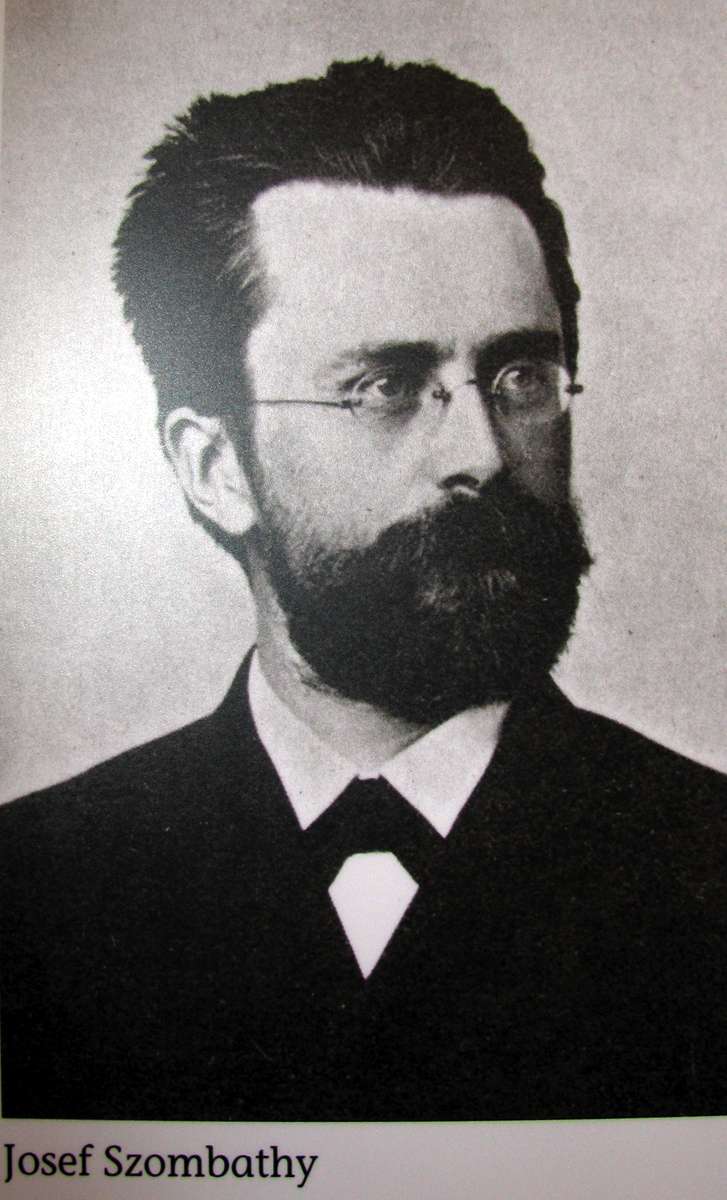
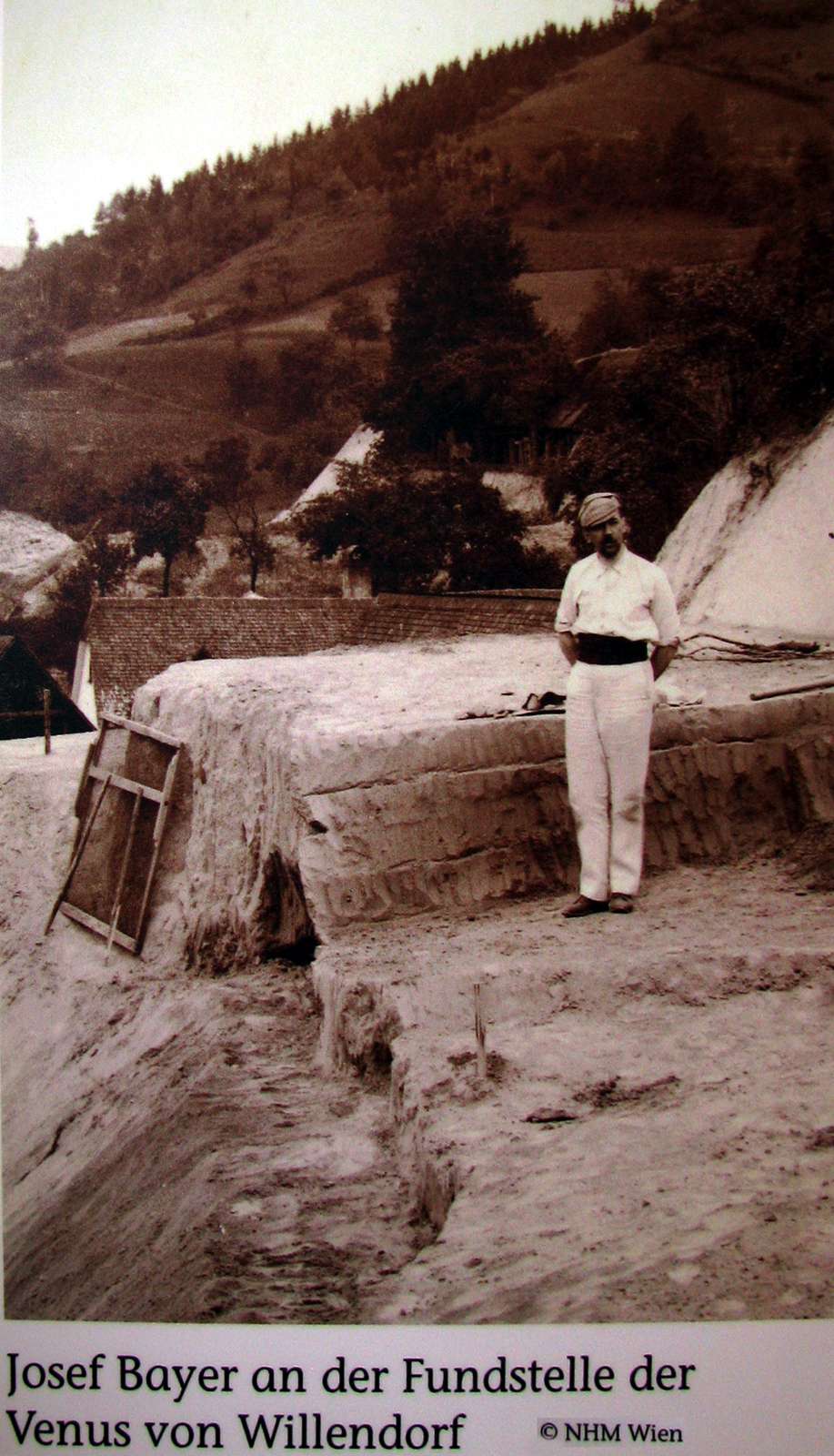
Hugo Obermaier and Josef Szombathy on the left and centre photographs, with Josef Bayer pictured at the centre of the excavations where the Venus of Willendorf was found, on the right photograph.
Willendorf had already been known as a Palaeolithic site for over 20 years when, in 1908, systematic excavations by Szombathy, Bayer and Obermaier began.
By the 1870s at the latest, the owner of the Brunner brickyard at Willendorf had found flint tools there. Leopold Koch and Ferdinand Brun learned of these finds in late 1883. Brun had noticed bones at the surface of the Brunner brickyard on several occasions. He carried out initial archaeological investigations in 1884. At the end of the 1880s, bones were discovered during digging for a new clay pit on the Ebner property. Ludwig Hans Fischer carried out excavations of this site in 1890. Remains of human skeletons were reported to have been discovered while digging for clay between 1904 and 1905.
( It should thus be realised that the region was already well known to contain palaeolithic artefacts well before the construction of the railway, which, however, greatly facilitated the search for these artefacts - Don )
Rephotography: Don Hitchcock 2008
Source: Venusium, the museum at Willendorf. © NHM Wien
Text: Display at Venusium, the museum at Willendorf.
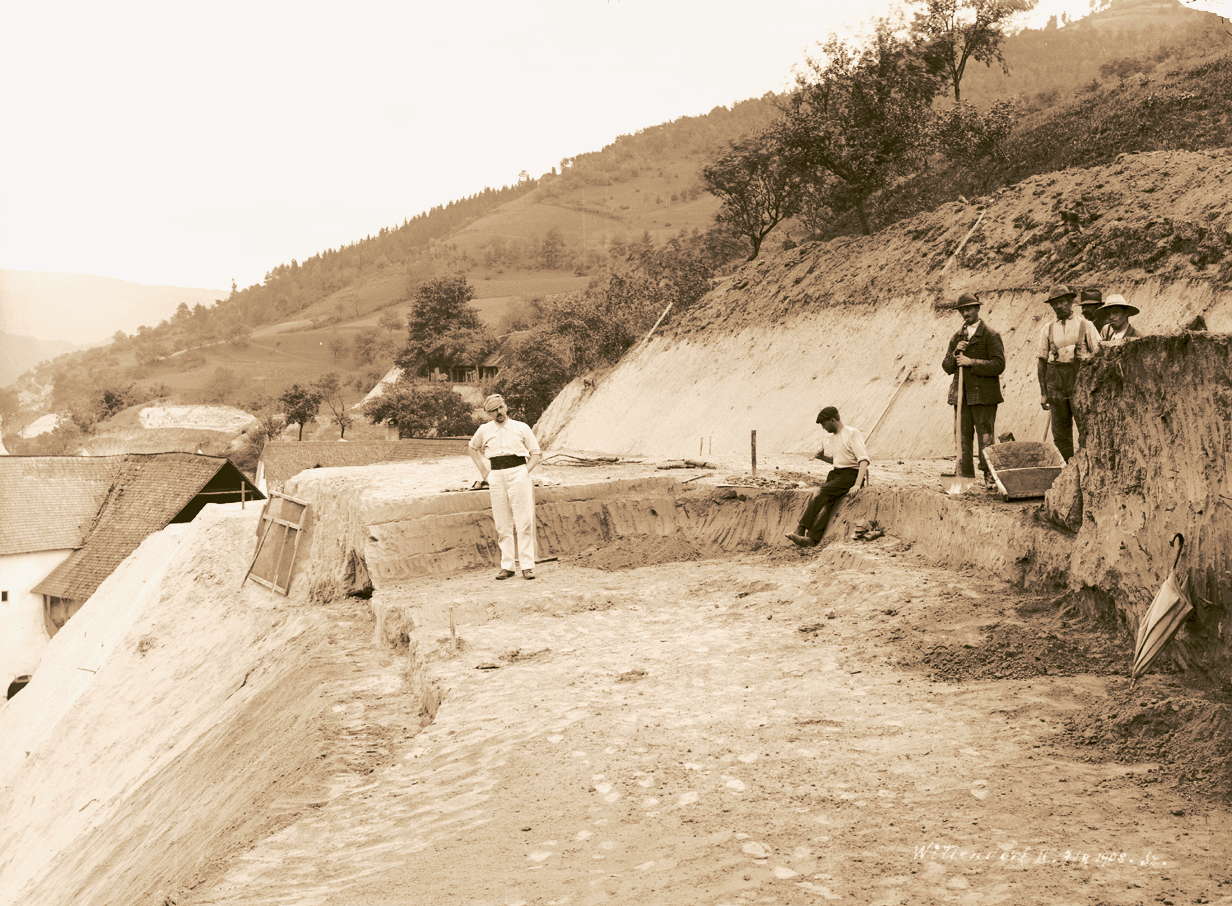
Willendorf II, 7th August 1908: discovery of the Venus I of Willendorf. The man standing at the findspot of the figurine is J. Bayer.
Johann Veran, one of the workers, found the statuette. Szombathy, who stood nearest to Veran, saw the figurine first and showed it to Bayer, who worked not far away from Veran. Szombathy took some photographs of the situation, as shown here.
(This photo shows more of the site than the one on the right, above - Don )
Photo: J. Szombathy; © Archive of the Department of Prehistory, Museum of Natural History, Vienna; nr. 4796)
Source: Nigst et al., 2008
Additional text: Antl-Weiser (2008a)
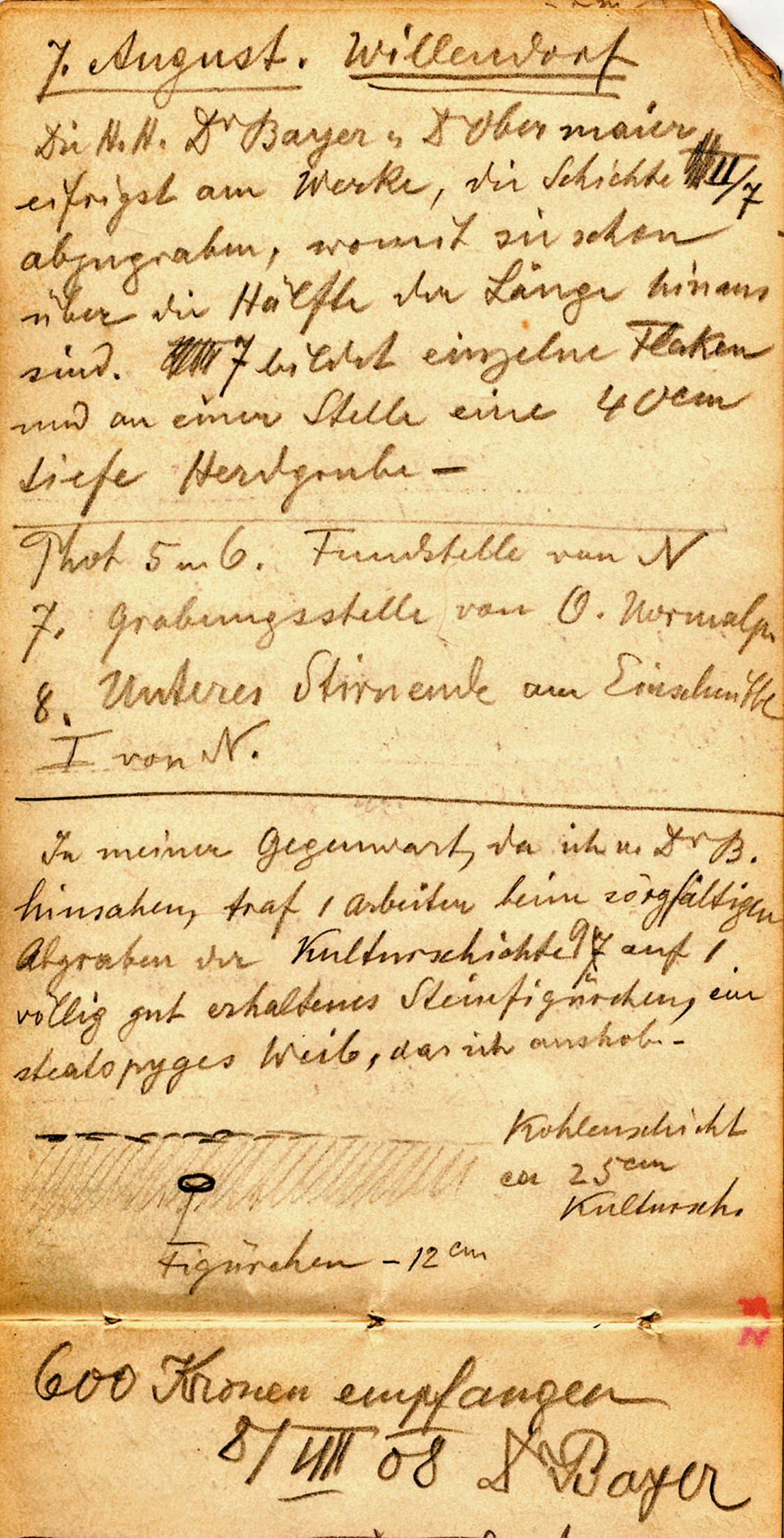
Szombathy’s diary
Obermaier excavating further to the west heard of the find in the evening because Szombathy and Bayer didn’t want the public to take notice of the find. The molestation by various private collectors was already big enough.
Obermaier wrote about this moment of finding that all of them, the workers, Bayer and he himself, were excavating in a line when the figurine was found. Therefore it was not unusual that at that very moment neither of them – neither Bayer nor Obermaier – was overseeing the worker Veran at the moment of discovery. This passage led to doubts that the finding had been documented adequately, but Obermaier did not mean that they had not been at the site when the Venus was found. He only said that none of them stood behind Veran, because all of them were working.
Only Szombathy went along this line of workers and saw the figurine near Veran or perhaps even watched Veran unearthing the Venus. There are two authentic statements which support the above mentioned interpretation of Obermaier’s passage about the finding. Although Obermaier’s diary has been lost in Freiburg in Switzerland, we have a handwritten transcript of some parts of the diary written by Felgenhauer.
Obermaier wrote in his diary that Veran had found the Venus. He also mentioned the names of the eye witnesses: Szombathy and Bayer. The second statement was made by Szombathy on his visit on the 7th of August in Willendorf. He wrote the following note into his diary:
'Dr. Bayer and Dr. Obermaier are busily excavating layer II/7. They have already finished half of it. Layer 7 contains some dark spots and in one place a 40 cm deep hearth. (FA-PA, Willendorf) Photo 5 and 6 findspot from the north'
Photo and text: Antl-Weiser (2008a)

Map of the (future) Willendorf digs I, II and III by Bayer on 19th May 1908.
( An old excavation is shown here in red, but three new cultural layers, discovered on May 11 1908, as a result of walking the newly dug foundations for the railway, are shown in green - Don )
As early as 1904, Szombathy had made a drawing of the Grossensteiner brickyard and noted that the Wachaubahn railway would pass just above or below it. Excavation for the railway began in January of 1908.
On January 18, Josef Bayer published an appeal to the population of the Wachau to be watchful for any finds made in the loess.
He also informed Szombathy that the excavation work had already touched on levels of finds from the Palaeolithic period. Szombathy then charged Hugo Obermaier and Josef Bayer with observing the excavation work.
( The researchers were thus already working as time and money allowed on the site, but seized the advantage to their studies when the railway decided to give them, in effect, a very large bonus for their excavation costs, as well as greatly extending the area of research.
As one can see from the photos on this page of the discoveries, the site was dug out and levelled to a huge extent for the railway, something which the researchers could usually never hope to do - all they could manage before that was pay for one or two trenches and sondages (pits) at likely places. The railway construction meant that their timetable had to be speeded up, and took on some of the aspects of a rescue mission. The construction carried both advantages and disadvantages. It might well help uncover archaeological sites, but it equally could destroy them if strenuous efforts were not made to make sure that anything of interest was rescued and meticulously recorded.
The levelling for the railway showed up artefacts such as bones and lithic materials themselves, as well as discoloured areas in the otherwise very uniformly coloured loess that indicated that humans had been there, changing the colour of the loess with their hearths and detritus. This allowed the researchers to do their digging at the most likely spots.
My thanks to Sarah Brazier for her help in clarifying this section - Don )
On May 11 the two of them followed the railway bed from Krems to Willendorf and noted three additional archaeological sites ( shown in green on the hand drawn map above - Don ) besides the former brickyard.
They purchased some of the finds and made sketches of the sites. In early June, an engineer of the imperial railway construction authority named Kann reported finds from the railway bed to the central commission in Vienna. Szombathy carried out negotiations with Kann and Albus, the subcontractor from Groisbach who was supplying tools and labour. On July 22 he summoned Bayer and Obermaier to Willendorf on July 29.
Rephotography: Don Hitchcock 2008
Source: Venusium, the museum at Willendorf. © NHM Wien
Text: Display at Venusium, the museum at Willendorf.
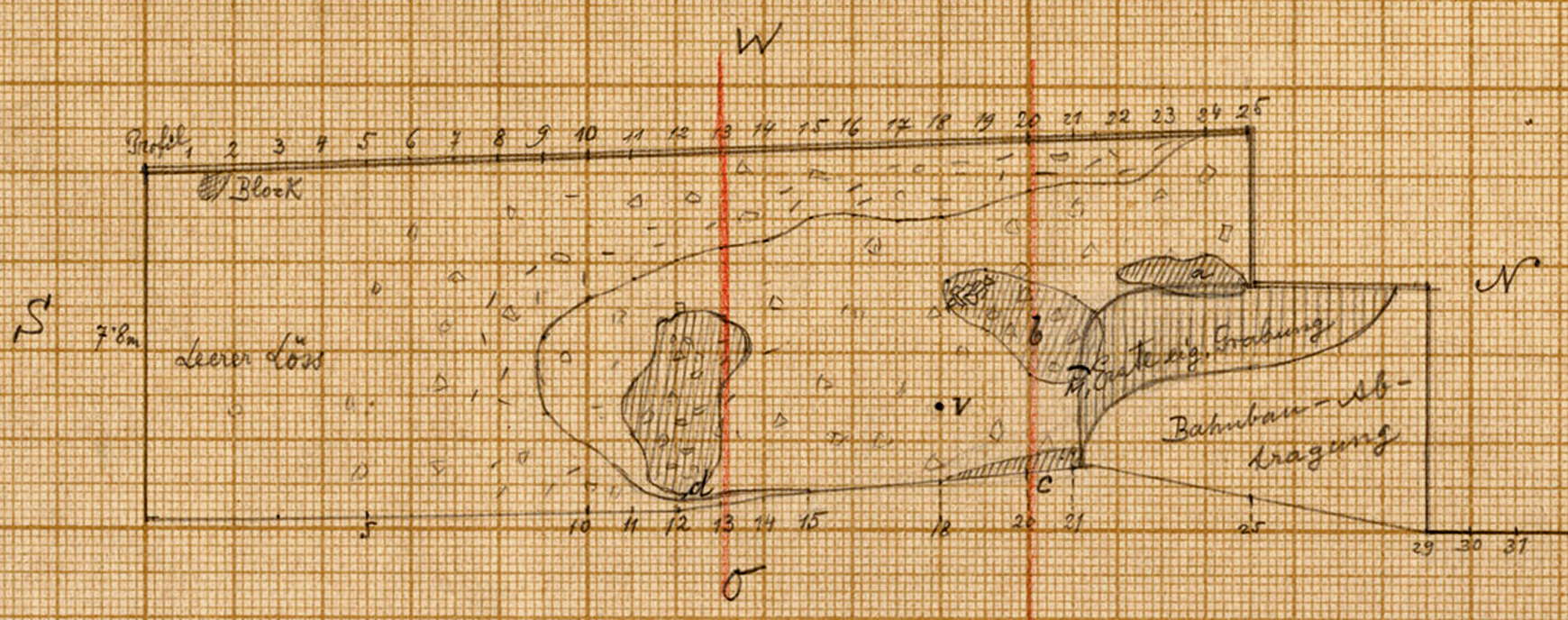
Plan of the excavation at Willendorf I in 1908 with the position of the figurine.
Photo and text: Antl-Weiser (2008a)
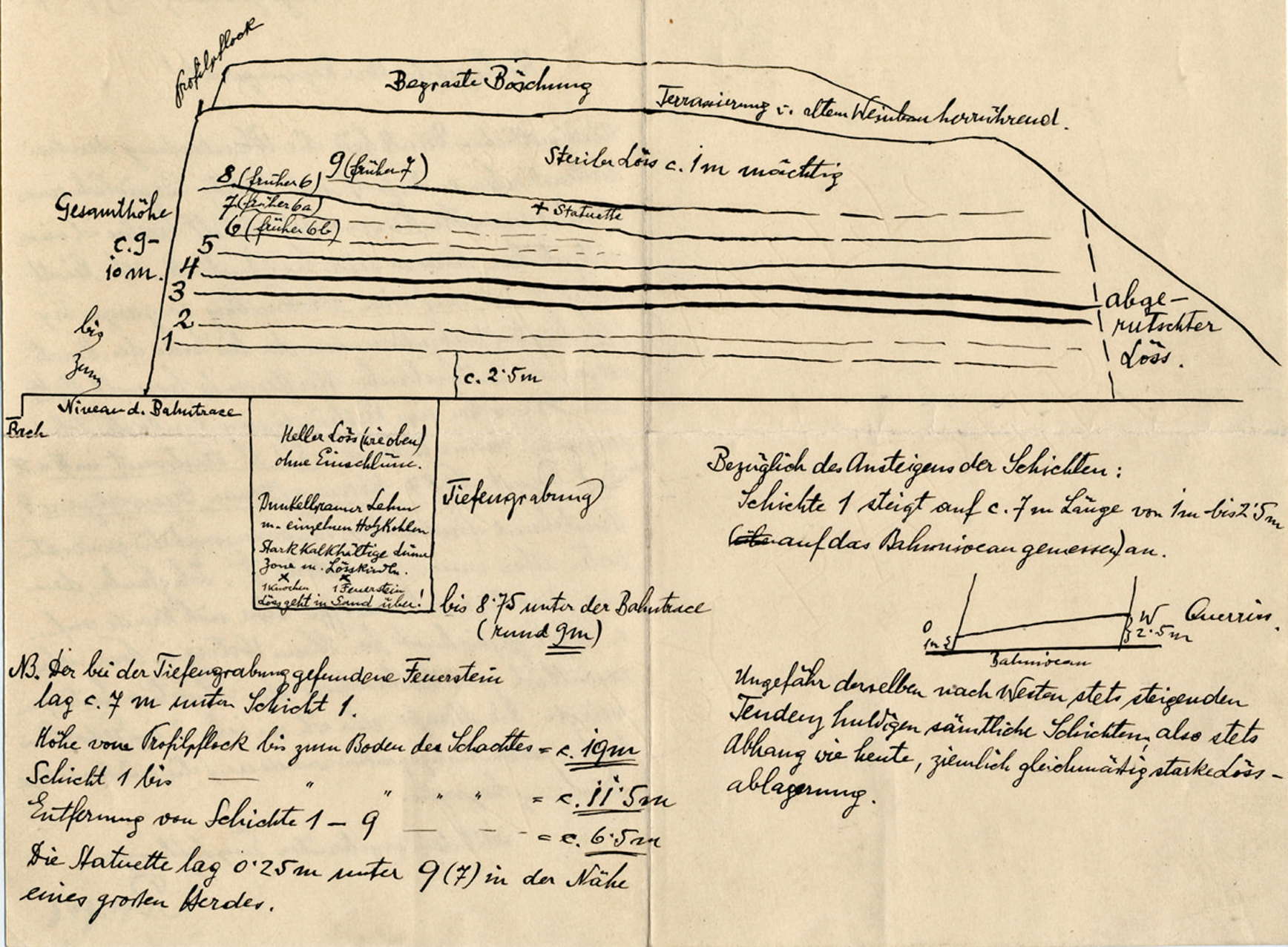
Bayer’s description of the layers in 1909, which is presumed to be information for Szombathy’s speech in Potsdam in that year.
Photo and text: Antl-Weiser (2008a)
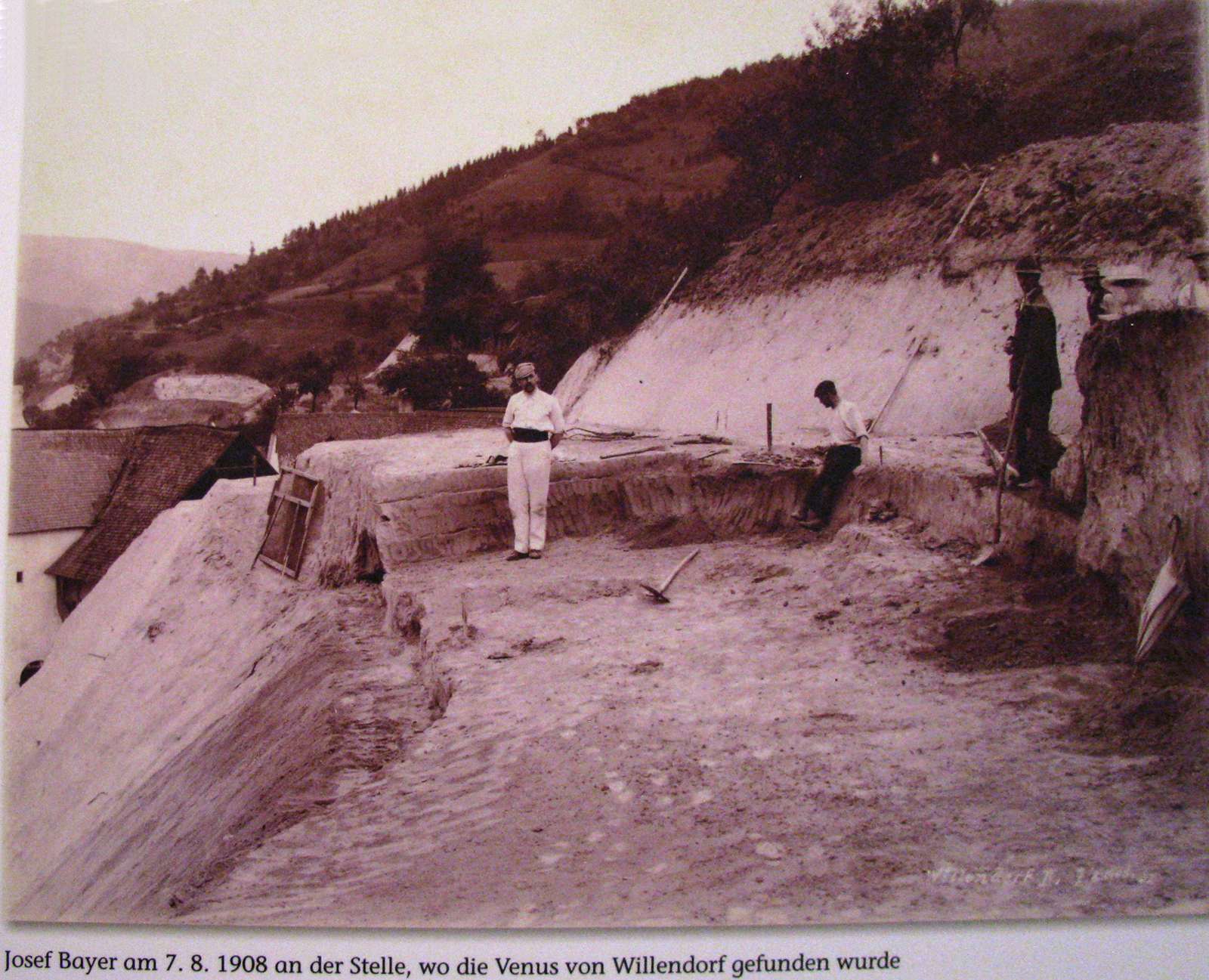
Josef Bayer on the 7th August 1908 on the level where the Venus of Willendorf was discovered.
Rephotography: Don Hitchcock 2008
Source: Venusium, the museum at Willendorf. © NHM Wien
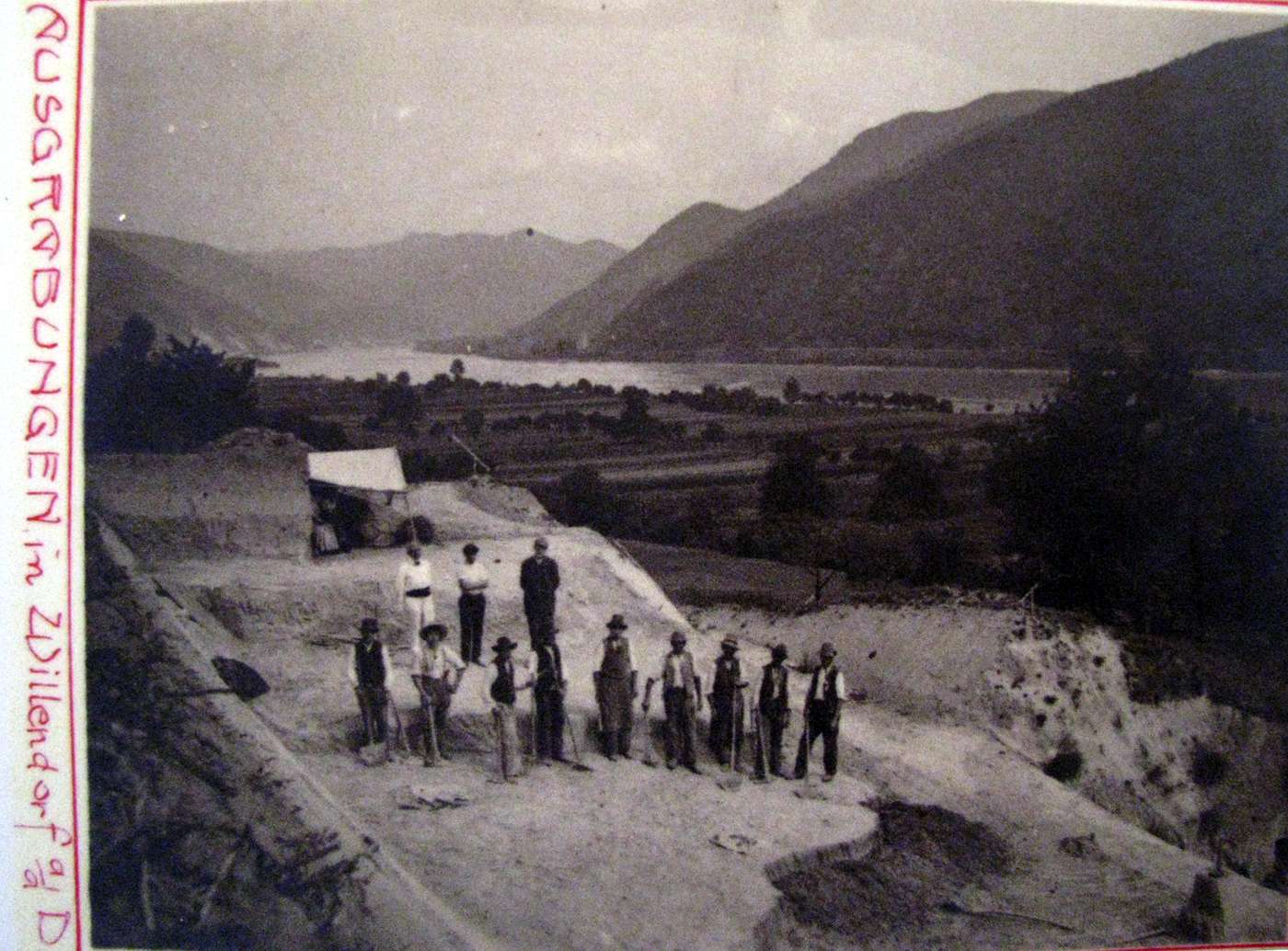
The site of the dig at Willendorf.
On the morning of August 7, Josef Szombathy arrived in Willendorf on a routine visit. He and Josef Bayer were present when a worker, Johann Veran, discovered the Venus of Willendorf. Hugo Obermaier learned of the find only later, in the course of the day. In 1925 Hugo Obermaier wrote to his friend Menghin, head of the Institute of Prehistory and Early History at Vienna University, that no one had been present when the statue had actually been found. He and Bayer had been occupied with excavating the levels. Szombathy alone had gone from one worker to another and noticed the object lying among the finds made by Veran.
Obermaier's letter became a source of later speculation. Some suspected that none of the three researchers had actually been at the excavation site when the Venus had been found. This may be ruled out, however, since Obermaier himself also wrote that he and Bayer had been working above and Szombathy had been observing their work.
Rephotography: Don Hitchcock 2008
Source: Venusium, the museum at Willendorf. © NHM Wien
Text: Display at Venusium, the museum at Willendorf.
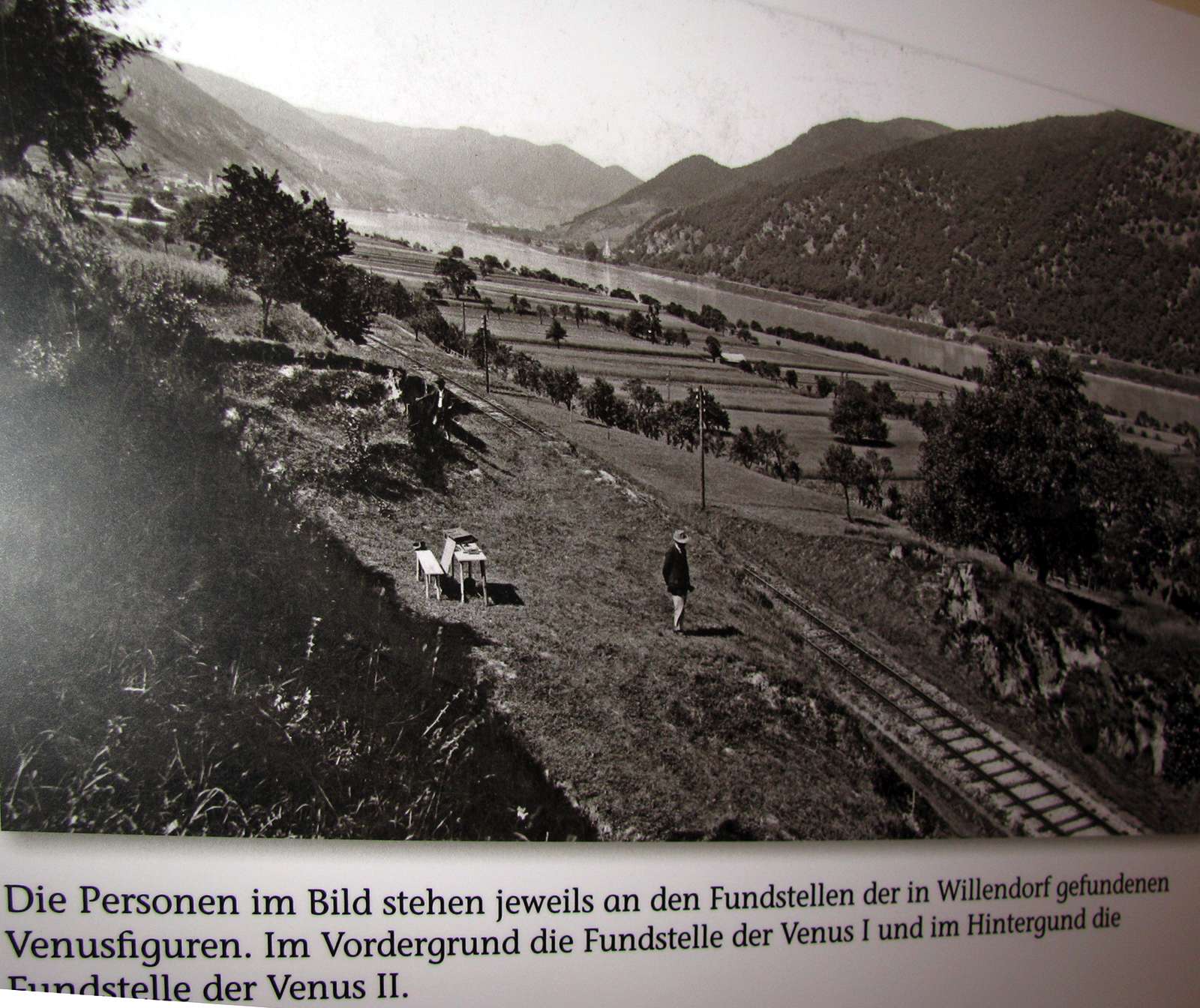
The site of the dig at Willendorf.
The people in the photo are standing at the place where the Venus figures were found. The person in the foreground is standing at the site where the Venus I was found, and the person in the background is standing at the site where the Venus II was found.
Rephotography: Don Hitchcock 2008
Source: Venusium, the museum at Willendorf. © NHM Wien
Text: My translation of the caption on the photograph.
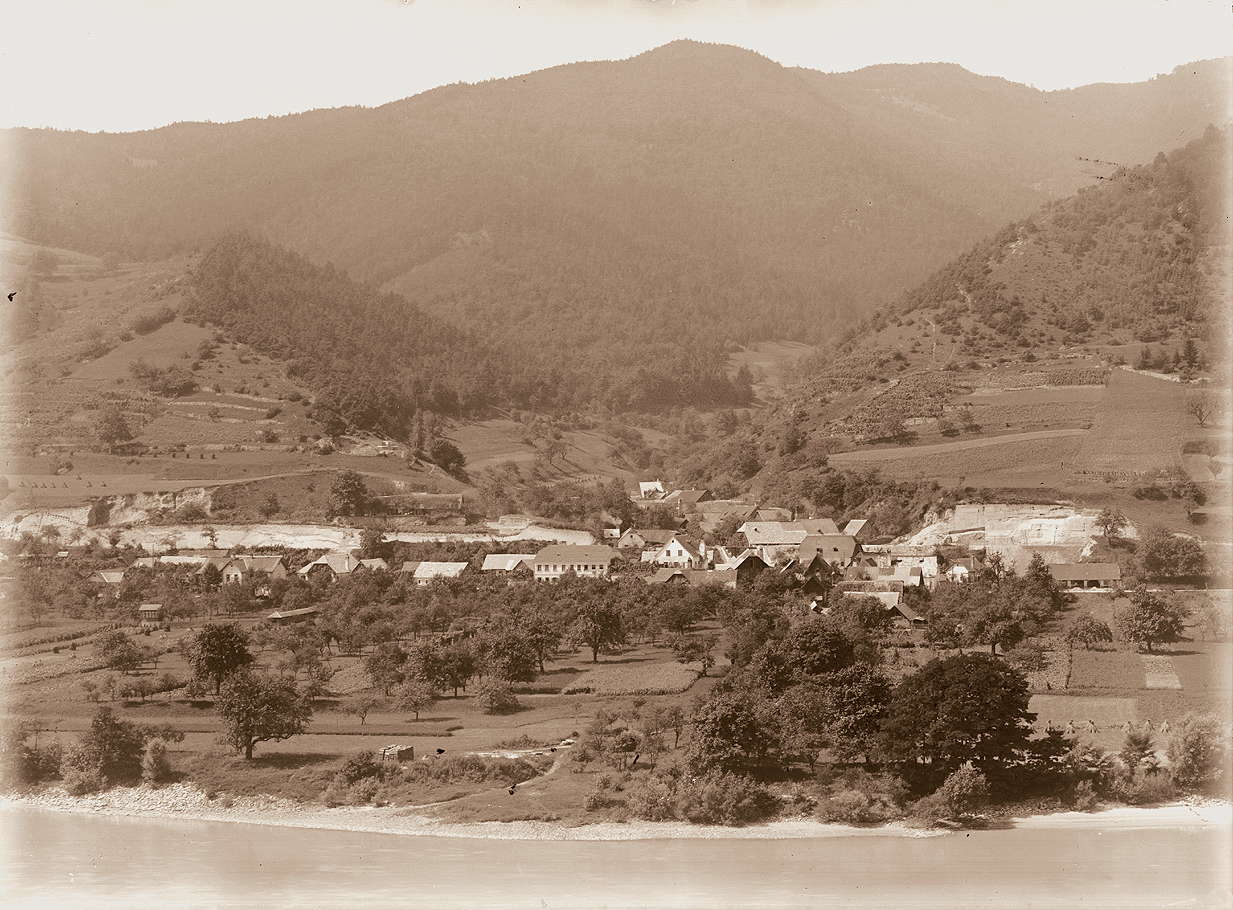
View of Willendorf I, I-North, and II from the eastern bank of the Danube in 1908 after the completion of the railroad.
Photo: Szombathy; © Archive of the Department of Prehistory, Museum of Natural History, Vienna; nr. 4777)
Source: Nigst et al., 2008
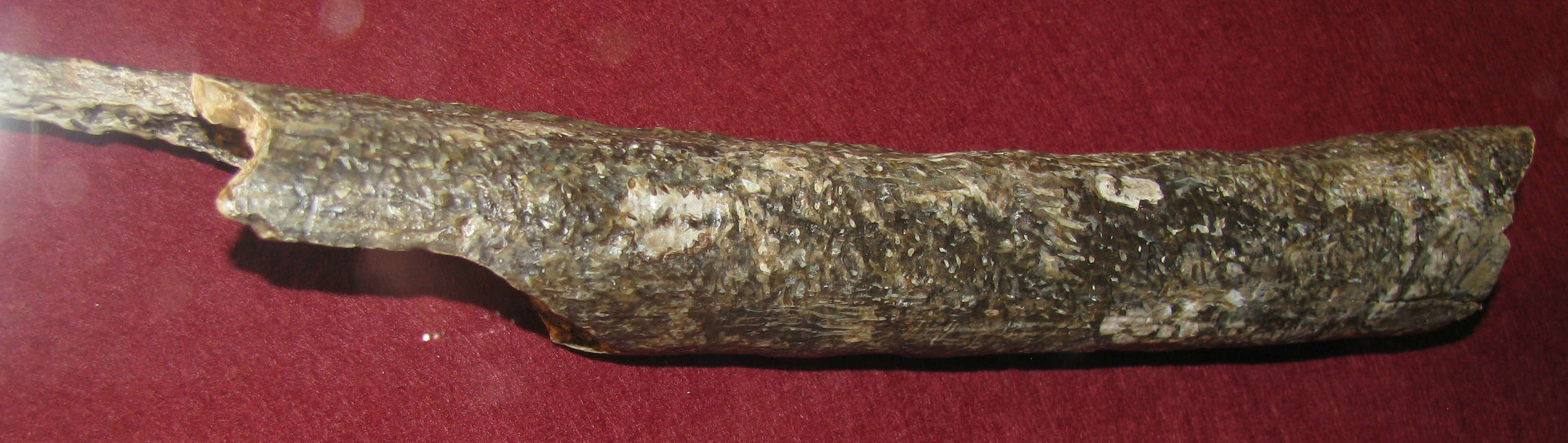
Human thighbone, Willendorf I.
Age: 24 000 BP.
This looks like a facsimile.
Photo: Don Hitchcock 2008
Source: Vienna Natural History Museum.
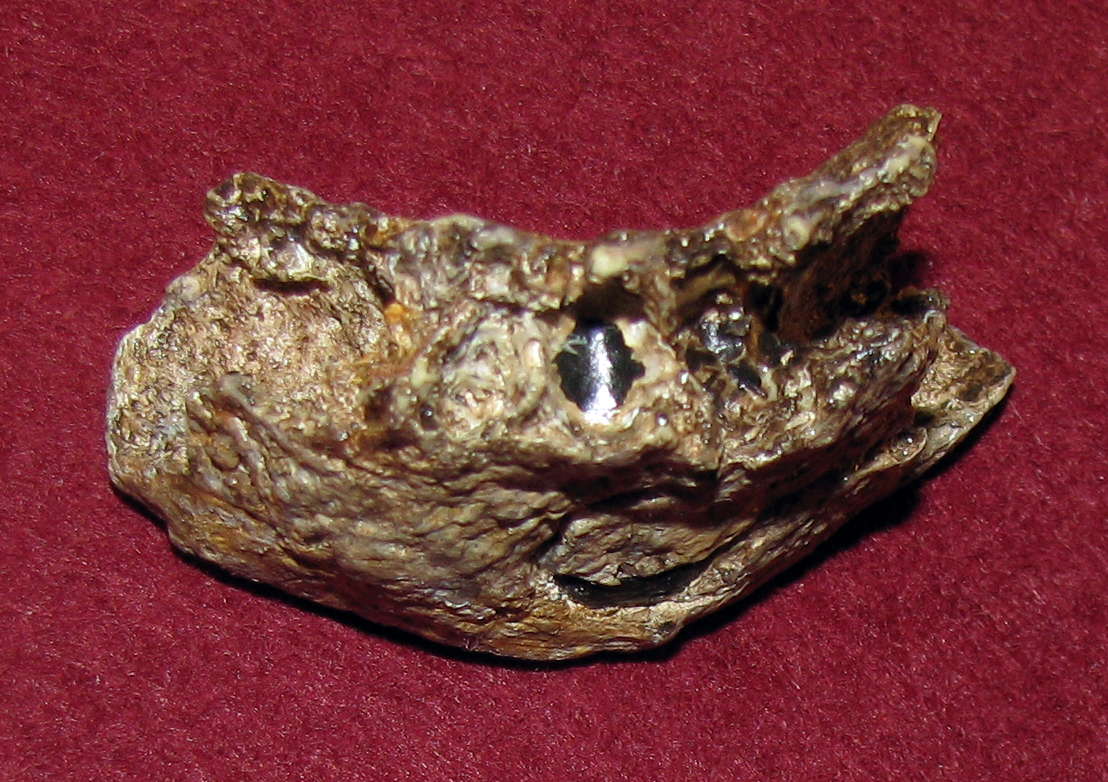
Human jaw, Willendorf II.
Age: 24 000 BP.
This looks like a facsimile.
Photo: Don Hitchcock 2008
Source: Natural History Museum of Vienna
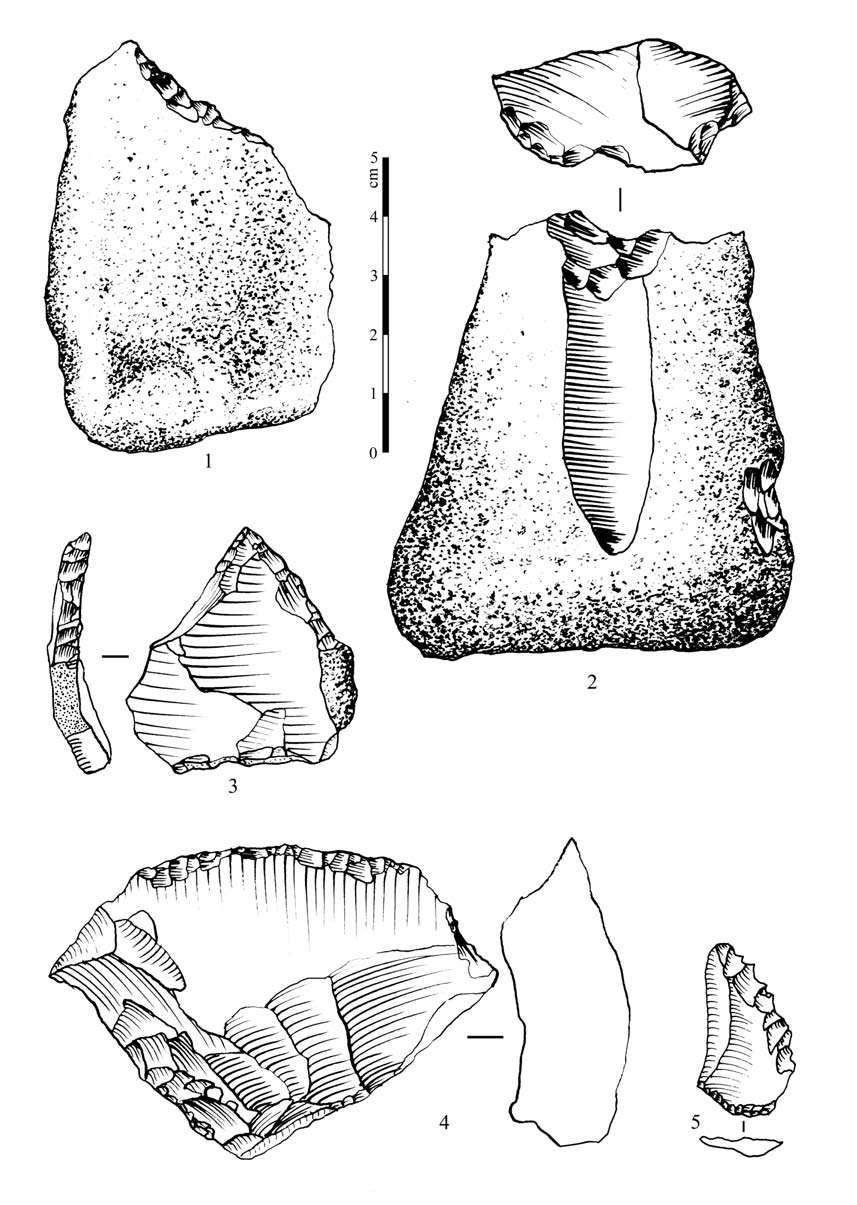
Willendorf II, layers 1 (1-2) and 2 (3-5).
1. retouched flake
2. core
3. bec (nosed end scraper)
4. sidescraper
5. denticulate
Layer 1 contains only three artifacts, all undiagnostic. Their characters did not allow us to specify a chrono-cultural attribution.
Layer 2 yielded a slightly more important assemblage, which, nevertheless, is insufficient for a real typo-technological characterization. The Vienna collections contain 41 pieces corresponding to 32 tools, 7 unretouched blades and 2 cores. Blade debitage seems to be exclusive and there is no clear evidence of a specific flake production.
Layers 1 to 3 are very poor. Their interpretation is all the more difficult because the quantitative and qualitative value of the assemblages changes from one layer to another. In fact, layer 4 is the only one to offer a rich and diversified assemblage containing more than 100 tools in association with numerous debitage products.
Flakes are preferentially used for the manufacture of a diversified tool-kit dominated by retouched flakes, which are generally heterogeneous and only partially retouched. The assemblage also includes a small proportion of notches, denticulates (no. 5) and scrapers (no. 4), as well as one bec (no. 3) and one truncated piece, both on flakes.
Photo and text: Haesaerts et al. (2003)
Drawings: N. Teyssandier
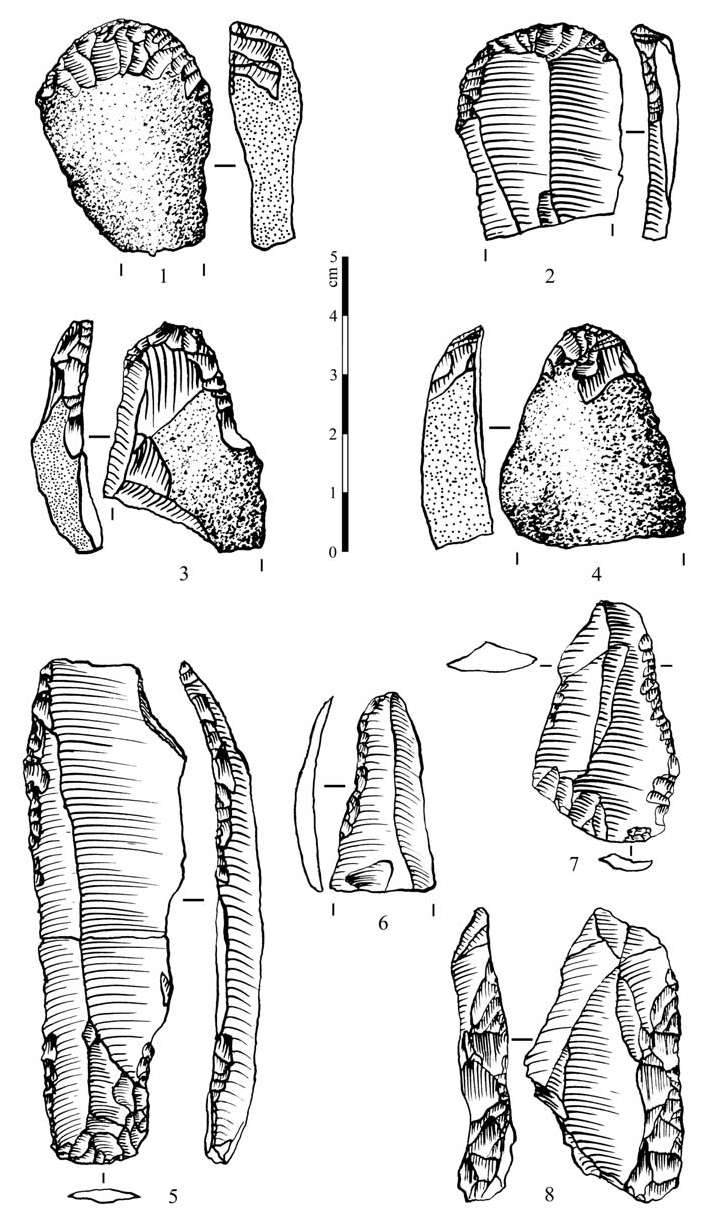
Willendorf II, layer 2.
1-4 single endscrapers
5-6 retouched blades
7-8 retouched flakes
Blade tools are not so numerous; they are represented by five endscrapers (no. 1-4) - more often than not on cortical blades - and four retouched blades (no. 5-6). Among the retouched blades, a more elongated and regular specimen (no. 5) indicates that it has been detached with a soft organic hammer. This is testified to by the carefully abraded unfaceted butt and the particularly well developed lip.
Photo and text: Haesaerts et al. (2003)
Drawings: N. Teyssandier
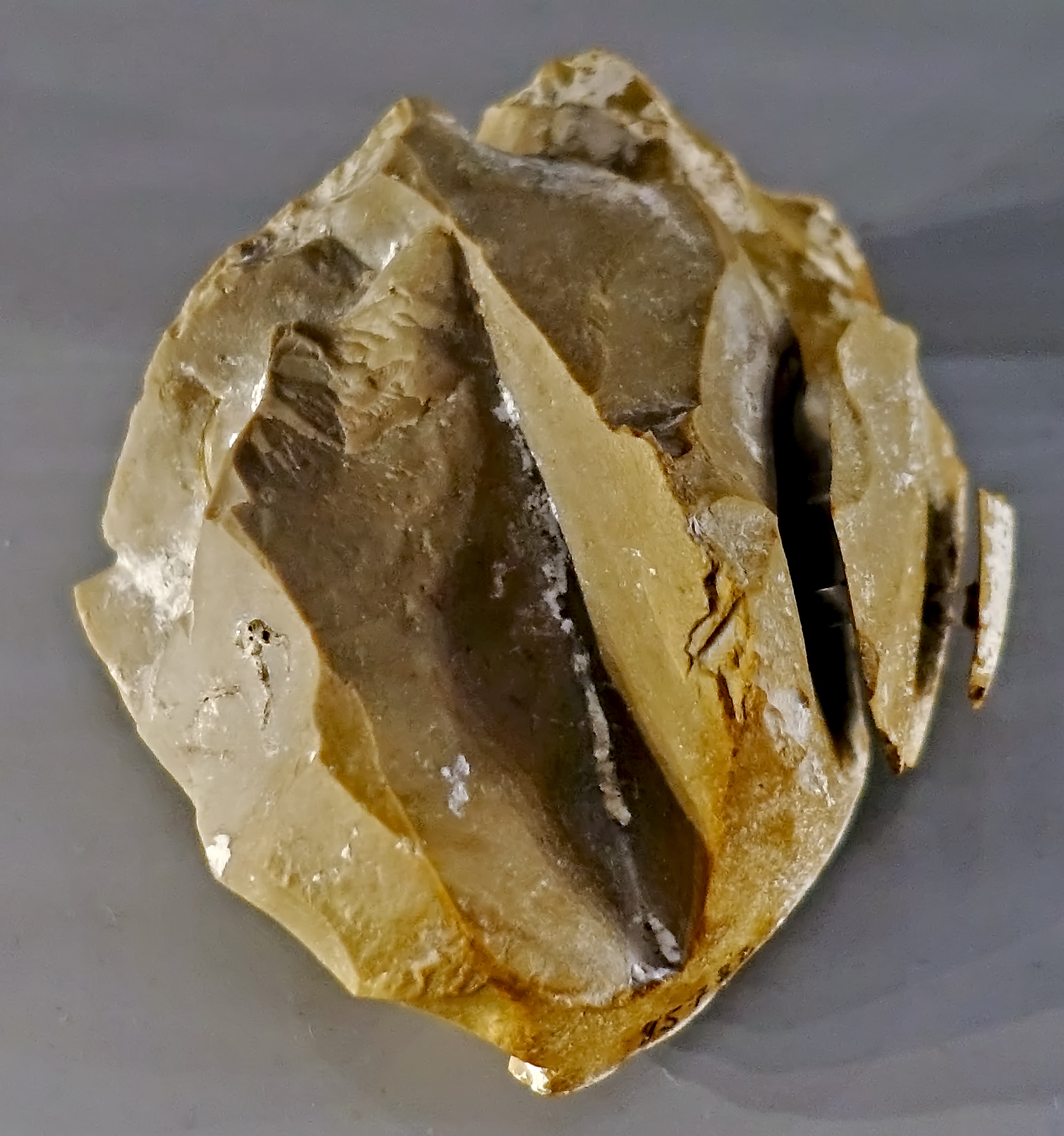
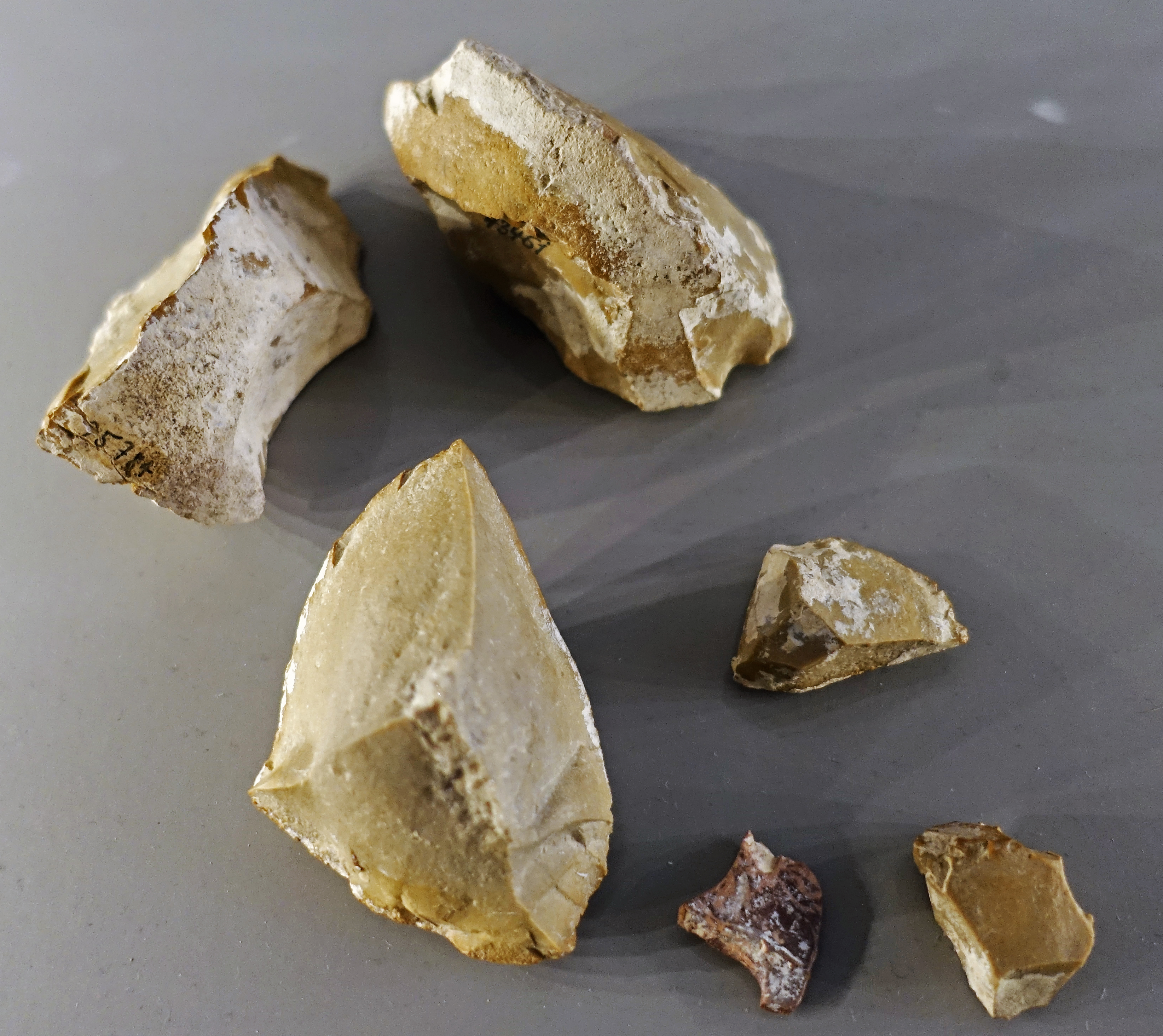
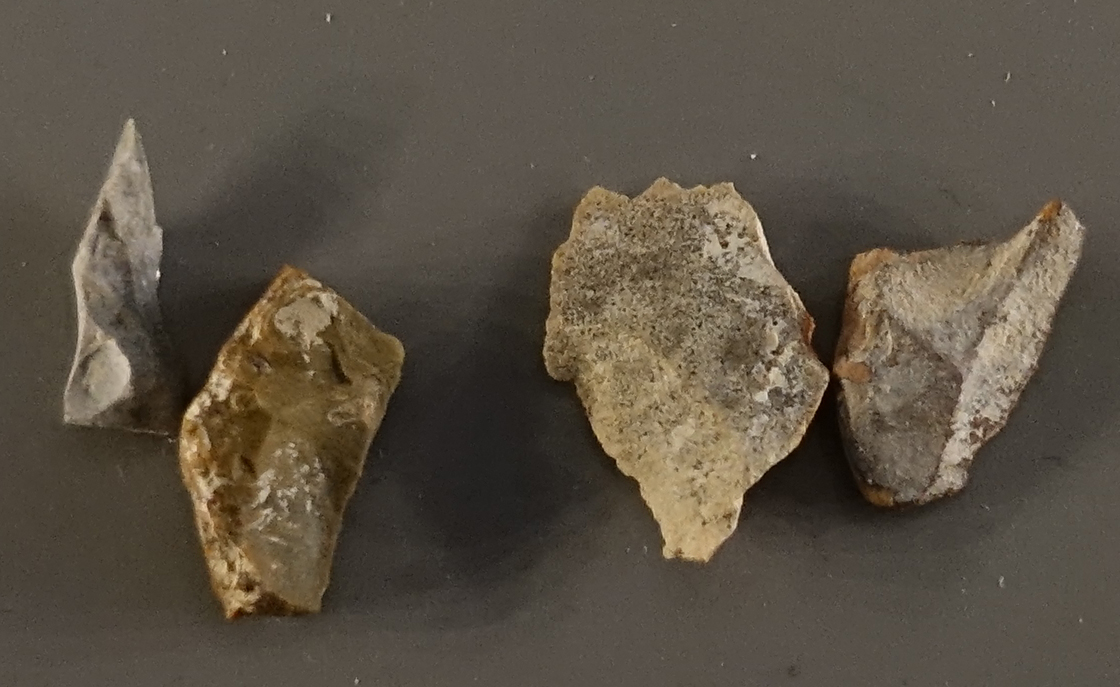
(upper left) Oldest core of early modern humans in Europe showing microblade technology, 43 000 BP.
(upper right) flakes, 43 000 BP.
(left) small flakes, 43 000 BP.
Photo: Don Hitchcock 2018
Source and text: Natural History Museum of Vienna
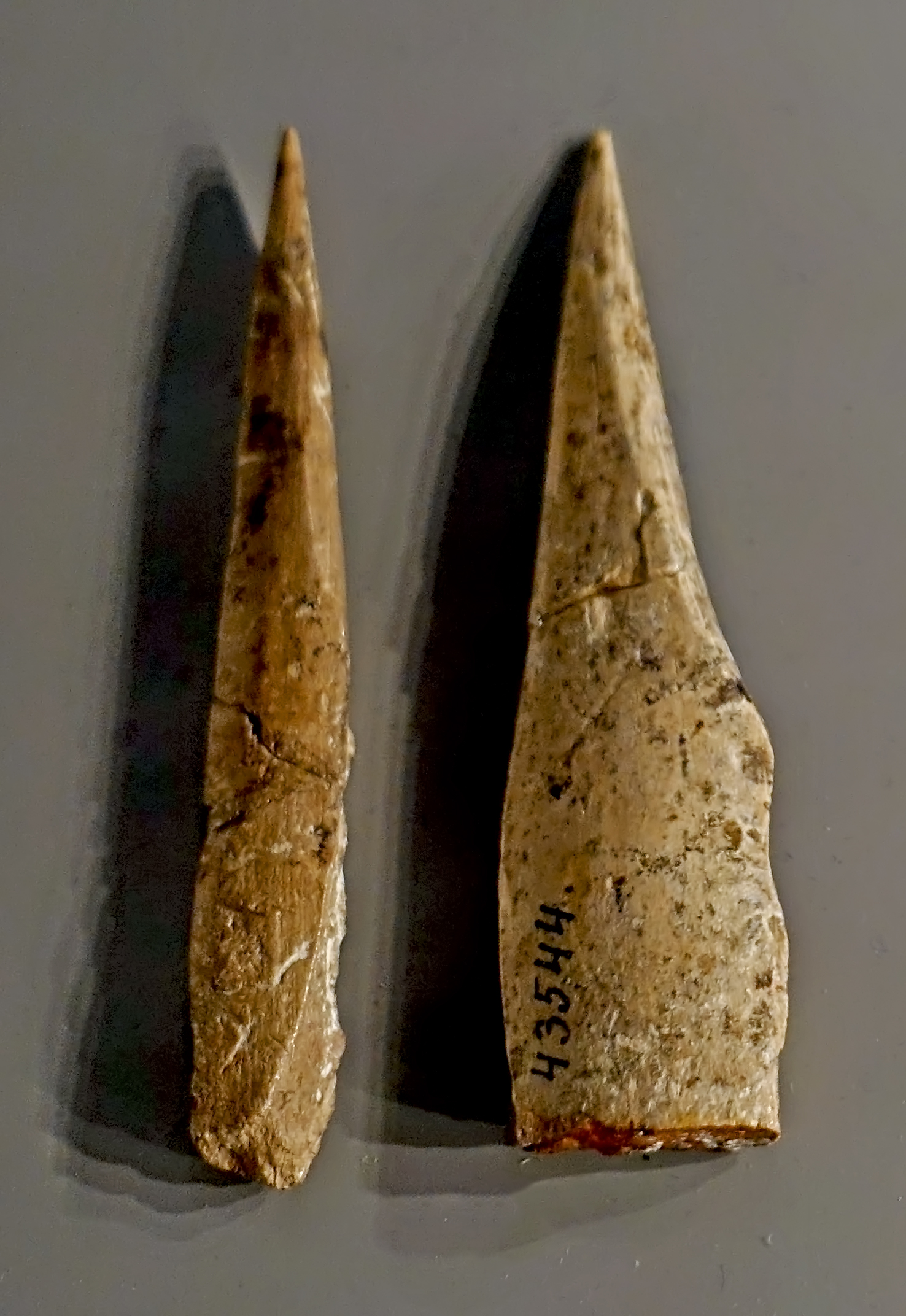
Aurignacian projectile points from Willendorf, Layer 4: circa 31 500 BP.
Photo: Don Hitchcock 2018
Source and text: Natural History Museum of Vienna
Dating: Nigst et al. (2008b)
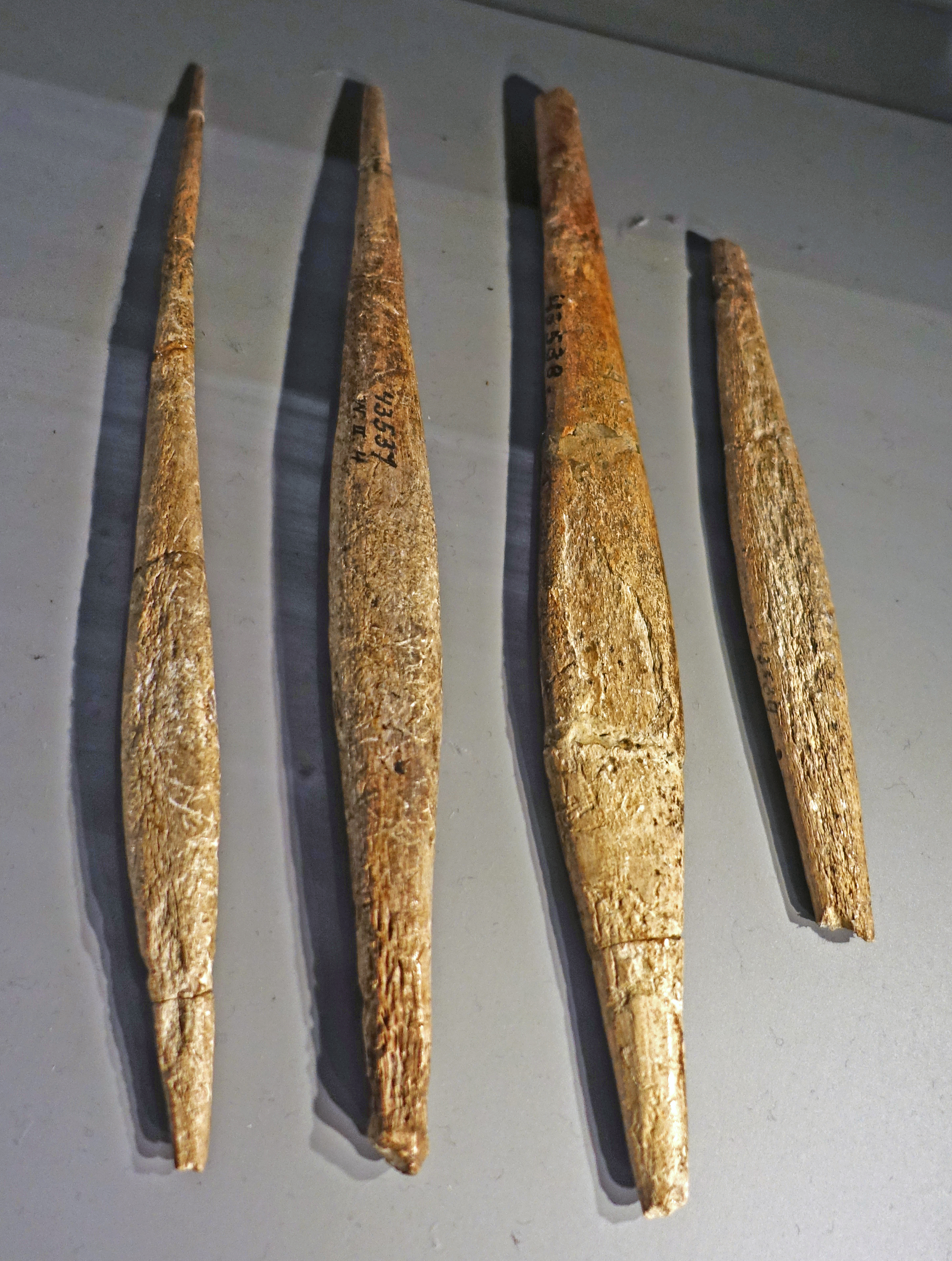
Awls of bone and ivory from Willendorf, Layer 4: circa 31 500 BP.
Photo: Don Hitchcock 2018
Source and text: Natural History Museum of Vienna
Dating: Nigst et al. (2008b)
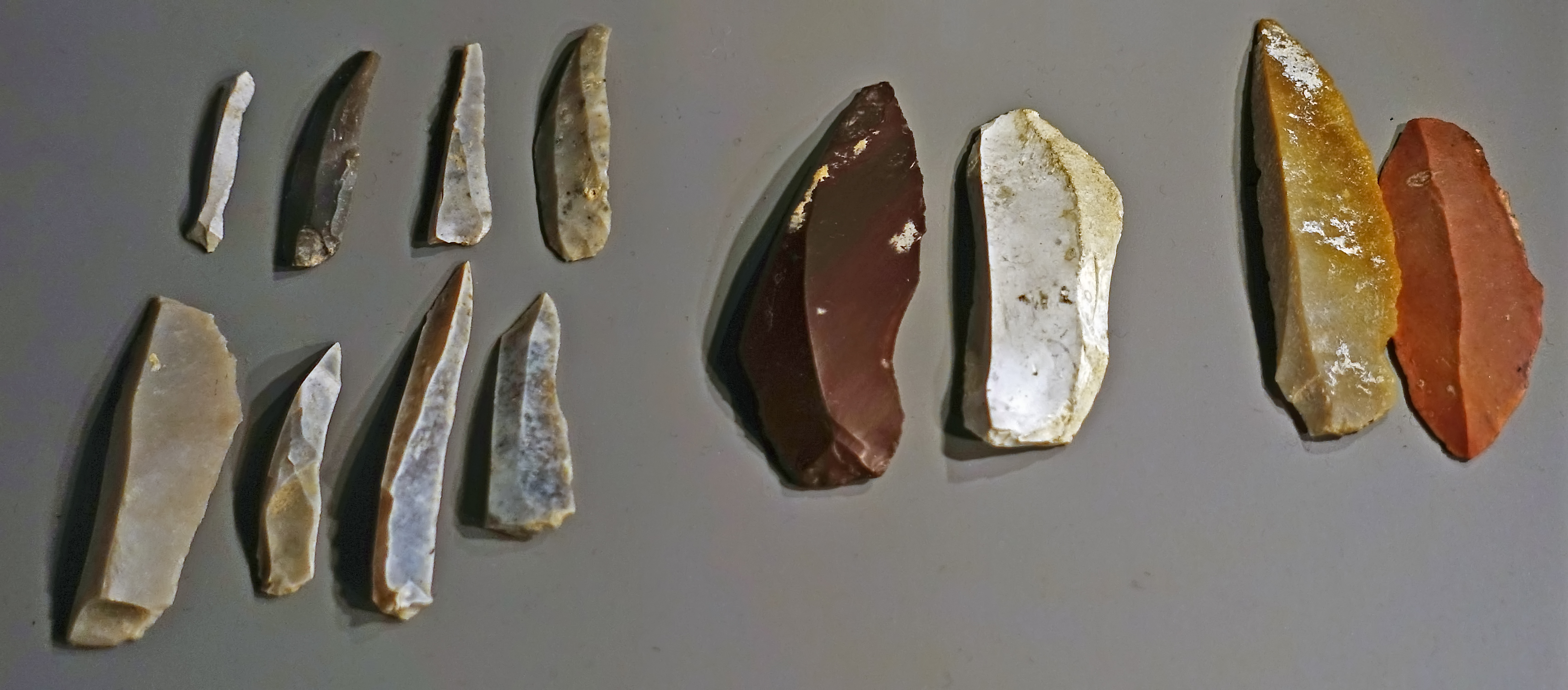
Awls of flint from Willendorf, Layer 4: circa 31 500 BP.
Photo: Don Hitchcock 2018
Dating: Nigst et al. (2008b)
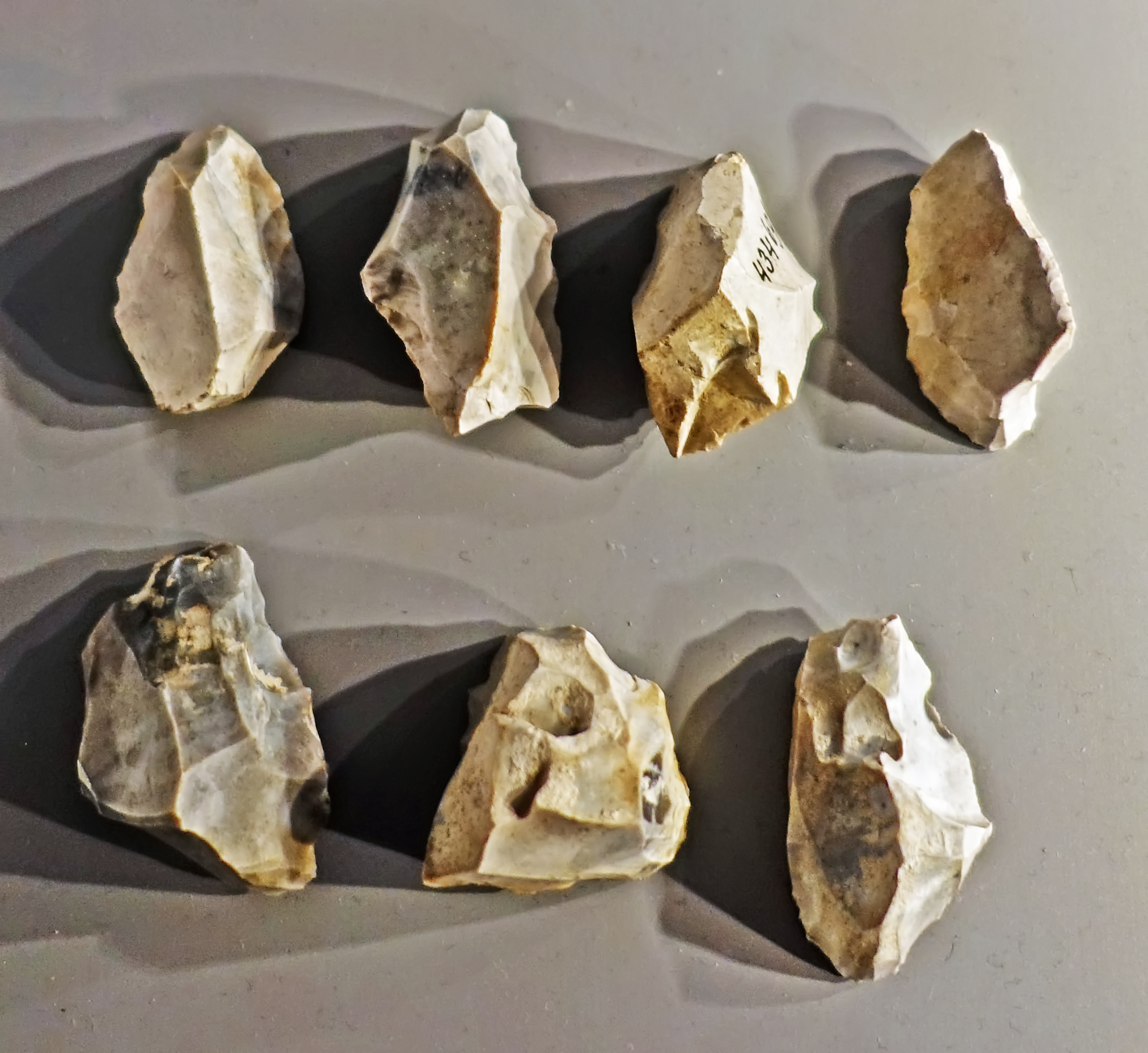
Carenated endscrapers from Willendorf, Layer 4: circa 31 500 BP.
Photo: Don Hitchcock 2018
Source and text: Natural History Museum of Vienna
Dating: Nigst et al. (2008b)
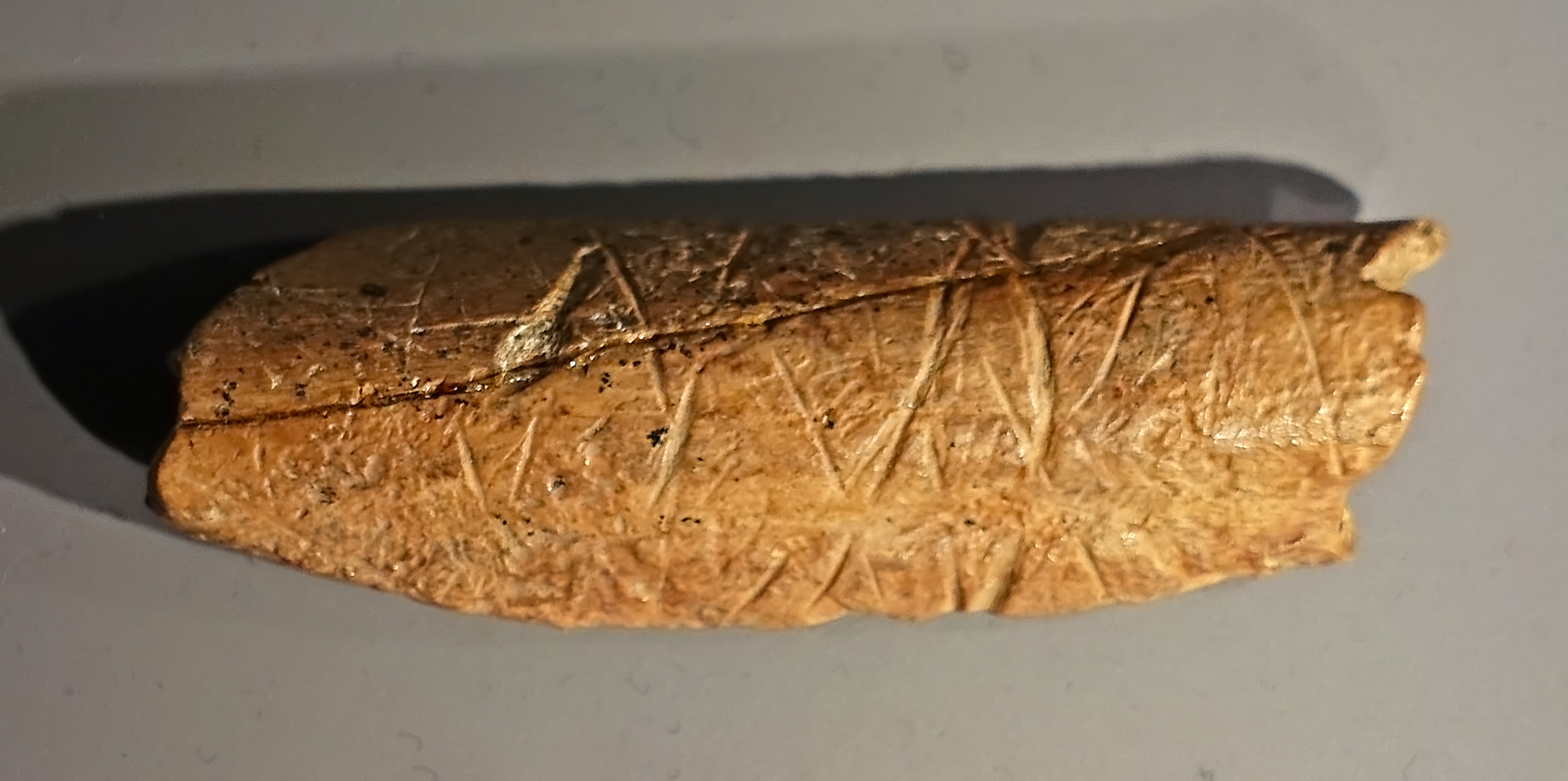
Engraved bone from Willendorf, Layer 4: circa 31 500 BP.
Photo: Don Hitchcock 2018
Source and text: Natural History Museum of Vienna
Dating: Nigst et al. (2008b)
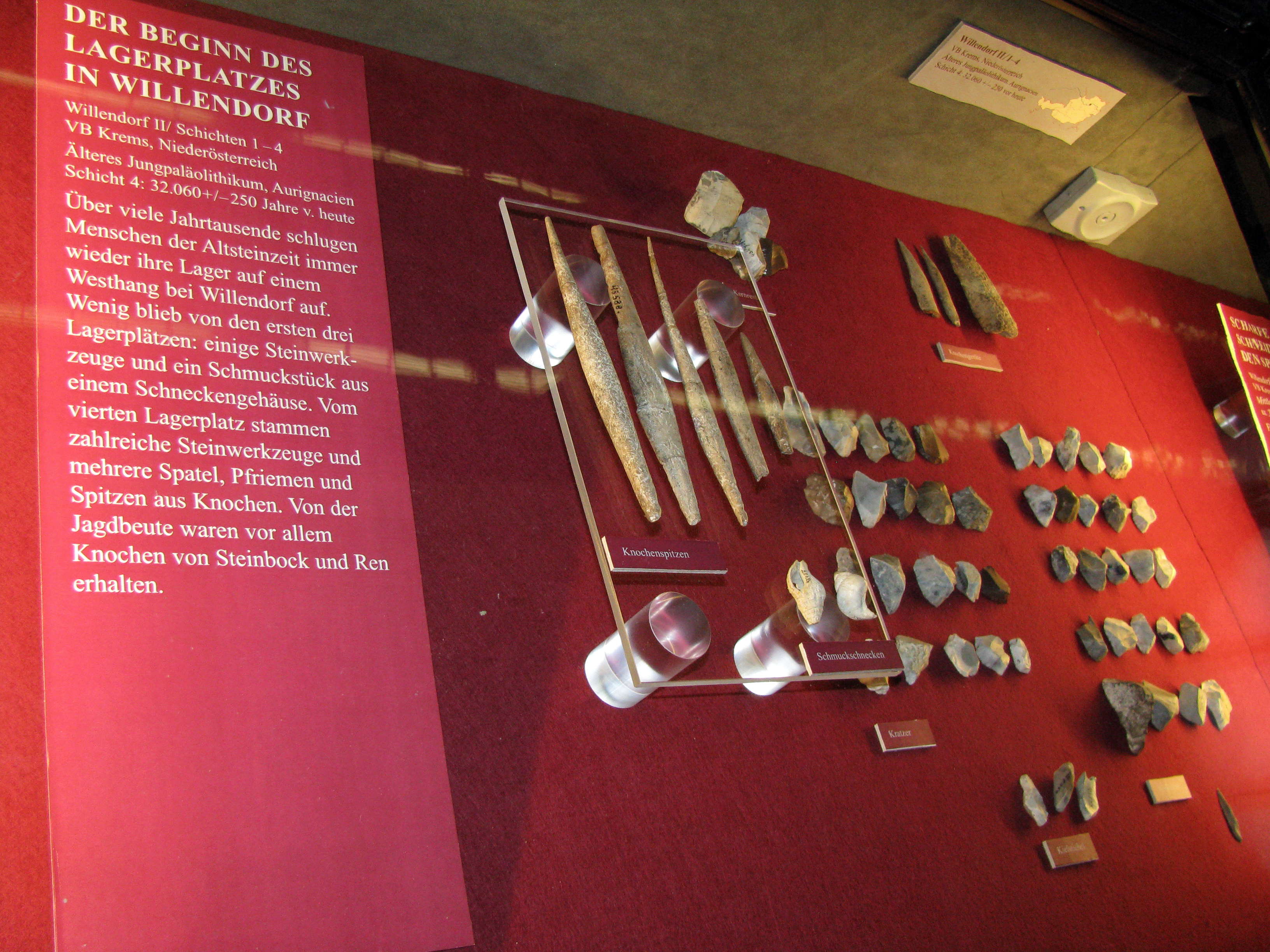
The beginnings of the open air camp site in Willendorf.
Willendorf II/Layers 1 - 4, in the district of Krems, Lower Austria.
Older Upper Palaeolithic, Aurignacian.
Layer 2: circa 40 000 BP.
Layer 3: circa 36 000 BP.
Layer 4: circa 31 500 BP.
Over many millennia, the inhabitants here put up their camps on the east facing slope made of wind blown rock flour, loess, of the left bank of the Danube at Willendorf. Little remains to be found of the first three layers, except for some stone tools and some jewellery, a pierced snail shell.
In the fourth layer are numerous stone tools and multiple blades, awls and points made of bone. They hunted, in particular, Ibex and Reindeer. This indicates that the climate was very cold.
Photo: Don Hitchcock 2008
Source: Natural History Museum of Vienna
Dating: Nigst et al. (2008b)
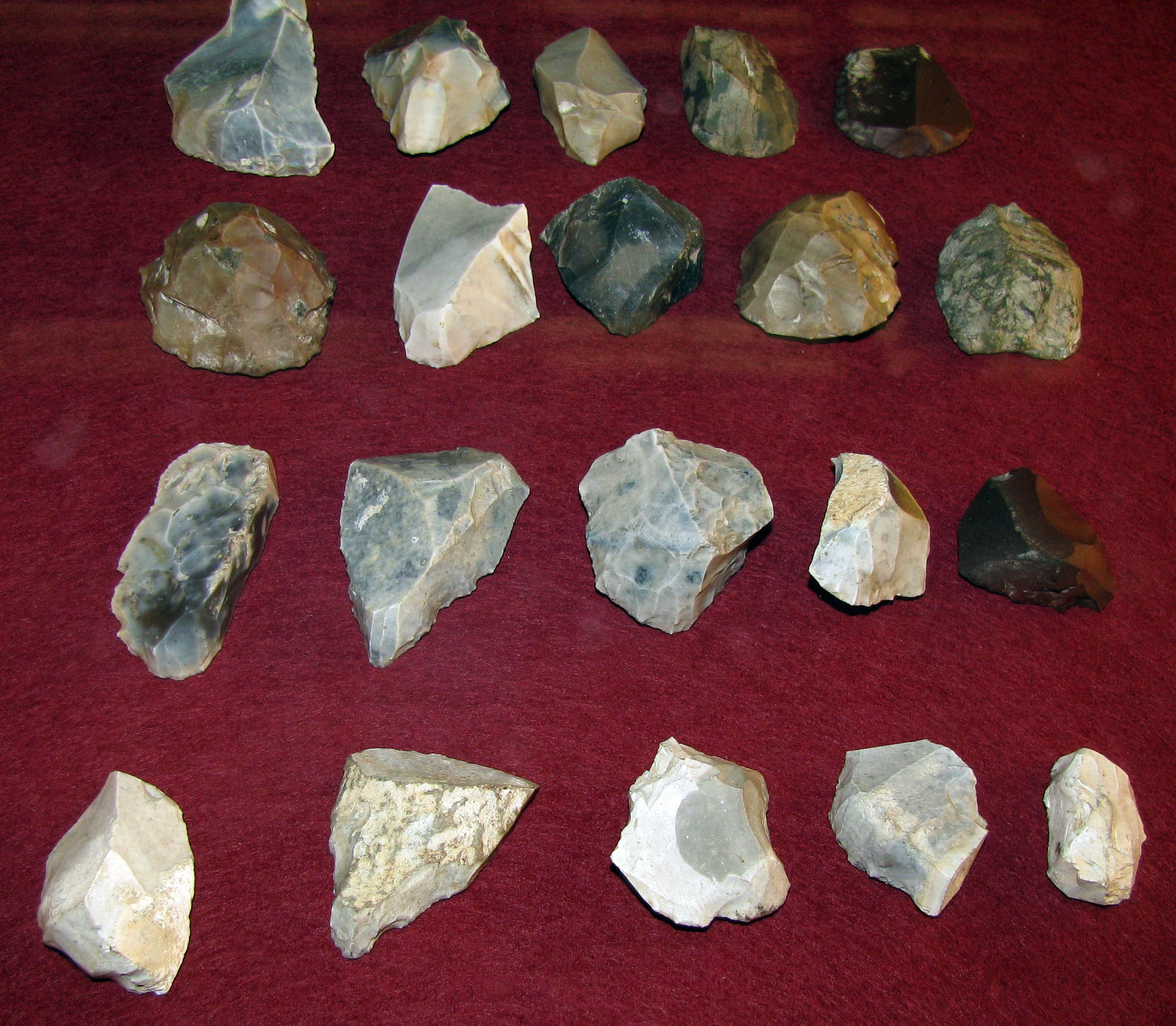
Scrapers from Layer 4 of the Willendorf II site, circa 31 500 BP. Scrapers are unifacial tools that were used either for hideworking or woodworking purposes, whereas this term is often used for any unifacially flaked stone tool that defies classification, most lithic analysts maintain that the only true scrapers are defined on the base of use-wear, and usually are those that were worked on the distal ends of blades - i.e., 'end scrapers' or grattoirs.
Other scrapers include the so-called 'side scrapers' or racloirs, which are made on the longest side of a flake, and notched scrapers, which have a cleft on either side that may have been used to attach them to a handle.
Photo: Don Hitchcock 2008
Source: Natural History Museum of Vienna
Text: Adapted from Wikipedia
Dating: Nigst et al. (2008b)
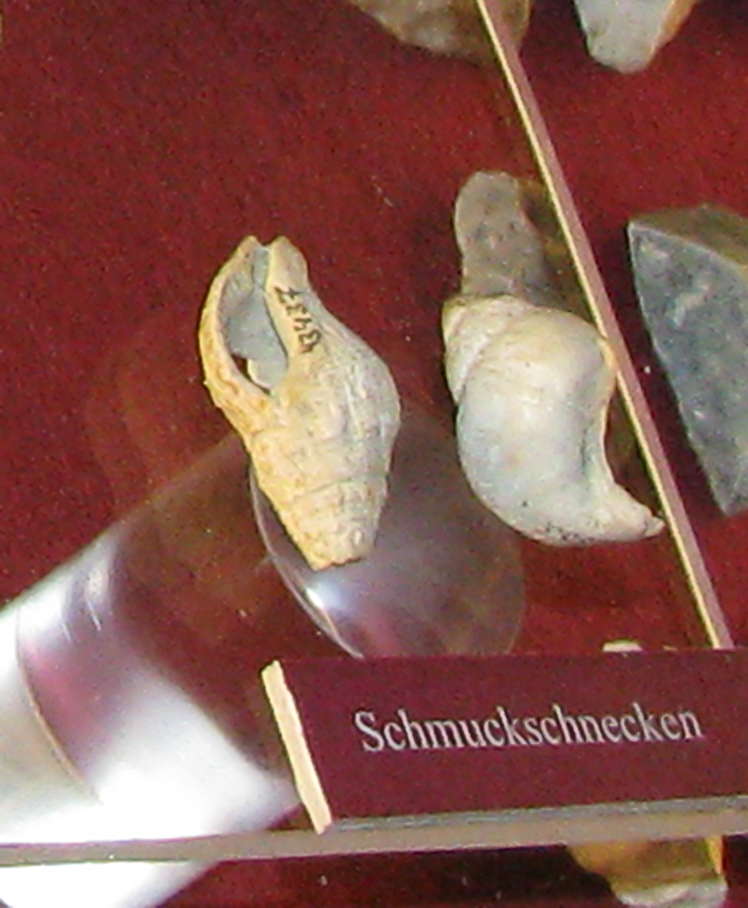
Shells from Layer 4 of the Willendorf II site, circa 31 500 BP.
These are marine snail shells brought by humans from the sea a long distance away and thus very valuable, pierced to be strung on a leather thong.
Photo: Don Hitchcock 2008
Source: Natural History Museum of Vienna
Text: Adapted from Wikipedia
Dating: Nigst et al. (2008b)
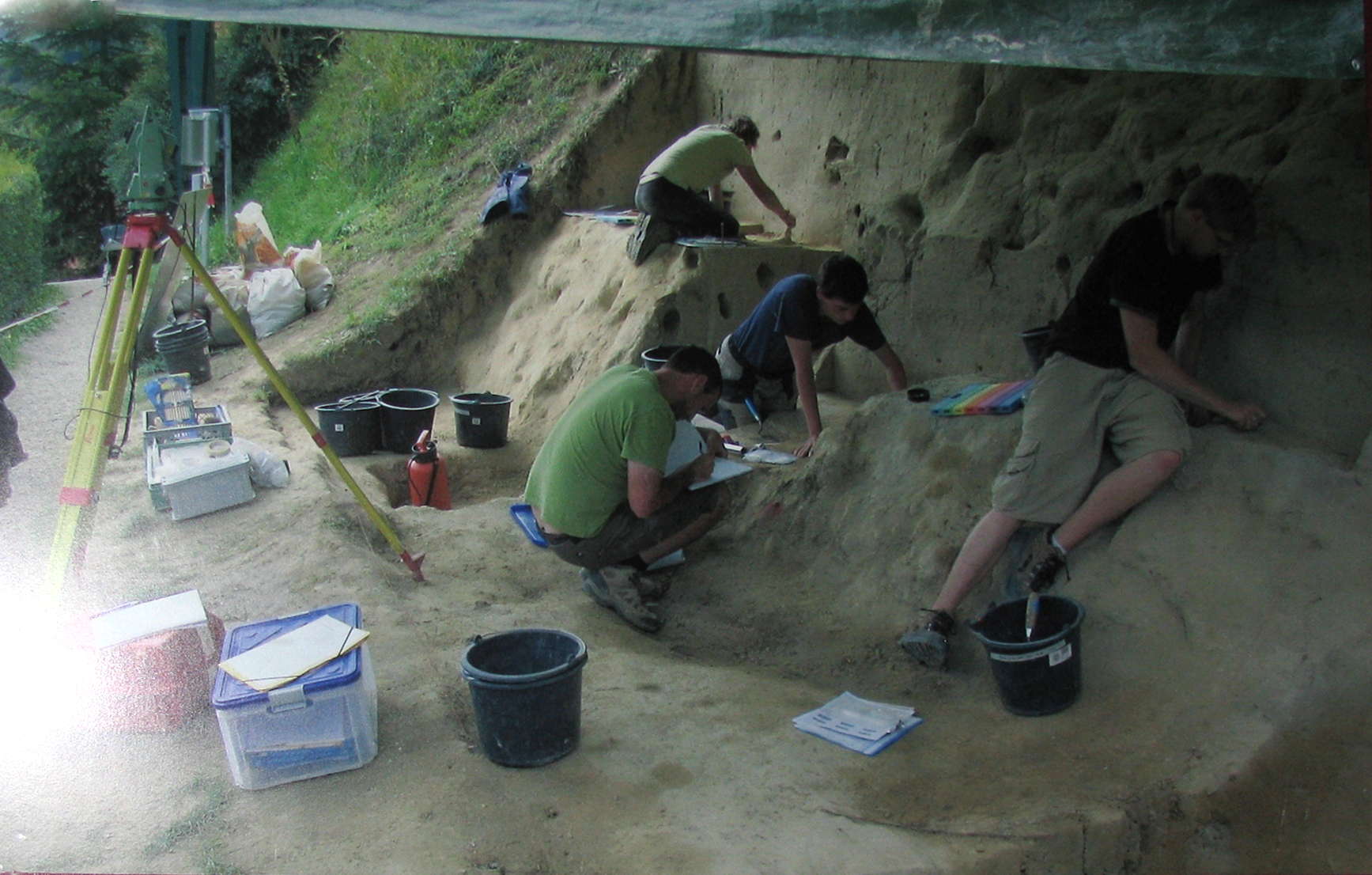
A young team of dedicated prehistorians and anthropologists focused in 2006 on the lower layers 2-4 of the Willendorf profile, horizons that have yielded relatively few artefacts, but are important because they were deposited between 40 000 - 31 500 years ago, at a time when Anatomically Modern Humans were replacing Neanderthals in the fossil record.
Source: Natural History Museum of Vienna
Dating: Nigst et al. (2008b)

Kielkratzer, keeled or carinated end scrapers, from Layer 4 of the Willendorf II site, circa 31 500 BP.
Note that the scraper on the bottom left looks very much like a muzzle shaped scraper, often known as a 'nose' scraper, or a grattoir à museau.
Photo: Don Hitchcock 2008
Source: Natural History Museum of Vienna
Dating: Nigst et al. (2008b)

Willendorf II / Layer 5, in the district of Krems, Lower Austria.
Middle Upper Palaeolithic, Gravettian.
Layer 5: ca 31 500 BP.
Sharp spear points
Five superimposed Camps of the Gravettian (layers 5-9) completed the deposits at the site where the Venus of Willendorf was found. At the oldest of this group of camps, layer 5, bones of mammoth, reindeer, ibex and deer have survived as remnants of the animals they hunted, once again pointing out the periglacial climatic conditions that prevailed in this area 31 500 years ago.
Only a few bone tools were found. The people of Willendorf used scrapers, burins, and minute stone points known as 'Gravettespitzen' (Gravettian points, Pointes de la Gravette), and 'microliths' - for their work.
Fossil Dentalia shells extracted from ancient limestone deposits, as well as perforated deer and fox teeth, were hung as pendants around the neck.
Photo: Don Hitchcock 2008
Source: Natural History Museum of Vienna
Dating: Nigst et al. (2008b)
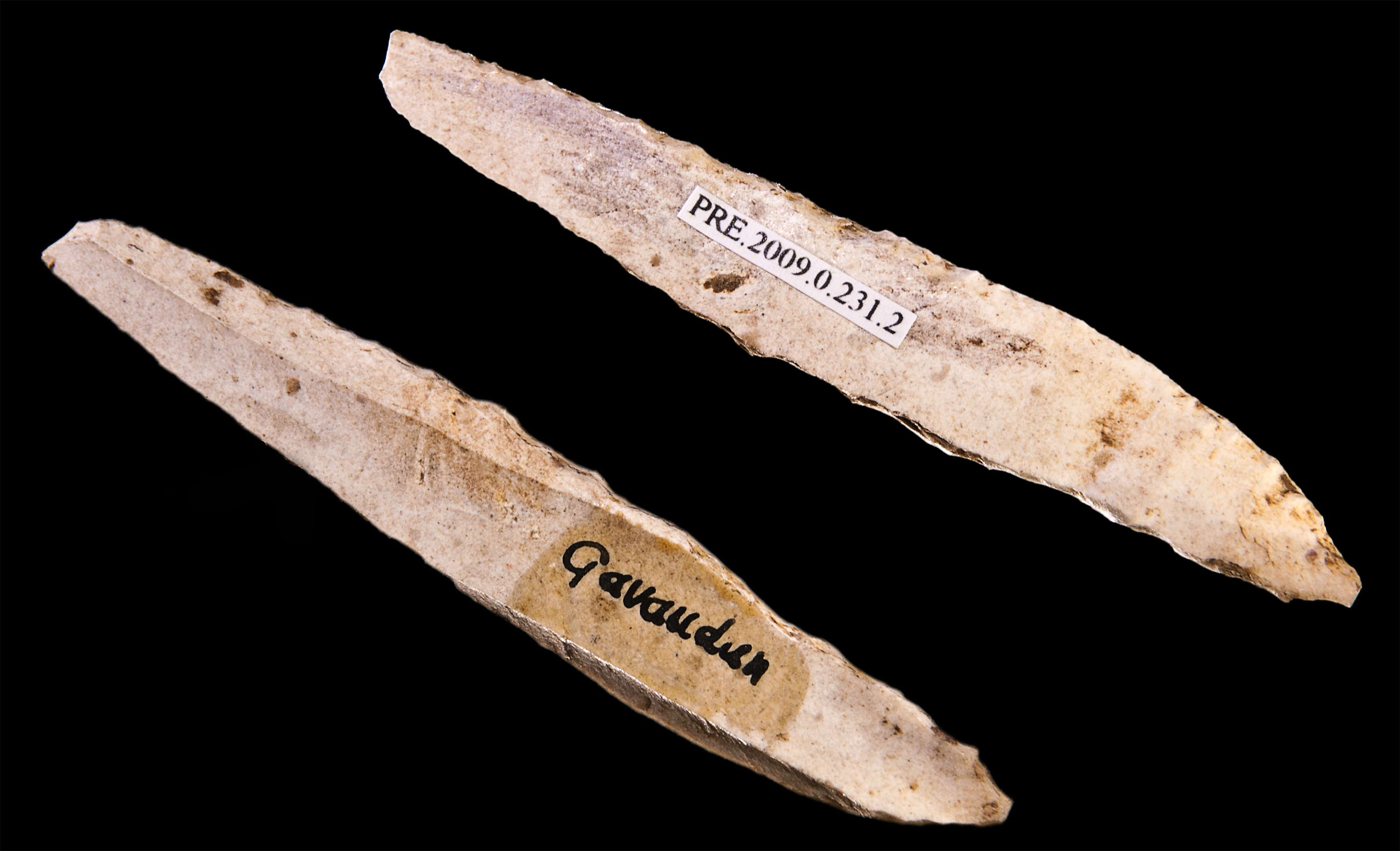
Pointe de la Gravette - a term introduced by Henri Breuil in 1906, different views of the same specimen.
A Gravettespitze or Gravettian point is a narrow, pointed blade, usually made of flint, having a steep retouched back (right end in the figure). The retouching was used as a hafting area for gluing to a grooved shaft of wood or bone.
The retouching is applied to the base of the point, (proximal end) gradually disappearing as it gets to the point (distal end). This suggests it was used as reinforcement when used as a tip in a spear. Another form of the Pointe de la Gravette is the Micro-Gravettian point, which is sometimes defined by a Gravettian point with a length of less than 30 mm.
Gravettian points are the signature tool of the older Gravettian, 31 000 to 25 000 years ago, or the Perigordian IV, a culture of the Upper Paleolithic.
Material: Flint
Dimensions: 60 × 10 × 4 mm - 2 grams.
Origin: Gavaudun, Lot-et-Garonne, France
Photo: Didier Descouens , 8 January 2011
Source: Muséum de Toulouse, MHNT.PRE.2009.0.231.2
Permission: GNU Free Documentation License , Version 1.2
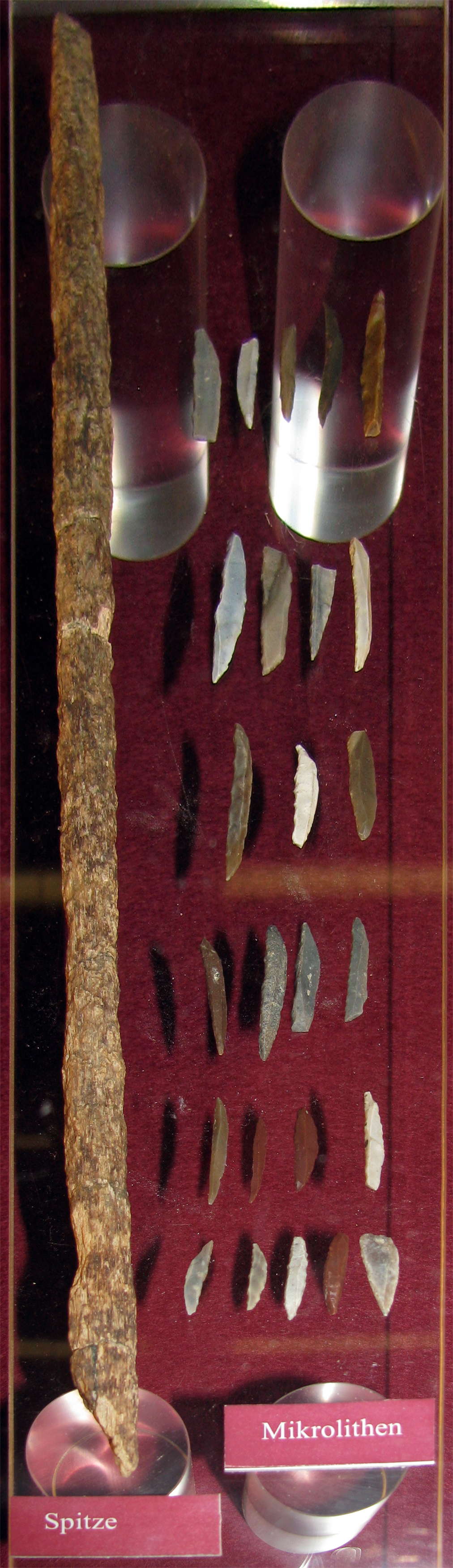
Willendorf II, Layer 5: ca 31 500 BP.
Bone point and microliths.
Photo: Don Hitchcock 2008
Source: Natural History Museum of Vienna

Willendorf II, Layer 5: ca 31 500 BP.
Dentalium shells, fossil shells extracted from ancient limestone, and another item of jewellery.
The modern descendants of Dentalium shells are still highly prized as jewellery, and are commonly used by Native North American artists. They are often referred to as tusk shells or tooth shells, and are used in indigenous jewellery and personal decoration in Western Canada and the United States.
Photo: Don Hitchcock 2008
Source: Natural History Museum of Vienna
Dating: Nigst et al. (2008b)
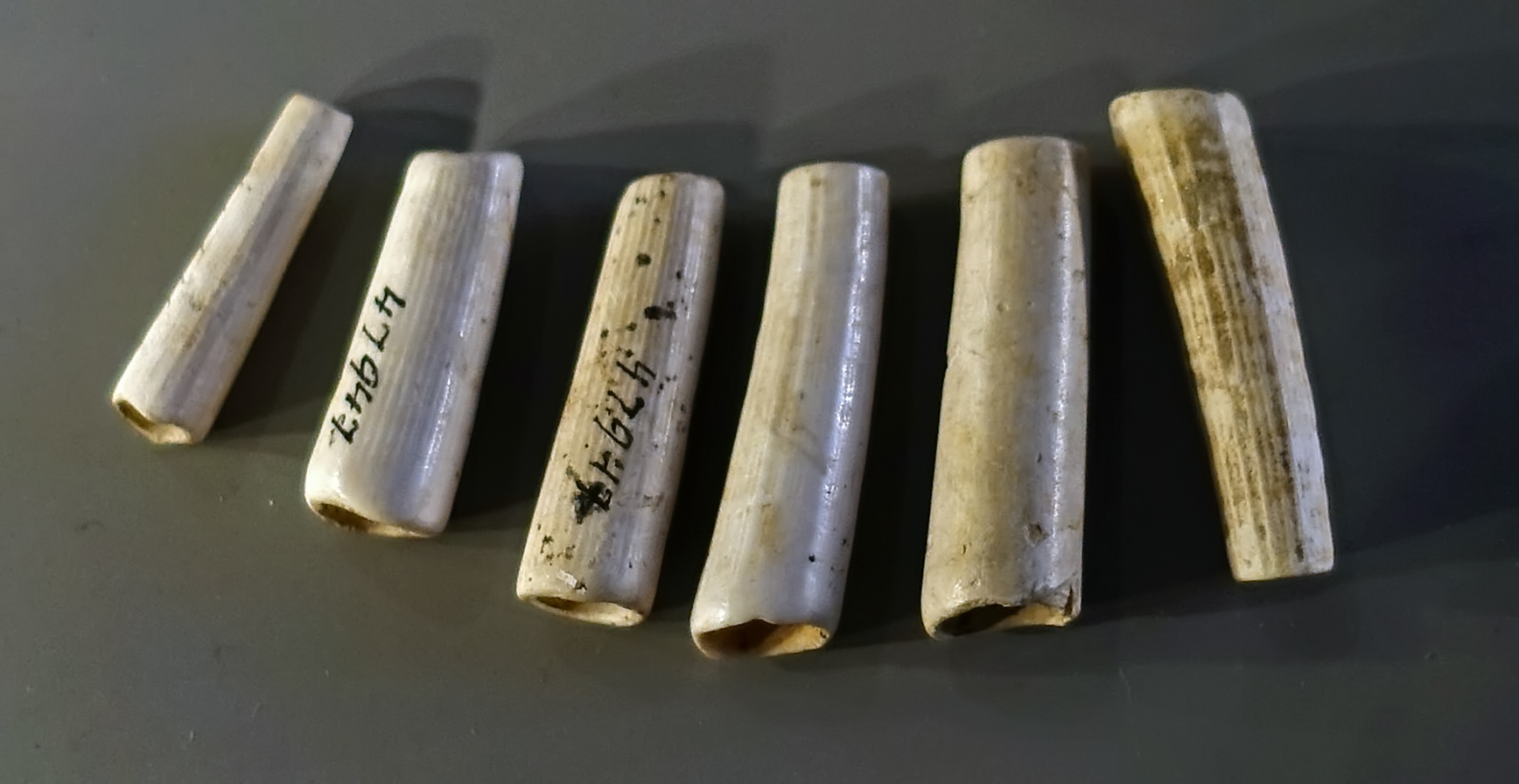
Fossil Dentalium shells from Aggsbach, used as decoration on clothing and strung on necklaces, circa 35 000 BP - 27 000 BP.
(
Note that by 2018, at least some of the Dentalium shells in the image immediately above this one had been recatalogued (note the catalogue number visible in both) as coming from Aggsbach - Don )
Photo: Don Hitchcock 2018
Source: Vienna Natural History Museum

The modern equivalent of Dentalium is Antalis pretiosum, which occurs from Alaska to Baja California, but were mostly harvested, because of (only just!) suitable local tidal and sea conditions, off the coast of Vancouver Island. They were regarded as very precious, and were widely traded. These tusk shells are a kind of seashell, specifically the shells of scaphopod mollusks. The name 'dentalium' is based on the scientific name for the genus Dentalium, but because the taxonomy has changed over time, not all of the species used are still placed in that genus, however all of the species are certainly in the family Dentaliidae.
This 'Indian Money Shell', Antalis pretiosum, was formerly Dentalium pretiosum. It has a smooth shell, and lacks the longitudinal linear sculpture of a true Dentalium, and for this reason amongst others was transferred to the Antalis genus (Ron Shimek, pers. comm).
'Dentalium' shells in the trade now are mostly Asian, and of inferior quality.
In the Pacific Northwest, 'dentalium' shells were only available from the Pacific coast of Vancouver Island. They were an indicator of wealth and were highly prized. 'dentalium' shells were used as decorative elements on clothing accessories and for personal adornment. This wawáq’aqt or choker is from the Rydryck Collection, and combines 'dentalium' shells, blue glass beads and brass beads sewn onto a single piece of leather with buckskin ties. The bracelet on the left is from the Spalding-Allen Collection and combines 'dentalium shells,' black pony beads and leather spacers with buckskin ties. It is assembled with sinew.
Choker Plateau c 1875-1900 Shell (Antalis pretiosum, glass beads, sinew, brass beads. L 33 cm. Nez Perce National Historical Park, NEPE 2194
Bracelet 1830s Shell (Antalis pretiosum), glass beads, leather. L 26 cm.
Nez Perce National Historical Park, NEPE 8762
Date: 1875-1900
Photo: Nez Perce National Historical Park, NEPE 8762
Permission: This work is in the public domain in the United States because it is a work of the United States Federal Government.
Text: Partly adapted from Wikipedia.
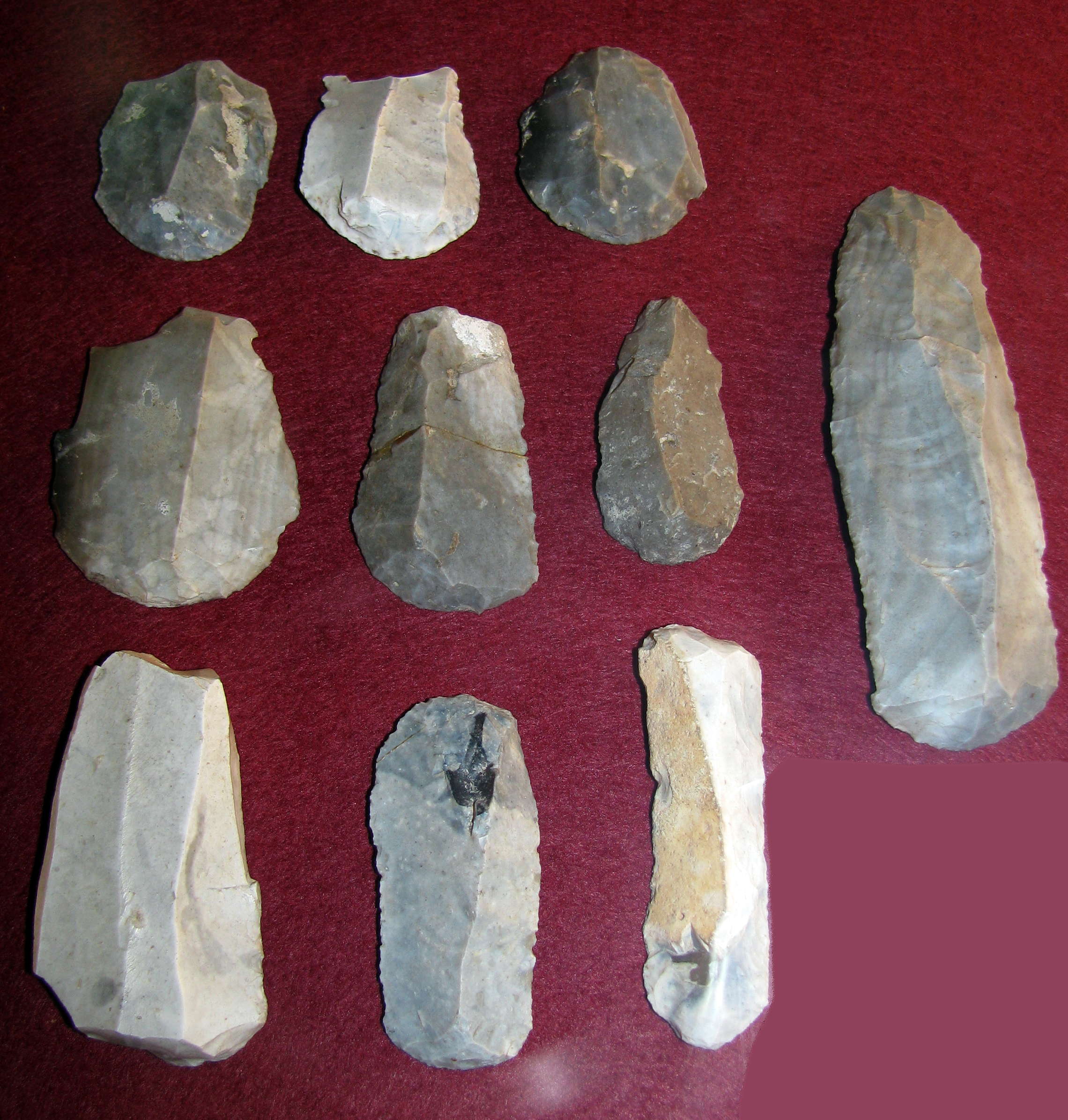
Willendorf II, Layer 5: ca 31 500 BP.
A range of scrapers.
Photo: Don Hitchcock 2008
Source: Natural History Museum of Vienna
Dating: Nigst et al. (2008b)
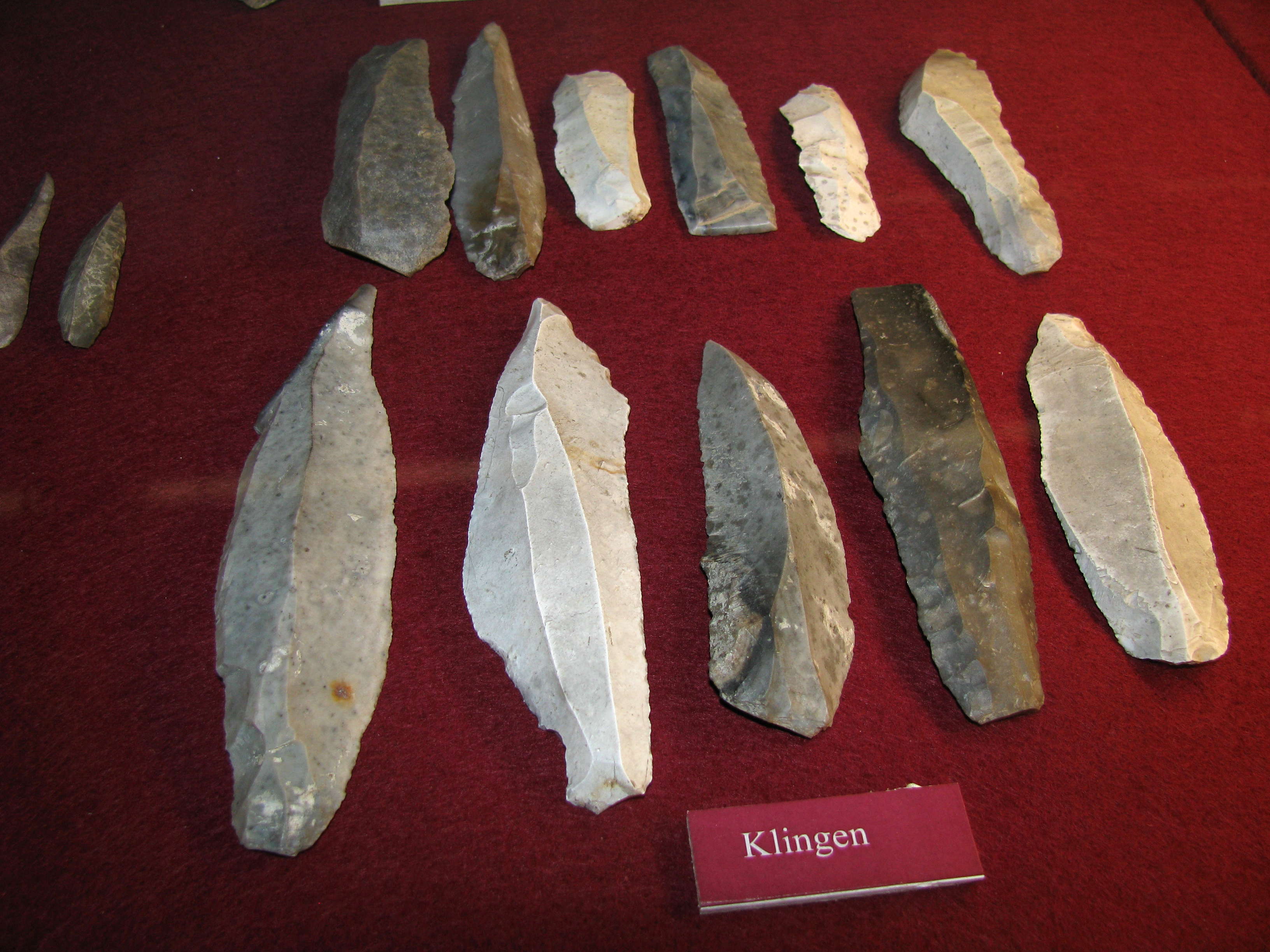
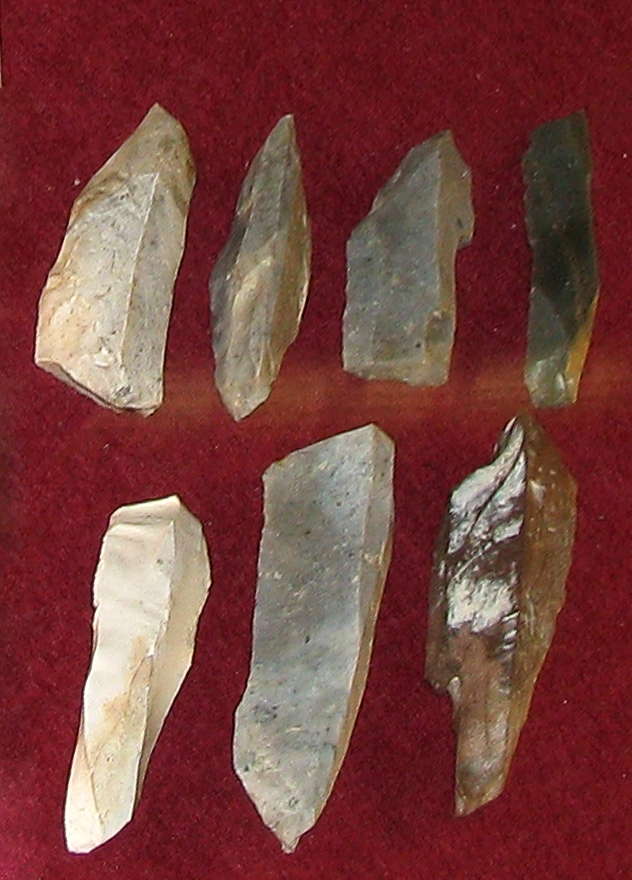
Willendorf II, Layer 5: ca 31 500 BP.
Some skilfully made blades, and two small drills or augers on the far left, almost out of frame.
Photo: Don Hitchcock 2008
Source: Natural History Museum of Vienna
Dating: Nigst et al. (2008b)
Willendorf II, Layer 5: ca 31 500 BP.
Burins, or engravers.
Photo: Don Hitchcock 2008
Source: Natural History Museum of Vienna
Dating: Nigst et al. (2008b)
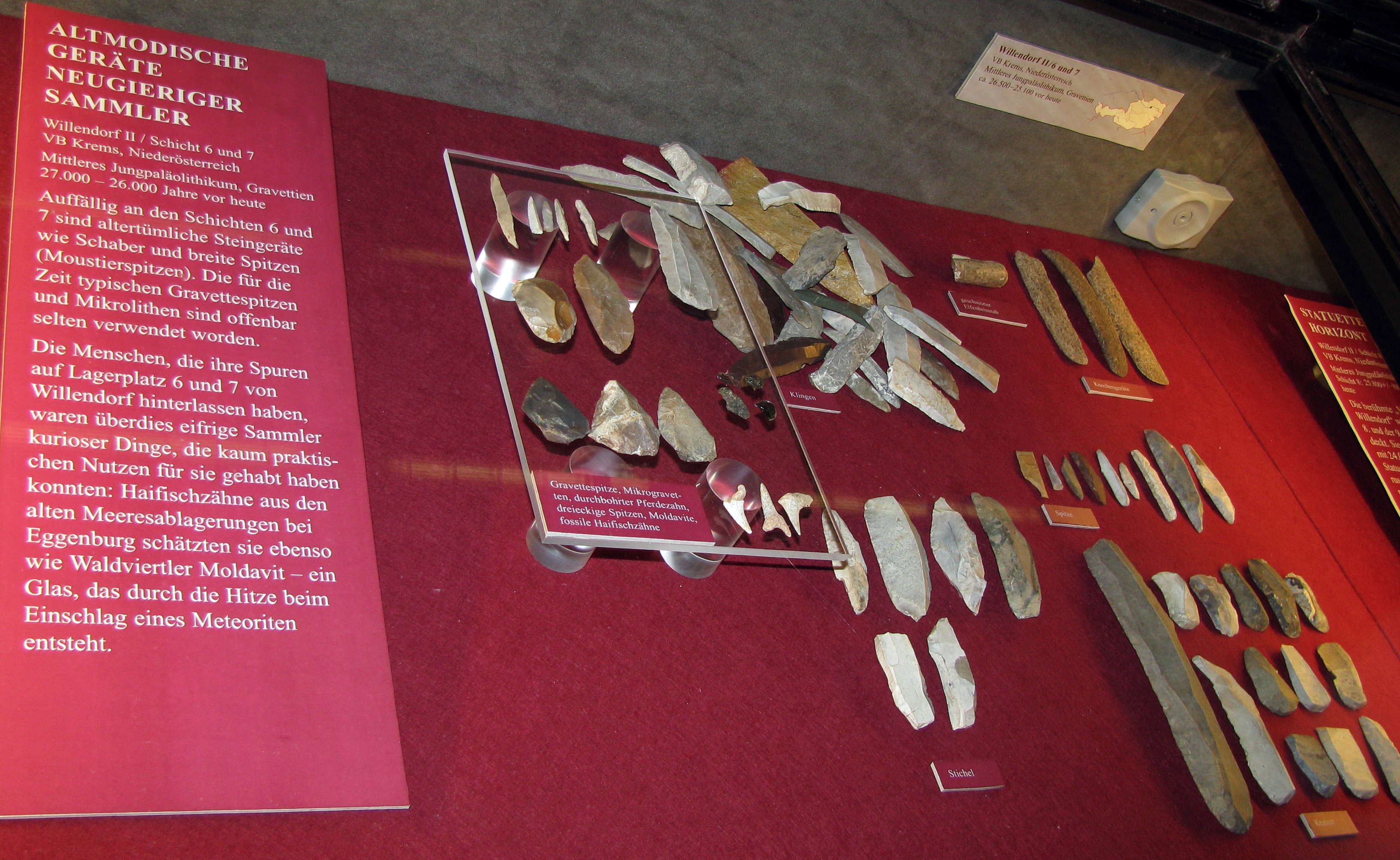
Willendorf II / Layers 6 and 7 in the district of Krems, Lower Austria.
Middle Upper Palaeolithic, Gravettian.
Layer 6: circa 27 100 BP.
Layer 7: circa 24 000 BP.
A striking feature of the layers 6 and 7 are the ancient forms of stone tools used there, such as scrapers and broad points similar to the earlier Mousterian (Neanderthal) type.
Points typical of the age, such as Gravettian points and microliths, were apparently rarely made or used.
The people who left their mark on camps 6 and 7 of Willendorf were also avid collectors of curiosities that could have had little practical benefit for them: shark teeth, probably from the ancient marine deposits in Eggenburg, as well as Moldavite from the Waldviertler area. Moldavite is an olive-green or dull greenish glassy substance formed by meteorite impact.
Photo: Don Hitchcock 2008
Source: Natural History Museum of Vienna
Dating: Nigst et al. (2008b)
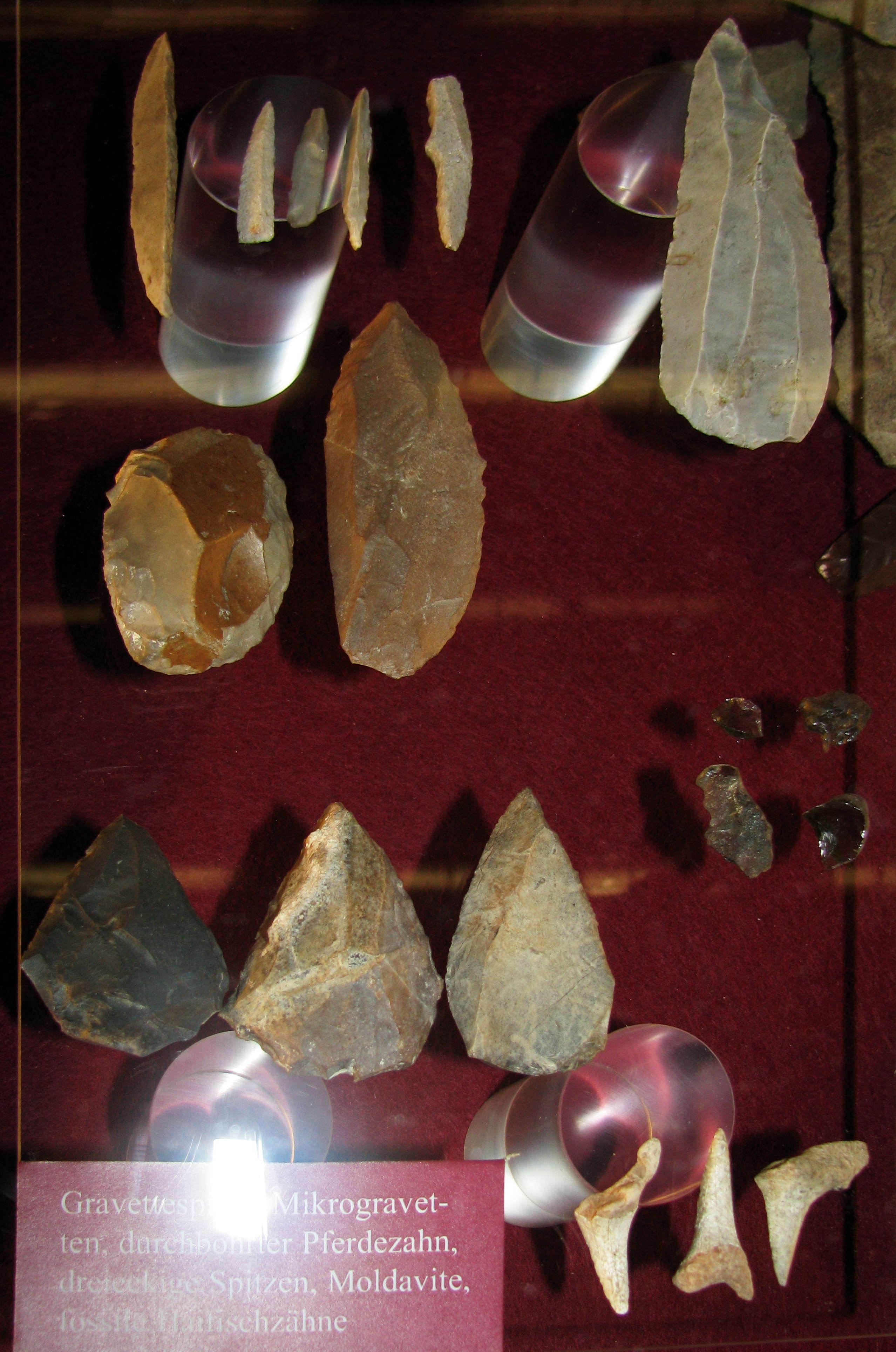
Willendorf II, Layers 6 and 7: circa 27 100 BP - 24 000 BP.
The display has been organised to show the atypical tools and artefacts found in these layers, from the typical Gravettian at the top to what appears to be Mousterian, or Neanderthal at the bottom, with 'in-between' tools between these two extremes.
We can see, at the top, a typical Gravettian point and some Gravettian microliths, with quite a well made large point to the right.
Below that are two nondescript tools, and at the bottom what are apparently Mousterian flint implements.
Off to the right we can see the glassy remnants of a meteorite impact, known as tektites, and below these are some fossil shark teeth extracted from nearby limestone deposits.
The binary meteorite which created the glassy tektites, impacted the earth and created the Ries Crater, 24 km in diameter, and the Steinheim crater, 3.8 km diameter, about 14.4 million years ago, when a binary asteroid with one portion having a diameter of 1.5 kilometres (Ries) and the other 150 metres (Steinheim) hit western Bavaria. The impact velocity is thought to have been about 20 km/s (45 000 mph). The resulting explosion had the power of 1.8 million Hiroshima bombs. All life would have been exterminated for 100 km around the impact zone. The sound would have been heard around the world.
(Wikipedia and http://www.realgems.org/list_of_gemstones/moldavite_info.html.)
(These green/brown tektites were thrown off at the moment of impact as molten rock, which hardened so quickly as it flew through the air that crystals did not have time to form, thus resulting in a small, hardened glass object by the time it hit the ground - Don )
On the bottom right are three fossil shark teeth from the sediments fifty kilometres away near Eggenburg, the Burgschleinitz Formation, which contains remnants of vertebrates: fish teeth (sharks, rays, breams) and bones of dolphins, whales, crocodiles, turtles and sea cows. (Pervesler et al., 2011)
Photo: Don Hitchcock 2008
Dating: Nigst et al. (2008b)
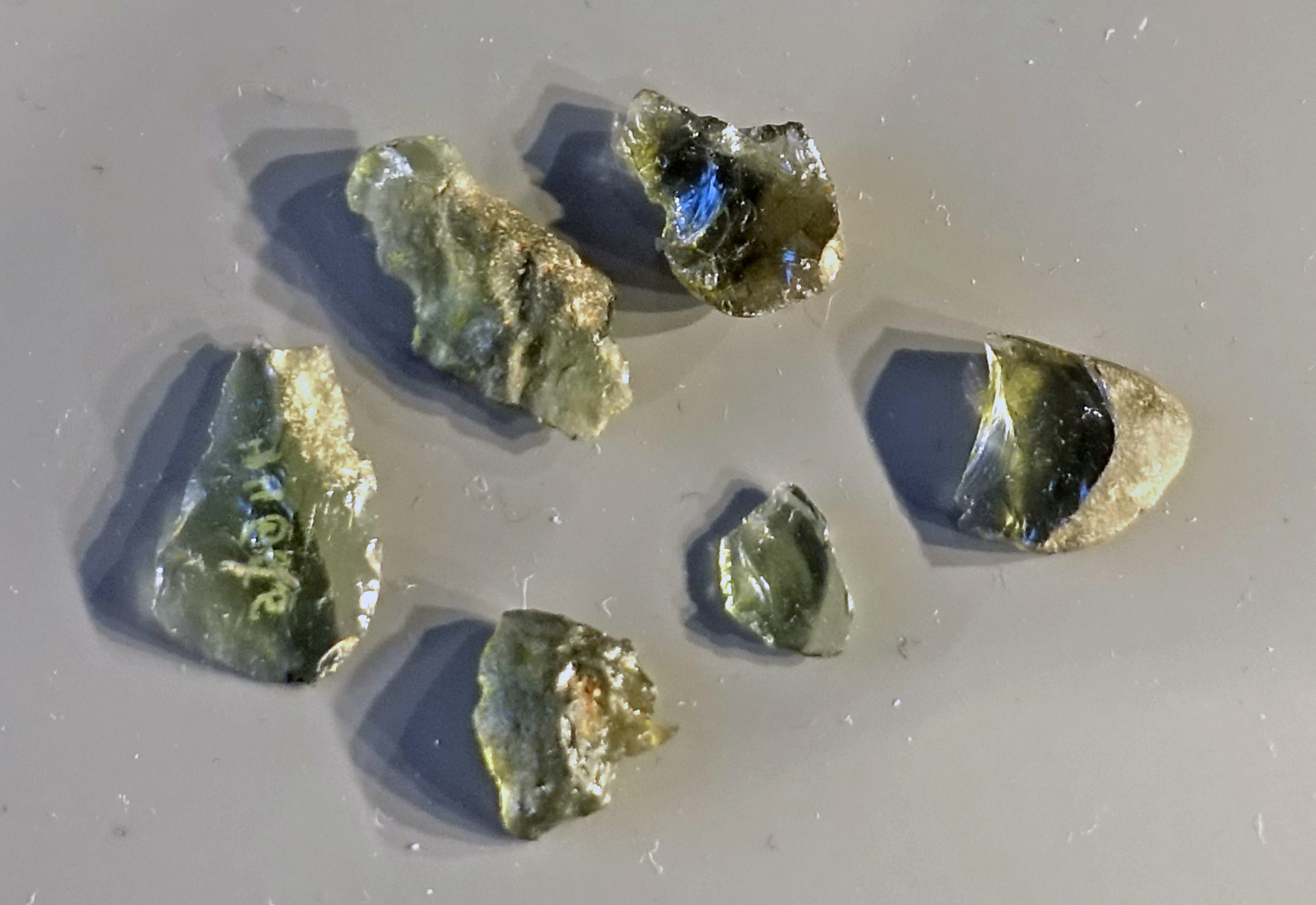
Moldavites from Willendorf, Lower Austria, Gravettian, circa 29 000 BP.
Moldavite (Czech: vltavín) is a forest green, olive green or blue greenish vitreous silica projectile glass formed by a meteorite impact probably in southern Germany (Nördlinger Ries Crater) that occurred about 15 million years ago. It is a type of tektite.
(
These, despite their very small size, seem to have been knapped into useful objects, perhaps for drilling small holes in wood or ivory, as in the top left and the bottom right, although they may have just been curiosities. As a glass, they probably had very sharp edges - Don )
Photo: Don Hitchcock 2018
Source: Vienna Natural History Museum
Additional text: Wikipedia
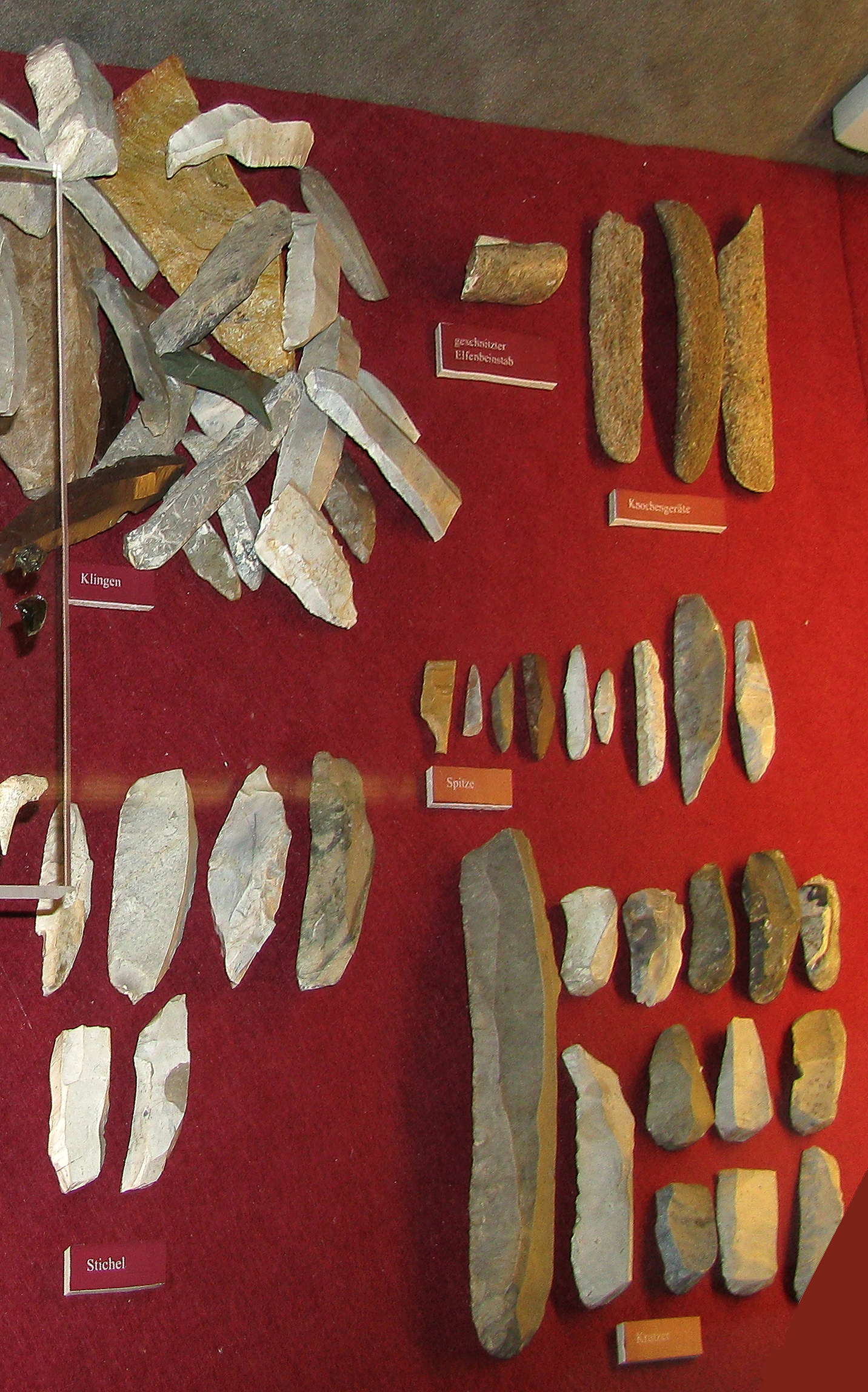
Willendorf II, Layers 6 and 7: circa 27 100 BP - 24 000 BP.
Despite what was implied in the text with the previous photo, there were some fine artefacts, beautifully made, in these layers.
Left to right, top to bottom:
A set of well made blades, an engraved ivory rod, and three bone tools.
Nine points in the Gravettian tradition.
Six well made burins, and some scrapers, including a long, superbly made example.
Photo: Don Hitchcock 2008
Source: Natural History Museum of Vienna
Dating: Nigst et al. (2008b)
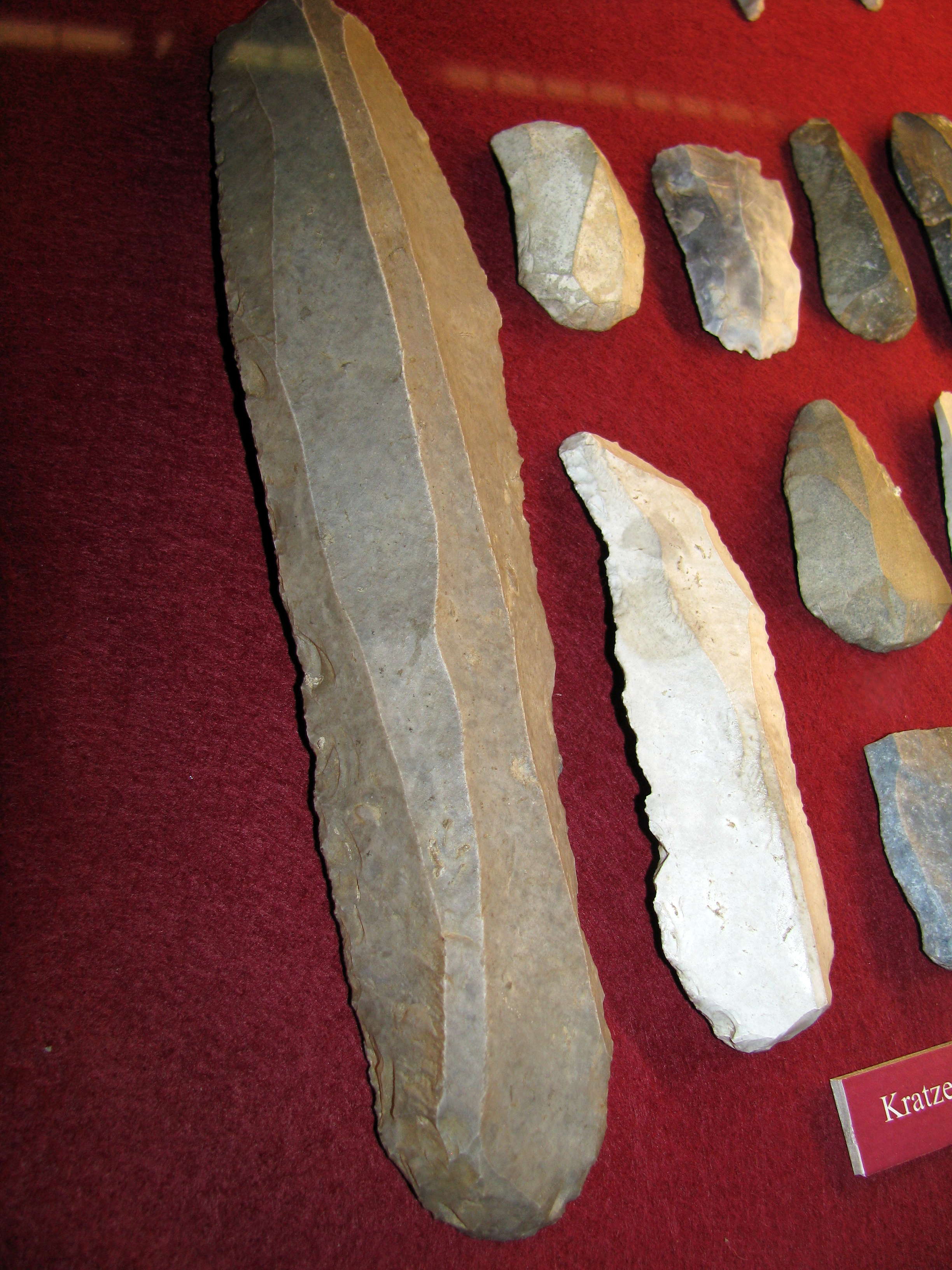
Willendorf II, Layers 6 and 7: ca 27 000 - 25 000 BP.
The huge grey scraper on the left of the photo is a tour de force. The knapper was in total control of the material. What a great piece!
Photo: Don Hitchcock 2008
Source: Natural History Museum of Vienna
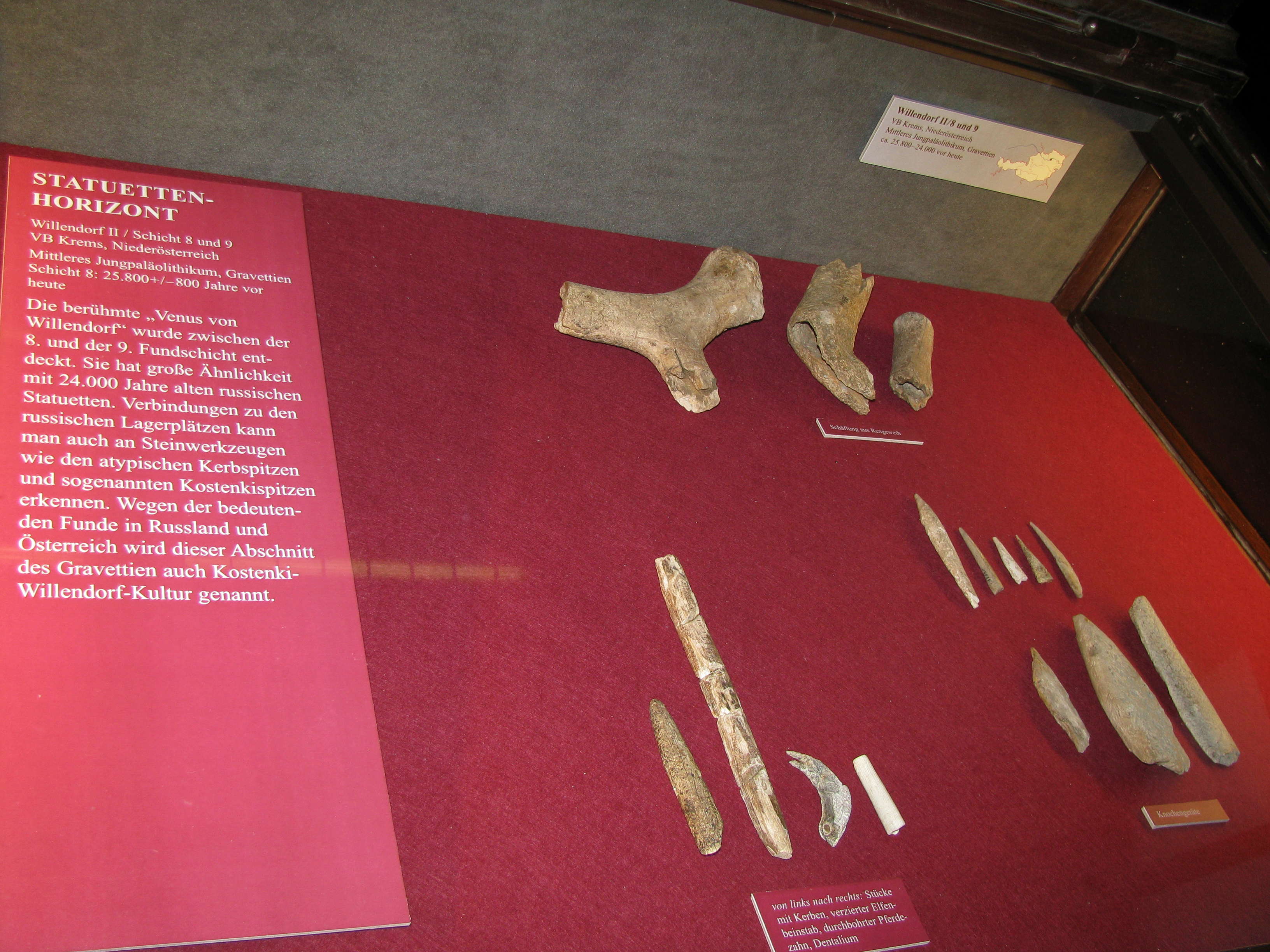
Willendorf II / Layers 8 and 9 circa 25 800 - 24 000 BP, in the district of Krems, Lower Austria.
Middle Upper Paleolithic, Gravettian. Layer 8: circa 25 800 BP.
The famous 'Venus of Willendorf' was discovered in the 9th layer, 25 cm below the 9th layer upper boundary (at Willendorf II). The figurine has great similarity with 24 000 year old Russian statuettes. Another connection with Russian sites are the stone tools discovered here, such as the tanged knives, and other similar points.
Because of these important analogous discoveries in both Russia and Austria, this is called the Gravettian Kostenki-Willendorf culture.
Photo: Don Hitchcock 2008
Source: Natural History Museum of Vienna
Dating: Nigst et al. (2008b)
It was a beautiful August morning in 1908, when the 'Venus of Willendorf' again awoke from thousands of years of sleep in sunny Wachau. It was discovered in my presence in the village of Szombathya, at a depth of approximately 25 cm beneath an undisturbed layer of ash near a large kiln (the 9th and highest cultural layer)…"Source: http://www.projektvenus.eu/
(J. Bayer in the Neues Wiener Tagblatt newspaper dated 4.2.1910, cited in: Antl-Weiser, S 11)

Willendorf II / Layers 8 and 9 ca 25 800 - 24 000 BP, in the district of Krems, Lower Austria.
Middle Upper Paleolithic, Gravettian. Layer 8: 25 800 BP.
Clockwise from bottom left:
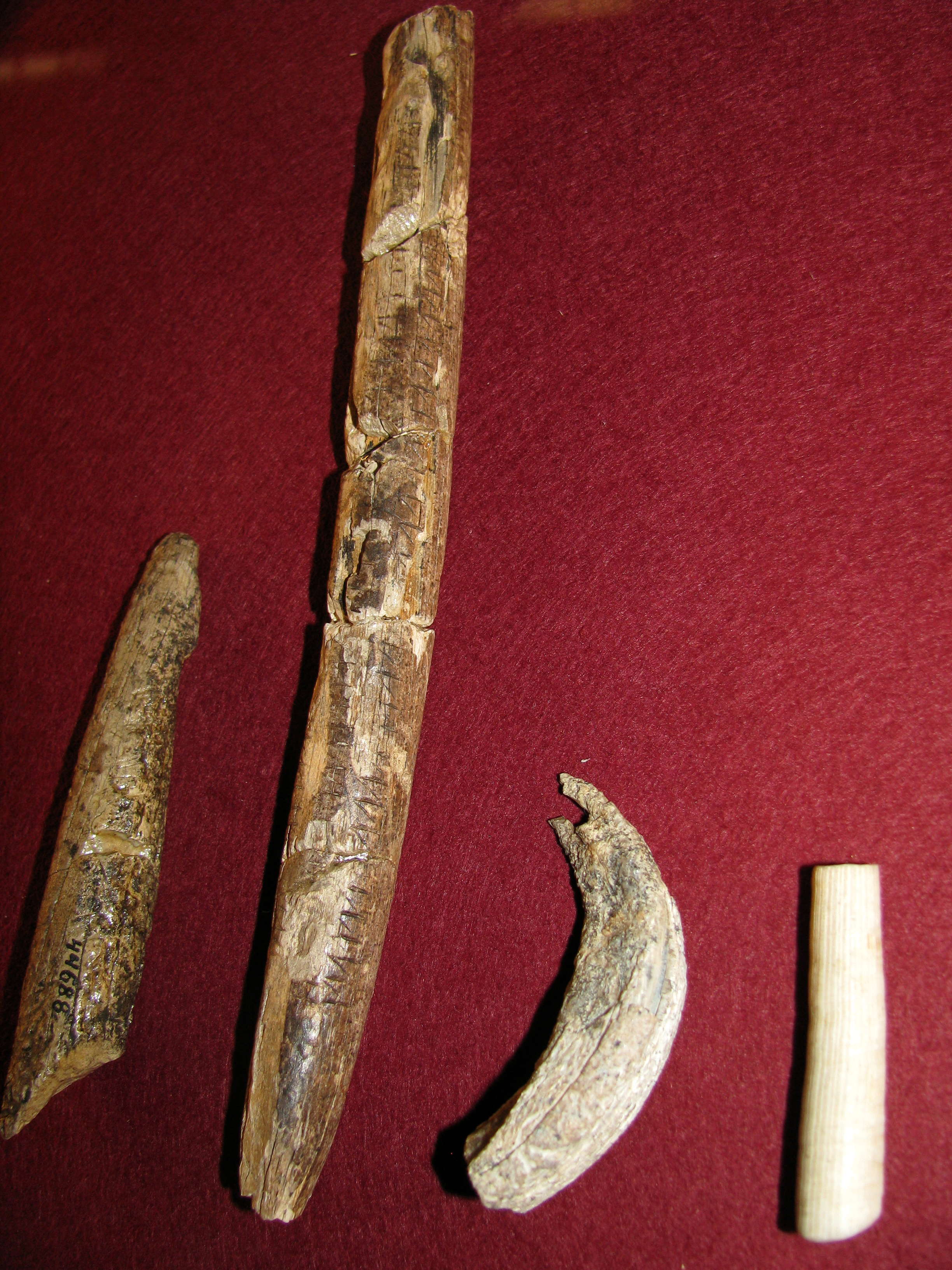
a) (l to r) A piece with notches, ornamented rod, pierced horse tooth, fossil dentalium shell extracted from ancient limestone.
b) handles made from reindeer antler.
c) bone tools.
Photo: Don Hitchcock 2008
Source: Natural History Museum of Vienna
Dating: Nigst et al. (2008b)

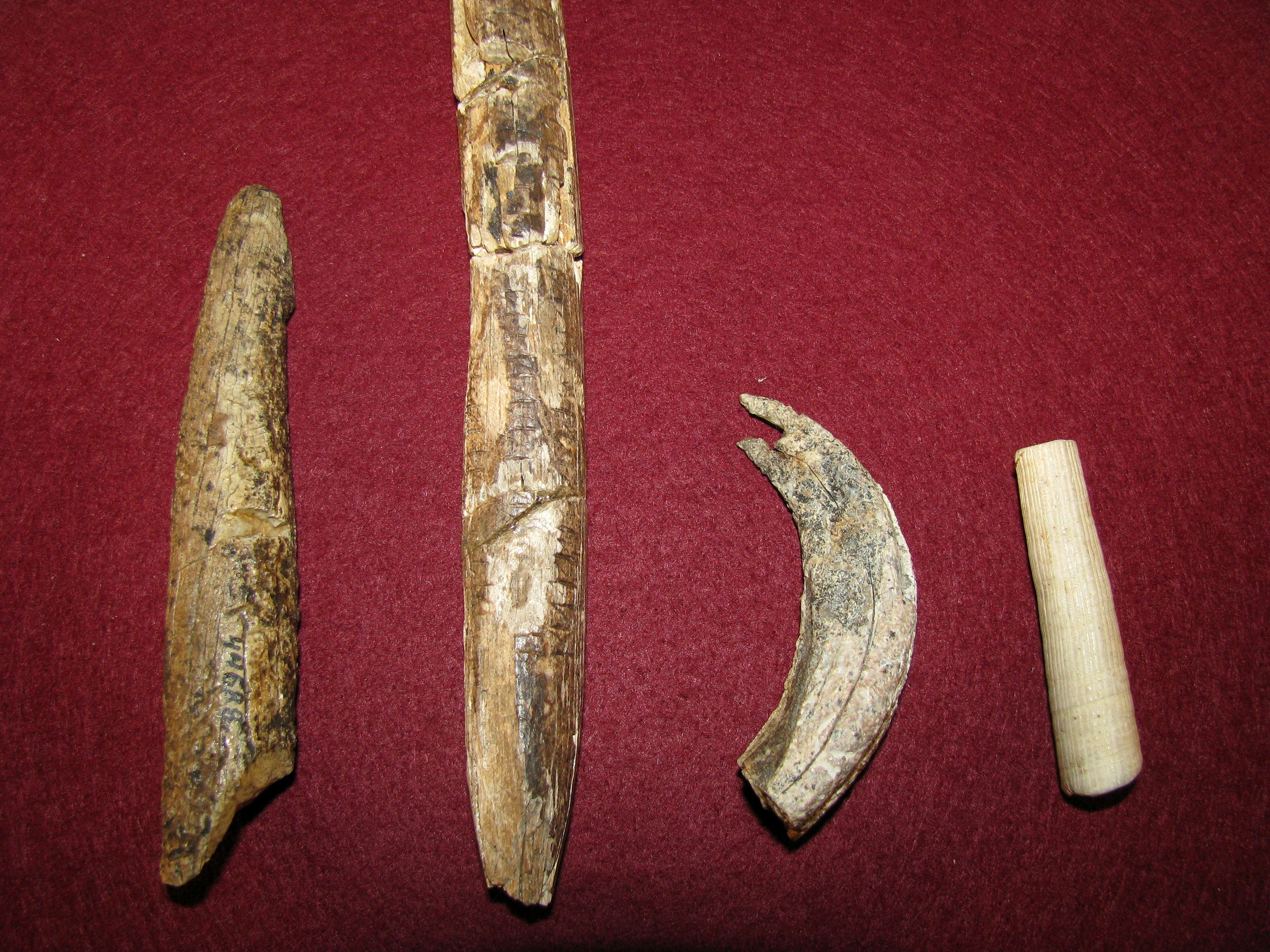
Willendorf II / Layers 8 and 9 ca 25 800 - 24 000 BP, in the district of Krems, Lower Austria.
Middle Upper Paleolithic, Gravettian. Layer 8: 25 800 BP.
Various views of:
(l to r) A piece with notches, ornamented rod, pierced horse tooth, fossil dentalium shell extracted from ancient limestone.
Photo: Don Hitchcock 2008
Source: Natural History Museum of Vienna
Dating: Nigst et al. (2008b)
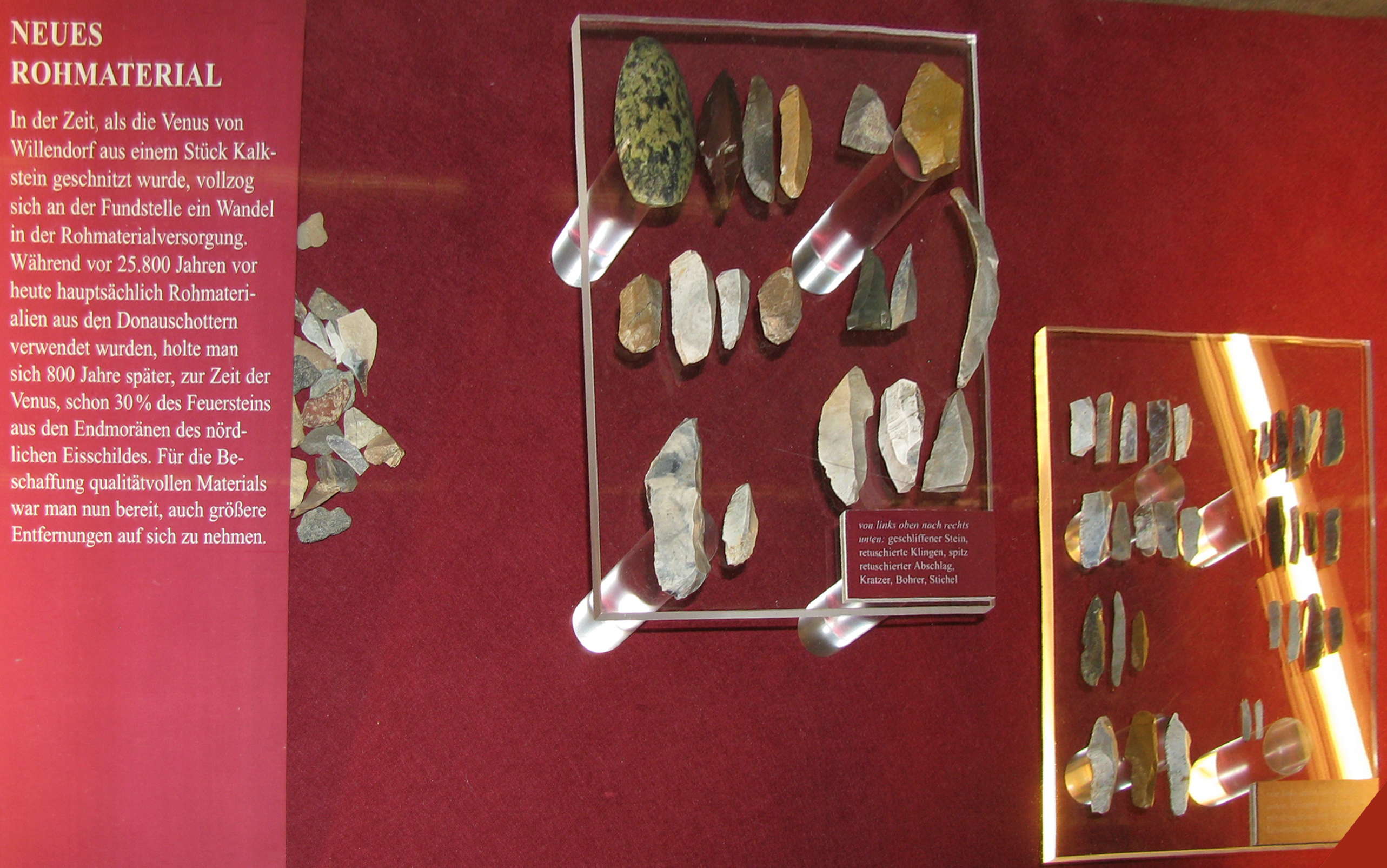
New Raw Material
At the time in Level 9 when the Venus of Willendorf was carved from a piece of limestone, a big change took place so far as the source for the supply of raw materials for tools.
Up until 25 000 BP, the main raw materials were the ones ready to hand in the Danube river gravels below the campsites. Just 800 years later, almost 30% of the flint was taken from the terminal moraines of the northern ice sheet, a considerable distance to the north of Willendorf. The inhabitants had decided that it was worth the effort to travel greater distances to get more high quality material for their knives and other tools.
Photo: Don Hitchcock 2008
Source: Natural History Museum of Vienna
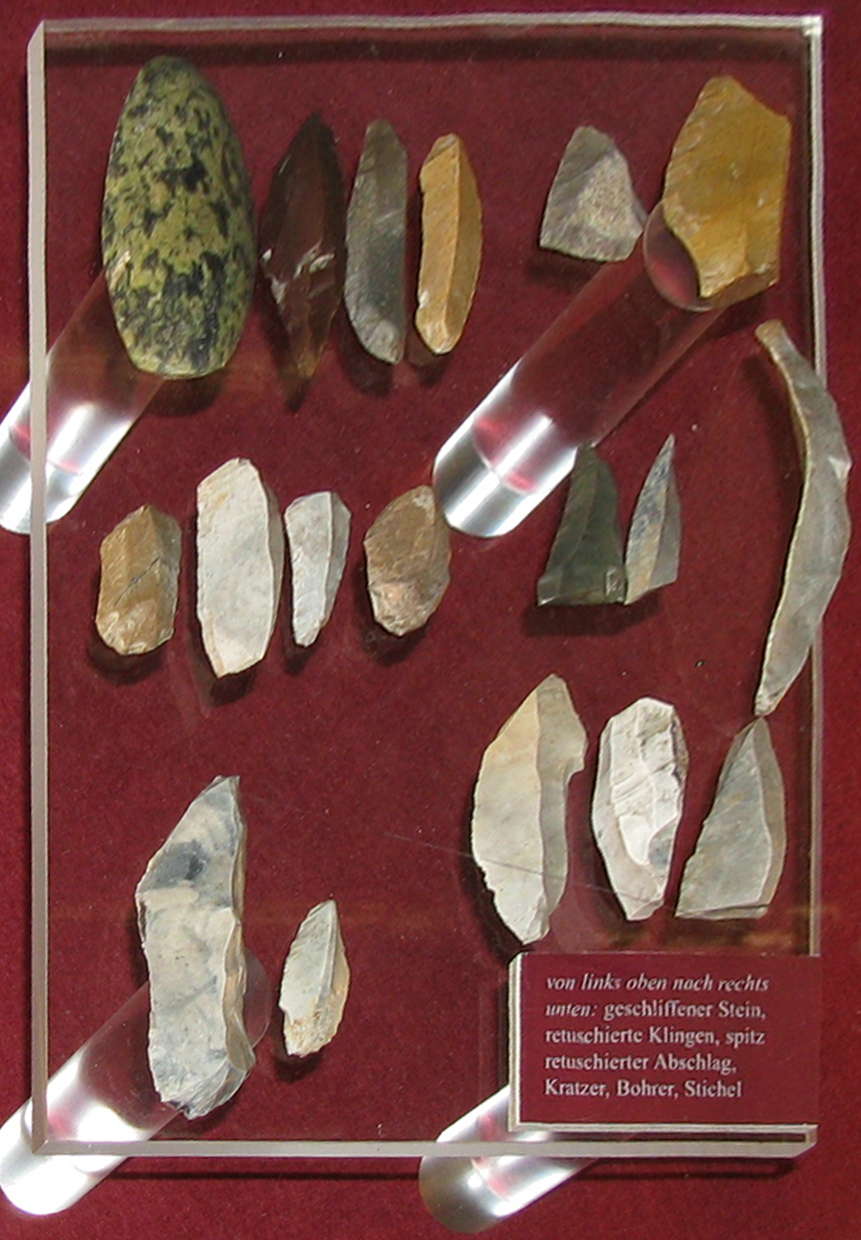
Tools from Layer 9, from top left to bottom right:
Polished stone
Retouched blades
Retouched flake points
Scrapers
Awls
Burins
Photo: Don Hitchcock 2008
Source: Natural History Museum of Vienna
Josef Bayer continued excavations in Willendorf in 1909. After these excavation works he renamed the levels found in 1908 (i.e. 1, 2, 3, 4, 5, 6a, 6b, 6 and 7) to 1, 2, 3, 4, 5, 6, 7, 8 and 9, recognising that layers 6a and 6b were refuse layers from different occupations of the site. Further excavations at Willendorf were hindered by the outbreak of the First World War. Bayer was informed in 1926 of substantial damage to the soil strata.
Upon initial investigation of unauthorised digging, Bayer discovered an ivory figure about 22 cm tall - Venus II of Willendorf, resting on the lower jawbone of a mammoth. It had not been completed and the head had been truncated. Bayer carried out intensive research at the site in the following years. In addition to drawing a plan of the most significant finds, he packed them individually, so that even today we are able to faithfully reconstruct the original position of each. This is an indication of the high scholarly standards Bayer followed in his archaeological research.
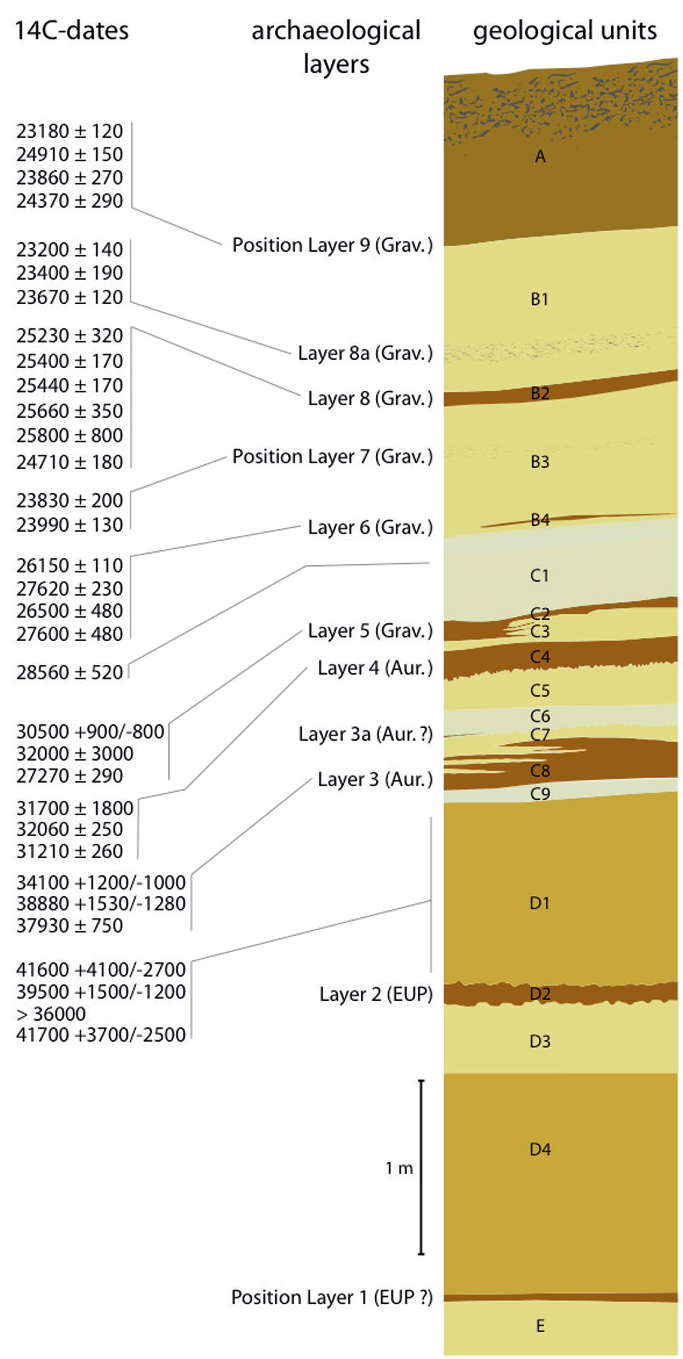
The nine levels of finds encompass a period spanning more than 20 000 years, from around 20 000 BP to 40 000 BP
Photo: Nigst et al. (2008)
Text: Display at Venusium, the museum at Willendorf.
As a result of differences between Szombathy, Bayer and Obermaier, the finds from Willendorf were not published. Only after the Second World War Fritz Felgenhauer of Vienna University worked through the great amount of material that had been discovered. He himself conducted excavations at Willendorf. With his work Felgenhauer created a high standard of presentation which allowed researchers for the first time to obtain an impression of the finds and the excavation site without actually viewing the original material. The percentage shares of the various types of tools as well as clearly defined tool types were specified so as to enable comparisons of similar archaeological sites throughout Europe.
The first C14 data was gathered in order to verify level chronology in absolute terms. Integration of natural sciences (i.e. mineralogy, palaeontology and others) became a standard for prehistoric research work. Whereas the Venus of Willendorf had occupied researchers' attention up to this time, after Felgenhauer the level sequence moved into the focus of interest of European scholars.
Text: Display at Venusium, the museum at Willendorf.
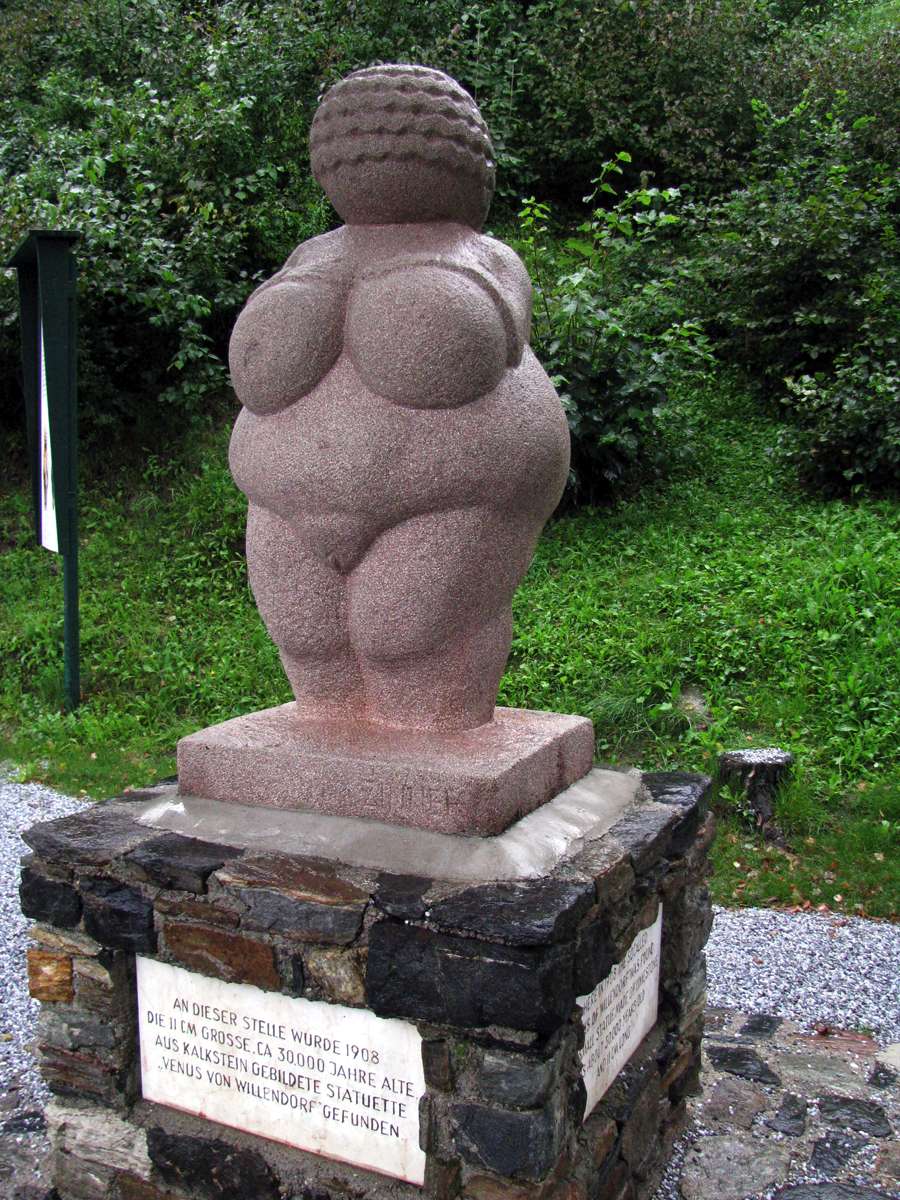
Venus statue at the site.
Photo: Don Hitchcock 2008
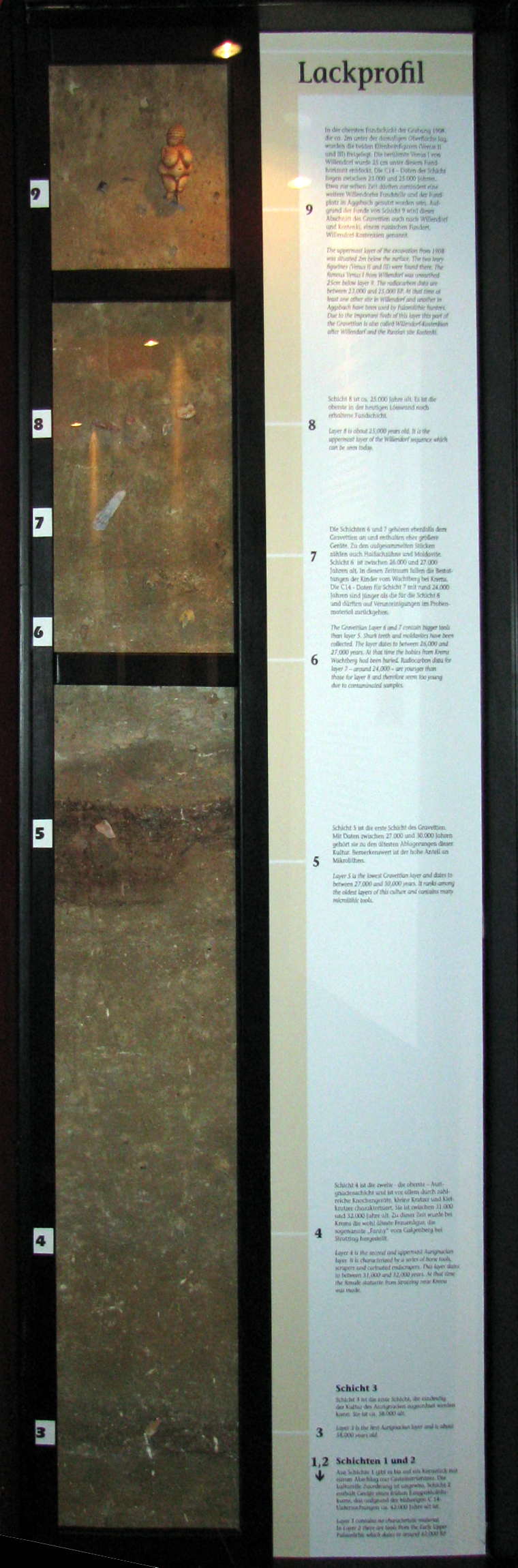
(This is an excellent display which illustrates graphically the time scale involved in the various layers of the Willendorf site. Each successive occupation was covered by wind blown fine material called loess, blowing from its source in the glaciated regions to the north, where the advance and retreat of the ice cap and associated glaciers ground rock into rock flour and left it piled up in front of the ice. This dust was then picked up by the strong, icy winds of the time and blown south. It accumulated here, on the northern bank of the Danube, and was responsible for the shallow slope leading down to the river, giving an ideal living environment, and for the subsequent burial of each succeeding layer at this open air site - Don )
The uppermost layer of the excavation from 1908 was situated two metres below the surface. The two ivory figurines (Venus II and III) were found there, in layer 9. The famous Venus I from Willendorf was unearthed in the 9th layer, 25 cm below the 9th layer upper boundary (at Willendorf I).
At that time at least one other Willendorf site and another in Aggsbach were being used by Palaeolithic hunters. Due to the important finds of this layer, this part of the Gravettian is also called the Willendorf-Kostenkian after Willendorf and the Russian site of Kostenki.
Layer 8 is about 25 000 years old. It is the uppermost layer of the Willendorf sequence which can be seen today.
The Gravettian Layers 6 and 7 contain bigger tools than Layer 5. Shark teeth and Moldavites have been collected.
Moldavite is an olive-green or dull greenish vitreous substance formed by a meteorite impact. It is one kind of tektite. It was named for the town of Moldauthein (Czech: Týn nad Vltavou) in Bohemia (the Czech Republic), where it occurs. It is sometimes cut and polished as an ornamental stone under the name of pseudo-chrysolite.
The layers date to between 26 000 and 27 000 BP. At that time the babies from Krems Wachtberg had been buried.
Layer 5 is the lowest Gravettian layer and dates to between 27 000 and 30 000 BP. It ranks among the oldest layers of this culture and contains many microlithic tools.
Layer 4 is the second and uppermost Aurignacian layer. It is characterised by a series of bone tools, scrapers and carinated (keeled ) endscrapers. This layer dates to between 31 000 and 32 000 BP. At that time the female statuette of 'Fanny' from Galgenberg was made.
Layer 3 is the first Aurignacian layer and is about 38 000 years old.
In Layer 2 there are tools from the Early Upper Palaeolithic which dates to about 42 000 BP.
Layer 1 contains no characteristic material.
Photo: Don Hitchcock 2008
Source: Venusium Museum, Willendorf
Additional text: Wikipedia
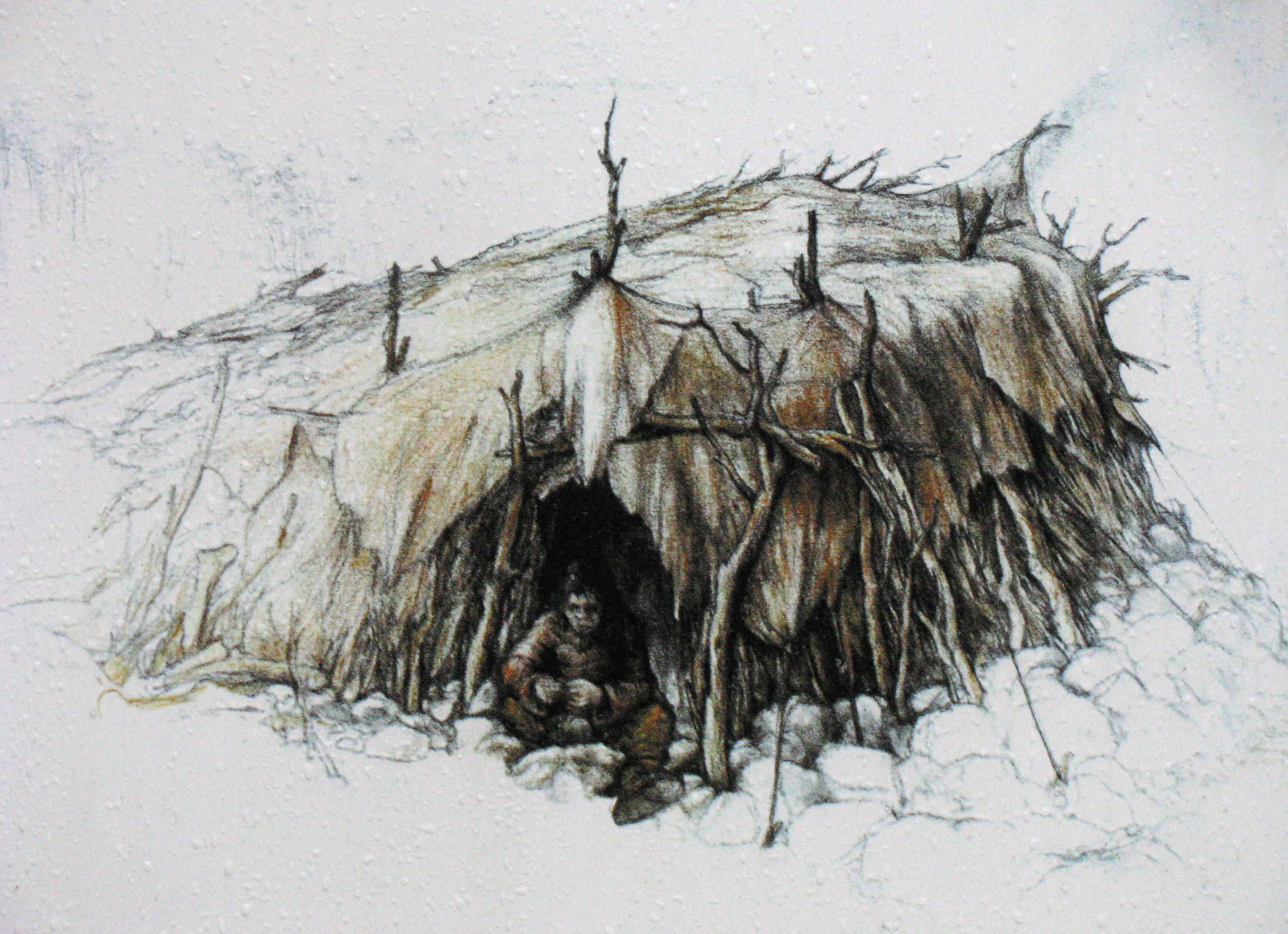
(The people who lived here left no evidence of their dwellings. This is an artist's recreation of a possible habitation, which uses skins and available tree branches well guyed to the ground to construct a small semi-permanent structure which would have kept out the howling winds and snows of winter.
Notice the slope of the ground towards the river, and the slope of the tent roof, which would have needed to be almost horizontal to the north in order to provide the least purchase on it by the prevailing strong northerly winds, tempered somewhat by the position of the encampment in the valley of the Donau.
The upslope floor of the tent may well have been dug out to provide more space inside, though I know of no evidence for this conjecture. This artwork seems to be showing the tent in spring, after some of the snow had melted. In winter, the snow on the roof would have helped somewhat to insulate the occupants from the worst of the weather, and keep the skins in place.
Dwellings of this type can be surprisingly comfortable, if cramped. Double layers of skins with dry grass between can help to keep the temperature inside the tent reasonably warm and weatherproof, even in the ice age conditions of the time - Don )
Photo: Don Hitchcock 2008
Source: Display, Venusium Museum, Willendorf

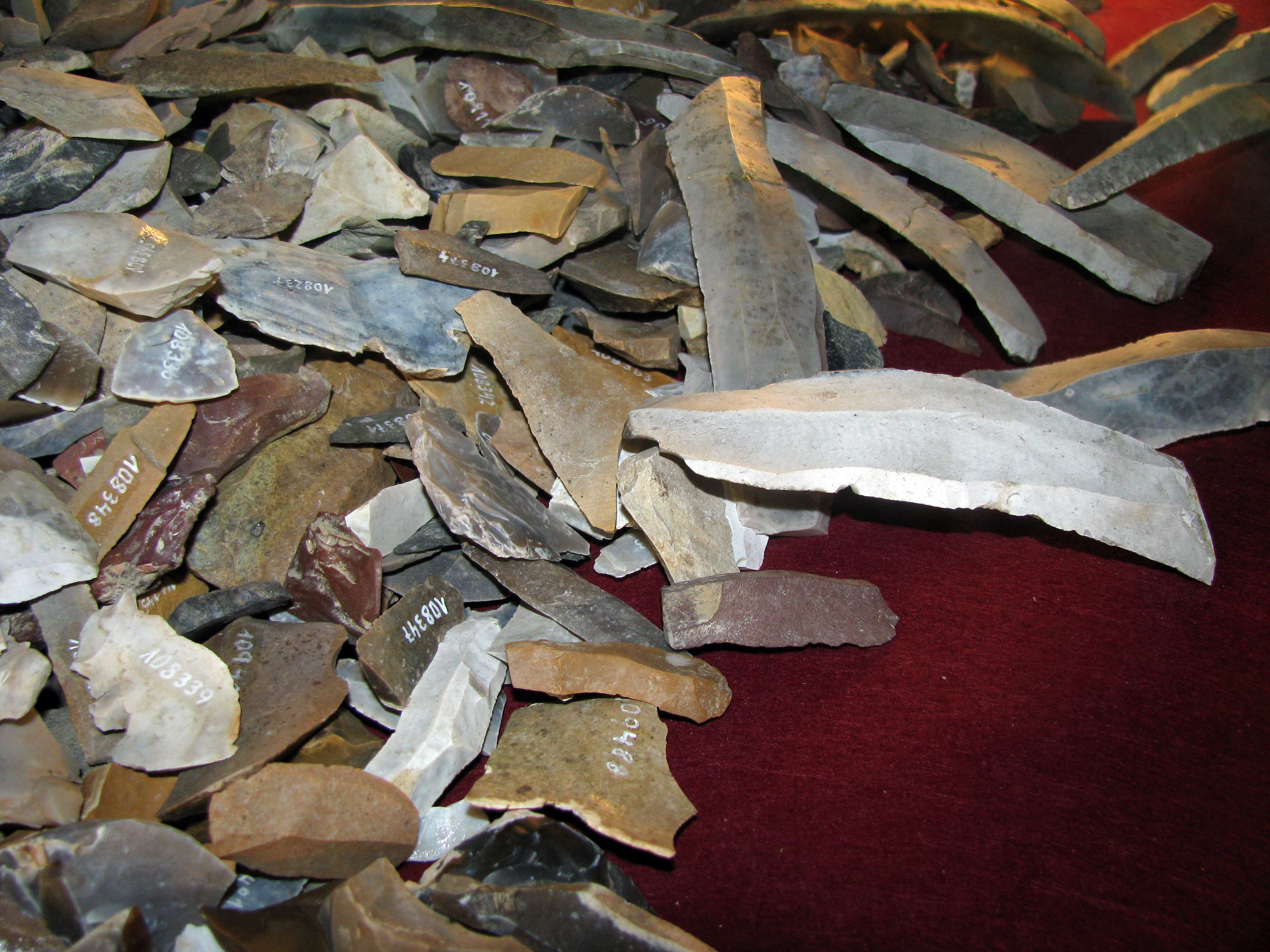
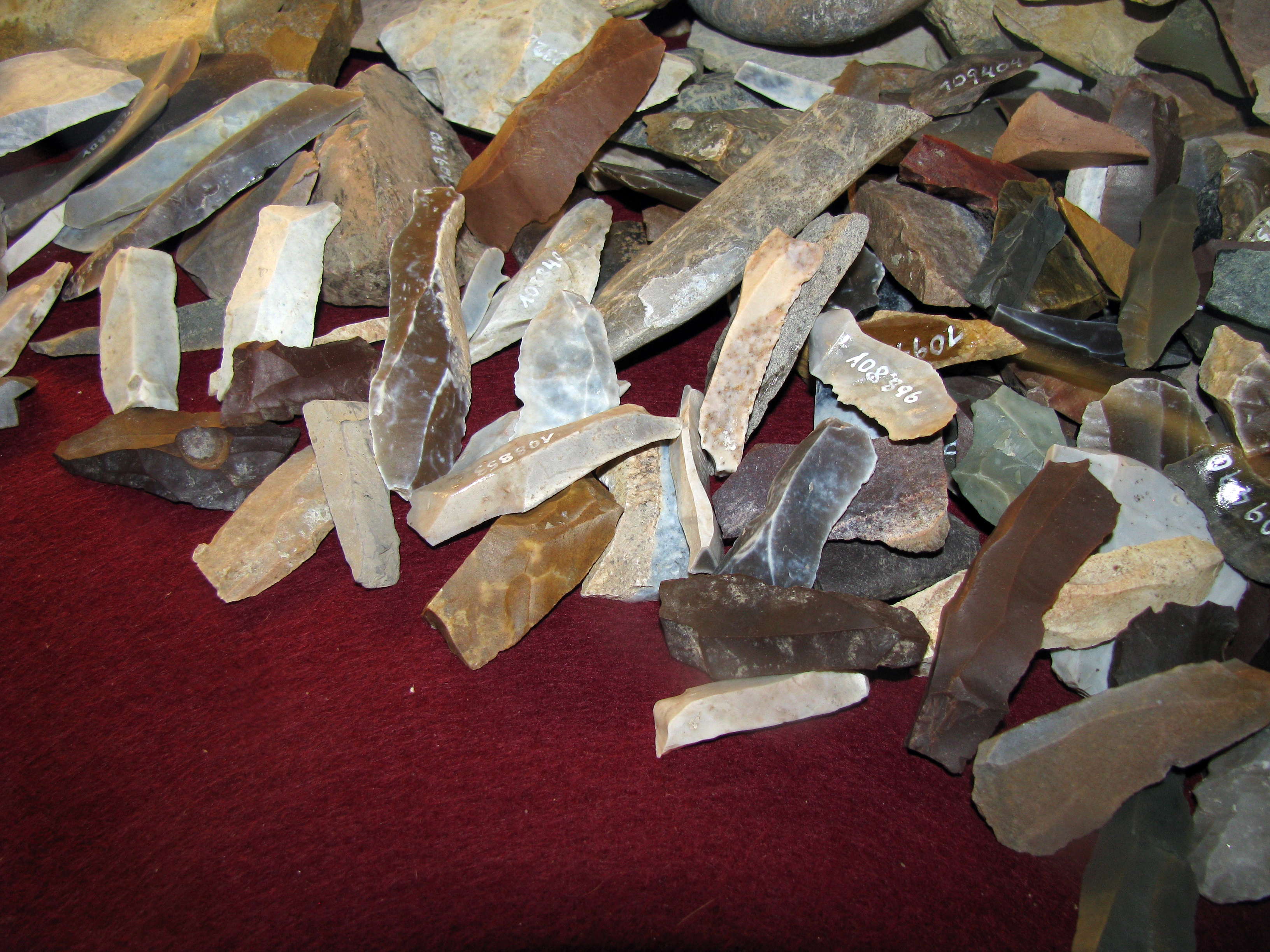
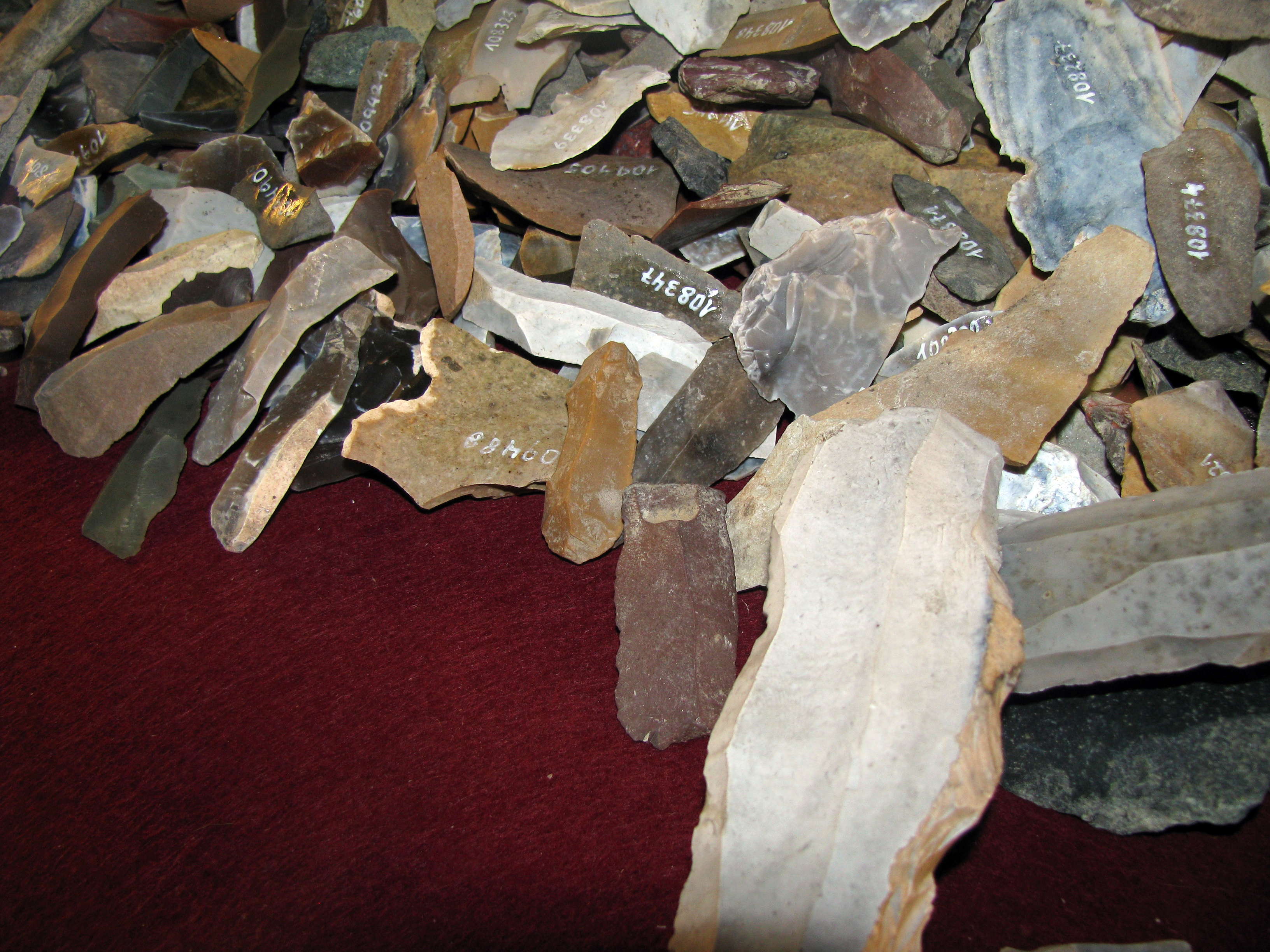
This is part of the staggering number of tools from levels 8 and 9 at Willendorf II, the Gravettian, ca 25 000 - 24 000 BP.
The Venus of Willendorf was found in Layer 9, 25 cm below the top of the layer, marked by undisturbed ash from a nearby modern brickworks.
Photo: Don Hitchcock 2008
Source: Vienna Natural History Museum

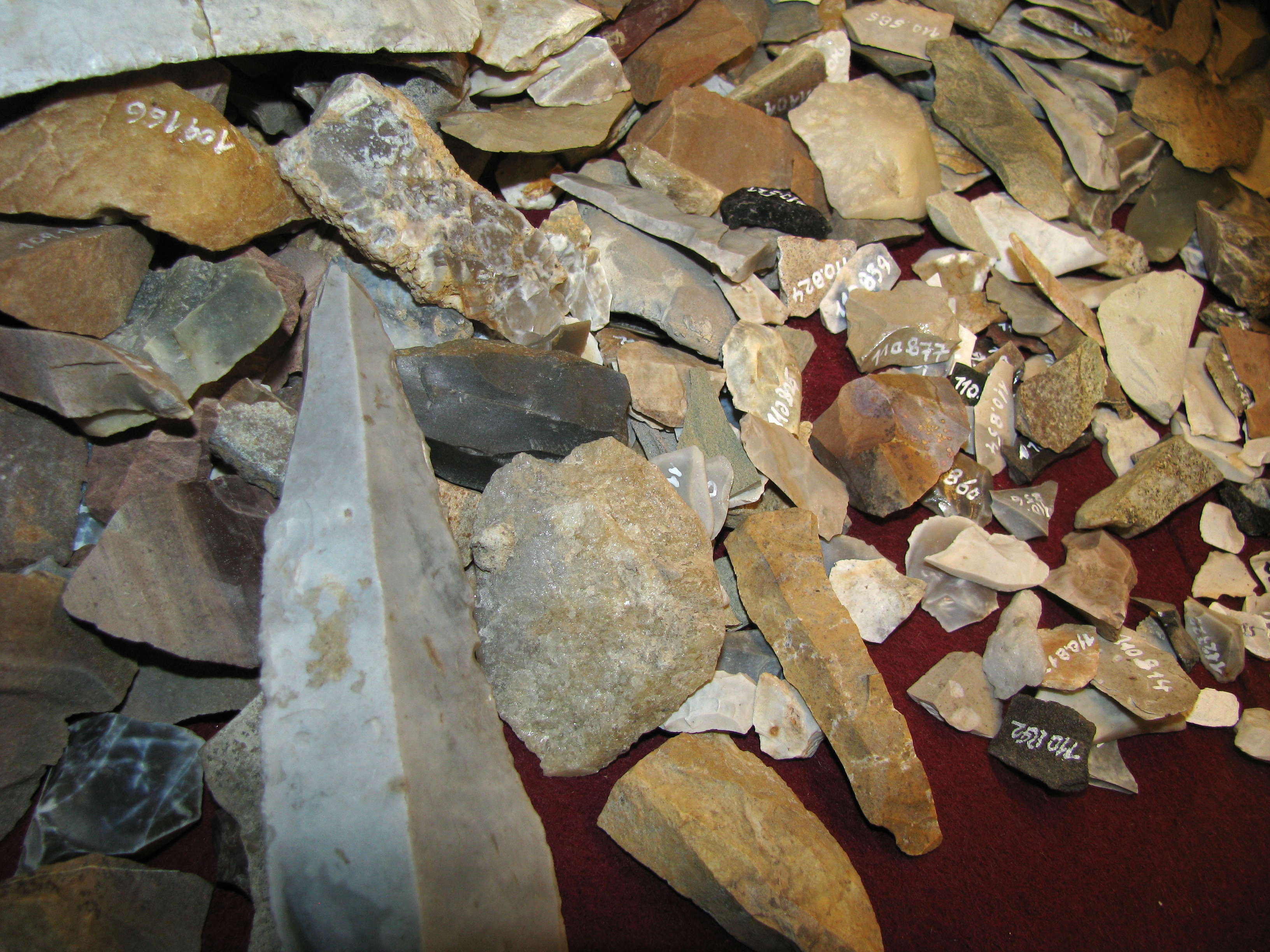
As noted above, this cornucopia of superb tools was the result of going north to the ice sheet to pick through the terminal moraines to obtain high quality flint, instead of just using the river gravels easily available from the Danube, a few hundred metres away.
Photo: Don Hitchcock 2008
Source: Vienna Natural History Museum
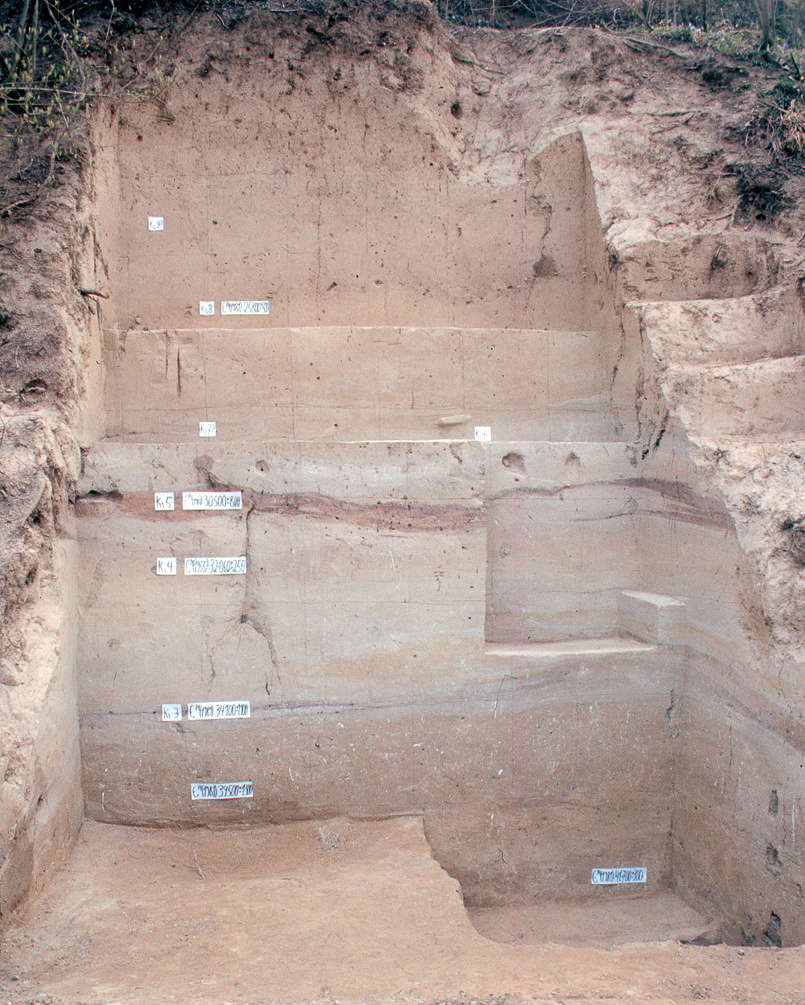
Willendorf II, section cleaning 1993.
In 1981 Paul Haesaerts started his work in Willendorf II. His team cleaned a small section and took a number of samples. It was the first stratigraphic work on Willendorf II using modern methods. The results including the first set of 14C-dates for the whole sequence were published (Haesaerts, 1990).
About 10 years later, in 1993, Paul Haesaerts, Freddy Damblon, and Gerhard Trnka started a collaborative research program on Willendorf II in order to enlarge the 1981 section and to collect more well provenienced (provenience refers to the three-dimensional location of an artefact or feature within an archaeological site - Don ) samples for dating and palaeoenvironment reconstruction, as shown in the photo at left. The results of this analysis form the basic description of the sequence up to now. Haesaerts et al. (1996)
Photo: G. Trnka
Text: Nigst et al. (2008) with definition from Wikipedia.
In 1996 the local museum society wanted to protect the section left by Paul Haesaerts’ team with a wooden roof construction and clean the section. The cleaning of the section was done by a team led by Spyridon Verginis of the University of Vienna. In the course of this work Verginis' team removed between 5 and 30 cm of sediment from Paul Haesaerts' section and collected a number of samples. These results are not yet published.
Text above: Nigst et al. (2008)
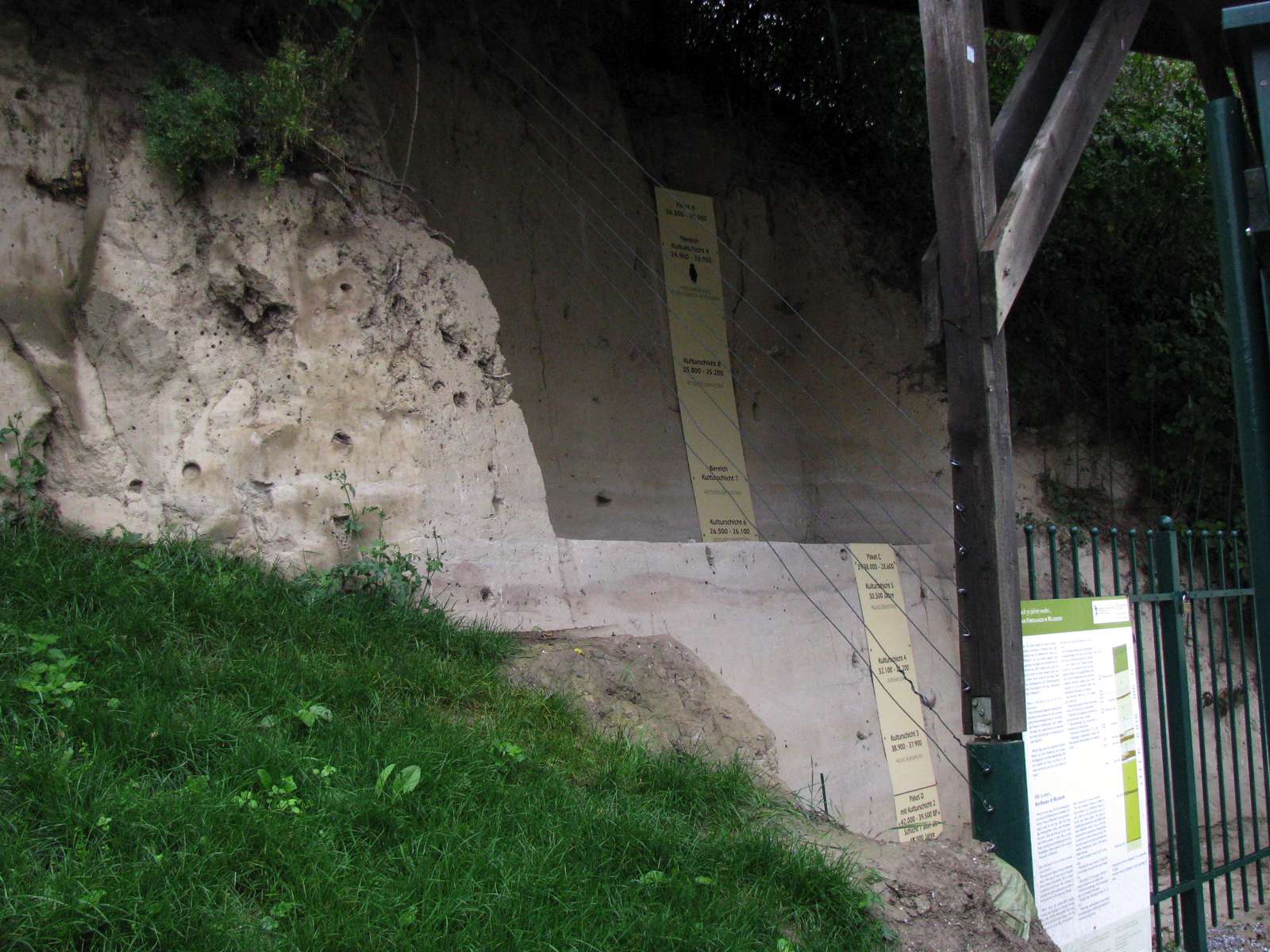
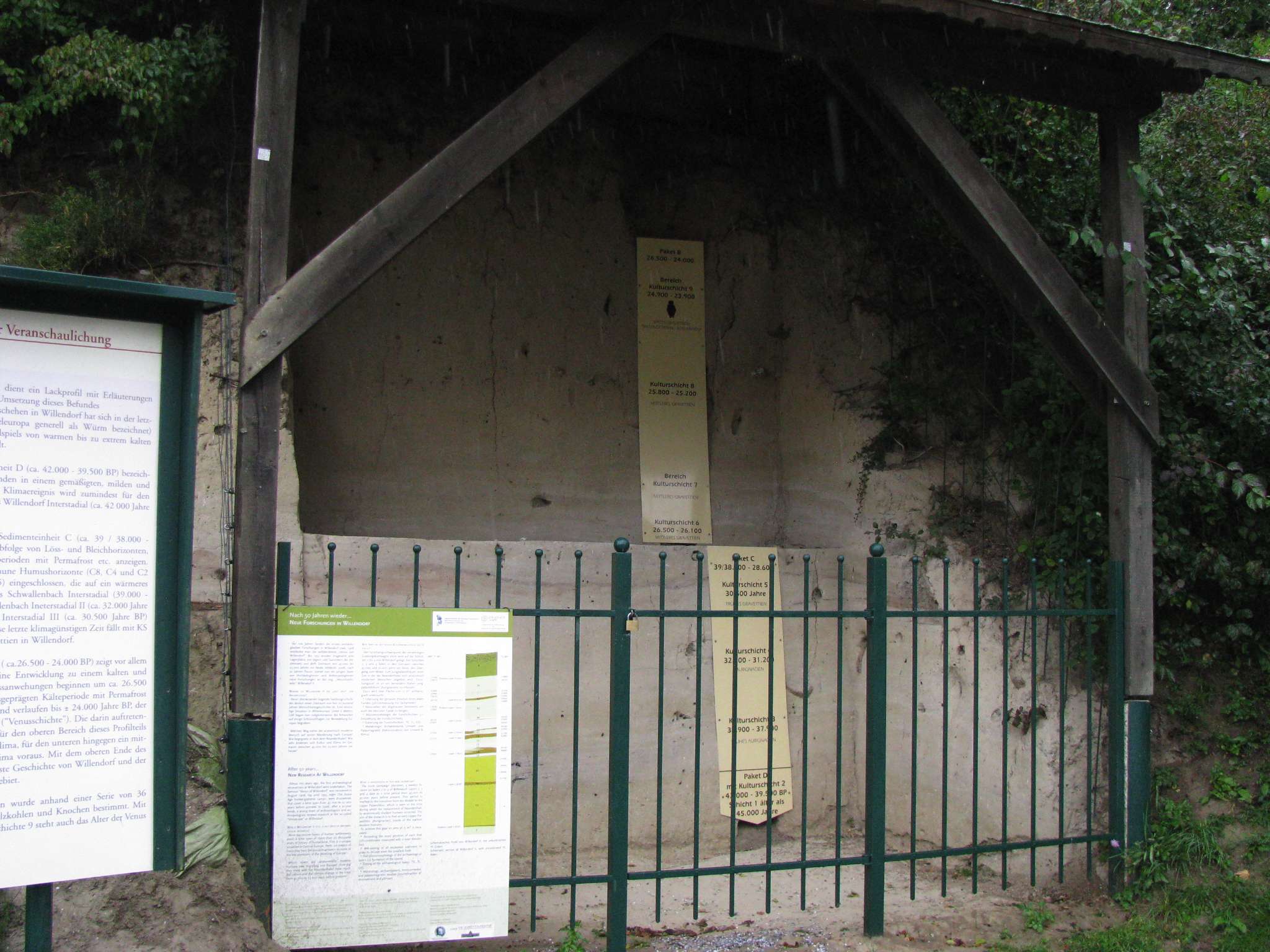
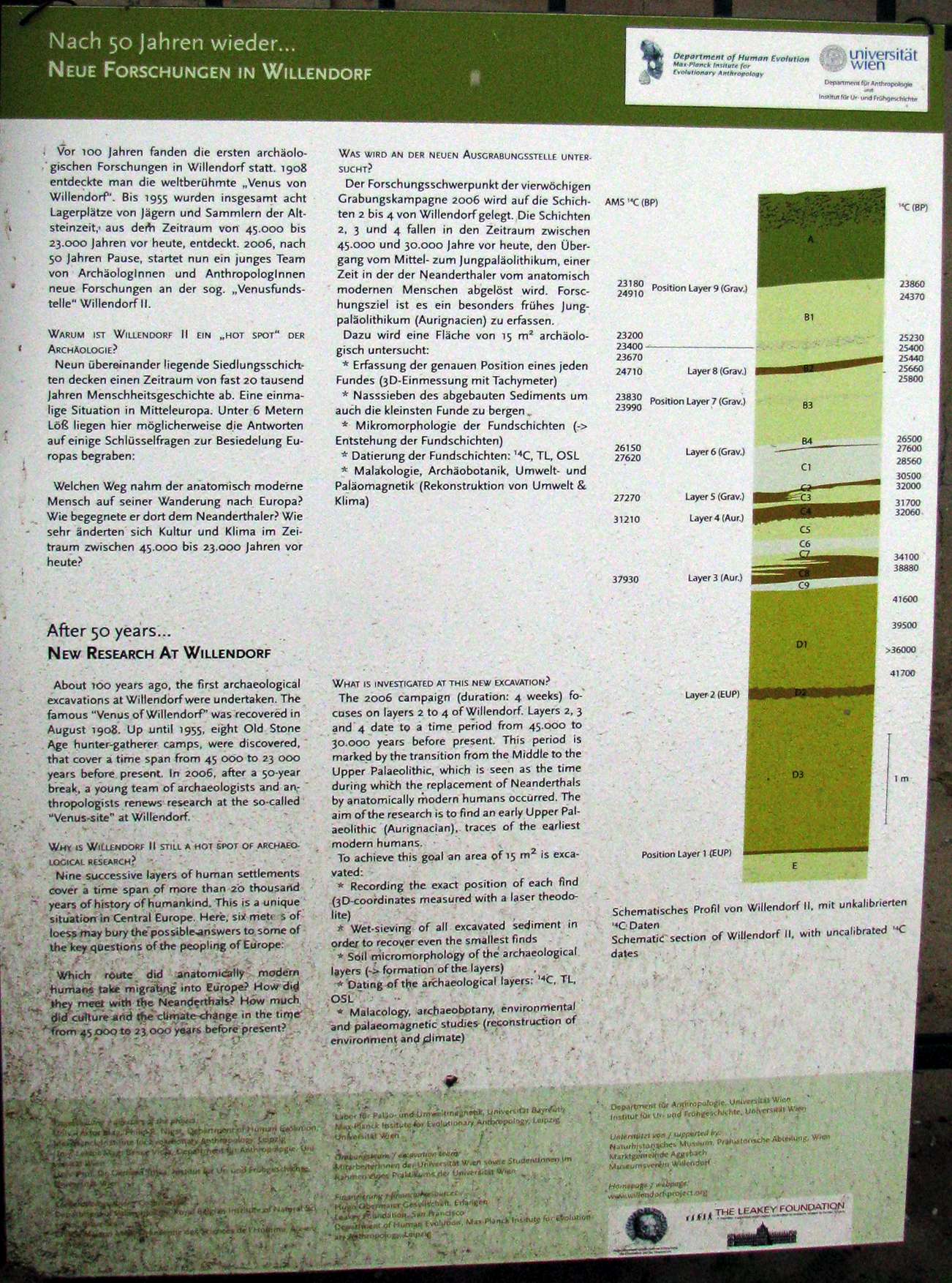
This is the shelter put up by the local museum society, which has protected the site, and added valuable information for those who visit.
Photo: Don Hitchcock 2008
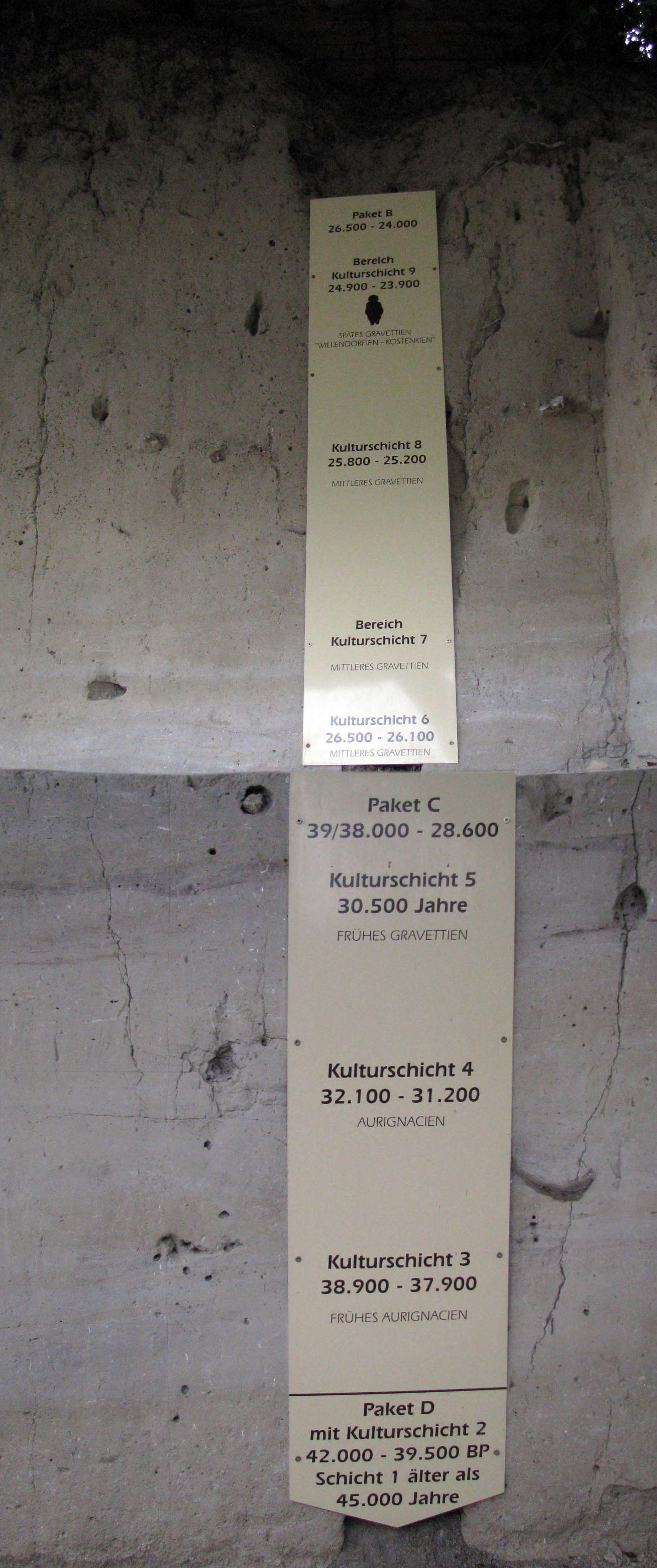
Photo: Don Hitchcock 2008
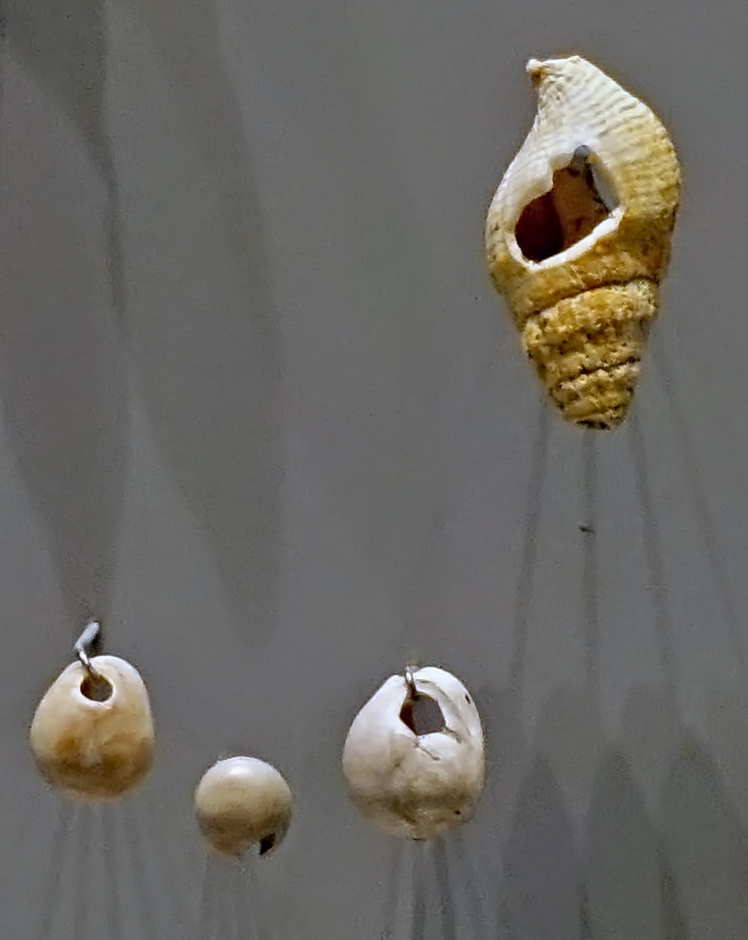
Necklaces were also made from marine shells, traded across great distances. The large shell is from Willendorf l.d. Wachau II Schicht 2, and at 43 000 BP is Austria's oldest jewellery.
The three perforated mollusc shells are from Krems, lower Austria, and are dated at 36 000 BP
Photo: Don Hitchcock 2018
Source: Museum of Natural History, Vienna

Bone rod from Willendorf, Lower Austria, circa 35 000 BP - 27 000 BP.
Photo: Don Hitchcock 2018
Source: Vienna Natural History Museum
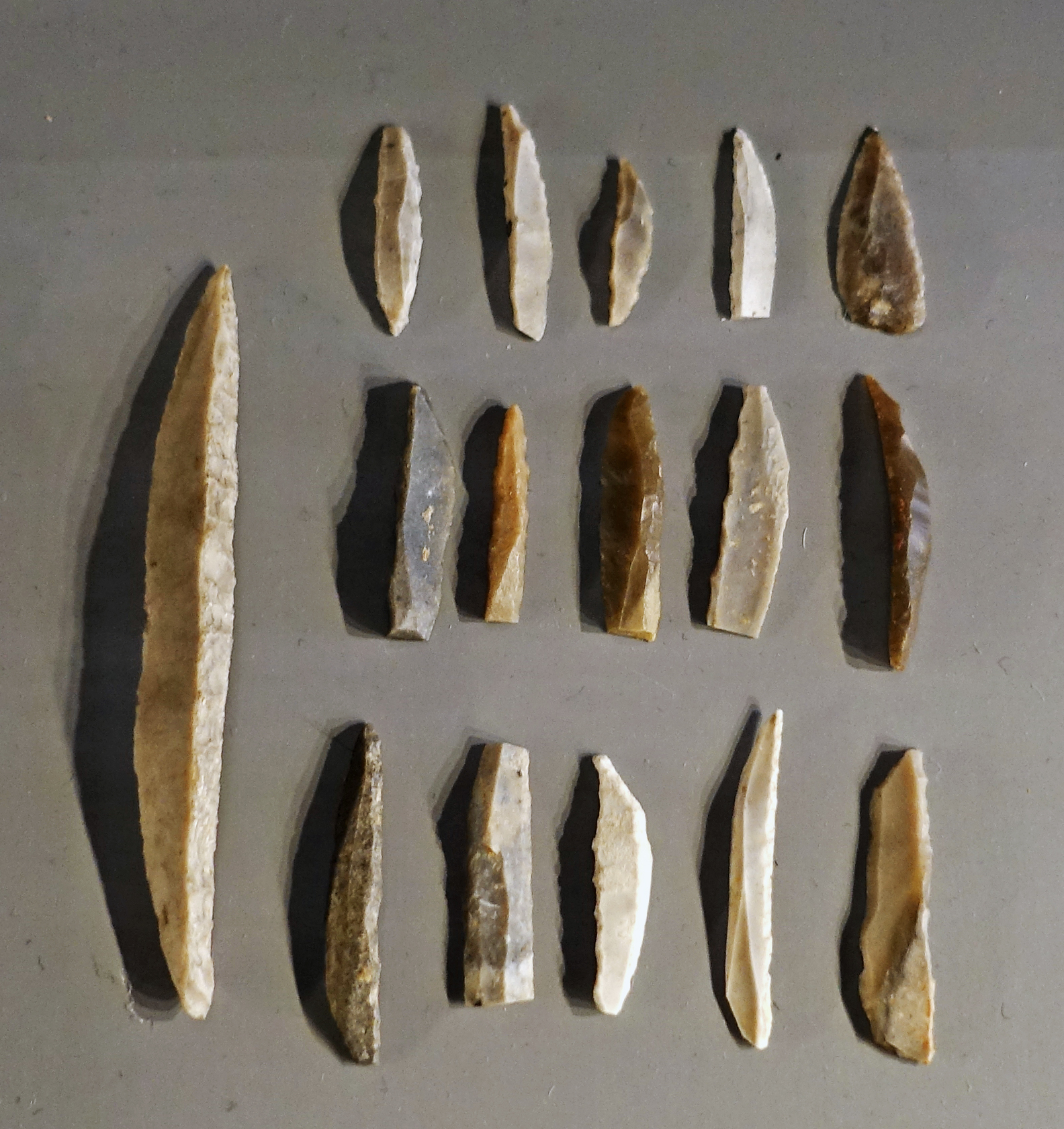
Microgravettian blades from Willendorf, Lower Austria, circa 35 000 BP - 27 000 BP.
Photo: Don Hitchcock 2018
Source: Vienna Natural History Museum
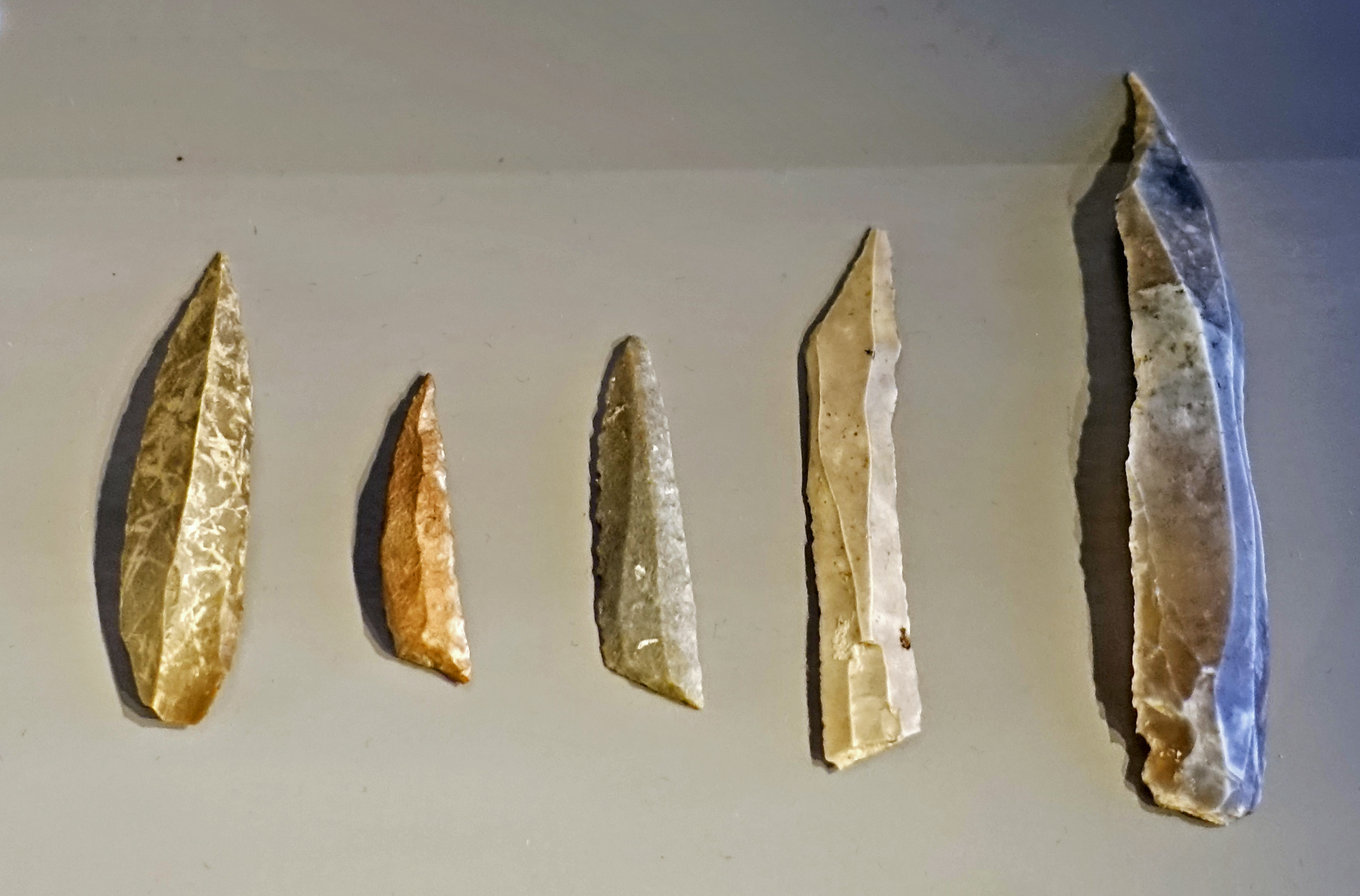
Awls from Willendorf, Lower Austria, circa 35 000 BP - 27 000 BP.
Photo: Don Hitchcock 2018
Source: Vienna Natural History Museum
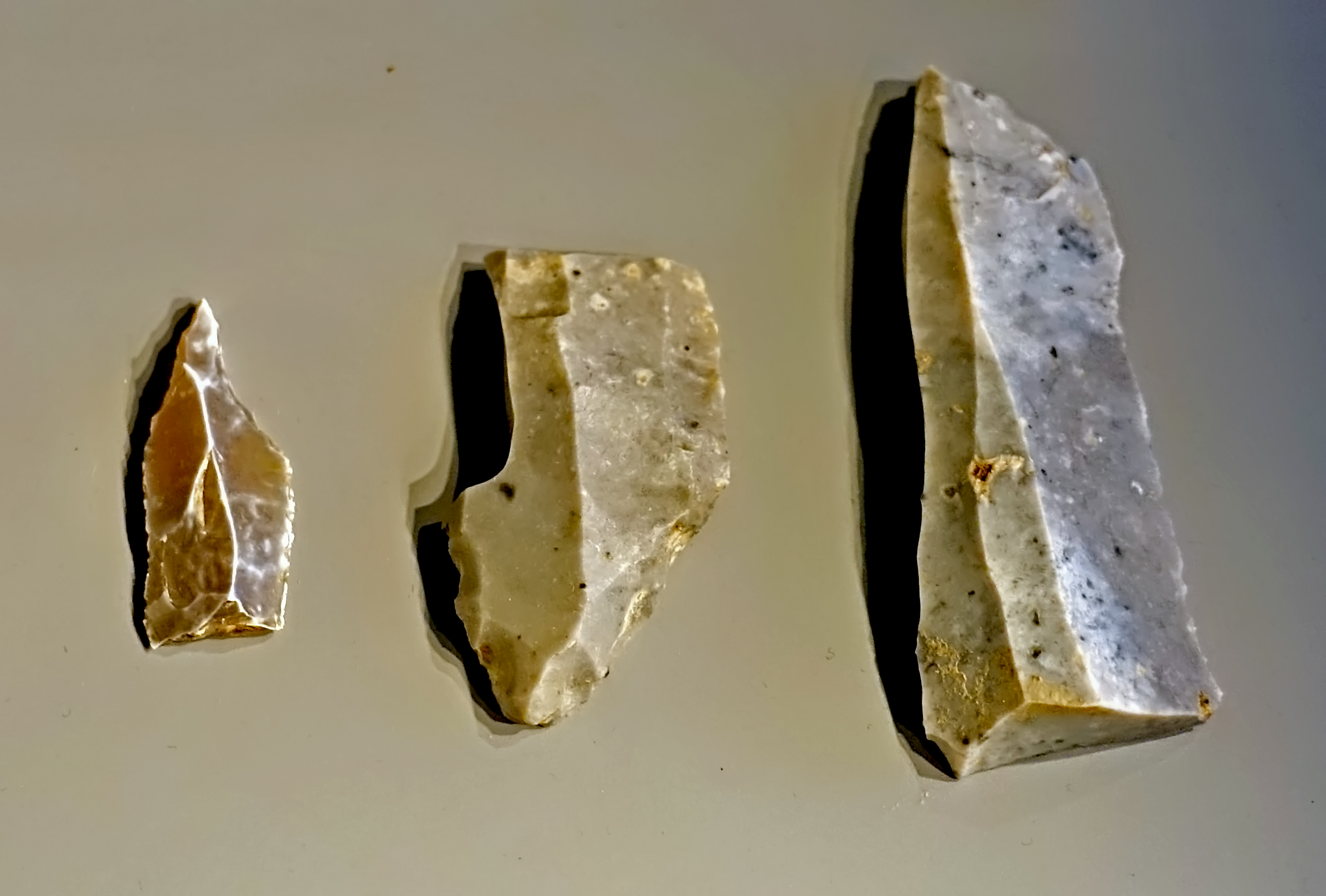
Burins from Willendorf, Lower Austria, circa 35 000 BP - 27 000 BP.
Photo: Don Hitchcock 2018
Source: Vienna Natural History Museum
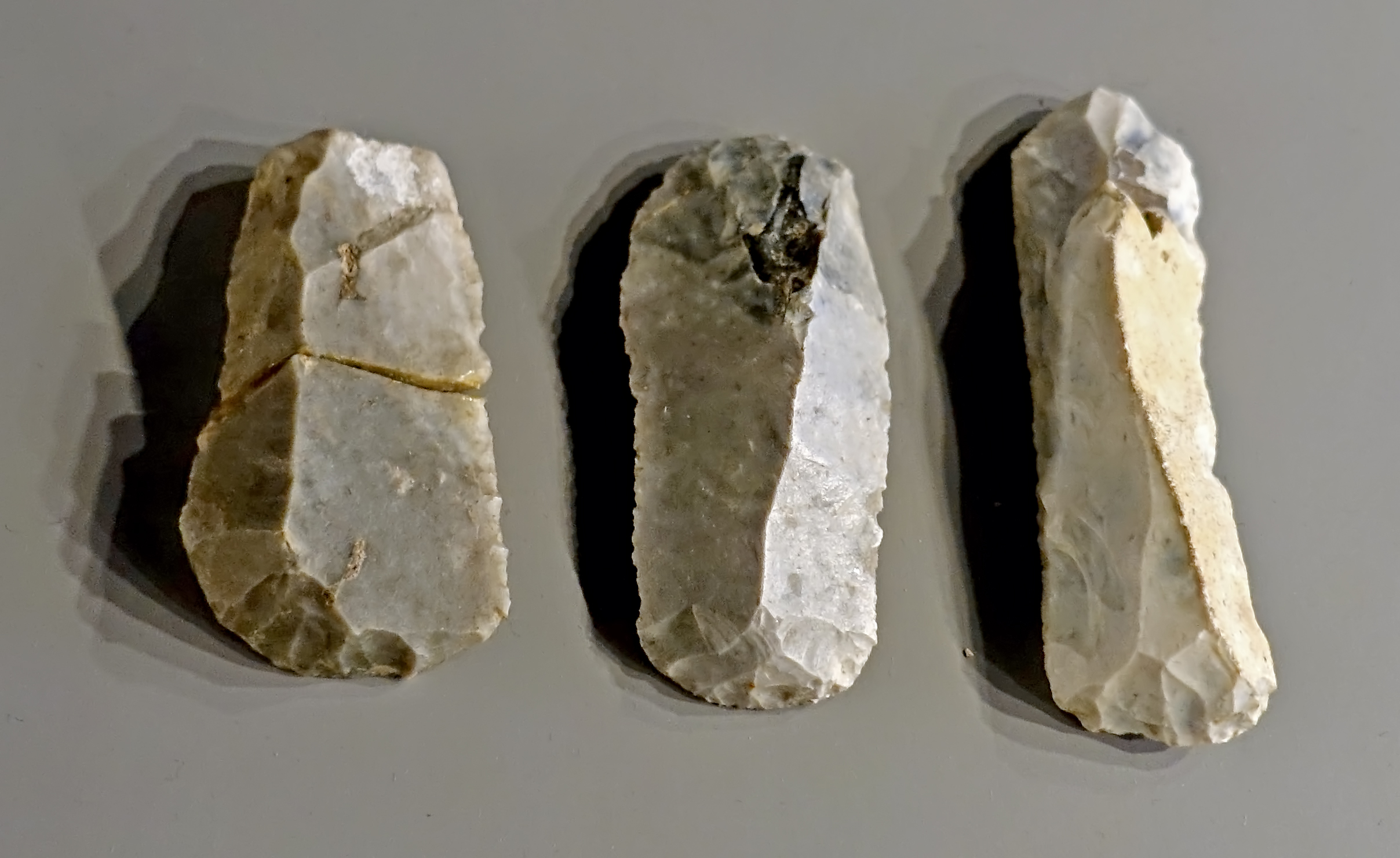
Grattoirs, scrapers, from Willendorf, Lower Austria, circa 35 000 BP - 27 000 BP.
Photo: Don Hitchcock 2018
Source: Vienna Natural History Museum
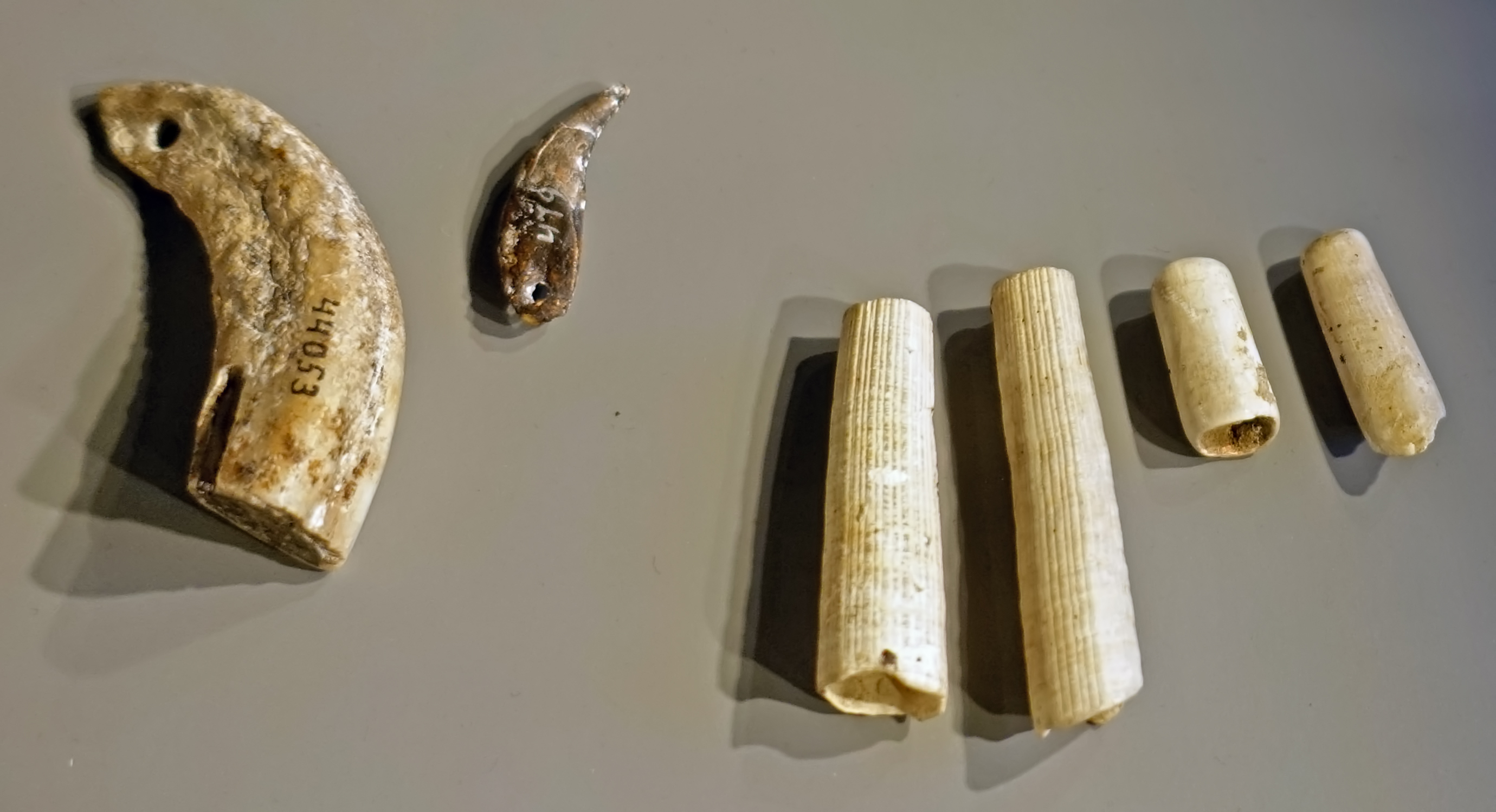
Personal jewellery, from Willendorf, Lower Austria, circa 35 000 BP - 27 000 BP.
On the left, two animal canines with holes drilled for suspension on a cord.
On the right, hollow fossil Dentalium shells, often strung on necklaces.
Photo: Don Hitchcock 2018
Source: Vienna Natural History Museum
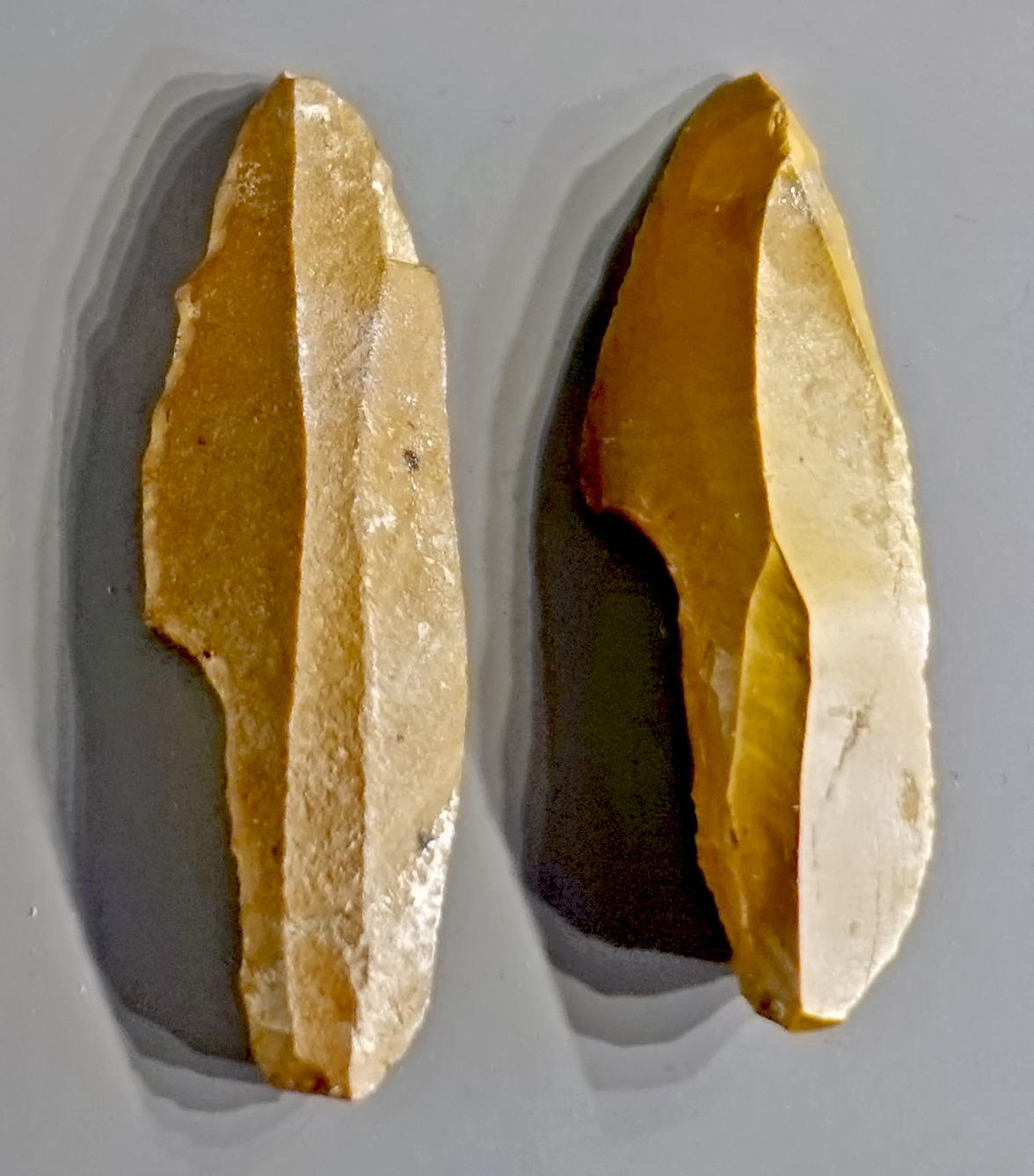
Shouldered points (pointes à cran) from Willendorf, Lower Austria, circa 35 000 BP - 27 000 BP.
Photo: Don Hitchcock 2018
Source: Vienna Natural History Museum
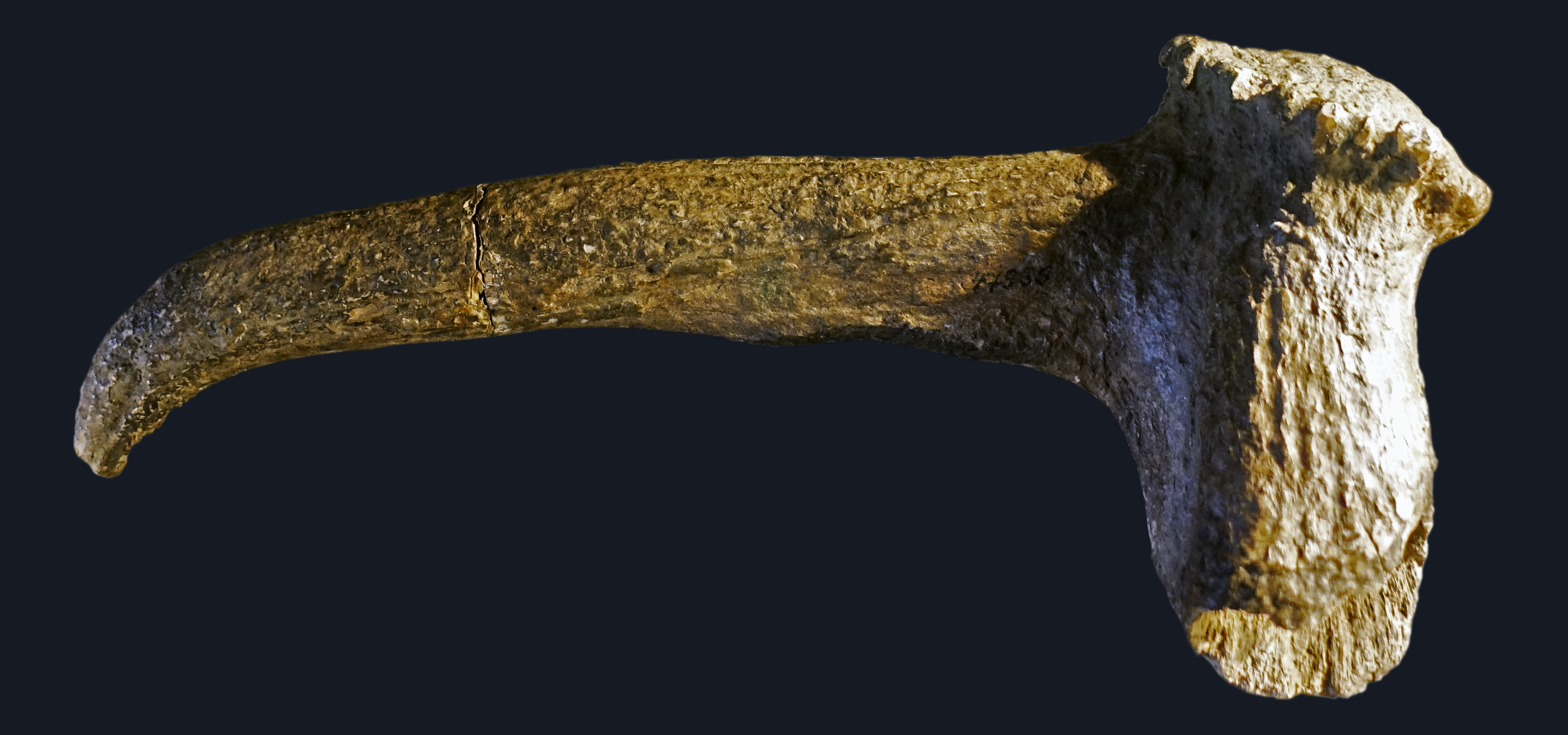
Deer antler used as a handle for a tool, from Willendorf, Lower Austria, Gravettian, circa 29 000 BP.
Photo: Don Hitchcock 2018
Source: Vienna Natural History Museum
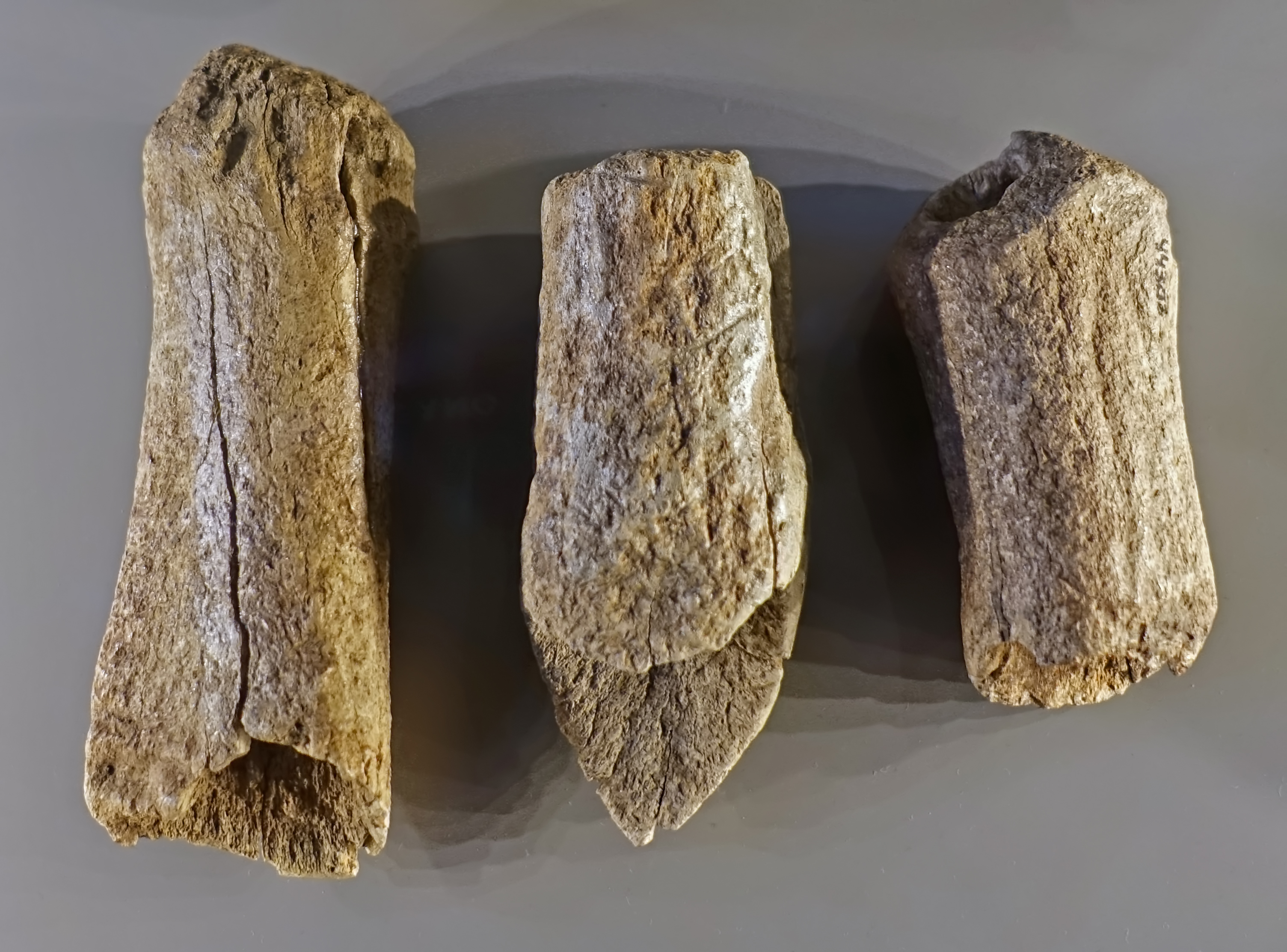
Deer antler used as handles for tools, from Willendorf, Lower Austria, Gravettian, circa 29 000 BP.
Photo: Don Hitchcock 2018
Source: Vienna Natural History Museum
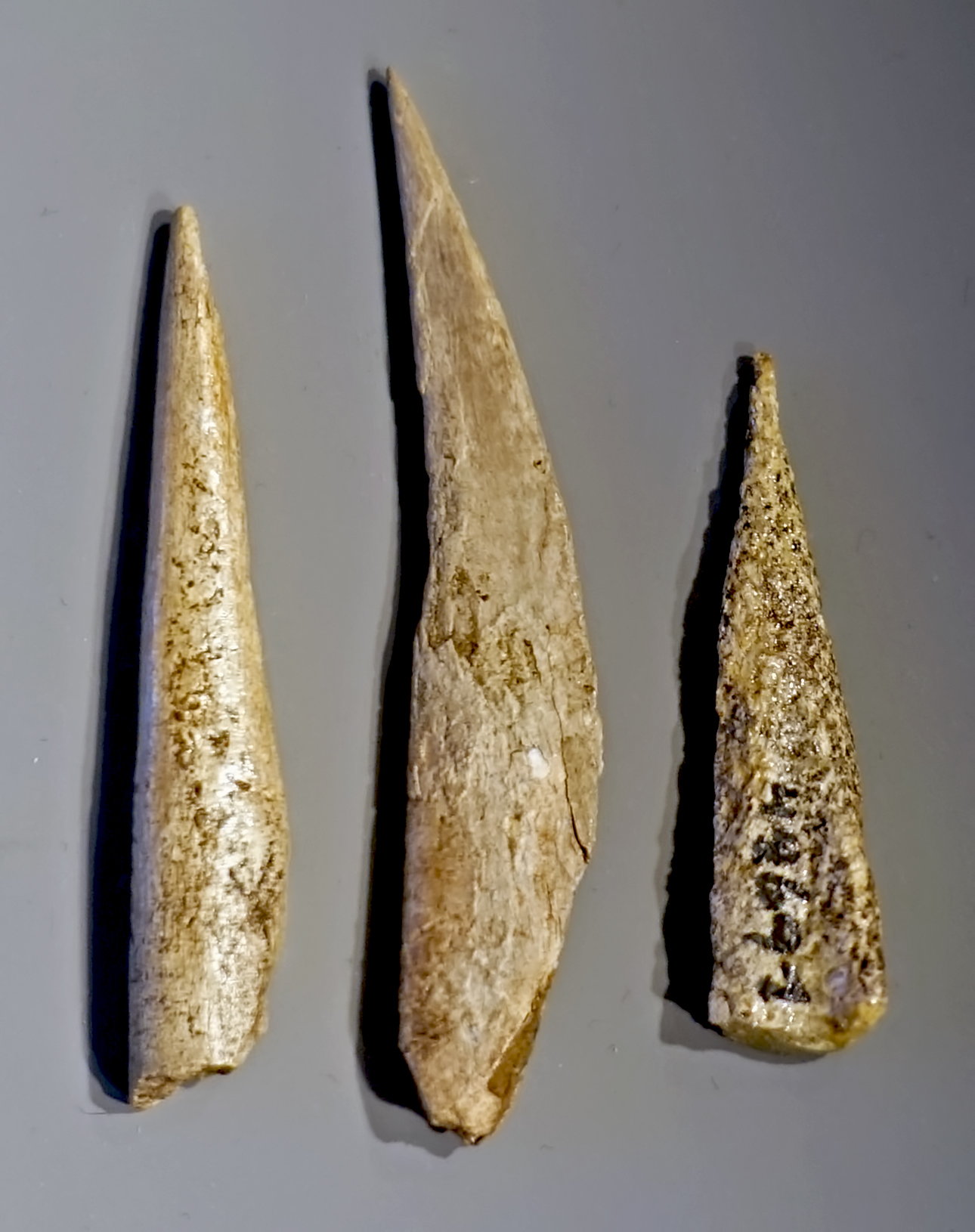
Bone awls, from Willendorf, Lower Austria, Gravettian, circa 29 000 BP.
Photo: Don Hitchcock 2018
Source: Vienna Natural History Museum
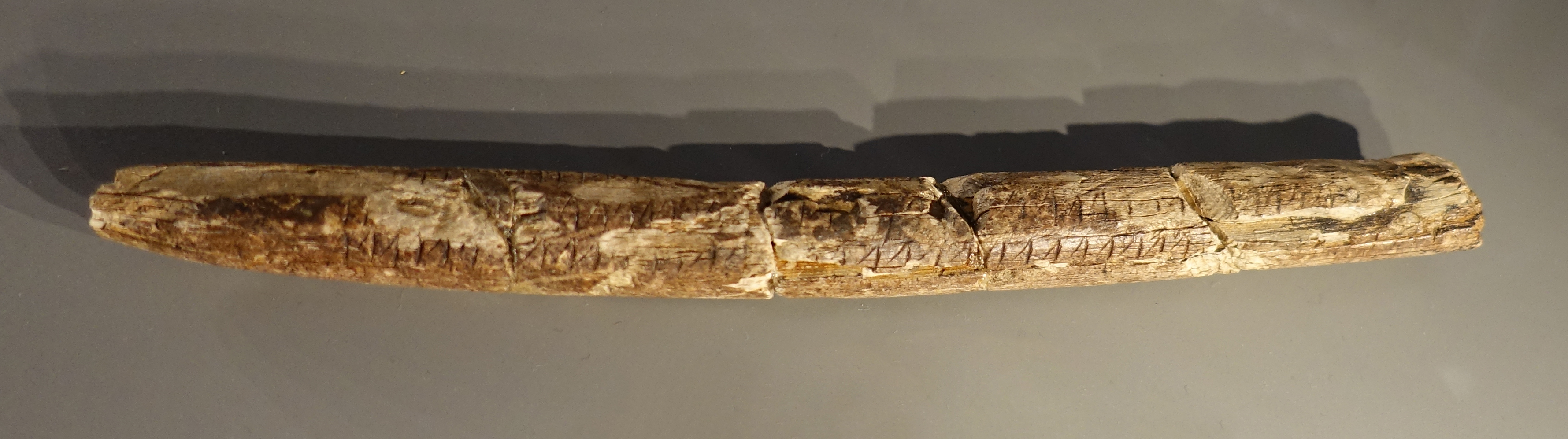
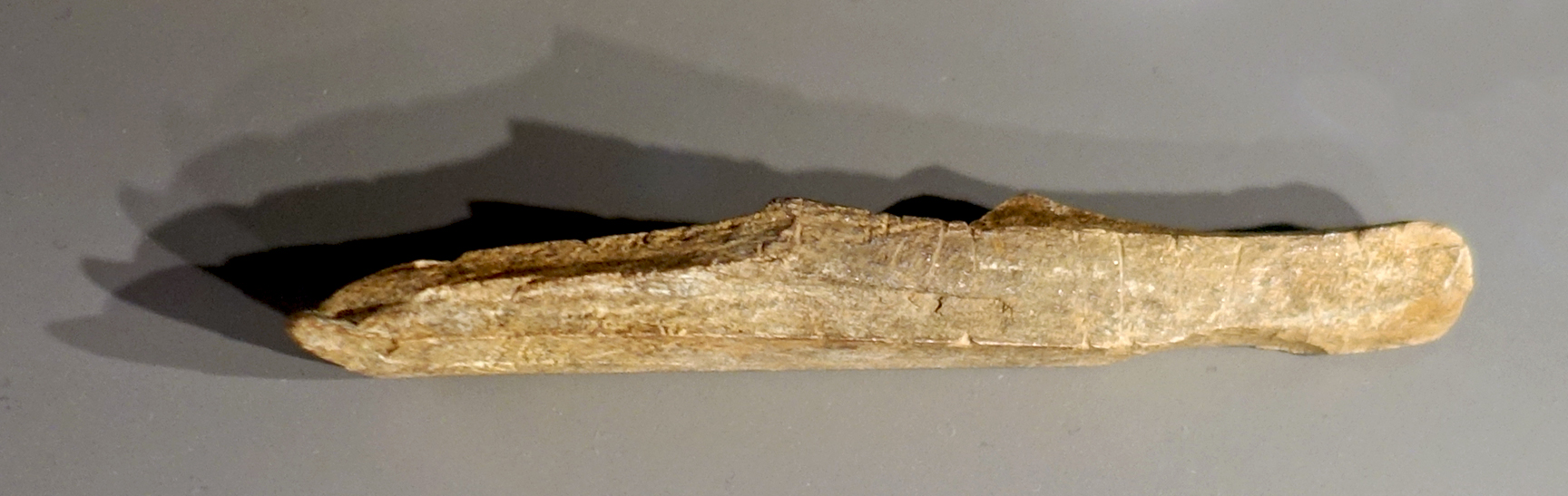
Carved ivory rod from Willendorf, Lower Austria, Gravettian, circa 35 000 BP - 27 000 BP.
Photo: Don Hitchcock 2018
Source: Vienna Natural History Museum
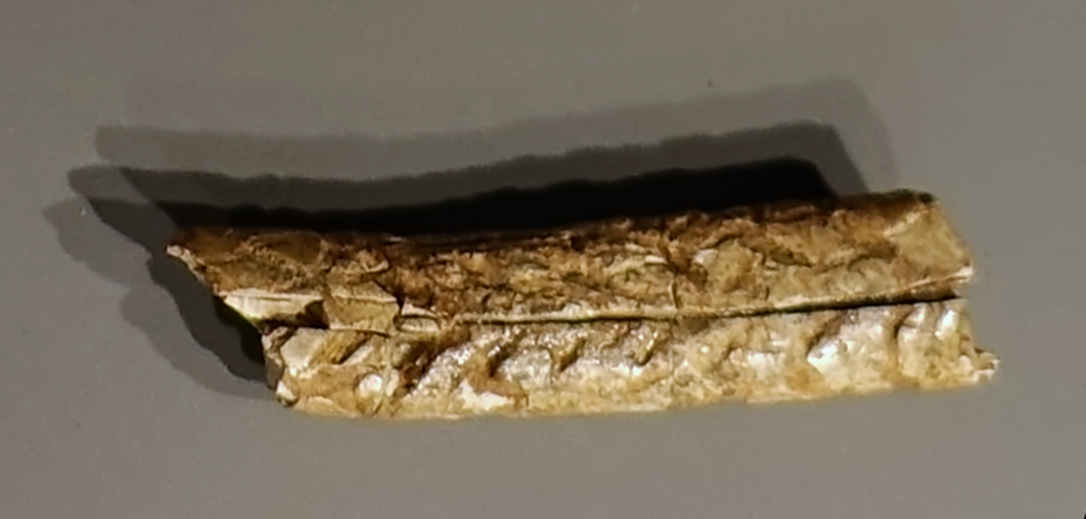
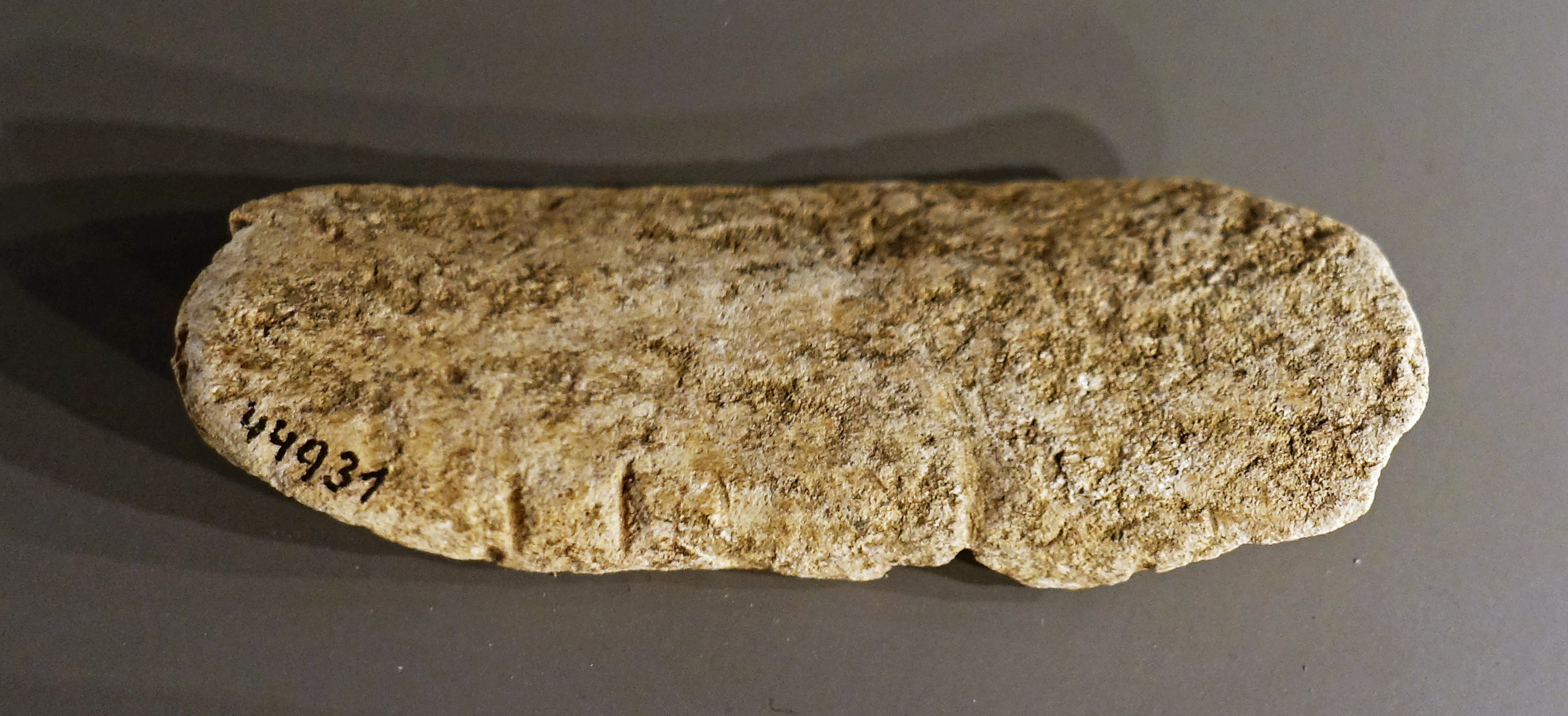
Carved ivory rods from Willendorf, Lower Austria, Gravettian, circa 35 000 BP - 27 000 BP.
Photo: Don Hitchcock 2018
Source: Vienna Natural History Museum
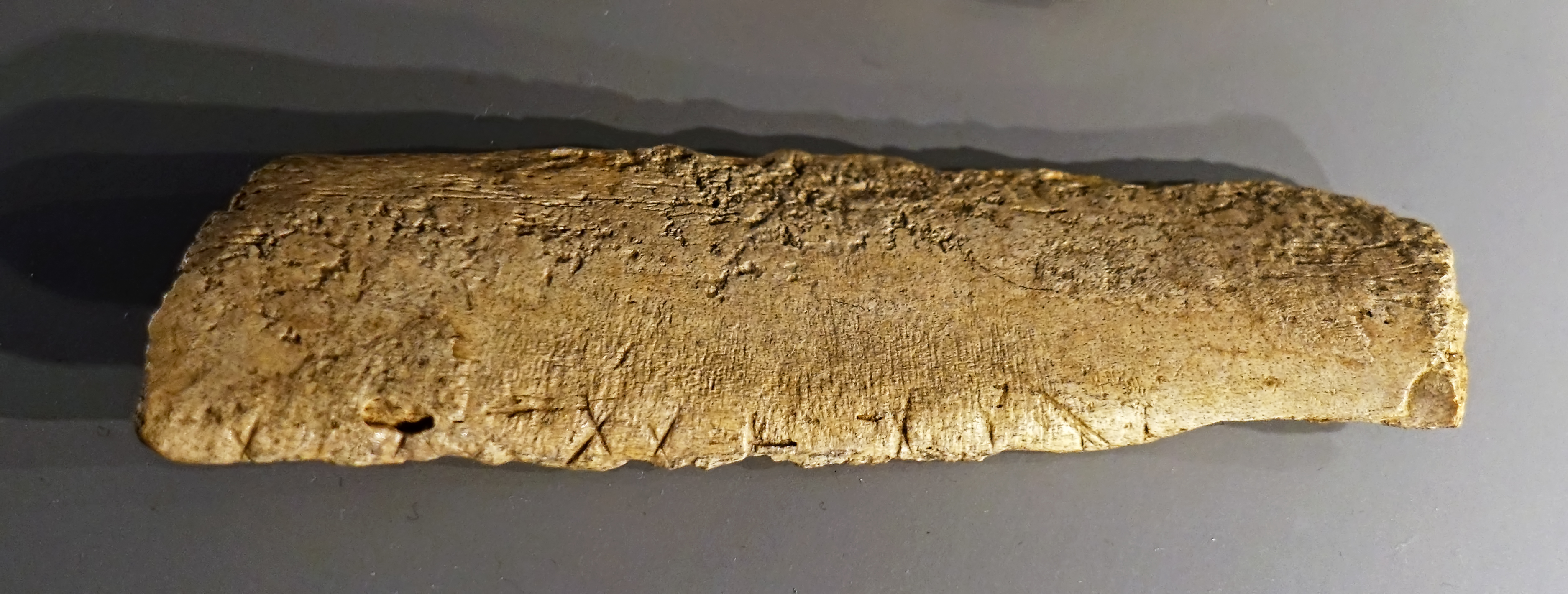
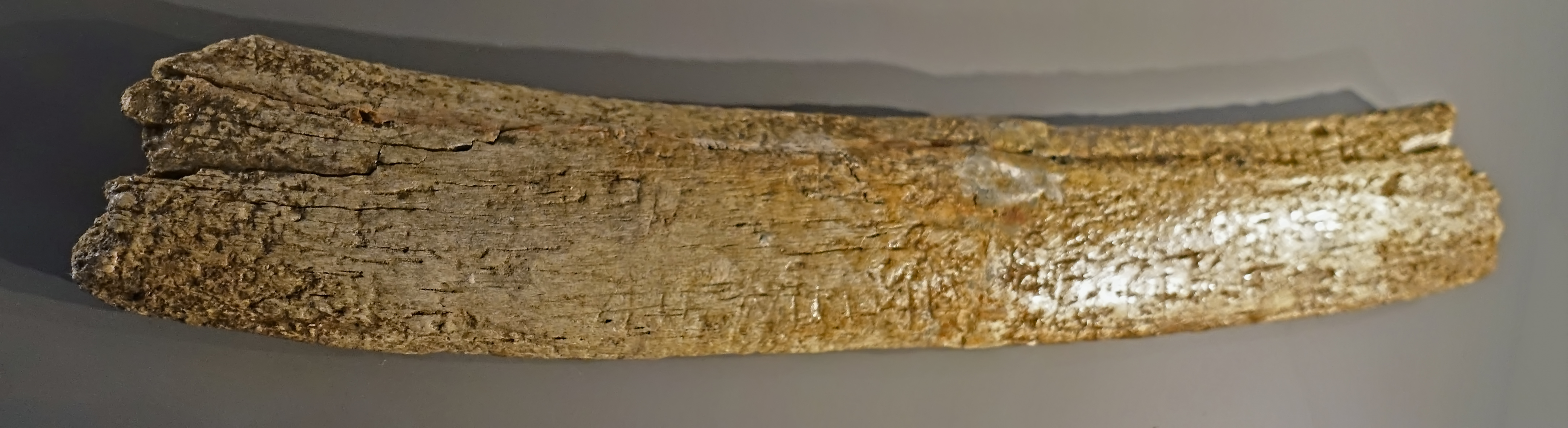
Carved mammoth ribs from Willendorf, Lower Austria, Gravettian, circa 29 000 BP.
Photo: Don Hitchcock 2018
Source: Vienna Natural History Museum
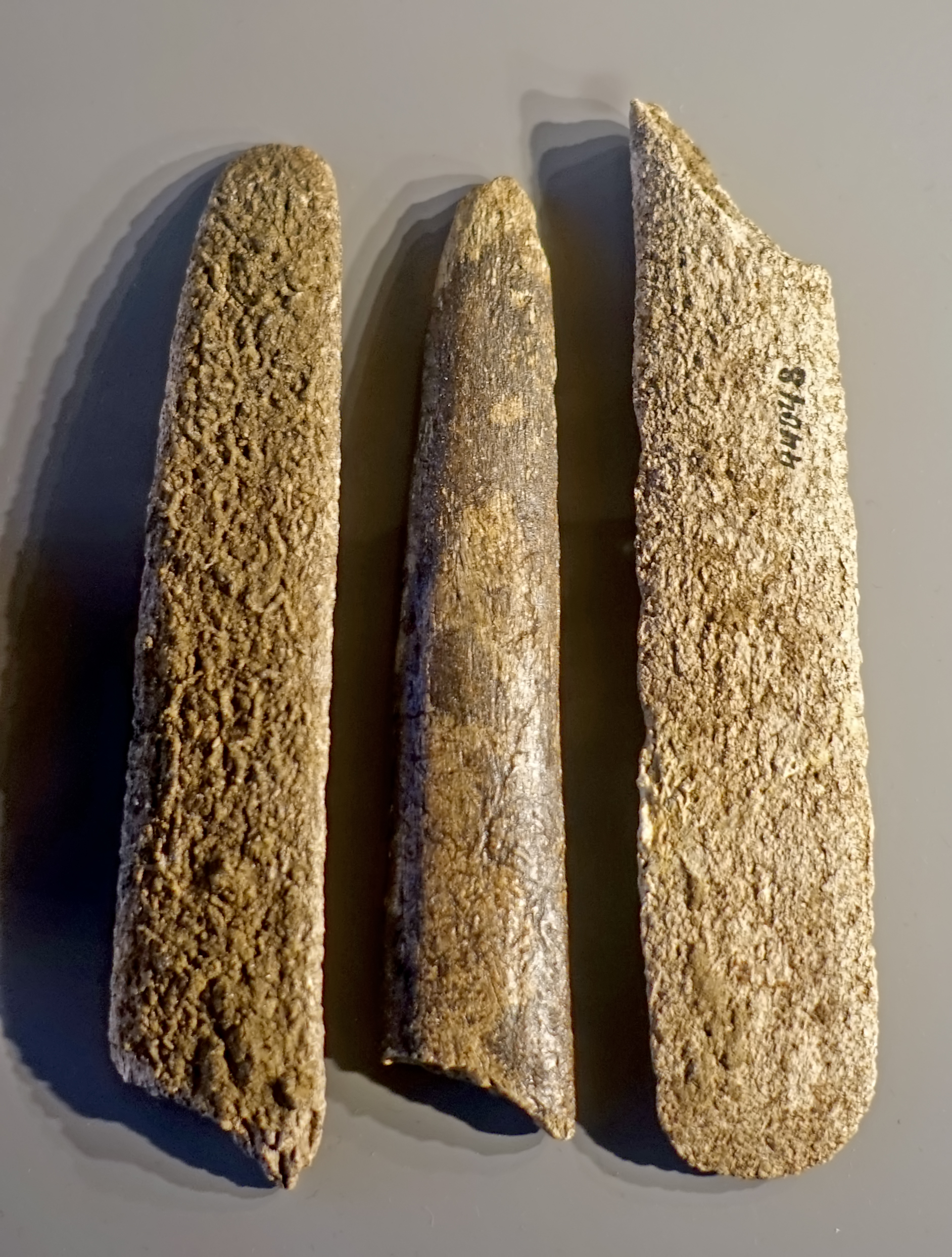
Bone spatulae, from Willendorf, Lower Austria, Gravettian, circa 29 000 BP.
Photo: Don Hitchcock 2018
Source: Vienna Natural History Museum
A layer with many tools and both ivory figurines was found 25 cm above the Venus of Willendorf. Long blades were made of high quality flint from Moravia. Of particular interest are shouldered points (pointes à cran) - these could be easily attached to spears and were used as efficient hunting weapons.
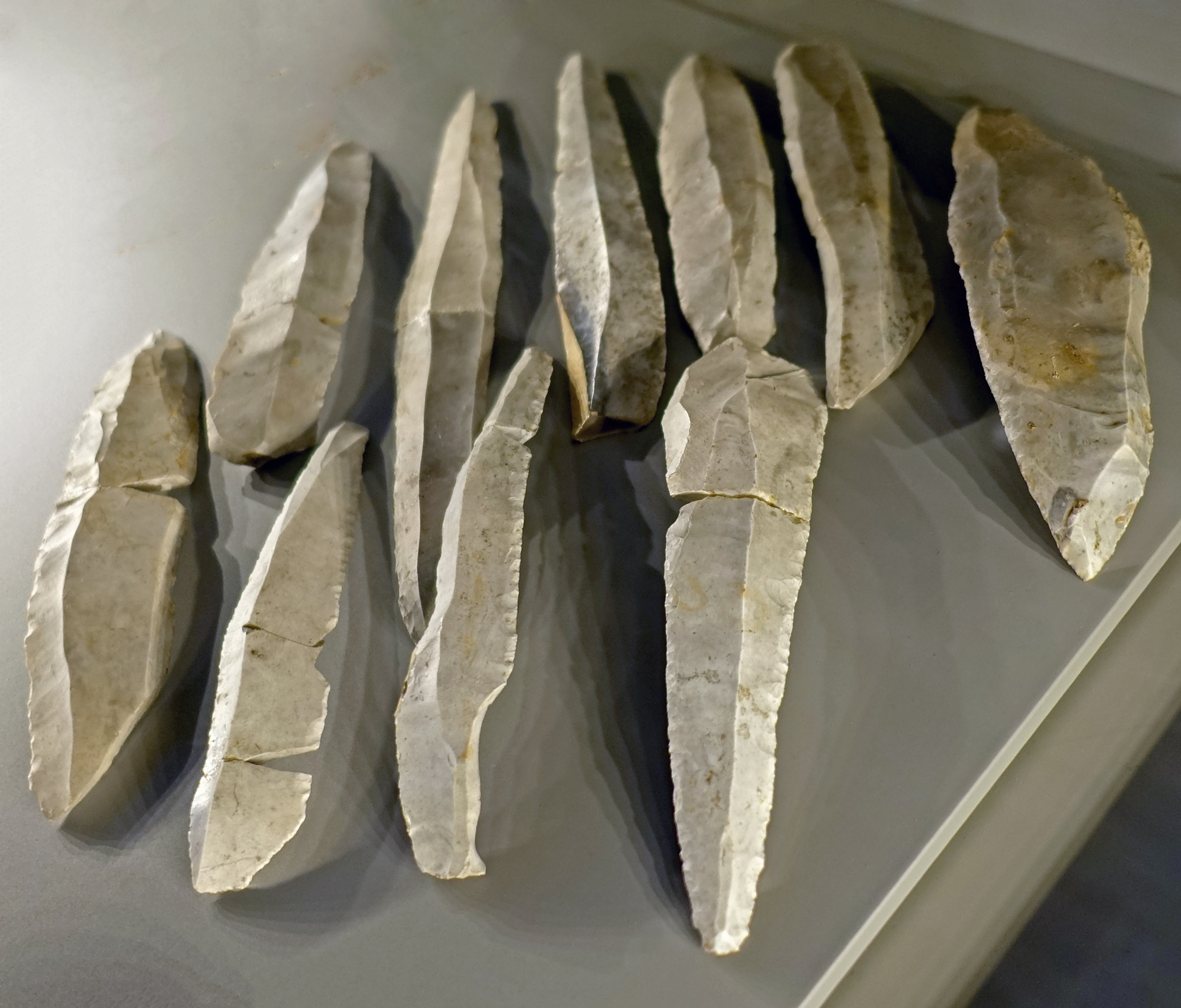
Tools from imported flint. Willendorf, Lower Austria, Gravettian, circa 29 000 BP.
Photo: Don Hitchcock 2018
Source: Natural History Museum of Vienna
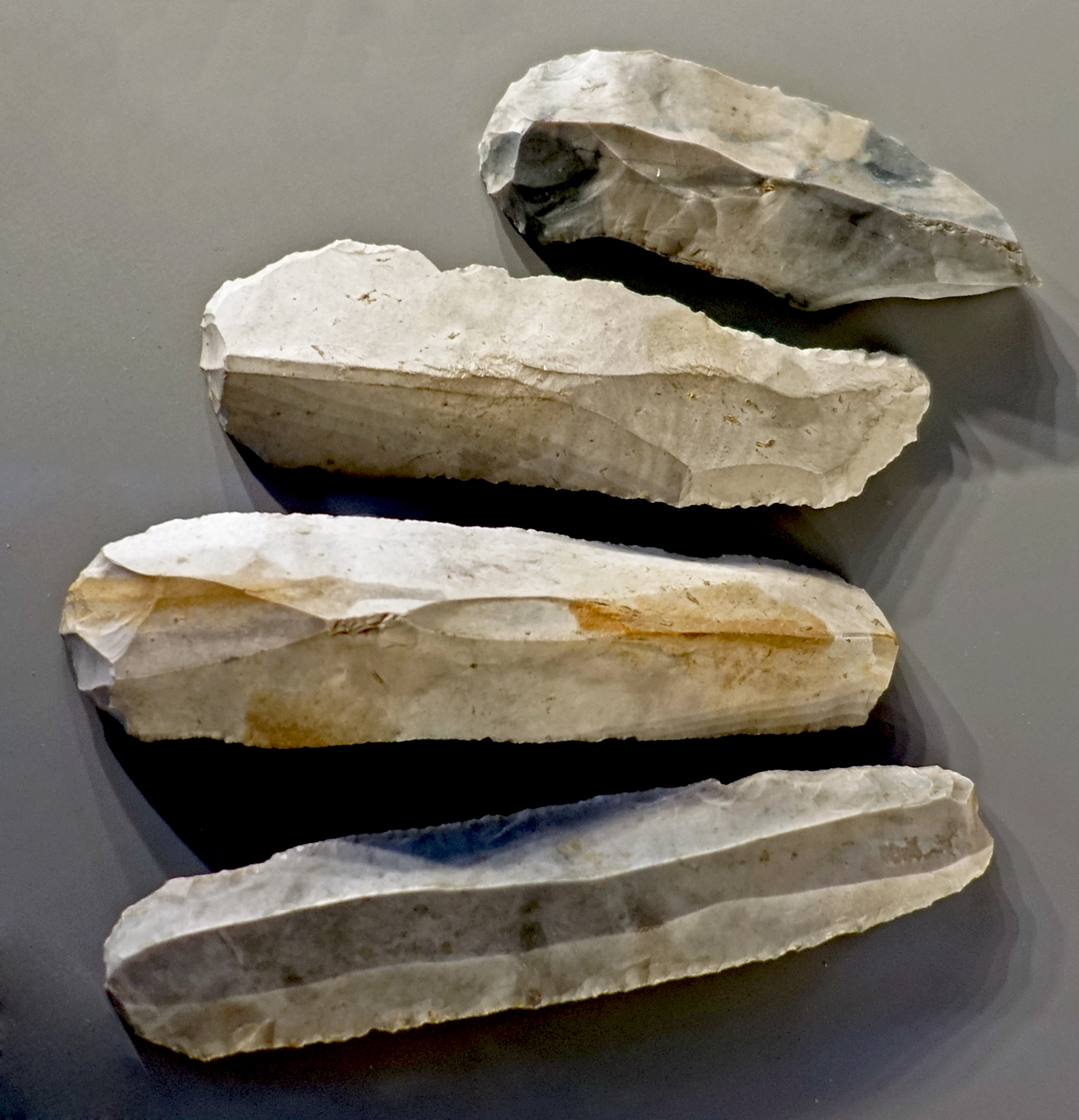
Tools from imported flint. Willendorf, Lower Austria, Gravettian, circa 29 000 BP.
Photo: Don Hitchcock 2018
Source: Natural History Museum of Vienna
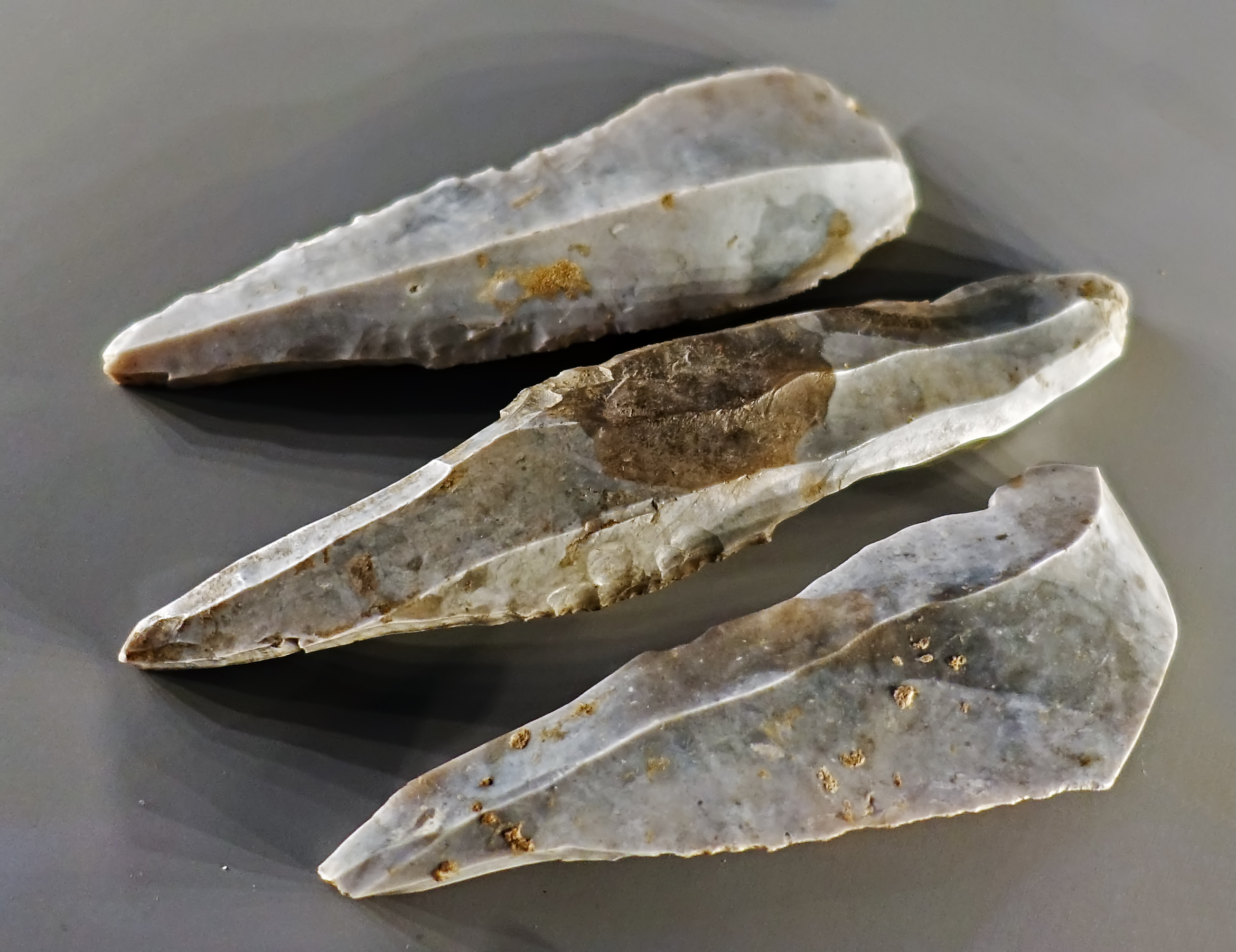
Tools from imported flint. Willendorf, Lower Austria, Gravettian, circa 29 000 BP.
Photo: Don Hitchcock 2018
Source: Natural History Museum of Vienna
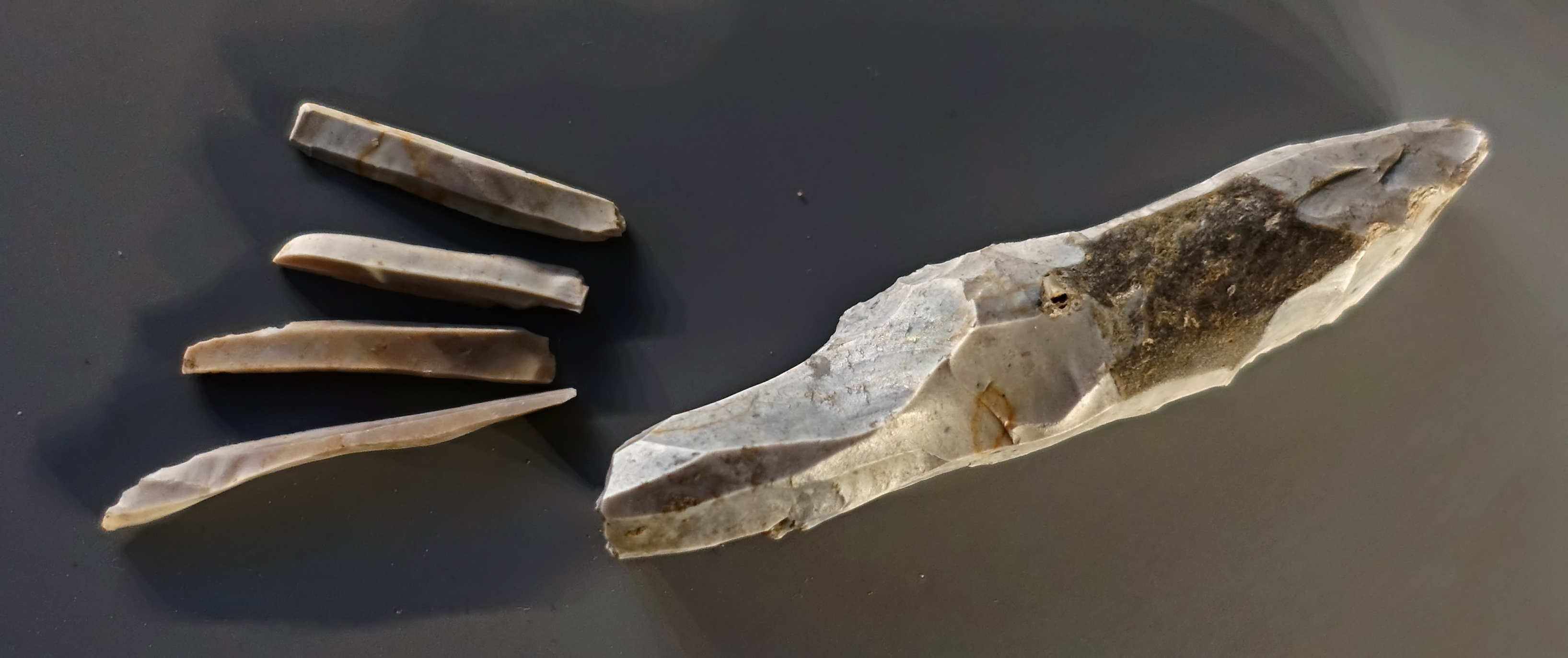
Tools from imported flint. Willendorf, Lower Austria, Gravettian, circa 29 000 BP.
The poorly made large shouldered point (pointe à cran) on the right could be easily attached to a spear.
Photo: Don Hitchcock 2018
Source: Natural History Museum of Vienna
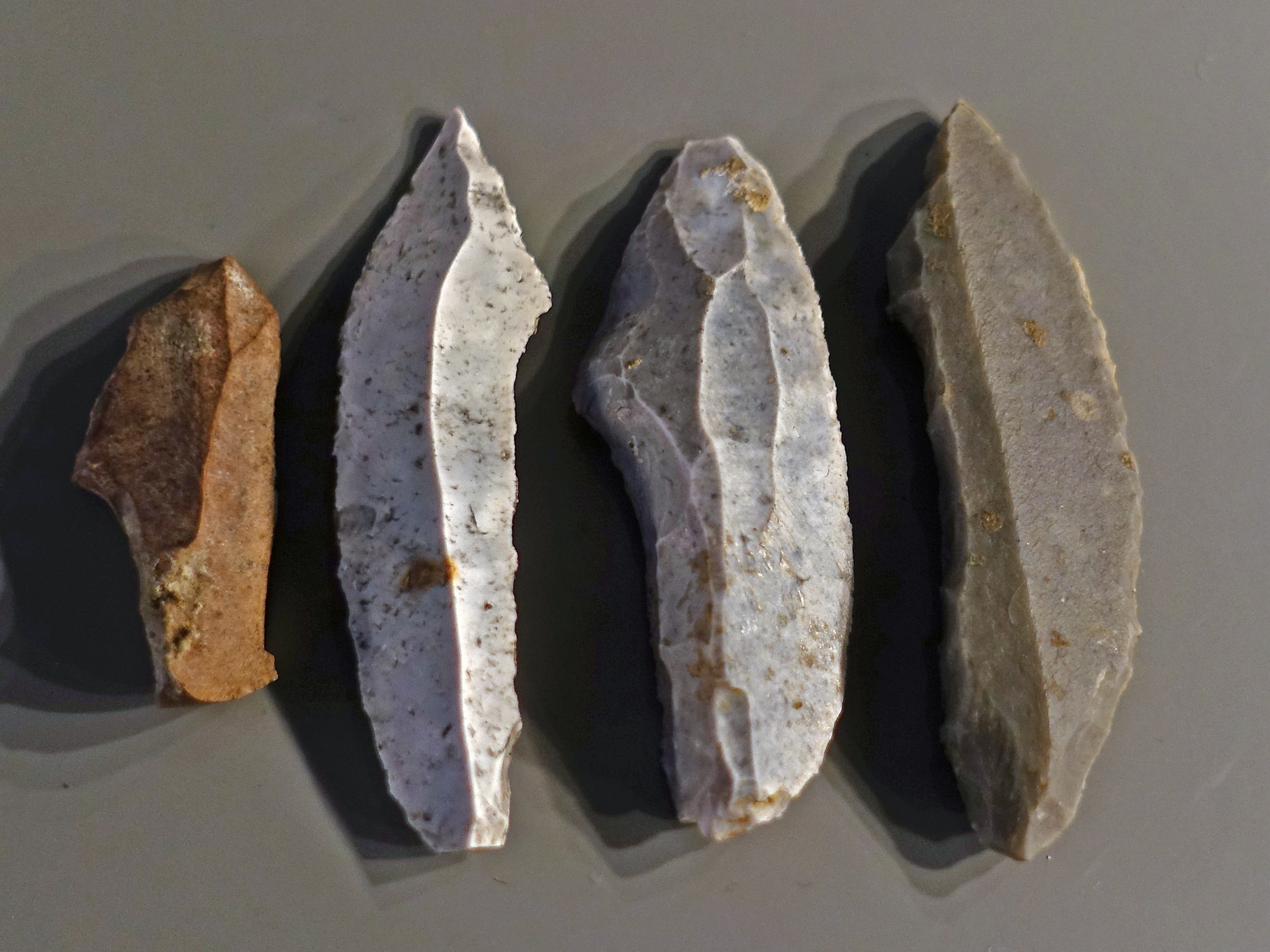
Tools from local flint. Willendorf, Lower Austria, Gravettian, circa 29 000 BP.
( These shouldered points (pointes à cran) are better made than the one above, but not with the elegant design of later examples, when the shoulders became thinner and shorter - Don )
Photo: Don Hitchcock 2018
Source: Natural History Museum of Vienna
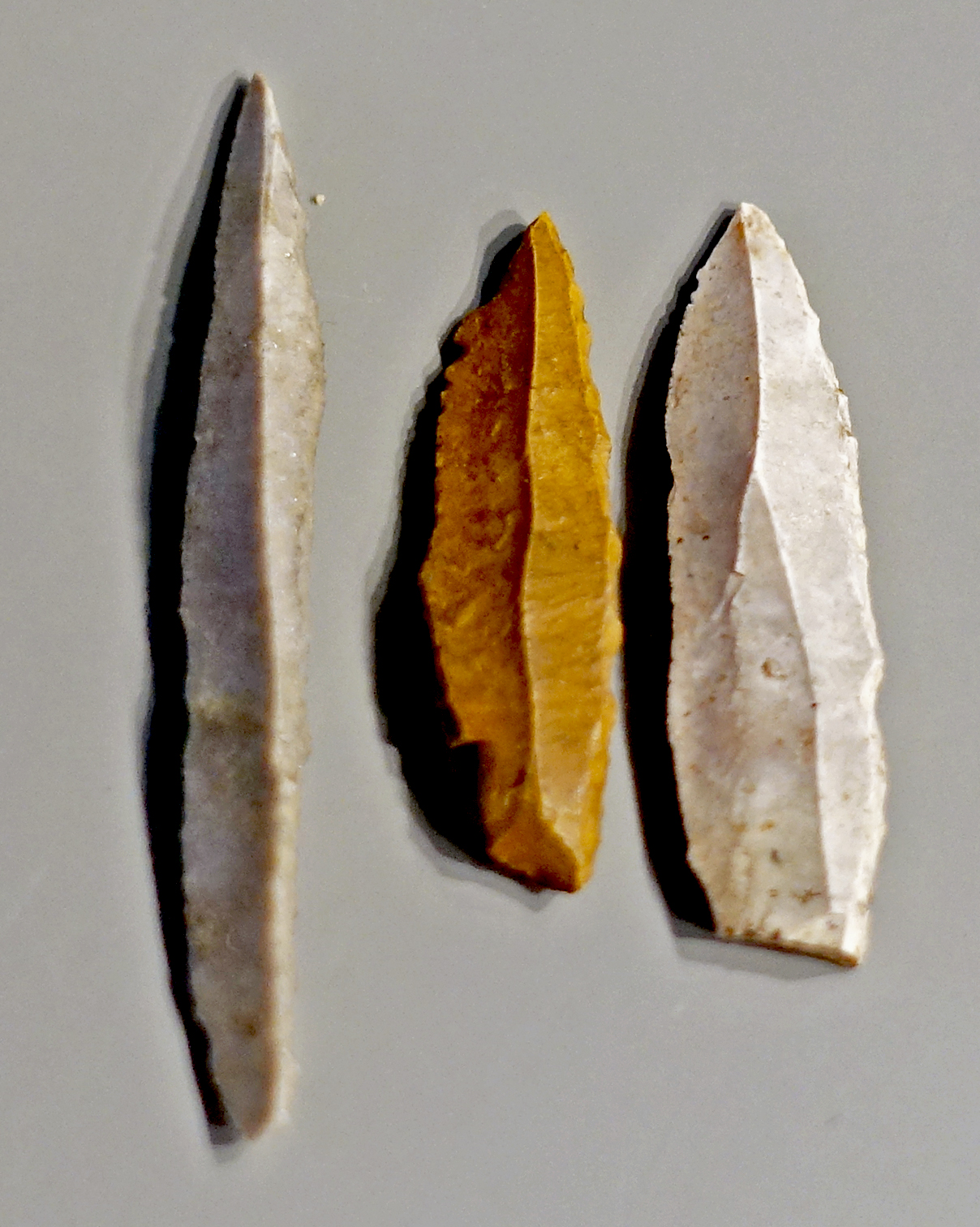
Well made tools from local flint. Willendorf, Lower Austria, Gravettian, circa 29 000 BP.
( The tool in the centre appears to be a denticulate knife (or saw) which has seen a lot of use - Don )
Photo: Don Hitchcock 2018
Source: Natural History Museum of Vienna
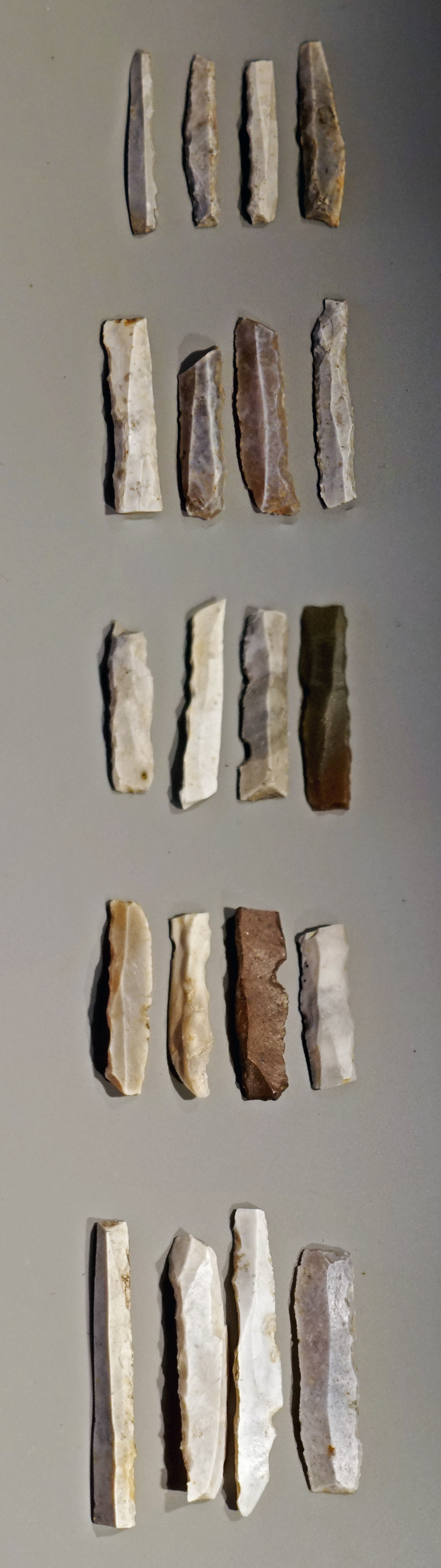
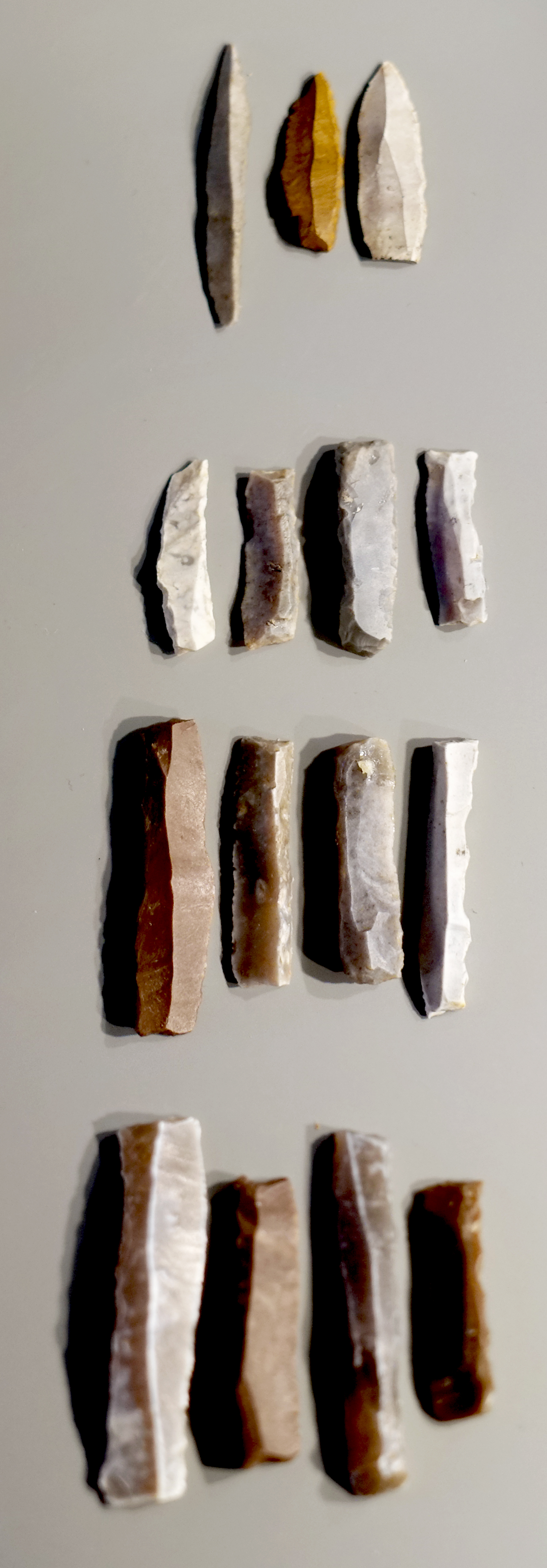
Small blades from local flint.
(left) Many are notched.
(right) Many have been truncated.
Willendorf, Lower Austria, Gravettian, circa 29 000 BP.
Photo: Don Hitchcock 2018
Source: Natural History Museum of Vienna
Small blades (microgravettes) from local flint.
(left) Many are notched.
(right) Many have been truncated.
Willendorf, Lower Austria, Gravettian, circa 29 000 BP.
Photo: Don Hitchcock 2018
Source: Natural History Museum of Vienna
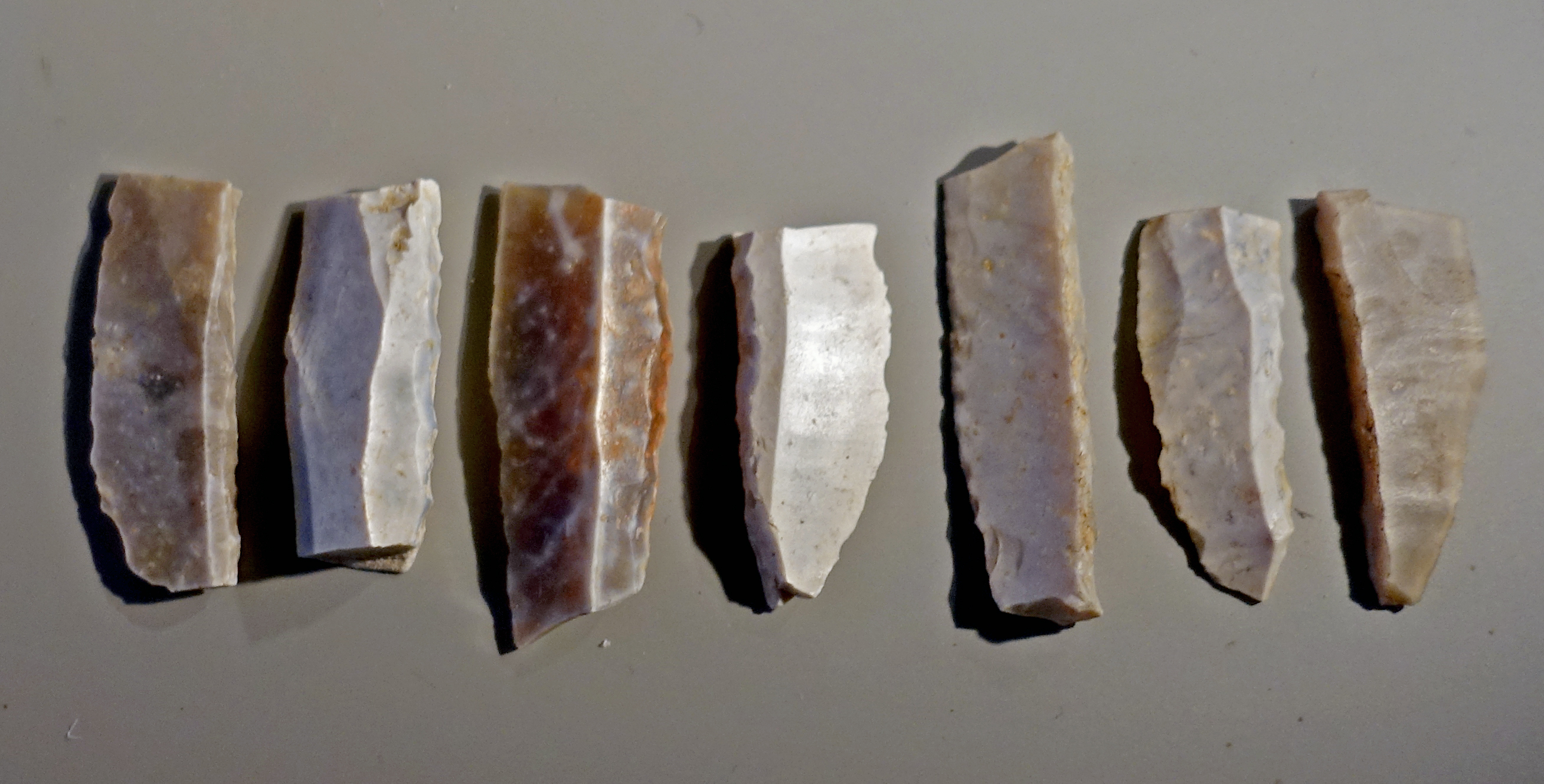
Small blades from local flint.
Many are truncated, perhaps by misuse, or perhaps for use as burins, though they are not ideal for the purpose.
Willendorf, Lower Austria, Gravettian, circa 29 000 BP.
Photo: Don Hitchcock 2018
Source: Natural History Museum of Vienna
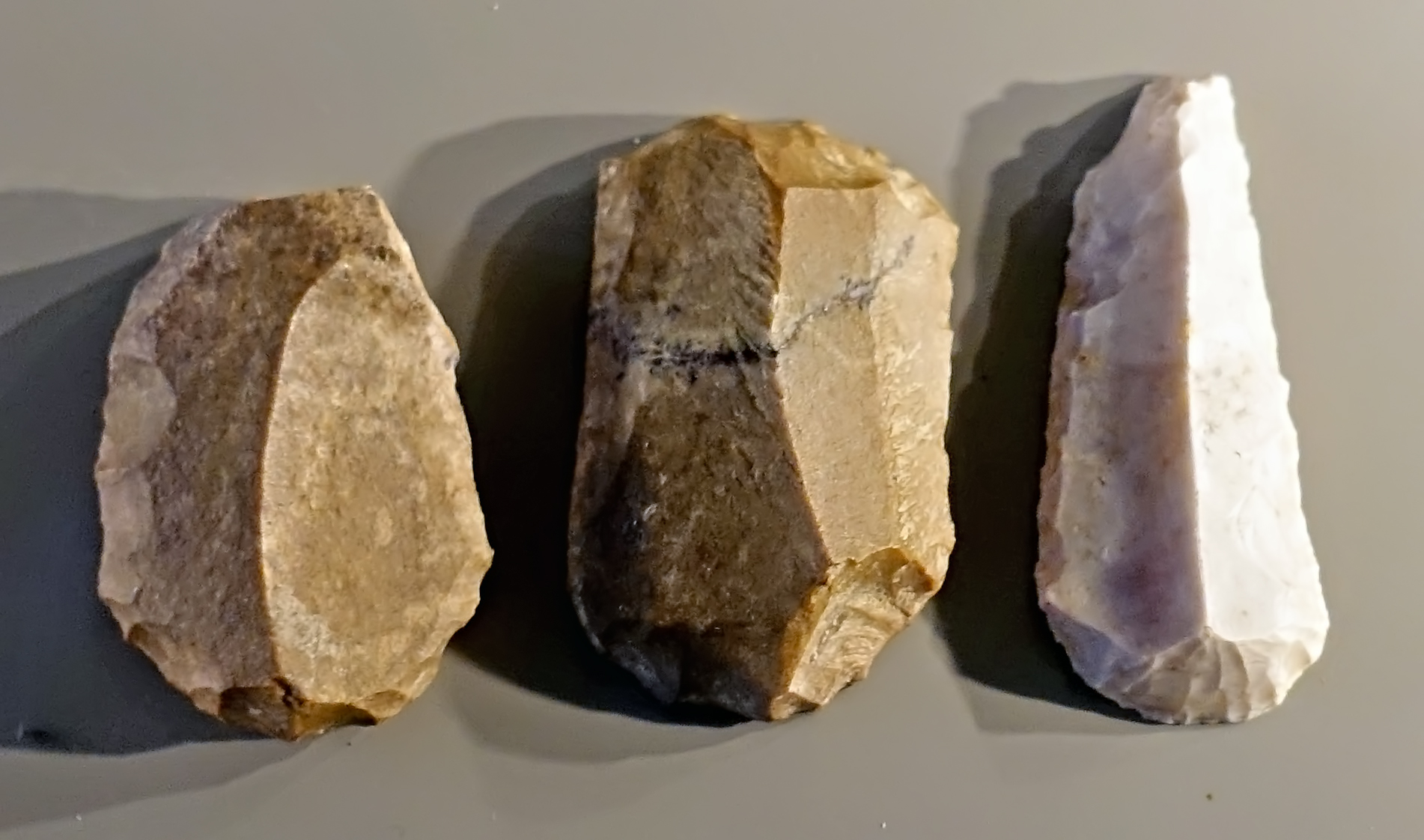
Small grattoirs, scrapers, from local flint.
Willendorf, Lower Austria, Gravettian, circa 29 000 BP.
Photo: Don Hitchcock 2018
Source: Natural History Museum of Vienna
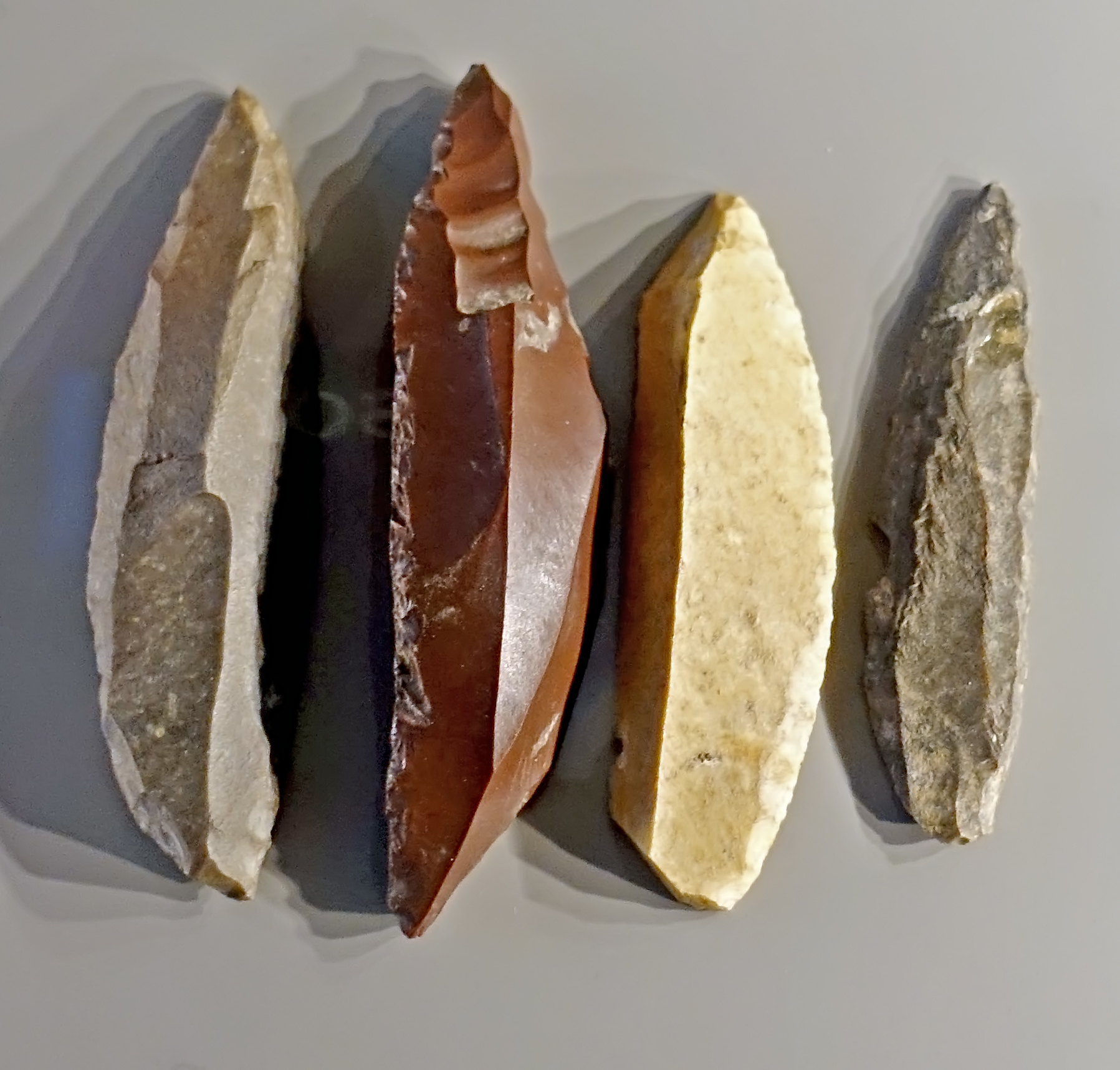
Small backed knives, designed to be held in the hand without a handle, from local flint.
Willendorf, Lower Austria, Gravettian, circa 29 000 BP.
Photo: Don Hitchcock 2018
Source: Natural History Museum of Vienna
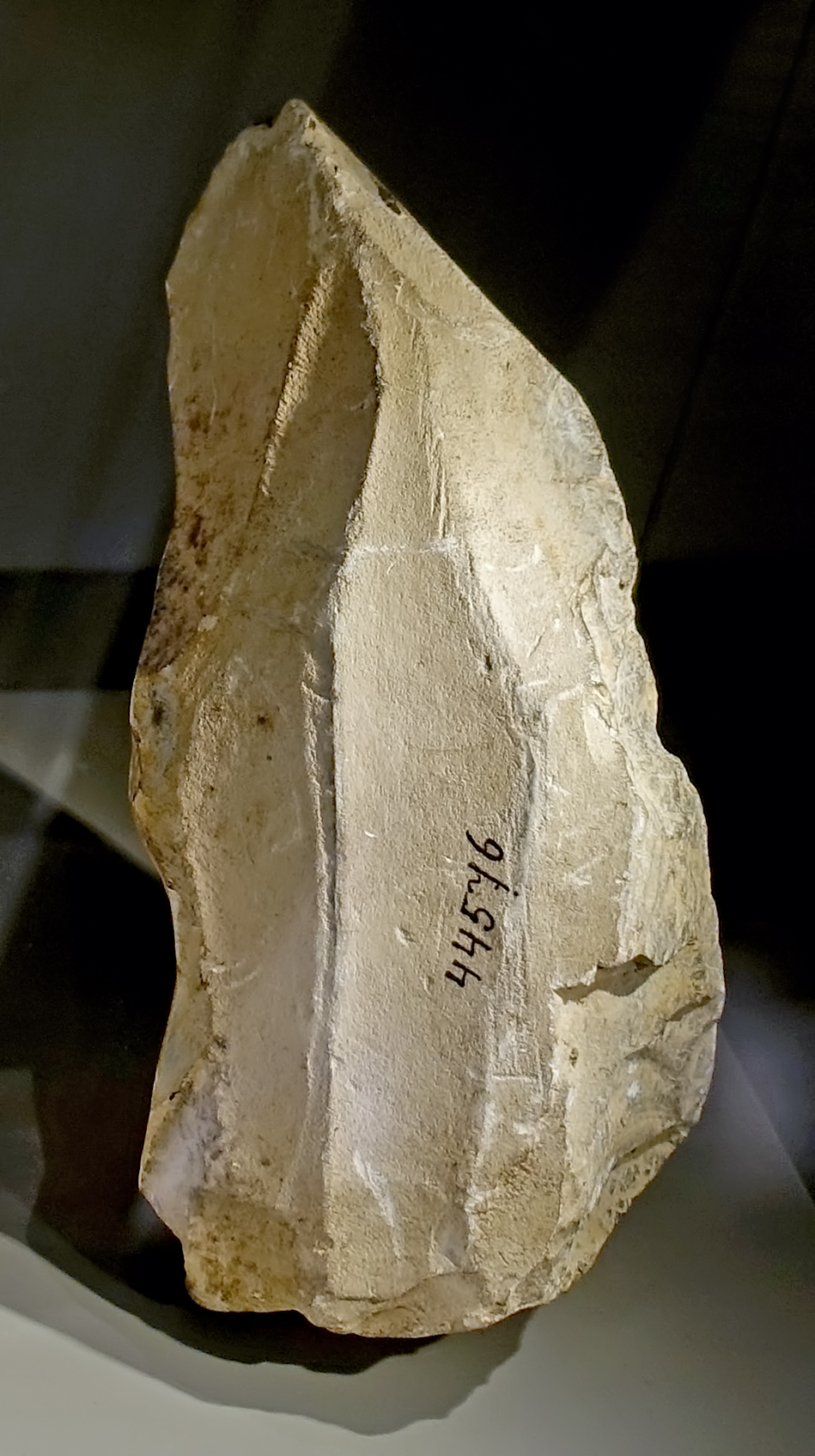
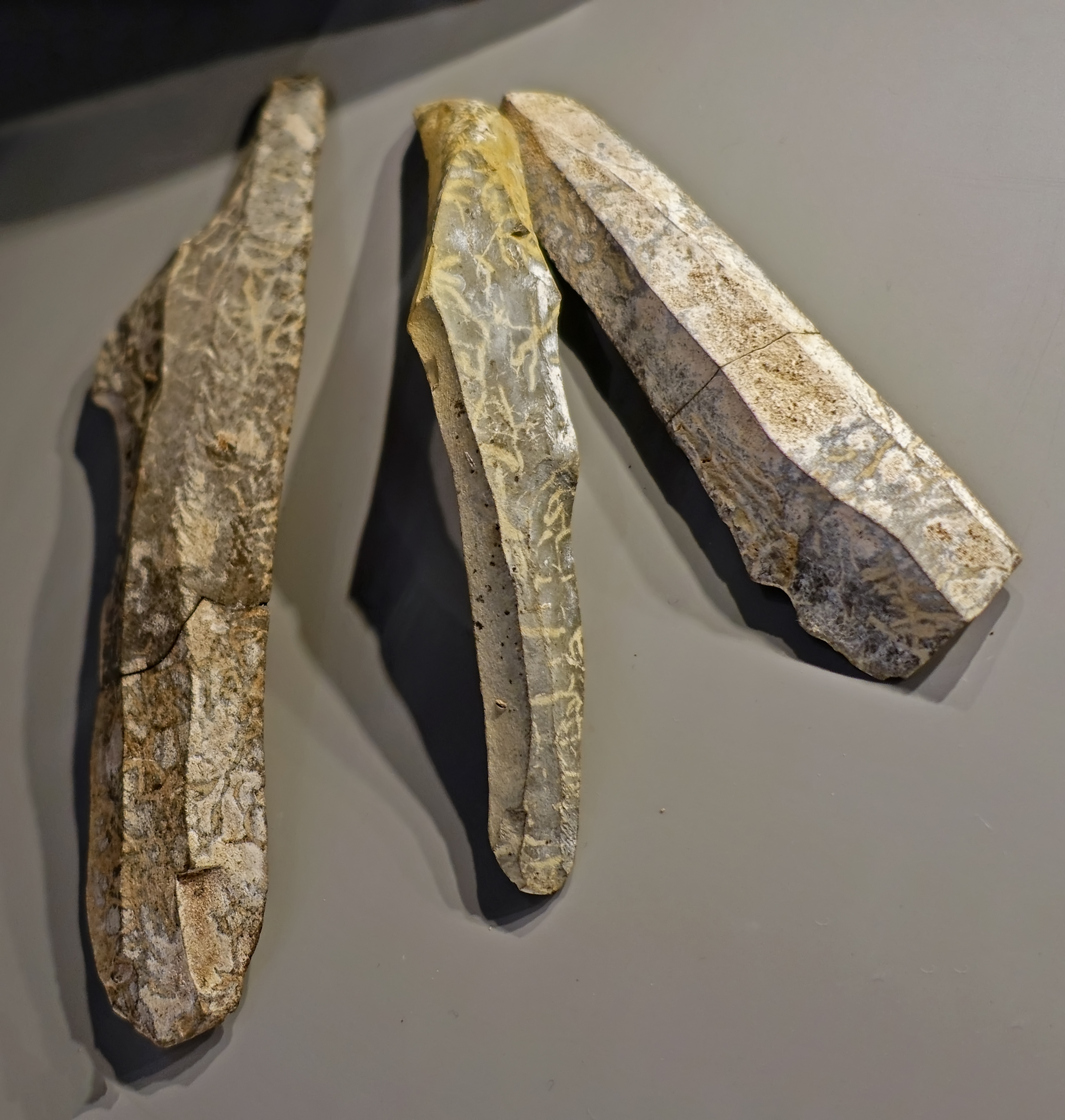
Core and blades from local flint. Willendorf, Lower Austria, Gravettian, circa 29 000 BP.
Photo: Don Hitchcock 2018
Source: Natural History Museum of Vienna
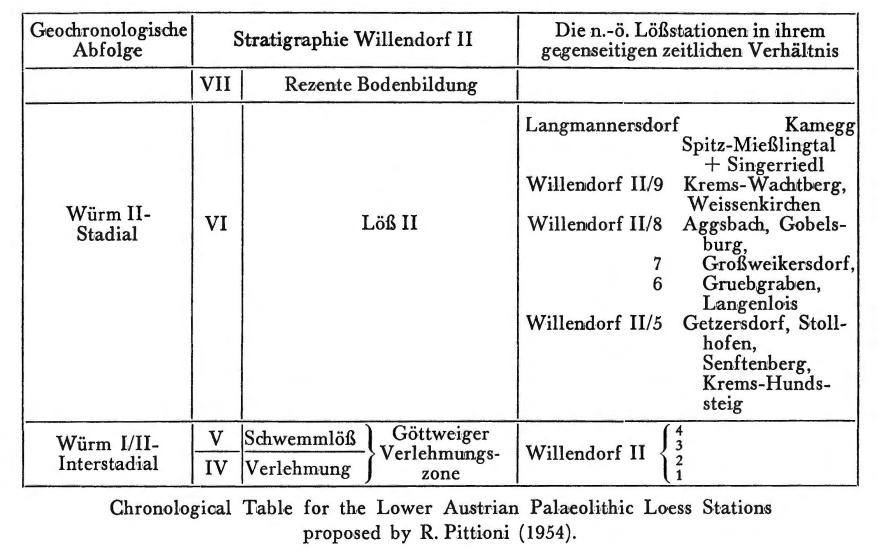
Chronological Table for the Lower Austrian Palaeolithic Loess Stations, proposed by Pittioni (1954).
Table: Pittioni (1954)
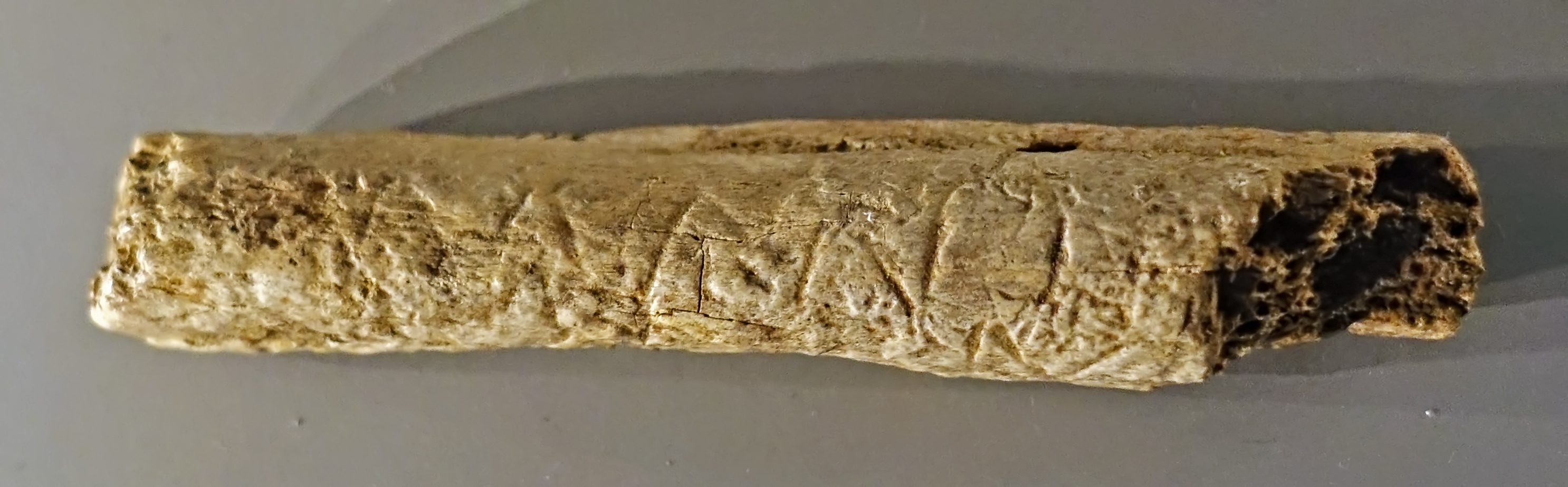
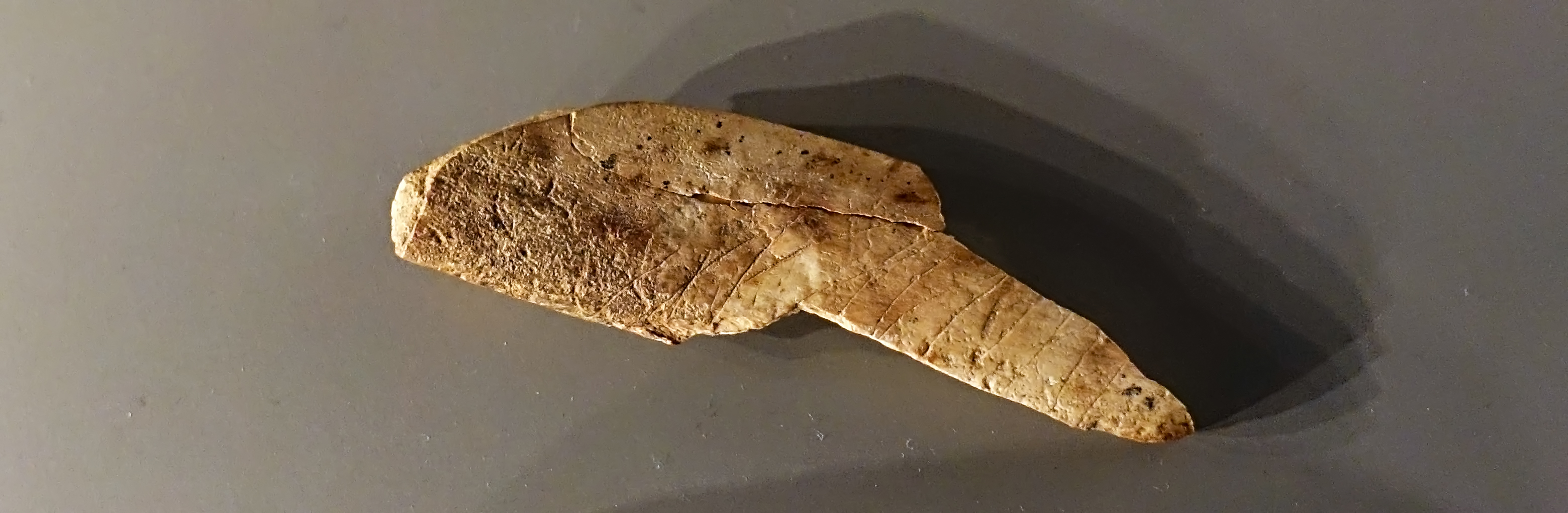
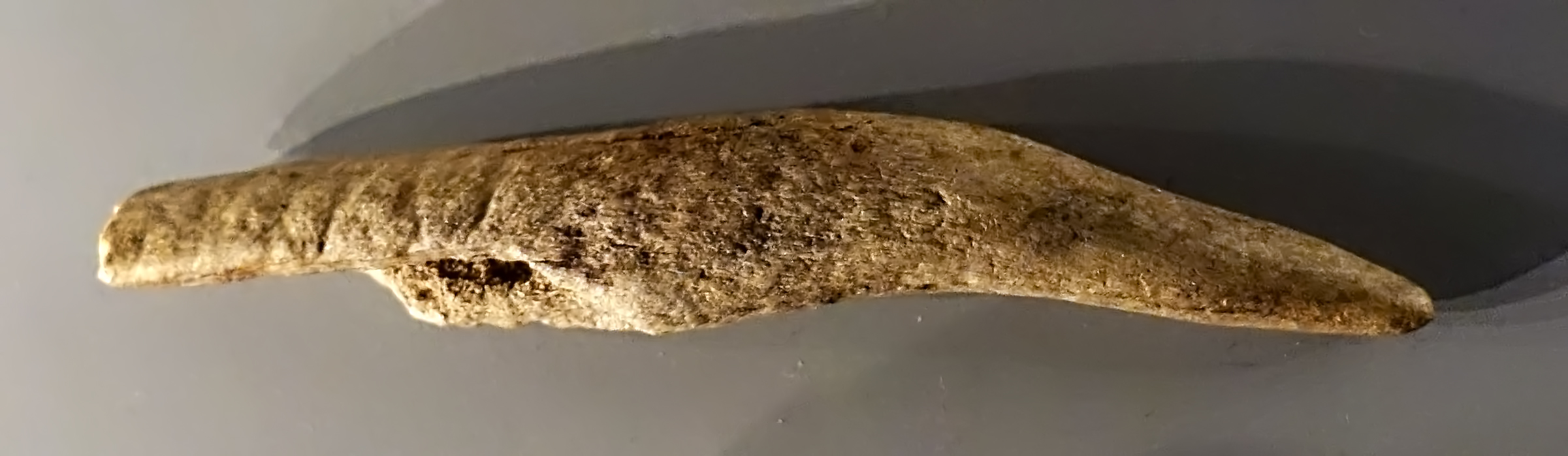
Incised bones.
Gobelsburg, Lower Austria, Gravettian, circa 35 000 BP - 27 000 BP.
Gobelsburg is about 70 km north west of Vienna.
The industries at Willendorf II/6-8 are equated with Gobelsburg, Gruebgraben and Langenlois for layers 6-7, and with Aggsbach for layer 8. Layer 9 is paralleled with KremsWachtberg and Weissenkirchen.
Photo: Don Hitchcock 2018
Source and text: Natural History Museum of Vienna
Additional text: Prüfer (1959)
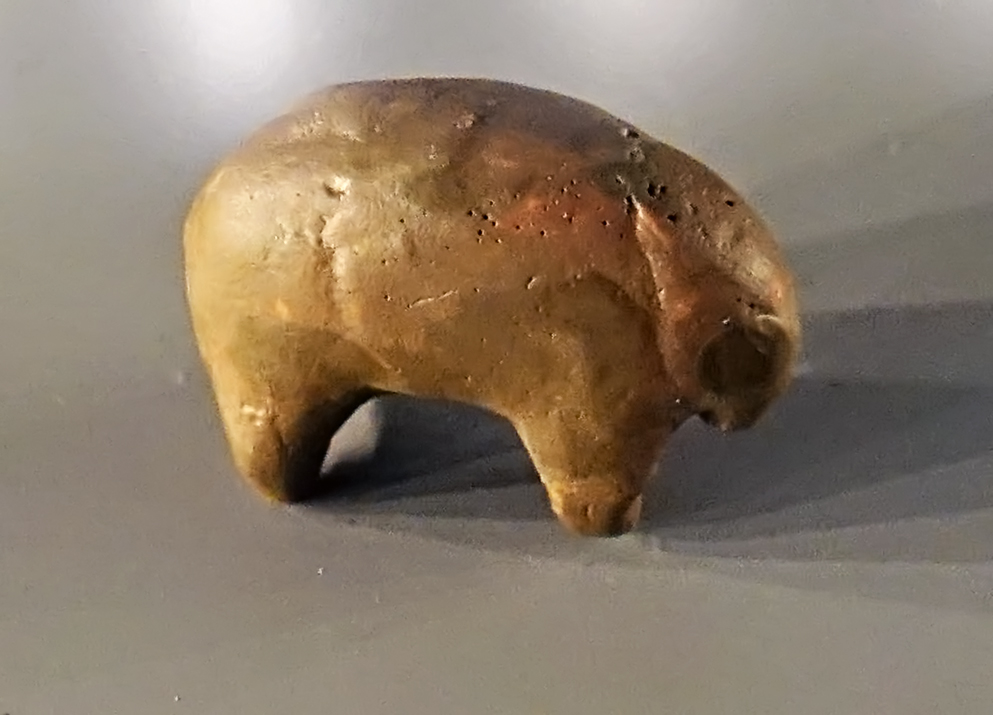
Mammoth figurine
Ceramic, Pavlov (near Dolní Věstonice), Czech Republic / Czechia, Gravettian, circa 32 000 BP.
Pavlov is about 140 km north east of Willendorf.
Photo: Don Hitchcock 2018
( this looks like a facsimile - Don )
Source and text: Natural History Museum of Vienna
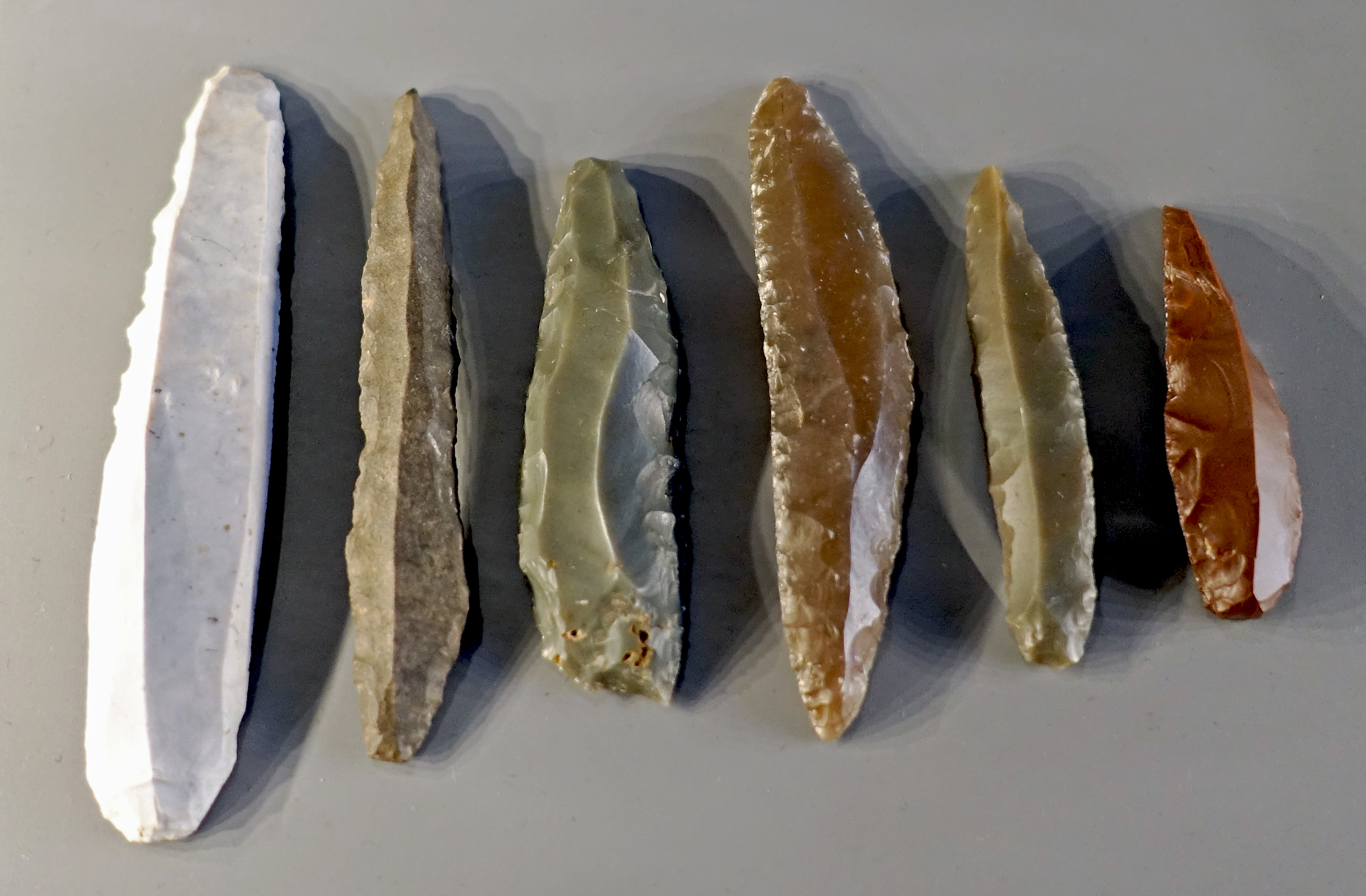
Gravettian blades from Aggsbach, five km from Willendorf, Lower Austria, circa 35 000 BP - 27 000 BP.
The period between 35 000 BP and 27 000 BP is known as the Gravettian in reference to a site in France. High quality raw material was transported over long distance and used for a range of specialised tools.
Photo: Don Hitchcock 2018
Source: Vienna Natural History Museum
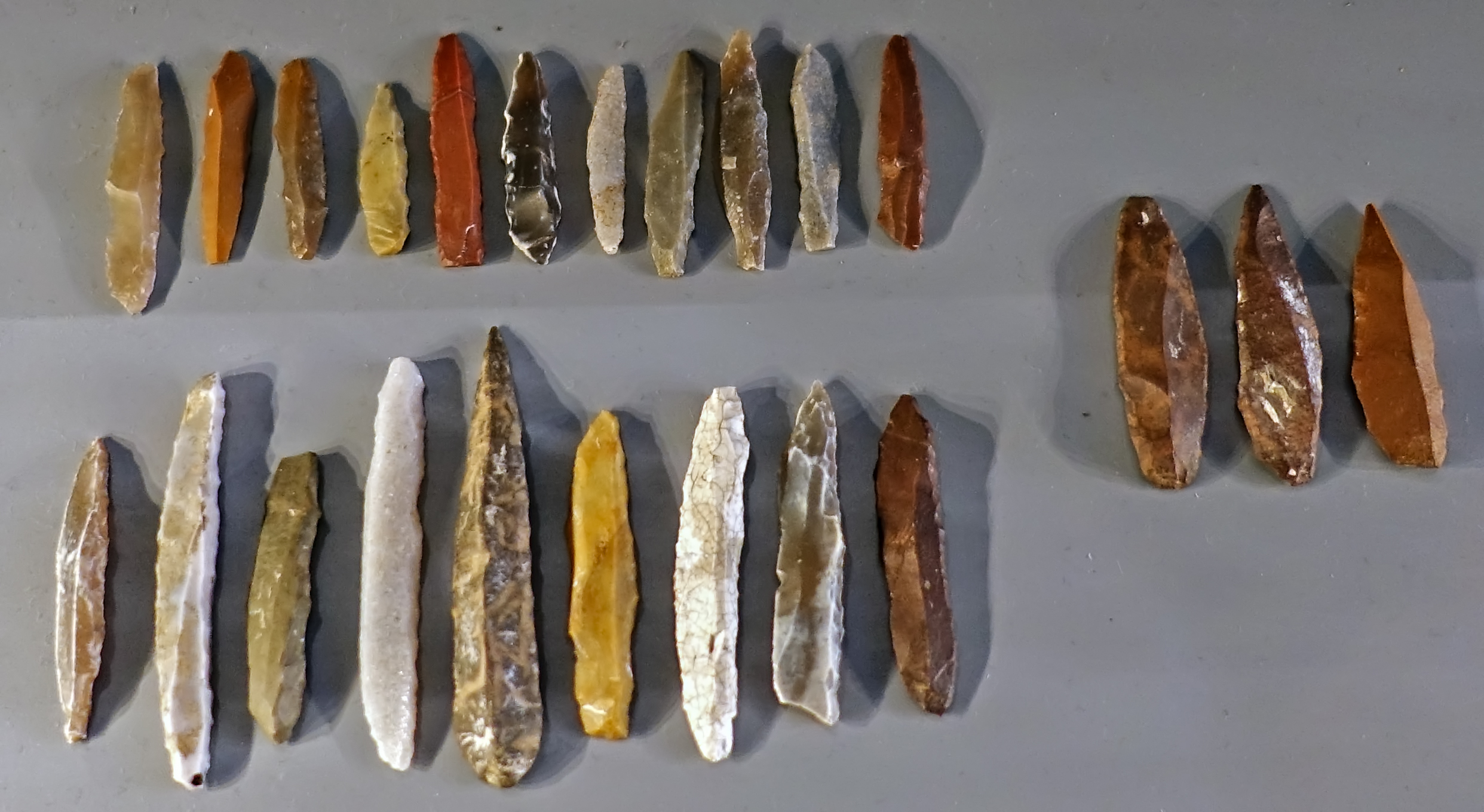
Micro Gravettian blades from Aggsbach, five km from Willendorf, Lower Austria, circa 35 000 BP - 27 000 BP.
Thin Gravettian points were special blades for spears and knives.
Photo: Don Hitchcock 2018
Source: Vienna Natural History Museum
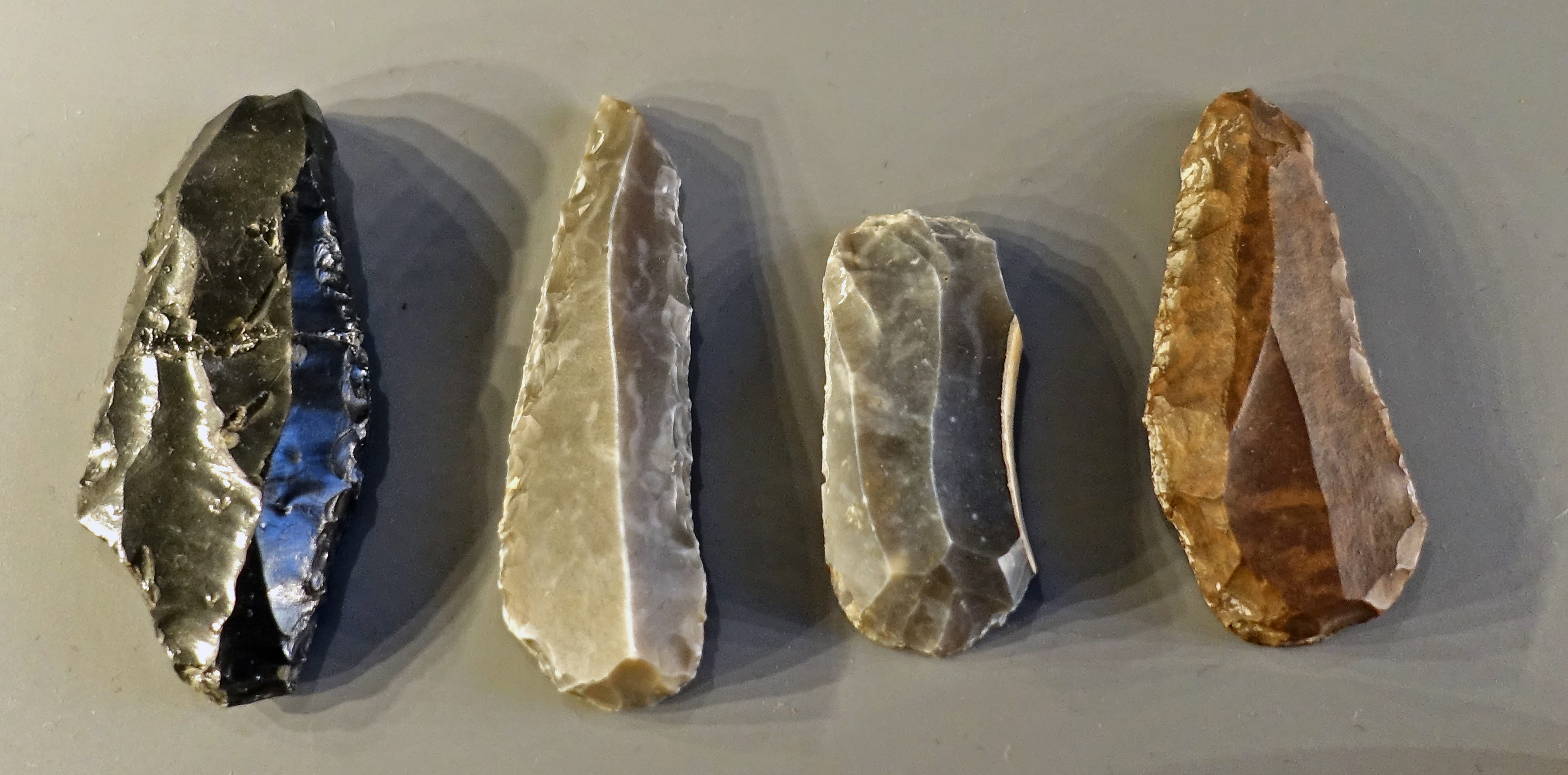
Blades from Aggsbach, circa 35 000 BP - 27 000 BP. The blade on the left is of obsidian.
Photo: Don Hitchcock 2018
Source: Vienna Natural History Museum
Fossil Dentalium shells from Aggsbach, used as decoration on clothing and strung on necklaces, circa 35 000 BP - 27 000 BP.
Photo: Don Hitchcock 2018
Source: Vienna Natural History Museum
The Venusium - A museum in Willendorf devoted to the Venus of Willendorf and associated material.
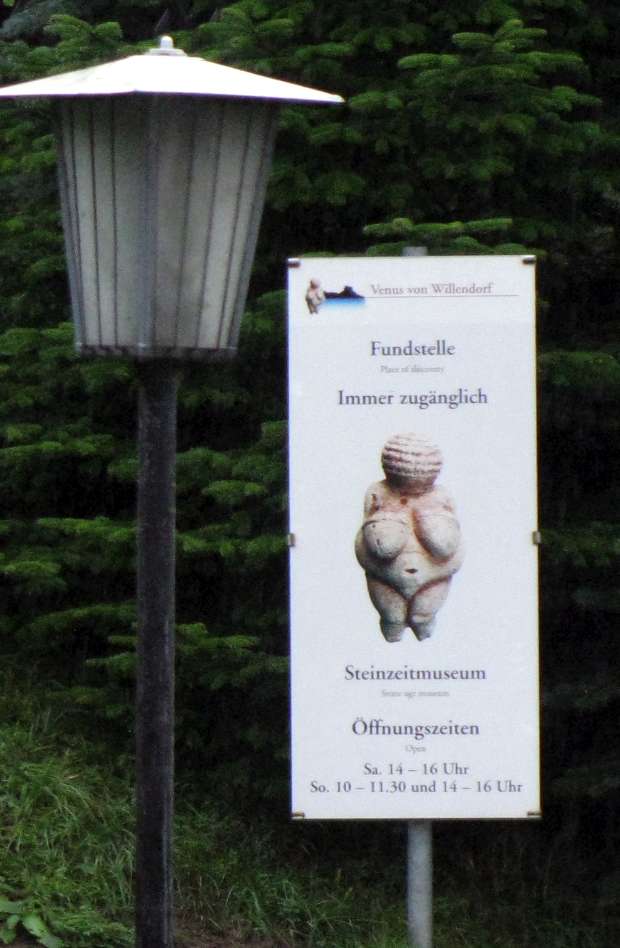
On a cold, wet and windy Monday afternoon in September 2008, my wife and I arrived on our bicycles, looking like drowned rats, at a Pensione in Willendorf. We were on a trip from the source of the Danube in the Black Forest of Germany, cycling along the banks of the Danube to Budapest in Hungary. After warming up with a hot shower, I looked out the window and saw this sign, and my heart sank - the museum is only open for a few hours each weekend.
However, we talked to our hosts, and they arranged for the curator of the museum to open it especially for us, for which we were very grateful.
Photo: Don Hitchcock 2008
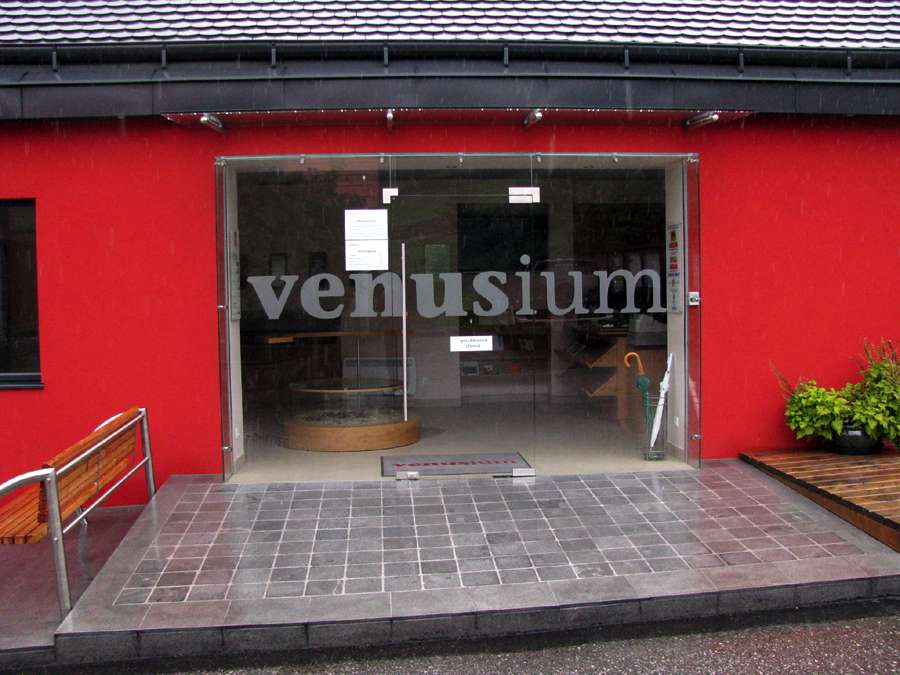
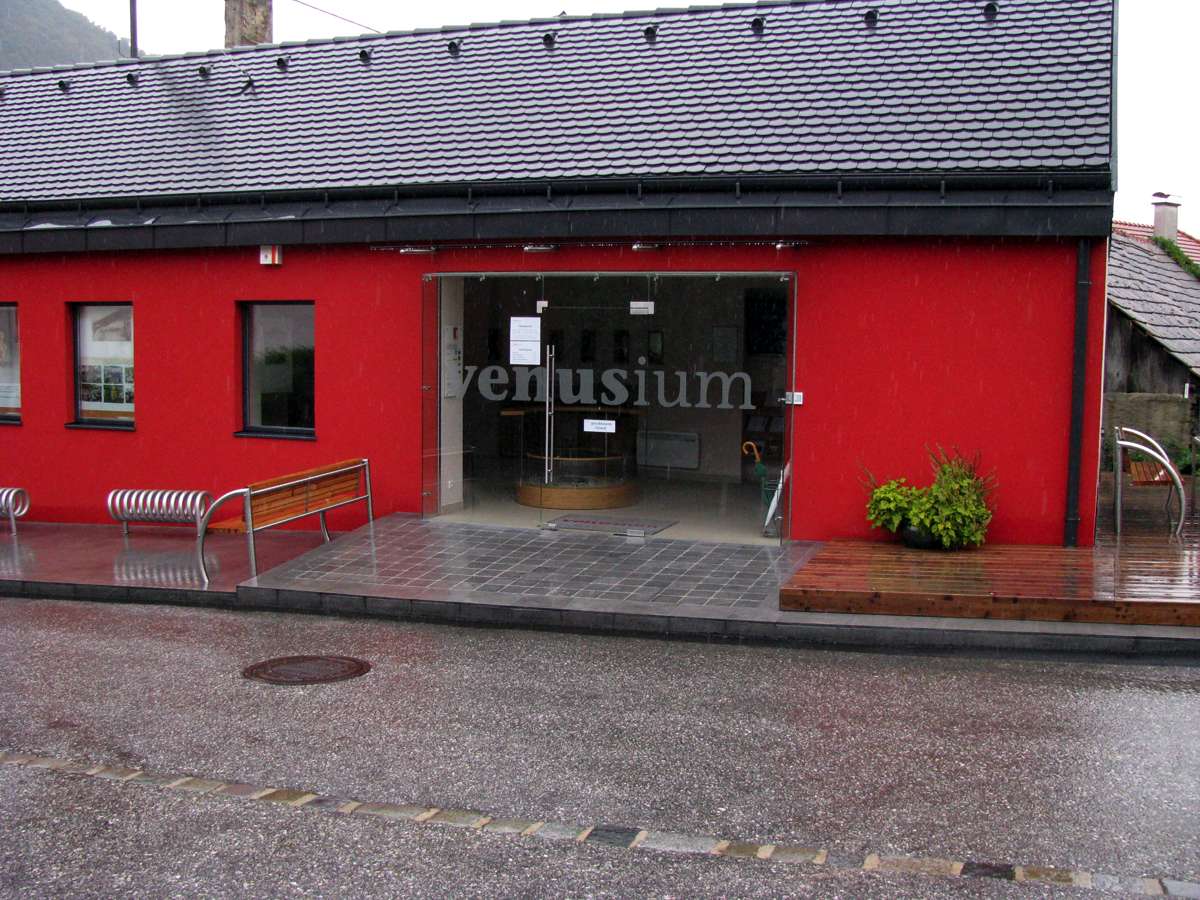
The Museum is fairly new, and beautifully organised, with excellent displays.
Photo: Don Hitchcock 2008
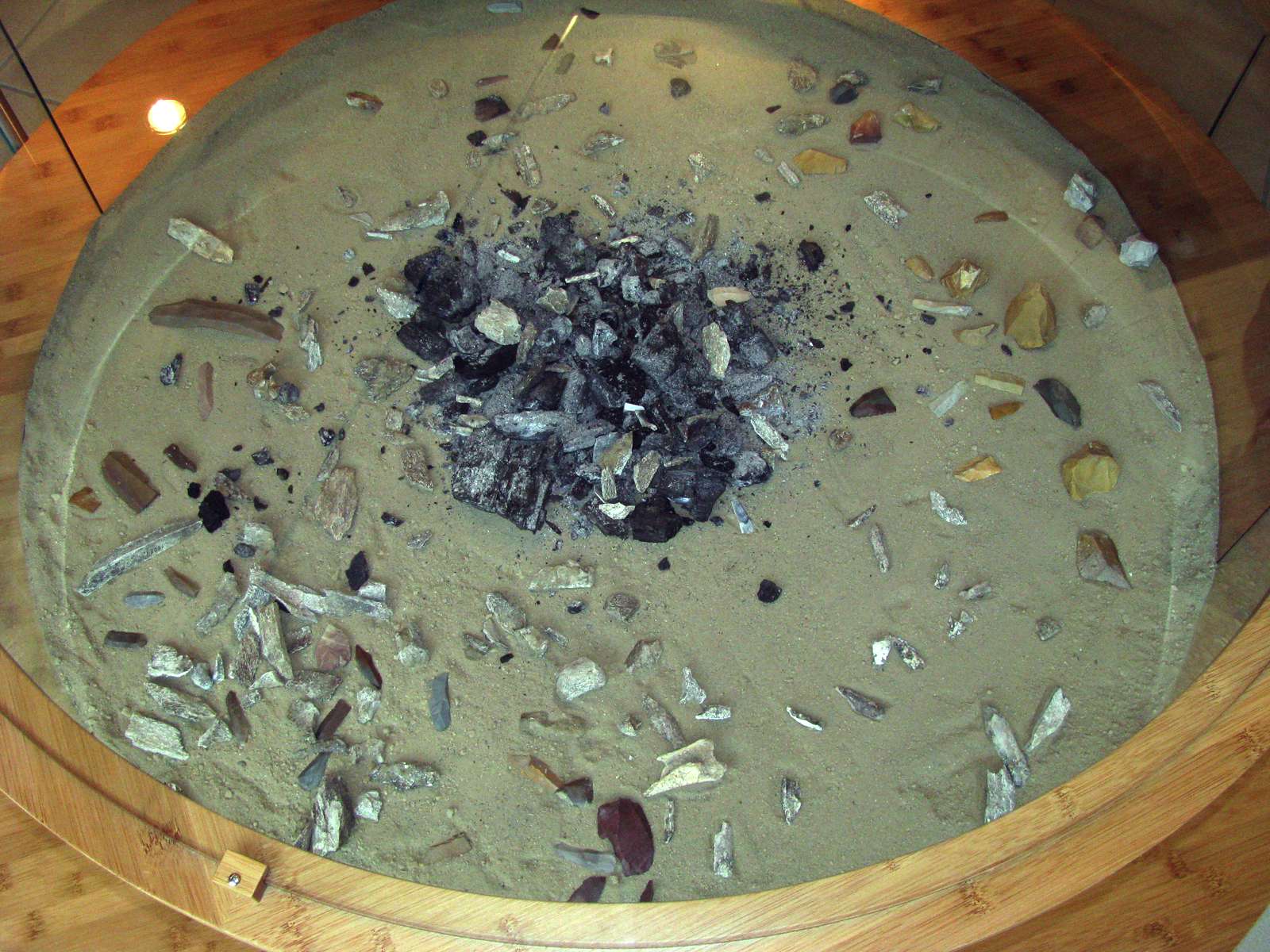

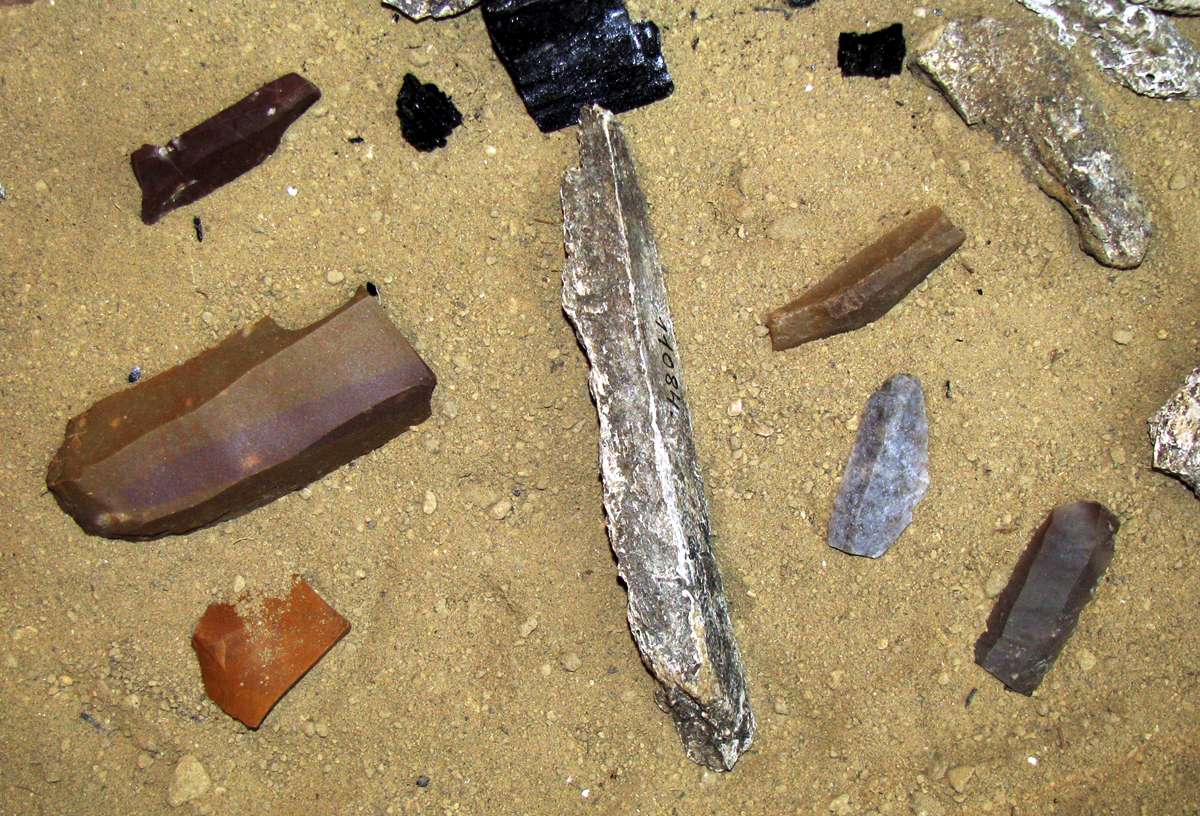
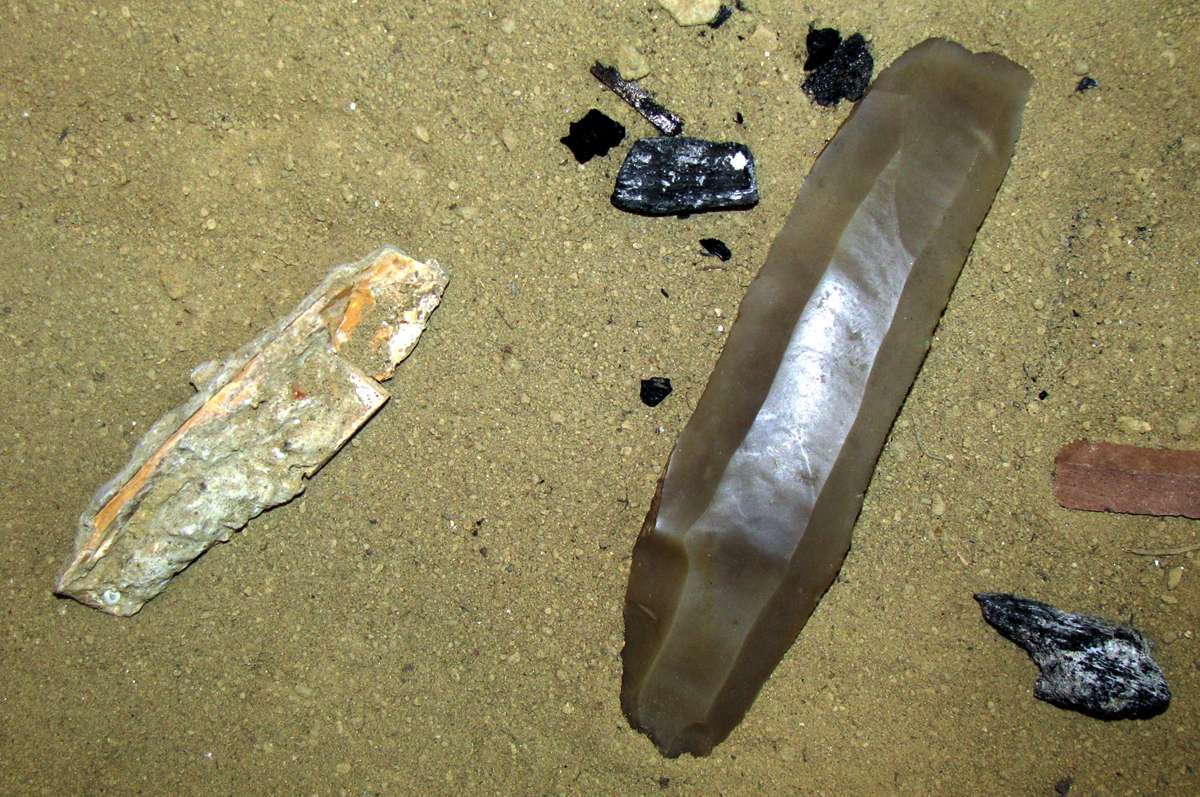
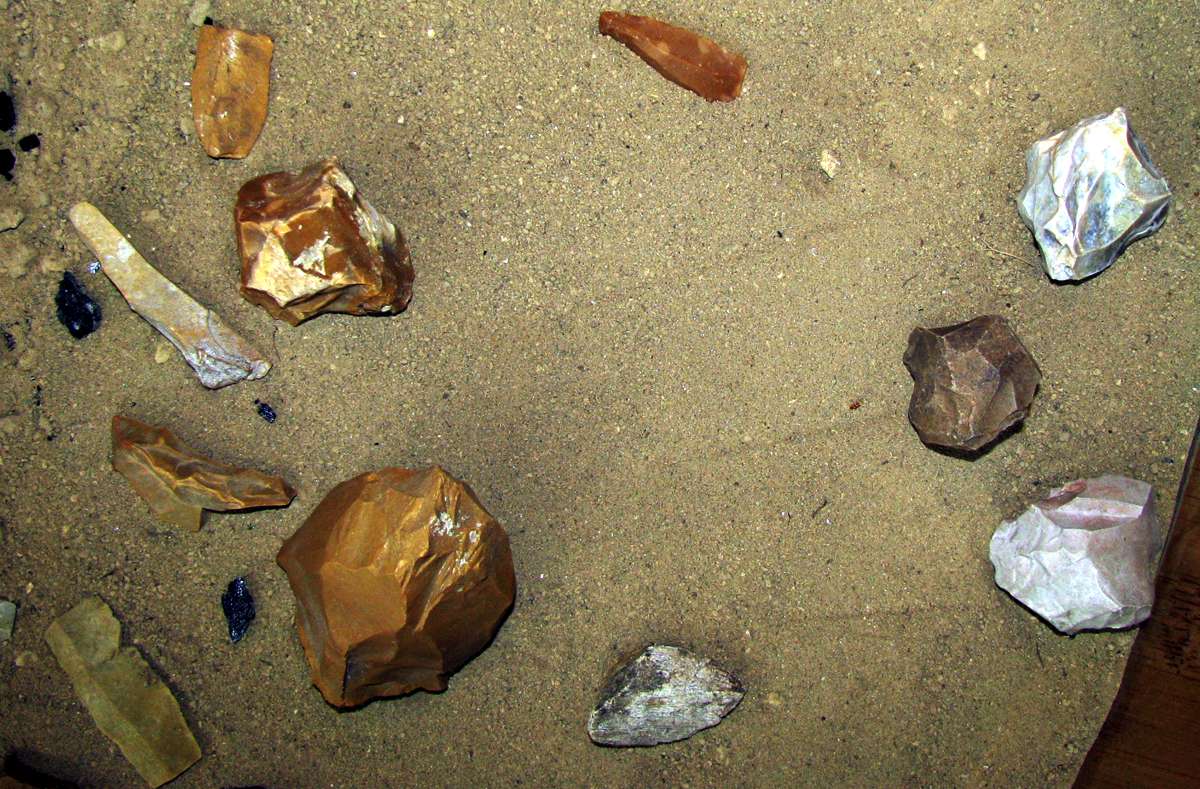

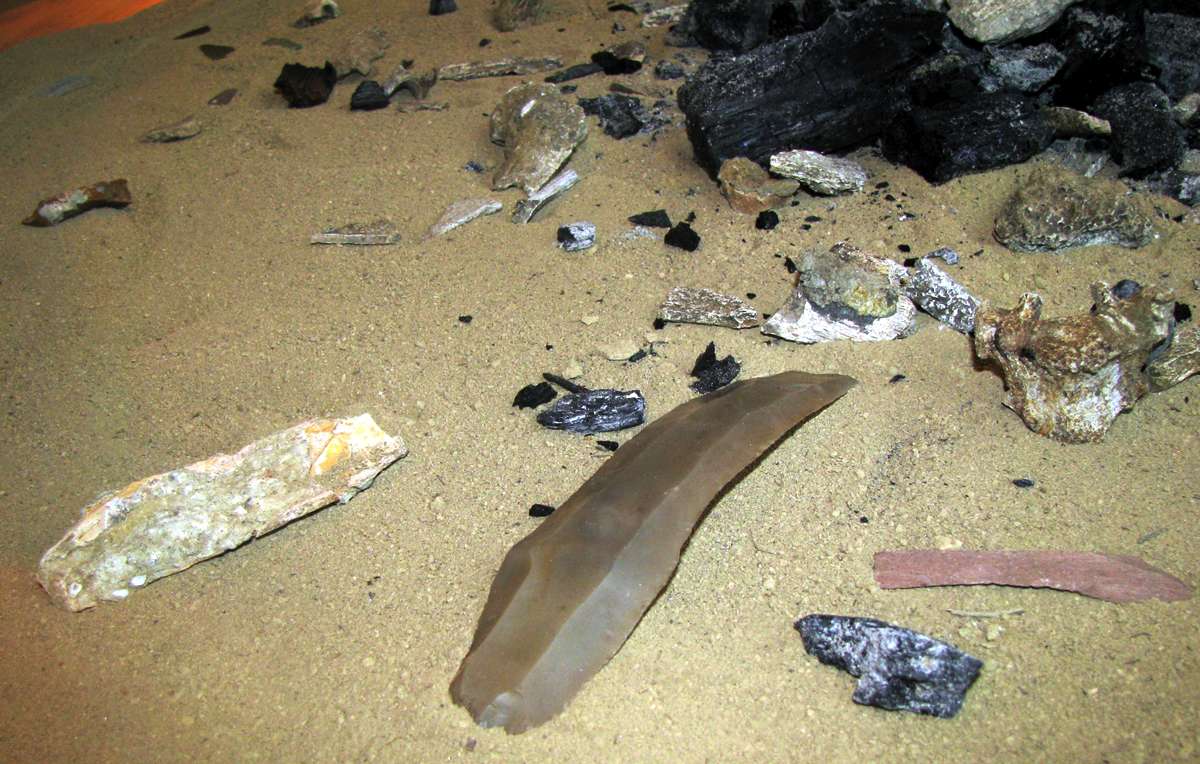
This display has been set up to recreate the hearth and materials near where the Venus was discovered.
Photo: Don Hitchcock 2008
Source: Venusium, the museum at Willendorf.
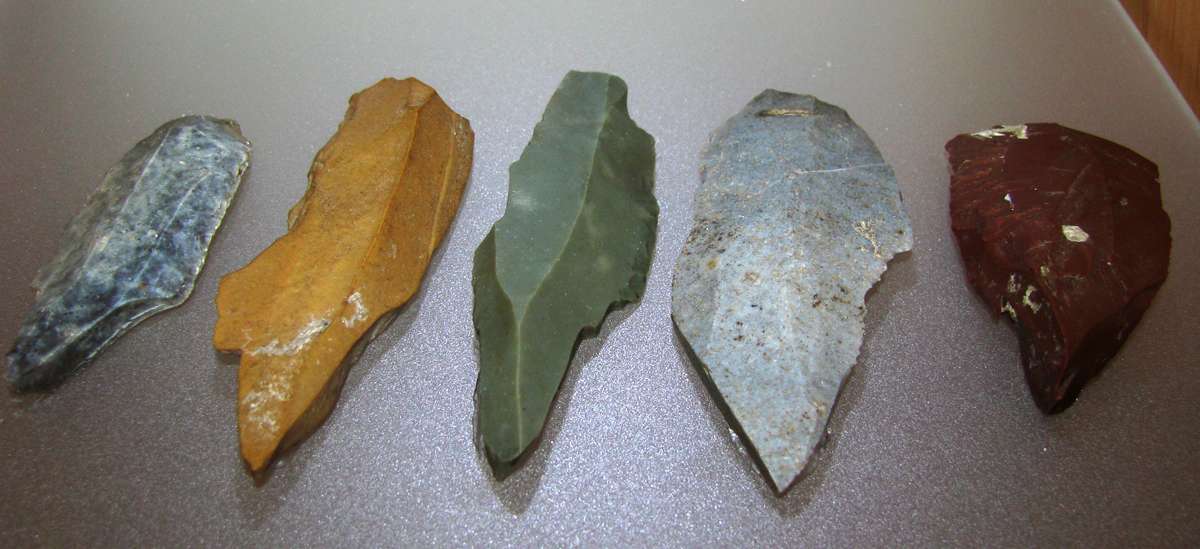
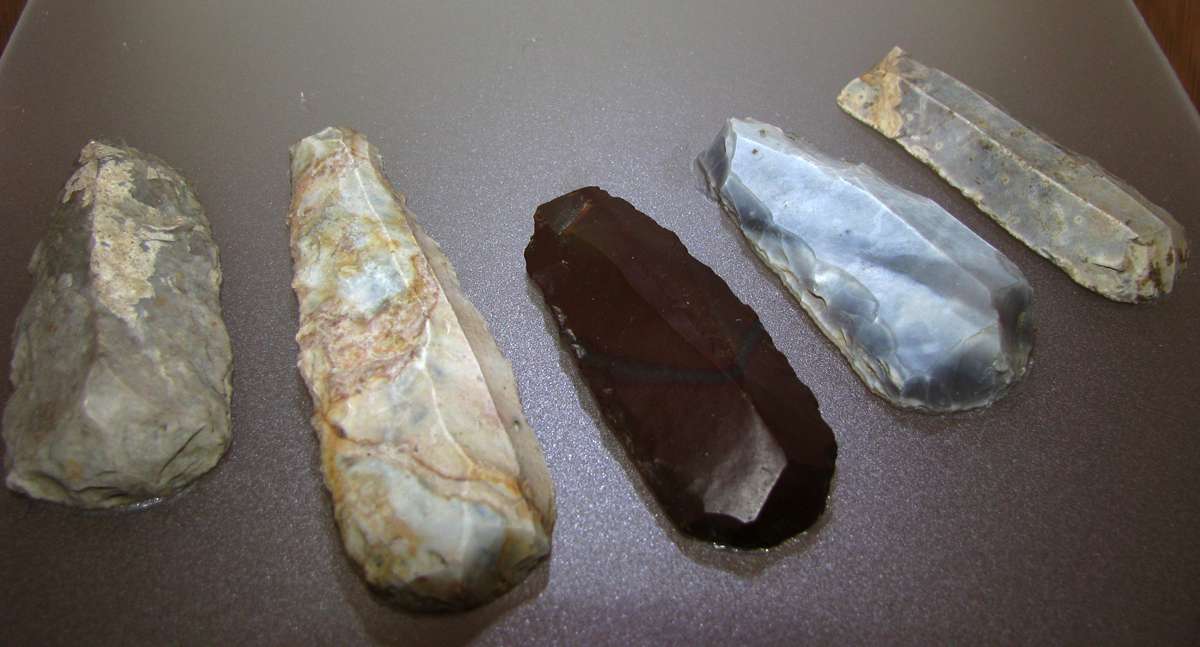
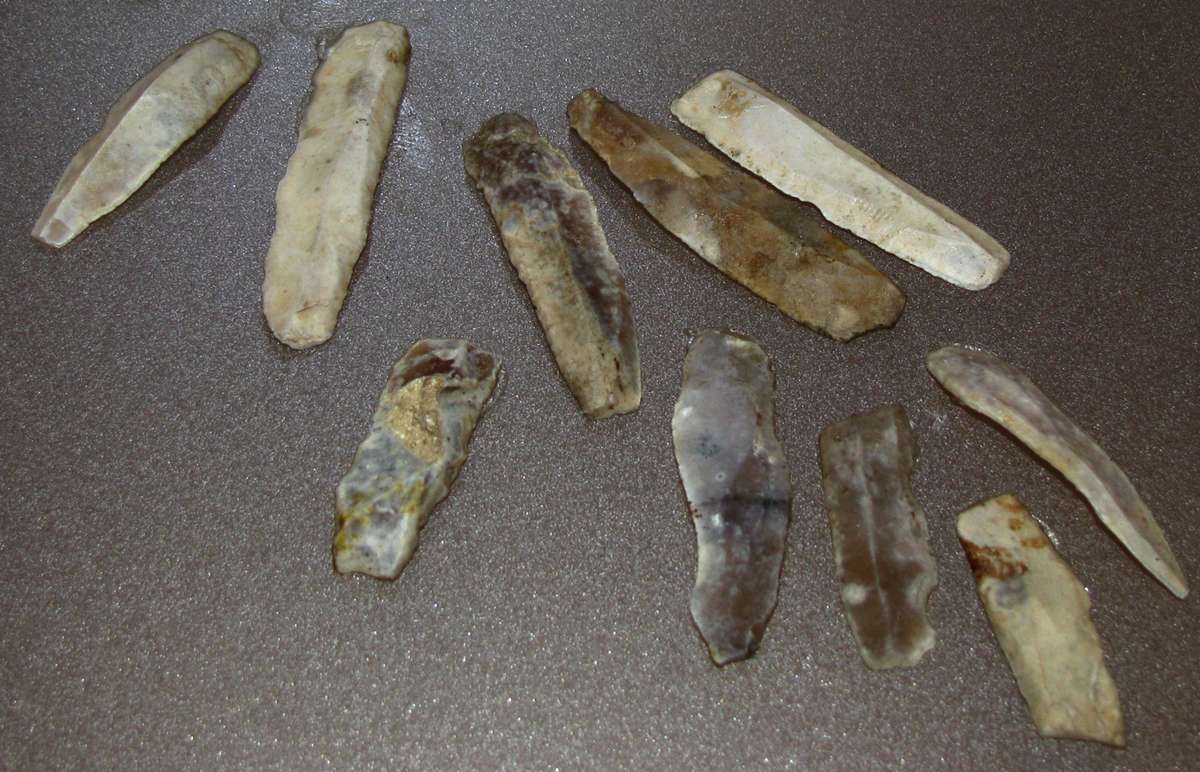
These are some of the huge number of flint tools found at the site.
Photo: Don Hitchcock 2008
Source: Venusium, the museum at Willendorf.

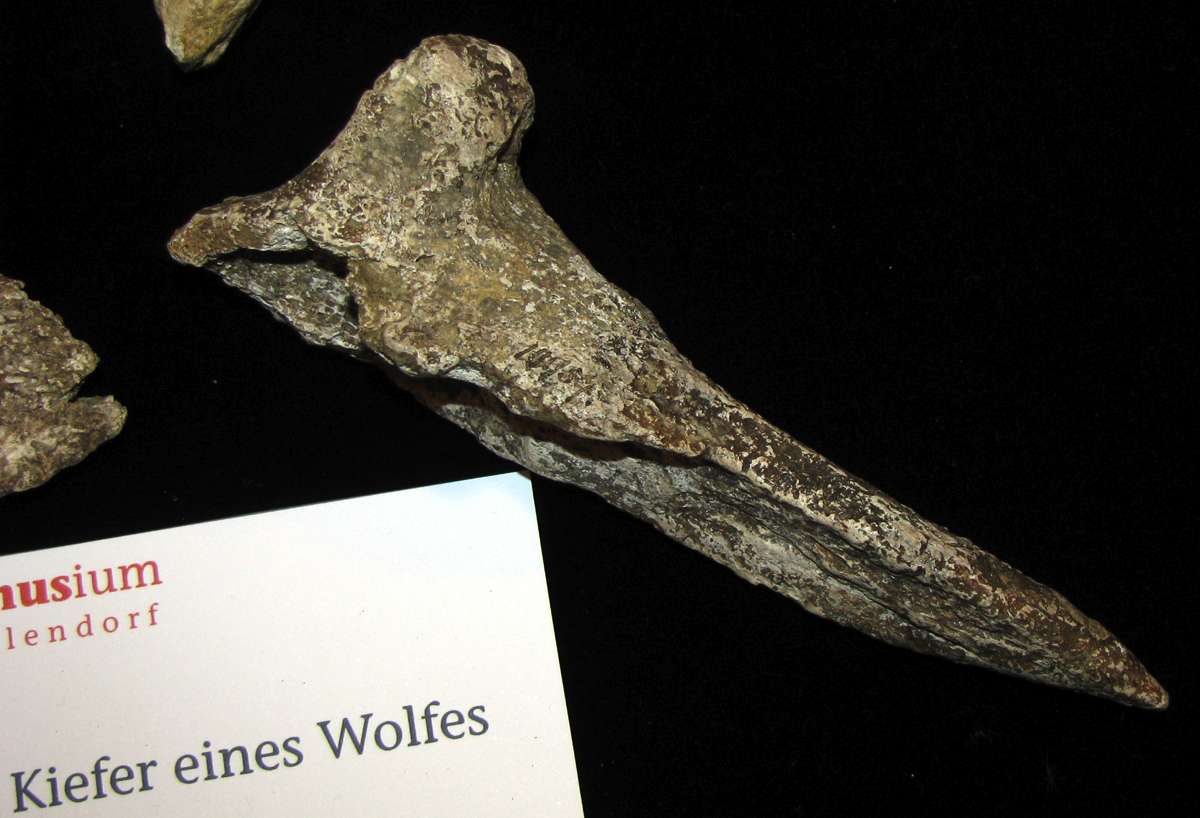
Deer antler modified for human use, and the jaw of a wolf.
Photo: Don Hitchcock 2008
Source: Venusium, the museum at Willendorf.
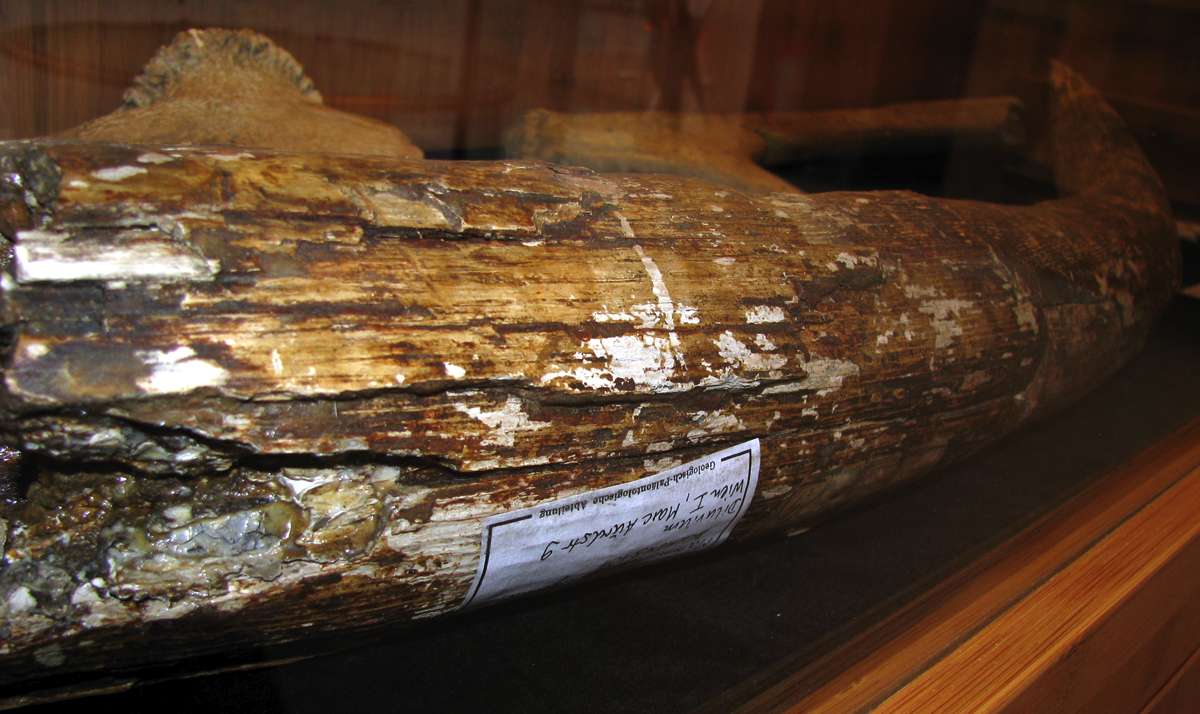
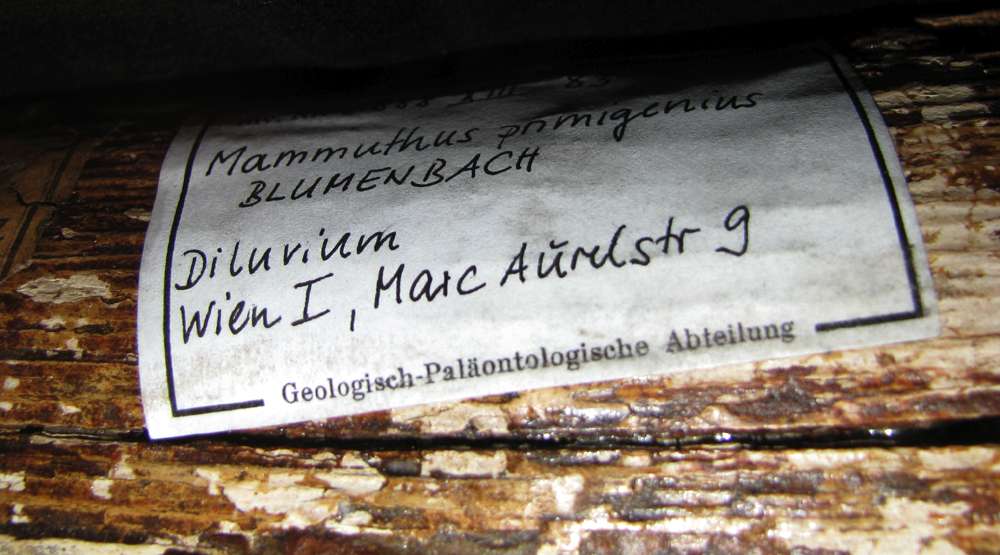
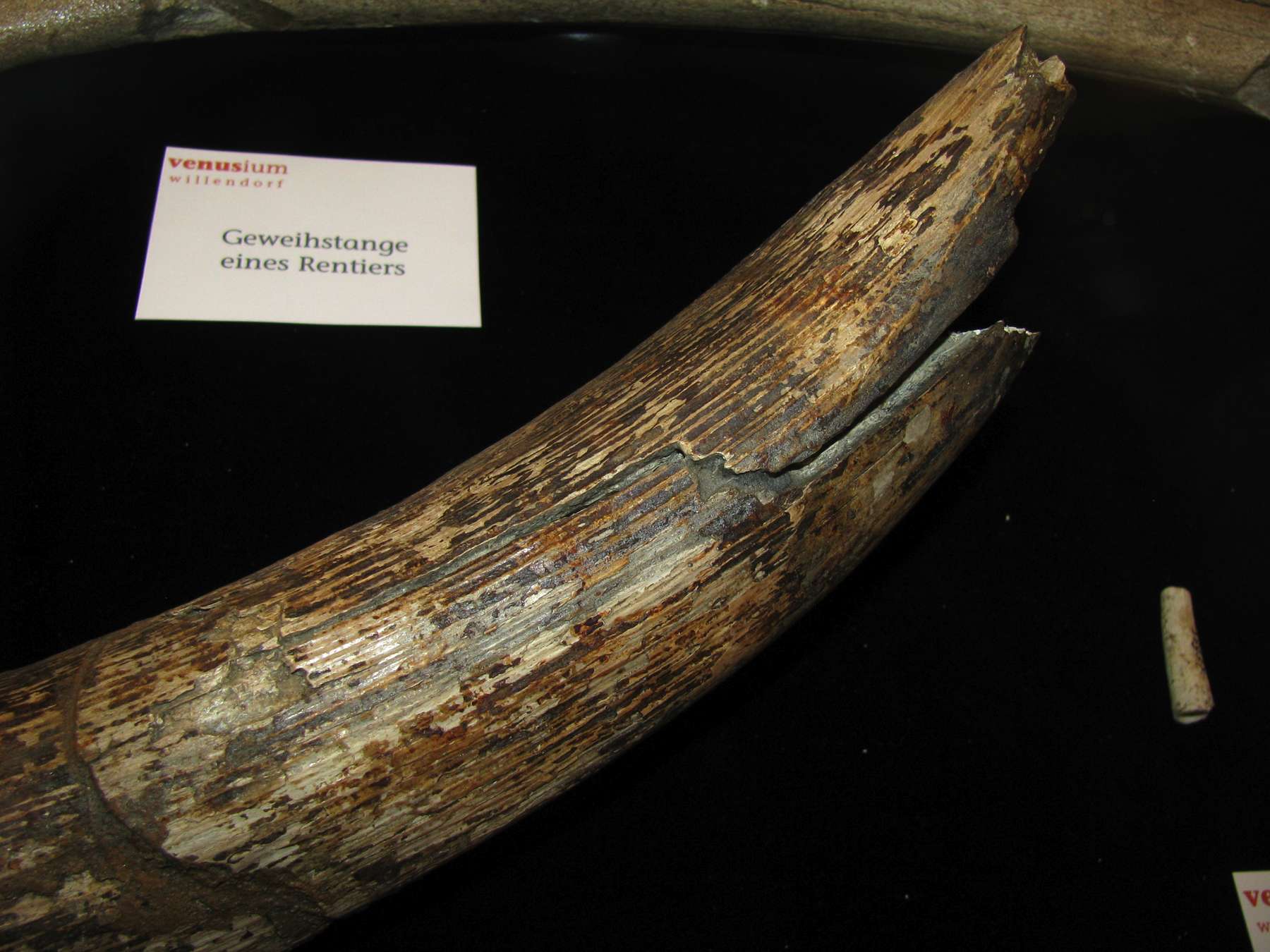
Mammoth tusk.
Photo: Don Hitchcock 2008
Source: Venusium, the museum at Willendorf.
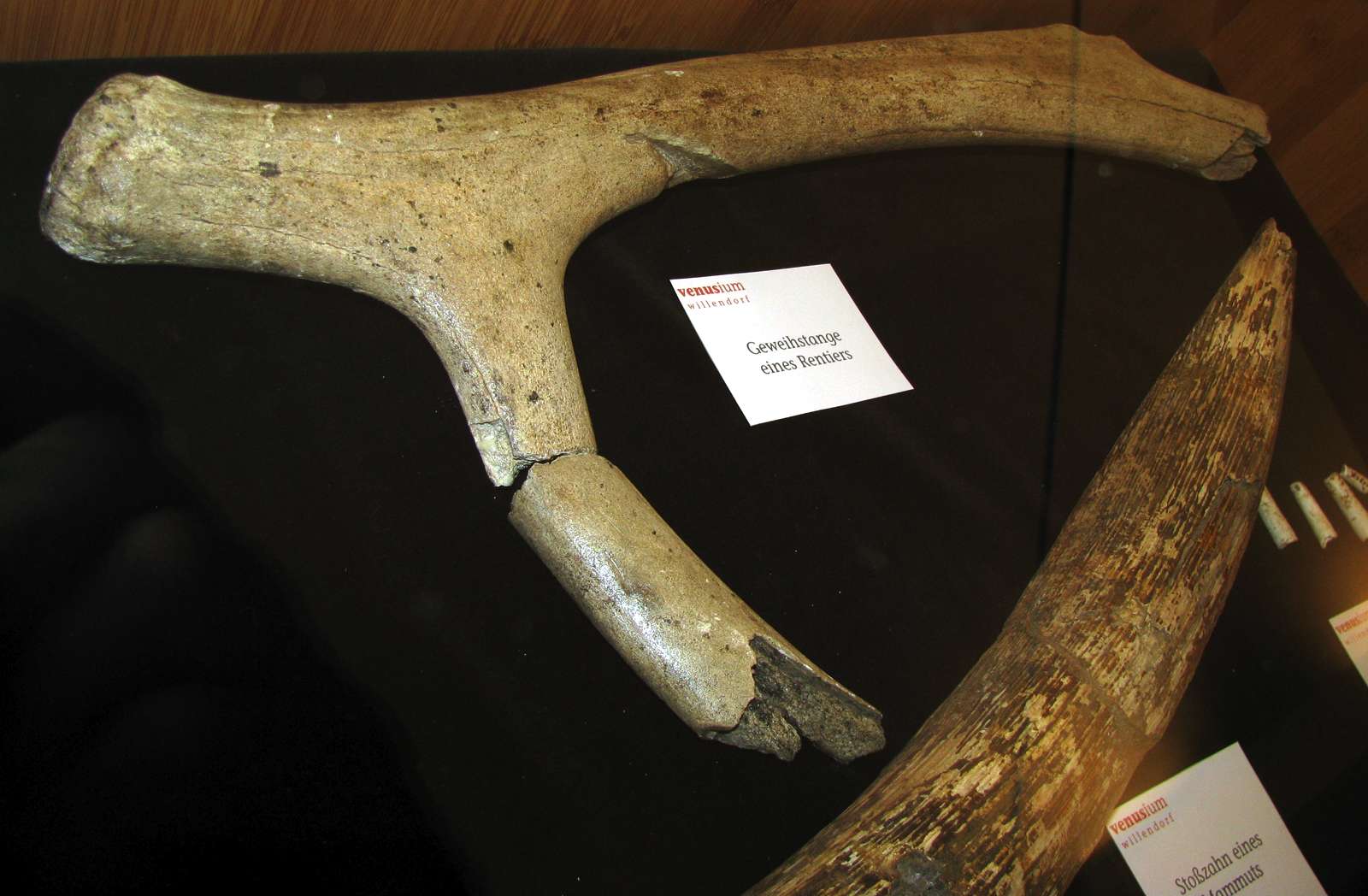
Reindeer antler
Photo: Don Hitchcock 2008
Source: Venusium, the museum at Willendorf.
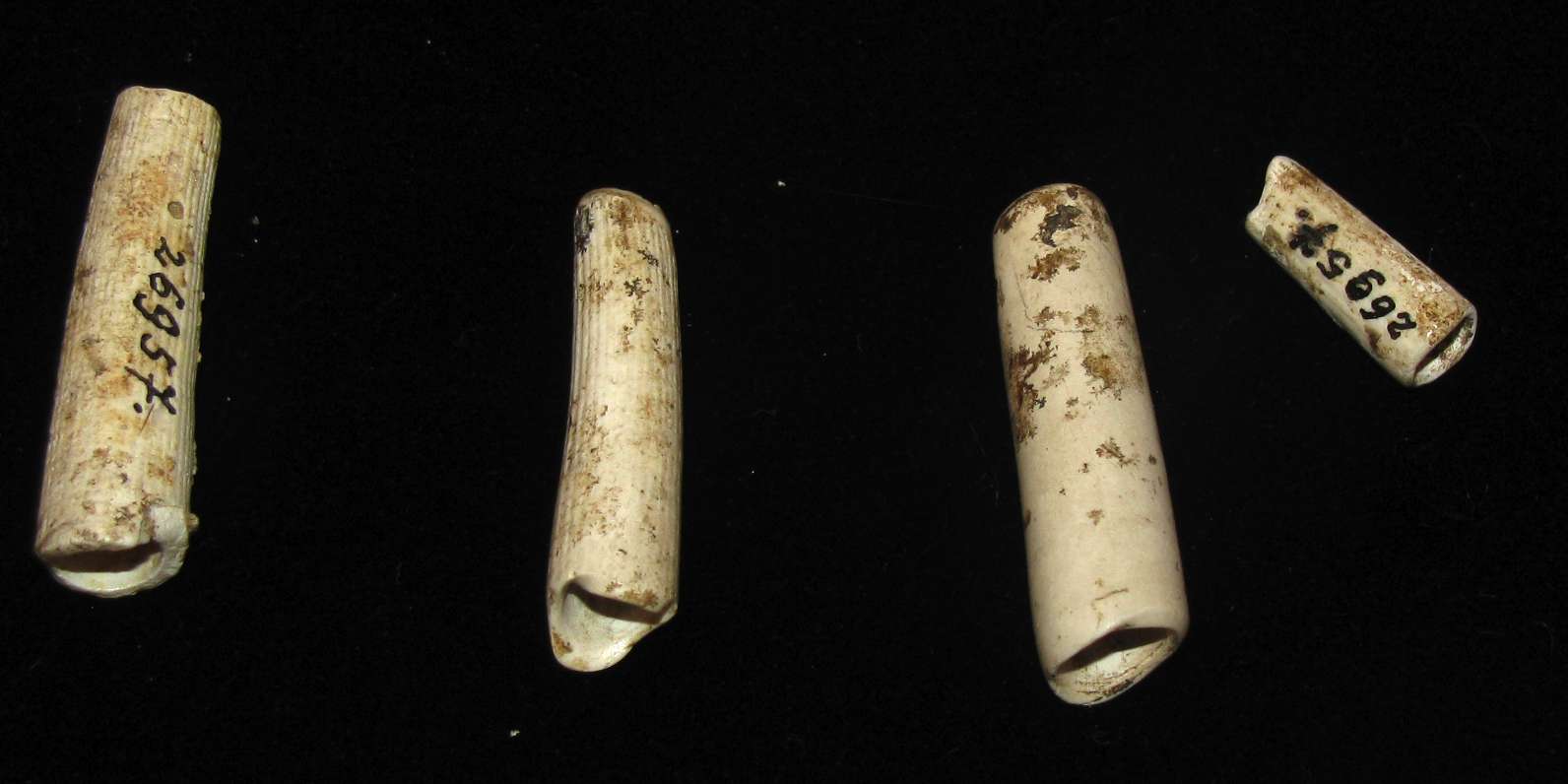
Dentalium shells used as jewellery
Photo: Don Hitchcock 2008
Source: Venusium, the museum at Willendorf.
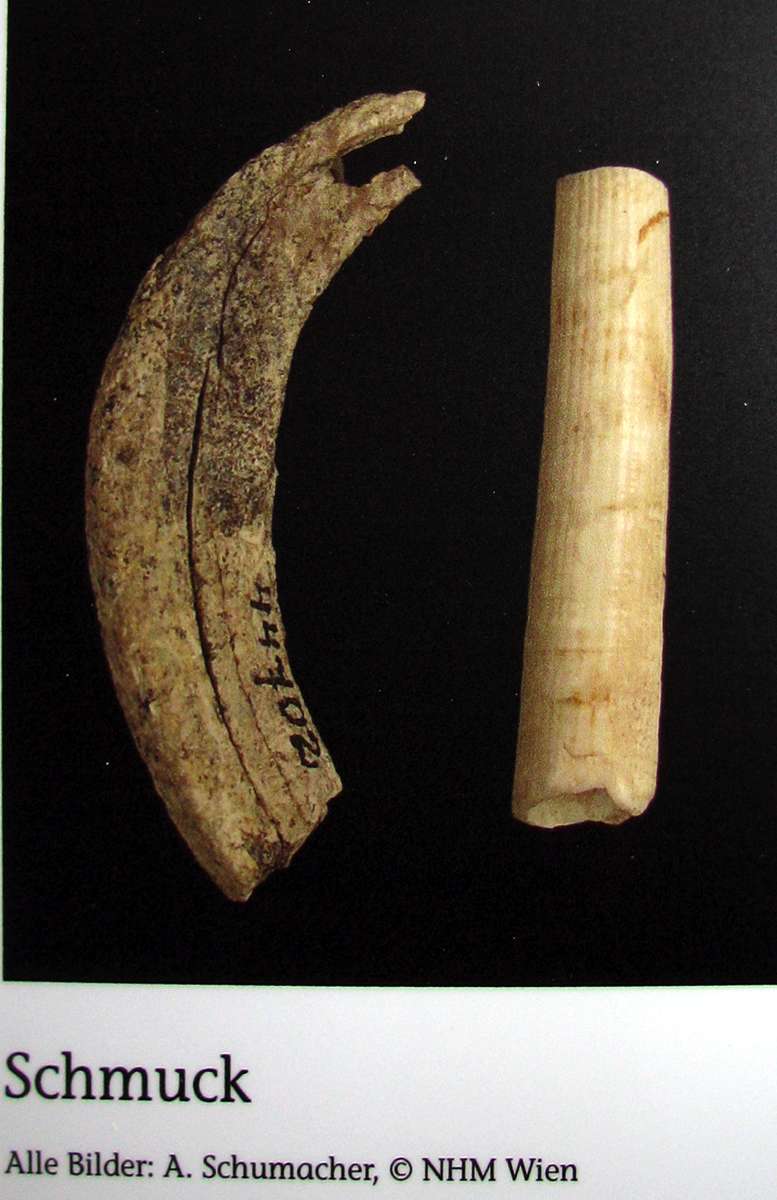
Bone and a Dentalium shell used as jewellery
Rephotography: Don Hitchcock 2008
Source: Venusium, the museum at Willendorf. Photographer A Schumacher, © NHM Wien
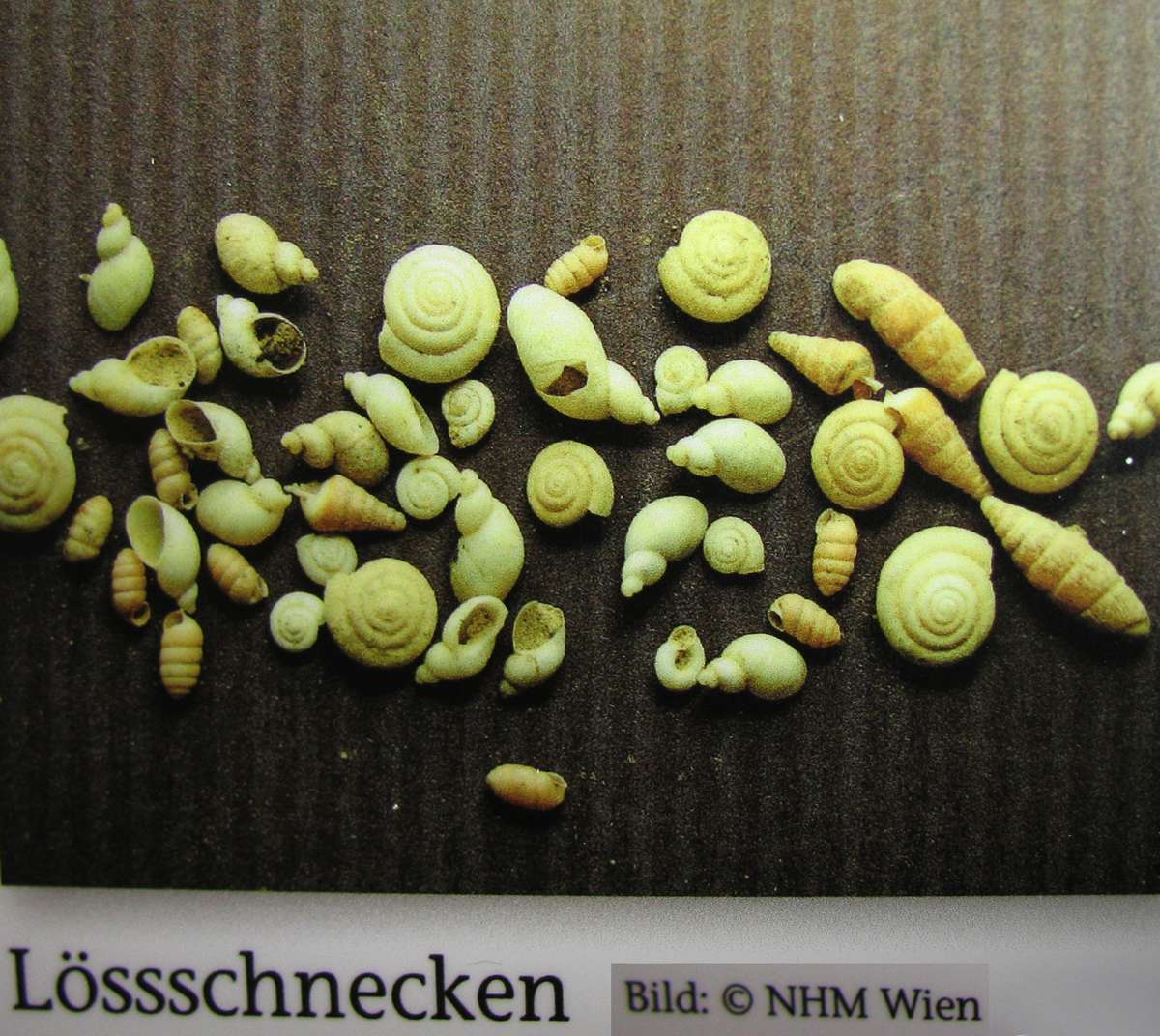
Individual gastropod shells found at the site.
Rephotography: Don Hitchcock 2008
Source: Venusium, the museum at Willendorf. © NHM Wien

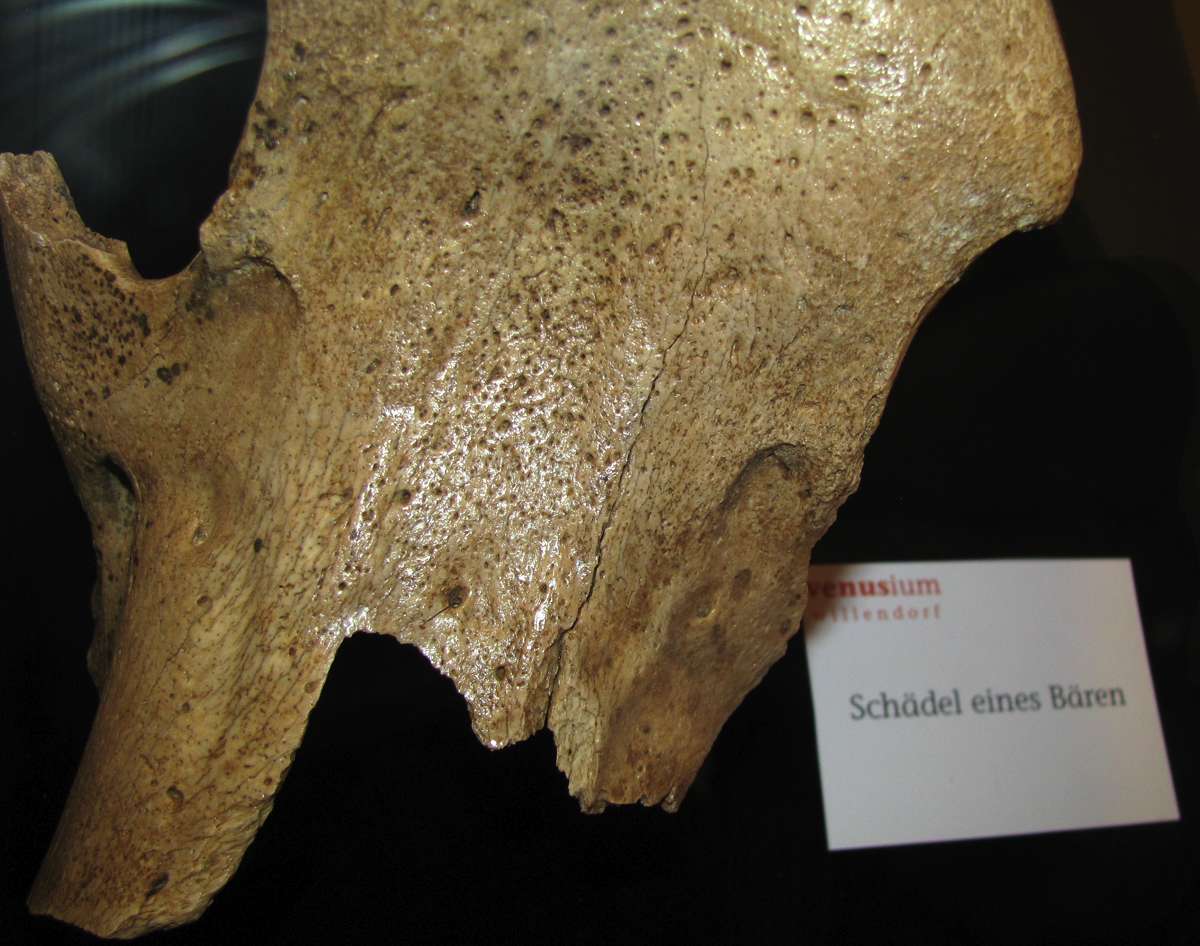
Bear Skull
Photo: Don Hitchcock 2008
Source: Venusium, the museum at Willendorf.
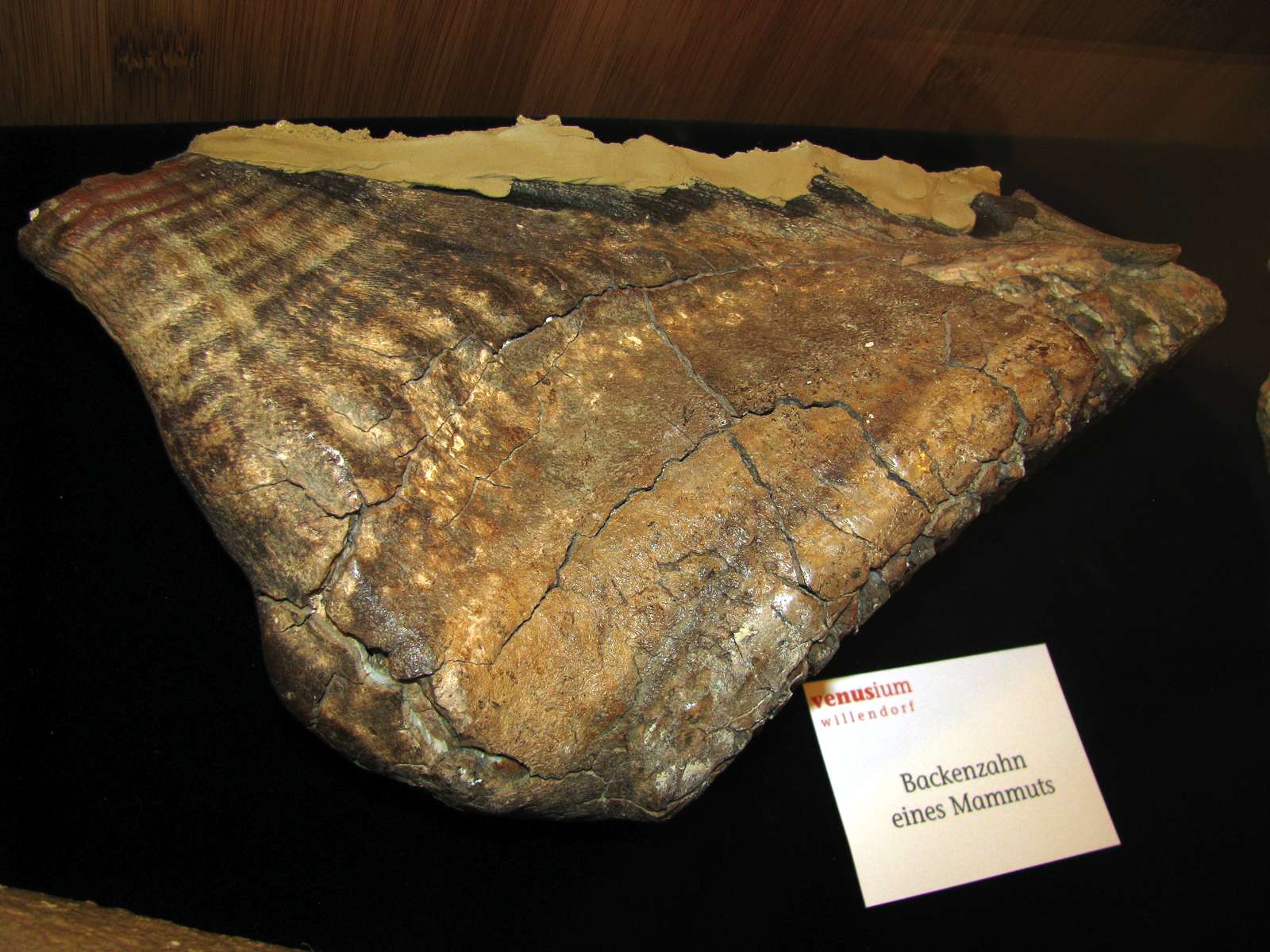
Mammoth molar.
Photo: Don Hitchcock 2008
Source: Venusium, the museum at Willendorf.
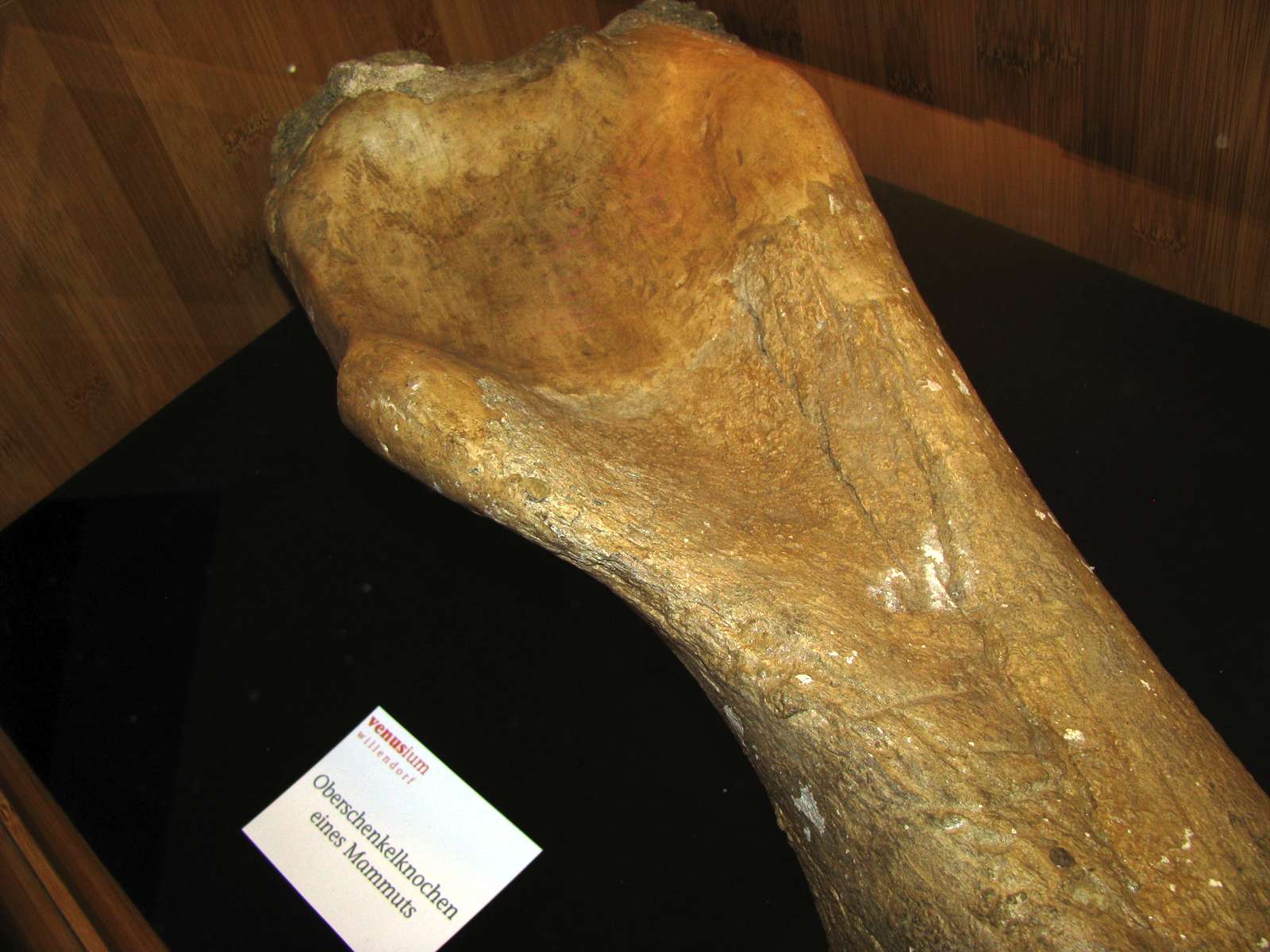
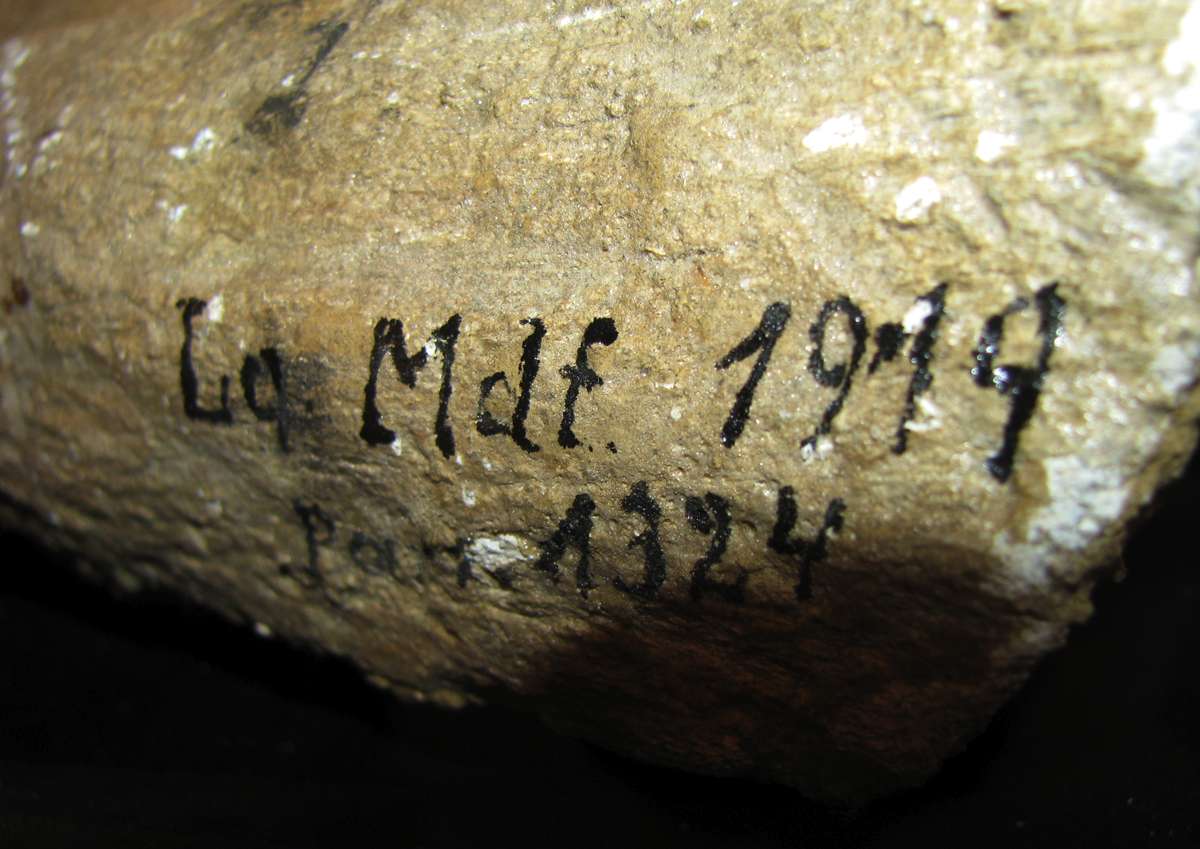
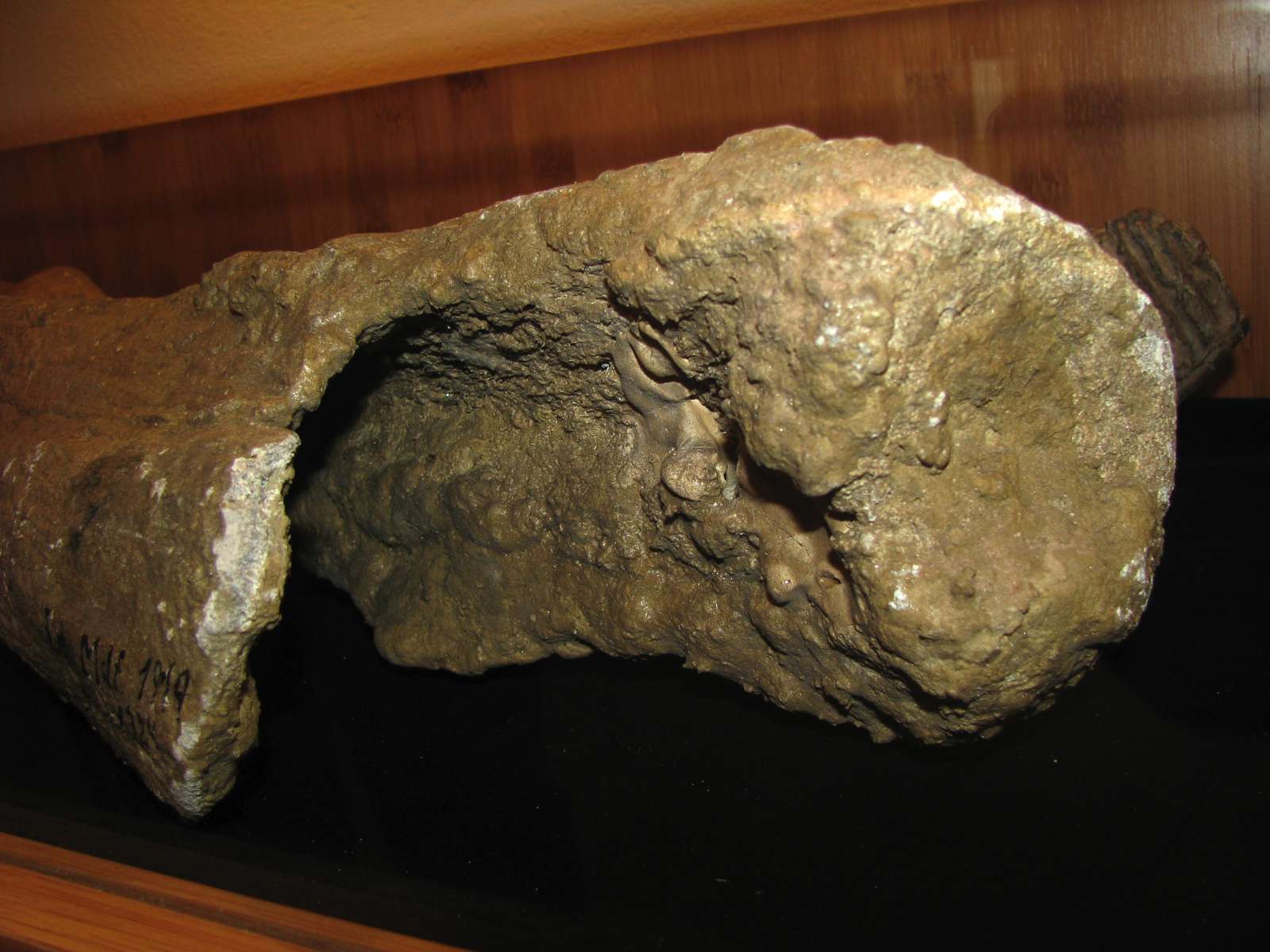
Mammoth femur.
Photo: Don Hitchcock 2008
Source: Venusium, the museum at Willendorf.
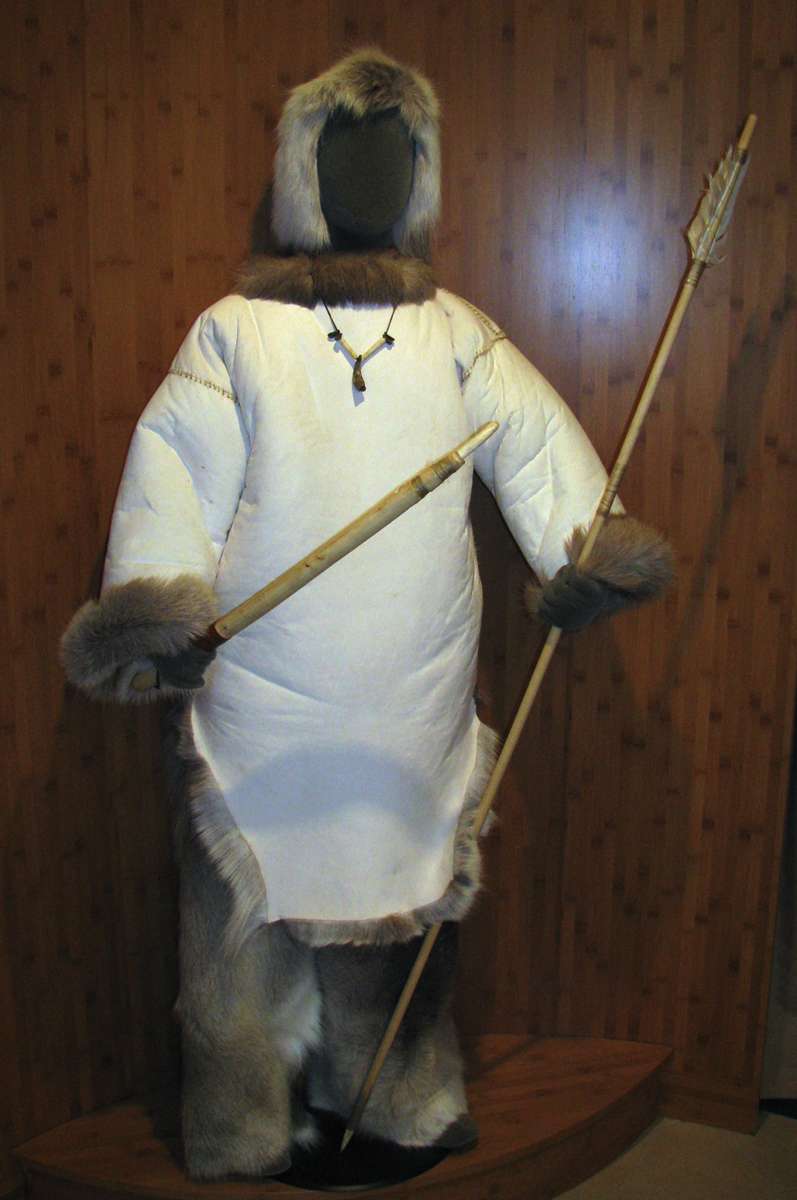
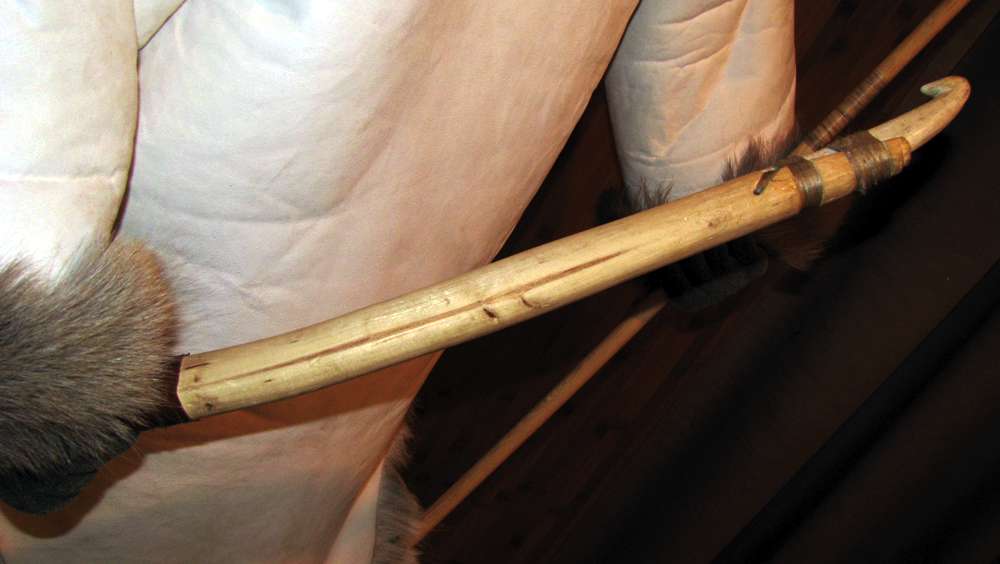


A model dressed in the clothes of the time, carrying a spear thrower and a spear.
Photo: Don Hitchcock 2008
Source: Venusium, the museum at Willendorf.
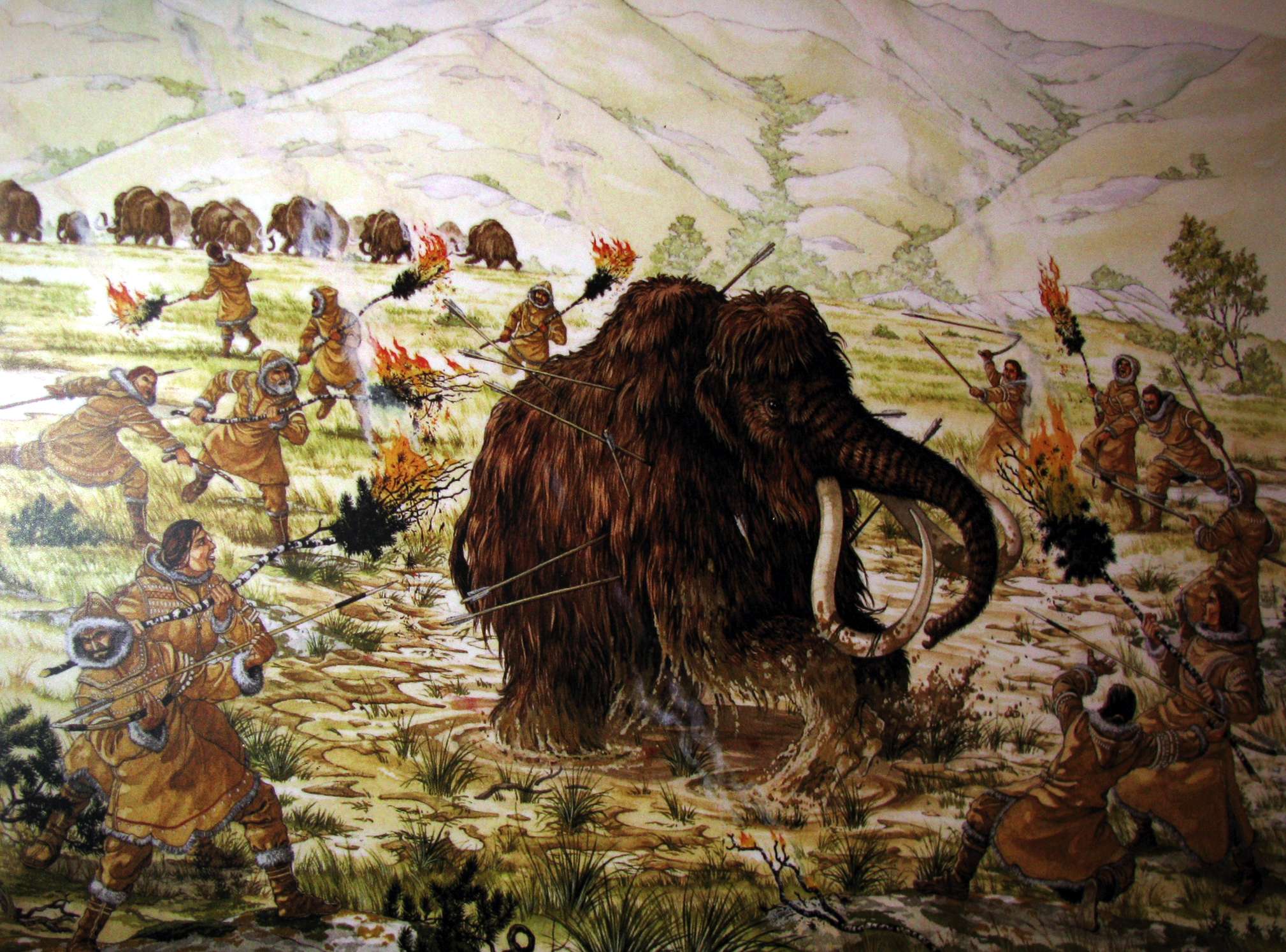
Hunting the hairy mammoth by driving it into marshland using men and fire.
Research by anthropologists has determined that adult males at the time were from 160 to 190 cm tall, and females between 150 and 175 cm tall. People wore jewellery made of mussel and snail shells or pendants carved from ivory, antlers or stone.
There were permanent settlements as well as hunting camps. Hunting camps were preferably located in areas favourable for finding a certain kind of animal. There the hunt was slaughtered and the unusable parts left behind. Bones from meat-rich parts of the animal, or which could be used for fashioning tools were more likely to be found at the main camp. Due to the wide variety of tasks carried out at the main camp, one would expect to find a greater variety of tools there. For these reasons, a main camp for ice age man is believed to have existed at level 9 of Willendorf II.
The temperature during the glacial periods was an average of about 3° to 6°C colder than today. With little precipitation in winter, only a thin layer of snow covered the ground, hence there was an adequate supply of nourishment even for large herbivores such as the mammoth. Yet the sequence of layers found at Willendorf spans a period of 20 000 years, and accordingly contains evidence for widely varying climatic stages. Layers 1 to 4, assigned to the period of the Aurignacian culture, consist of deposits which formed 42 000 to 31 000 years ago, at a time when the climate was more moderate than when level 5 was formed.
Following a period of extreme cold, a period characterised by wind deposits of loess began about 26 000 years ago, when culture level 6 was formed. This period lasted until approximately 24 000 years ago, until the time of the culture layer 9, the 'Venus layer'. Tiny snails, good indicators of climatic and environmental conditions in the ice age, are found in the loess in the upper levels at Willendorf and denote a dry, cold climate. The environment consisted of an open plain with a few bushes and trees. Nussberg, a hill to the west belonging to the Jauerling massif, while providing the settlement with some shelter from westerly winds, was probably bare.
Among the finds in layers 8 and 9 at Willendorf are the remains of animal bones, including foxes, arctic foxes, rabbits, wolverines, bears, cave lions, elk, reindeer, mountain goats, horses, mammoths and golden eagles. Particularly worthy of note is the large number of arctic foxes and foxes at level 9. Large numbers of small animals among the spoils found at a site are seen as evidence of a more sedentary lifestyle, i.e. animals found in the vicinity provided a sufficient supply of food. The particular species of animals hunted at Willendorf suggest that the site was used in the cold season.
Photo: Don Hitchcock 2008
Source: Venusium, the museum at Willendorf © NHM Wien
Text: Display at Venusium, the museum at Willendorf.
Willendorf II and its place in the context of the early Upper Paleolithic in central Europe
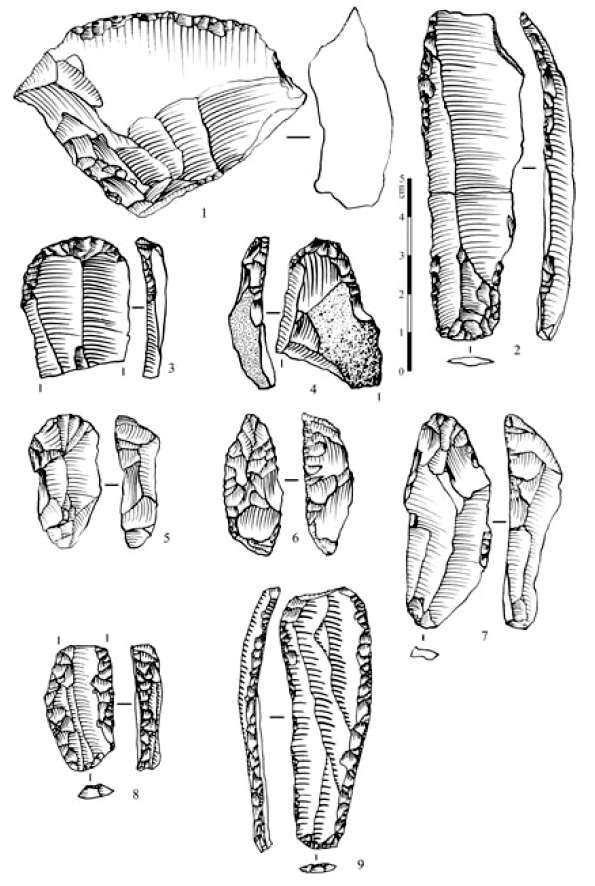
Willendorf II, lithic tools from layers 2 (1-4) and 3 (5-9):
1. sidescraper
2. retouched blade
3-4. single endscrapers
5, 7. carinated endscrapers
6. nosed endscraper
8-9. retouched blades
(after Teyssandier, 2003).
Photo:
Teyssandier et al (2002)
Willendorf II belongs to a set of Upper Paleolithic sites located on the western bank of the Danube along the Wachau, some 70 km to the west of Vienna. The site was excavated from 1908 to 1927 by Josef Bayer of the Museum of Natural Sciences of Vienna. The excavations revealed the existence of at least nine Paleolithic layers (1 to 9 from the base to the top) in the upper half of loamy deposits about 20 m thick, preserved on the top of a lower terrace of the Danube. The lowest cultural layers 1 to 4 are of critical importance in the debate concerning the appearance of Upper Paleolithic industries in central Europe.
Cultural layers 1 and 2 are non-diagnostic from a chrono-cultural perspective. The paucity of artifacts and more particularly of diagnostic items make attributions and comparisons extremely difficult. Only non-diagnostic tools are found in these assemblages; typical Aurignacian or transitional forms are totally lacking.
The available lithic assemblage of layer 3 was numerically equivalent to that of layer 2 and consisted of only 38 pieces. However, the morphology of the different tool-types changes: more tools are made on blades, thick endscrapers appear for the first time, and retouched blades are more diversified with two true Aurignacian blades (Fig. 6, nos. 8-9) that are very similar to those usually assigned to the Aurignacian elsewhere. Layer 3 has always been interpreted as Aurignacian.
We, however, stress the small number of diagnostic artefacts and the small size of the assemblage, which make comparisons extremely difficult. We need thus to be cautious in using data of layer 3 of Willendorf II in theoretical and global models. Nevertheless, the best points of comparison for layer 3 are found in Early Aurignacian contexts. Recently, several hundred artifacts from layer 3 of Willendorf II have been re-discovered in the cellar of the Department of Prehistory of the Museum of Natural History in Vienna. These artifacts apparently confirm the classification of the Willendorf II, layer 3 assemblage as Aurignacian.
Adapted from: http://aace.metapress.com/index/WEBUVLCTJ77MXE4J.pdf
58 ENDOCRINE PRACTICE Vol. 4 No. 1 January/February 1998
Obesity in the Palaeolithic Era?
The Venus of Willendorf
Eric Colman, M.D.
The Venus of Willendorf is one of numerous
similarly shaped, uniquely feminine, statuettes dating to
the Upper Paleolithic Period (circa 20 000 to 30 000 BC)
This faceless work of art, with its pendulous breasts,
fleshy hips, and protruding buttocks, has been considered
by some to be a true to life depiction of obesity. Are
we to believe that obesity plagued prehistoric women?
Although we cannot discount the existence of a singular
case of obesity due to Cushing's disease, hypothyroidism,
or pituitary dysfunction, several lines of reasoning suggest
that obesity must have been exceedingly rare, if it existed
at all, during prehistoric times.
Excessive dietary fat and calories, sedentariness, and aging (particularly after menopause) are
commonly associated with weight gain and obesity. These
factors, in all probability, did not have a major role in the
lives of prehistoric women. First, the people of that era
lived as hunter gatherers. Obtaining food supplies required
daylight, accommodating weather, time, and luck.
Provisions were probably scarce. In addition, primarily
because of the leanness of wild animals, our prehistoric
ancestors consumed a diet low in fat, approximately 20%
of total calories. Therefore, consumption of an overabundance of calories by those women is difficult to imagine. In fact, the studies of paleonutritionists support the
contention that undernutrition was a pervasive health problem during prehistoric times.
Second, the nomadic
hunter gatherer lifestyle was not sedentary. Indeed, some
archeologic data suggest that prehistoric people engaged in
perennial treks from mountainous to coastal regions to take
advantage of seasonally abundant food sources. Third,
the life expectancy of prehistoric women was short. Studies
of skeletal remains indicate that most people of that time
did not live beyond their mid 30s. Accordingly, age and menopause related increases in body weight would not
have manifested themselves in most cases. Collectively,
therefore, the lifestyle of Paleolithic women seems unlikely to have fostered the development of obesity.
What then remains as an alternative interpretation of
the Venus of Willendorf? Some may argue that because
obesity was rare and may have conferred a survival benefit
during times of food shortage (much like non insulin
dependent diabetes mellitus and the thrifty genotype), it
was desirable and worthy of ritualisation in the form of
statuettes. At first glance, this is a reasonable hypothesis;
yet when one considers that no portly male figurines have
been discovered, this theory falls into disfavour.
In addition to a short life expectancy, prehistoric
women seemed to have suffered an increased risk of death
during their 20s. This finding may reflect mortality
associated with pregnancy and childbirth. It takes little
imagination to see the similarities (albeit exaggerated)
between the Venus and a pregnant woman. Although
admittedly speculation, the Venus of Willendorf may have
been used as a talisman in a precarious world of heightened obstetric related mortality. Similarly, some have proposed that this figurine was the object of a cult: a fertility
goddess used to conjure deities and obtain from them
fertility for the species.
Obviously, we will never know exactly what inspired
the creation of the Venus of Willendorf , nor will we know
its true meaning. Nonetheless, this ancient work of art
serves as a valuable reminder that obesity is a disease
unique to the modern world and one in which environmental factors, such as diet and exercise, assume critical etiologic roles.
Obesity, Venus figures, Marilyn Monroe and Barbie dolls
Firstly, the words above "obesity is a disease unique to the modern world and one in which environmental factors, such as diet and exercise, assume critical etiologic roles" are not my words, but those of Eric Colman, M.D., from a respectable medical journal.
I am aware that obesity was until recently desirable in western countries, and indeed in some societies is still highly desirable.

Some have said that Marilyn Monroe would be considered obese today. This is not correct. Marilyn Monroe would not even be considered overweight today, let alone obese. She had a perfectly healthy weight. Like most people, her weight varied, and according to her dressmaker was between 118 and 140 pounds.
Her BMI, even after she had gained a lot of weight because of depression before filming 'Some Like it Hot', and weighed 140 pounds, and had a height of 5'5", was only 22.9, well under the 25 cutoff for overweight, and way below the 30 cutoff for obese. If we take the studio's estimate of her weight, 120 pounds, her BMI was 19.7. Underweight is less than 18.5.
The present fashion for models to be very thin indeed is just that, a fashion. Marilyn Monroe was a healthy weight. And as others have said, she looked like a million dollars, invested in all the right places!
Photo: Cropped screenshot of Marilyn Monroe from the trailer for the film Some Like It Hot, 1959.
This work is in the public domain because it was published in the United States between 1923 and 1977, inclusive, without a copyright notice.
Some venus figures are patently exaggerated in the same way as modern day Barbie dolls are exaggerated. Neither should be regarded as an accurate picture of what ordinary people look like.
If you would like to see a Palaeolithic Barbie figure, you have only to look at
The Hohlefels Venus
True obesity, however, has deleterious health effects. This is indisputable.
Obesity is associated with cardiovascular diseases, diabetes mellitus type 2, obstructive sleep apnea, some types of cancer, and osteoarthritis. It reduces life expectancy.
In palaeolithic times, the generally low life expectancy may have masked many of obesity's bad effects, and indeed may at that time have been associated with increased life expectancy because of the person with a high BMI having reserves of fat to survive famine more easily, and this may be part of the reason for the carving of venus figures with such rotund characteristics.
Even in Palaeolithic times, while obesity may have been seen as desirable for those who spent their time at the hearth, and did not move around much, it would not have been desirable for a hunter who had to move quickly and cover large amounts of ground in the chase. There are no obese marathon runners.
And I don't know where this came from, and the dates are wrong (should be ~20 000 BP, not 4 000 BP) but I can't resist….
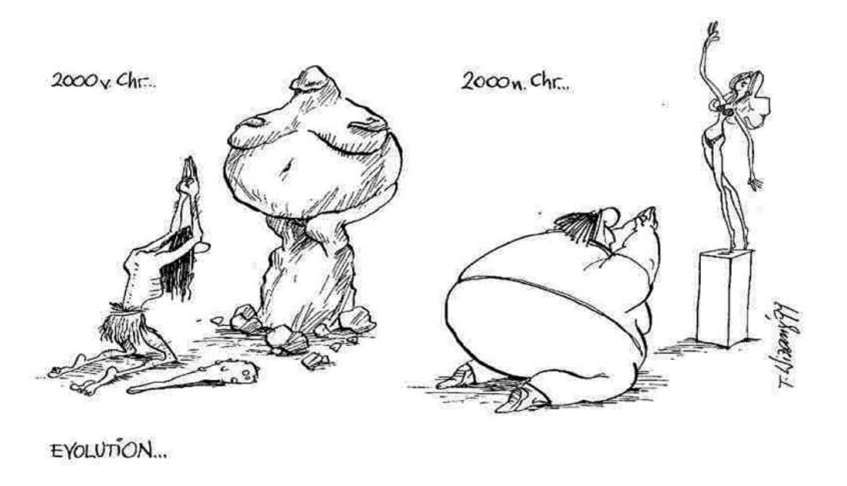
References
- Antl-Weiser W., 2008a: The anthropomorphic figurines from Willendorf, Wiss. Mitt. Niederösterr. Landesmuseum 19 19-30 St. Pölten 2008
- Antl-Weiser W., 2008b: die Venus von Willendorf, ihre Zeit und die Geschichte(n) um ihre Auffindung, Wien : Verlag des Naturhistorischen Museum, 2008
- Bayer J., 1930: Die Venus II von Willendorf, Eiszeit und Urgeschichte 7, 48-54
- Haesaerts P., Teyssandier N., 2003: The early Upper Paleolithic occupations of Willendorf II (Lower Austria): a contribution to the chronostratigraphic and cultural context of the beginning of the Upper Paleolithic in Central Europe, Instituto Português de ArqueologiaThe Chronology of the Aurignacian and the Transitional Technocomplexes Dating Stratigraphies Cultural Implications (2003), Volume: 33, Pages 133-151
- Haesaerts P., 1990: Nouvelles recherches au gisement de Willendorf (Basse Autriche)Bulletin de l’Institut Royal des Sciences Naturelles de Belgique, Sciences de la Terre60, 203-218
- Haesaerts P., Damblon, F., Bachner, M., Trnka G., 1996: Revised stratigraphy and chronology of the Willendorf II sequence, Lower Austria. Archaeologia Austriaca 80, 25-42
- Kern A., Antl-Weiser L., 2008: Venus, Edition Lammerhuber, Baden, Österreich
- Musil, R., 1968: Stranska Skala: Its Meaning for Pleistocene Studies, Current Anthropology, Vol. 9, No. 5, Part 2 (Dec., 1968), pp. 534-539
- Nigst, P., Viola T., Haesaerts P., Trnka G., 2008: Willendorf IIWiss. Mitt. Niederösterr. Landesmuseum 19 31-58 St. Pölten 2008
- Nigst, P. et al., 2008b: Neue Forschungen zum Aurignacien in Zentraleuropa: Eine erste Mitteilung zu den Grabungen 2006 in Willendorf IIQuartär 55 (2008): 9-15, see: https://www.researchgate.net/publication/40853859_New_research_on_the_Aurignacian_of_Central_Europe_A_first_note_on_the_2006_fieldwork_at_Willendorf_II ( note that this appears to be another publication of essentially the same material as Nigst et al. (2008) above - Don )
- Pervesler, P., Roetzel R., Uchman A., 2011: Ichnology of shallow sublittoral siliciclastics of the Burgschleinitz Formation (Lower Miocene, Eggenburgian) in the Alpine-Carpathian Foredeep (NE Austria)Austrian Journal of Earth Sciences Volume 104/1 81-96 Vienna 2011
- Pittioni R., 1954: Urgeschichte des österreichischen Raumes, F. Deuticke, Wien, 1954.
- Prüfer O., 1959: The Upper Palaeolithic Cultures of the Lower Austrian Loess Region, A Critical Interpretation, Quartär, International Yearbook for Ice Age and Stone Age Research, DOI: https://doi.org/10.7485/qu.1959.10.82084
- Schulz M., 2008: Pummel aus dem Eisder Spiegel, 16/2008
- Teyssandier, N., Bolus M., Conard N., 2002: The Early Aurignacian in central Europe and its place in a European perspective Trabalhos de Arqueologia 45 Towards a definition of the Aurignacian - Proceedings of the Symposium held in Lisbon, Portugal, June 25-30, 2002
- Weber, W. et al., 2022: The microstructure and the origin of the Venus from Willendorf, Scientific Reports, Nature Publishing Group, https://phys.org/news/2022-02-year-old-venus-willendorf.html, DOI: 10.1038/s41598-022-06799-z