Back to Don's Maps
Back to Venus figures from the Stone Age
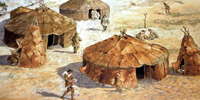 The open-air site of Gönnersdorf was discovered in 1968, during the construction of a cellar for a private house. After digging through the pumice, bones and stone slabs appeared and it became clear that it was a location of the late ice age. A wonderful inventory of ice age life was unearthed: pulverised red hematite, a fireplace, evidence of habitation constructions, a lithic industry, statuettes of ivory and antler, engraved slate plaquettes, jet beads, perforated animal teeth and a well preserved faunal record. Based on these finds it was evident that Gönnersdorf was a site of huge importance.
 Lalinde / Gönnersdorf Figurines and Engravings
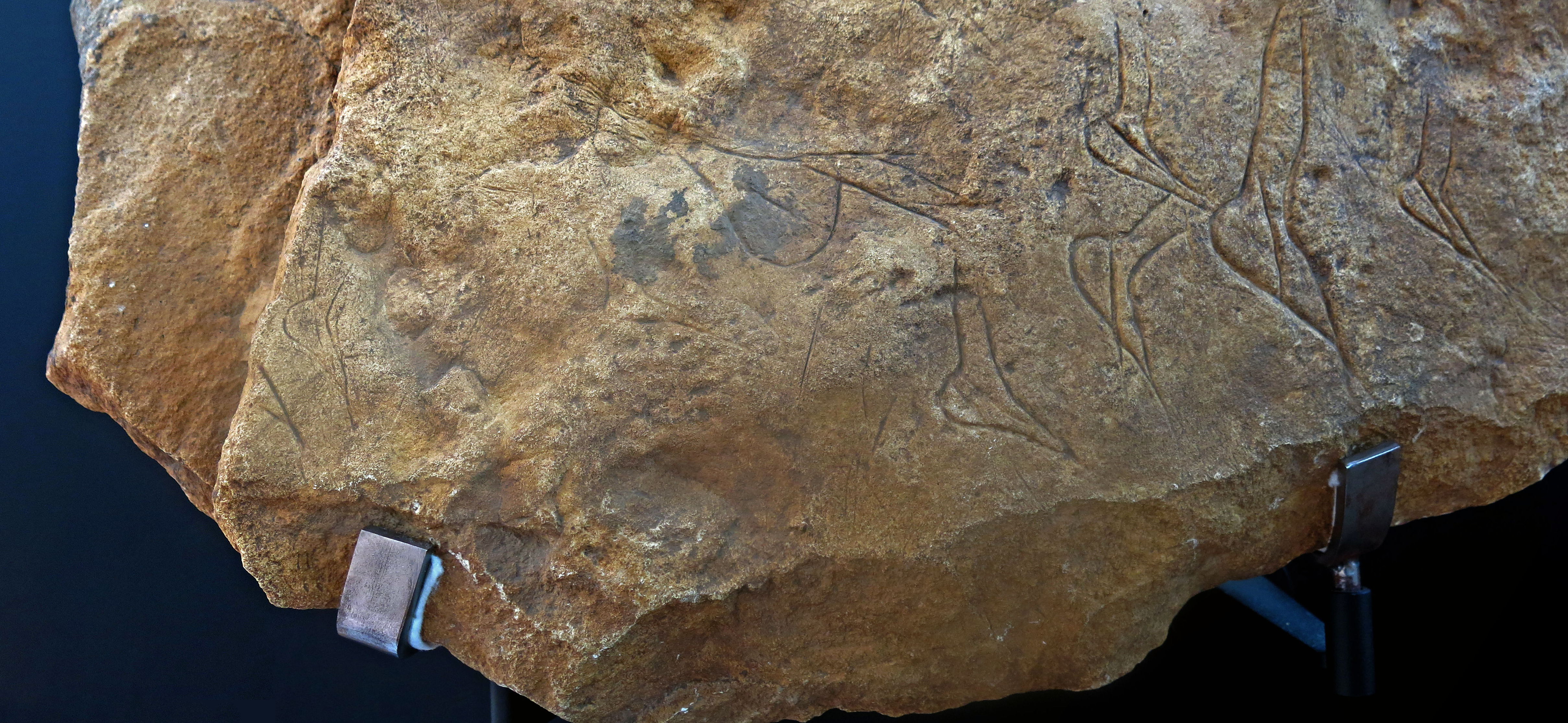
Engravings in the Lalinde style from la Grotte de la Roche, Lalinde.
Photo: Don Hitchcock 2014
Source: Original, Musée National de Préhistoire, Les Eyzies
Lalinde / Gönnersdorf figurines and engravings are strictly stylised, overtly female forms with over-sized buttocks, long trunks, small or missing breasts, and no heads. These images have been found at sites such as Gönnersdorf in Germany, in Abri Murat and Gare de Couze in France, Pekárna in the Czech Republic, and Wilczyce in Poland.Text above adapted from: http://archaeology.about.com/od/upperpaleolithic/a/0307_venusfig.htm
Les figurations féminines schématiques
Très caractéristiques de la fin du Magdalénien, les figures féminines stylisées (du type Lalinde-Gönnersdorf) constituent une iconographie à part de l'art traditionnellement animalier du Magdalénien. Identifiées à l'origine d'après la figure princeps de Couze, gravés sur bloc calcaire (No 1 dans la vitrine), ces figurations schématiques sont connues sur divers supports dans toute l'Europe. Elles traduisent l'homogénéité culturelle de la fin du Paléolithique supérieur à une époque où les circulation des matières premières et des coquillages, atteignent leur apogée.
Very characteristic of the late Magdalenian, these stylised female figures (known as the Lalinde-Gönnersdorf tradition) are a part of imagery in the art of the traditional Magdalenian. Identified initially on the basis of the figures from Gare de Couze, engraved on a limestone block (No. 1 in the display window), the schematic figures are known on various media across Europe. They reflect the cultural homogeneity of the late Upper Palaeolithic at a time when the movement of raw materials and shells reached their climax.
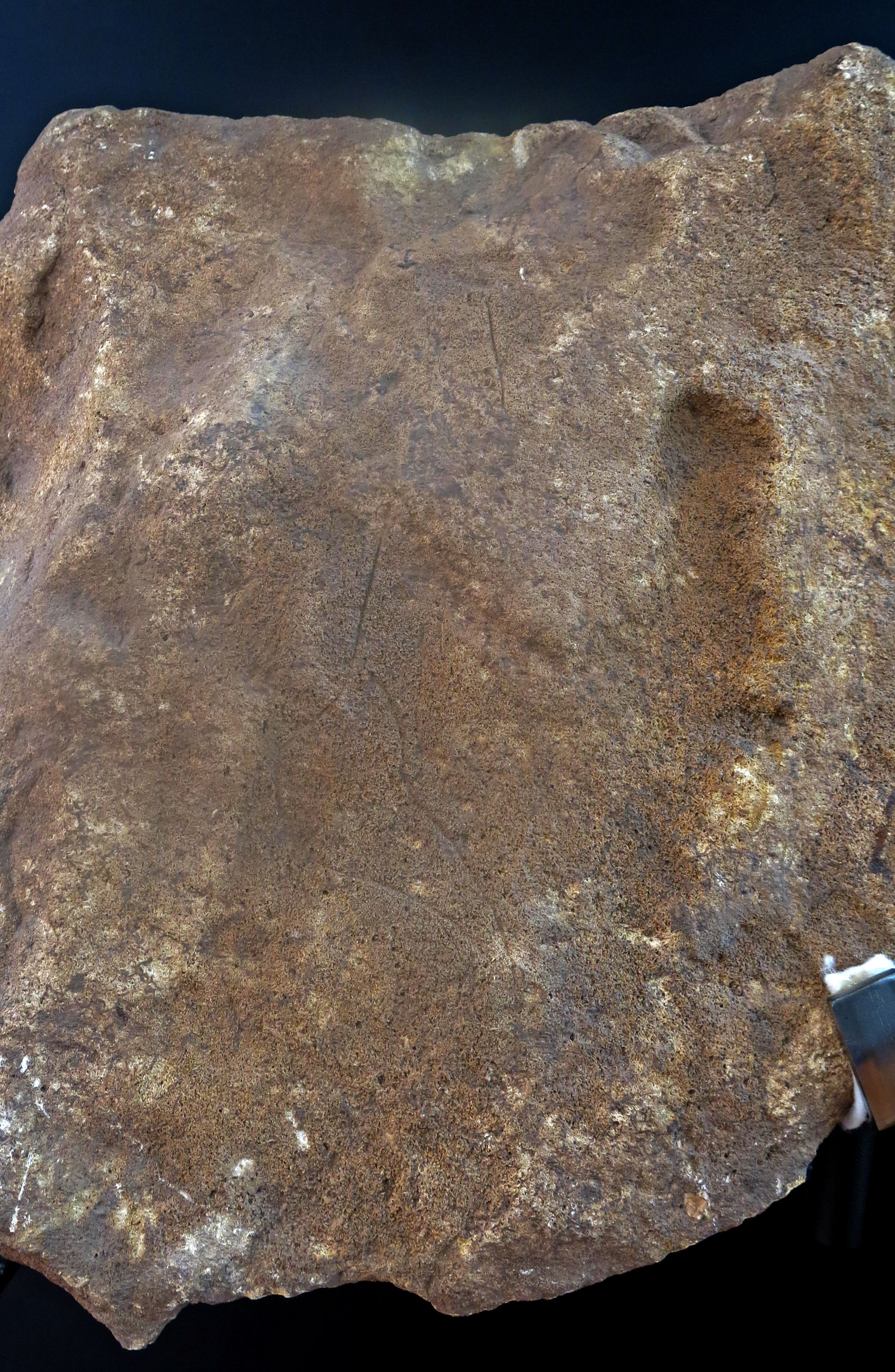
Engraving in the Lalinde style from Gare de Couze.
Photo: Don Hitchcock 2014
Source: Original, Display at Musée National de Préhistoire, Les Eyzies
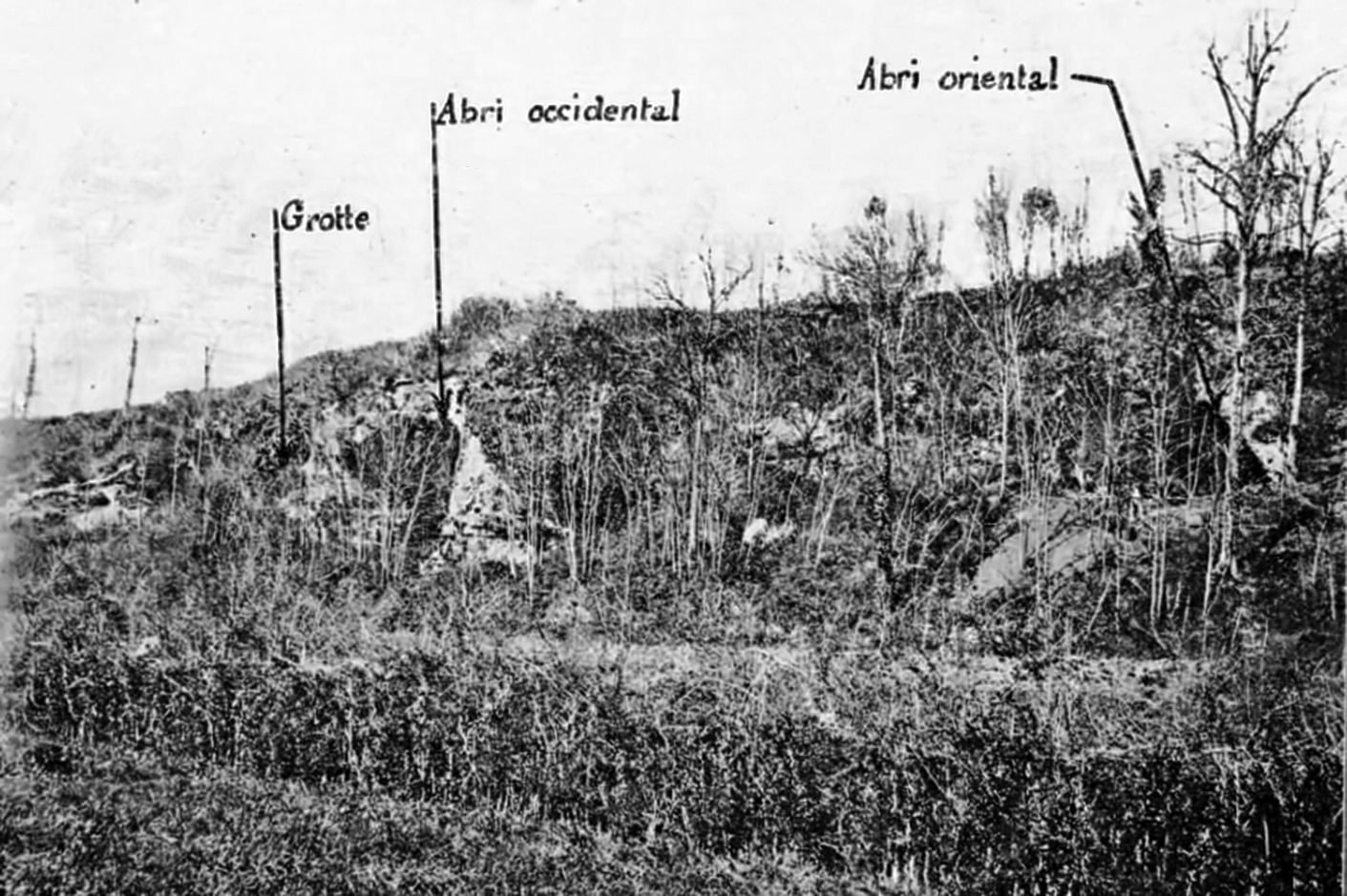
The Gare de Couze archaeological site.
Photo: Denis Peyrony
Source: Peyrony (1932)
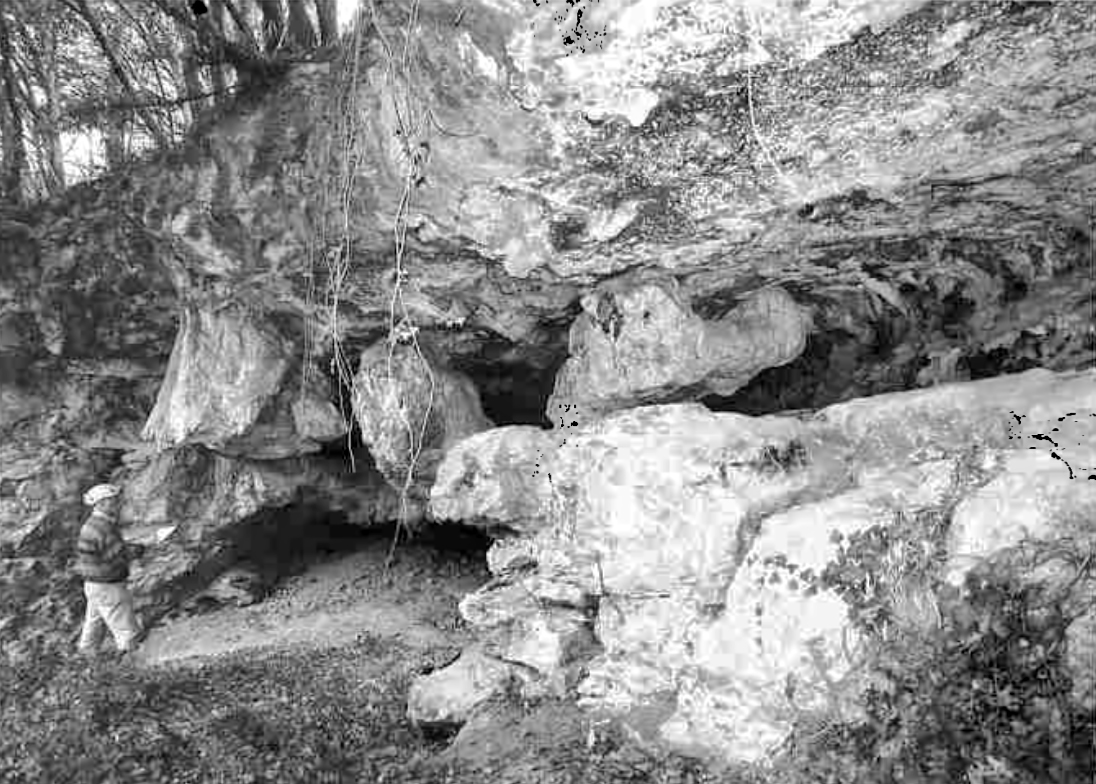
Entrance and the two levels of the Grotte de la Roche, Lalinde.
Photo: Unattributed
Source: Delluc et al. (2008)
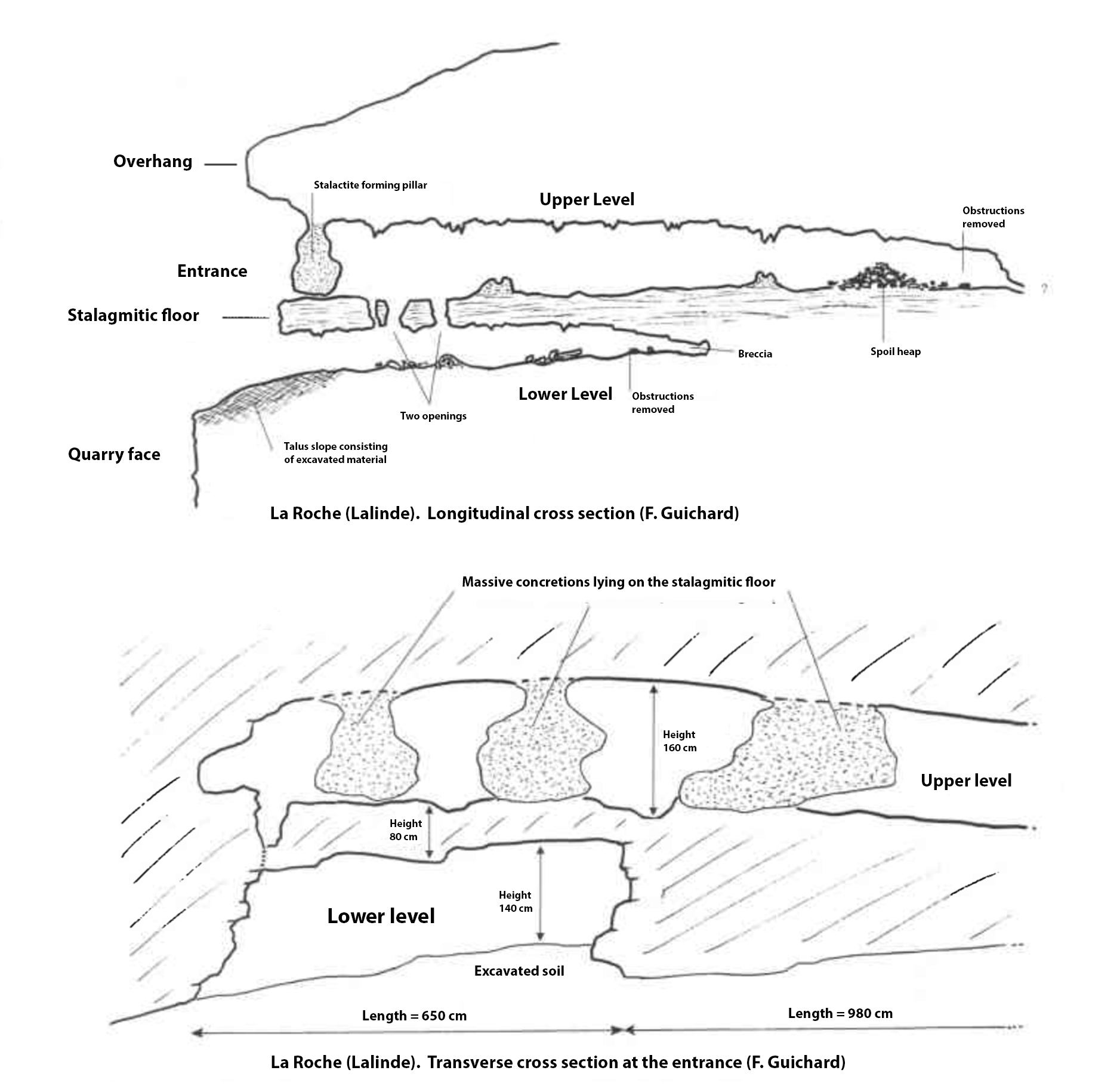
Longitudinal and transversal coupe of the Grotte de la Roche, Lalinde.
Photo: After F. Guichard
Translated text: Don Hitchcock
Source: Delluc et al. (2008)
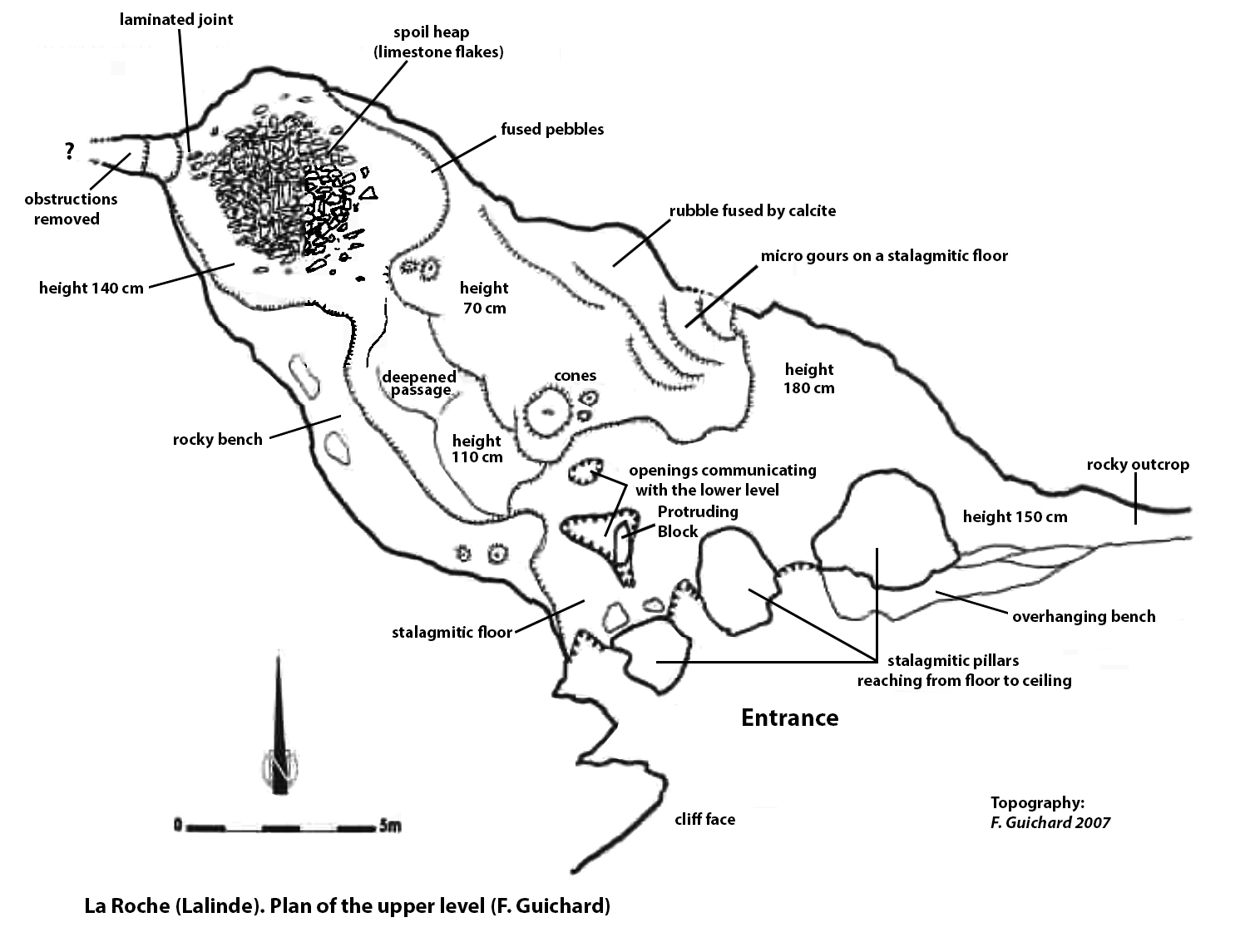
La Roche (Lalinde). Plan of the upper level (F. Guichard)
Note that a laminated joint in this instance refers to a discontinuity separating two sedimentary strata. In a karstic environment, these joints are areas of weakness both for water percolation (and therefore dissolution) and for physical erosion. The erosion of the limestone often begins along these planes, in particular at the intersection with the axes of joints.
Photo: After F. Guichard
Translated text: Don Hitchcock
Source: Delluc et al. (2008)
Additional text: http://environnement.wallonie.be/csis/aspnet/aide/jointStratification.htm
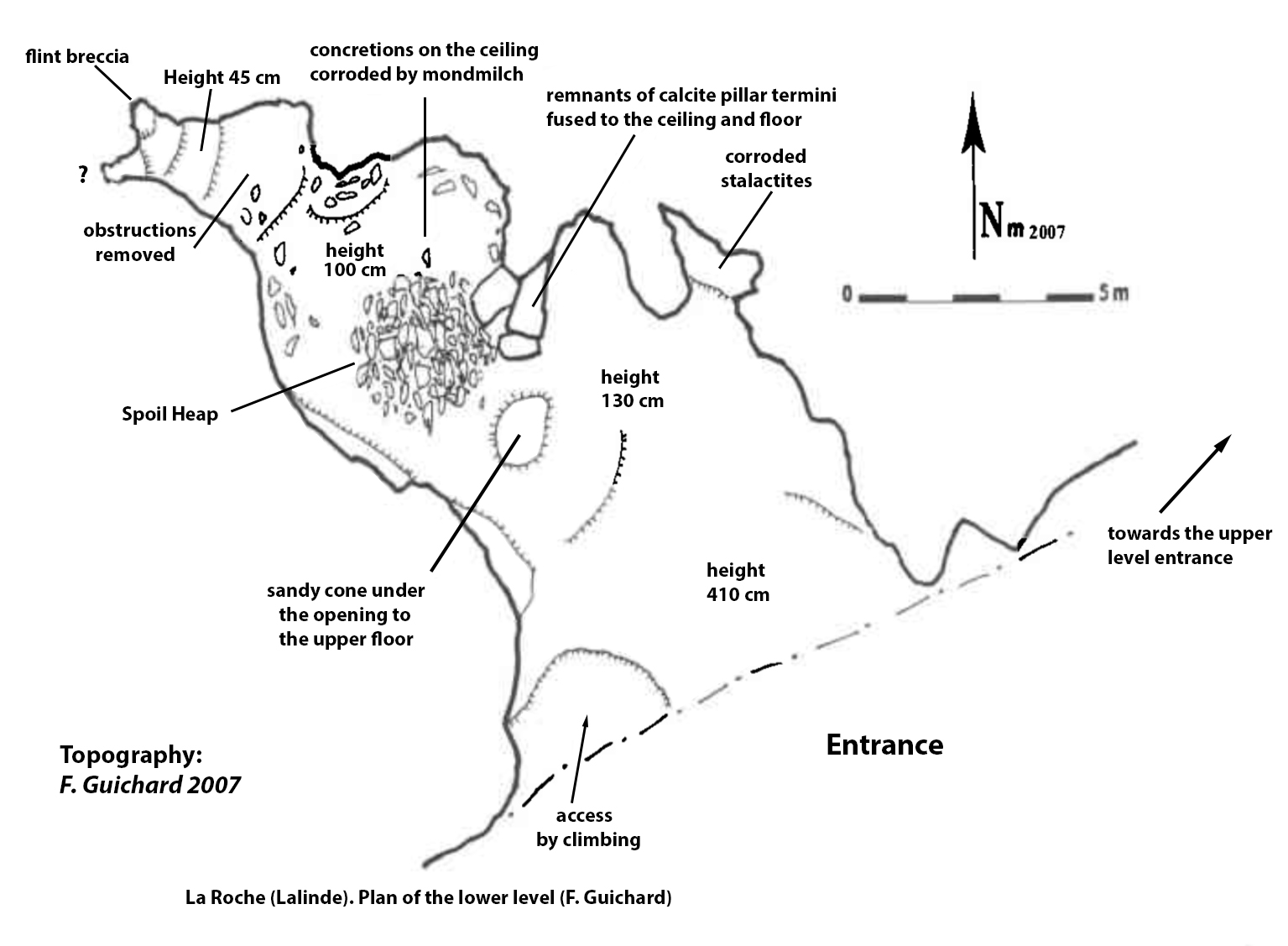
La Roche (Lalinde). Plan of the lower level (F. Guichard)
Photo: After F. Guichard
Translated text: Don Hitchcock
Source: Delluc et al. (2008)
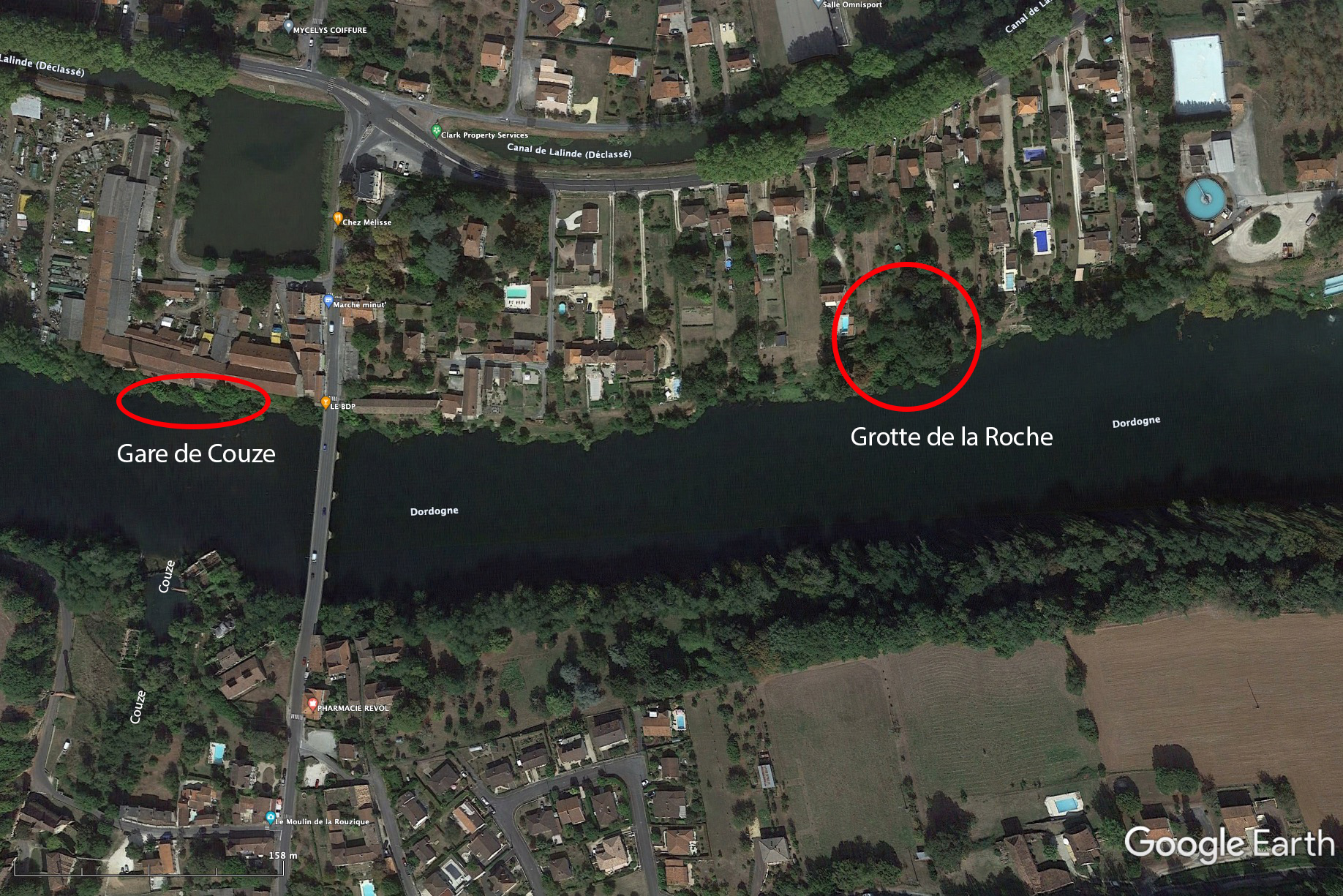
Location of the Gare de Couze and Grotte de la Roche archaeological sites, about 3 km downstream from Lalinde.
Photo: Google Earth
The Gare de Couze site is located 103 km from Bordeaux, on the right bank (north side) of the Dordogne, 3 km west (downstream) of the town of Lalinde, roughly opposite the confluence of the Couze (which comes from the south) with the Dordogne (which flows from east to west)
It is sometimes cited as the 'site of Saint-Sulpice-des-Magnats', Saint-Sulpice being the name of the nearby chapel and the Magnats that of the hamlet also nearby.
It is close to several other Magdalenian sites , including two at Lalinde: the Grotte de la Roche about 500 m upstream, near Birol, and the Abri du Soucy about 1 km upstream. The Jamblancs site (ancient Magdalenian and raclette site) is 5.3 km to the south-east at Bourniquel, that of Combe-Capelle (at Saint-Avit-Sénieur ) is 13 km to the south-east.
Text above: Wikipedia
Peyrony writes:
Text above: Peyrony (1932)
On the right bank of the Dordogne, opposite the confluence of this river and the Couze, near the goods station of Couze (railway from Bordeaux to Aurillac), stands a group of high rocks whose base is two to three metres above the valley. It is separated from the railway line by a meadow and a small rising slope planted with acacia trees and covered in places with brambles and bushes which mask its base. It faces due south, close to an abundant and clear spring. These rocks form a small cave and two shelters that were inhabited in historical times.
The cave and the nearest shelter were completely empty when I first visited in 1910, with only a few remnants of spoil containing flints and broken bones.
( The empty cave once contained the Lalinde style venus engravings, which were sold to the highest bidder - Don )
The second shelter, situated to the east and upstream of the first, had only been partially excavated. The entire interior appeared to have been disturbed, but the terrace was intact. I rented, at that time, the right to search the whole chain.
This station was reported for the first time by M. Douliot, at the Congress of the Association francaise pour l'avancement des sciences in Bordeaux in 1872. In 1884, Dr Testut, with the help of his friends Braquemont and Masson, undertook research there. The cave and the nearby shelter were empty at that time. He noted the presence of the Mousterian in the other, but his research took place mainly in the meadow in front of the cave, which was then arable land. There he collected flint and bone objects relating to the Magdalenian. It was here, too, that on my first visit, I collected an abundance of finds from this period.


Engravings in the Lalinde style from la Grotte de la Roche, Lalinde .
Photo: Don Hitchcock 2014
Source: Original, Display at Musée National de Préhistoire, Les Eyzies

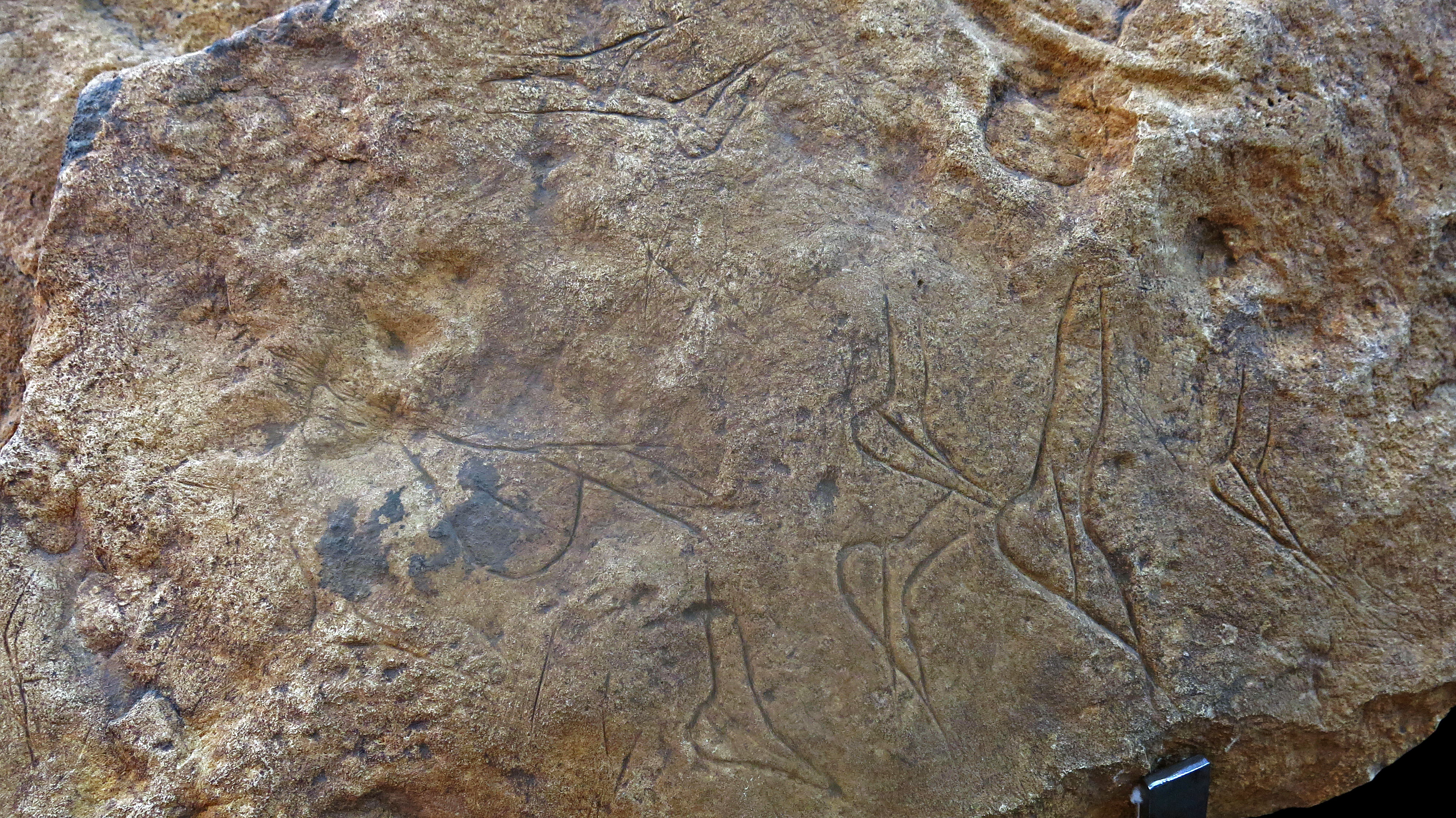
Engravings in the Lalinde style from la Grotte de la Roche, Lalinde.
Photo: Don Hitchcock 2014
Source: Original, Display at Musée National de Préhistoire, Les Eyzies

Engravings in the Lalinde style from la Grotte de la Roche, Lalinde .
Photo: Don Hitchcock 2014
Source: Original, Display at Musée National de Préhistoire, Les Eyzies
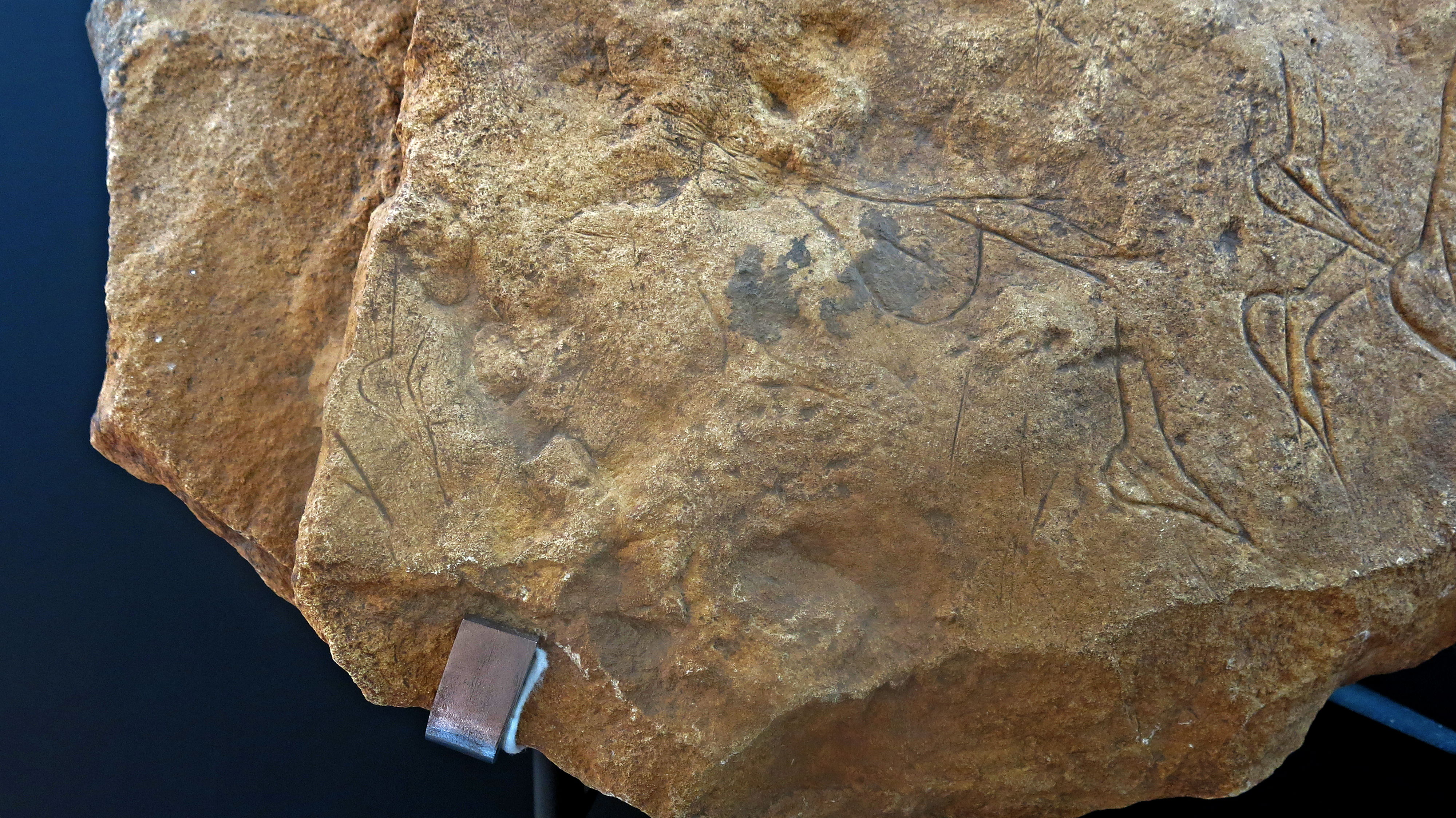
Engravings in the Lalinde style from la Grotte de la Roche, Lalinde .
Photo: Don Hitchcock 2014
Source: Original, Display at Musée National de Préhistoire, Les Eyzies
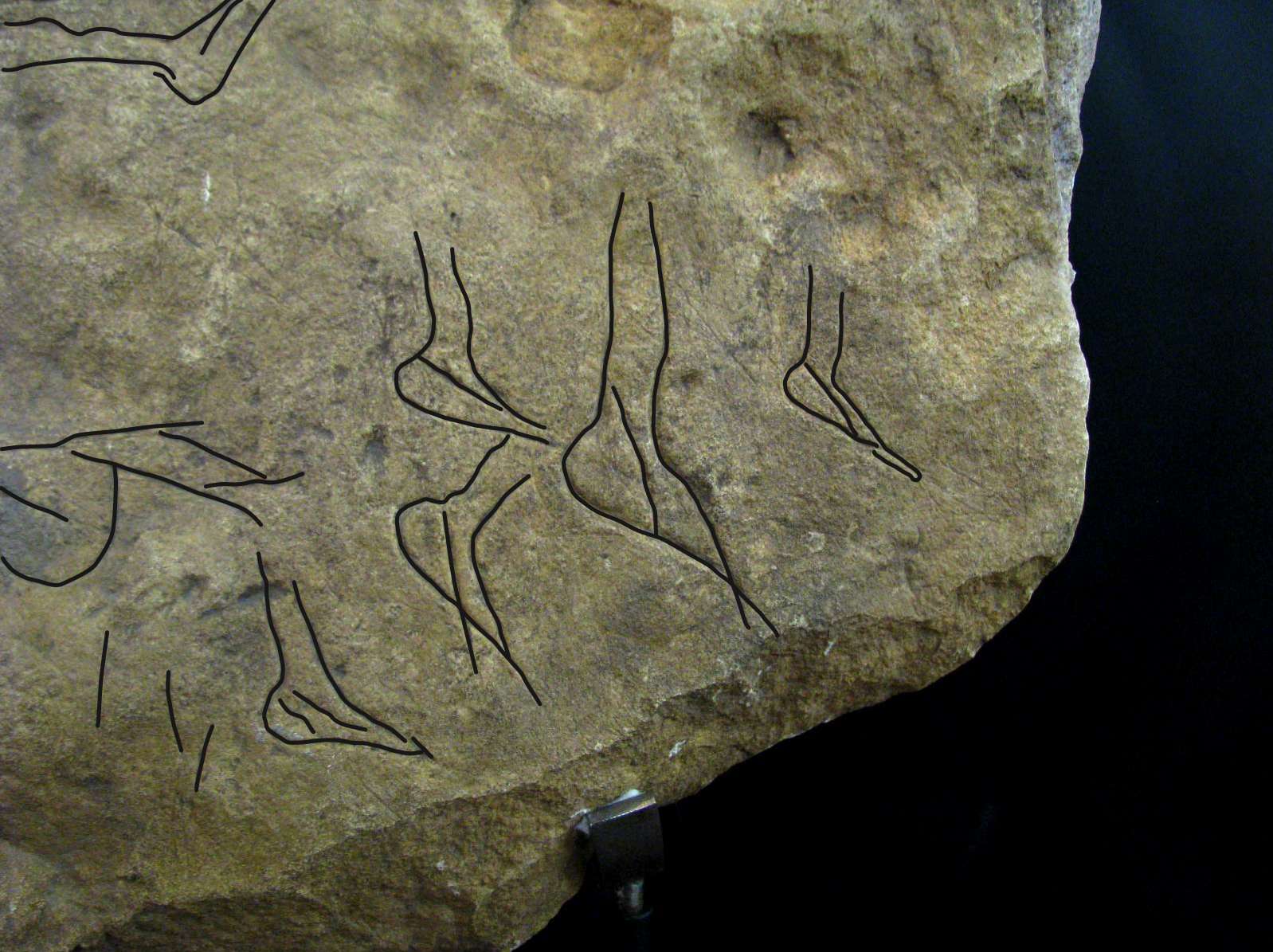
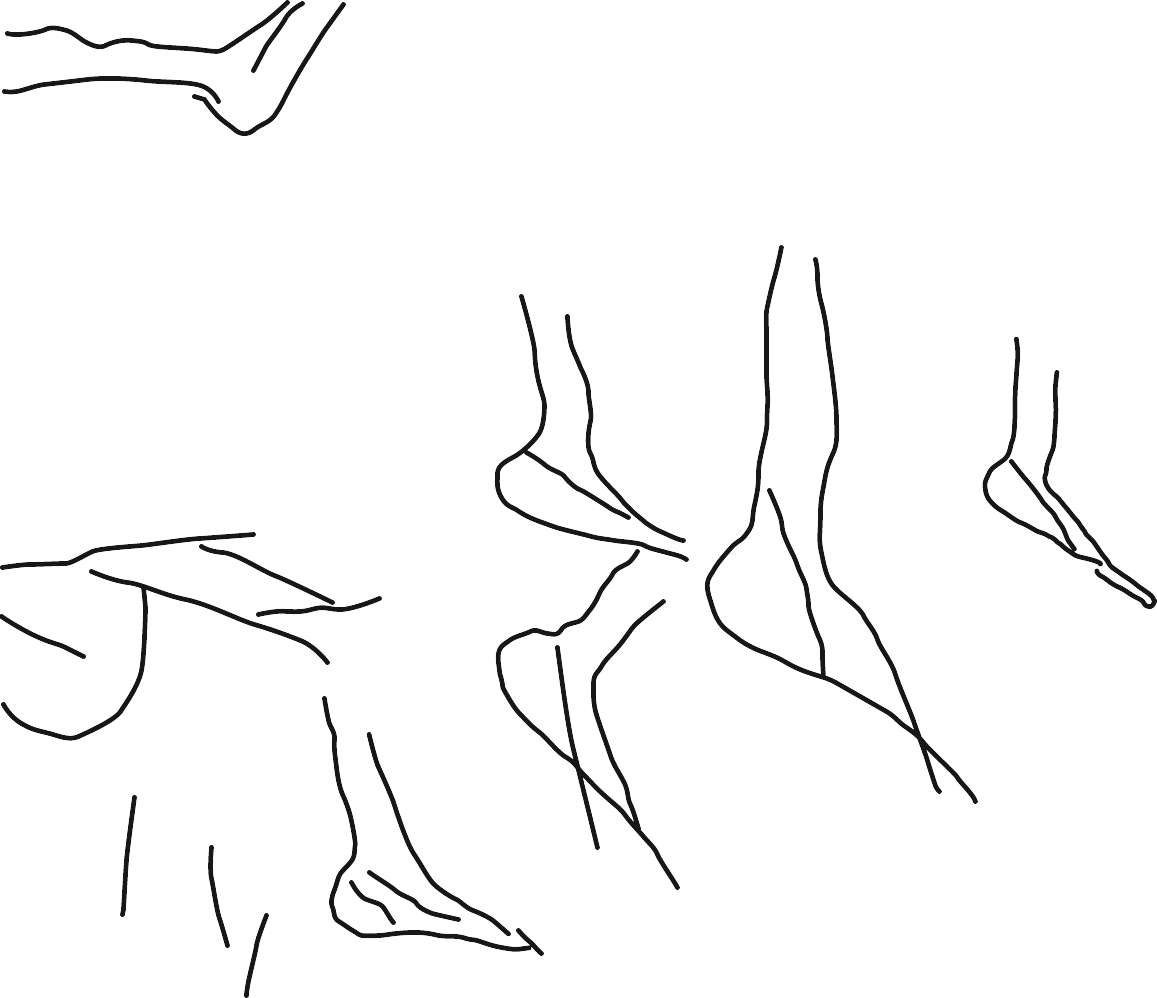
La Grotte de la Roche, Lalinde, engravings highlighted.
Photo: Don Hitchcock 2008
Source: Originals, display at Musée National de Préhistoire, Les Eyzies
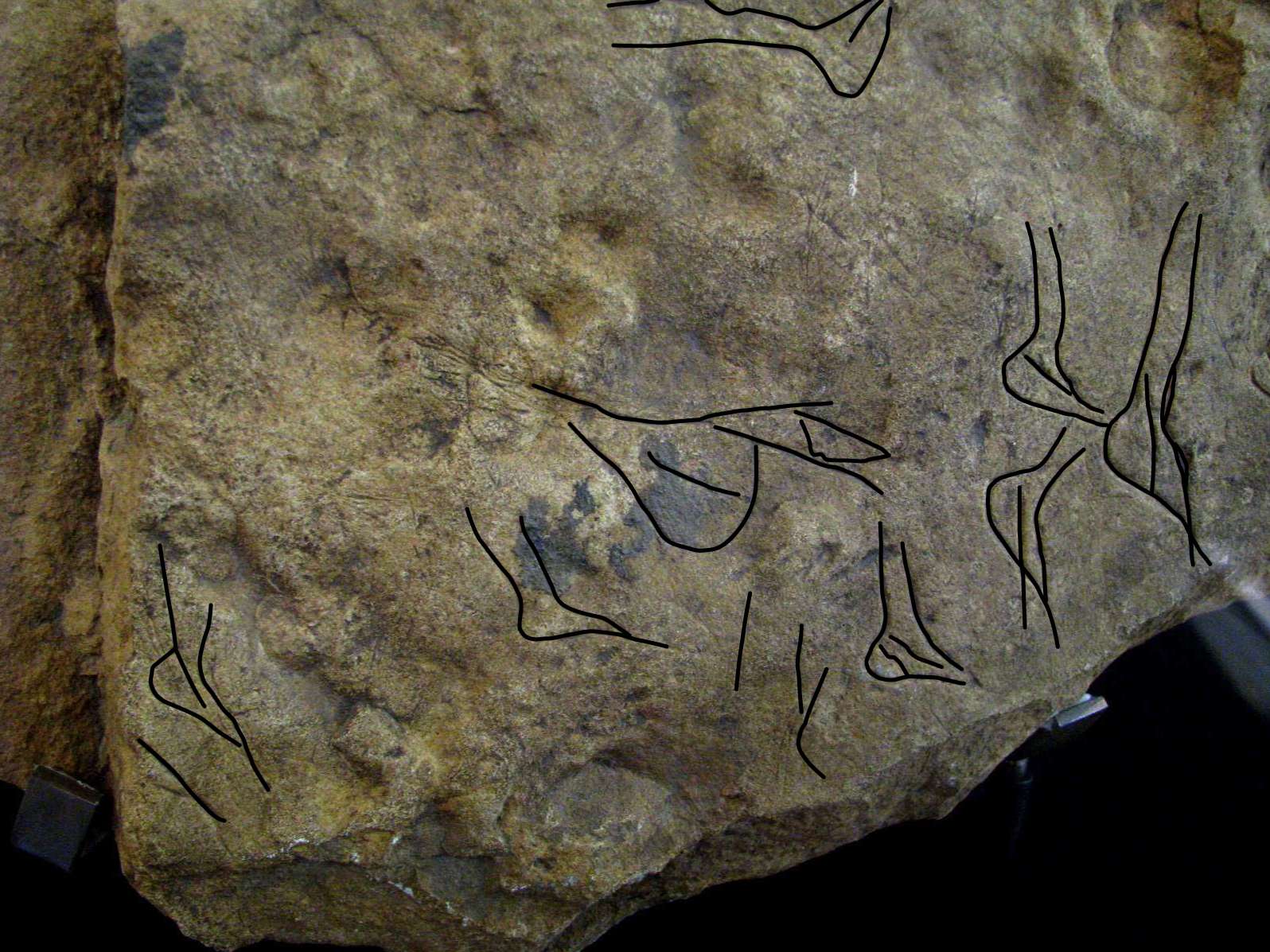
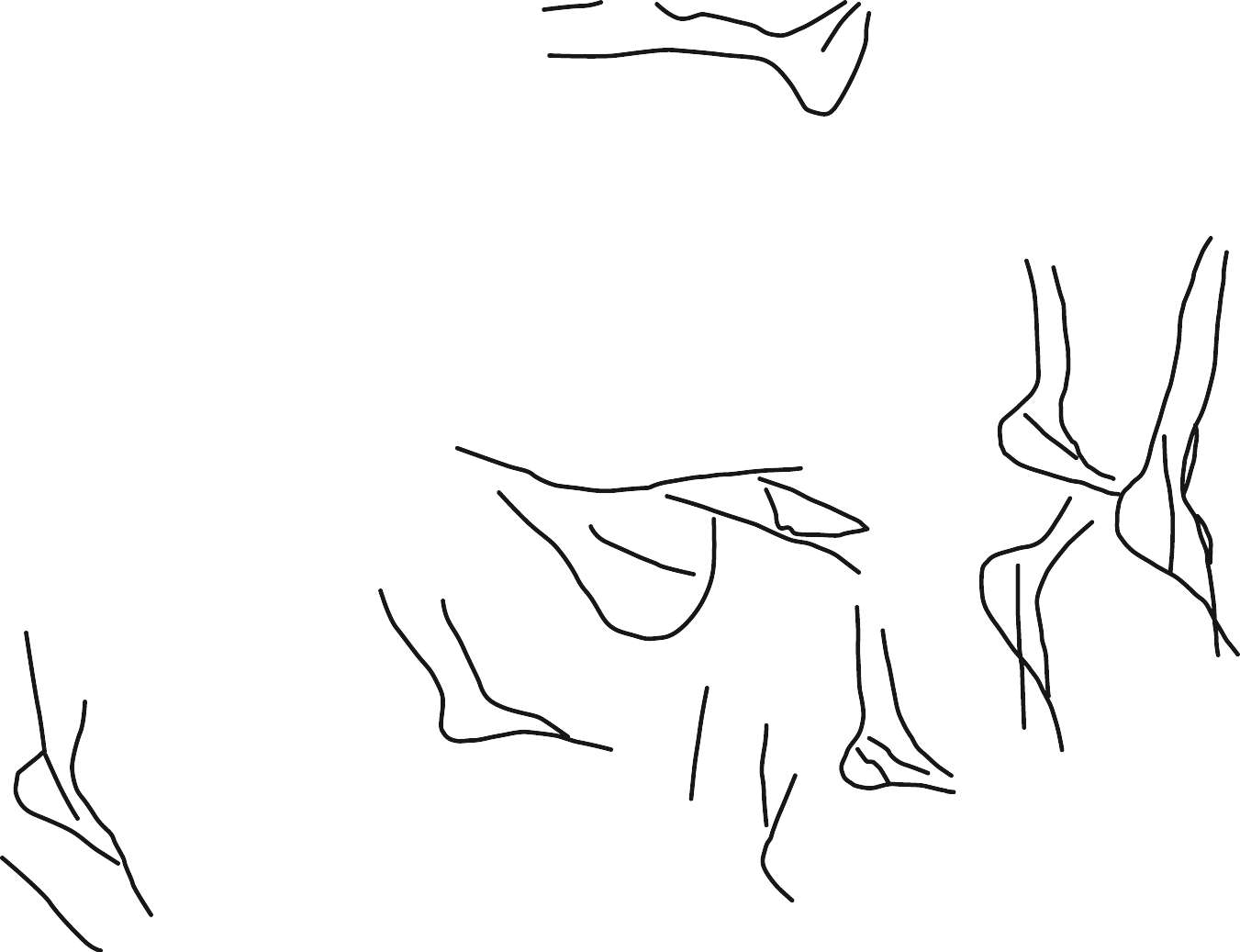
La Grotte de la Roche, Lalinde, engravings highlighted.
Photo: Don Hitchcock 2008
Source: Originals, display at Musée National de Préhistoire, Les Eyzies


La Grotte de la Roche, Lalinde, engravings highlighted.
Photo: Don Hitchcock 2008
Source: Originals, display at Musée National de Préhistoire, Les Eyzies
These form part of a consistent art form, showing the outline of the female form engraved in limestone or on ivory plaques. See the illustrations below.
Note however, that every single one of the engravings photographed above on a single stone is shown from the right side of the female outline, which is not the case with all of the examples shown below.
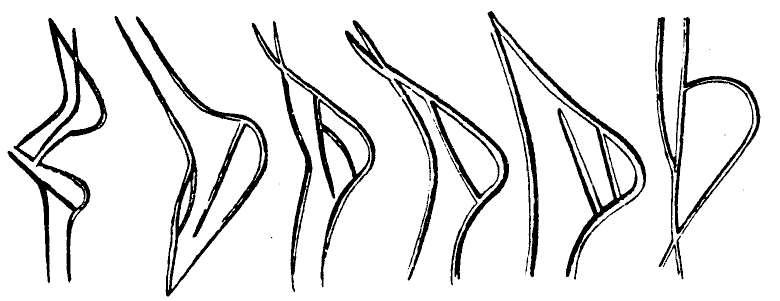
La Roche Lalinde
Photo: www.ucmo.edu/Documents/dissertationillus.pdf
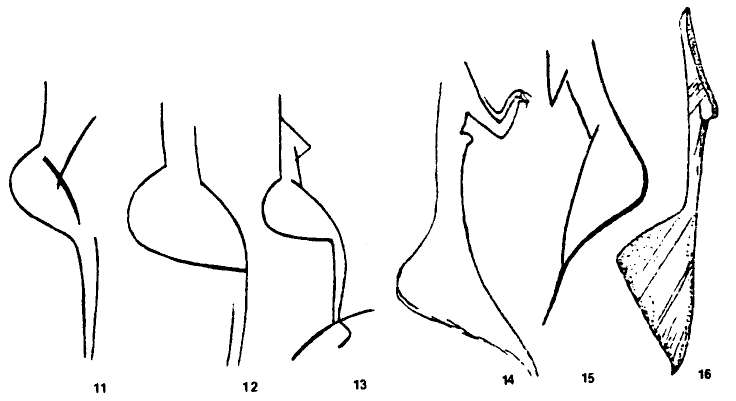
11-13 , Hohlenstein; 14-16 Gönnersdorf (engraving No. 59-1 and 86-1 and figurine No. 1
Photo: www.ucmo.edu/Documents/dissertationillus.pdf
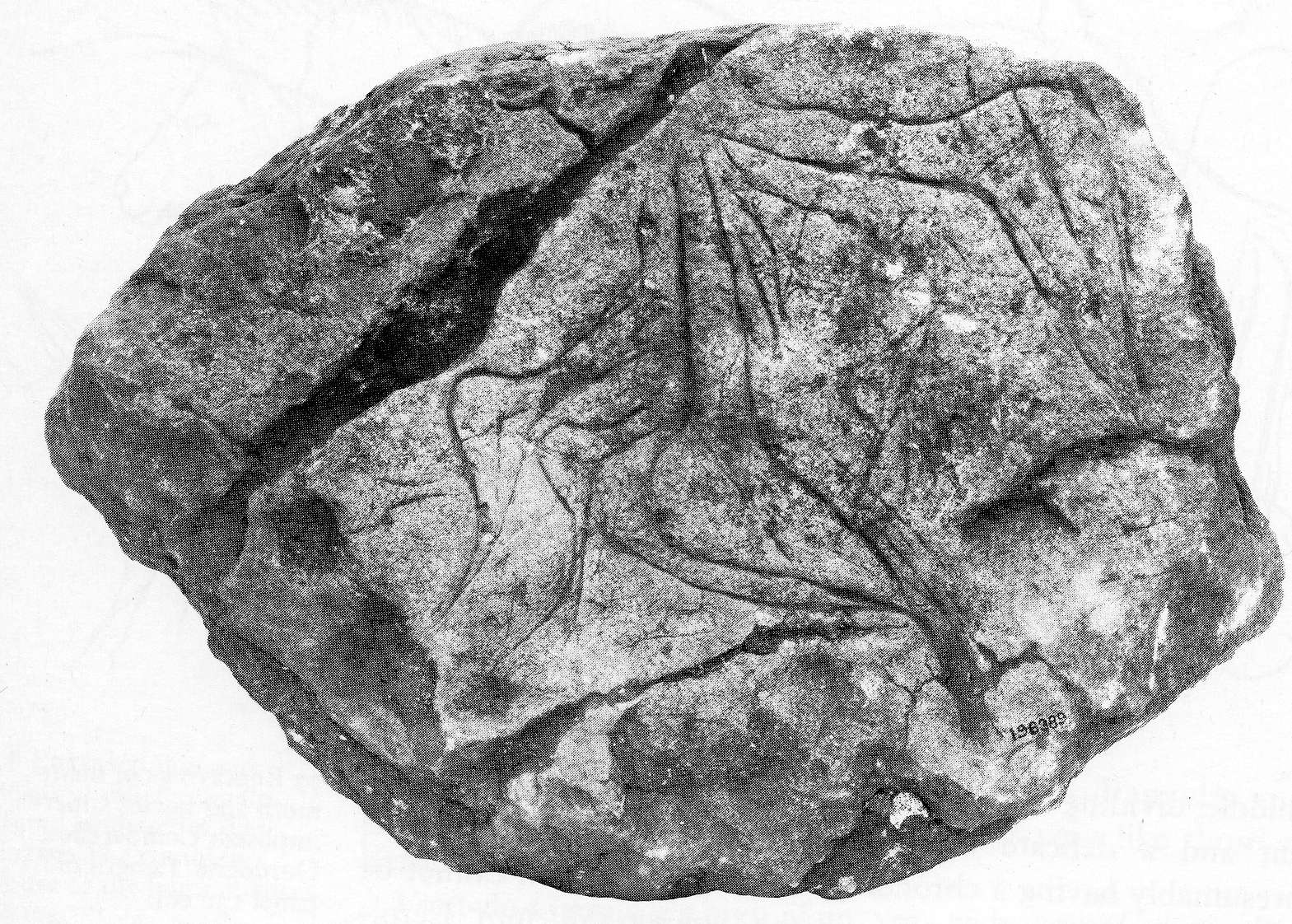
Stone block with schematic female figures engraved on it. La Grotte de la Roche, Lalinde, Dordogne. Length of block 37 cm.
Photo:
Sieveking (1979)
Source: Original, Field Museum, Chicago.
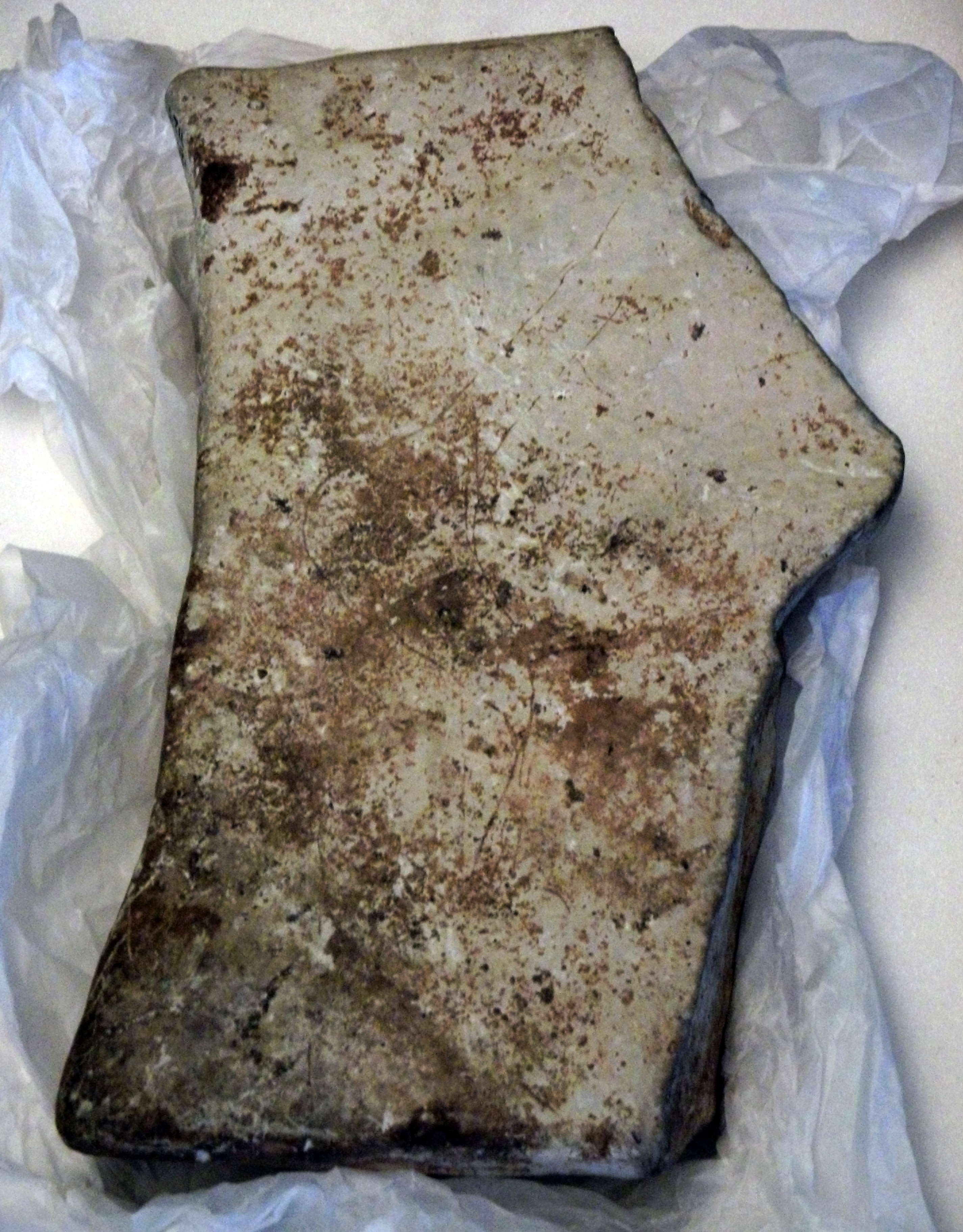
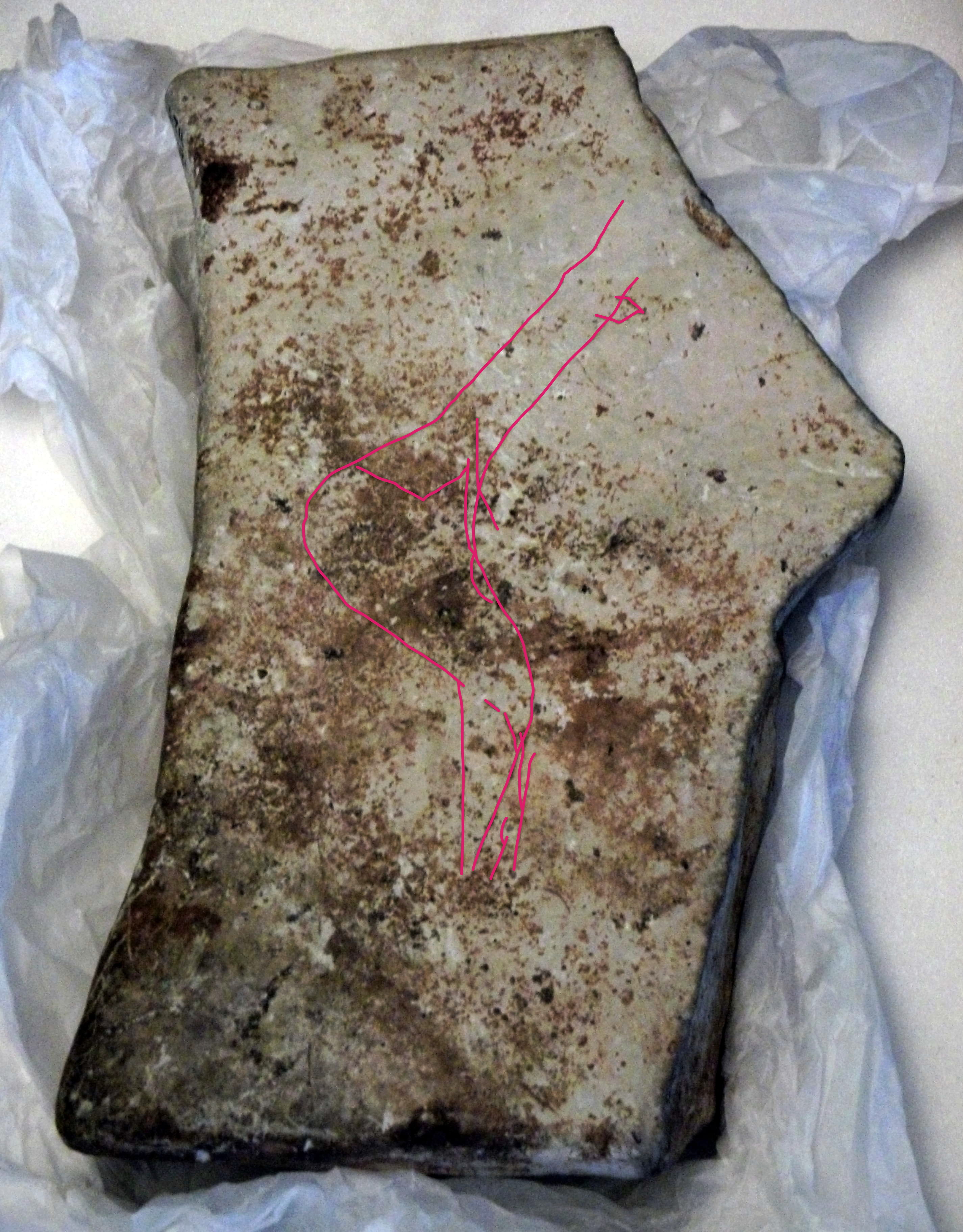
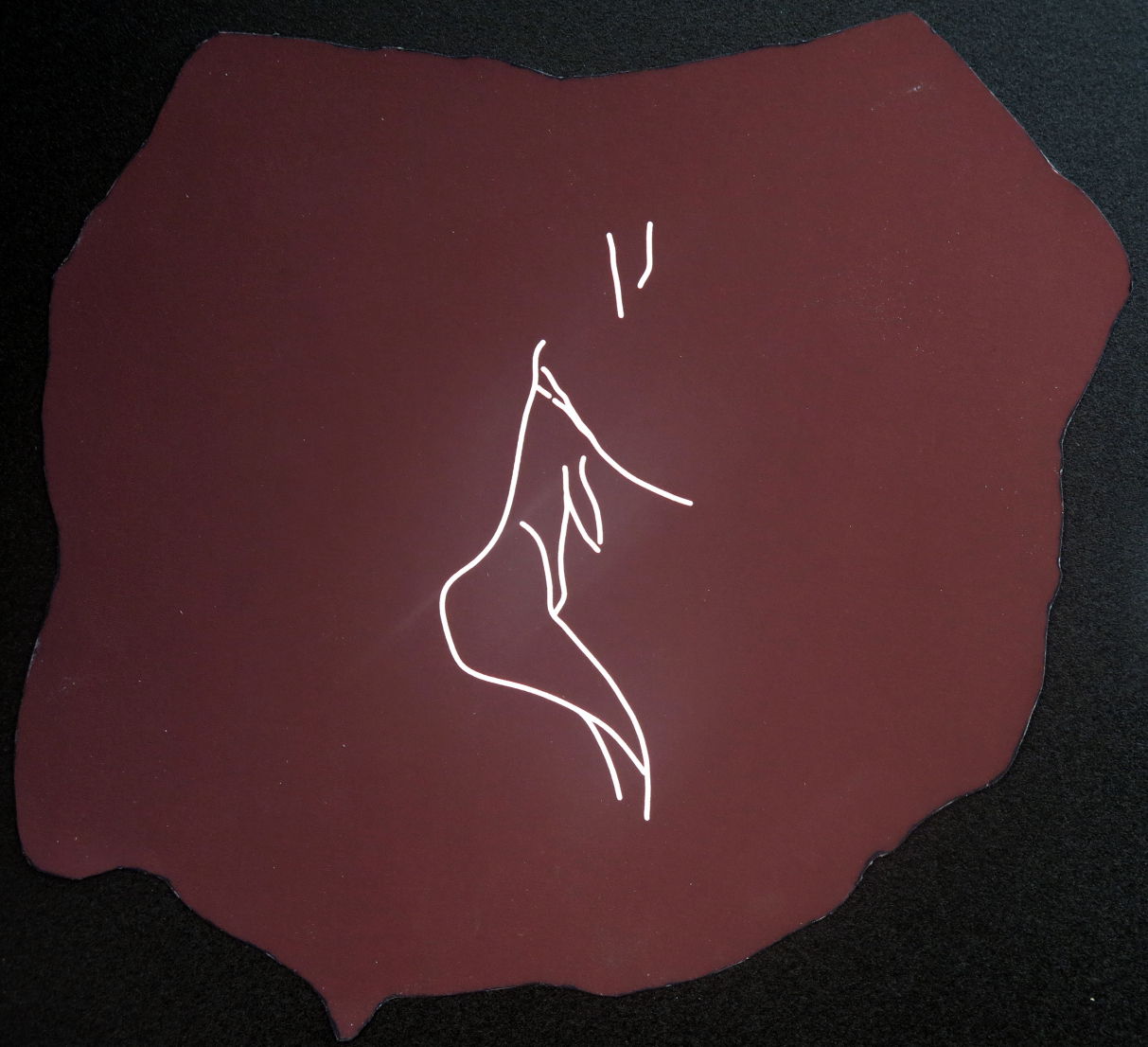
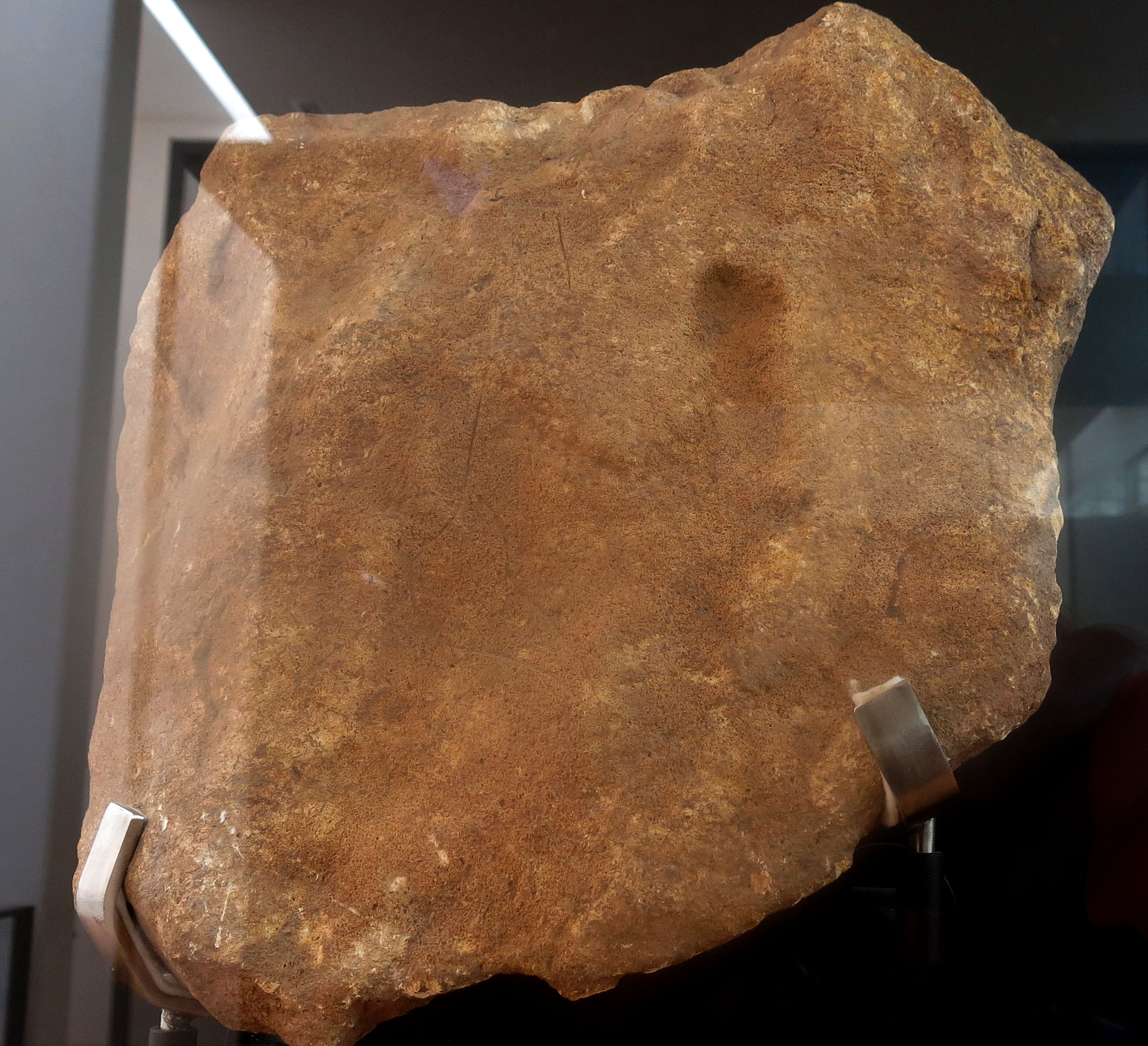
The Montastruc decorated stone (Acc. No. Palart 518) is an example of Ice Age art, now in the British Museum. A human figure that appears to be female has been scratched or engraved to decorate a fragment of a piece of limestone used as a lamp. The piece was excavated from Courbet Cave, Montastruc, Tarn-et-Garonne, Midi-Pyrénées, France, on the northern bank of the River Aveyron, a tributary of the Tarn. It is dated to around 11 000 BC, locally the Late Magdalenian period of the Upper Palaeolithic, towards the end of the last Ice Age.
It was excavated by Edouard Lartet and Henry Christy in 1863, and bequeathed with many other items to the museum by Christy. The dimensions of the stone are: length 230 millimetres, width 145 mm, depth 52 mm. The Swimming Reindeer and Mammoth spear thrower were found at the same site.
The other side of the slab of limestone has a natural depression in which fat was burnt, no doubt for lighting in the rock shelter. The engraving seems to have been made after the stone lamp broke, as the figure is neatly centred on the fragment.
Photo: Johnbod
Permission: Creative Commons Attribution-Share Alike 3.0 Unported license.
Tracing: Don Hitchcock 2013
Text: Wikipedia
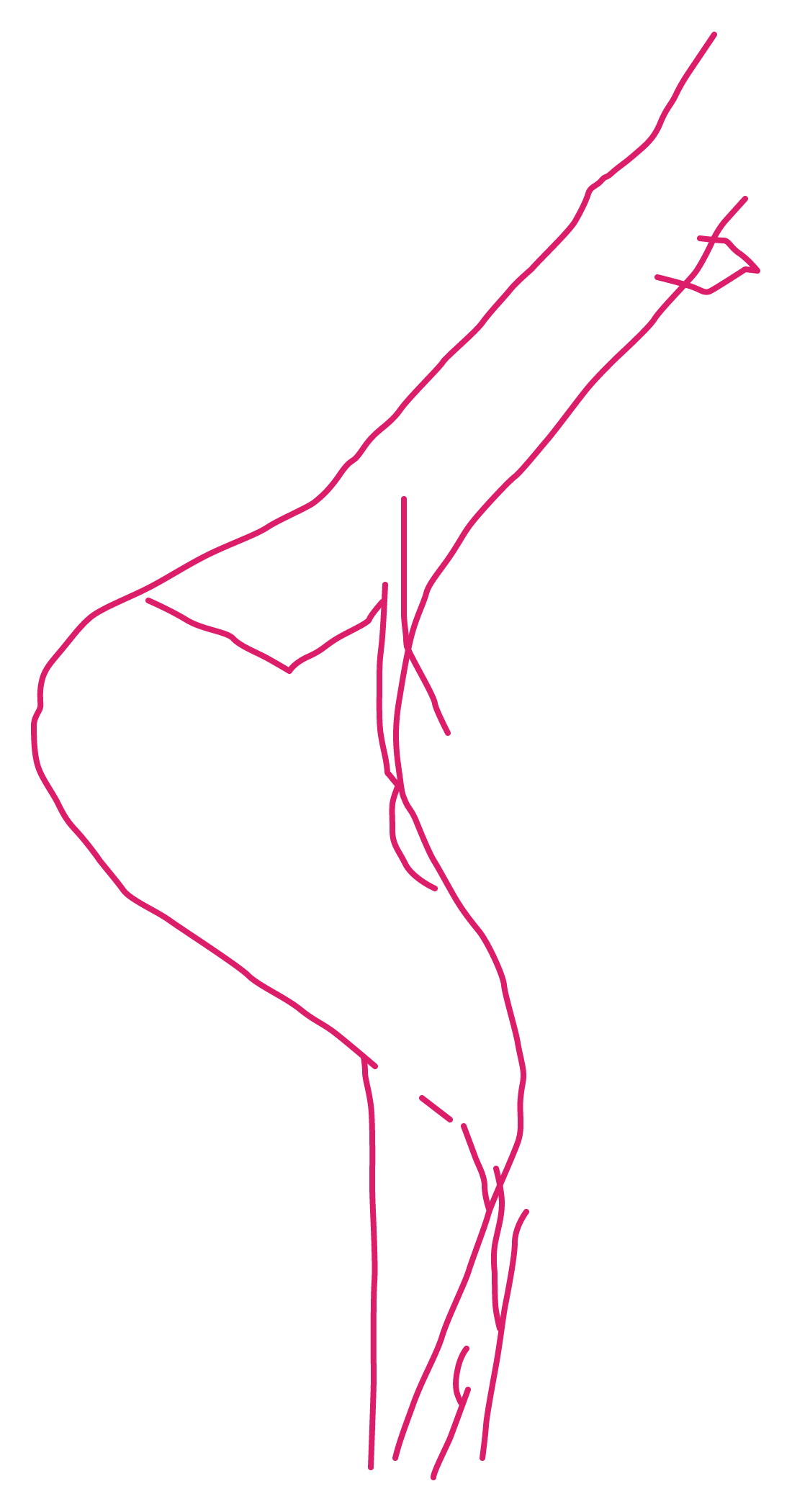
The headless figure is shown from the side, bending to the right, with the large rounded buttocks and thigh carefully drawn. The thin torso features a small sharp triangle that may indicate the breasts, or perhaps arms held out. The two lines defining the front and rear of the profile are continuous and 'confidently drawn', though they converge at knee level. Extra lines below the waist may represent an apron or skirt. Similar characteristics can be found in engraved figures from Neuwied in Germany.
Tracing: Don Hitchcock 2013
Text: Wikipedia
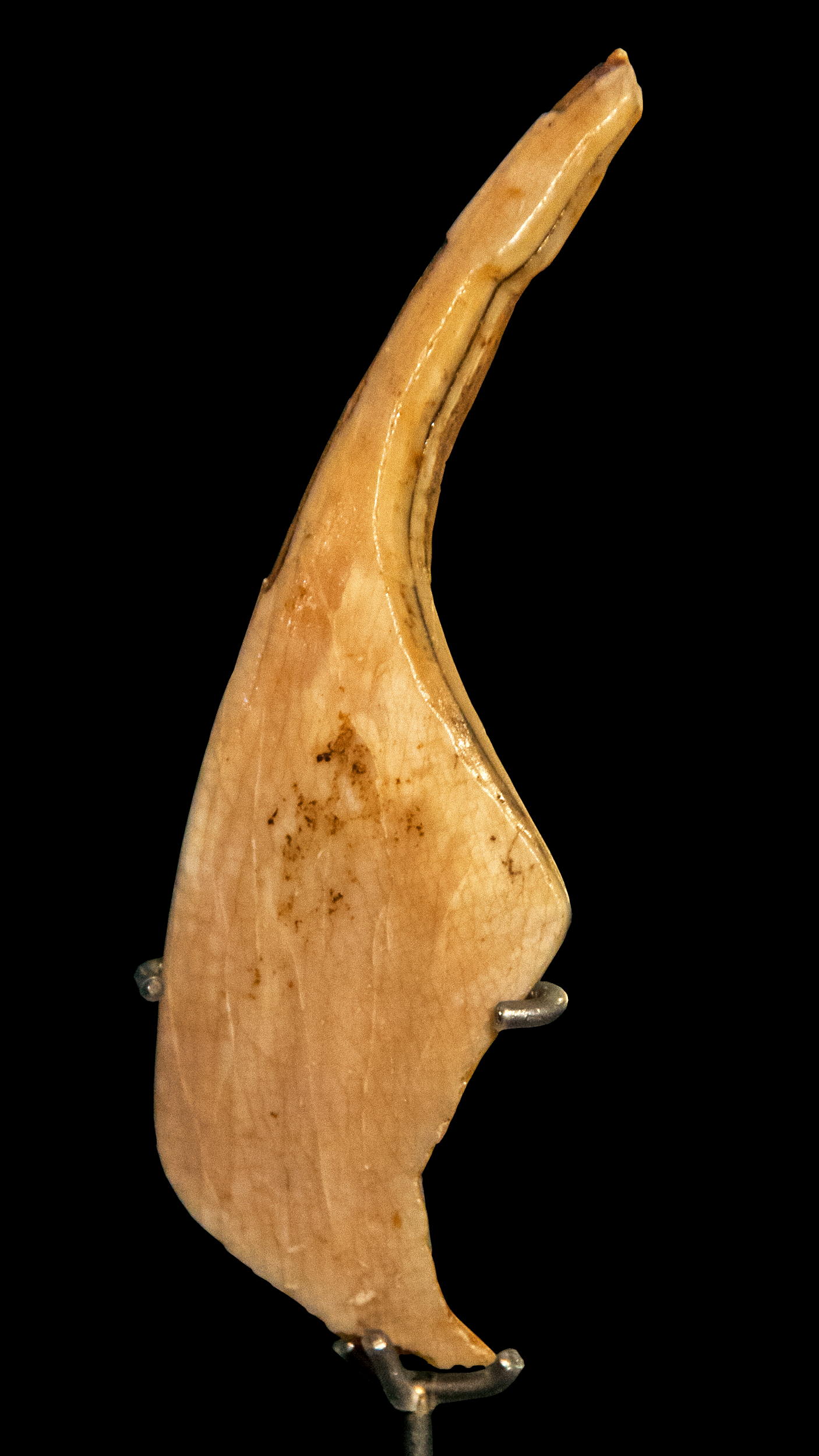
Venus sculpture from Vogelherdhöhle in the Lalinde/Gönnersdorf tradition.
The figurine is made from a boar tooth, found at the 2008 re-excavation of the materials from the Riek excavation of 1931 in front of the Vogelherdhöhle cave.
It is of Magdalenian age, about 13 000 BP.
Photo: Thilo Parg / Wikimedia Commons
Permission: CC BY-SA 3.0
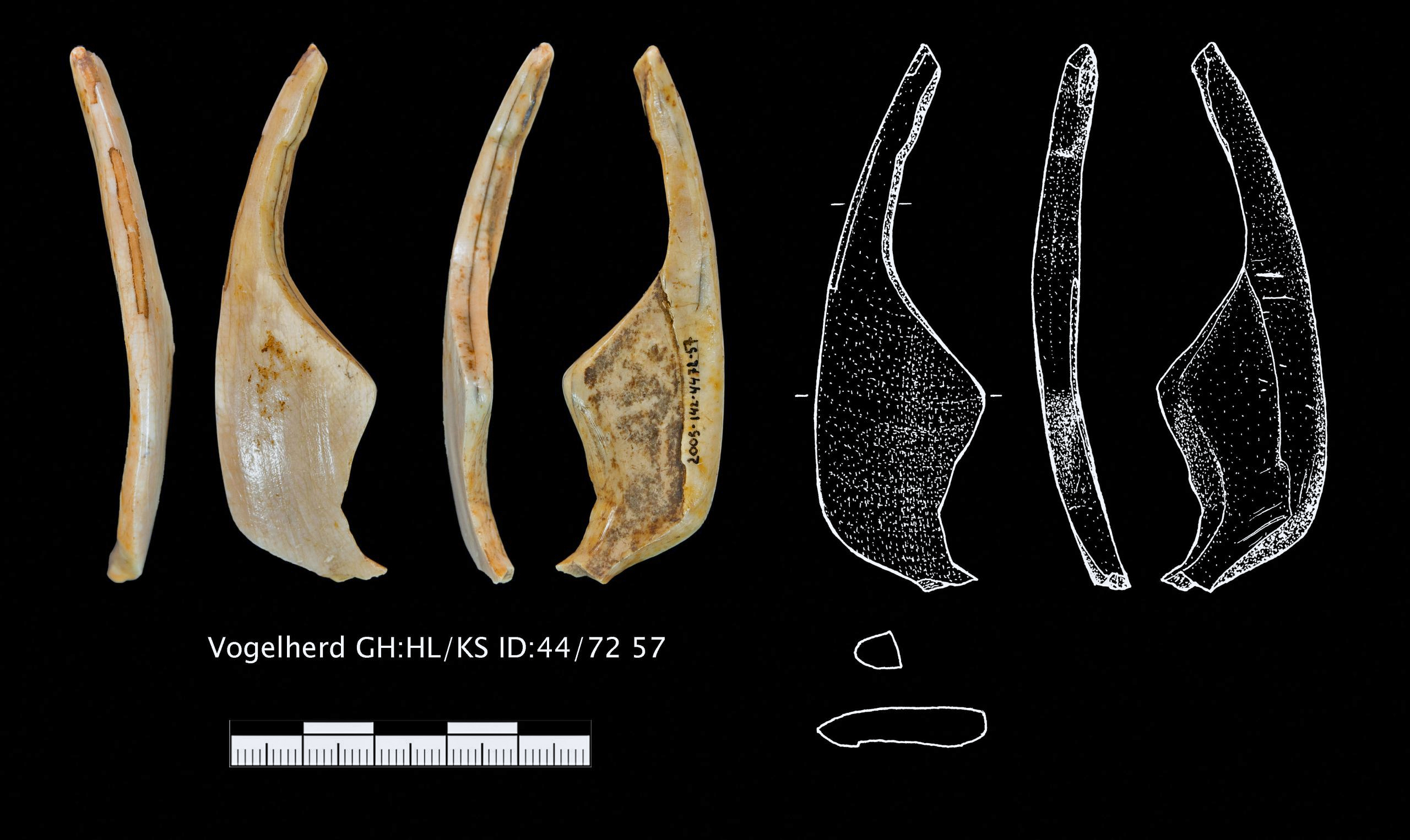
Venus sculpture from Vogelherdhöhle in the Lalinde/Gönnersdorf tradition.
Note that Conard et al. (2023) state that except for the general shape of the artefact, there is no convincing evidence justifying the interpretation the artefact as a female depiction, and that the find is likely a tool from the Mesolithic or the Neolithic.
( Note also, however, that no possible use has been proposed by the authors for this object, if it is indeed a tool - Don )
Photo: B. Schürch; Drawing according to Conard et al. (2009)
Proximal source: Conard et al. (2023)
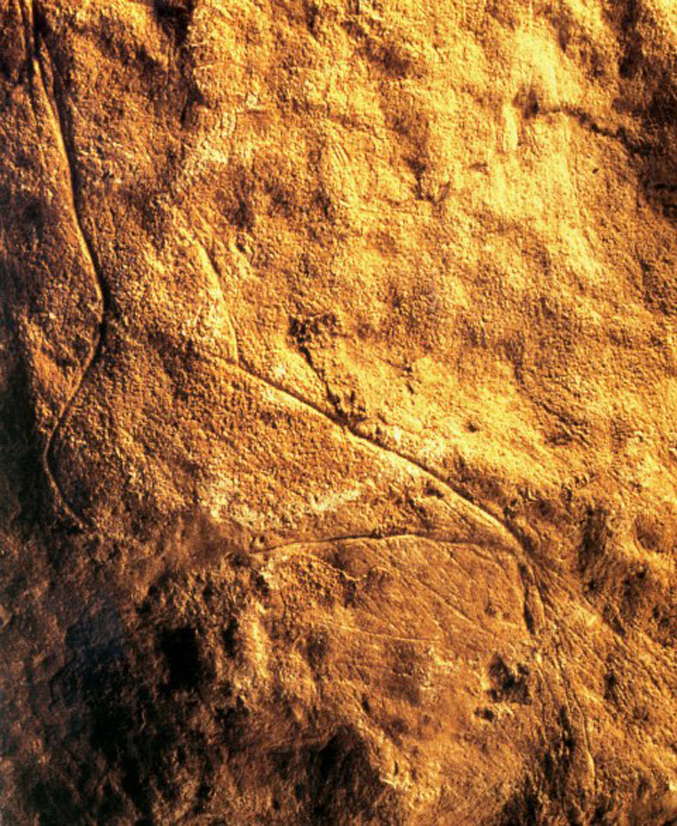
Feminine silhouettes engraved on a limestone plaque in La Grotte de la Roche, Lalinde.
Photo: http://www.istmira.com/foto-i-video-pervobytnoe-obschestvo/3923-iskusstvo-predystorii-pervobytnost-1.html
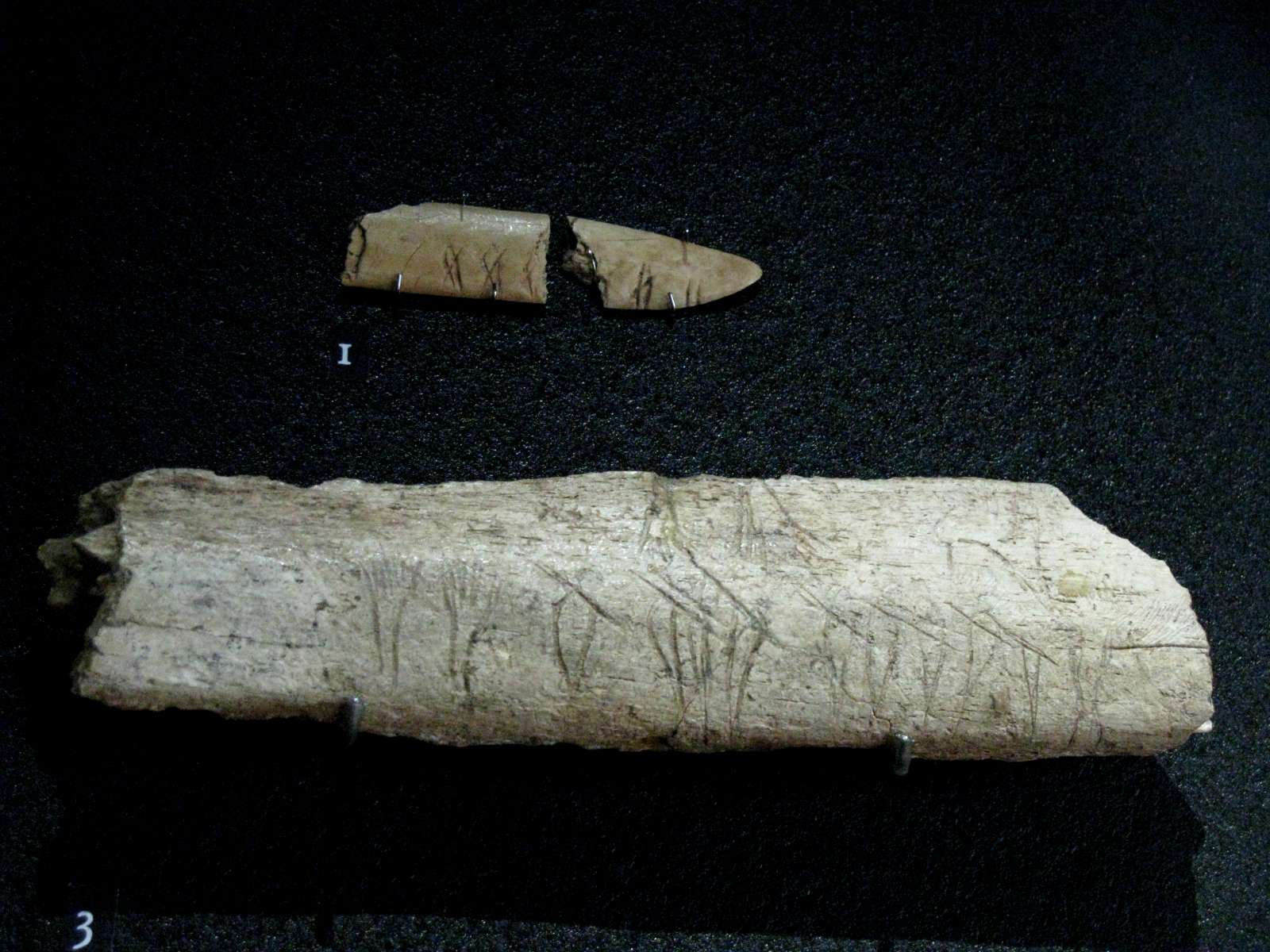
1 - Arancou - fragment of a polisher, Magdalenian.
3 - Chateau des Eyzies - fragment of a rib, Magdalenian.
Both of these objects have carvings which bear some resemblance to Lalinde/Gönnersdorf figurines.
Photo: Don Hitchcock 2008
Source: Originals, display at Musée National de Préhistoire, Les Eyzies
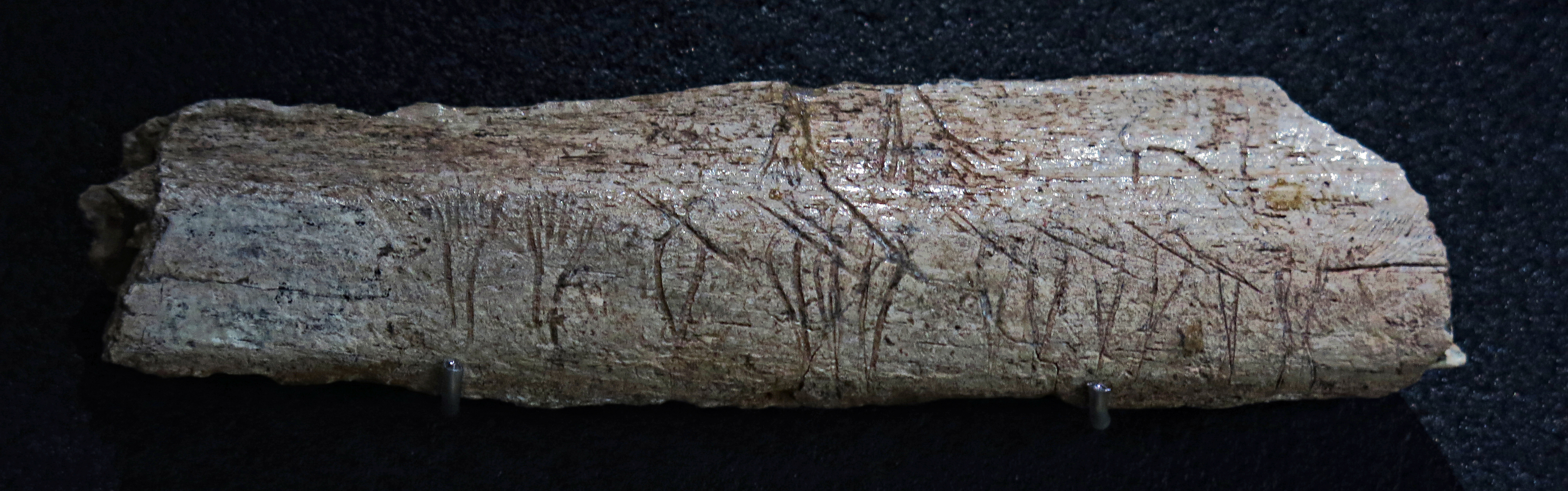
Rib shown above, Magdalenian, close up.
Photo: Don Hitchcock 2014
Source: Original, display at Musée National de Préhistoire, Les Eyzies
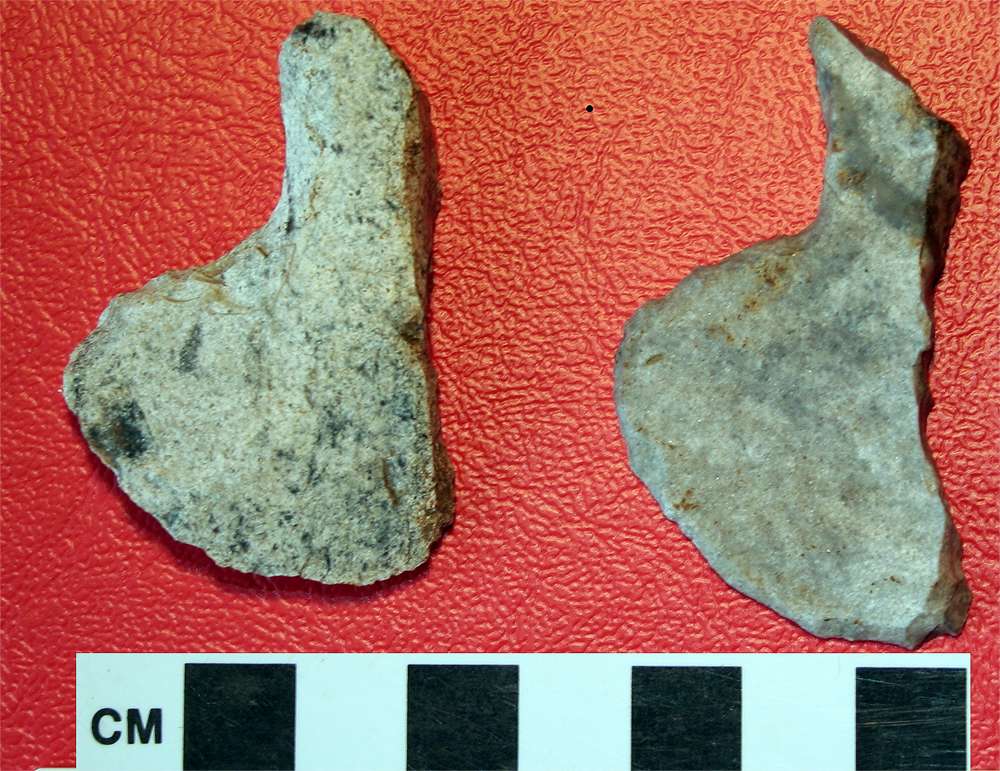
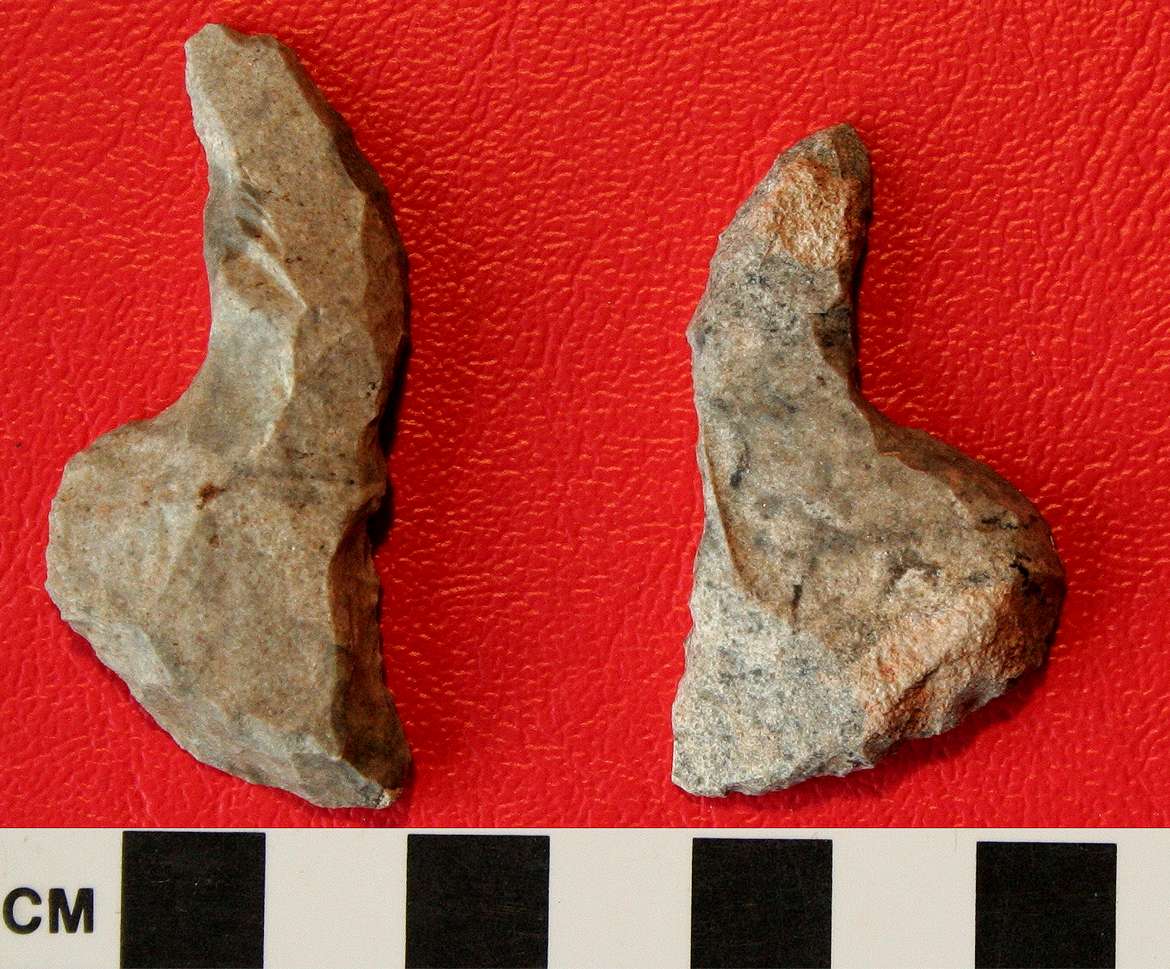
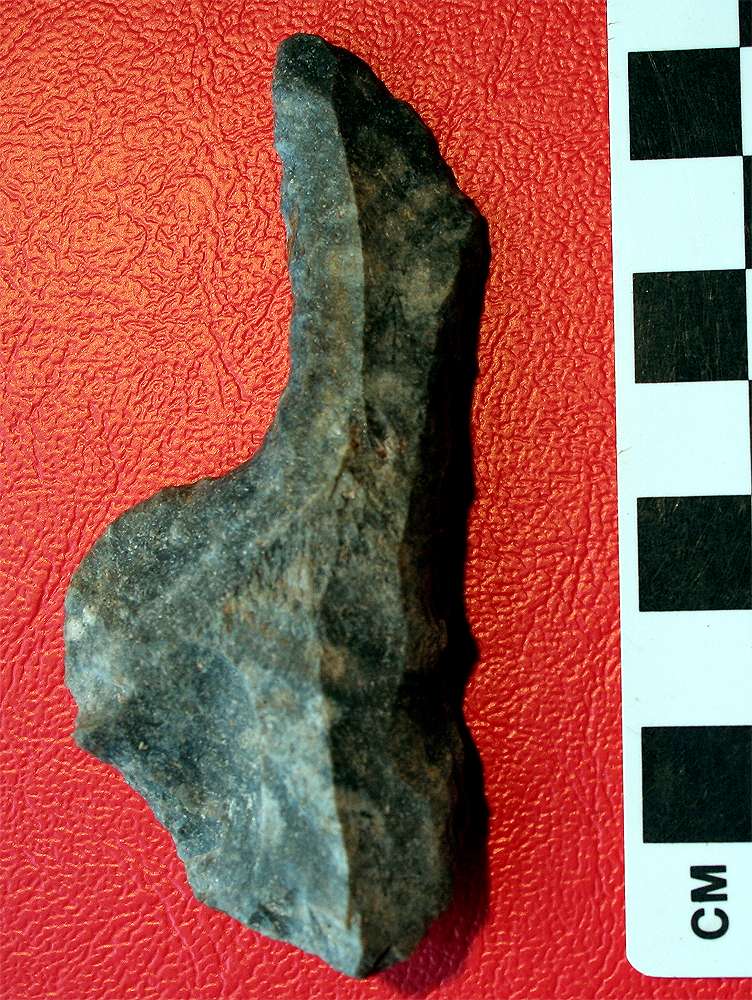
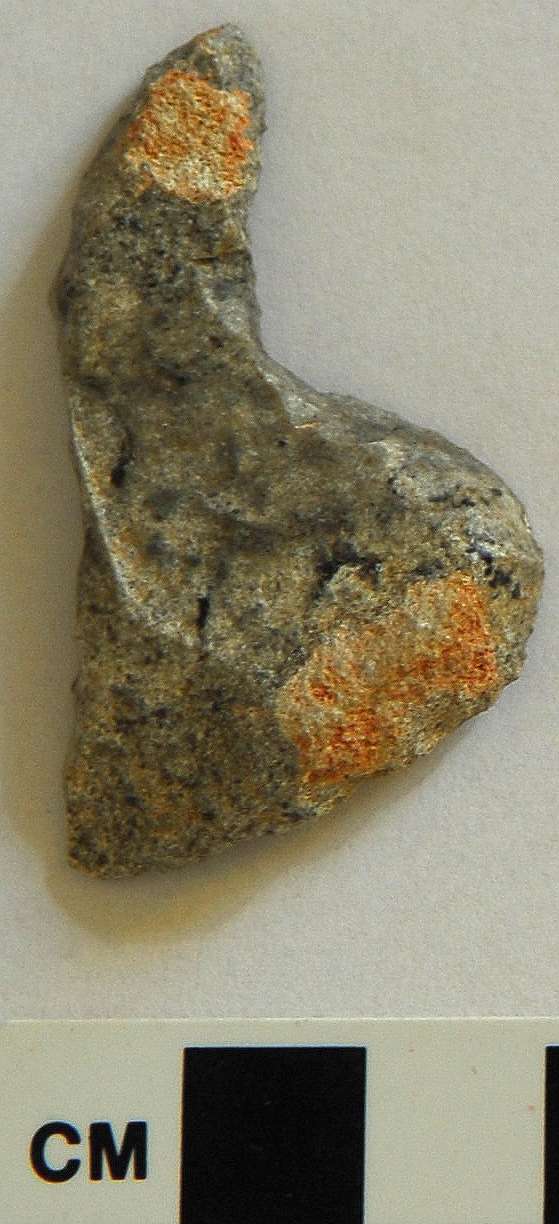
Chipped stone female figurines (style Lalinde/Gönnersdorf) from Wilczyce, Poland
Photo: Romuald Schild, photo credit Dagmara Manka
Source: http://archaeology.about.com/od/artandartifacts/ig/Wilczyce-Figurines/Chipped-Stone-Female-Figurine-.htm
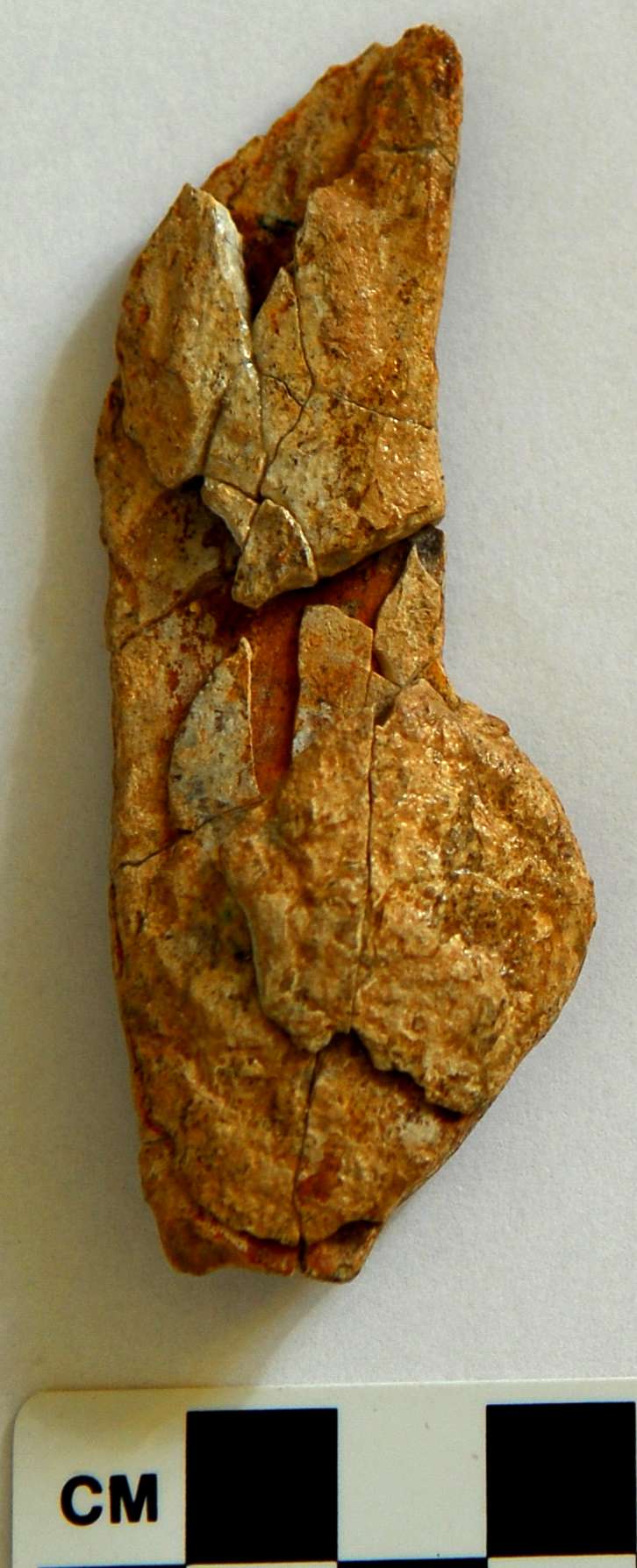
Carved Bone Female Figurine (style Lalinde/Gönnersdorf) from Wilczyce, Poland
Photo: Romuald Schild, photo credit Dagmara Manka
Source: http://archaeology.about.com/od/artandartifacts/ig/Wilczyce-Figurines/Chipped-Stone-Female-Figurine-.htm
Further information about the Wilczyce site may be found at the link below:
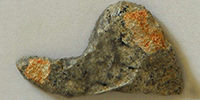 Female figurines in the style of Lalinde/Gönnersdorf from Wilczyce are unusual in that many are knapped from flint. Located on the Sandomierz plateau in southern Poland, the Wilczyce site was discovered in 1994 during a prospecting campaign carried out by the Polish Academy of Sciences. The site is located on a slope dominating the valley of the river Opatówka, and uniquely, the venus figures are all in 'ice wedges' deposits, which occur in areas subjected to permafrost.
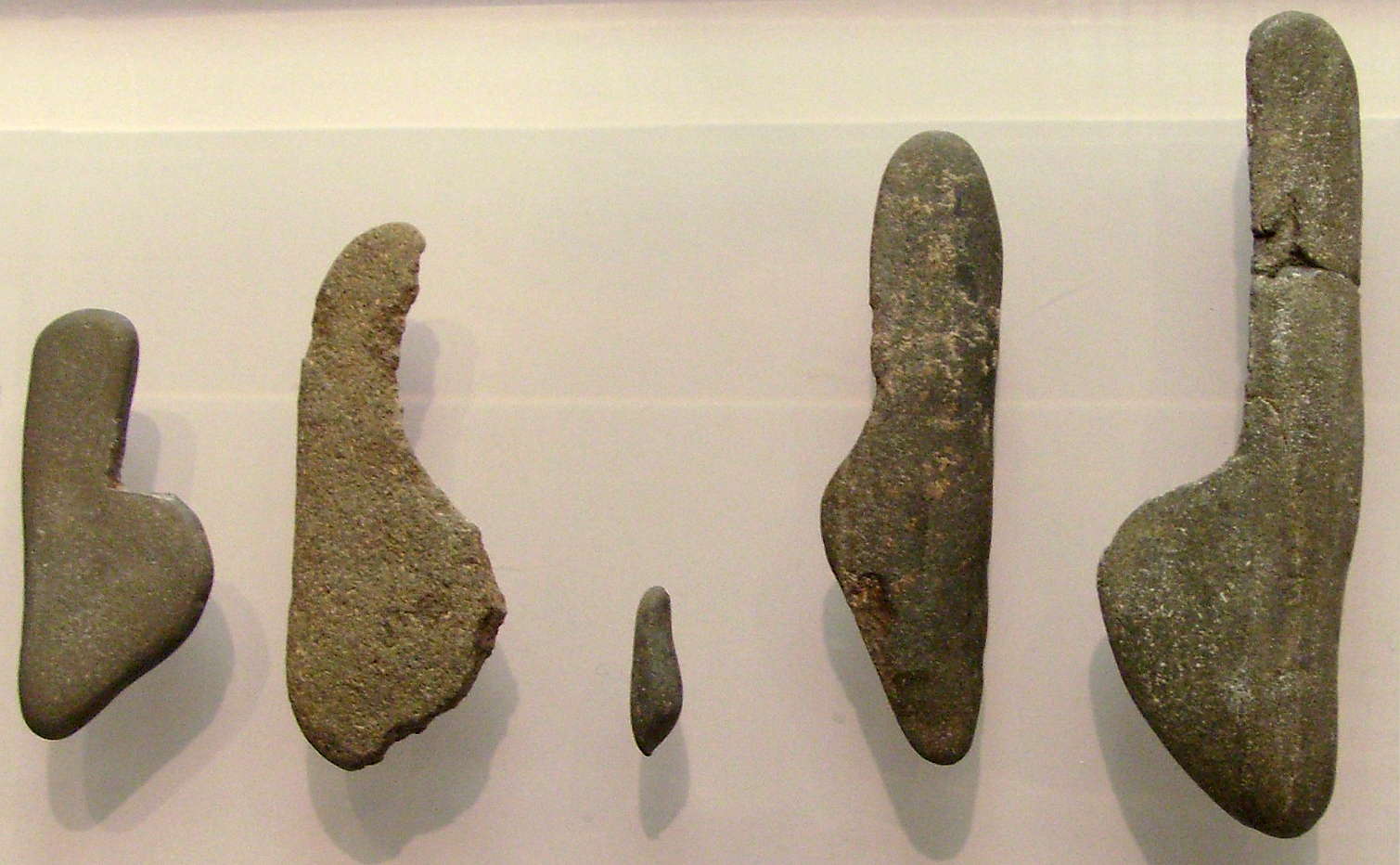
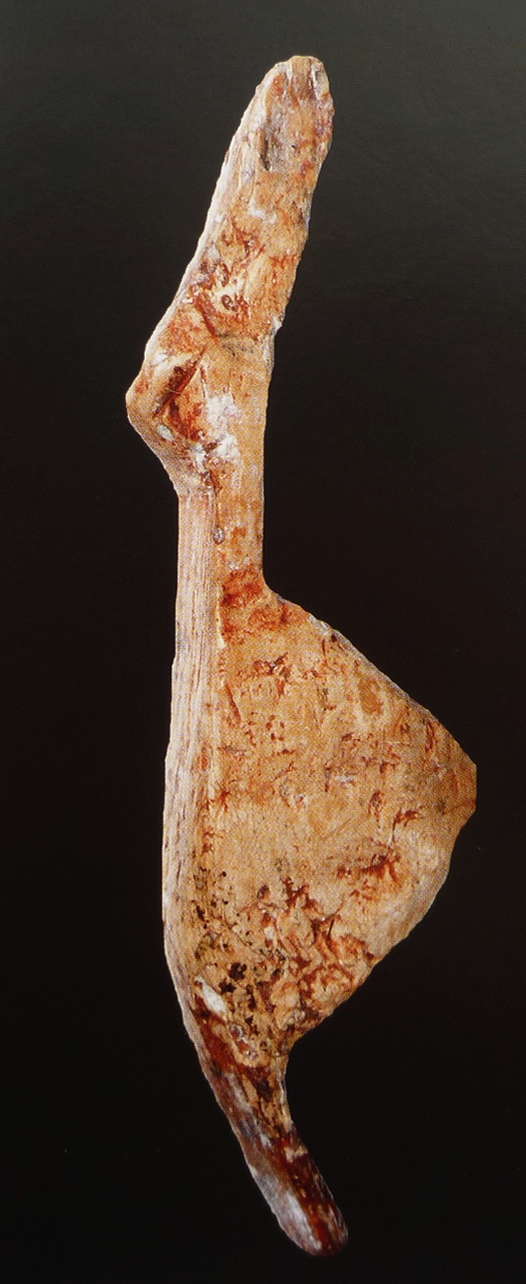
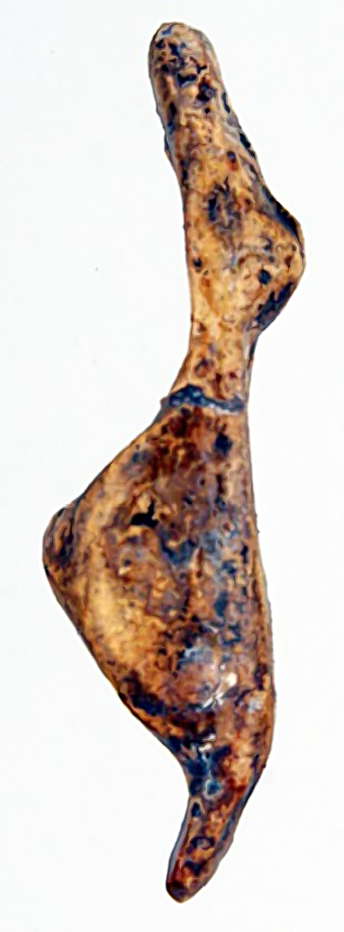
Female figurines from the excavations at Oelknitz, Thüringen.
Source: Museum für Ur- und Frühgeschichte Thüringens in Weimar
Photo: PaulTTS, Feb. 2010
Permission: Creative Commons Attribution-Noncommercial-Share Alike version 3.0
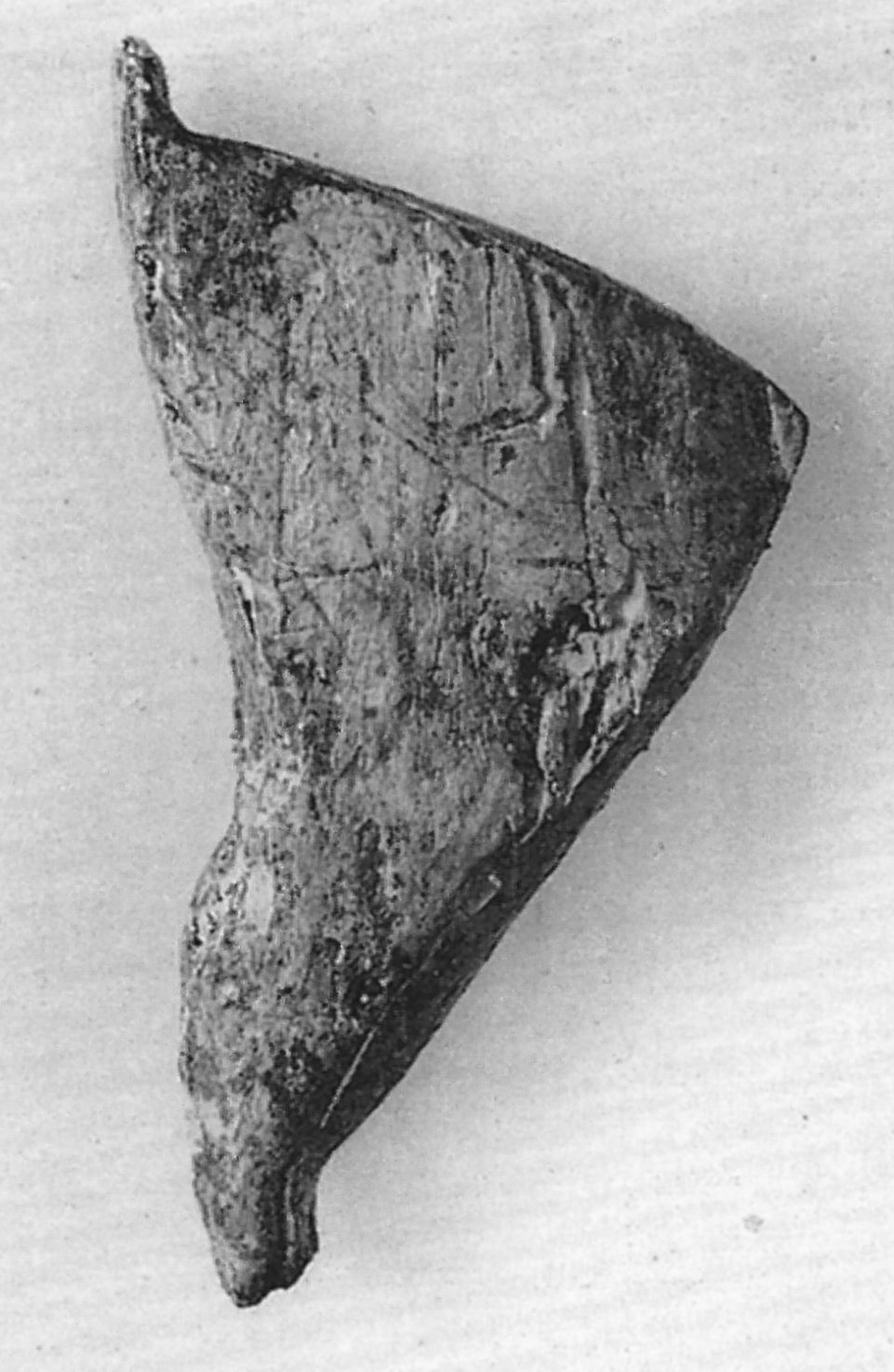
Female figurine from Oelknitz, 36 mm high.
Photo: Original, Müller-Beck et al. (1987)
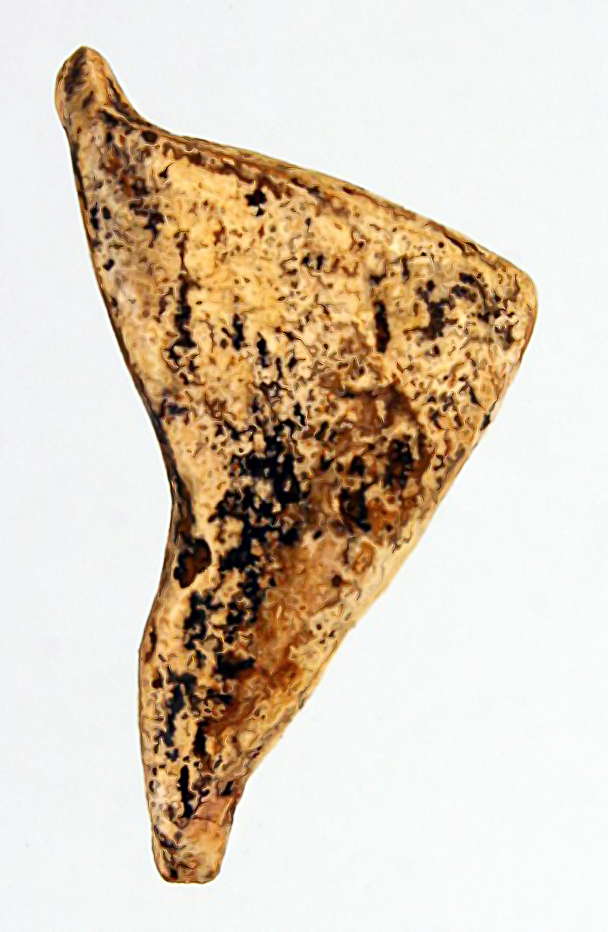
The Oelknitz venus above as a replica for sale.
Photo: Facsimile, http://www.topgeo.com/venusfragment_nebra_replica__7076.html

Oelknitz Venus.
Photo: Original, Müller-Beck et al. (1987)
Oelknitz Venus in ivory.
Photo: Rau et al. (2009)
Replica for sale, possibly the same as the one above, Oelknitz venus, 45 mm high.
Photo: http://www.topgeo.com/venus_of_nebra_2_replica__7077.html
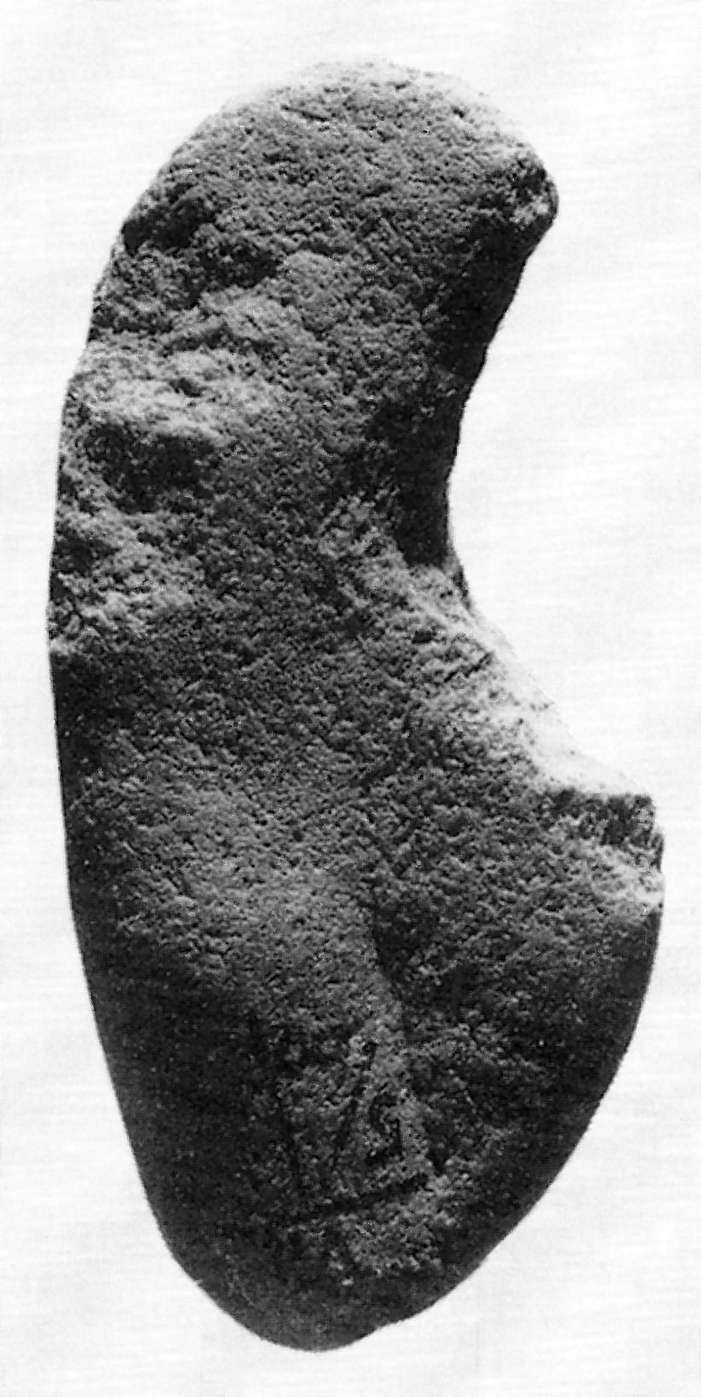
Oelknitz Venus.
Photo: Original, Müller-Beck et al. (1987)

Engraving of a vulva, from Oelknitz.
Photo: Original, Müller-Beck et al. (1987)
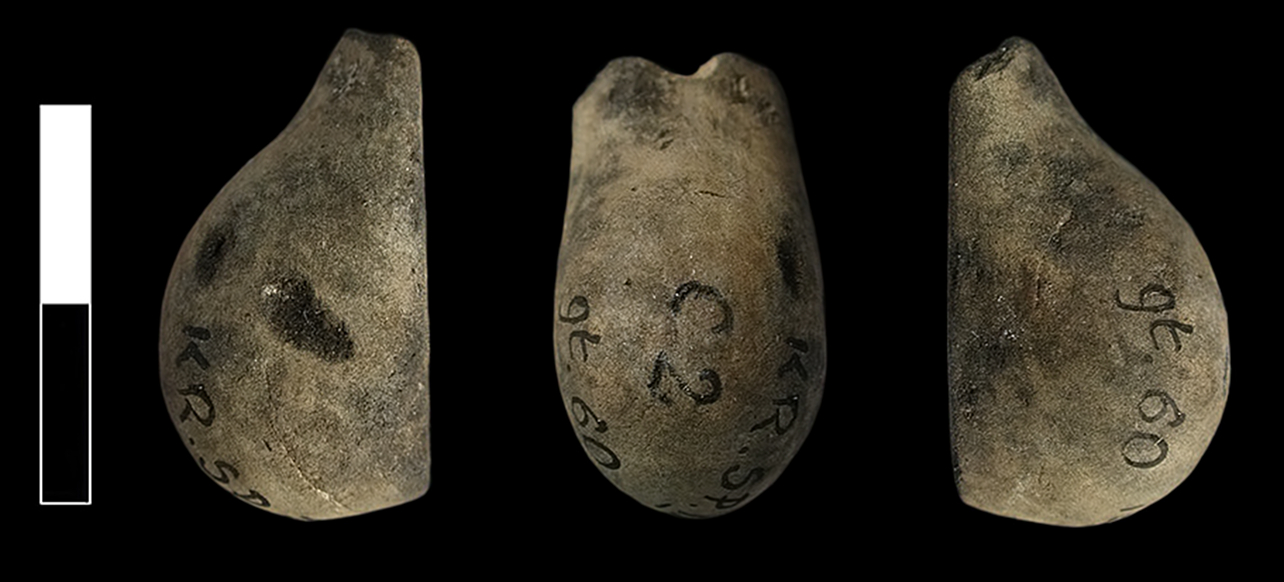
Kraków Spadzista (Poland). Burned pendant made from ivory. Scale is 2 cm.
Artefacts made from mammoth bones or ivory are much less represented on open air Gravettian sites in southern Poland. There are ten in the collection from Kraków and five in the Jaksice II's collection. It should be noted that artefacts from this second site were made only from ivory. On Kraków Spadzista mostly bone artefacts or ornamented objects made from mammoth bones were found. Only one pendant made from ivory was discovered, which was (probably) accidentally burnt.
( note that this is very similar to a Lalinde/Gönnersdorf figurine. It is not unusual that it is made of ivory, but it is a little unusual in that, being of ivory, it has been pierced for use as a pendant. Some of the jet venus figures from Petersfels are, however, pierced for use as a pendant. - Don )
Photo and text: Original, Wojtal and Wilczynski (2015)
References
- Conard, N., Malina, M., Verrept, T. 2008: Weitere Belege für eiszeitliche Kunst und Musik aus den Nachgrabungen 2008 am Vogelherd bei Niederstotzingen-Stetten ob Lonetal, Kreis Heidenheim. Archäologische Ausgrabungen in Baden-Württemberg pp. 23–26.
- Conard, N., Schürch, B., Haack F., Wolf S., 2023: Zur Stellung des Wildschweinzahn-Artefakts aus dem Grabungsabraum am Vogelherd, Kerns Verlag Tübingen, https://kernsverlag.com/de/, doi.org/10.51315/mgfu.2022.31005
- Cook, J., 2013: Ice Age art - the arrival of the modern mind, The British Museum Press, 26th May 2013
- Hansen, M., 2006: Beyond seals - The Representation of Seals on Engraved Slate Plaquettes from the Magdalenian Site Gönnersdorf (Central Rhineland, Germany), Thesis in Archaeology, Candidate thesis for the title Cand. Philol. University of Tromsø, Autumn 2006
- Müller-Beck, H. and Albrecht, G. (Ed.), 1987: Die Anfänge der Kunst vor 30000 Jahren Theiss: Stuttgart.
- Peyrony, D., 1932: Station Préhistorique de la Gare de Couze ou de Sain-Sulpice-des-Magnats, Commune de Lalinde (Dordogne), Bulletin de la Société historique et archéologique du PérigordTome LIX, 1932, gallica.bnf.fr/ark:/12148/bpt6k121801s/f82.item.zoom
- Rau, S., Naumann D., Barth M., Mühleis Y., Bleckmann C., 2009: Eiszeit: Kunst und Kultur, Thorbecke, 2009, 396p. ISBN: 978-3-7995-0833-9
- Sieveking, A., 1979: The Cave Artists, Thames and Hudson
- Stevens, R., O'Connell T., Hedges R., Street M., 2009: Radiocarbon and stable isotope investigations at the Central Rhineland sites of Gönnersdorf and Andernach-Martinsberg, Germany, Journal of Human Evolution 57 (2009) 131–148
- Wojtal, P., Wilczynski, J., 2015: Hunters of the giants: Woolly mammoth hunting during the Gravettian in Central Europe, Institute of Systematics and Evolution of Animals, Polish Academy of Sciences, Sławkowska 17, 31-016 Kraków, Poland