Back to Don's Maps
Back to Venus figures from the Stone Age
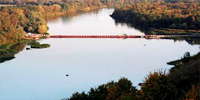
Kostenki on the Don River is a very important Paleolithic site. It was a settlement which contained venus figures, dwellings made of mammoth bones, and many flint tools and bone implements.
Venus figures from the Kostenki - Borshevo region on the Don River

Photomontage of an important Kostenki Venus, diadem, and the Don River in the Kostenki region
Photo: Vladimir Gorodnjanski
Kostenki is a very important Paleolithic site on the Don River in Russia. It was a settlement which contained venus figures, dwellings made of mammoth bones, and many flint tools and bone implements. Kostenki / Kostienki is not actually a single site but really an area on the right bank of the Don River in the regions of the villages of Kostenki and Borshevo, consisting of more than twenty site locations, all dating to the Paleolithic.
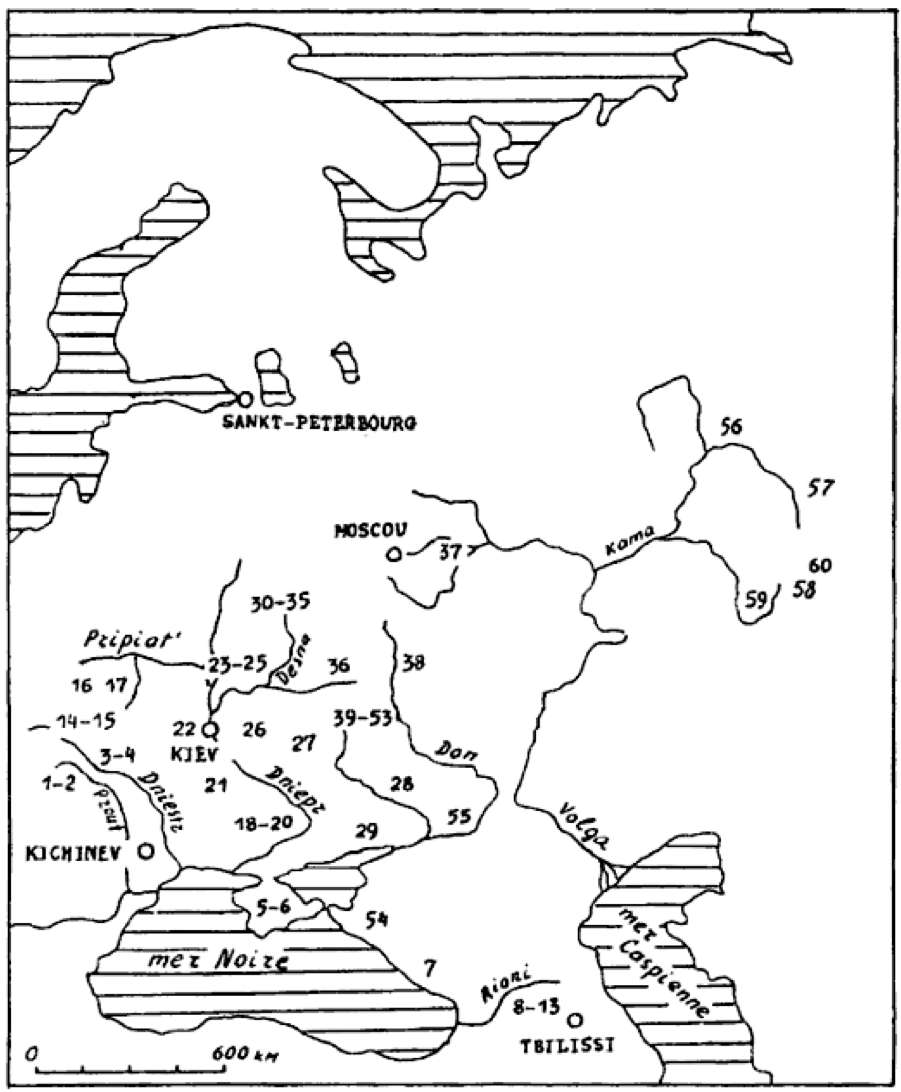
Distribution of mobile art in Eastern Europe.
1 Staryé Duruitory, 2 Brynzeny, 3 Kosseoutzy, 4 Klimaoutzy, 5 Suren' 1, 6 Chan-Koba, 7 Apiantcha, 8 grotte d'Uvarov, 9 Sakagia, 10 Sagvardgilé, 11 Gvardgilas-Kldé, 12 Devis-Khvreli, 13 Taro-Kldé, 14 Molodova V, 15 Lissitchniki, 16 Lipa VI, 17 Klinetz, 18 Ossokorovka, 19 Dubovaya Balka, 20 Kaïstrovaya Balka, 21 Mejiritch (Mezhirich), 22 Kievo-Kirillovskaya, 23 Mézine (Mizyn), 24 Novgorod Severskyi, 25 Puchkari I, 26 Dobranitchevka, 27 Gontzy, 28, Rogalik, 29 Amvrossievka, 30 Eliseevitchi I, 31 Eliseevitchi II, 32 Yudinovo, 33 Khoylevo II, 34 Timonovka, 35 Suponevo, 36 Avdeevo, 37 Sungir', 38 Gagarino, 39 Kostienki 19, 40 Kostienki 21, 41 Kostienki 13, 42 Kostienki 1, 43 Kostienki 14, 44 Kostienki 12, 45 Kostienki 17, 46 Kostienki 2, 47 Kostienki 11, 48 Kostienki 4, 49 Kostienki 15, 50 Kostienki 9, 51 Kostienki 8, 52 Borchtchevo 1, 53 Borchtchevo 2, 54 Ilskaya, 55 Murakovka, 56 Ostrovskaya, 57 Bez'imyannyi, 58 Smelobskaya, 59 Kapova, 60 Ignatievskaya.
Photo: Abramova (1995)
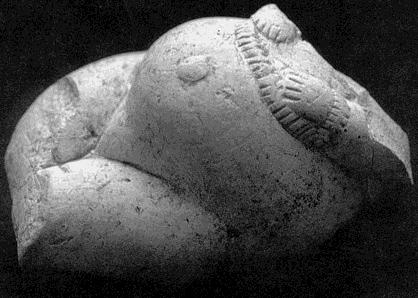
The Kostienki limestone venus.
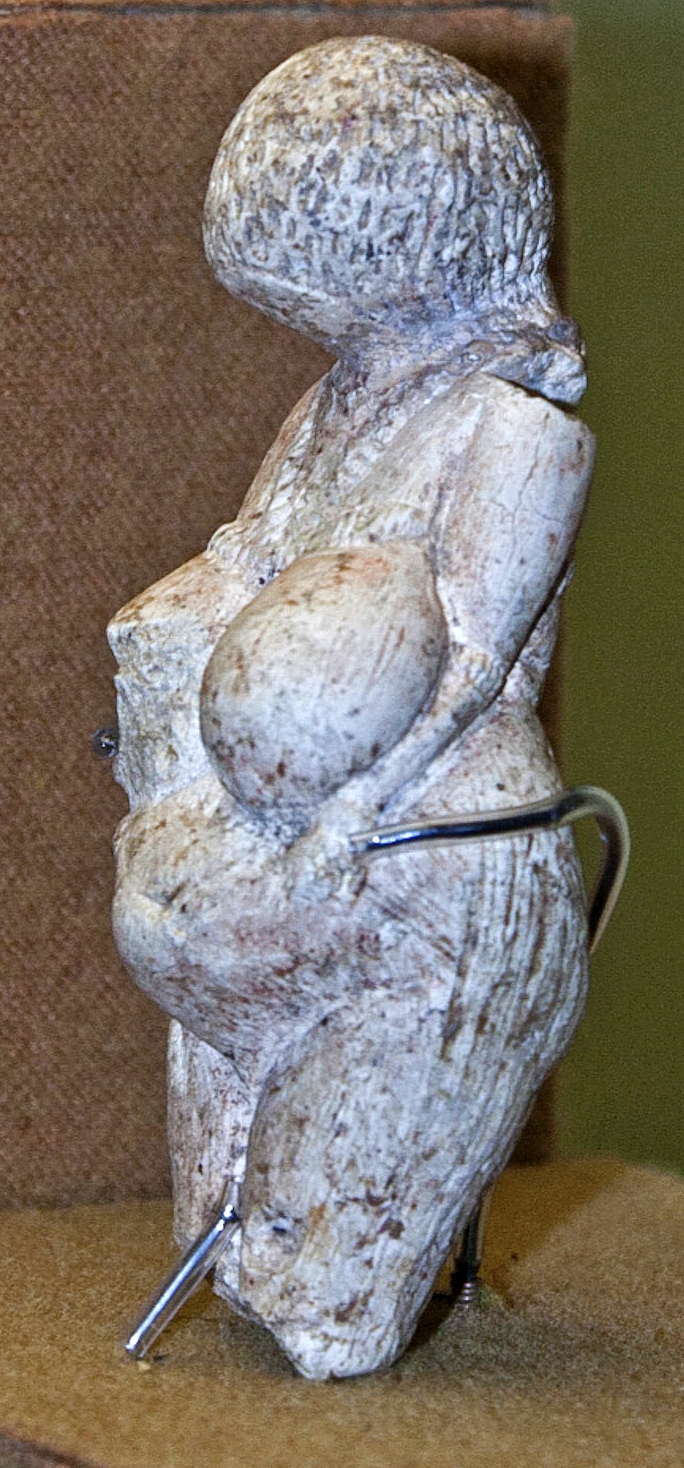
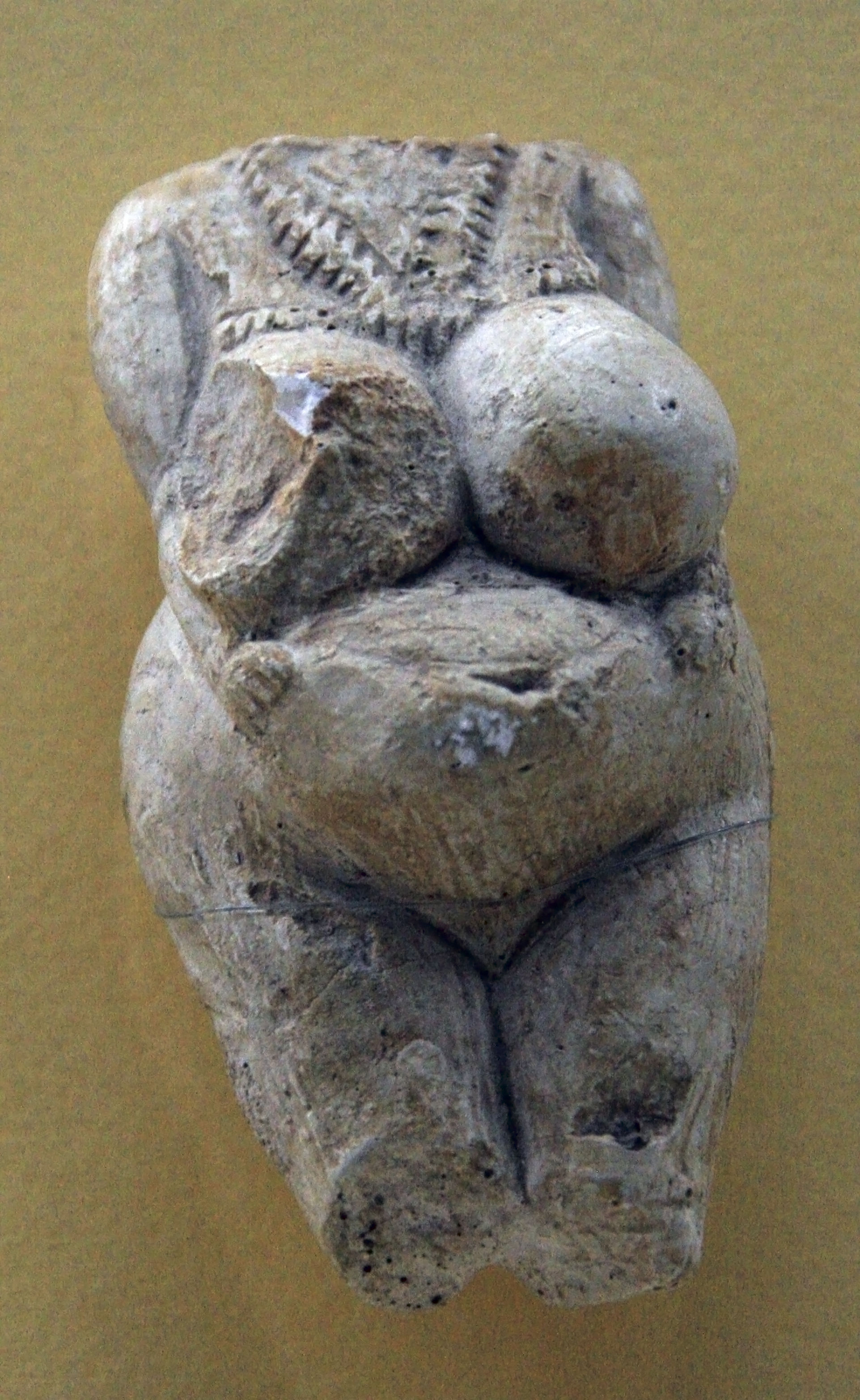
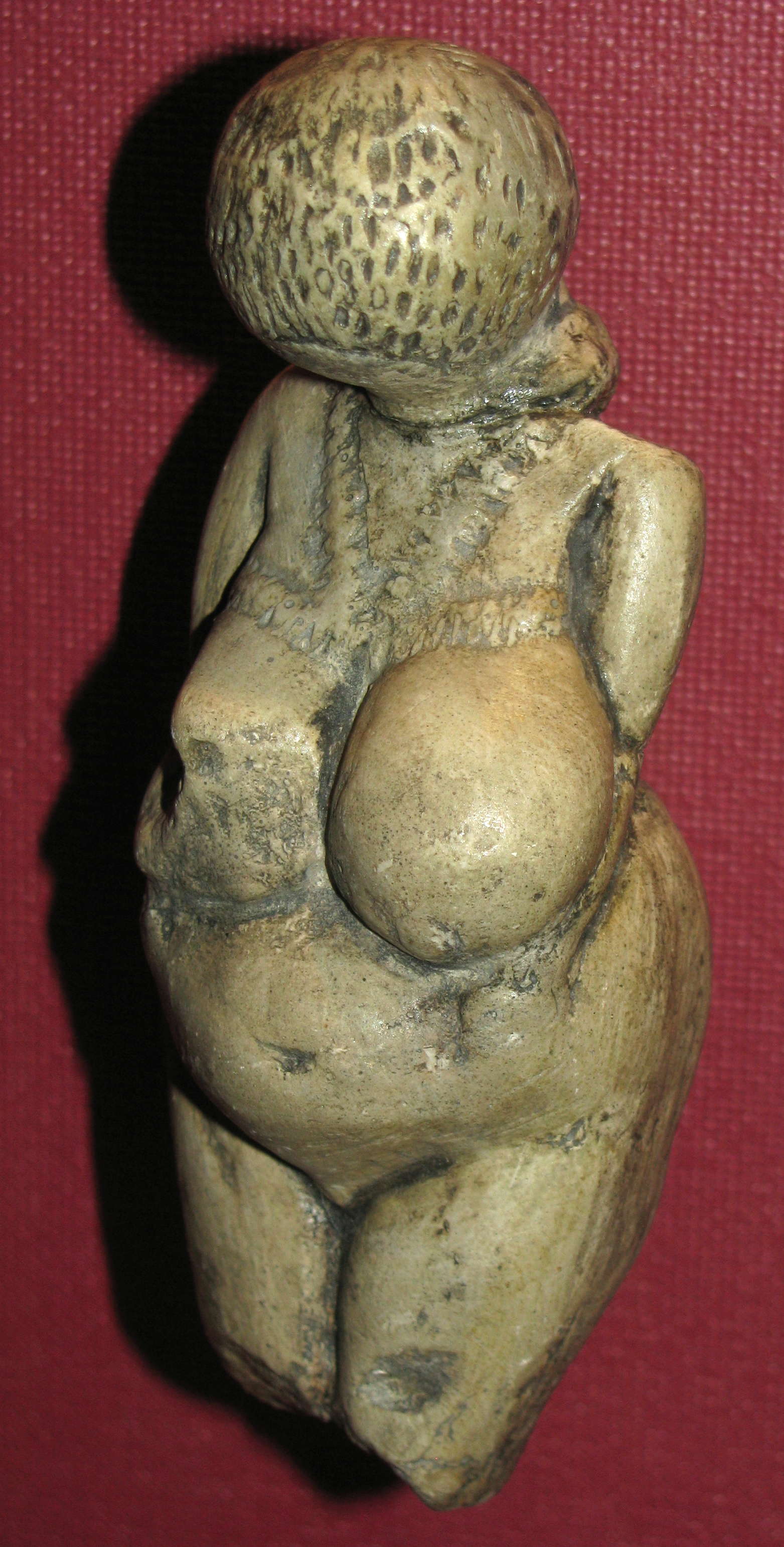
Found at the Russian site of Kostenki in 1988, this is by far the biggest such object known from the ice age. The height of the surviving fragment is 13.5 cm (5.5 inches) It is noteworthy not only for its massive size and the prominent navel, but also for the bracelets on the wrists, which appear to be joined together at the front like a pair of handcuffs.
Photo: P. Bahn, 'Prehistoric Art'
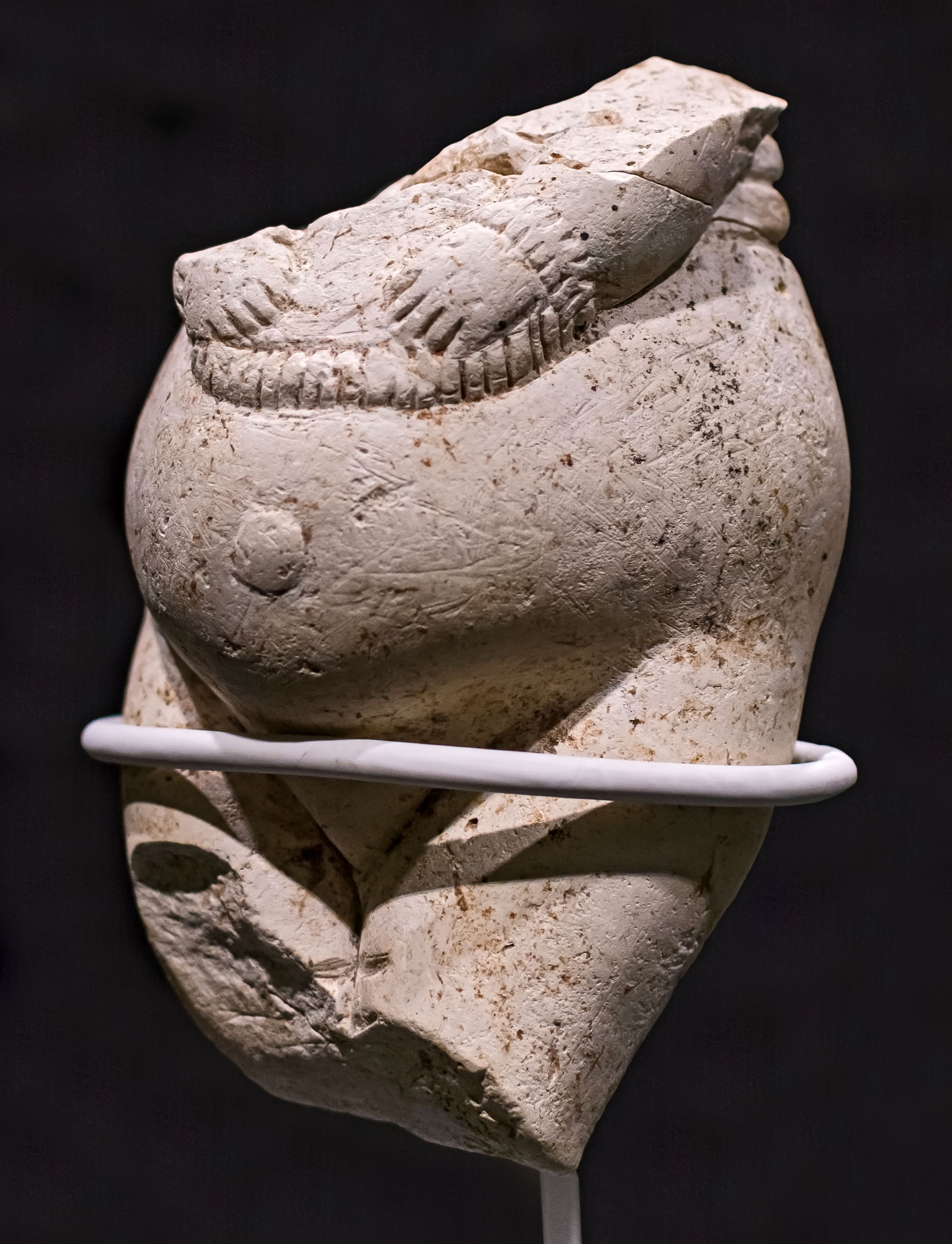
The Kostenki limestone venus.
Height: 137 mm
Gravettien, circa 25 000 BP, original,
Photo: Thilo Parg
Permission: CC BY-SA 4.0
Source: original, exhibited at the Archeological Museum Hamburg (Ice Age - The Art of the Mammoth Hunters from 18 October 2016 to 14 May 2017)
On loan from the Hermitage Museum, Saint Petersburg, Russia.
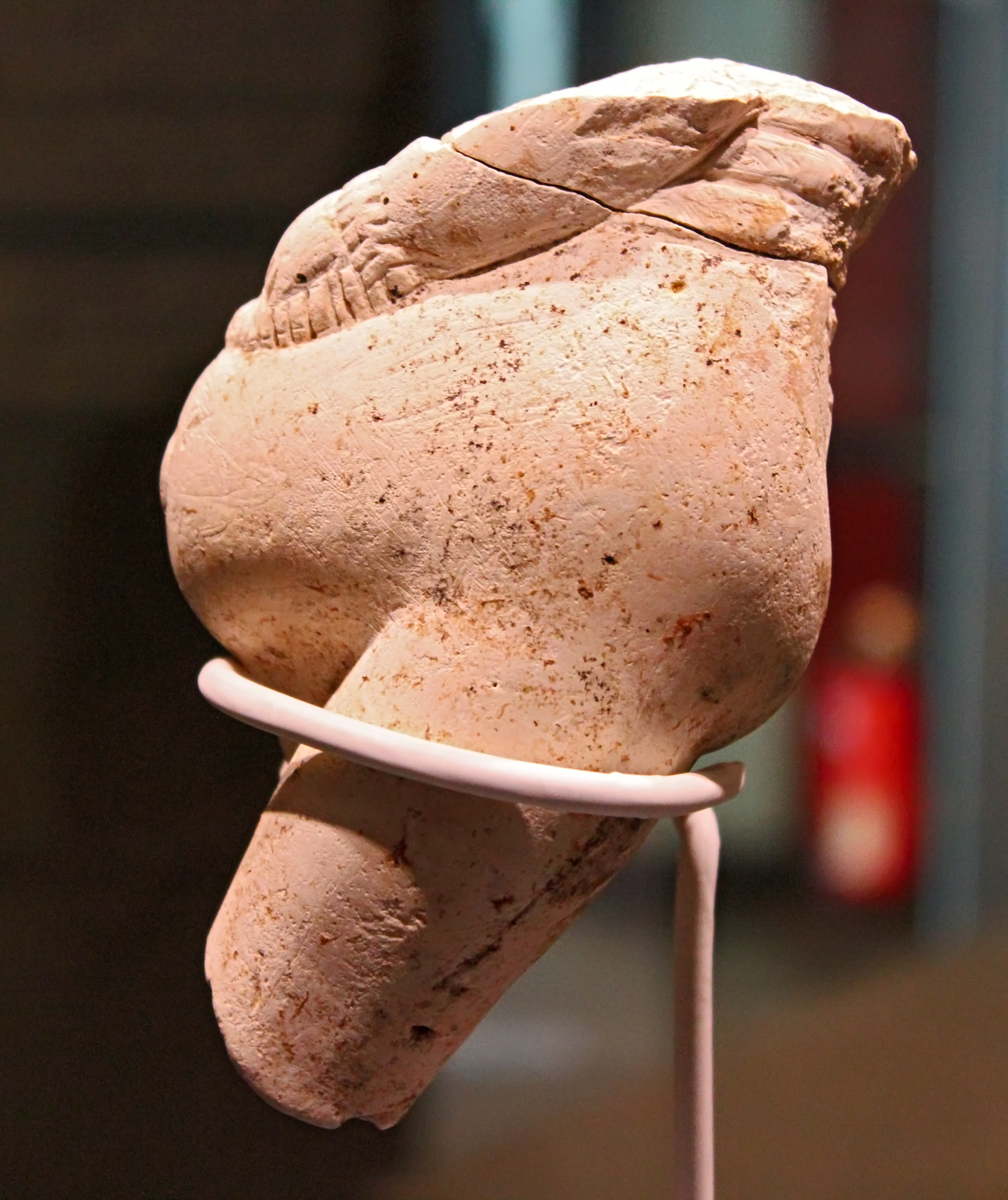
The Kostenki limestone venus.
Height: 137 mm
Gravettian, circa 25 000 BP, original,
Photo: Courtesy Ralph Frenken
Source: original, exhibited at the Archeological Museum Hamburg (Ice Age - The Art of the Mammoth Hunters from 18 October 2016 to 14 May 2017)
On loan from the Hermitage Museum, Saint Petersburg, Russia.
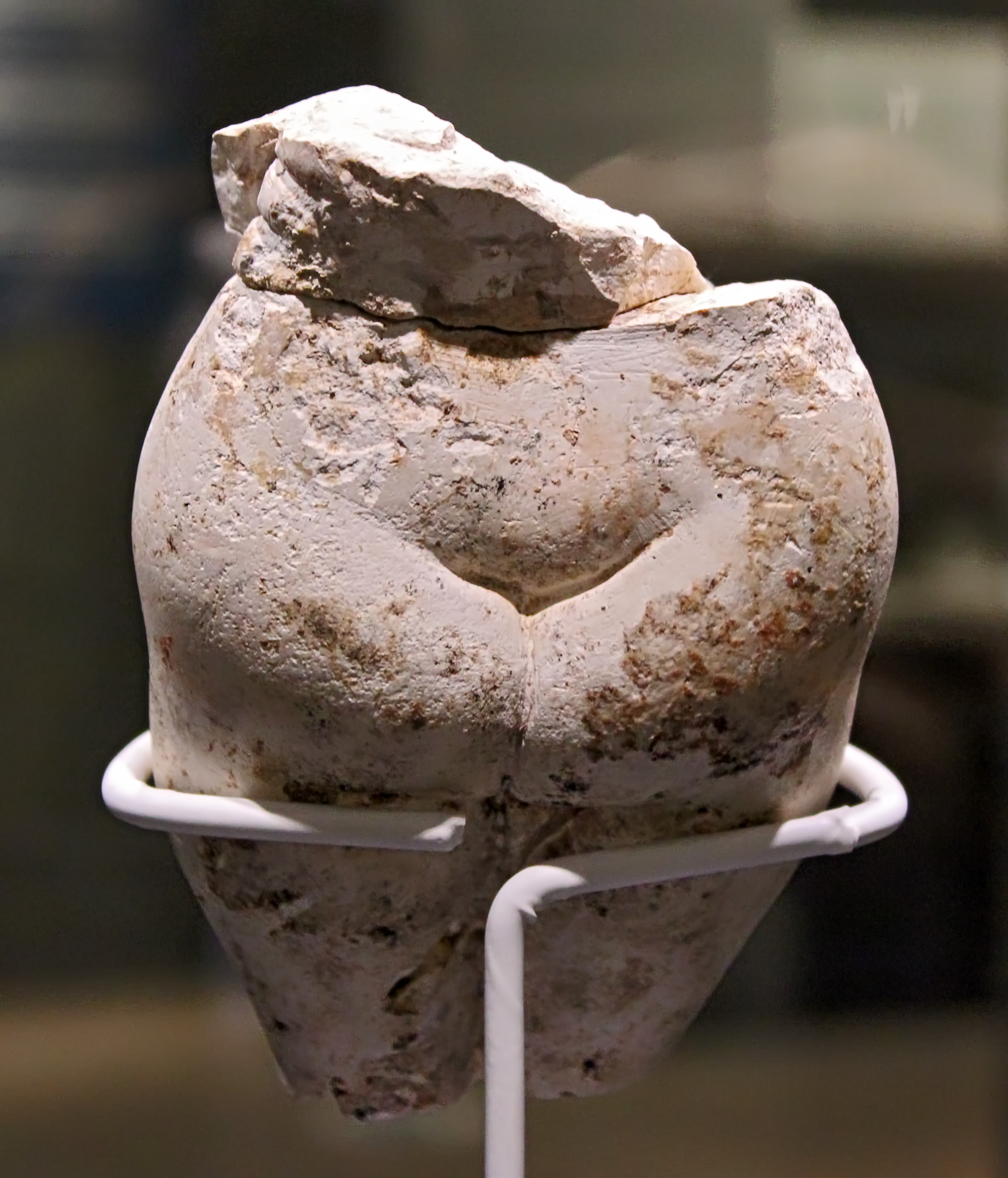
Rear view of the Kostenki limestone venus.
Photo: Courtesy Ralph Frenken
Source: original, exhibited at the Archeological Museum Hamburg (Ice Age - The Art of the Mammoth Hunters from 18 October 2016 to 14 May 2017)
On loan from the Hermitage Museum, Saint Petersburg, Russia.
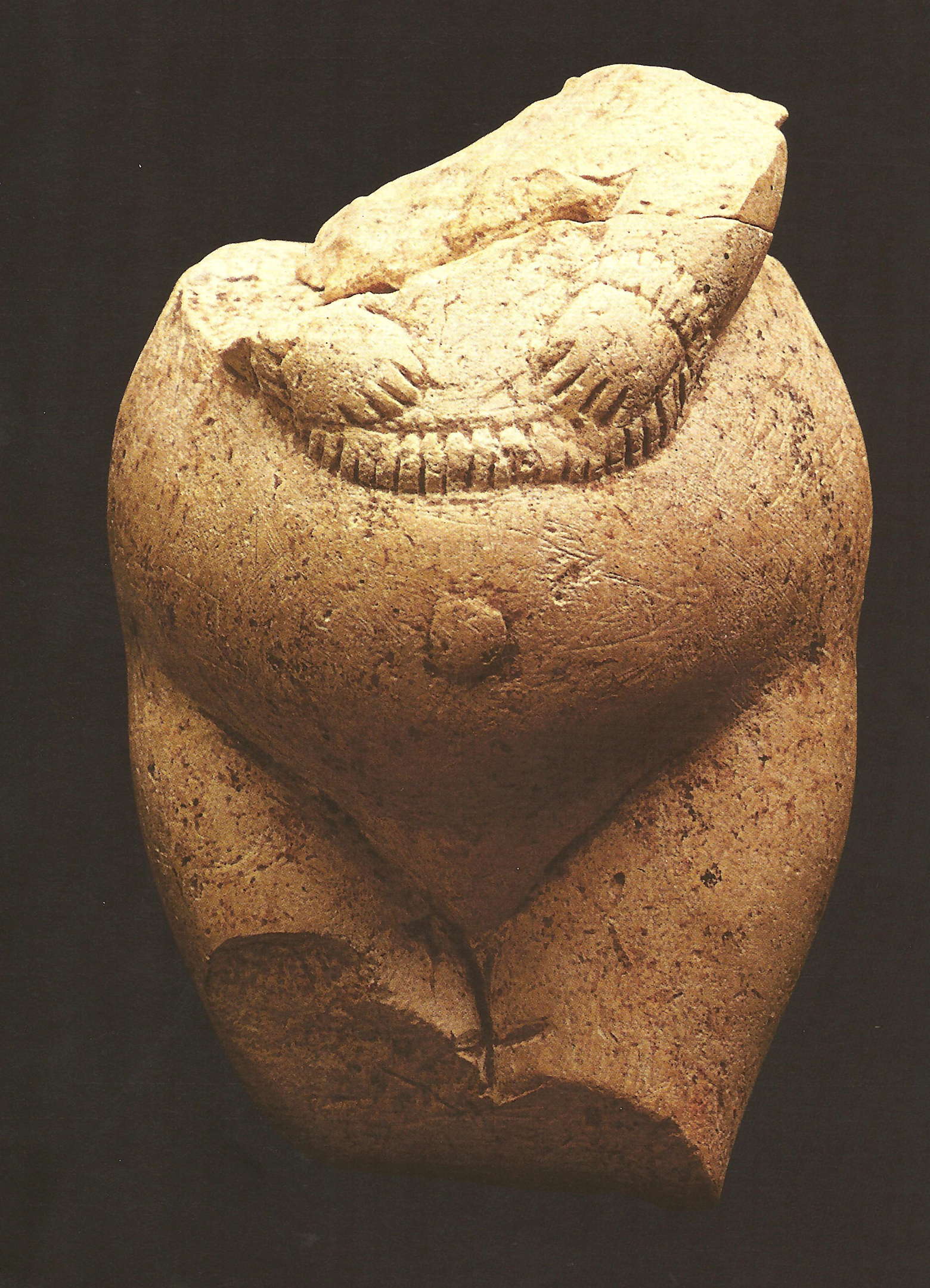
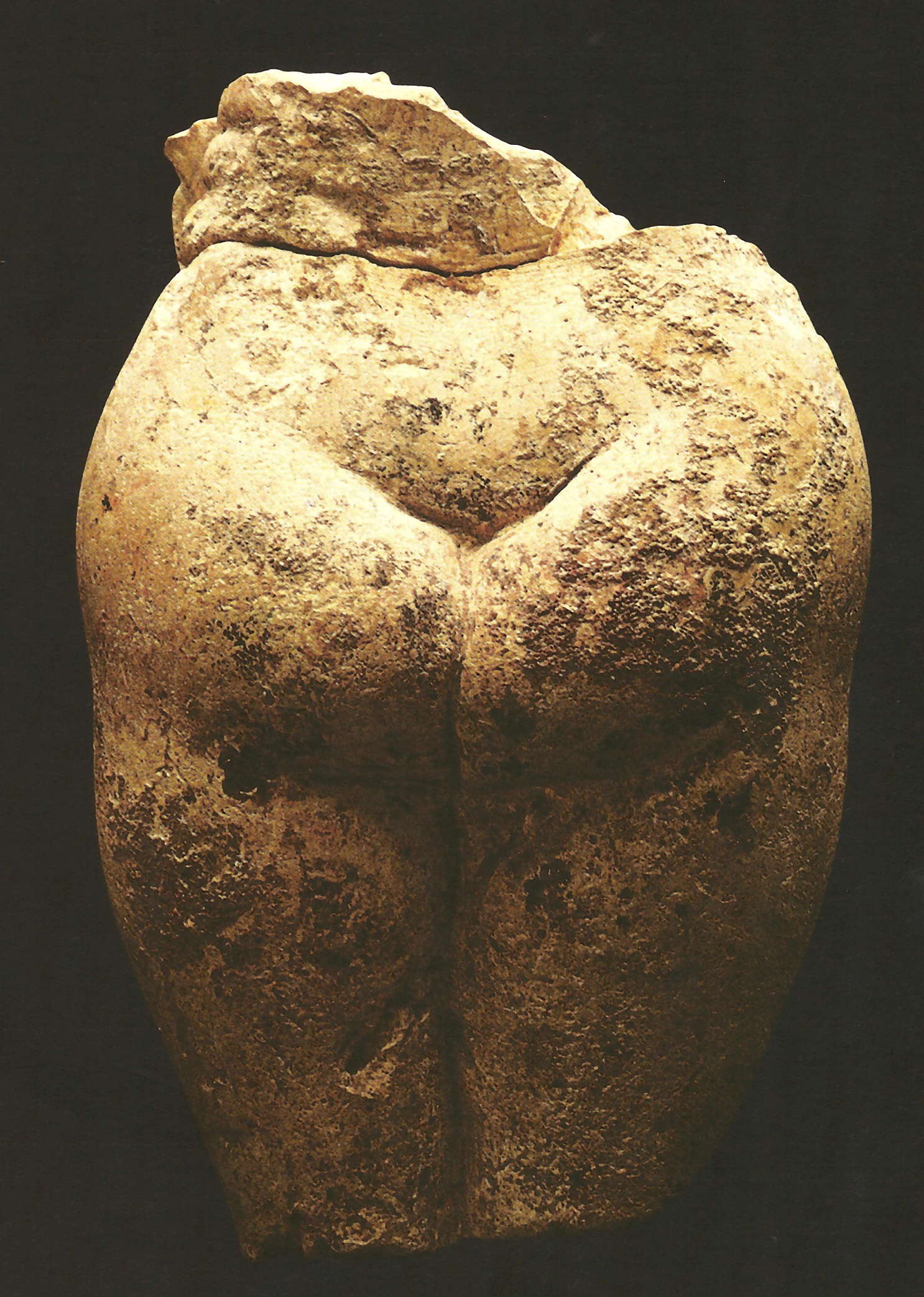
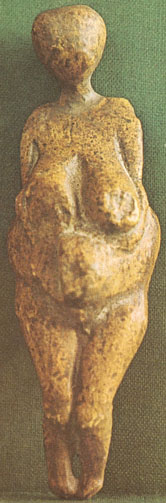
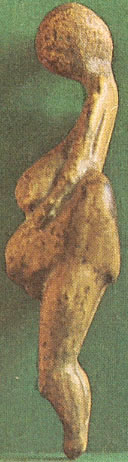
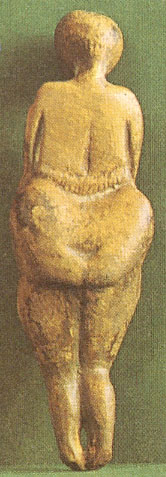
The Kostienki limestone venus.
Photo: Cohen (2003)
 |
 |
 |
|
|
|
|
This Venus figure from Kostienki 1, catalogued as number 3 by Abramova (1962), made of mammoth bone, shows the characteristic pregnancy, well developed buttocks and pendulous breasts of many such statues. In the rear view she can be seen to be wearing a fringe or girdle.
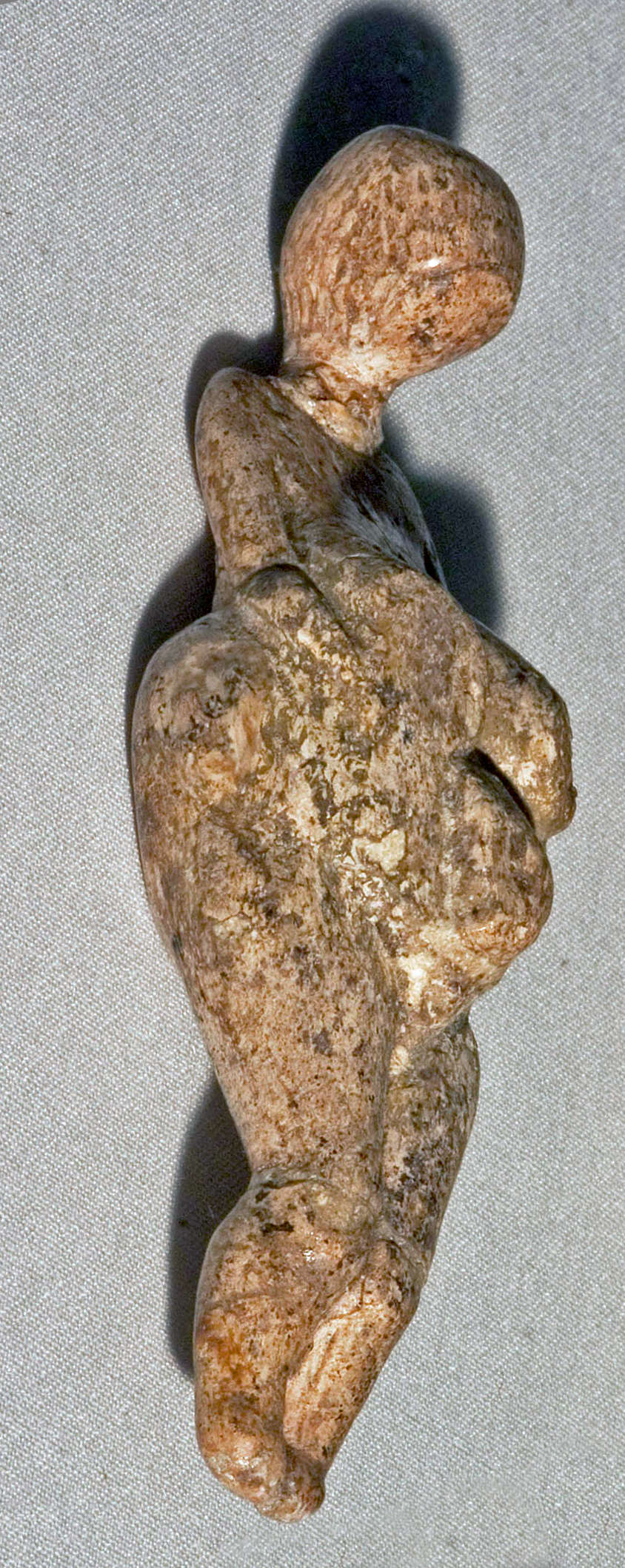
This is a very high quality facsimile.
Photo: LWL/Egbert.
Source and text: http://www.lwl.org/pressemitteilungen/mitteilung.php?urlID=16067#.Us96qmQyFO0
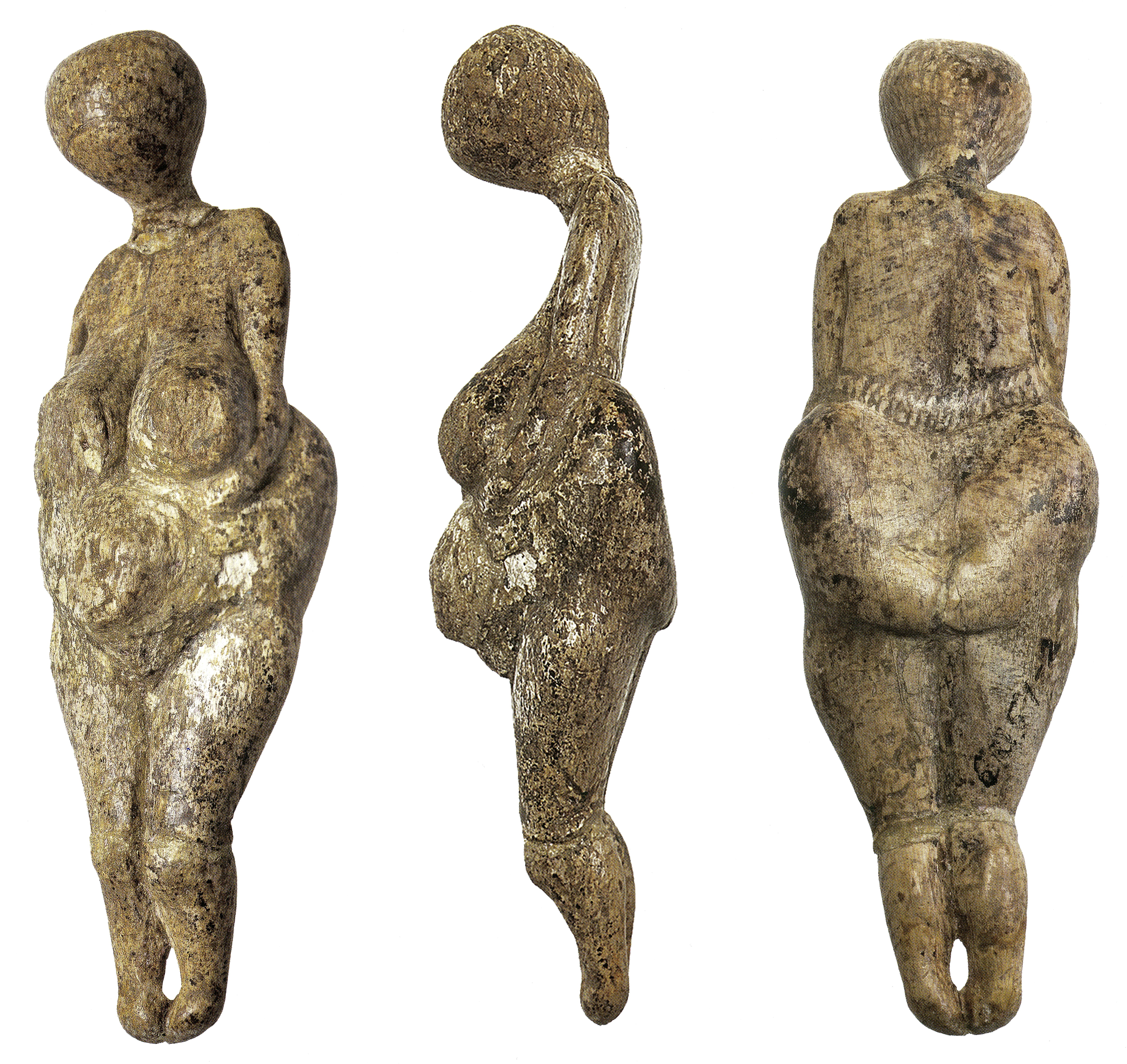
The Venus of Kostienki 1, catalogue number 3, is one of the most well-known Venuses of the world, created 24 500 - 21 500 BP
This is a detailed image of the venus.
Photo: Merkel und Weiss (2017)

This photo of the original is catalogued as Kostenki 1, Venus figure number 3 by Abramova (1962)
(Note the hole between the ankles which could have been used to thread a cord through to make a pendant - Don )
Photo: Abramova (1962)
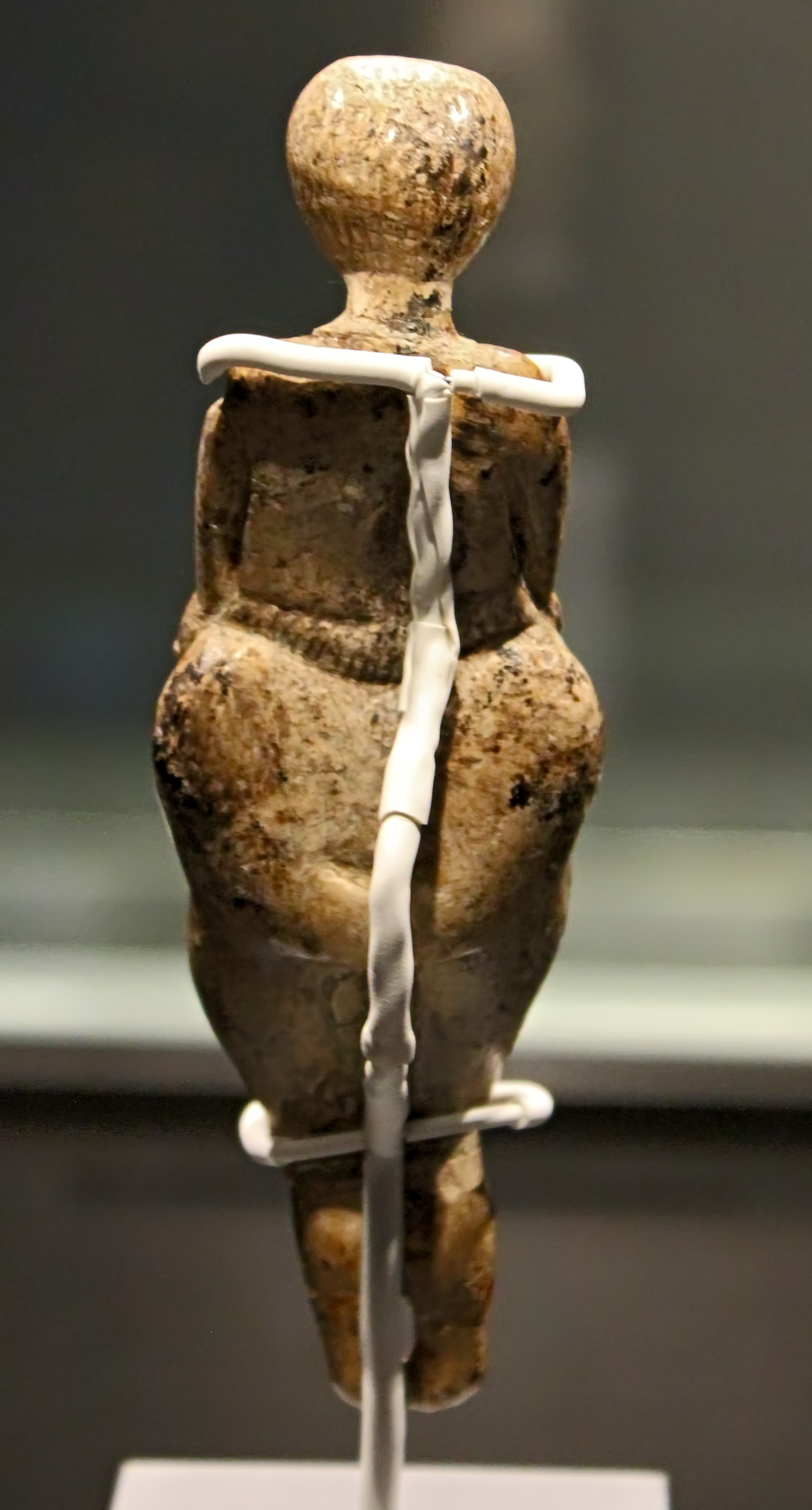
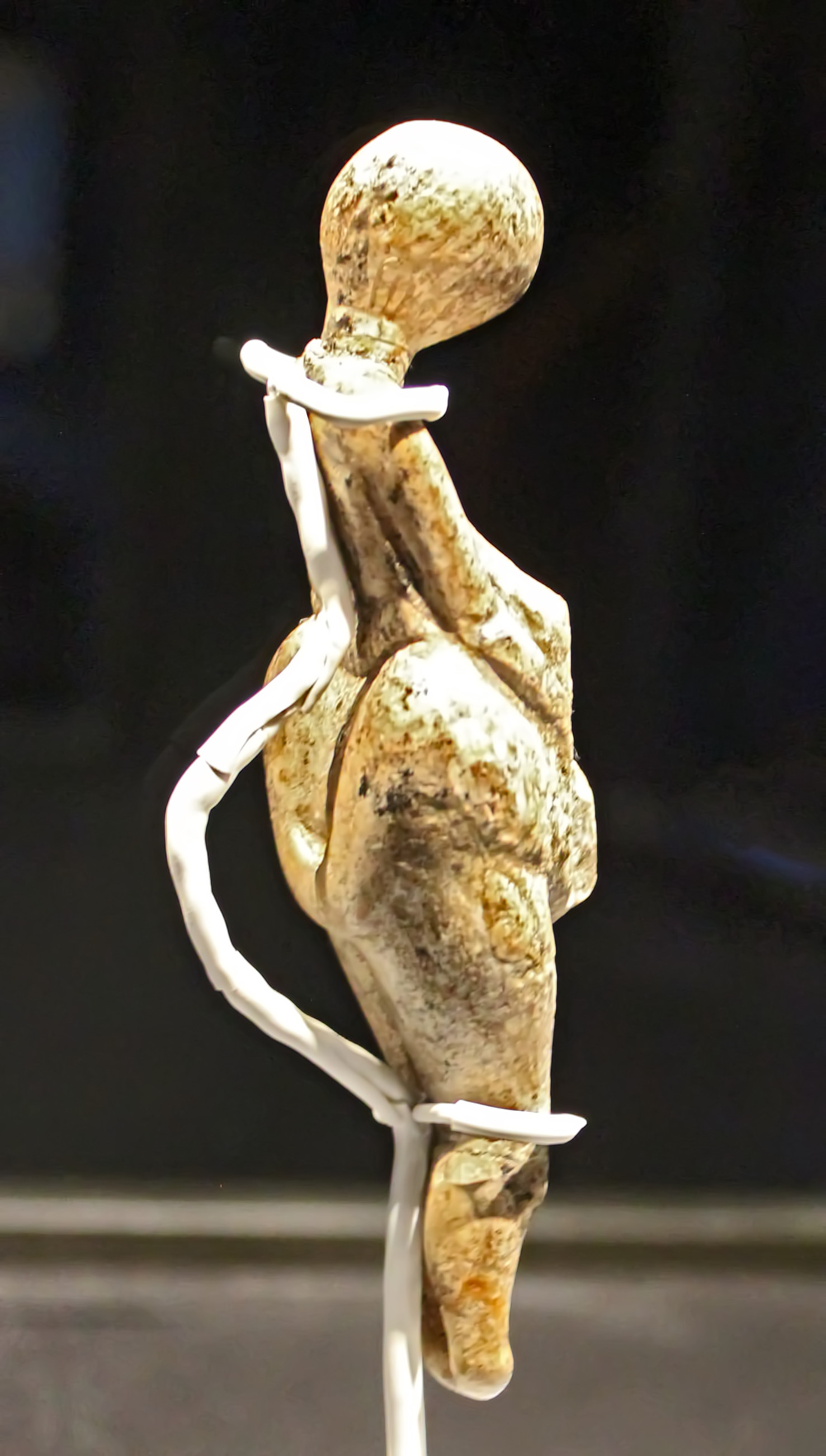

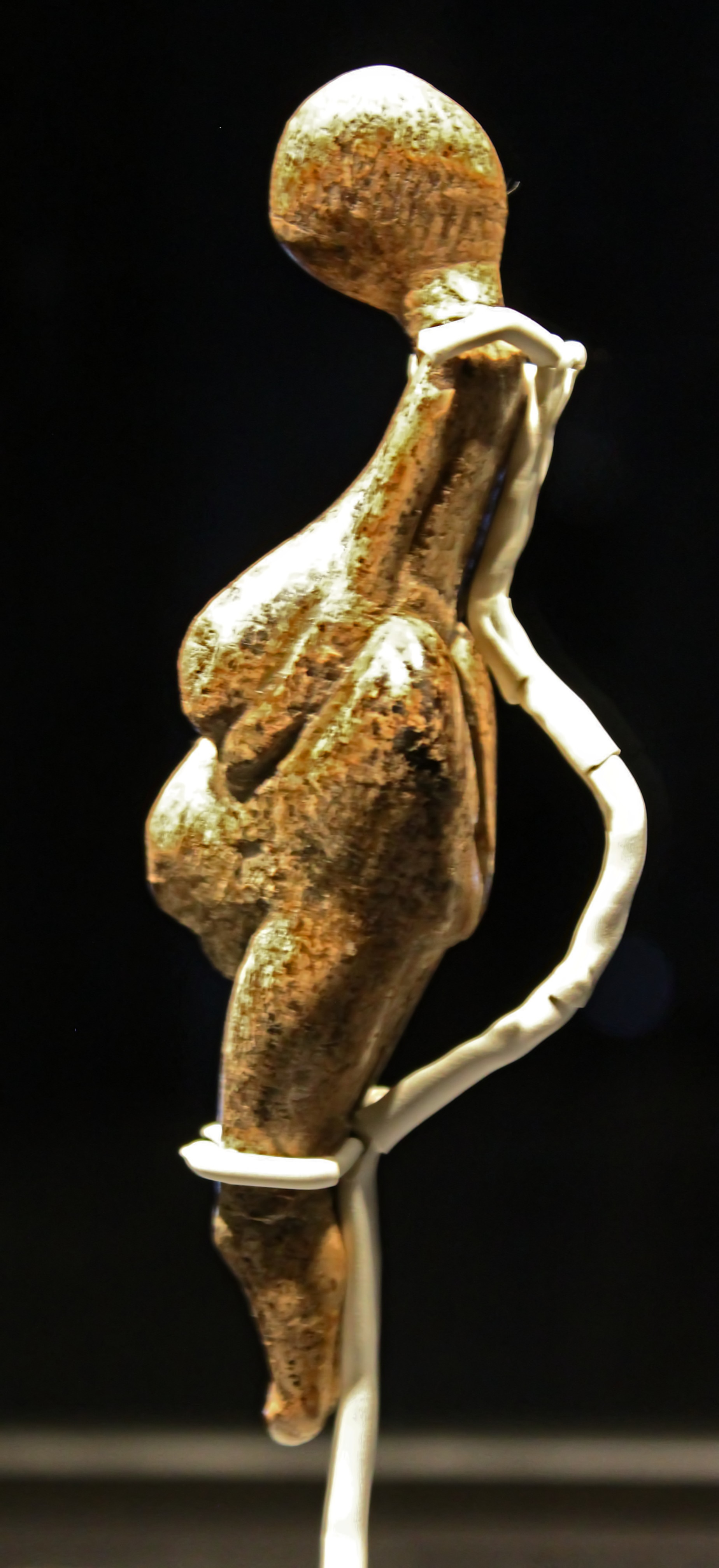
Venus, Kostenki
Photo: Courtesy Ralph Frenken
Source: Original, exhibited at the Archeological Museum Hamburg (Ice Age - The Art of the Mammoth Hunters from 18 October 2016 to 14 May 2017)
On loan from the Hermitage Museum, Saint Petersburg, Russia.
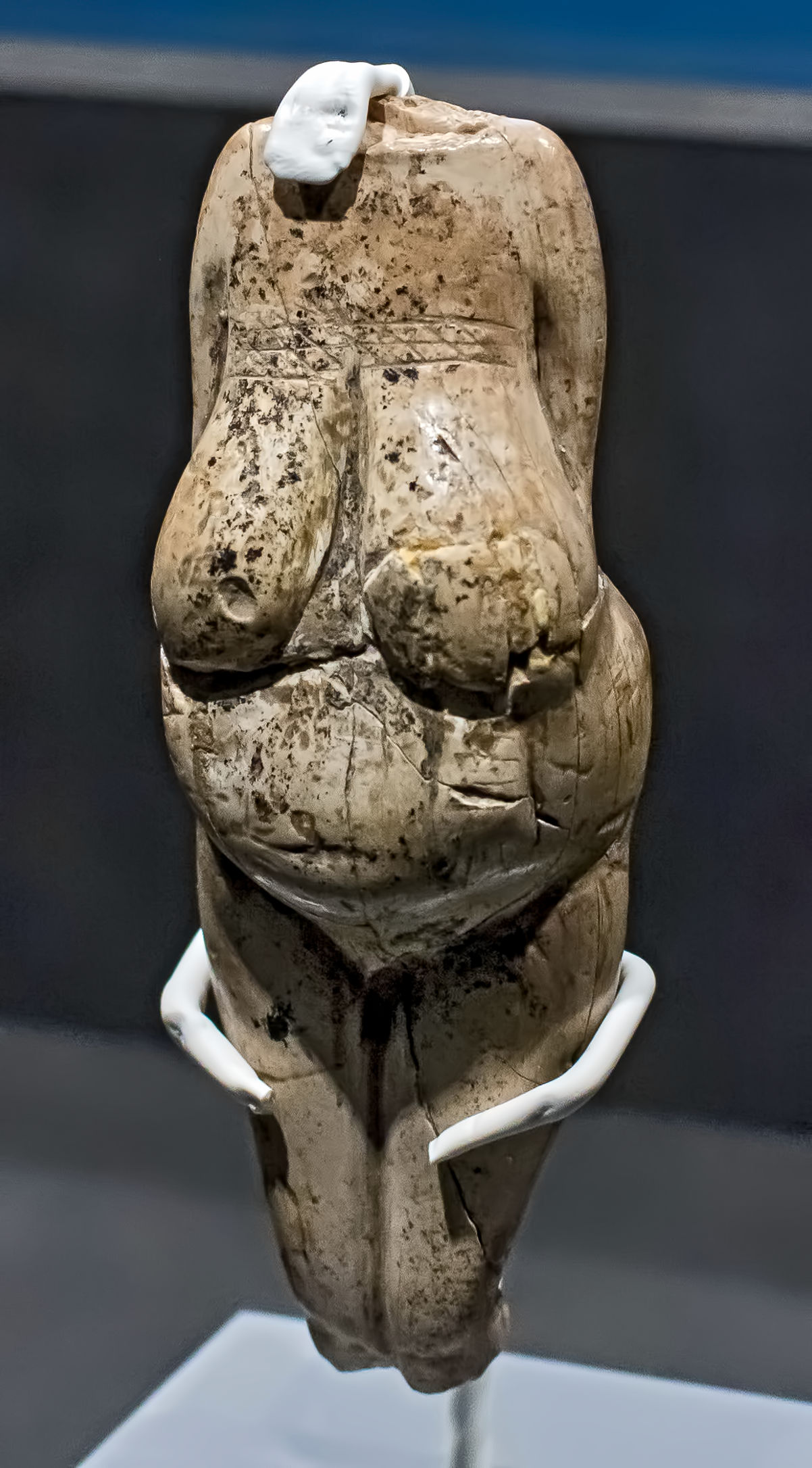
Kostenki mammoth ivory venus, Kostenki 1, Venus figure number 4.
Gravettien, circa 25 000 BP, original.
Photo: Thilo Parg
Permission: CC BY-SA 4.0
Source: original, exhibited at the Archeological Museum Hamburg (Ice Age - The Art of the Mammoth Hunters from 18 October 2016 to 14 May 2017)
On loan from the Hermitage Museum, Saint Petersburg, Russia.

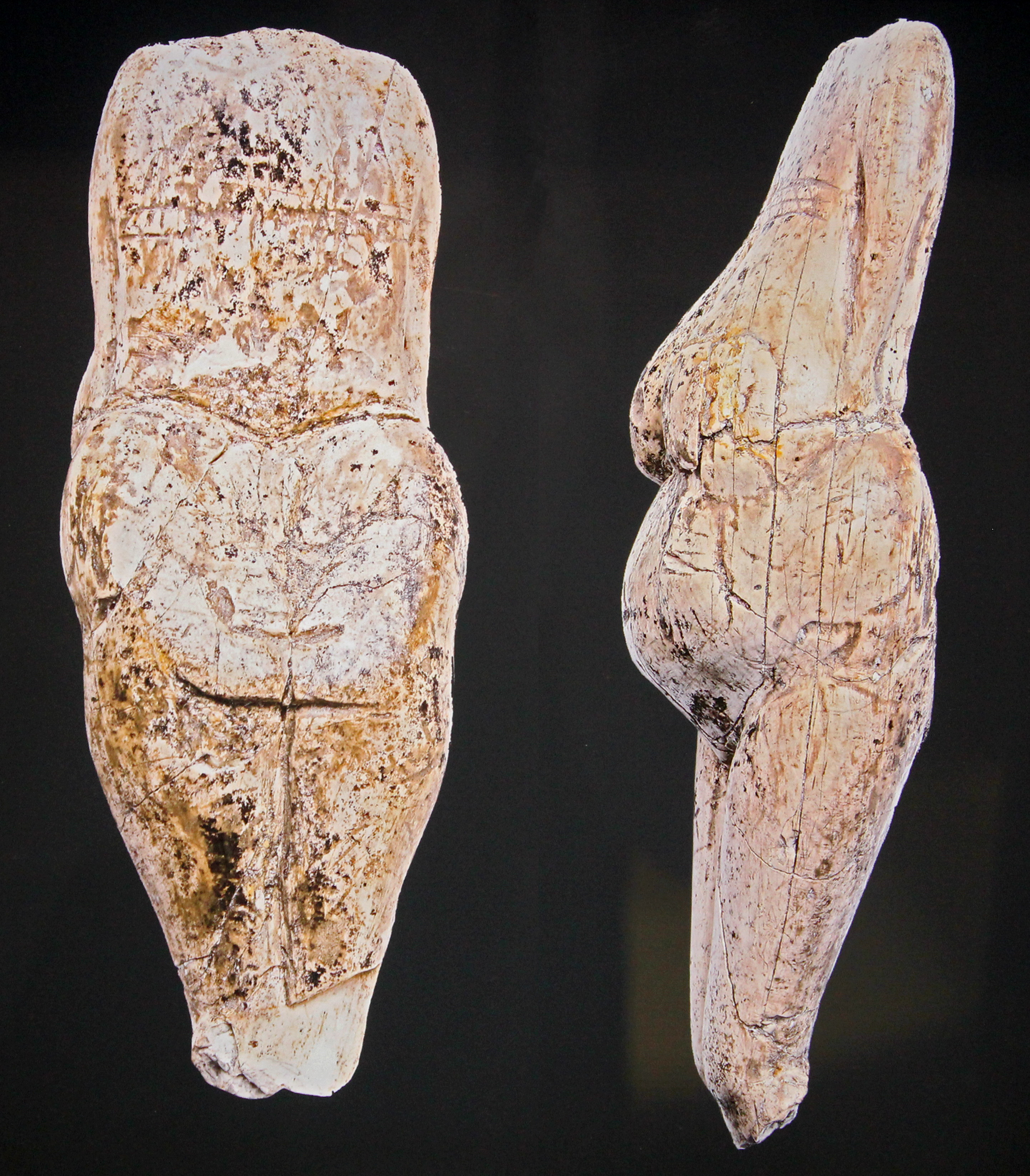
Detailed view from the front, side and rear of the Kostenki 1, Venus figure number 4.
Photo: Merkel und Weiss (2017)
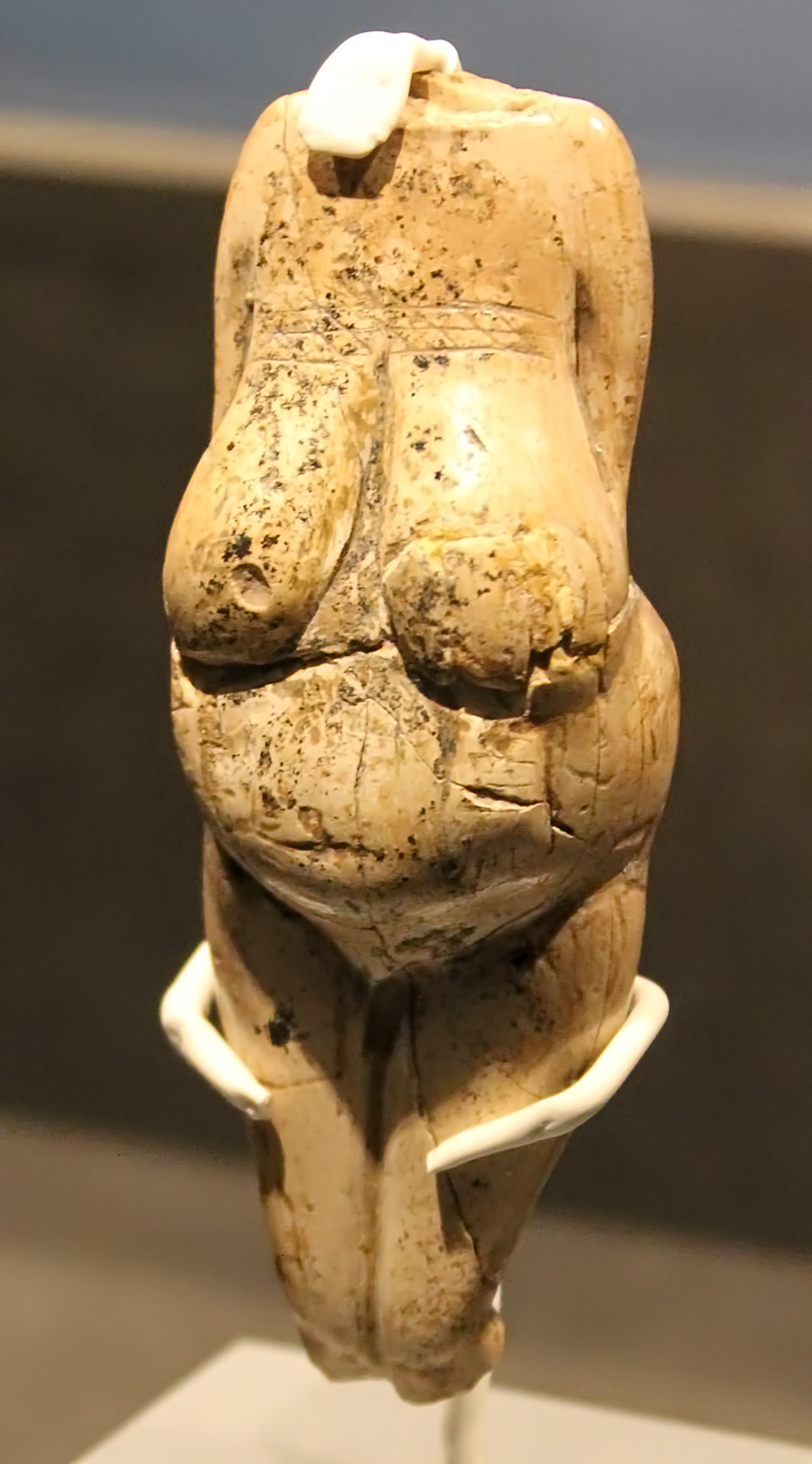
Venus, Kostenki, from a display at the museum.
Rephotography: Ralph Frenken
Source: The Archeological Museum Hamburg (Ice Age - The Art of the Mammoth Hunters from 18 October 2016 to 14 May 2017)
On loan from the Hermitage Museum, Saint Petersburg, Russia.
Venus, Kostenki, 25 000 BP.
This mammoth ivory statuette was found in 1923, and was the first ice age woman figure found in Russia.
Above her breasts she is decorated with a ribbon. This is shown with three parallel scribed lines and additionally provided with oblique scribed lines. The ornament continues on the back of the figure.
Photo: Courtesy Ralph Frenken
Source: Original, exhibited at the Archeological Museum Hamburg (Ice Age - The Art of the Mammoth Hunters from 18 October 2016 to 14 May 2017)
On loan from the Hermitage Museum, Saint Petersburg, Russia.
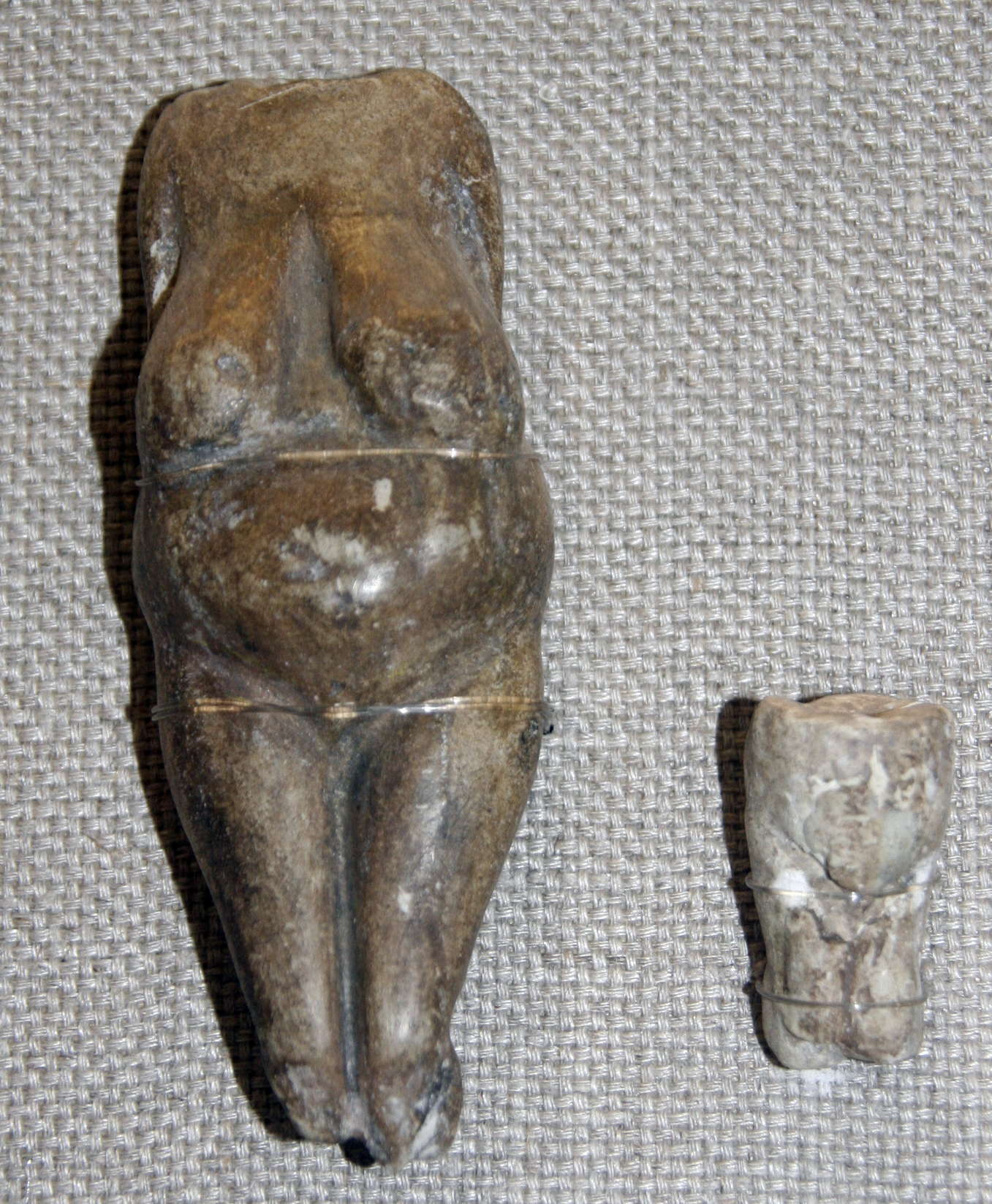
Venus figure from Kostenki 1, and a fragment of a venus figure, both facsimiles.
Photo: Vladimir Gorodnjanski 2008
Source: Facsimile, Voronezh Museum.
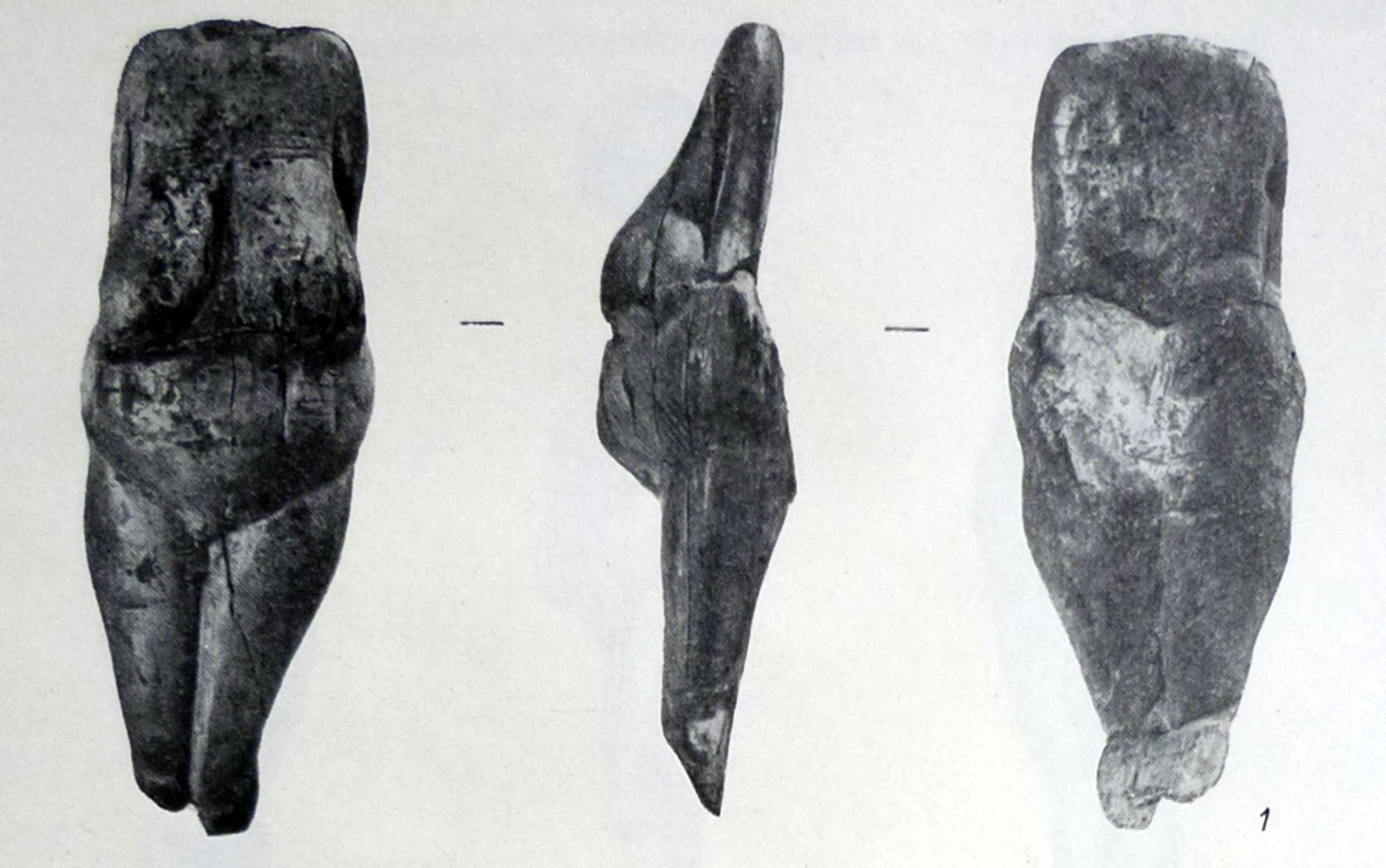
Apparently the original of the venus on the left, above.
Photo: Abramova (1962)
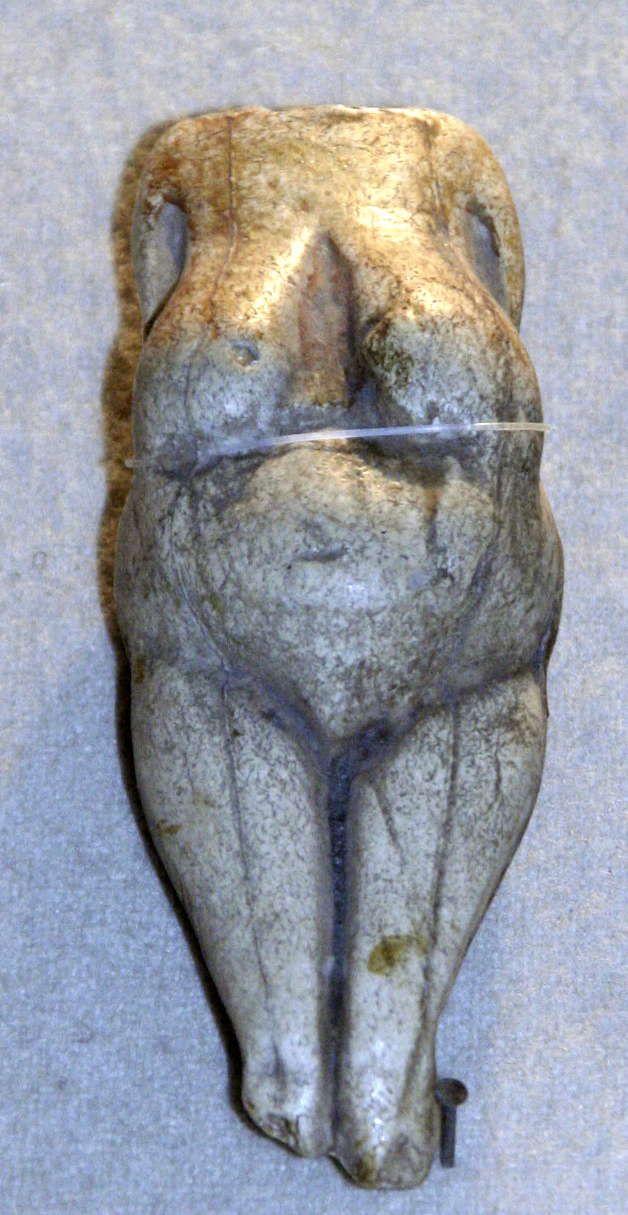
Venus figure, another version of the one on the left, above.
Photo: Vladimir Gorodnjanski 2008
Source: Facsimile, Voronezh Museum.
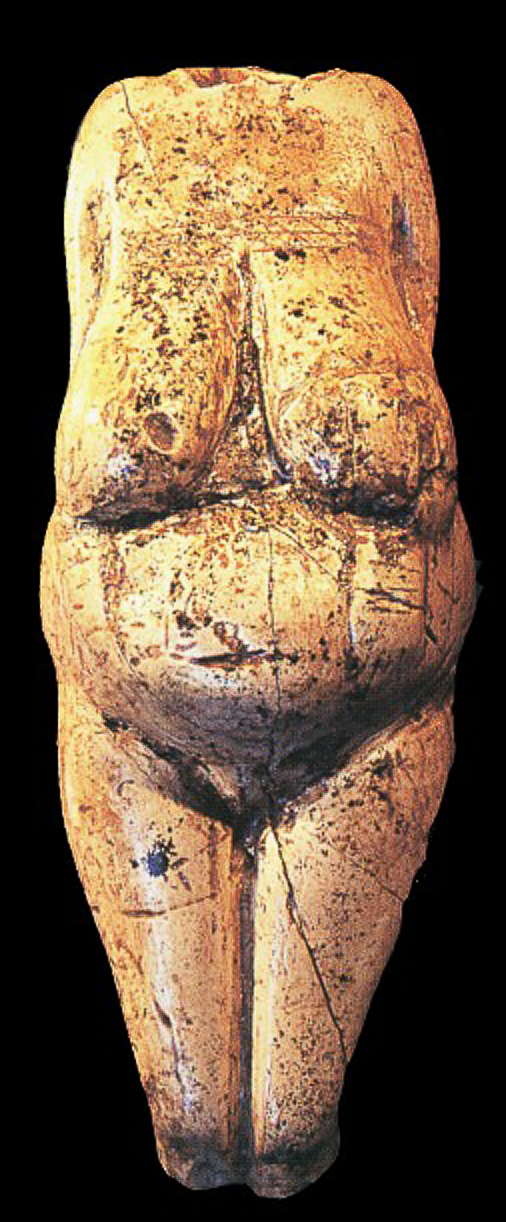
Venus figure, another version of the one on the left, above. The venus is from Kostenki 1 and is 9 cm high.
This is apparently of the original. Note the cross hatching across the top of the breasts, possibly a decorative band of some kind.
Photo: http://www.istmira.com/foto-i-video-pervobytnoe-obschestvo/3924-iskusstvo-predystorii-pervobytnost-2.html

The Venus statuette above.
Photo: © MAE (Kunstkamera) RAS, St. Petersburg, Russia, MAE # 4464-1
Source: http://eiszeiten-hamburg.de/2016/05/11/die-kunst-der-mammutjaeger/
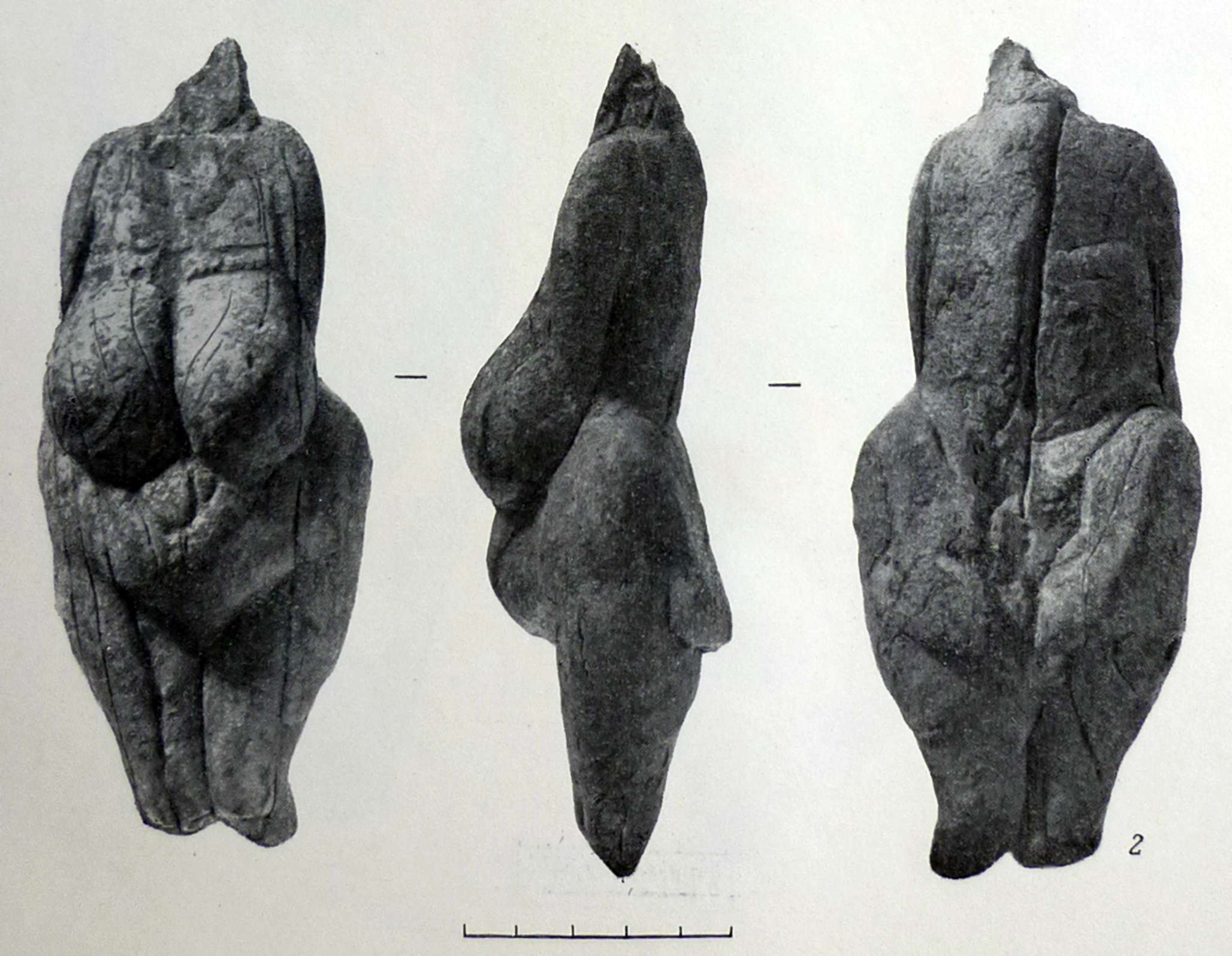
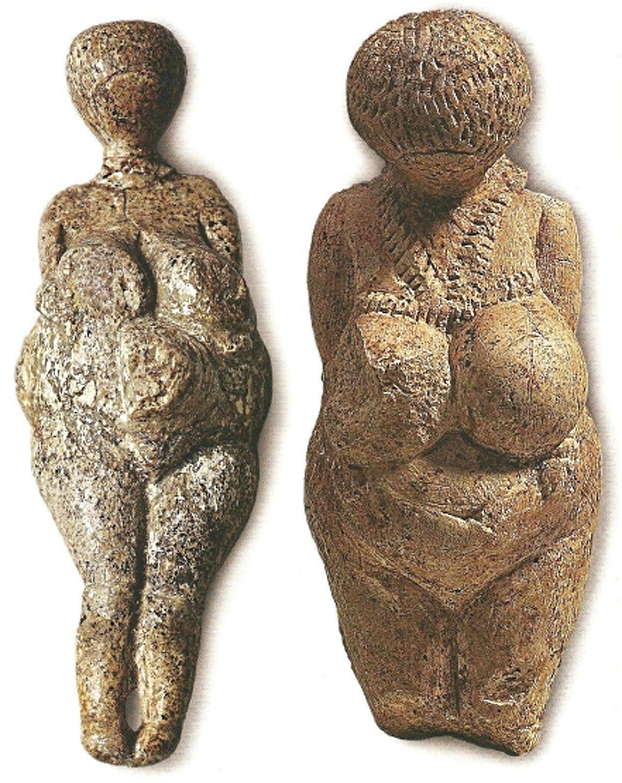
This photo of the original as seen in the upper drawing in the image below, is catalogued as Kostenki 1, Venus figure number 4 by Abramova (1962)
( Note that this is the only version of Kostenki 1 Venus figure number 4 available which shows the remains of the neck of this venus. All later images show the venus having been cut off at the shoulders level. The damage or removal occurred sometime after Abramova’s 1962 documentation.
My thanks to Nancy Young for this important observation - Don )
Photo: Abramova (1962)
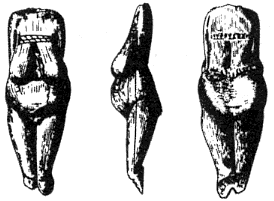
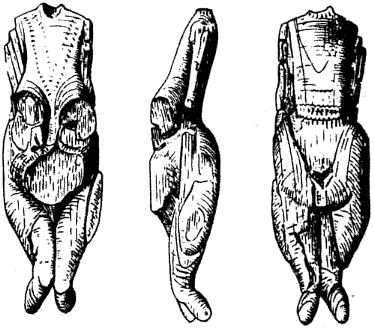

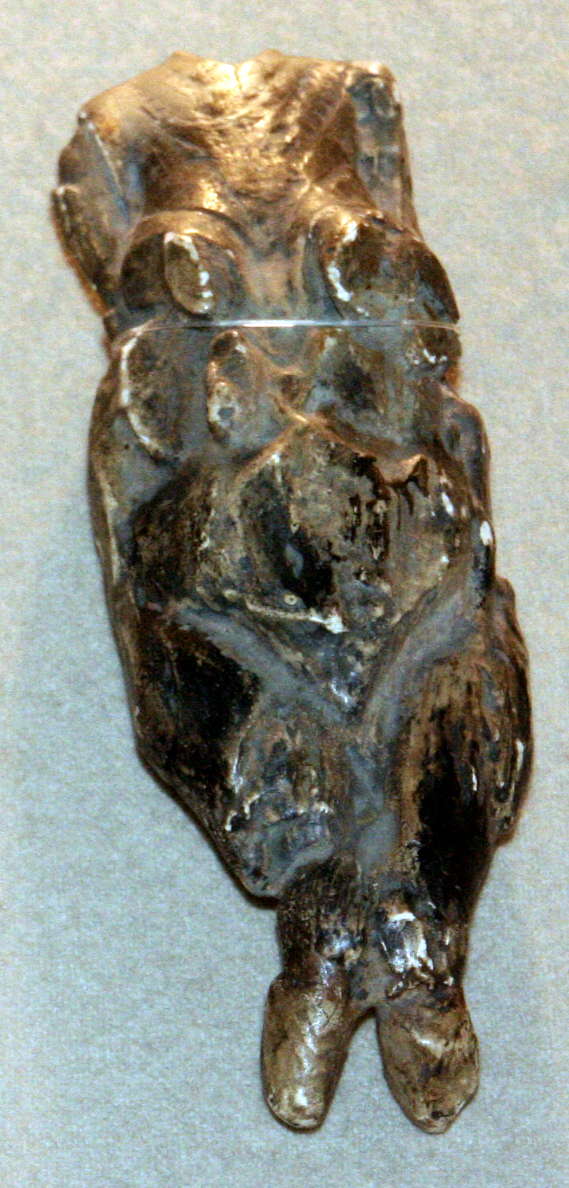
Venus figure as shown in the lower drawings above of two venus figurines from Jelinek.
Photo: Vladimir Gorodnjanski 2008
Source: Facsimile, Voronezh Museum.
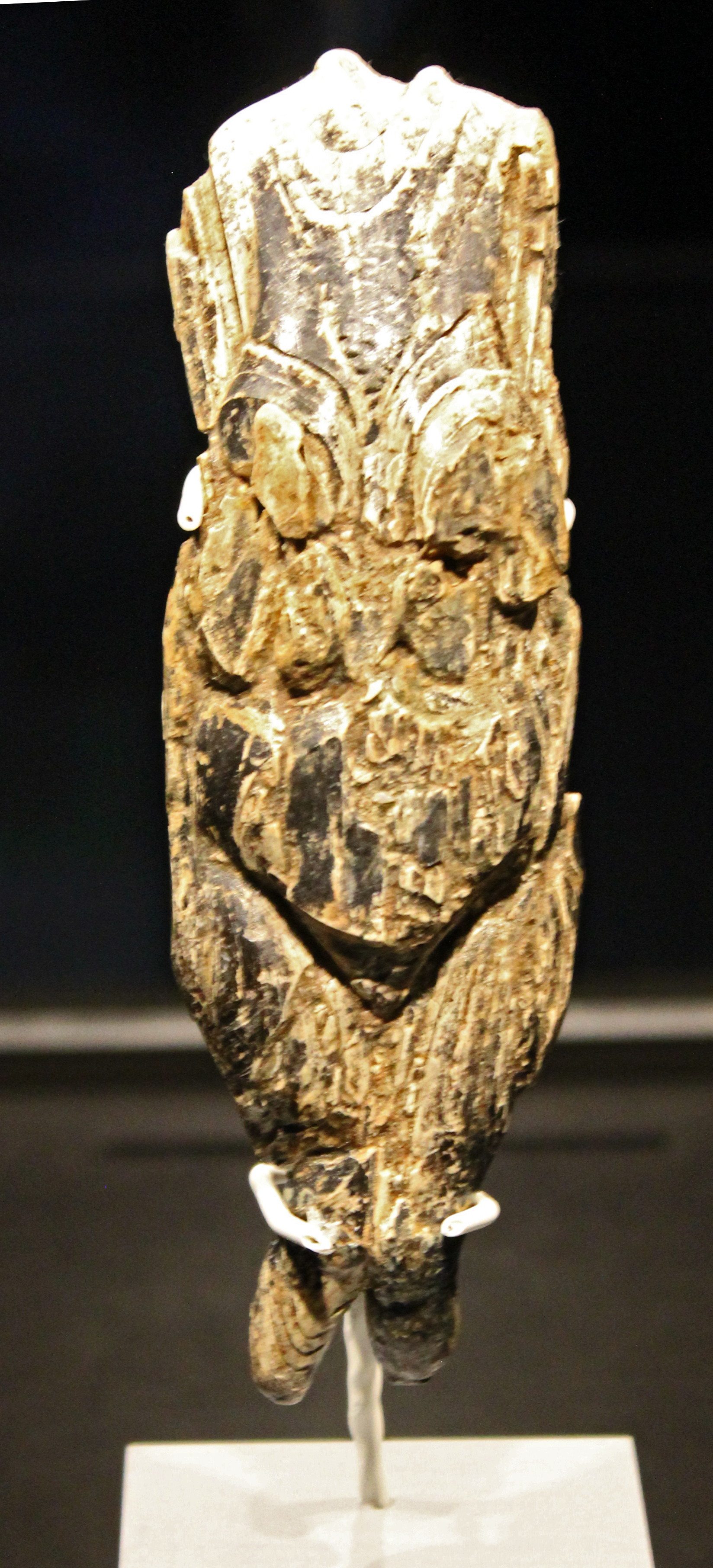
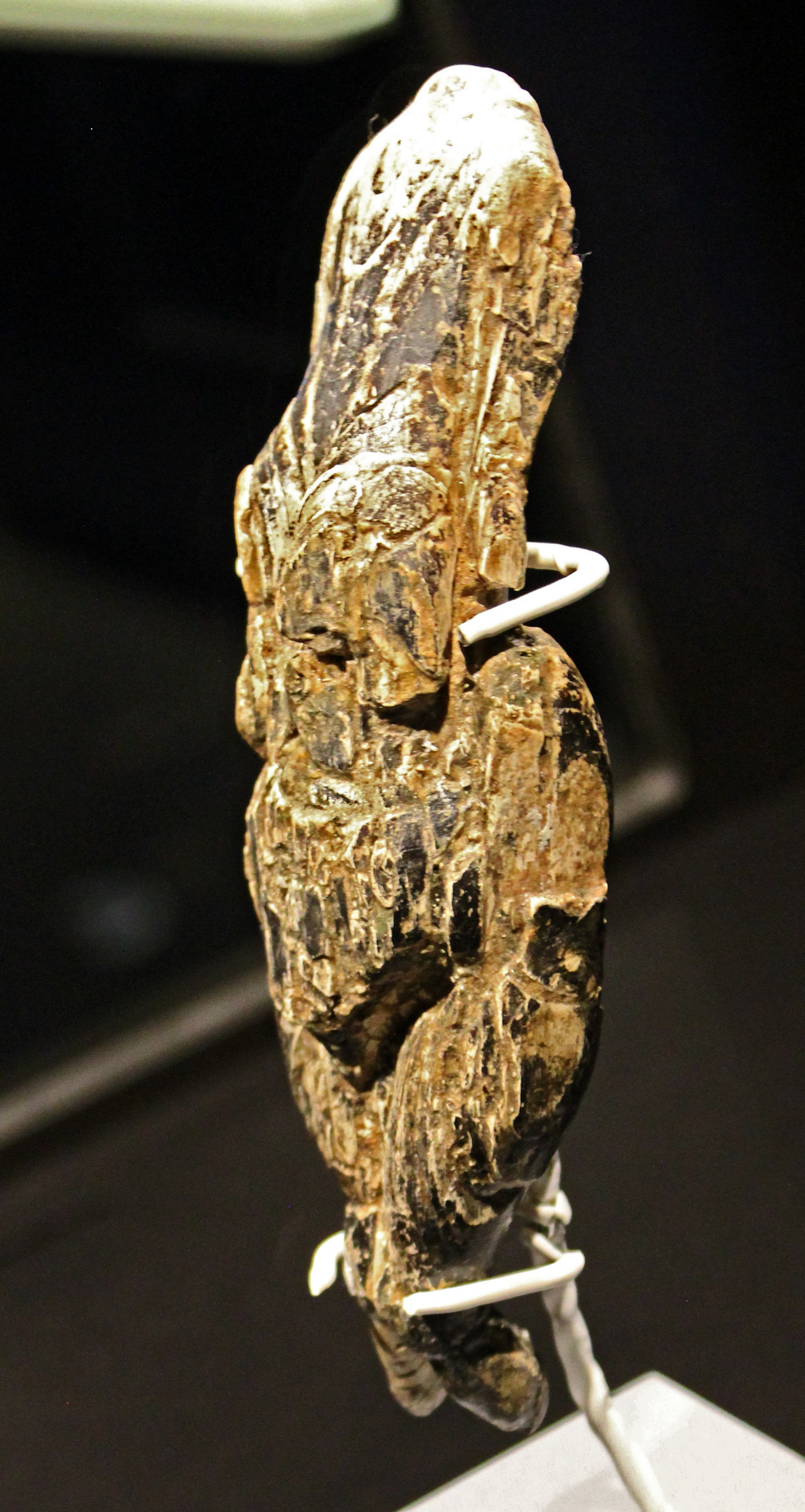
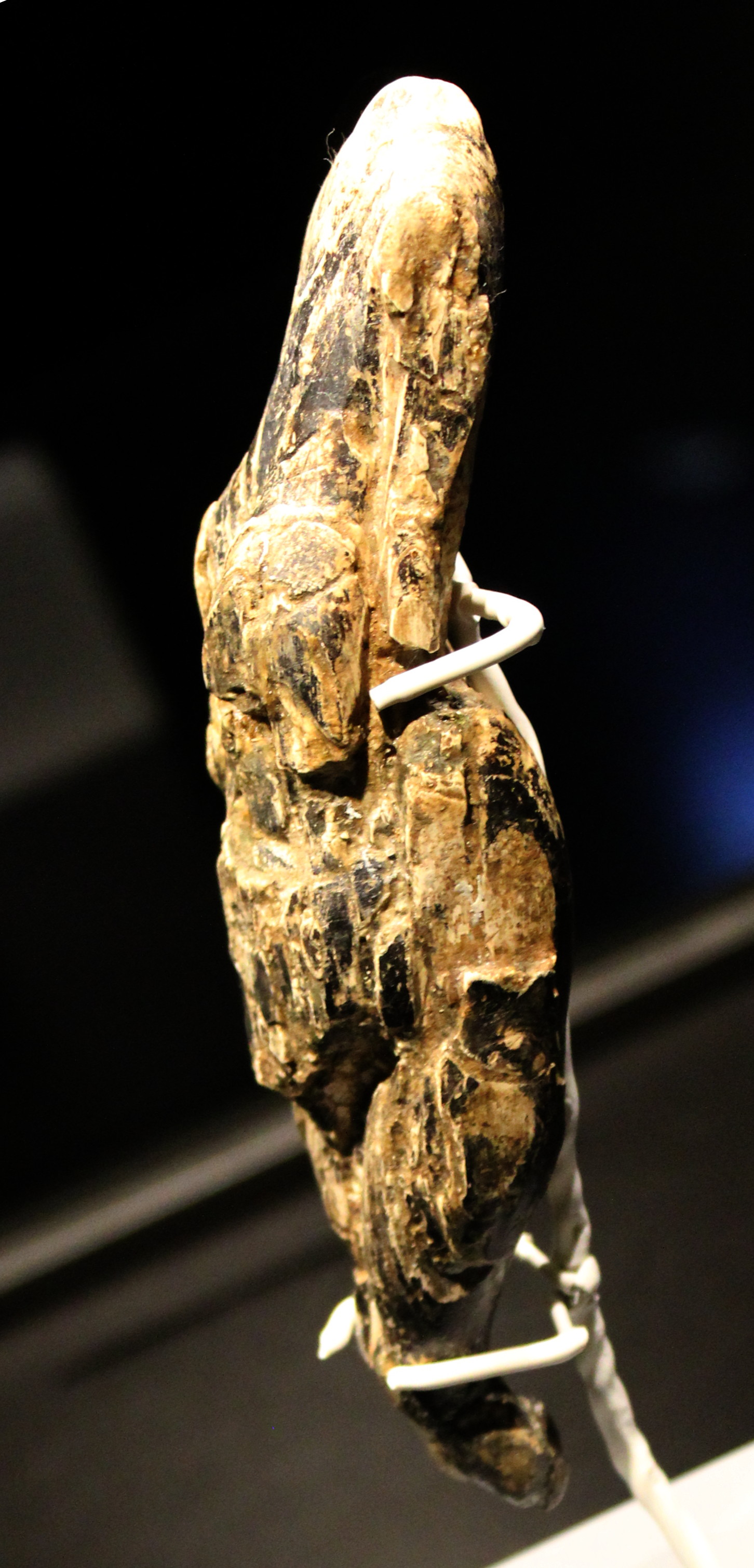
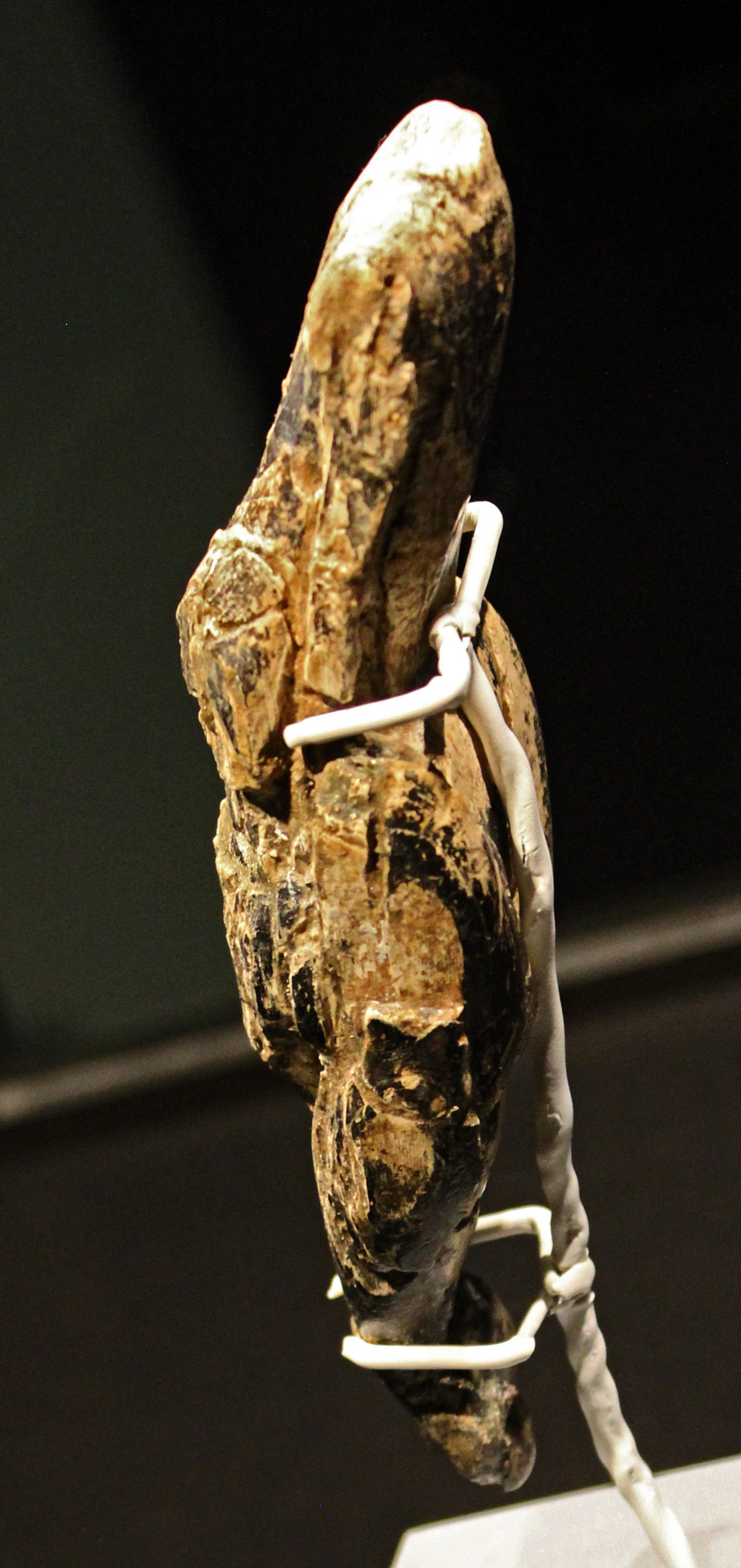

Venus figure, Kostenki, 25 000 BP.
This large mammoth ivory statuette was polished and painted with a black pigment.
Exceptional are the many engravings with which it has been decorated. Two jewellery bands can be seen in the décolleté area - possibly made of fox teeth, such as those from Gagarino. More bands run on the back over the hips. Also on the back is a notched neck collar.
Photo: Ralph Frenken
Source: original, exhibited at the Archeological Museum Hamburg (Ice Age - The Art of the Mammoth Hunters from 18 October 2016 to 14 May 2017)
On loan from the Hermitage Museum, Saint Petersburg, Russia.
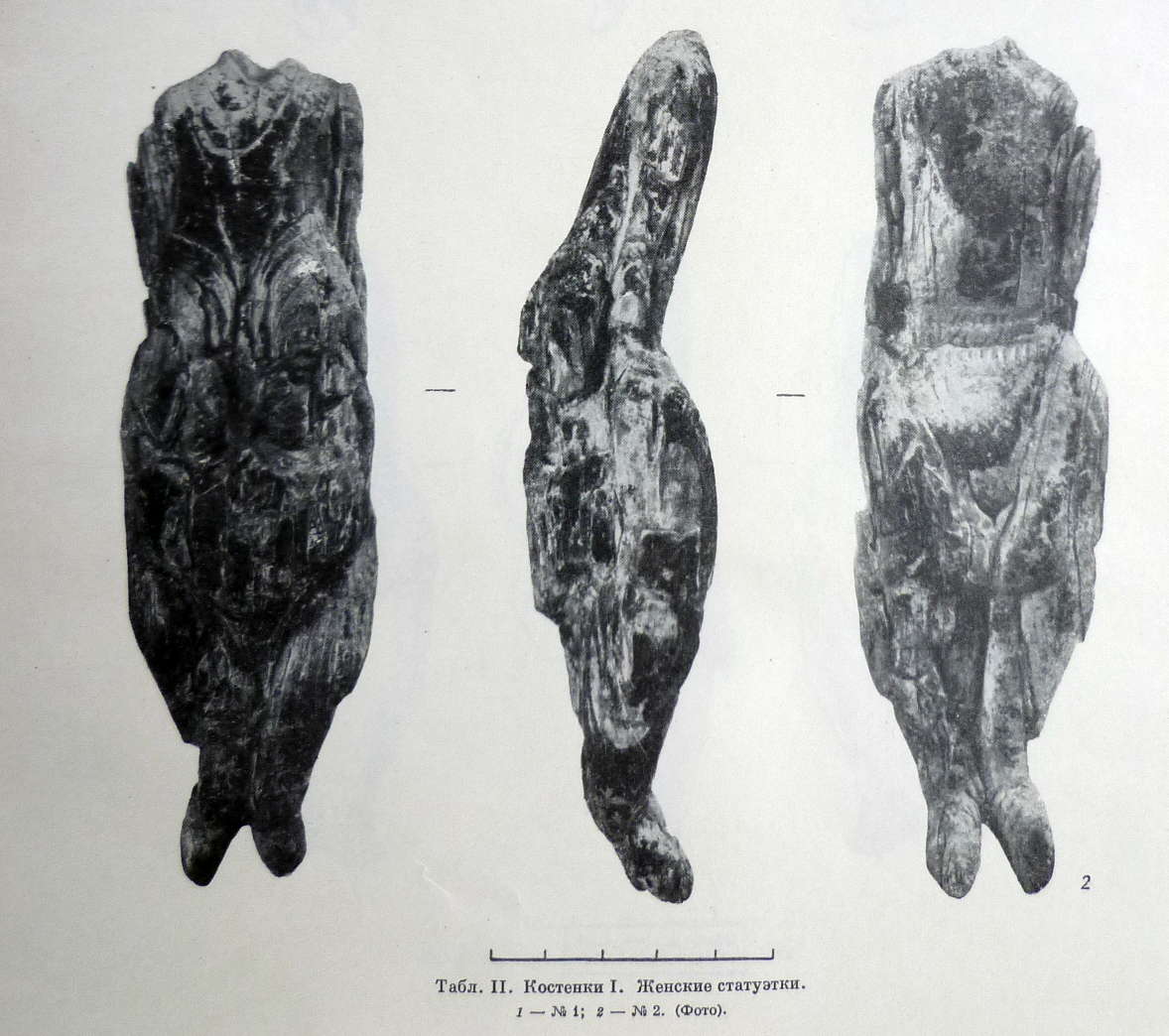
Venus figure as shown above.
The venus does not seem to be in a very good condition, the ivory is apparently delaminating.
Catalogued as Venus figure number 2 by Abramova (1962)
Photo: Abramova (1962)
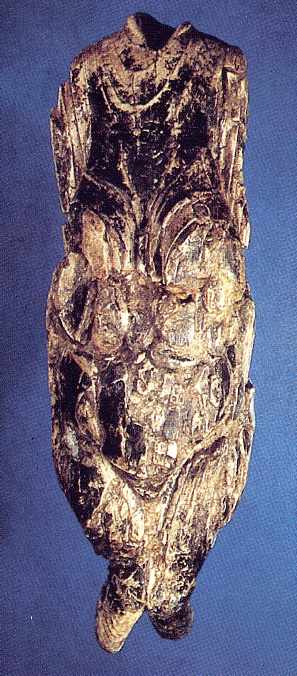 Statuette féminine de Kostienki 1, vue de face. Collection MAE. Photo
L. Iakovleva.
Statuette féminine de Kostienki 1, vue de face. Collection MAE. Photo
L. Iakovleva.
Venus from Kostienki 1, frontal view. Collection MAE. This is the same as the venus above.
Photo and French text: "les mammouths - Dossiers
Archéologie - n° 291 - Mars 2004"
Photograph L Iakovleva.
My thanks to Anya for access to this resource.


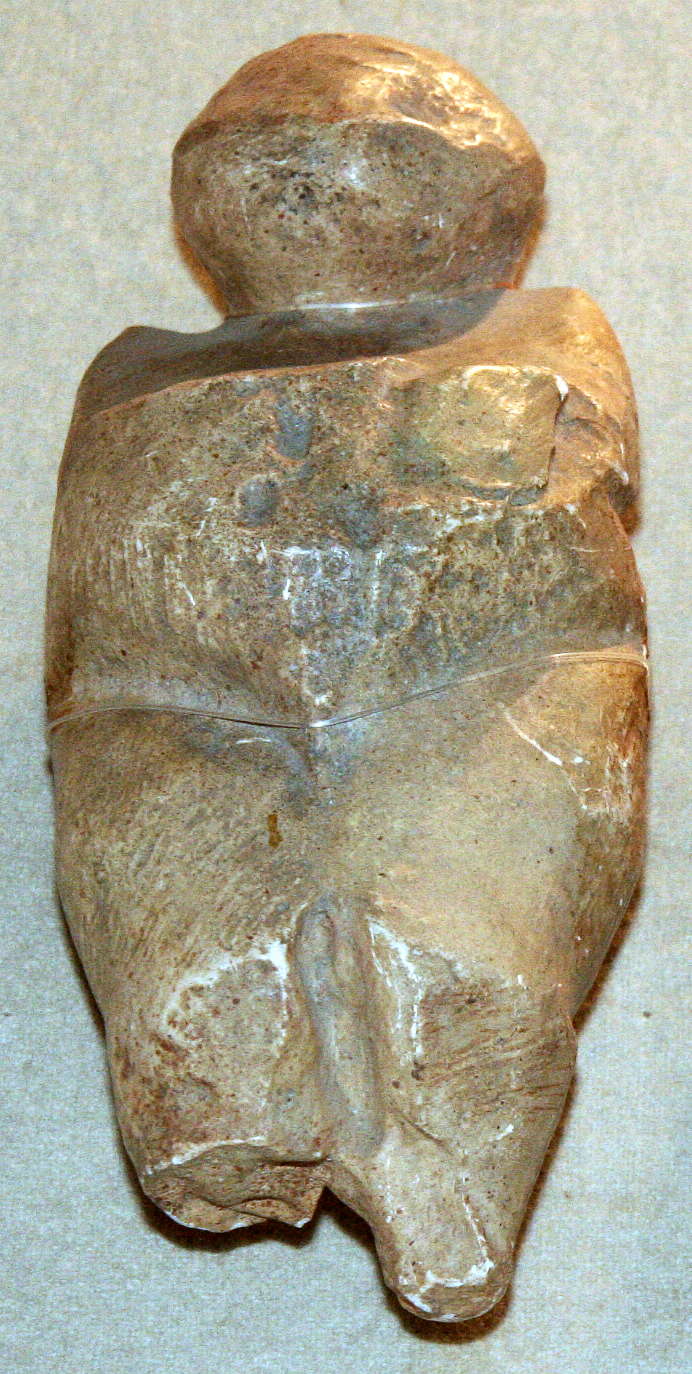
This is quite a heavy looking venus figurine. It may not have been completely finished.
Photo: Vladimir Gorodnjanski 2008
Source: Facsimile, Voronezh Museum.
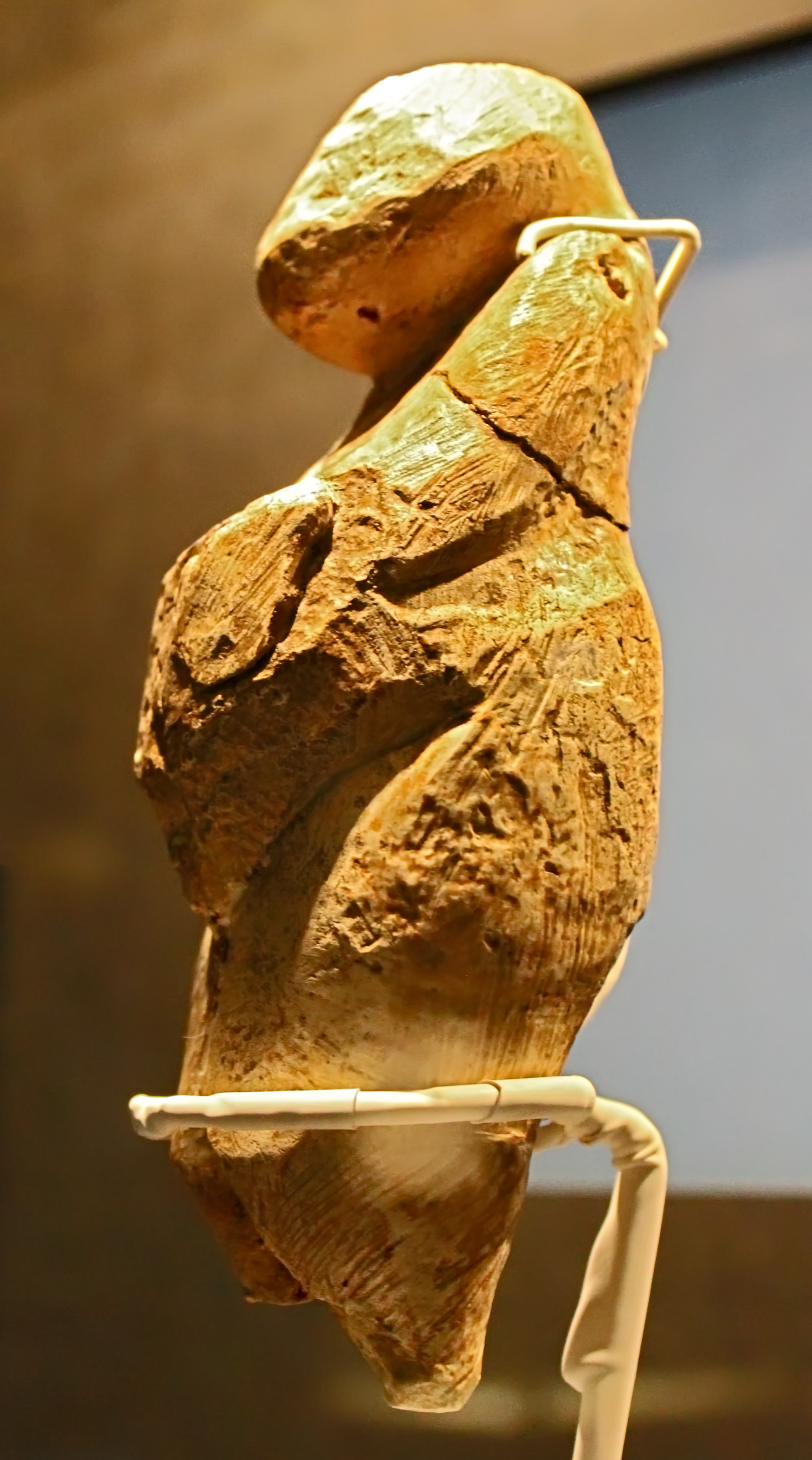
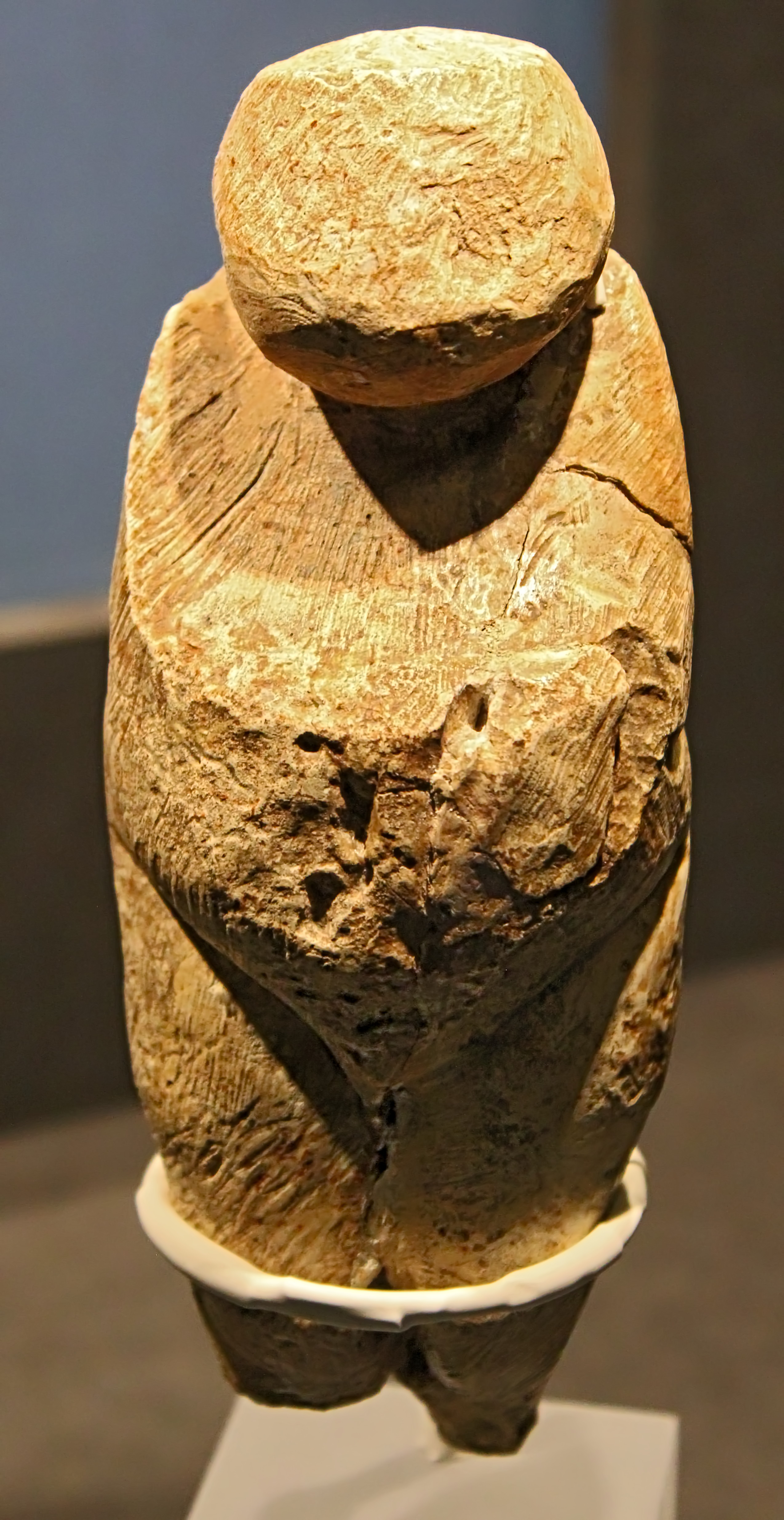
Venus, Kostenki.
This limestone statuette had been broken into four fragments at its discovery, and could have been deliberately broken directly after its manufacture. Perhaps this figure is a test piece.
Photo: Ralph Frenken
Source: Original, exhibited at the Archeological Museum Hamburg (Ice Age - The Art of the Mammoth Hunters from 18 October 2016 to 14 May 2017)
On loan from the Hermitage Museum, Saint Petersburg, Russia.
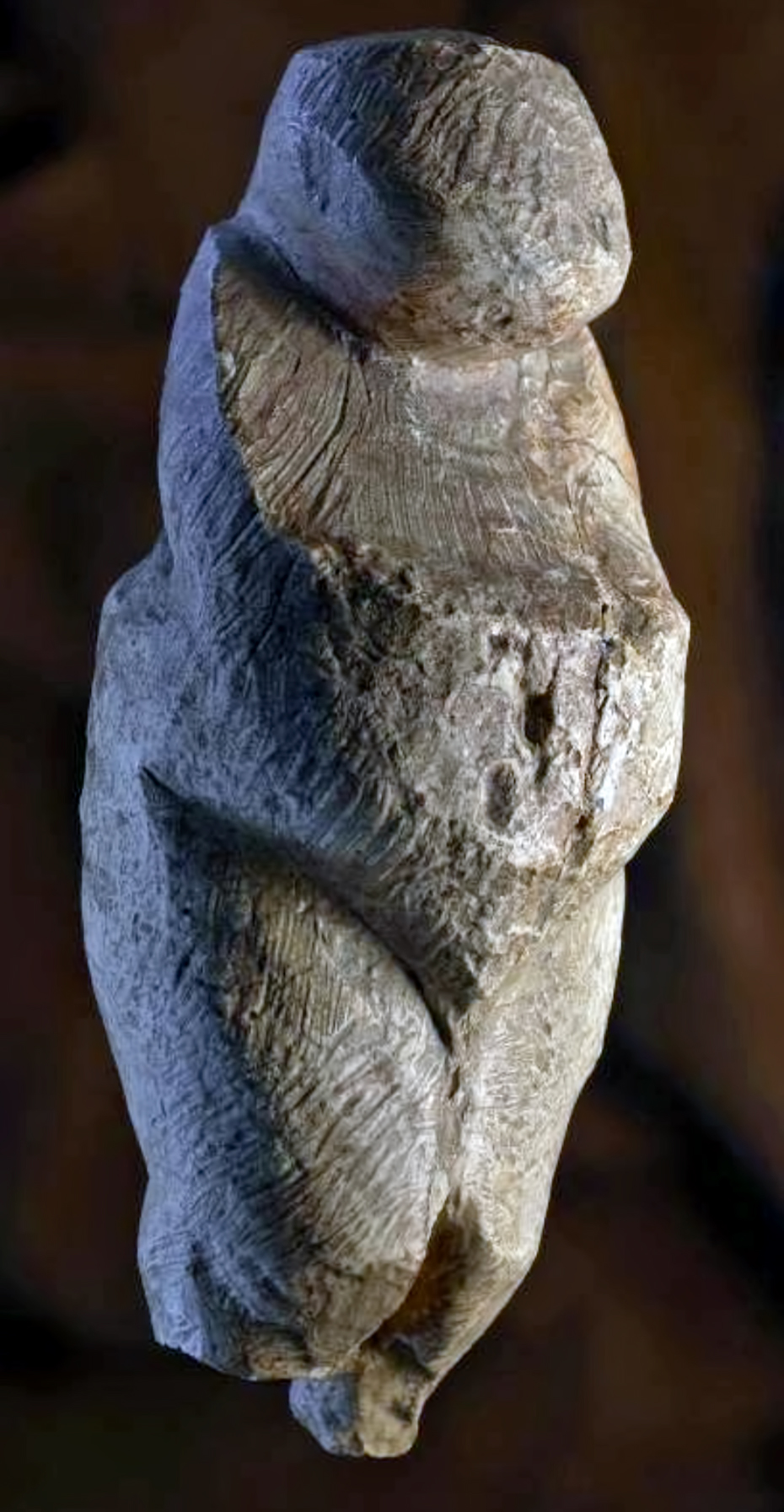
Kostenki Venus number 5.
Kostenki I, figurine in marlstone, roughly carved. Note the impacts from blows on the belly.
Height: 175 mm.
Photo: Martin Frouz
Source: Coll. Kunstkamera St. Petersburg.
Proximate source and text: Svoboda (2017)
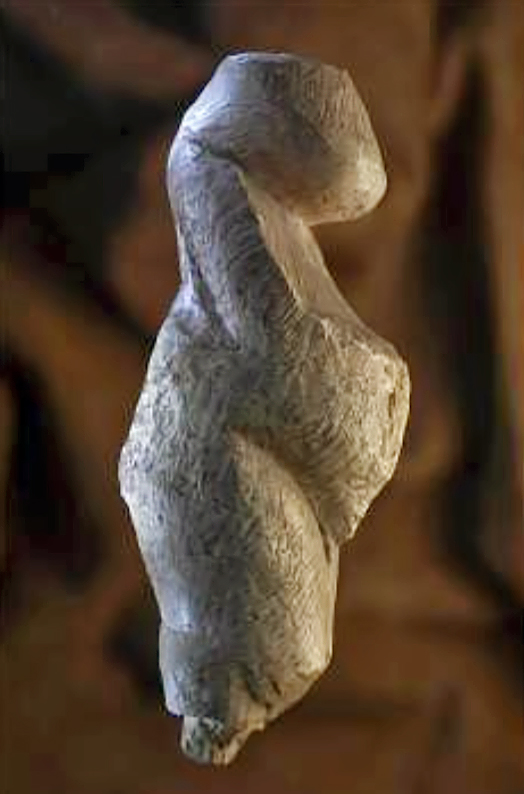
The Kostenki Venus number 5.
Photo: Martin Frouz
Source: Svoboda (2008)
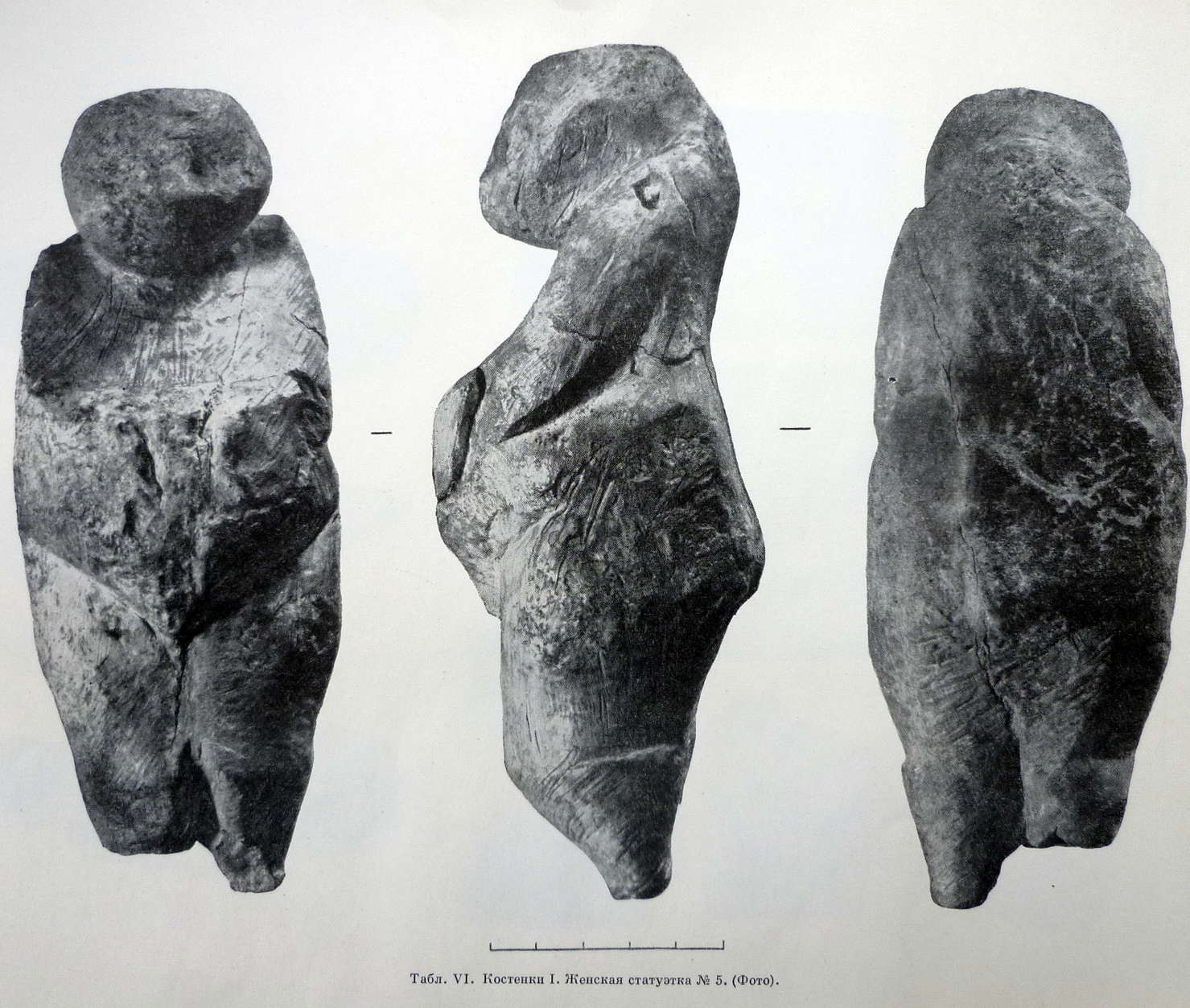
Black and white photos of the original of the venus above.
This is catalogued as Venus figure number 5 by Abramova (1962)
Photo: Abramova (1962)
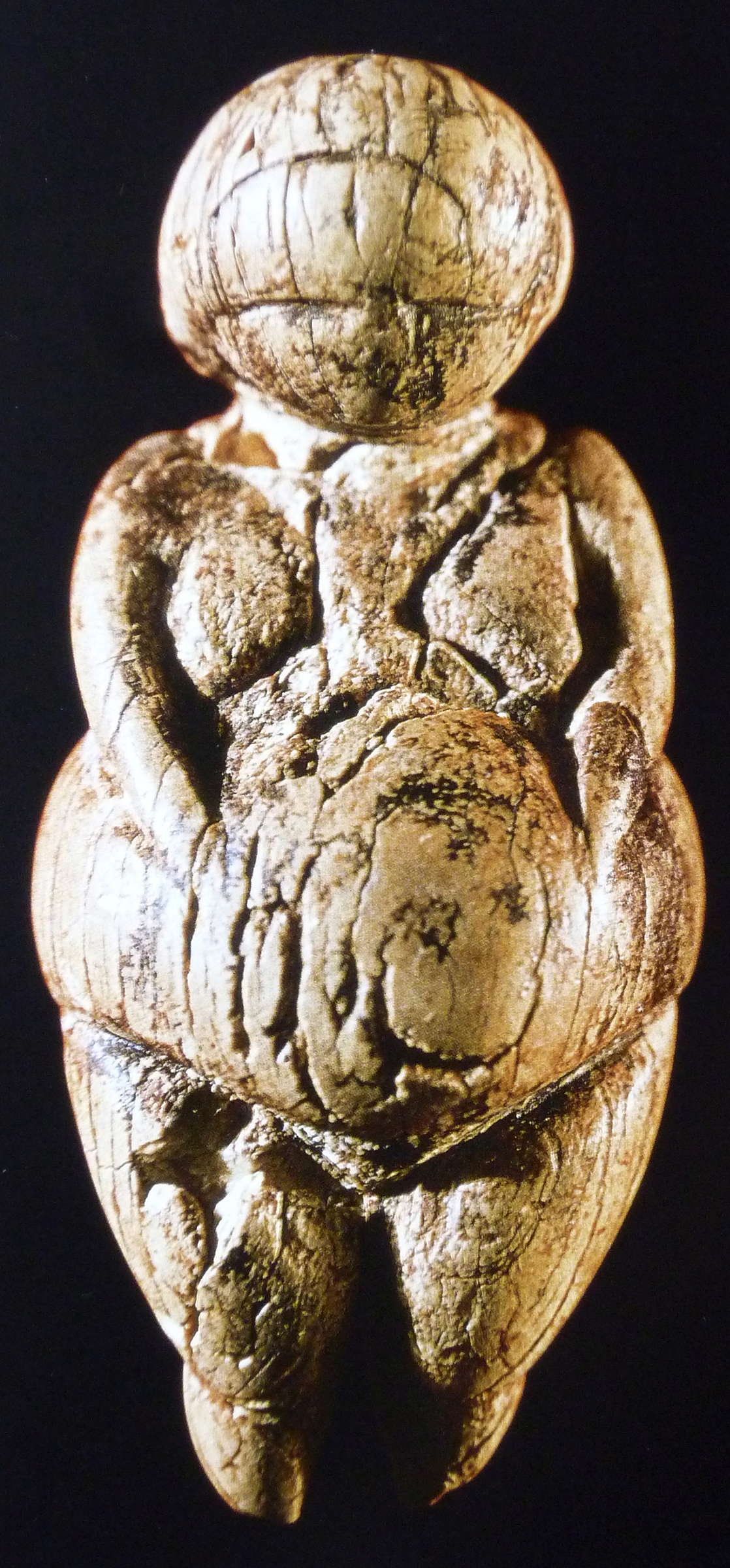 Venus figure from Kostenki.
Figure of a naked woman. Her head is covered with rows of shallow teeth cuts, depicting, according to Z. A. Abramova, hair or a closely fitting head-dress. Engraved and relief lines on the chest and on the back. Mammoth's tusk. Height 114 mm. Found in 1936, excavation made by P.P. Efimenko, who thought it to be 'one of the best creations of that period, known to us'.
Photo: Cohen (2003)
Text above: http://vm.kemsu.ru/en/palaeolith/plastic/costenki.html
ЖЕНСКАЯ СТАТУЭТКА
бивень мамонта Костенки 1,1 слой (22 тыс. лет), муляж
Одна из самых совершенных женских статуэток эпохи палеолита поражает мастерством исполнения и гармонией внутреннего содержания образа. Пред нами много рожавшая женщина, которая вновь готовится стать матерью. Маленькие ручки вытянуты вдоль живота, голова наклонена, как будто она прислушивается к находящейся внутри ее новой жизни, вся фигурка производит ощущение умиротворения и покоя. Это древнейший женский образ на Земле и символ красоты той эпохи.
Made of mammoth tusk, Kostenki 1, layer 1 (22 000 BP)
One of the most perfect female figurines of the Palaeolithic, with striking craftsmanship and harmony of the inner content of the image. We have before us a woman who already has children, and is preparing to become a mother again. Little hands stretched along the abdomen, head tilted as if she listens to the new life inside her, the whole figure produces a feeling of peace and tranquility. It is a symbol of the beauty of that era.
Additional text: Display, Kostenki Museum
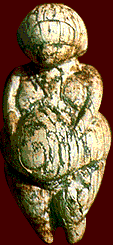
Another photo of the venus above.
From:
http://vm.kemsu.ru/en/palaeolith/plastic/costenki.html

This image shows both front and back views.
Photo: Rau et al. (2009)
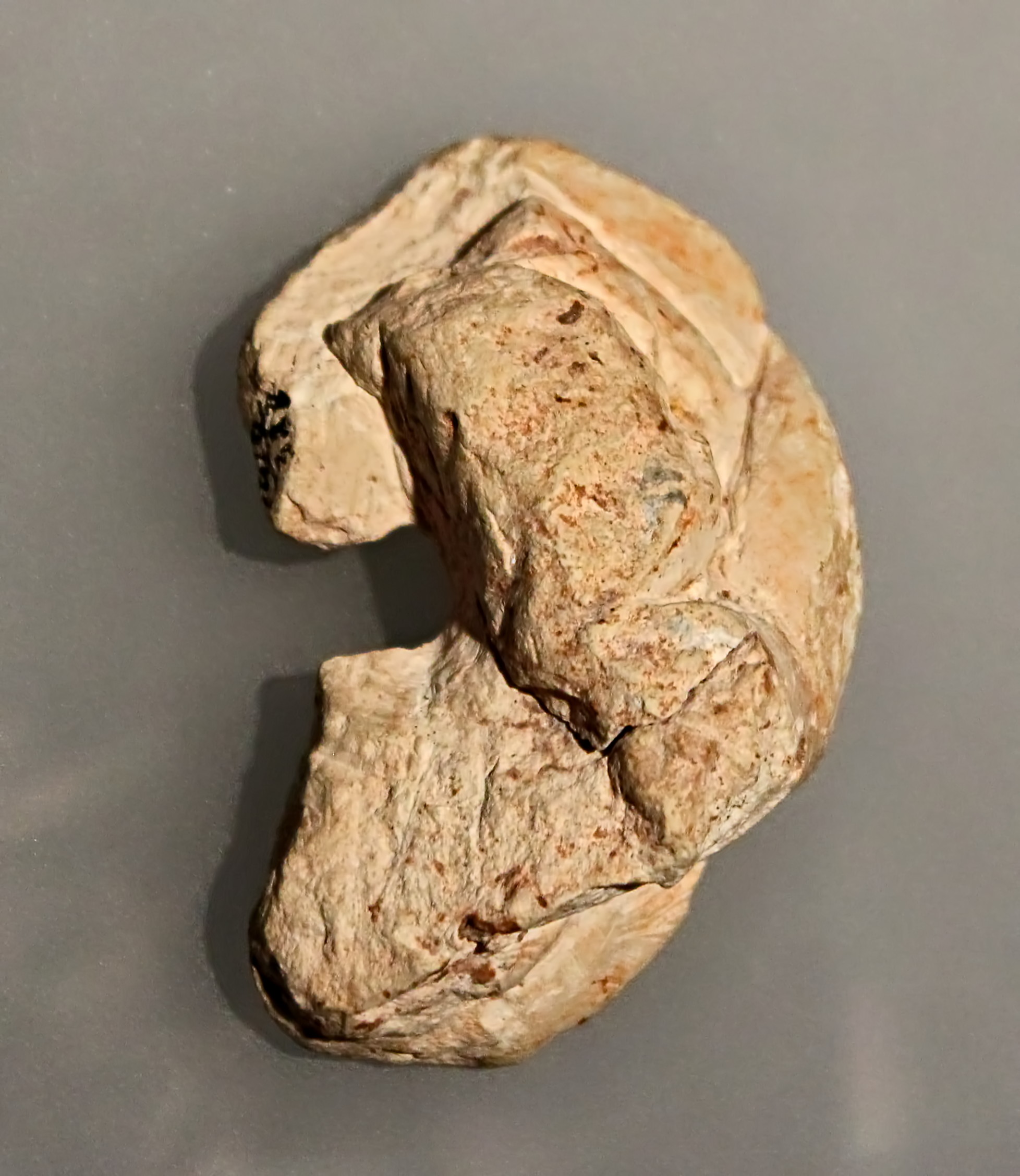


Fragment of a venus figure, Kostenki, 25 000 BP.
This limestone object is a fragment of a female statuette that has been pierced at chest height.
The left arm is still visible. The hole probably served for hanging the object on a cord.
Photo: Ralph Frenken
Source: Original, exhibited at the Archeological Museum Hamburg (Ice Age - The Art of the Mammoth Hunters from 18 October 2016 to 14 May 2017)
On loan from the Hermitage Museum, Saint Petersburg, Russia.
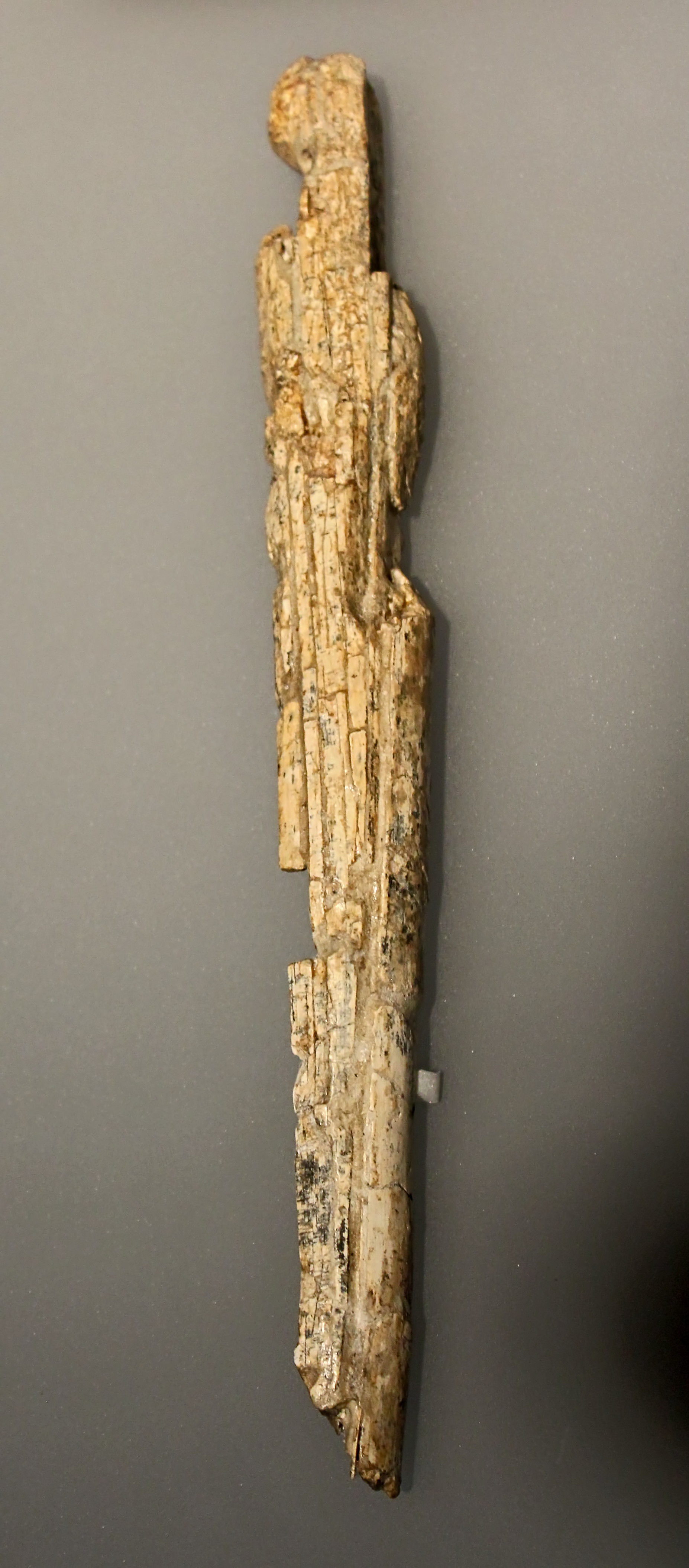
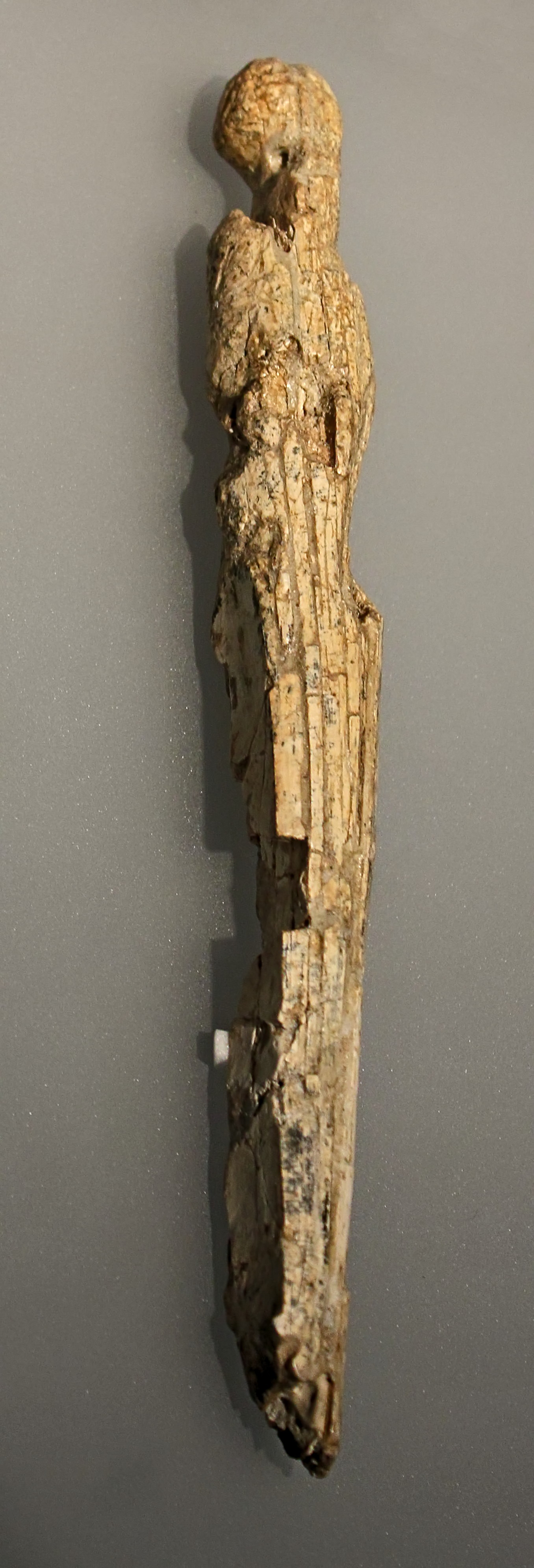
Uncompleted venus figure, Kostenki, 25 000 BP.
This large figure of mammoth ivory is the blank for a venus which was never finished.
Photo: Ralph Frenken
Source: Original, exhibited at the Archeological Museum Hamburg (Ice Age - The Art of the Mammoth Hunters from 18 October 2016 to 14 May 2017)
On loan from the Hermitage Museum, Saint Petersburg, Russia.
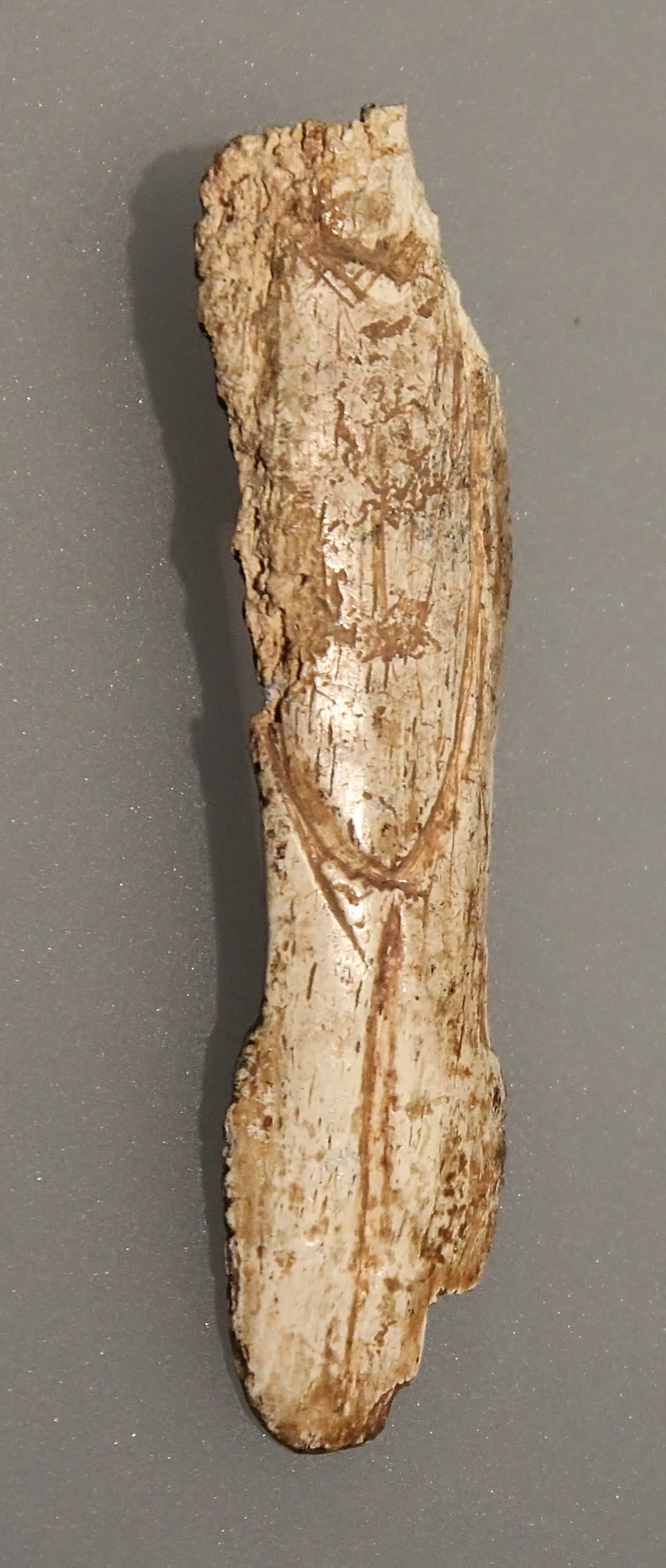
Representation of a man, Muralovka, 22 000 BP.
This figure of a man was engraved on a bison bone. The lower area of the abdomen as well as part of the legs can be seen.
Photo: Ralph Frenken
Source: Original, exhibited at the Archeological Museum Hamburg (Ice Age - The Art of the Mammoth Hunters from 18 October 2016 to 14 May 2017)
On loan from the Hermitage Museum, Saint Petersburg, Russia.
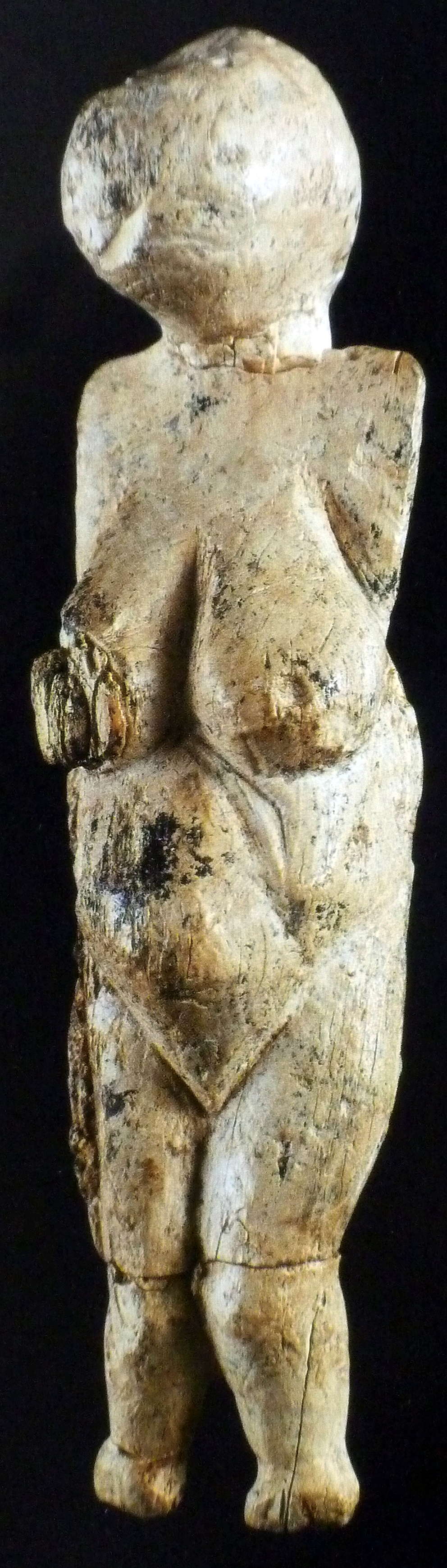
Venus figure from Kostenki 1.
Photo: Cohen (2003)
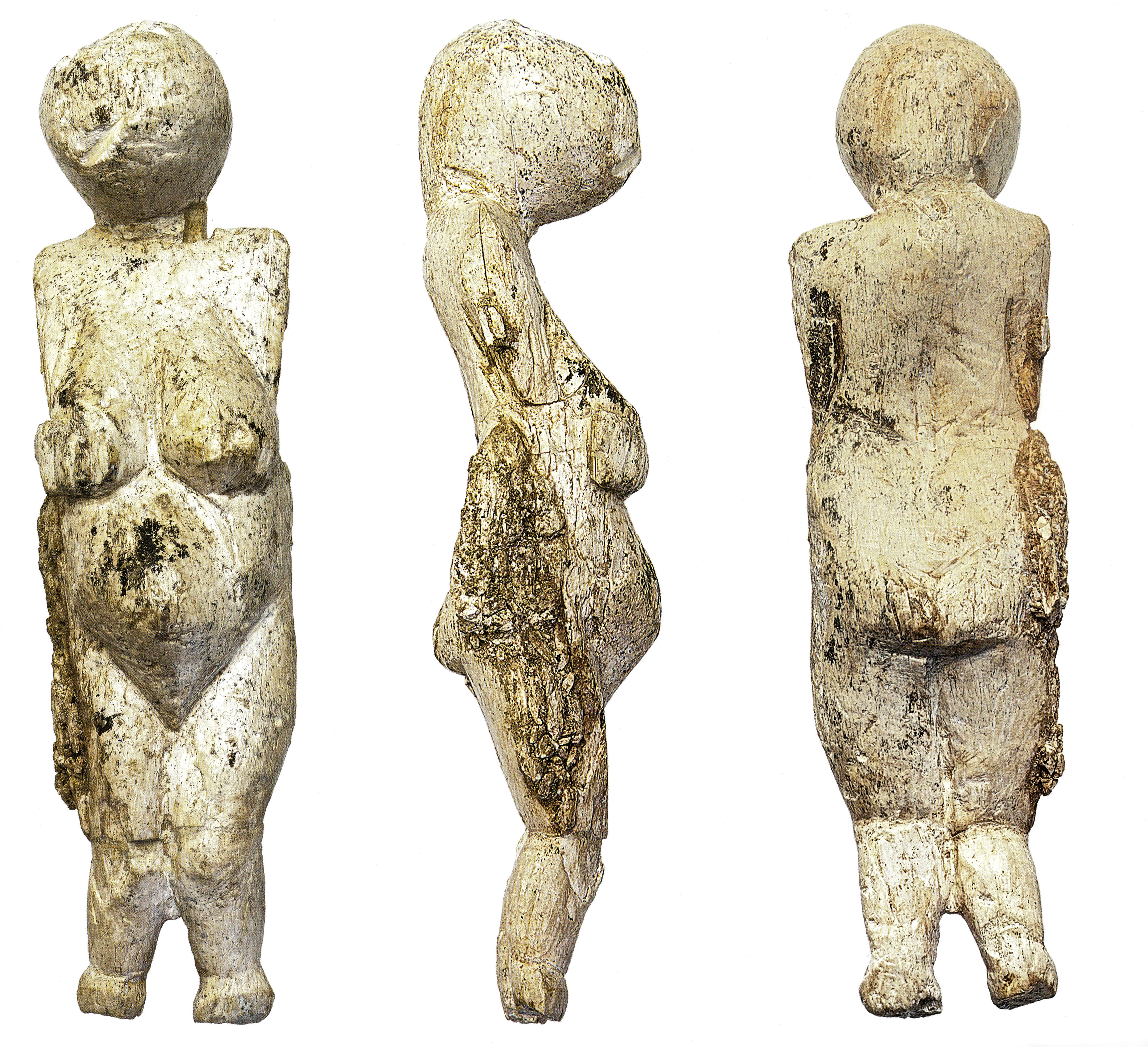
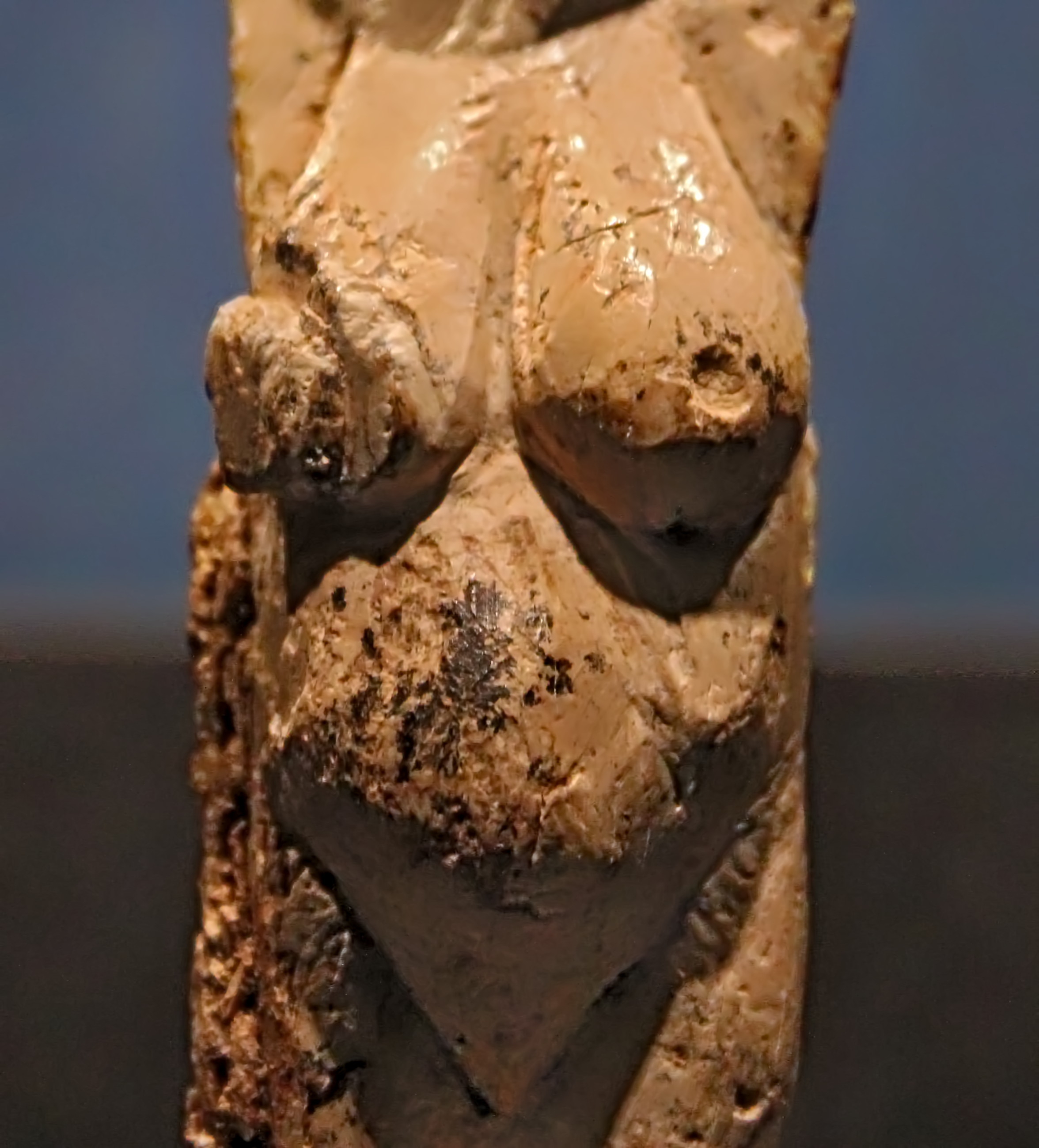
This is a detailed image of the venus.
Photo: Merkel und Weiss (2017)
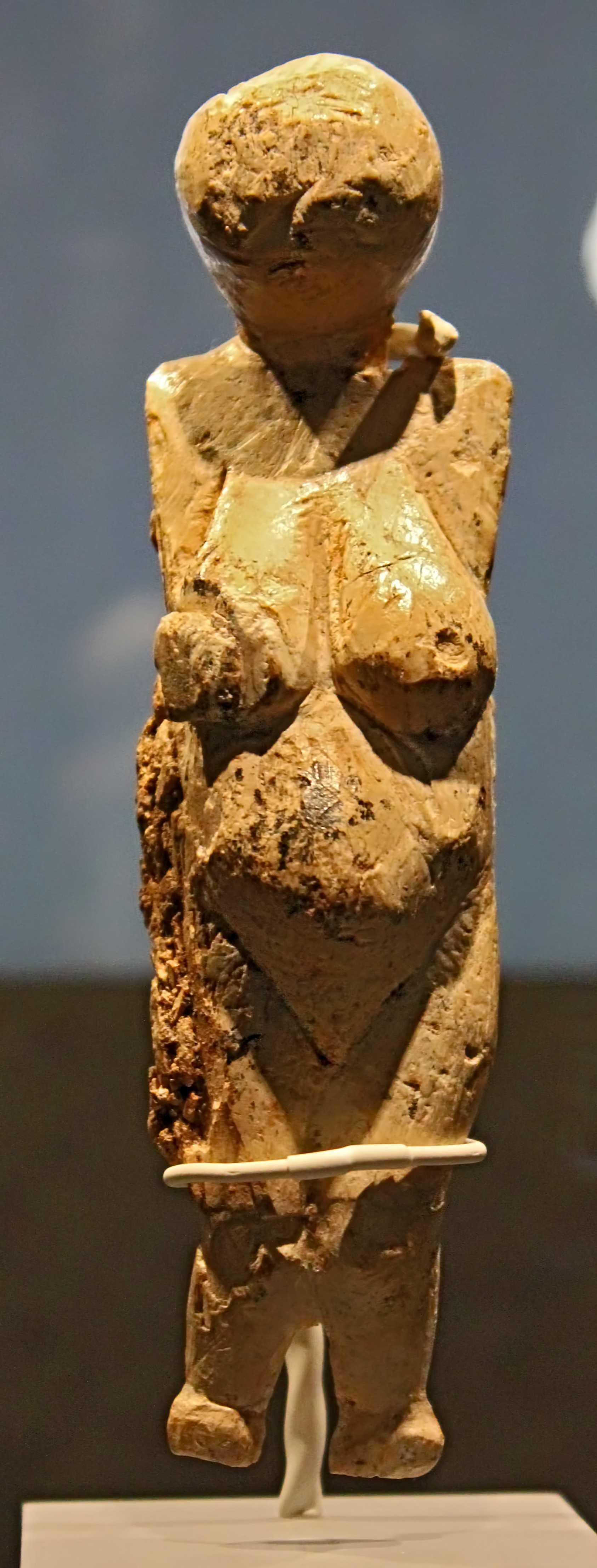
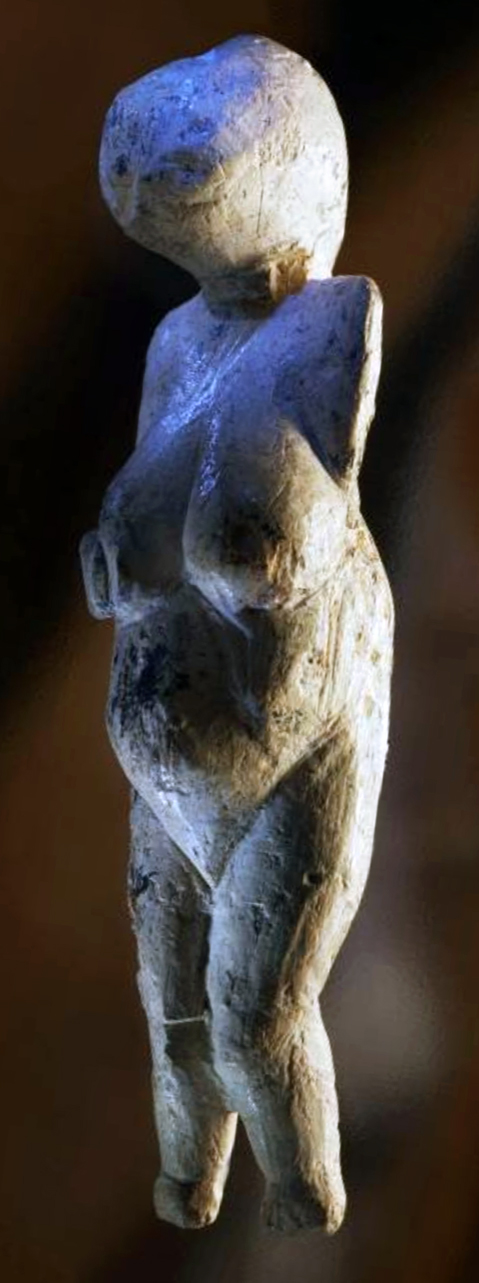
Venus figure, Kostenki.
25 000 BP
Photo: Ralph Frenken
Source: exhibited at the Archeological Museum Hamburg (Ice Age - The Art of the Mammoth Hunters from 18 October 2016 to 14 May 2017)
On loan from the Hermitage Museum, Saint Petersburg, Russia.
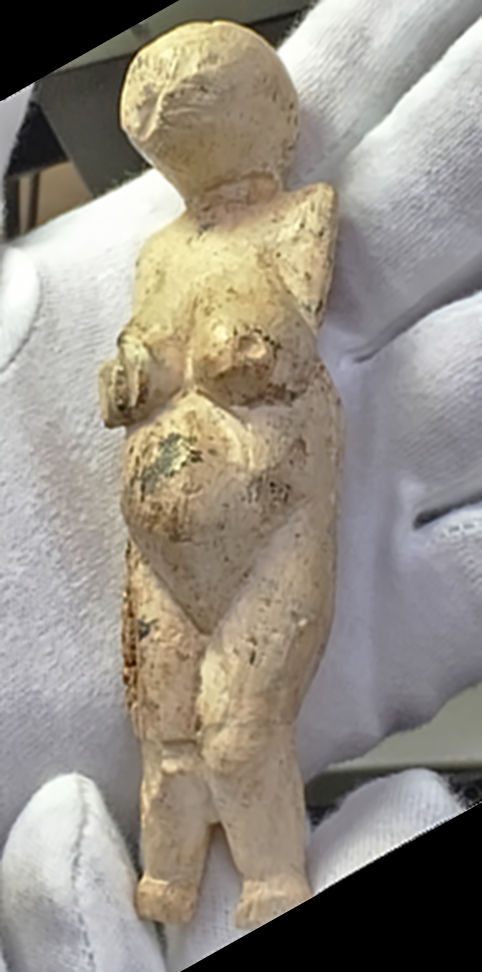
Venus figure, Kostenki.
25 000 BP
Photo: Ralph Frenken
Source: exhibited at the Archeological Museum Hamburg (Ice Age - The Art of the Mammoth Hunters from 18 October 2016 to 14 May 2017)
On loan from the Hermitage Museum, Saint Petersburg, Russia.
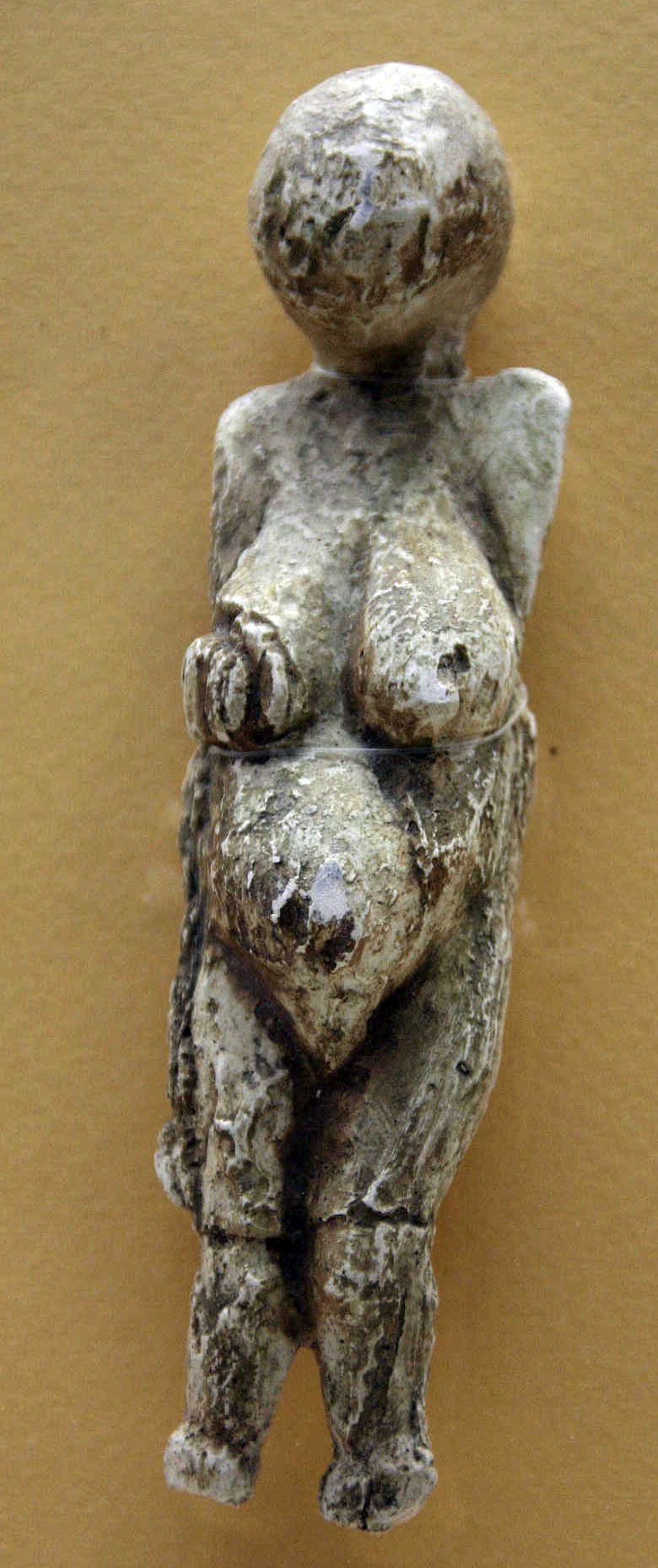
Kostenki I, ivory figurine, pregnant
Height: 127 mm.
Photo: Martin Frouz
Source: Coll. IIMK St. Petersburg.
Proximate source and text: Svoboda (2017)
Scientific examination of the Venus statuette above in the Kunstkamera St. Petersburg
Photo: © Archaeological Museum Hamburg
Source: http://eiszeiten-hamburg.de/2016/05/11/die-kunst-der-mammutjaeger/

Female figurine carved from mammoth tusk. Kostenki 1, layer 1
22 000 BP
Plaster cast.
Photo: Vladimir Gorodnjanski 2011, 2014
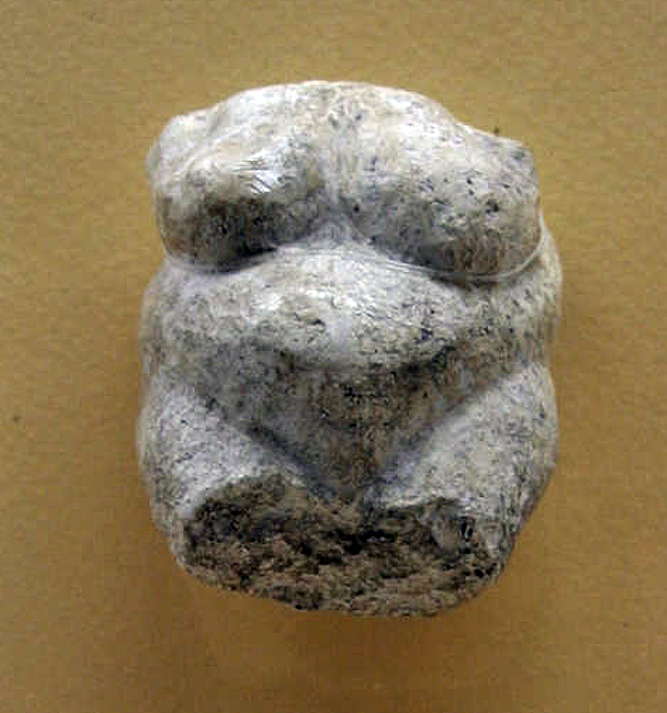
Female figurine carved from marl. Kostenki 1, layer 1
22 000 BP
Plaster cast.
Photo: Vladimir Gorodnjanski 2011
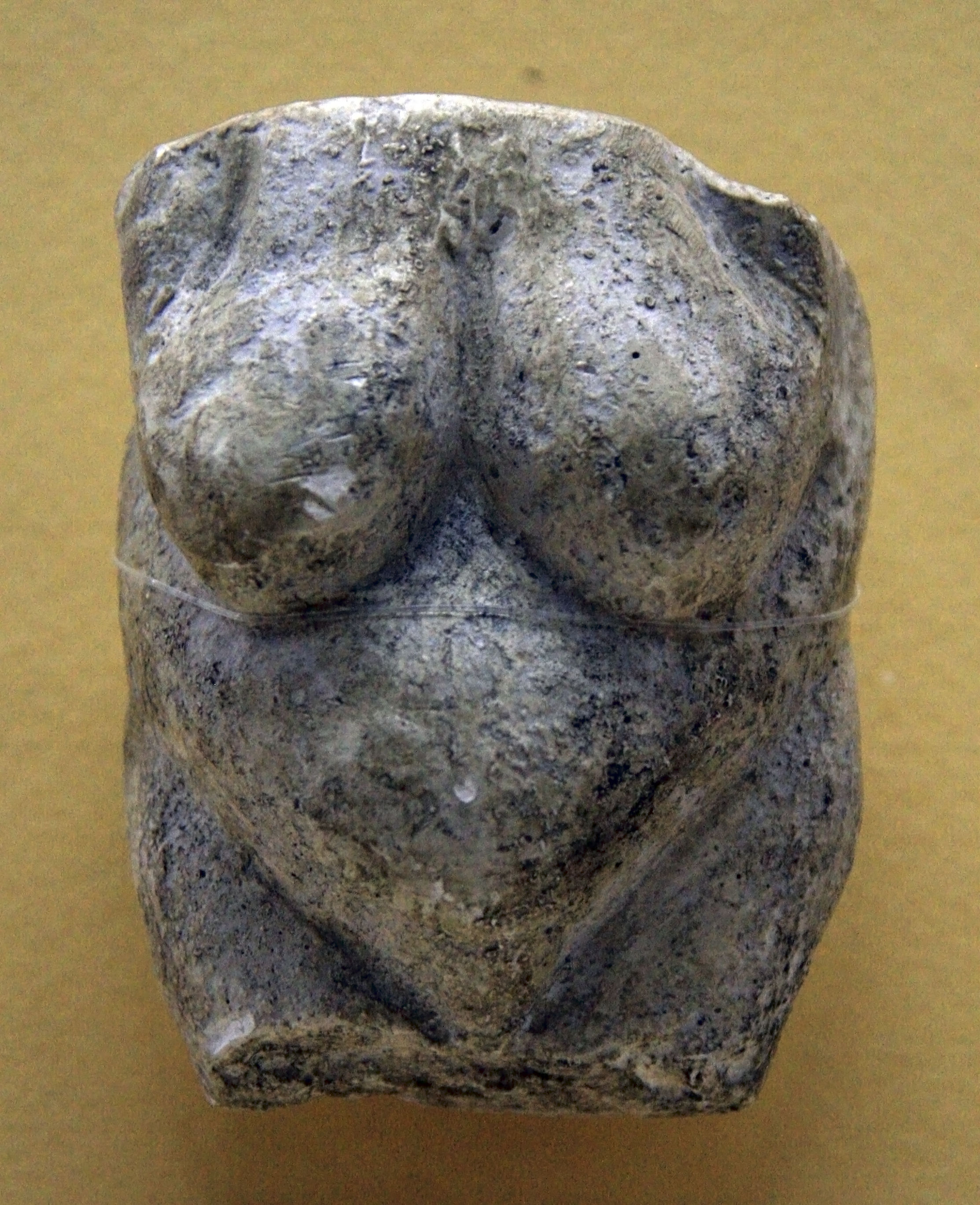
ЖЕНСКАЯ СТАТУЭТКА
мергель Костенки 1,1 слой (22 тыс. лет), муляж
Некоторые женские статуэтки из мергеля в Костенках представляют собой сознательно разбитые фигурки. У данной статуэтки не хватает нижней части ног и верхней части туловища: они были отбиты еще в каменном веке. Возможно, это был ритуал, смысл которого уже не ясен.
Female figurine.
Kostenky 1, layer 1 (22 000 BP), made of marl.
Some female figurines of marl in Kostenki present as deliberately broken figurines. In this statuette the lower part of the legs and the upper body are missing: they were broken off in the Stone Age. Perhaps it was a ritual, the meaning of which is not clear.
Photo: Vladimir Gorodnjanski 2014
Source: Facsimile, Kostenki Museum
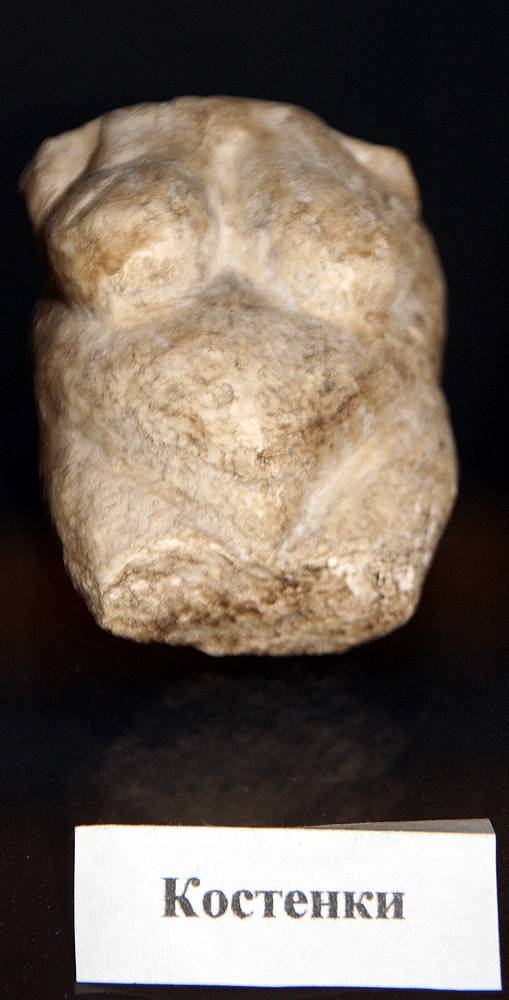
Another version of the venus figure above.
Photo: Vladimir Gorodnjanski, 2006
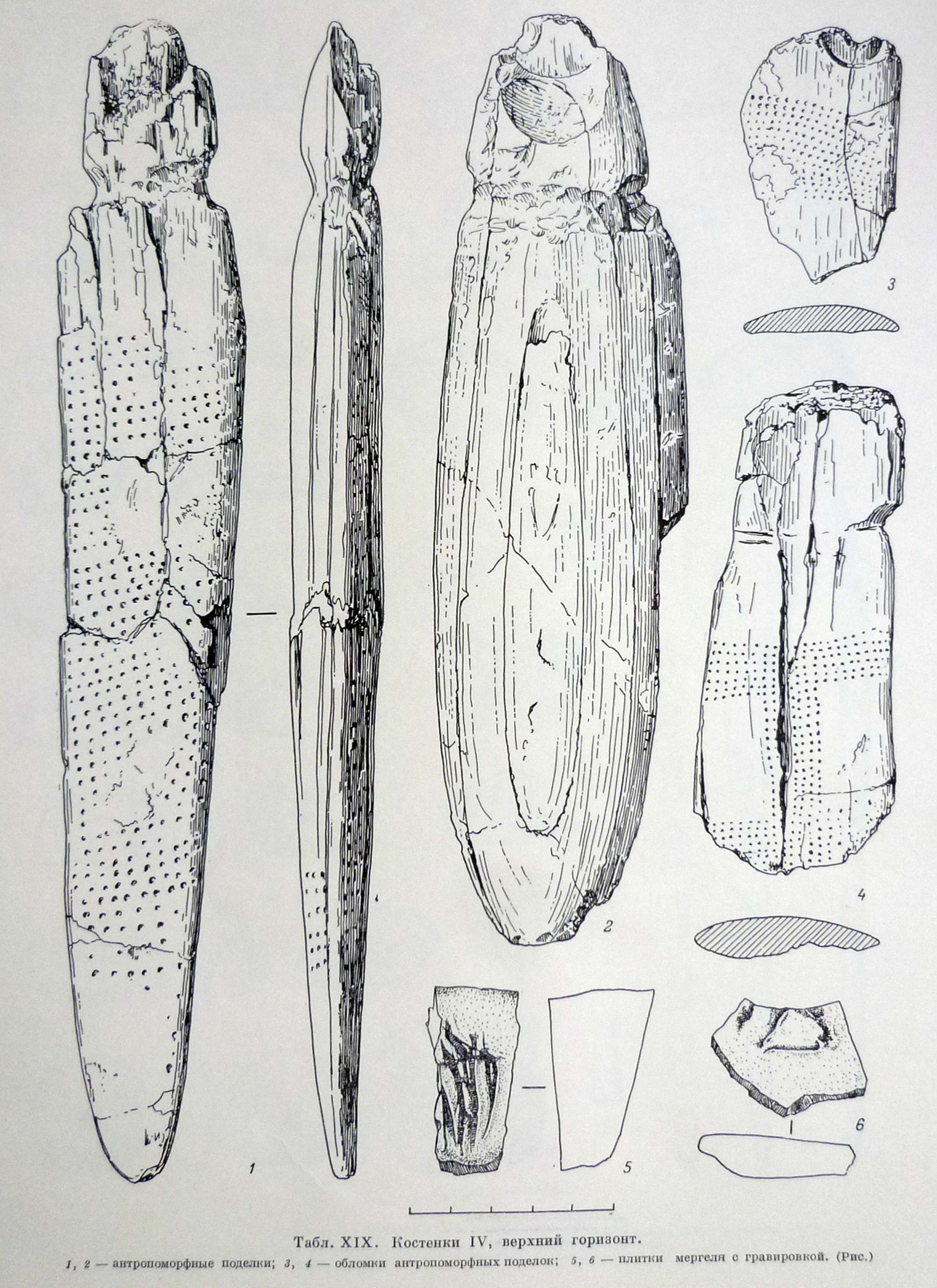
The upper horizon of Kostenki 4 yielded some interesting finds.
1 and 2 are venus figures, 3 and 4 are fragments of anthropomorphic pieces, and 5 and 6 are engraved plaques of marl (clayey limestone).
Photo: Abramova (1962)
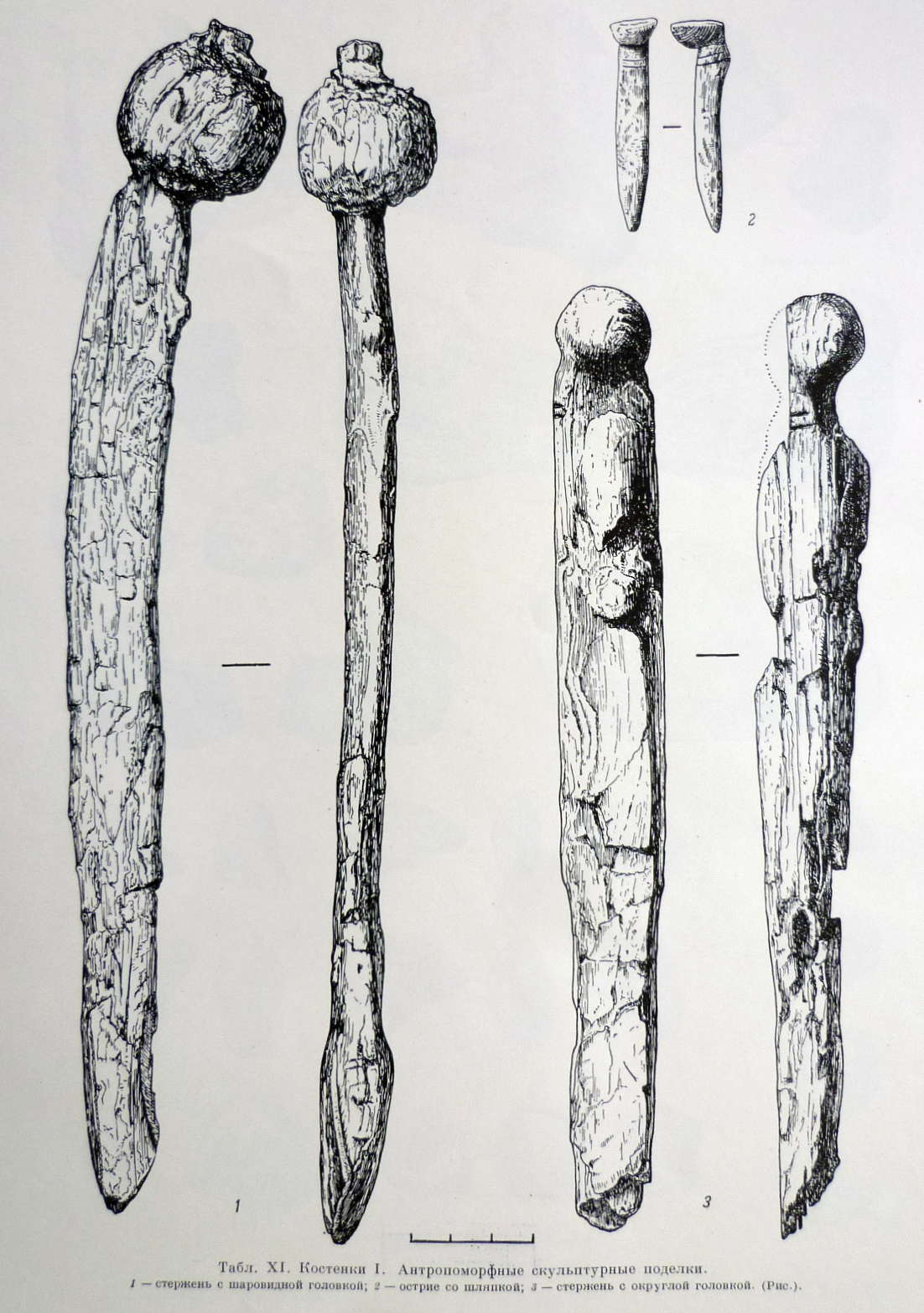
Kostenki 1 venus figures.
1 - A rod with a globular head.
2 - a point with a hat like head.
3 - Rod with a rounded head.
Photo: Abramova (1962)


Kostenki, 25 000 BP - we can only speculate on the exact function of these anthropomorphic devices, which have also been proposed as venus figures.
(left) Made of mammoth ivory, this resembles a percussion instrument, such as a drumstick, and could thus be an indirect proof of the use of drums.
(right) Carved from a mammoth rib, this might have been used for stripping snow from clothes.
Photo: Ralph Frenken
Source and text: Original, exhibited at the Archeological Museum Hamburg (Ice Age - The Art of the Mammoth Hunters from 18 October 2016 to 14 May 2017)
On loan from the Hermitage Museum, Saint Petersburg, Russia.
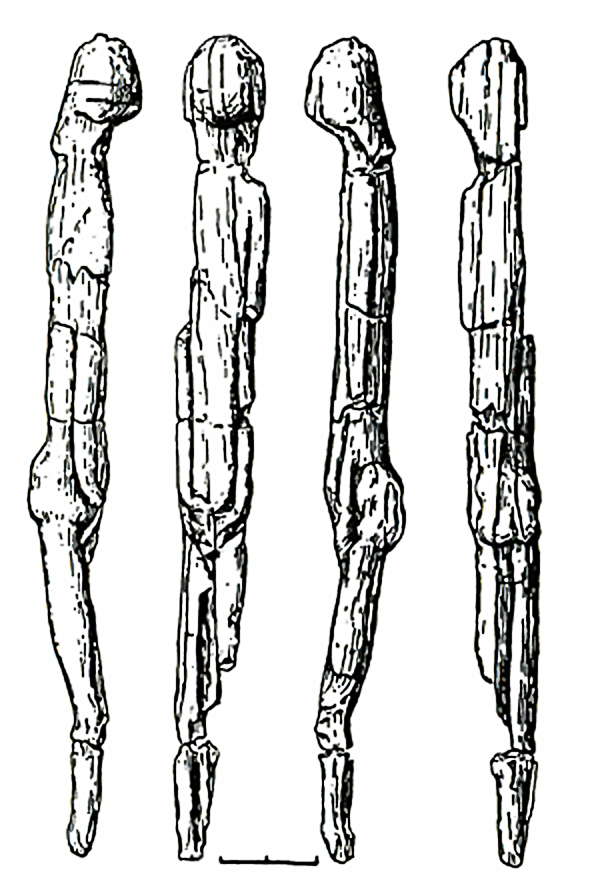
This is described as a male venus from Kostenki.
Photo: Abramova (1995)

A photograph of the male venus figure above.
Photo: Vladimir Gorodnjanski 2007
Source: The Hermitage Museum, Saint Petersburg
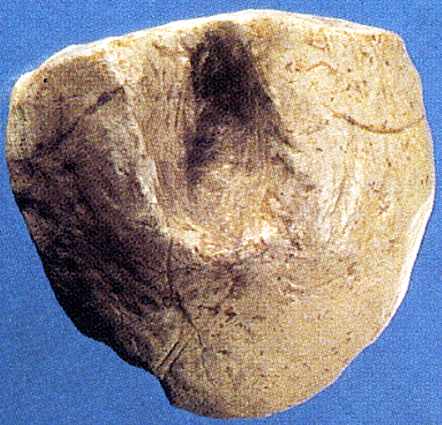 Vulve sculptée de Kostienki 1. Collection MAE. Photo L. Iakovleva.
Vulva sculpture from Kostienki 1. Collection MAE.
Photo and French text: "les mammouths - Dossiers
Archéologie - n° 291 - Mars 2004"
Photograph L Iakovleva.
My thanks to Anya for access to this resource.
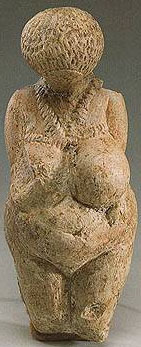
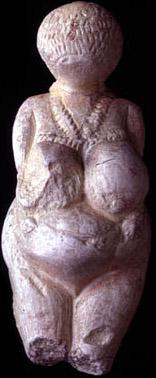
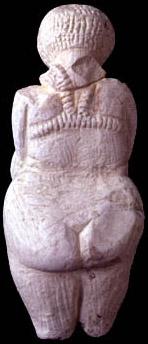
23 000 - 21 000 BC Limestone
H 10.2 cm
This figurine represents the Palaeolithic 'Venus', with overlarge breasts and belly. The faceless head bends towards the chest while the arms are pressed to the body with hands on the belly. Covering the surface of the head are rows of incisions indicating a hair style or cap. Relief work in the form of a tight plait convey a breast ornament tied up at the back. There are bracelets on the arms.
(right images) http://exn.ca/stories/2000/02/03/53.asp

Venus figure above, but minus the head.
This has the classic and famous beaded decoration around the neck and above the breasts.
Photo: Vladimir Gorodnjanski, 2006
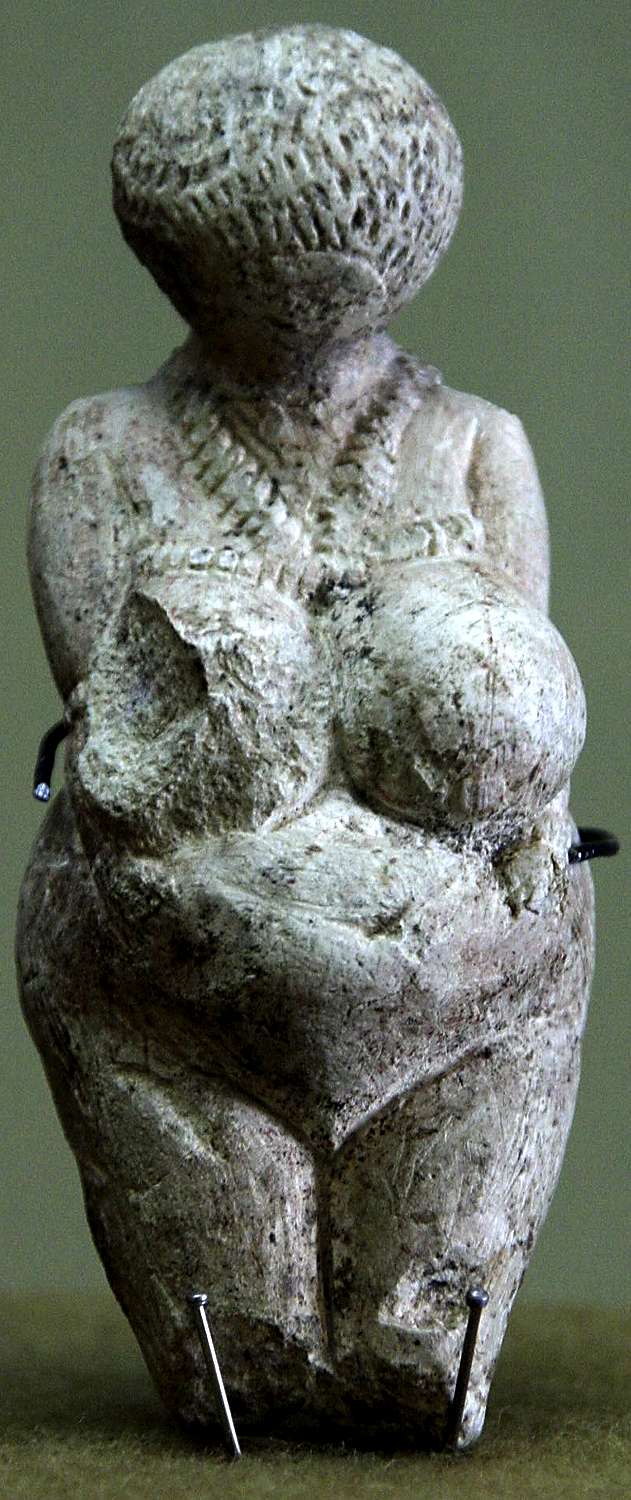
This is a much better photograph of the original in the Hermitage Museum at St Petersburg, Russia.
Photo: Vladimir Gorodnjanski 2007
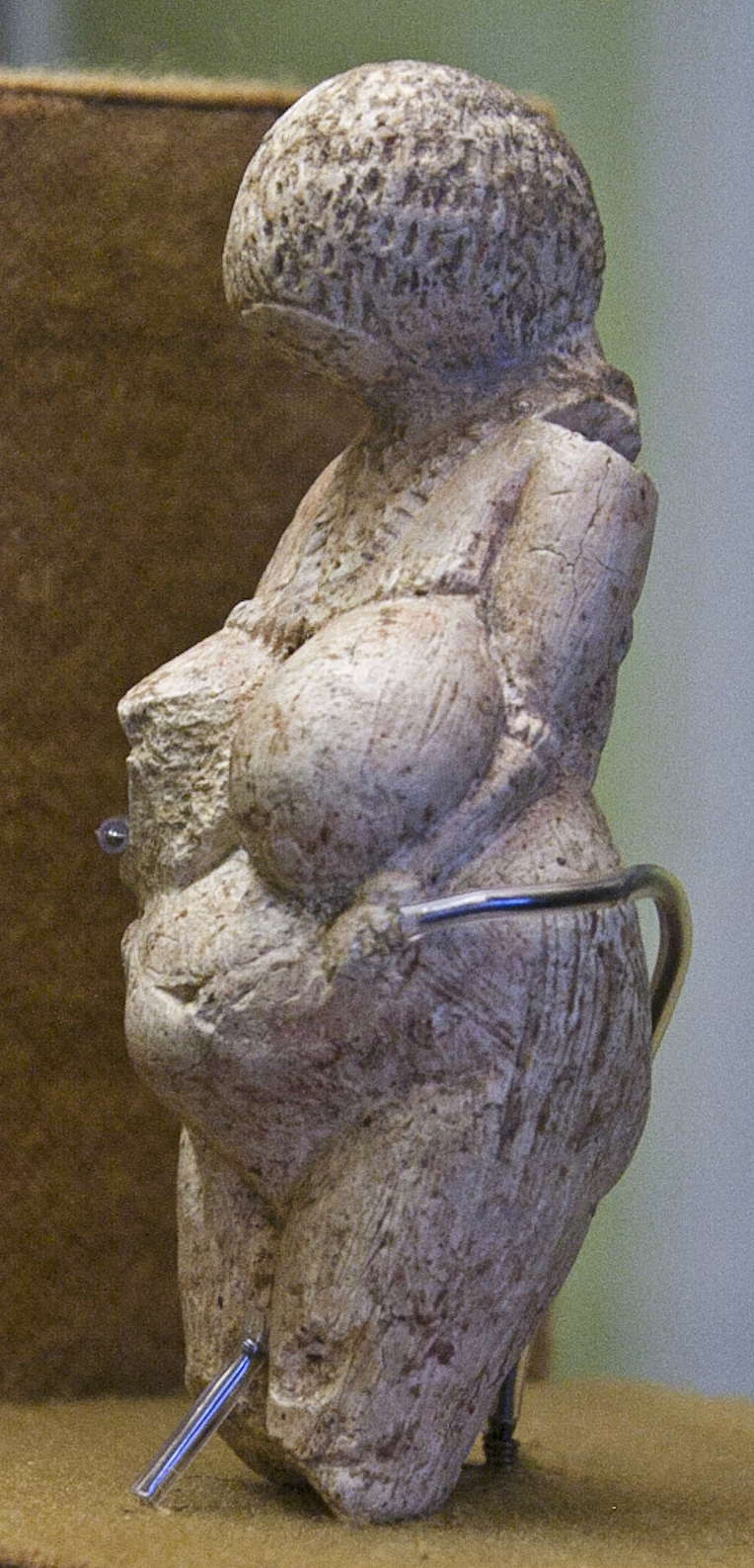

Various views of the original.
Photo: Vladimir Gorodnjanski 2014
Source: The Hermitage Museum, Saint Petersburg
This facsimile of the figurine above is missing the head, but the very small hands and lower arms are clear in this view.
Photo: Vladimir Gorodnjanski 2014
Source: Facsimile, Kostenki Museum
Facsimile of the venus figure above.
Photo: Don Hitchcock 2008
Source: Vienna Natural History Museum
Venus figurines from Kostenki
Photo: http://vantit.ru/antiquities/908-venera-iz-kostenok.html
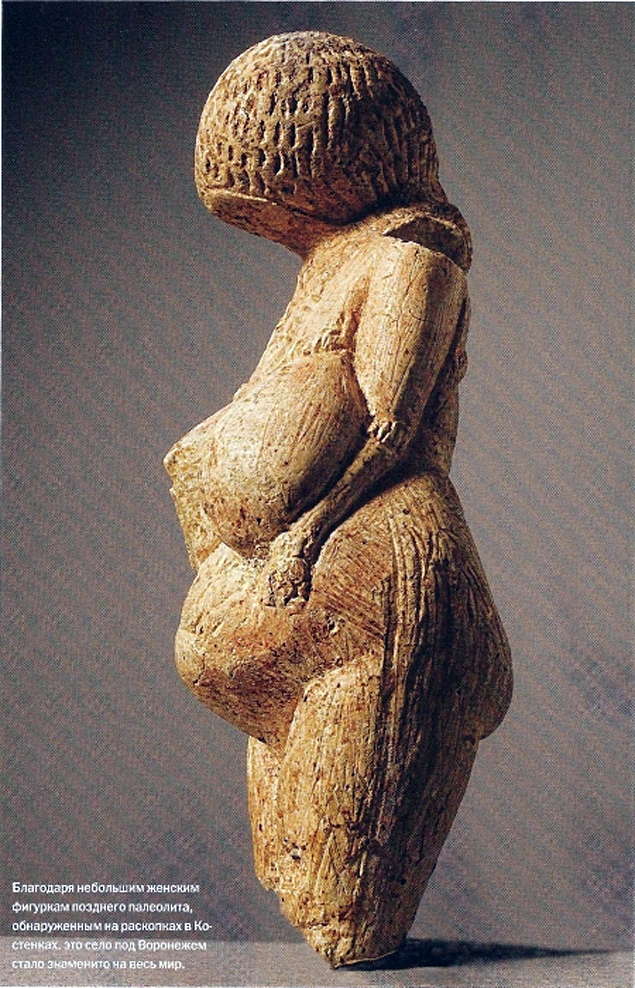
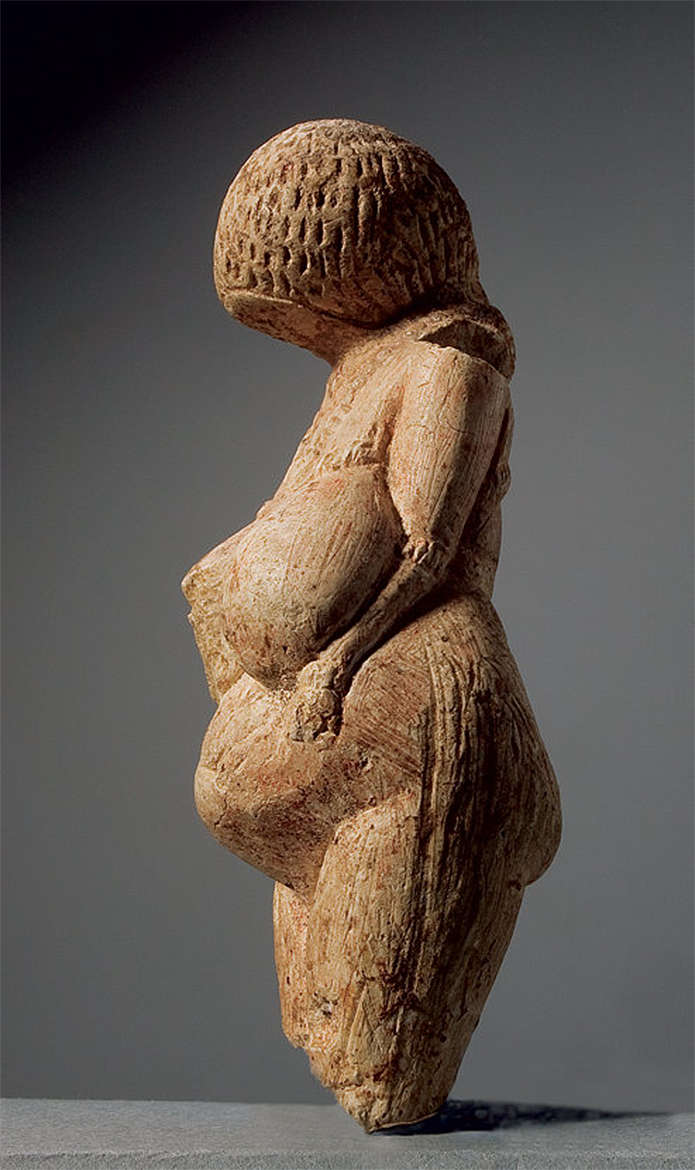
Venus figurine from Kostenki
Photo (left): http://vantit.ru/antiquities/908-venera-iz-kostenok.html
Photo (right): http://old.national-geographic.ru/ngm/200903/article_269/
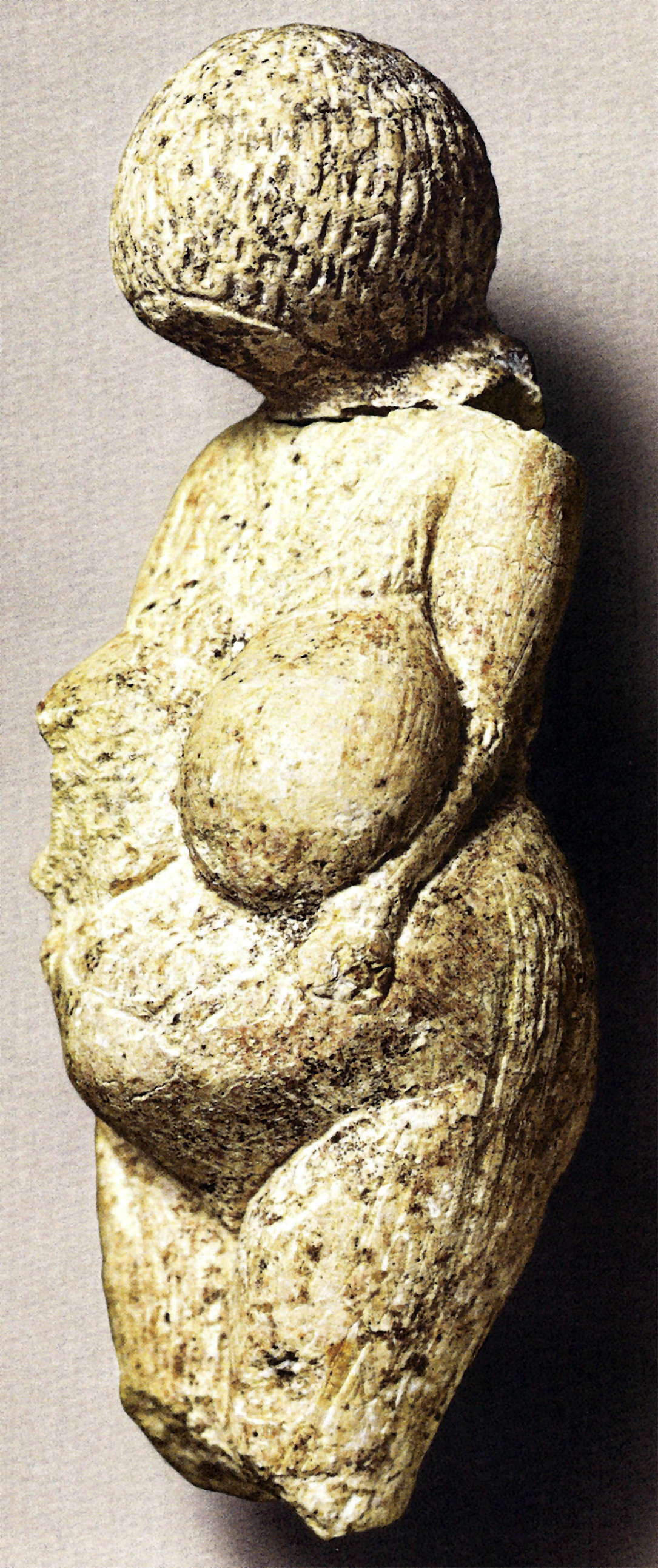
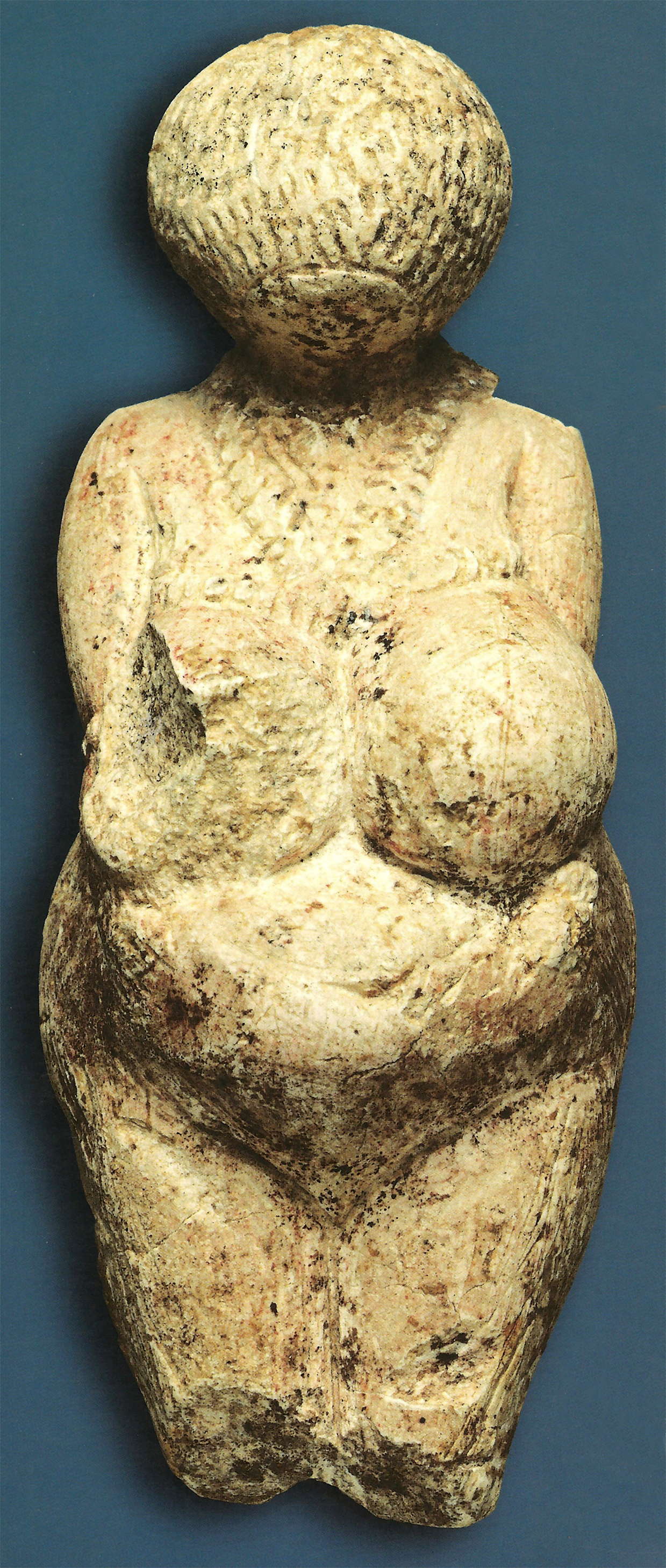
Venus figurine from Kostenki
Photo: Cohen (2003)
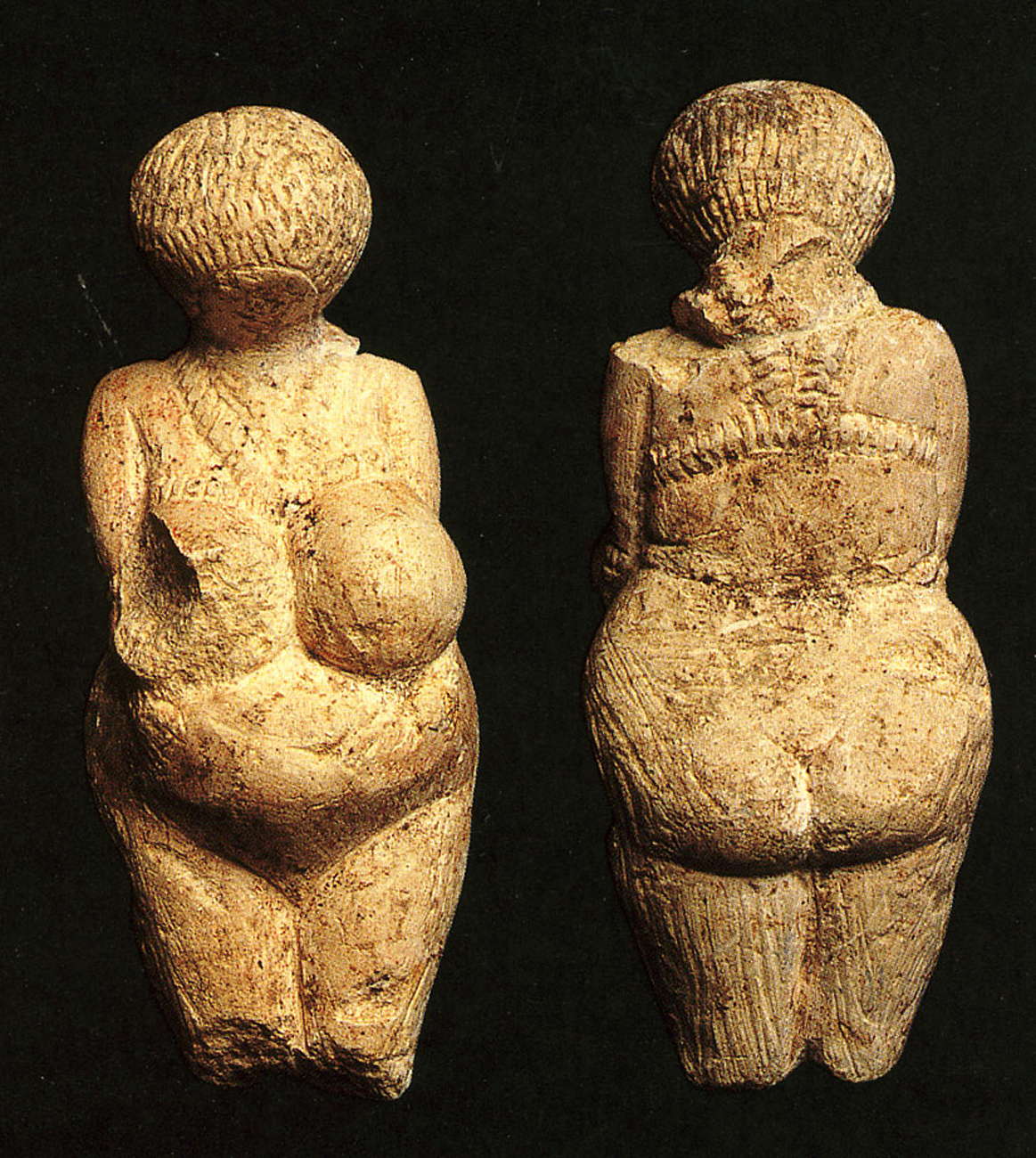
Kostenki Venus figure, with a good view of the back of the venus.
Photo: http://shamans-storytellers.wikispaces.com/9E+Look,+Ma,+No+Feet!++Paleolithic+Goddess+Figures
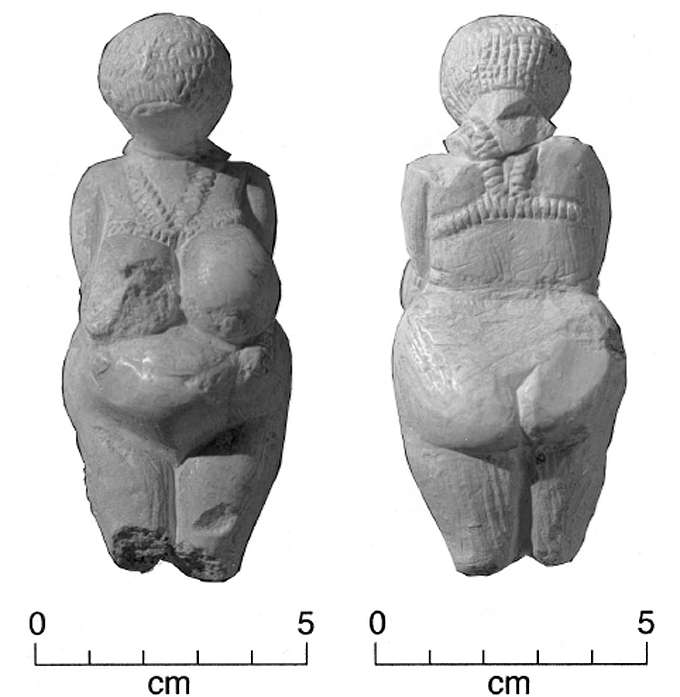
Venus figurine made of marl from Kostenki 1, apparently a facsimile.
Photo: Soffer et al. (2000)
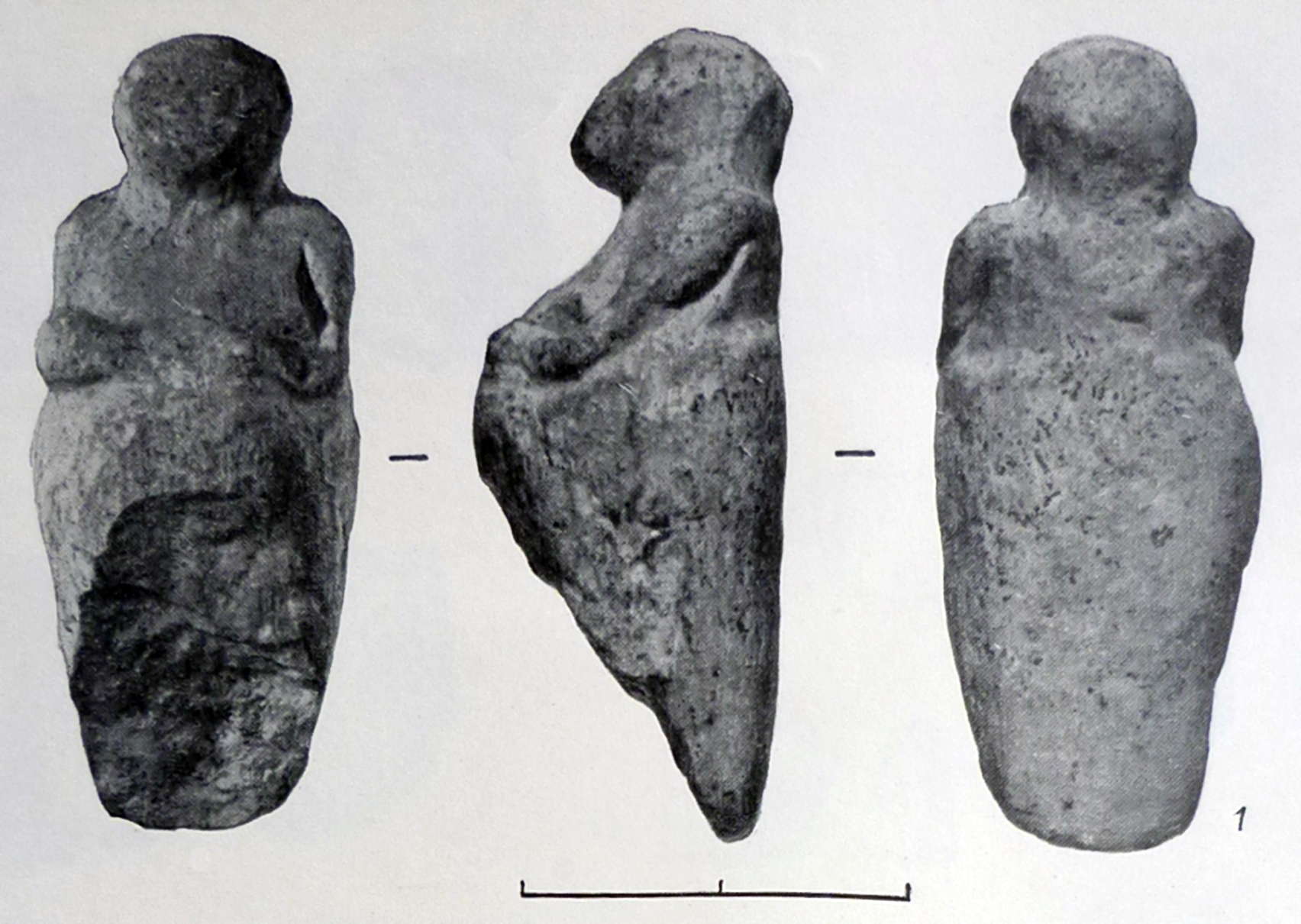
Venus figurine from Kostenki 1.
Abramova (1962) identifies this as Number 6 from Kostenki 1.
Photo: Abramova (1962)

Venus figure, Kostenki.
25 000 BP, Abramova (1962) identifies this as Number 6 from Kostenki 1.
The big belly of this limestone statuette probably shows a pregnancy.
In this venus only the upper body appears to have been worked out, the legs are not indicated.
Photo: Ralph Frenken
Source: Original, exhibited at the Archeological Museum Hamburg (Ice Age - The Art of the Mammoth Hunters from 18 October 2016 to 14 May 2017)
On loan from the Hermitage Museum, Saint Petersburg, Russia.
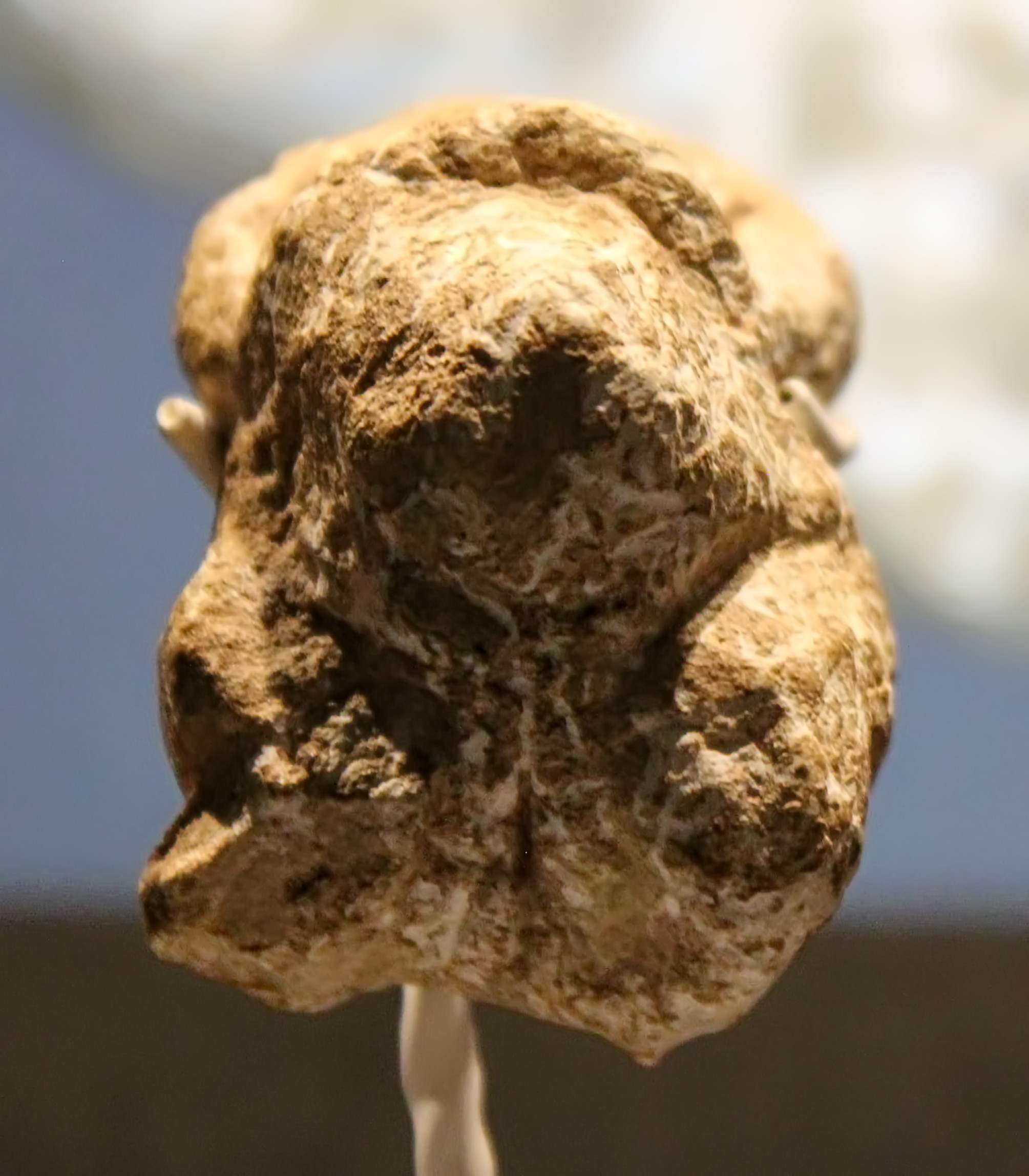
Venus figure, Kostenki.
25 000 BP.
The big belly of this limestone statuette probably shows a pregnancy.
The legs are shown, angled.
Photo: Ralph Frenken
Source: Original, exhibited at the Archeological Museum Hamburg (Ice Age - The Art of the Mammoth Hunters from 18 October 2016 to 14 May 2017)
On loan from the Hermitage Museum, Saint Petersburg, Russia.
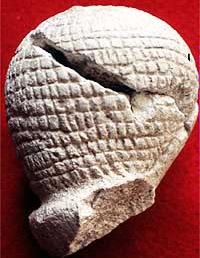 |
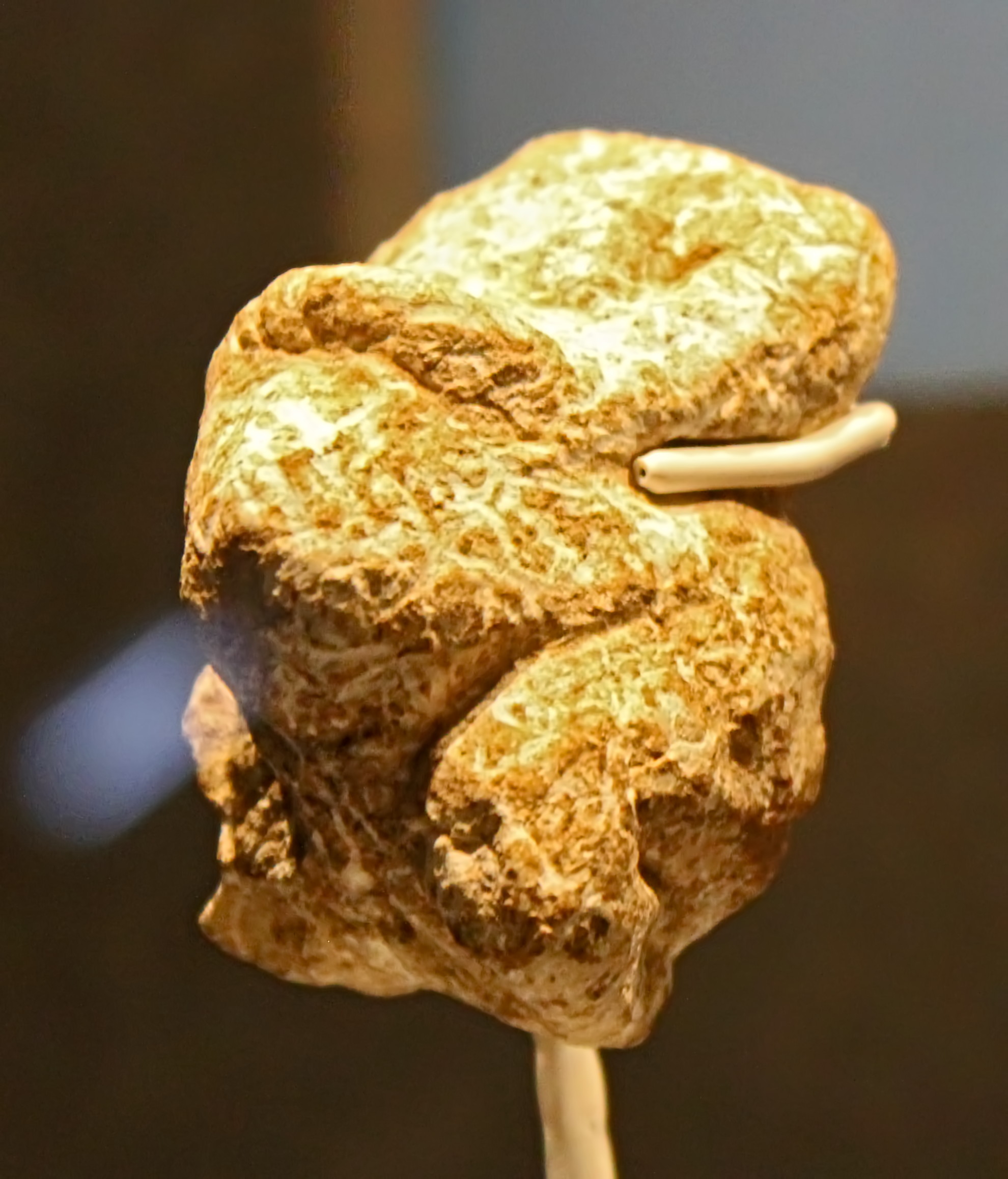
Head of a venus known popularly as the golf ball. From the Kostenki I site in Russia. The real basket headware was made of plaited starts and coiled basketry, copied here in stone.
Photo: http://www.unl.edu/rhames/212/venus/venus_string.html
|
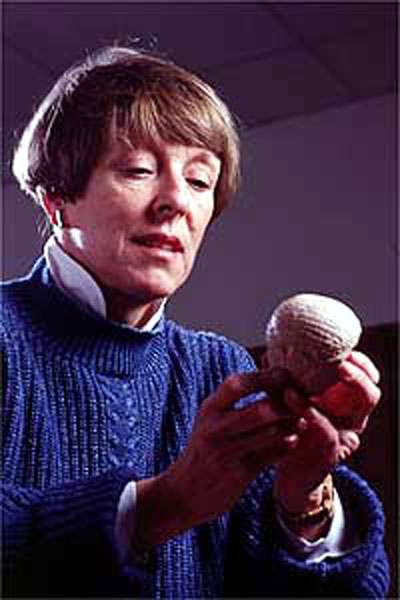
Dr. Olga Soffer examining the "golf ball" head of the Venus of the Kostenki I site in Russia.
"Because they have emotionally charged thingies like breasts and buttocks, the Venus figurines have been the subject of more spilled ink than anything I know of," Dr. Soffer said.
"There are as many opinions on them as there are people in field."
Text and Photo: http://www.hort.purdue.edu/newcrop/history/lecture02/r_2-1.html

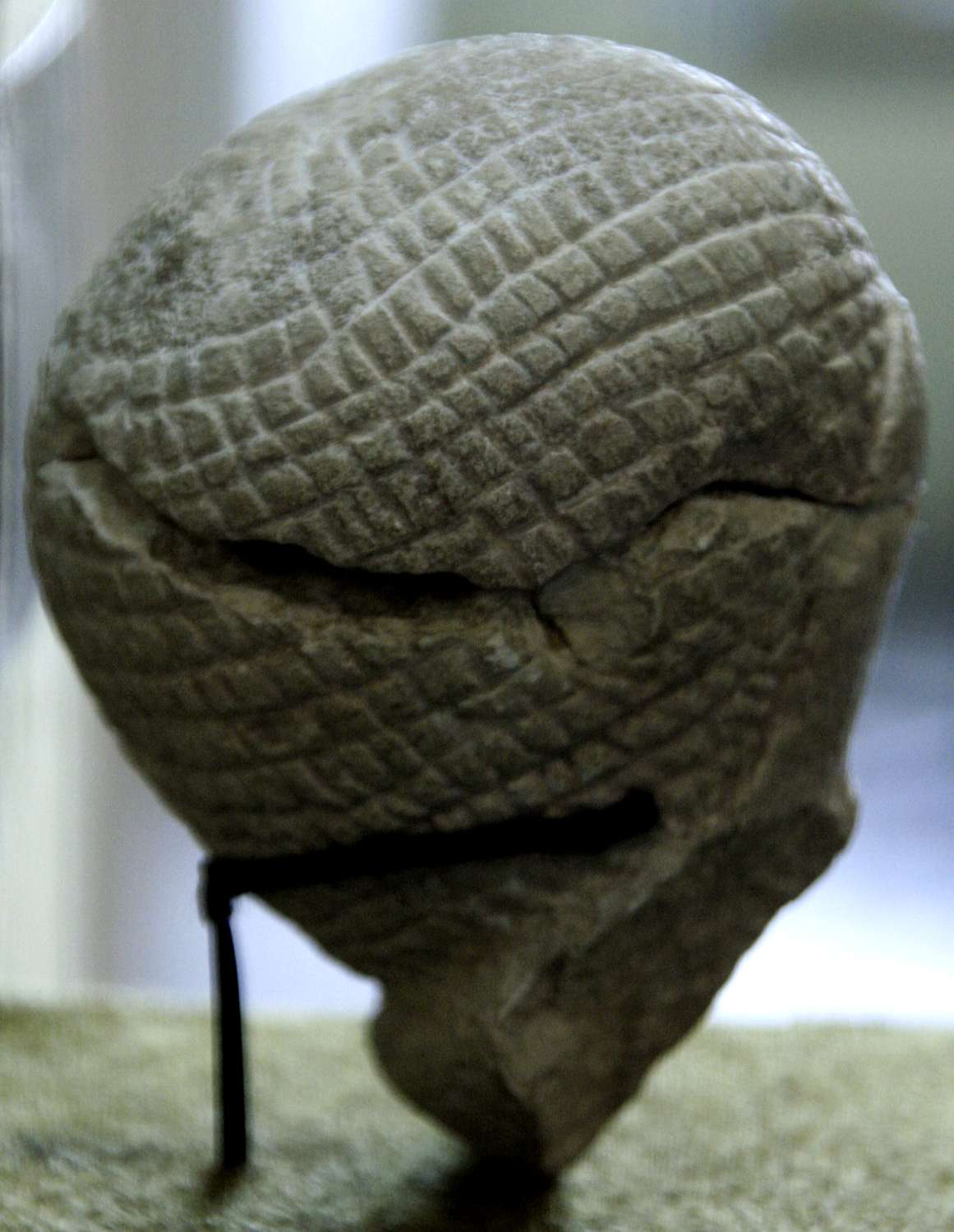
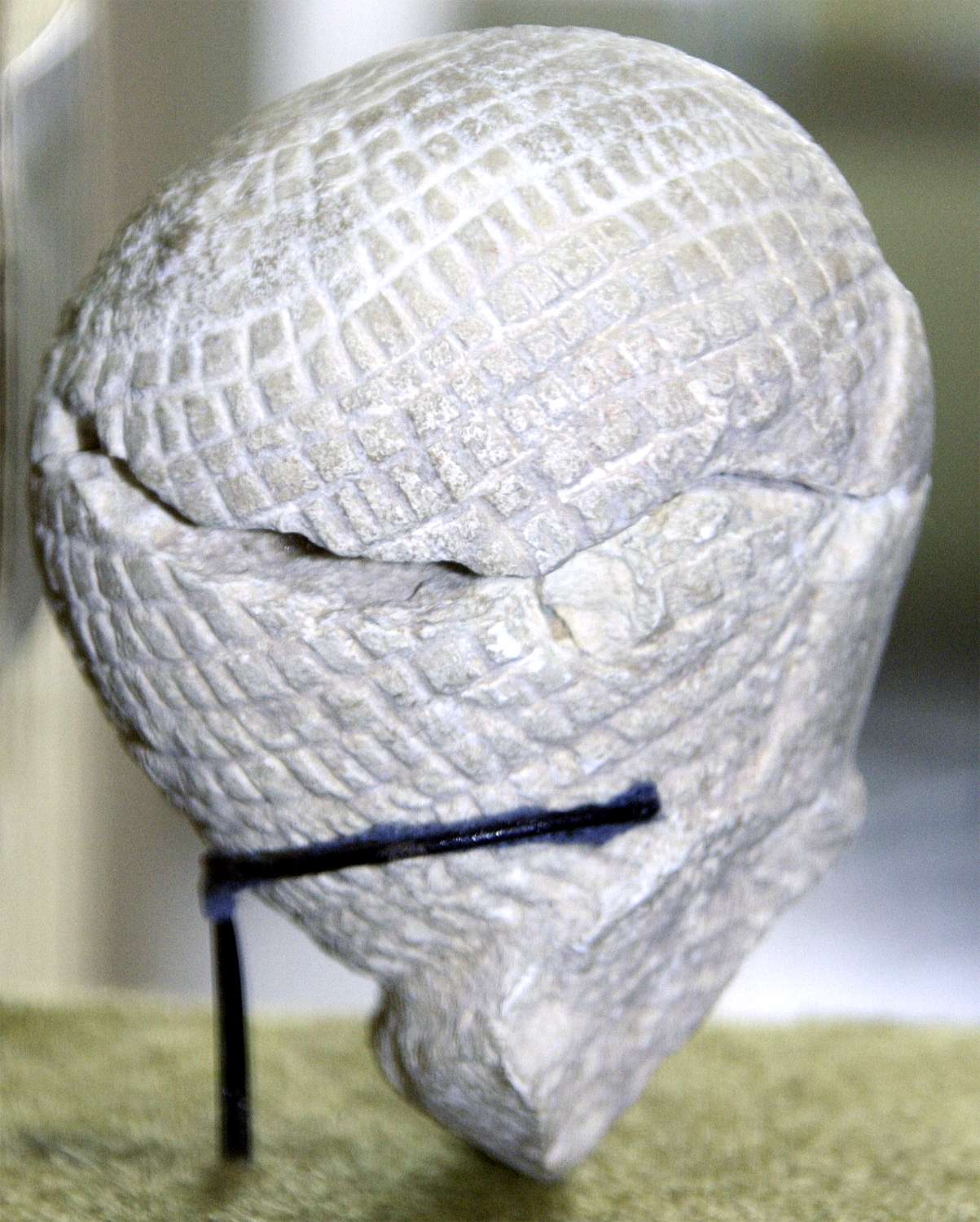
These are photographs of the original in the Hermitage Museum at St Petersburg, Russia.
Photo: Vladimir Gorodnjanski 2007
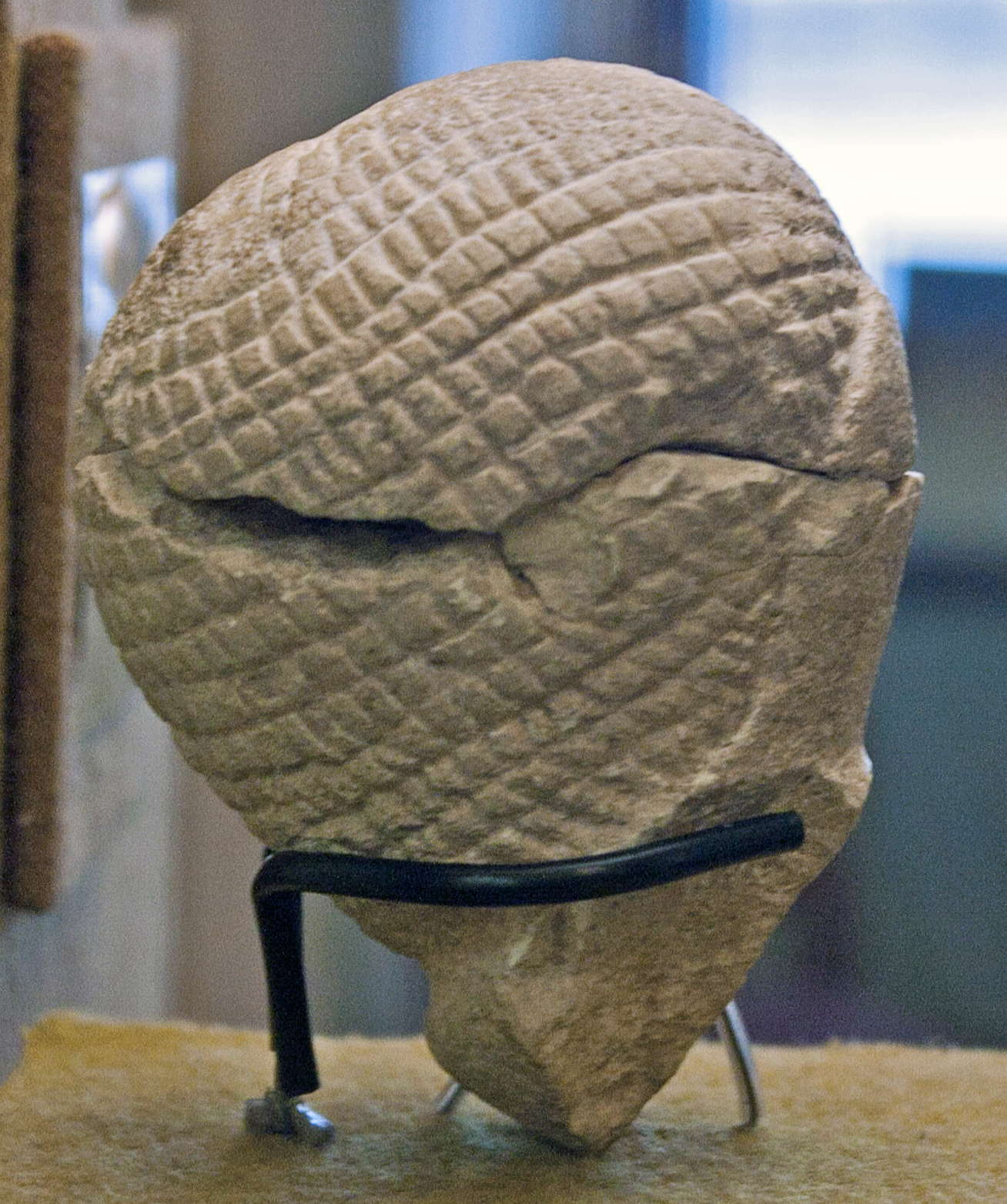
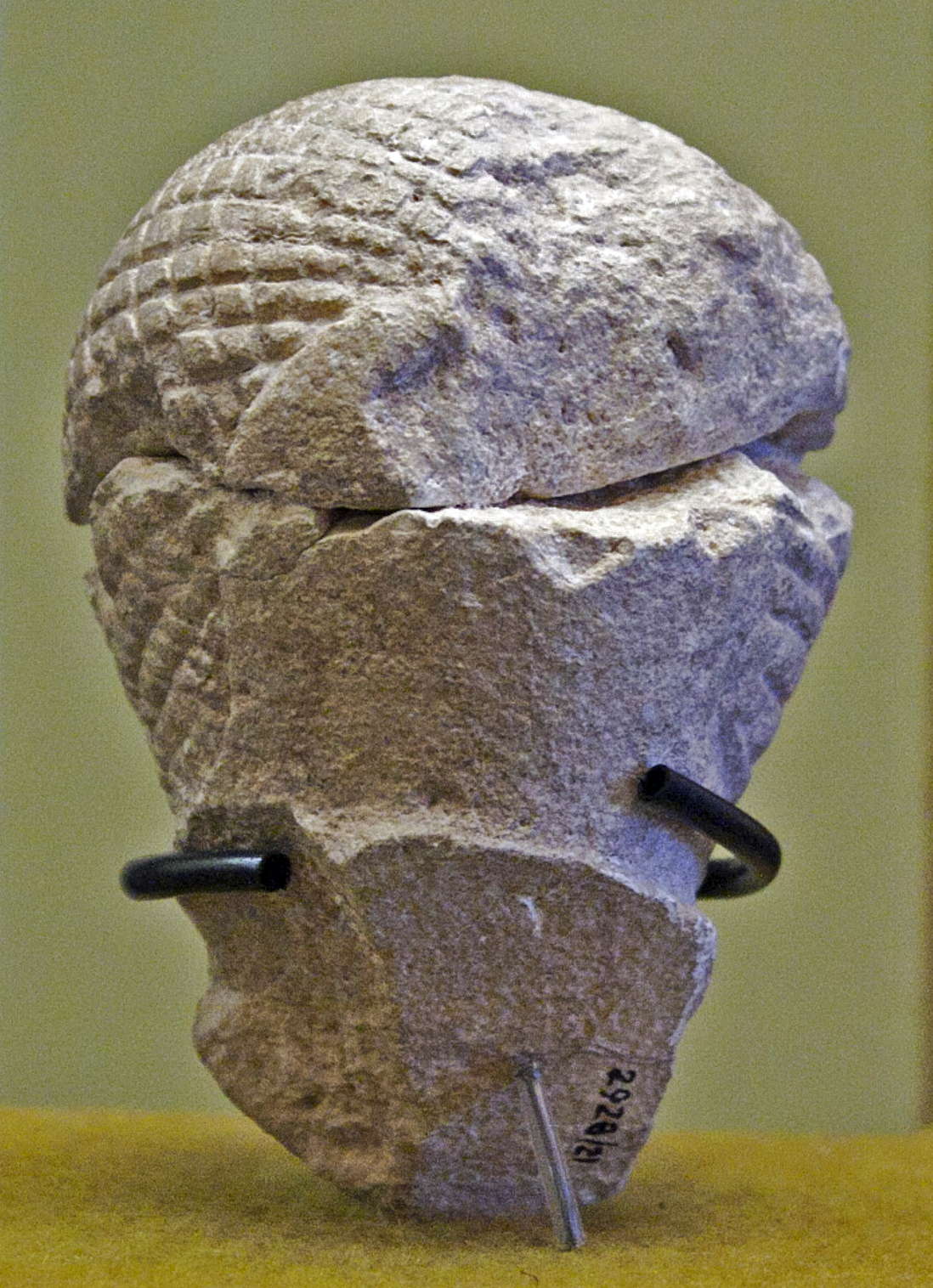
The golf ball venus.
Original.
Photo: Vladimir Gorodnjanski 2014
Source: The Hermitage Museum, Saint Petersburg

Large head made of marl from Kostenki I.
Left, right profile; centre, left profile; right, superior view.
Photo: Soffer et al. (2000)
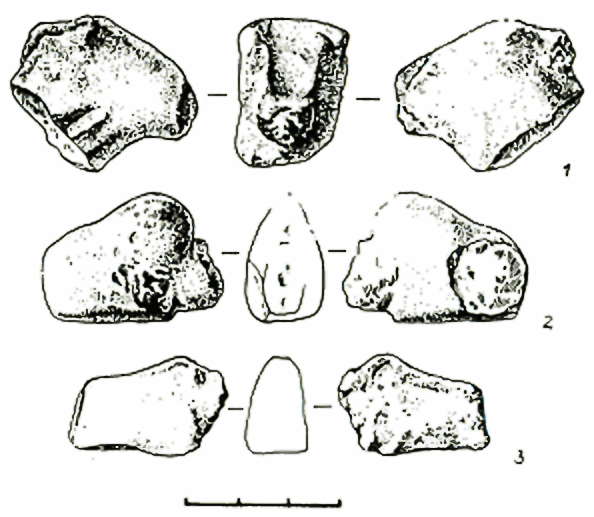
Animal head (possibly a cave lion head), and two bison figurines from Kostenki 4.
Photo: Abramova (1995)
References
- Abramova Z., 1962: Paleolitičeskoe iskusstvo na territorii SSSR, Moskva : Akad. Nauk SSSR, Inst. Archeologii, 1962
- Abramova Z., 1995: L'Art paléolithique d'Europe orientale et de Sibérie., Grenoble: Jérôme Millon.
- Cohen C., 2003: La femme des origines. Images de la femme dans la préhistoire occidentale,, Paris, Belin-Herscher, 2003, 191 pages.
- Merkel M., Weiss R., 2017: Eiszeiten: Die Kunst der Mammutjäger - Die Menschen des Nordlichts, von Museum für Völkerkunde (Herausgeber), Gebundene Ausgabe: 216 Seiten, ISBN-10: 3944193059, ISBN-13: 978-3944193052
- Sinitsyn A., 2007: Variability of the Gravettian of Kostienki (Bassin moyen du Don)Paleo, No. 19, December 2007, pp 181-202, http://paleo.revues.org/599
- Soffer O., Adovasio J., Hyland D., 2000: The 'Venus' Figurines - Textiles, Basketry, Gender, and Status in the Upper Paleolithic, Current Anthropology Volume 41, Number 4, August–October 2000
- Svoboda J., 2017: Upper Paleolithic female figurines of Northern Eurasia, PETRKOVICE, The Dolní Věstonice Studies 15, Brno 2008, 193-223 December 2017, Project: origins of art
- Svoboda J., 2008: Upper Paleolithic female figurines of Northern Eurasia. In: J Svoboda, ed., PETRKOVICE. The Dolní Věstonice Studies 15, Brno 2008, 193-223.
- Rau, S., Naumann D., Barth M., Mühleis Y., Bleckmann C., 2009: Eiszeit: Kunst und Kultur, Thorbecke, 2009, 396p. ISBN: 978-3-7995-0833-9