Back to Don's Maps
Cussac Cave - Grotte de Cussac
The Grotte de Cussac or Cussac Cave contains over 150 Paleolithic artworks as well as several human remains. It is located in the Dordogne River valley in Le Buisson-de-Cadouin, Dordogne, Aquitaine, France.The cave was discovered on September 30, 2000, by amateur speleologist Marc Delluc and formally announced by the French Ministry of Culture on December 8, 2000. It is currently under protection for scientific study, and closed to the public.
The cave's artworks are estimated to be 25 000 years old, and are almost exclusively engravings, often very large, made with stone tools on the walls, or with fingers on clay soil. Pigments are limited to very few red dots. They include both classic instances of Upper Paleolithic animal art (bison, horses, mammoths, rhinoceroses, ibex) and rarer images including birds, enigmatic figures, and perhaps four female profiles. All appear close in theme and style of those known to be Gravettien in the Quercy caves, in particular Pech Merle.
The cave's human remains appear to represent one of very few associations of parietal works and human burials in Paleolithic Europe. At least five people, four adults and a teenager, were deposited in the cavities, with bones dated by Carbon 14 measurements to approximately 25 000 years in age.
Text above from Wikipedia.

Entrance to Cussac Cave at the time of its discovery
Photo: Aujoulat et al. (2002)

Present entrance to Cussac Cave
Photo: Crestian Lamaison
Permission: This file is licensed under the Creative Commons Attribution-Share Alike 2.5 Generic license.
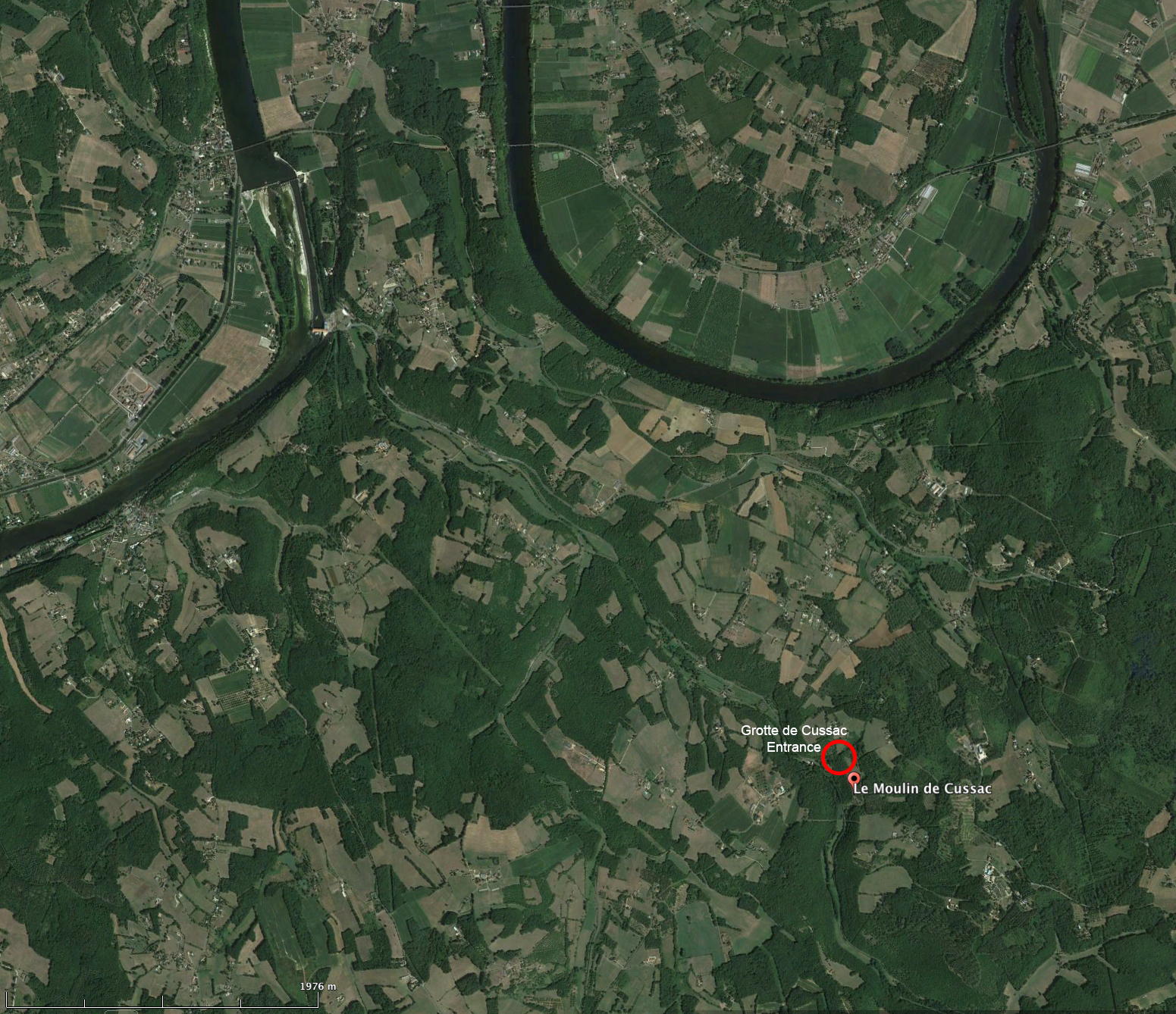
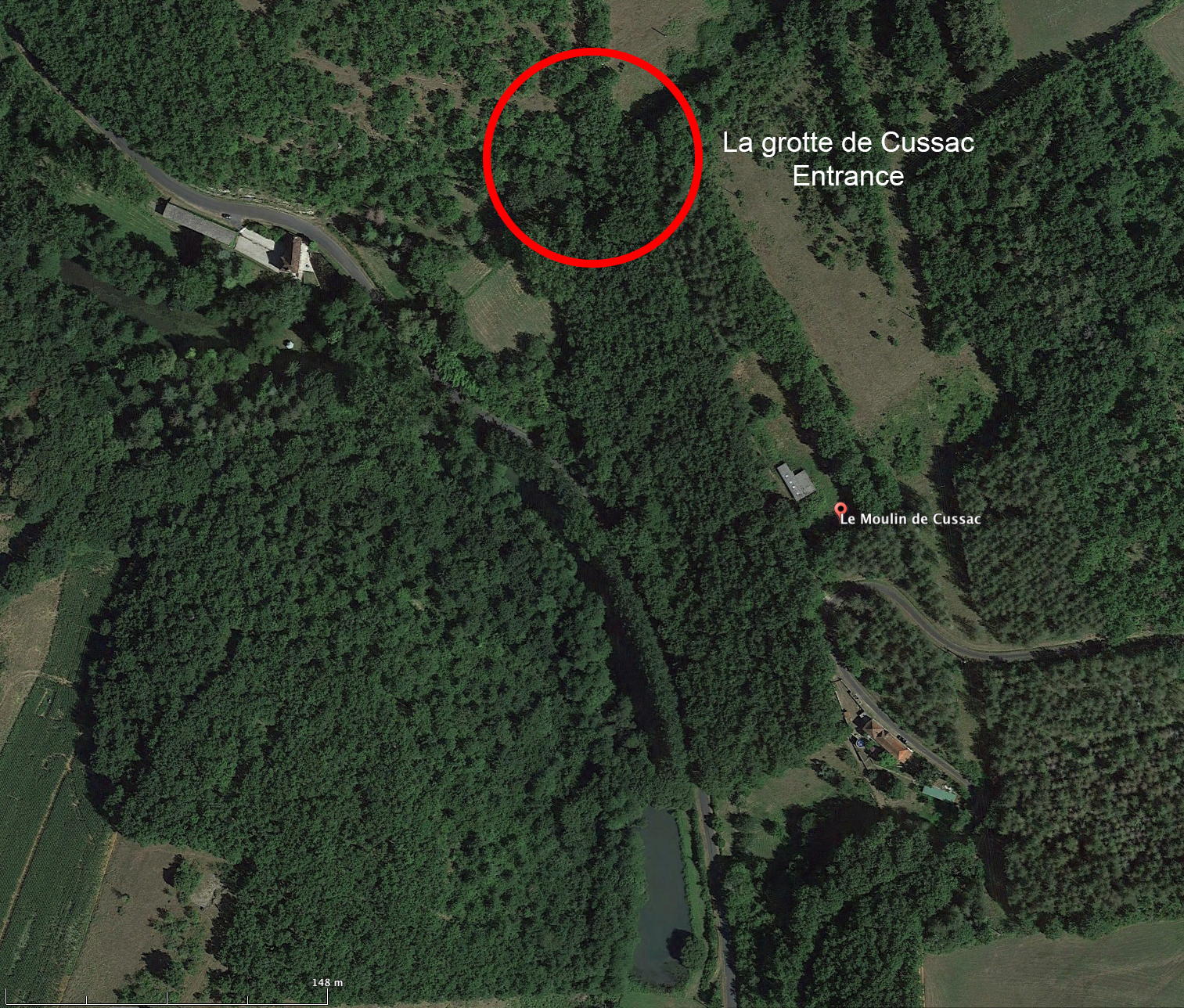
Location of the entrance of the Grotte de Cussac, on the right bank of the Bélingou, a tributary of the Dordogne.
It is not signposted, but is near Cadouin and Cussac, on the left bank of the Dordogne.
Photo: Google Earth
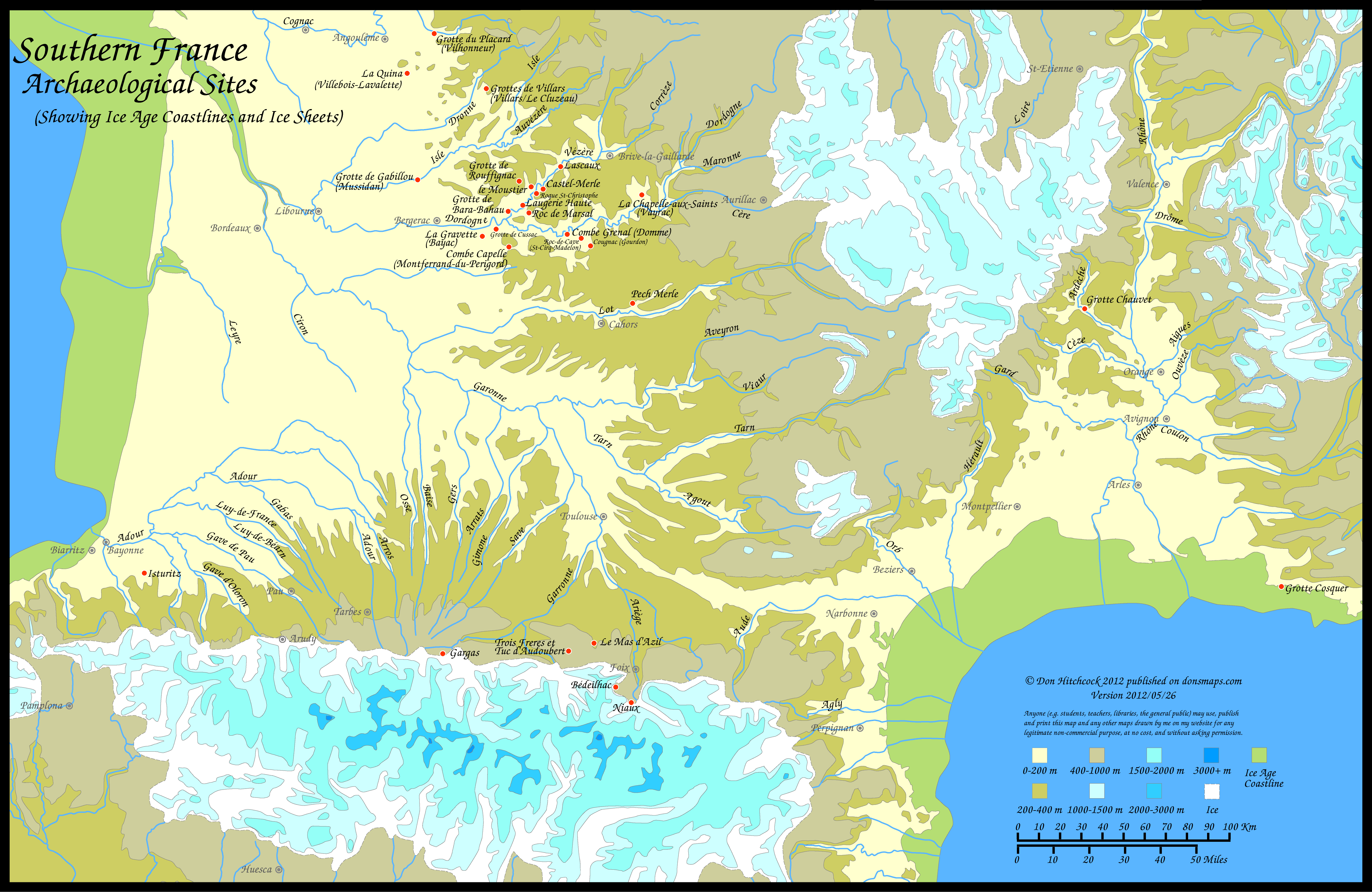
Note - Use this pdf file if you wish to print this map on a single sheet of paper.
Photo: Don Hitchcock version 2012/05/26
La grotte ornée de Cussac - Le Buisson-de-Cadouin (Dordogne): premières observations
Aujoulat, N., Geneste J., Archambeau, C., Delluc M., Duday, H., Gambier, S.
(2002)
Originally discovered on 16 September 2000, during a cave exploration conducted near the town of Le Buisson-de-Cadouin Marc Delluc and Fabrice Massoulier, both members of the Speleo-Club de Périgueux, recognised the opening of a cave a dozen metres away.
After squeezing through a small aperture, which was the only opening into the cave at the time, then a very low passage - about ten metres long - their path was blocked by a fall of limestone debris.
M. Delluc returned alone to the site on the following Saturday, and found that there was a breeze blowing through the rockfall, which encouraged him to persevere in starting to force a way through the limestone blocks.
He returned the following Saturday on the 30th September, and removing part of the obstruction allowed him to wriggle through into a large gallery that ran about one hundred metres.
During this exploration, he recognised the first engravings on the wall of the sanctuary. The following Saturday, October 7th, accompanied by Hervé Durif and Fabrice Massoulier, he and his companions travelled through six hundred metres of the gallery, but before finding many indices of previous human presence, they decided not to proceed further in order not to degrade the clay floor.
The next day, Sunday October 8th, Norbert Aujoulat, accompanied by Christian Archambeau, found both engravings and human remains littering the ground.
It was imperative that the cave be made secure, and there was much work to be done in enlarging the entrance area, disposal of the spoil, and this was completed between January and May 2001.
From that date, exploration, surveying and additional visits by experts in the field could resume.
The entrance to the cavity had been recognised by Denis Peyrony fifty years before. (Peyrony 1950)
Several cavers had also investigated the first opening, but got no further than the rockfall, and did not recognise any air flow from beyond, so they abandoned the investigation.
In late summer 2001, the exploration of this site continued in the right branch, which according to our initial observations could be the upstream channel of this network. In two successive sessions, we recognised an additional 400 metres of galleries, covering a total of 1600 m of data recorded by H. Durif.
The end is marked by a cone of clay blocking the entire width of the duct and preventing any further progress.
The right bank of the Bélingou, one of the southern tributaries of the Dordogne River, is underlain by a rocky bar in the middle part of its course. This formation precedes a cascade over travertine, which is created by the welling up of the underground stream network that runs directly under the decorated gallery.
The entry area is about twelve metres long, one to two metres high, and about three metres wide. Much of the floor in this section is uneven due to the extraction of limestone for fertilisers. A very low passage ten metres long leads to a rock fall (now removed), which at that time had to be squeezed through for a distance of four metres, which in turn leads to a large room ten to fifteen metres wide and twelve metres high. There are many concretions in this area, and their unbroken state means that the cave has not been visited for thousands of years.
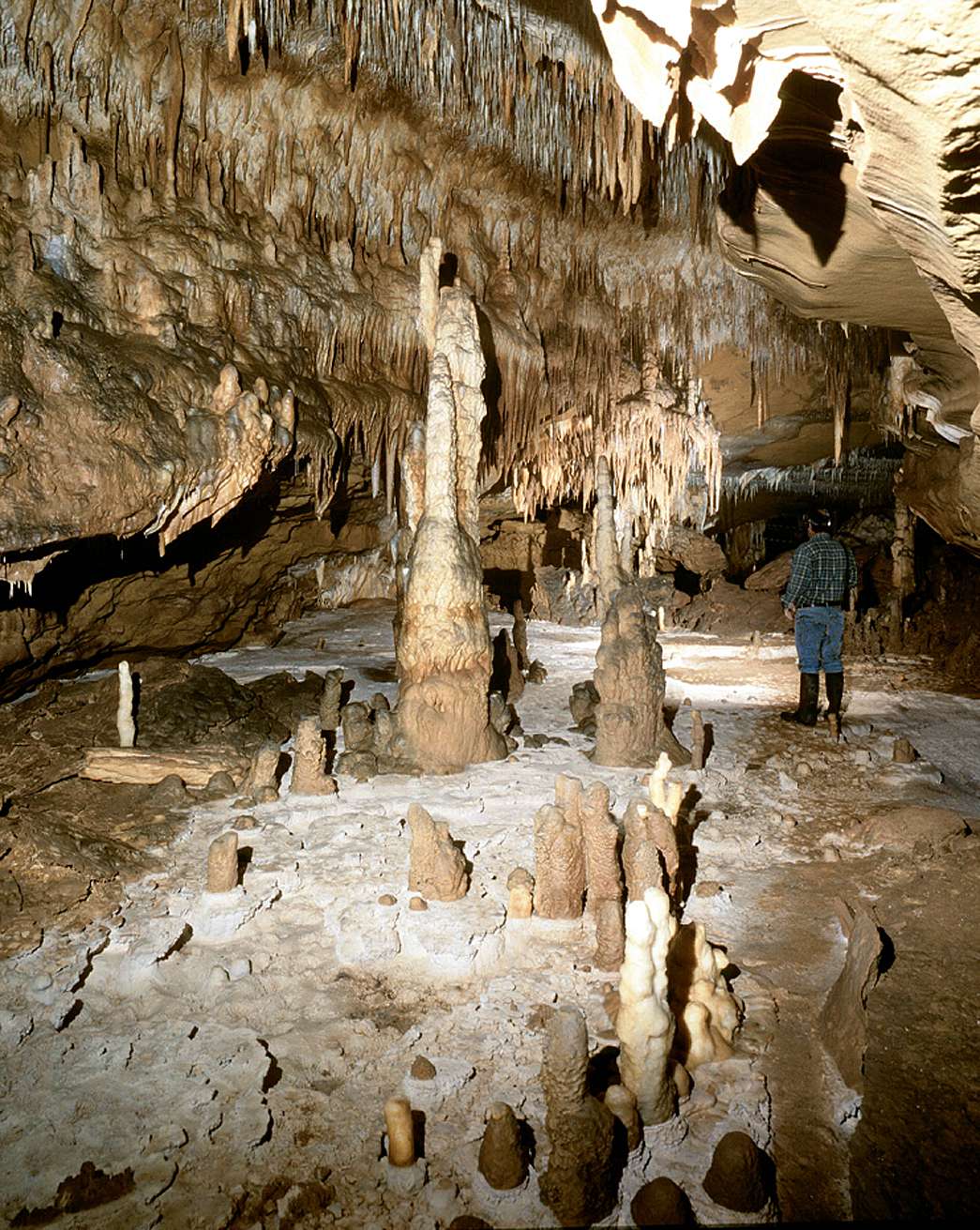
A general view of the interior of Cussac Cave, in the large room ten to fifteen metres wide and twelve metres high, with many concretions including stalagmites, stalactites and draperies. This is the large salle which is accessed close to the entry vestibule, originally via the narrow passage through the rock fall.
(The cavern in this photograph is part of the main path of the original stream, with the upstream part to the right, and the downstream part to the left. The entry gives access to this large room, and thus to the rest of the galleries, both upstream and down - Don)
Photo: CNP, Ministère de la Culture
This large room then splits into two branches, one right, oriented at 130° or south-east, the other opening to the left, at 330°- 35O°, almost due north.
Positioned at the junction of these two axes, the current entrance is a side passage of the main gallery.
The cave is sub-horizontal, and the route offers no great difficulty. The only obstacles are from the collapsed blocks, often of very large dimensions, which must be bypassed or climbed.
The lower or more precisely the underlying drain is visible several times through narrow openings in the clay floor. This portion of the cave remains, for now, impenetrable.
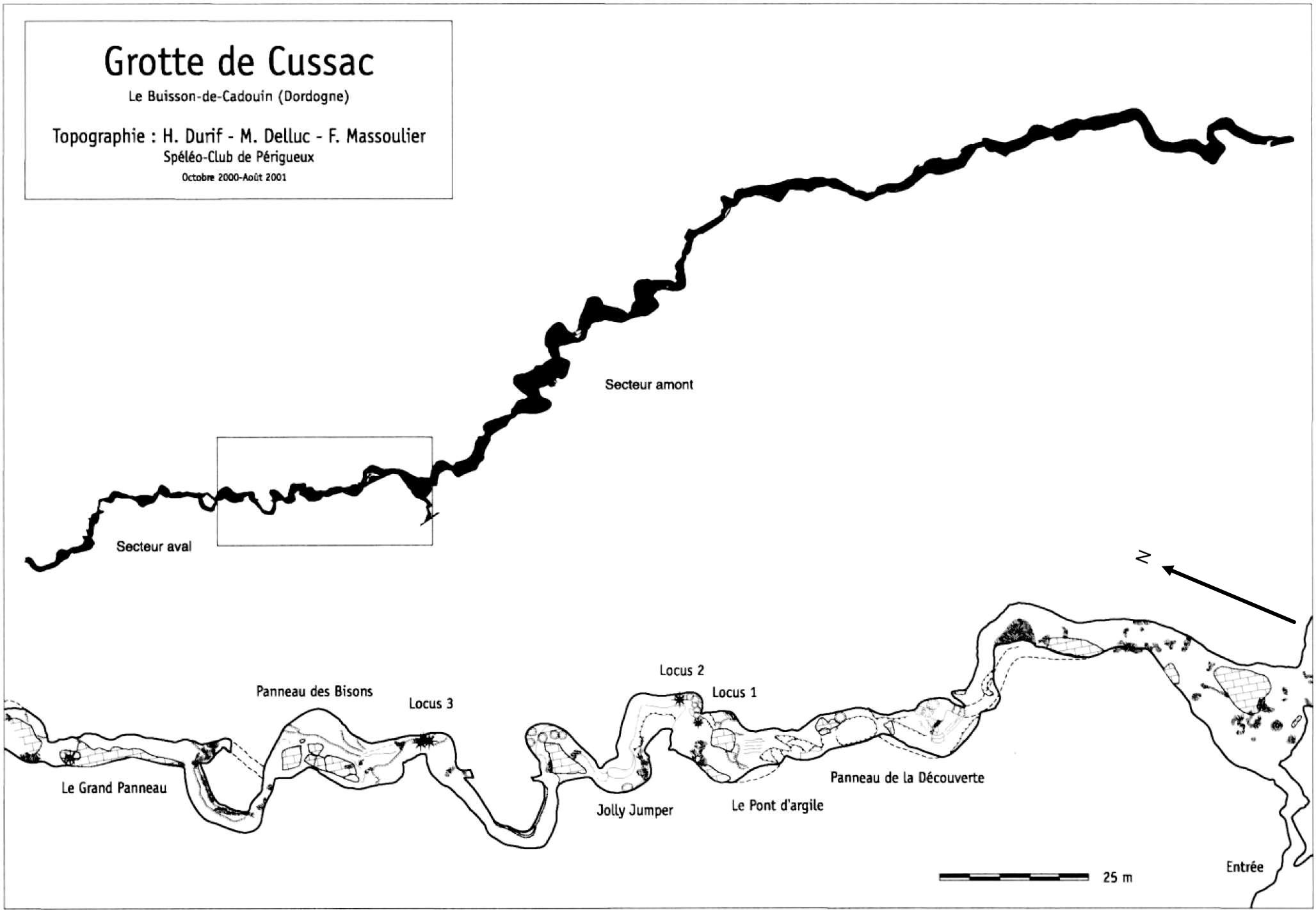
Plan of the Grotte de Cussac.
Photo: Aujoulat et al. (2002)
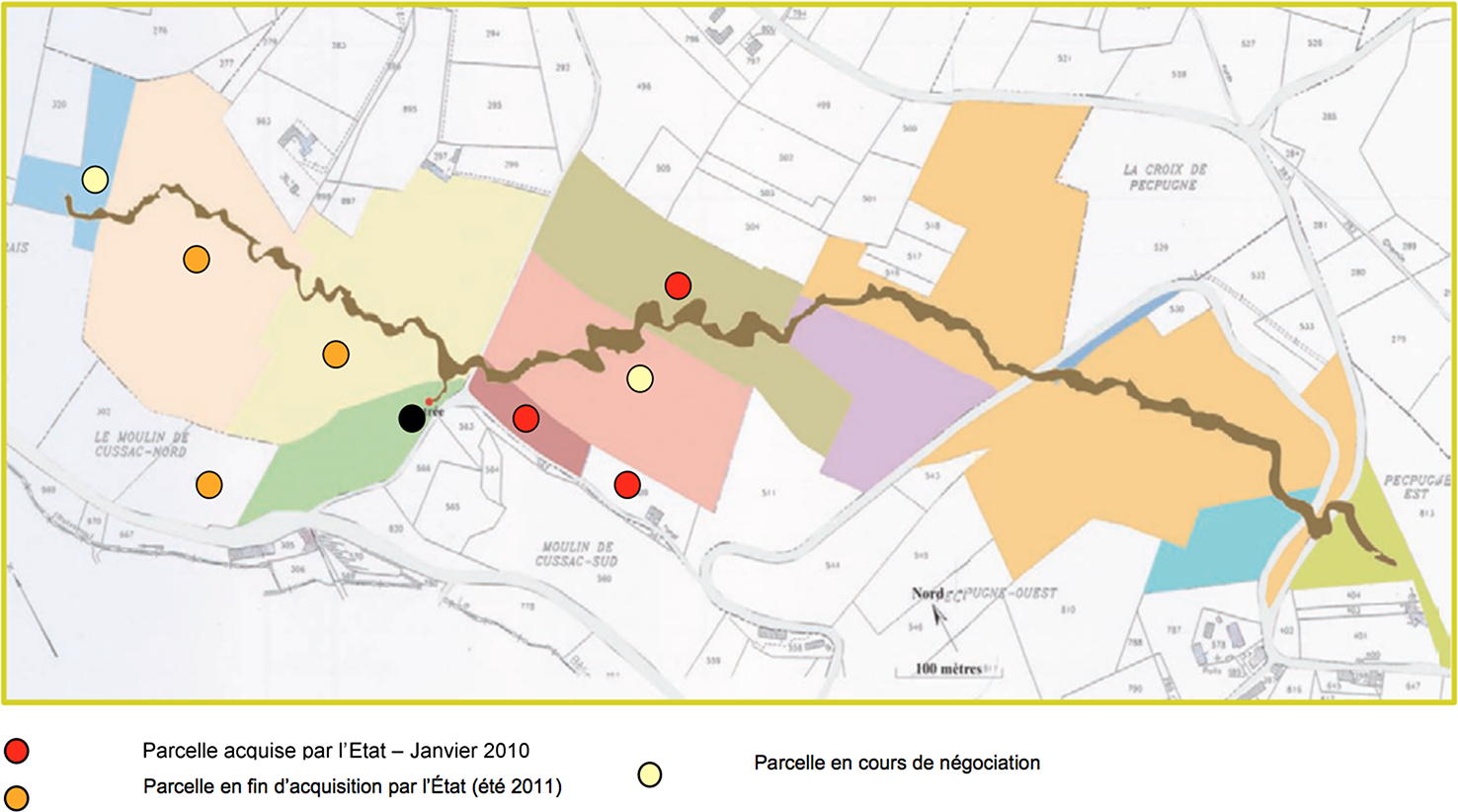
Plan of the Grotte de Cussac, showing the properties above it on the land surface.
Photo: Clottes (2012)
A cross section of the gallery shows three separate zones with different textures and slopes. The lowest level, which is vertical, shows a very fractured and rugged surface. The median level, often overhanging, has a surface without marked relief and with a quality of surface conducive to all forms of graphic expression. The roof consists of a wide meandering channel.
The majority of artistic representations are found on the surfaces belonging to the middle segment, the choice of which is due to a combination of structural, mechanical and colour factors. It has a very fine grain, an ochre colour, optimal hardness, allowing both excellent preservation of contours incised on the surface yet allowing unconstrained expression, are all criteria which allow for excellence of the art. The friability of this surface, 1 to 2 mm deep, allowed for the creation of numerous designs traced by fingers.
Large concretions (stalagmites, draperies, calcite floors...) partly cover the floors and walls. The lack of recent breakages of these features demonstrates the lack of visitors for many centuries until the recent discovery. The soil is clay, in places covered with flowstone.
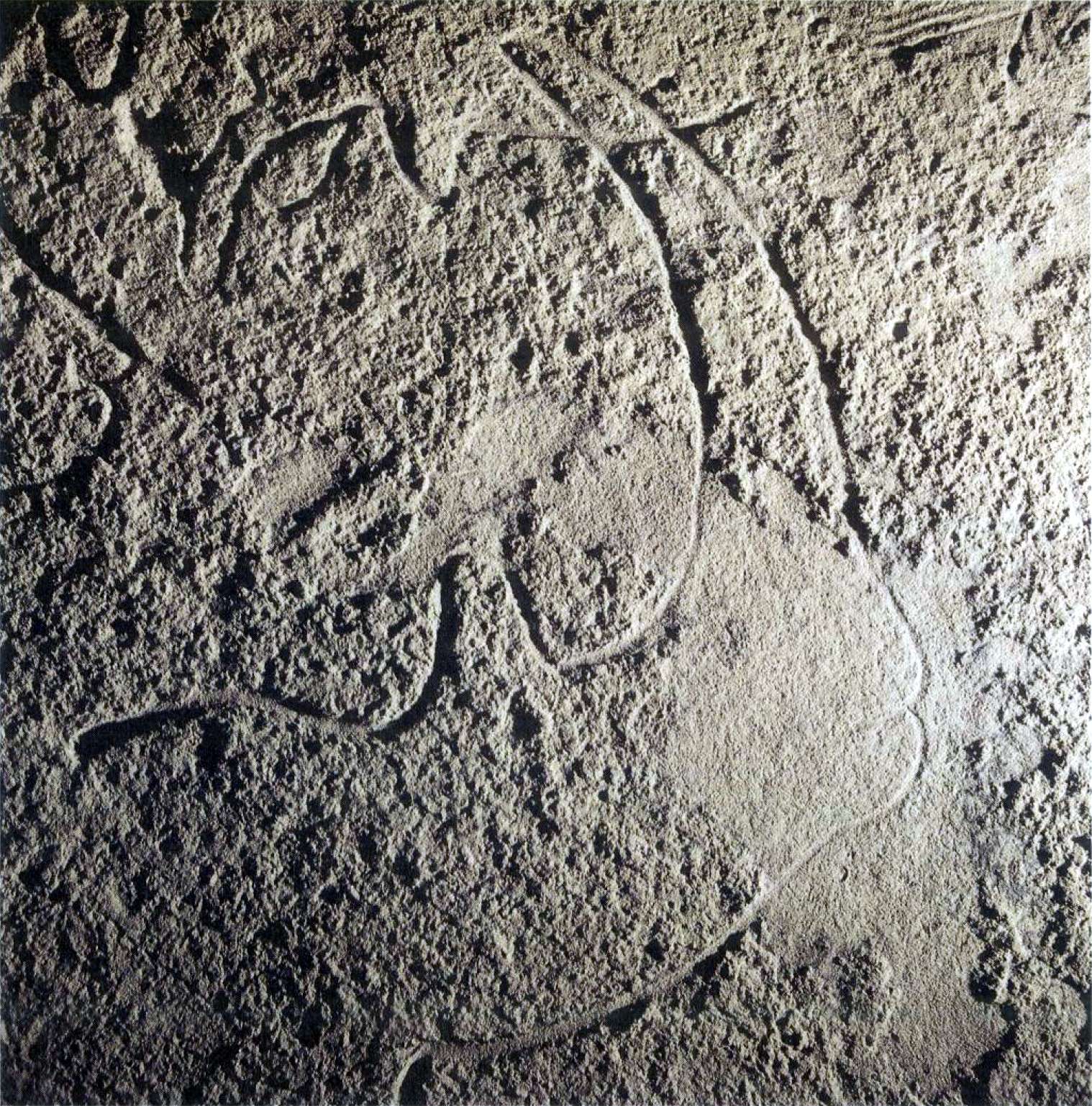
Wooly Rhinoceros
Photo: Aujoulat et al. (2002)

Large horse, with the erect mane characteristic of those common in the ice age, and bison, engraved at Cussac on the Grand Panel. The engraving is done with a sure and artistic hand - Don
Photo: CNP, Ministère de la Culture
With a horizontal development of fifteen metres, the Grand Panel has more than twenty figures, including several horses and bison, with impressive dimensions. It is one of the major works of Paleolithic cave art, combining many forms of graphic expression.
There are four representations of females in all, and they recall those drawn or engraved on the walls of Pech-Merle.

(This engraving is known as the Venus of Cussac. It appears to depict an older woman who has already had a child - Don)
Photo: CNP, Ministère de la Culture
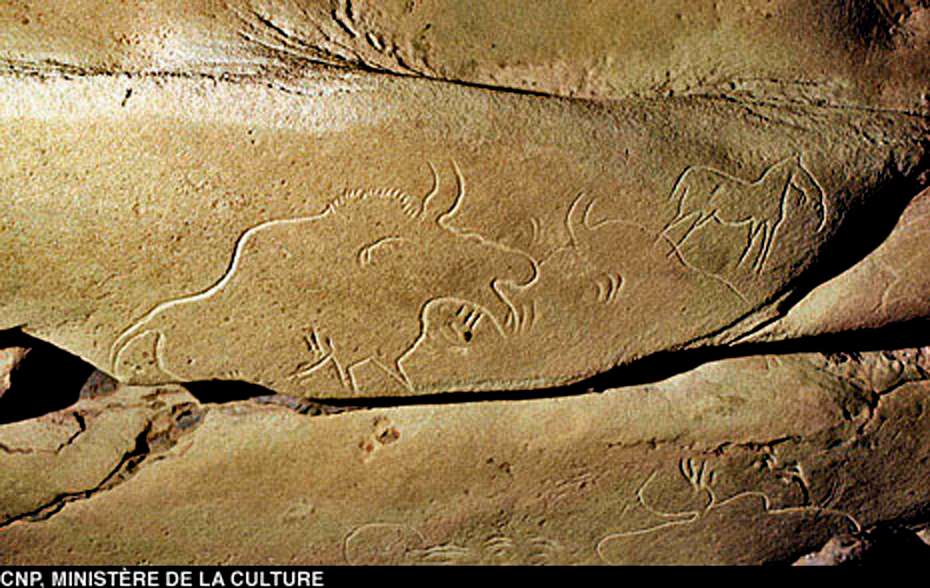
Panel with three bisons and a horse.
Photo: CNP. Ministère de la Culture
Source: http://www.archaeology.org/0109/newsbriefs/cave.html
As a conservation measure, the underground route taken by the researchers was reduced to an average width of 40 cm, with two continuous ribbons marking the boundaries.
Archaeological Contribution
In this exploratory phase that we have undertaken in recent months, we have been able to demonstrate a wide variety of archaeological evidence for this sanctuary, including the iconographic parietal components of intrinsic and anthropological value.
In addition, wildlife also used the site. The presence of animals, bears in particular, seems to have undergone some concealment by natural and rapid degradation of bone remains, a phenomenon linked to a usage by bears much older than that by man.
Two types of indications of animals appear now. One is shown by the many grooves or scratches on the residual clay veneer on the walls and floors, the other by several wallows dug into the clay soil.
So although at present scratches and footprints of bears are quite obvious, most areas of access around the Paleolithic decorated panels have been protected, particularly by large boulders in front of some panels. These places will be examined to study the possible presence of human footprints.
Tools
Denis Peyrony was able to glean a few stone tools at the entry and below the shelter, downstream from the entrance to the cave. In his collection, several indices enabled him to identify cultures from the late Magdalenian to the Mesolithic. (Peyrony 1950)
Some years later, the vestibular zone of the cave was searched for a dozen metres by Élie Peyrony, but data resulting from this investigation is not available.
Beyond the rock fall which was impassable until now, evidence of humans increased and diversified, albeit with features consistent with the limestone environment.
Like most of Paleolithic painted caves, lithic artifacts and bone remains are very limited in number. During the first contacts with this medium, we noticed only a small number of such objects. However, some blades were found on the surface. Furthermore, some land had been previously temporarily inundated over some tens of metres, which had the effect of silt covering areas close to the underground stream.
The separation of certain areas of clay undergoing drying showed that it had covered any Paleolithic remains several times.
Currently, nothing found yields much light on the identification of the cultural group of the upper Palaeolithic to which the deposits belong, nor on any understanding of the use of the site.
The lithic industry debitage testifies to finely crafted tools from the middle and late Upper Paleolithic. The few material remains that have been observed are limited to a few pieces of flint debitage and a spear. This last, of reindeer antler, broken into several fragments at the time of its deposit, corroborates in turn, but without further details, information provided by the lithic material. These elements are not inconsistent with a Gravettian origin.
On the regional level, the cave of Cussac is distant only a few kilometres as the crow flies from the rich eponymous site of the Gravettian: the rock-shelter at la Gravette à Bayac which, although known since the late 19th century, was excavated between 1930 and 1954 by F. Lacorre. (Lacorre, 1960)
Although no level of this site, which has five successive sets of layers, has been dated absolutely, it is highly likely that this sequence covers the time period of occupation of the cave found from the art and the dating of the human remains.
Rock art
The inventory during a first series of observations demonstrates the existence of over one hundred and fifty figures complete or partial. They all belong to the traditional bestiary of the Paleolithic world, namely: mammoths, rhinoceroses, ibex, and a larger number of bison and horses.
The distribution of graphic entities on the walls of this cavity is not uniform. We noticed a greater number of figures in the downstream segment, most grouped into panels, nine in total, evenly spaced, the entry to the distal end constituting nearly 90% of the iconography of the cave.
The figures in this site derive their uniqueness from the presence of animal representations rarely expressed in this context, including birds, probably geese, but also strange figures with elongated snouts, mouths open, for which accurate identification remains hypothetical.
Female figures and sexual depictions complete the iconography of the site. Their presence is crucial in attempts to compare the Grotte de Cussac with other sites in the region.
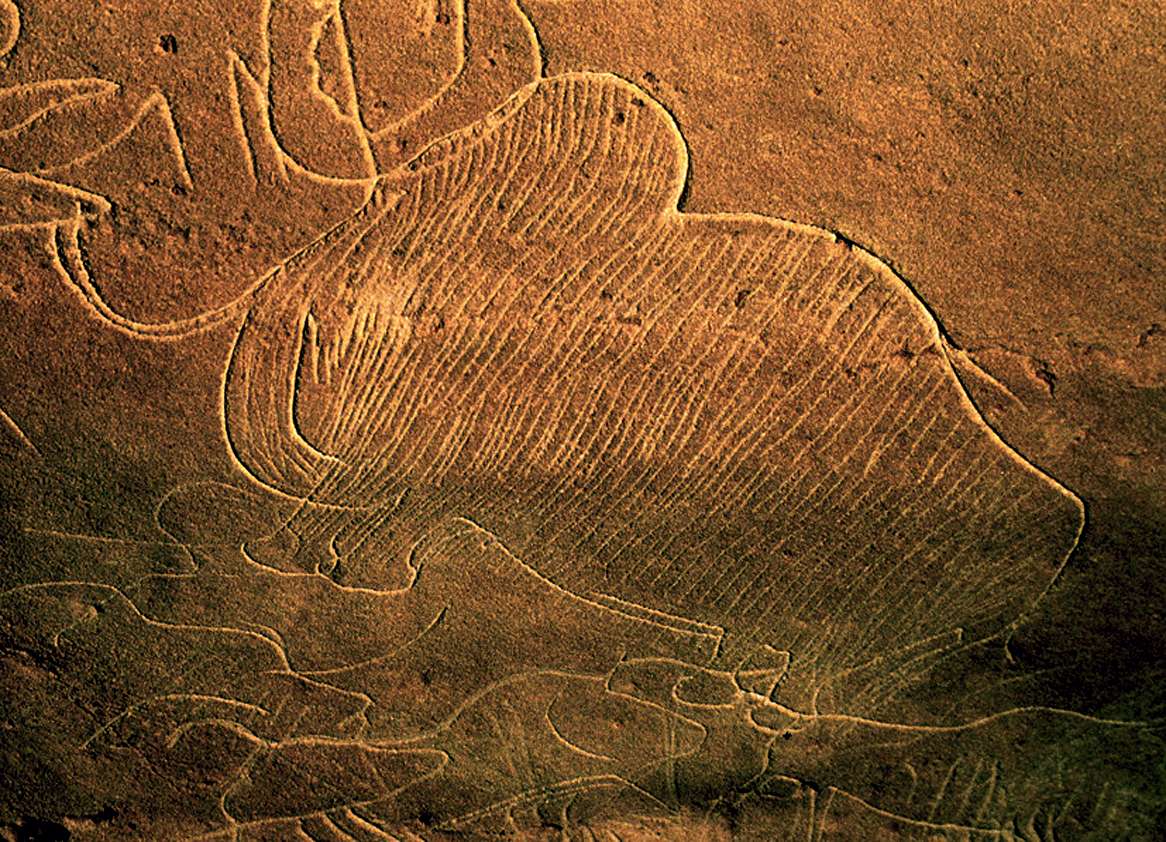
(Wooly Mammoth, with the hair clearly shown. Note that the tusks are shown from the front, but on a profile of the mammoth - Don)
Photo: CNP, Ministère de la Culture
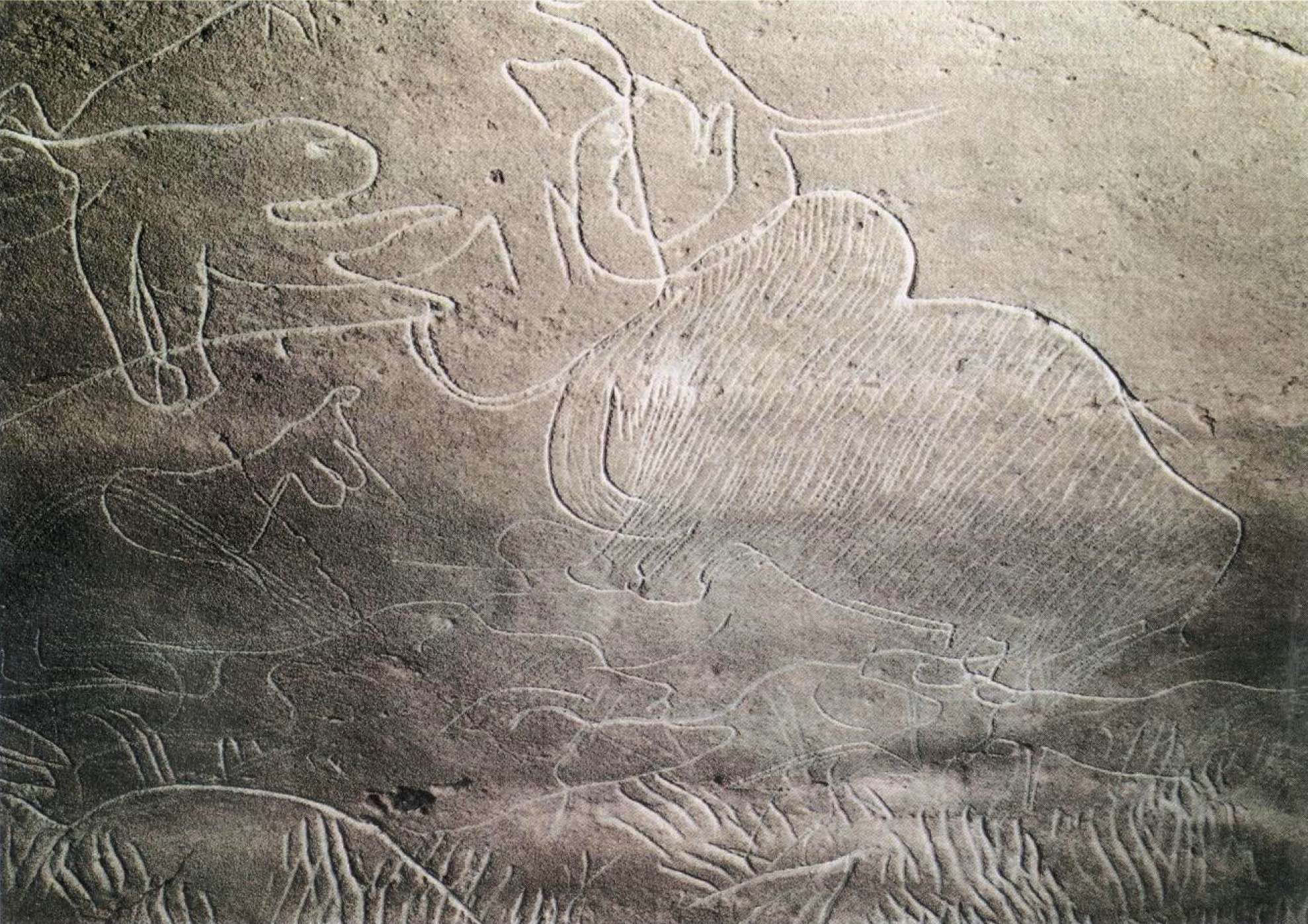
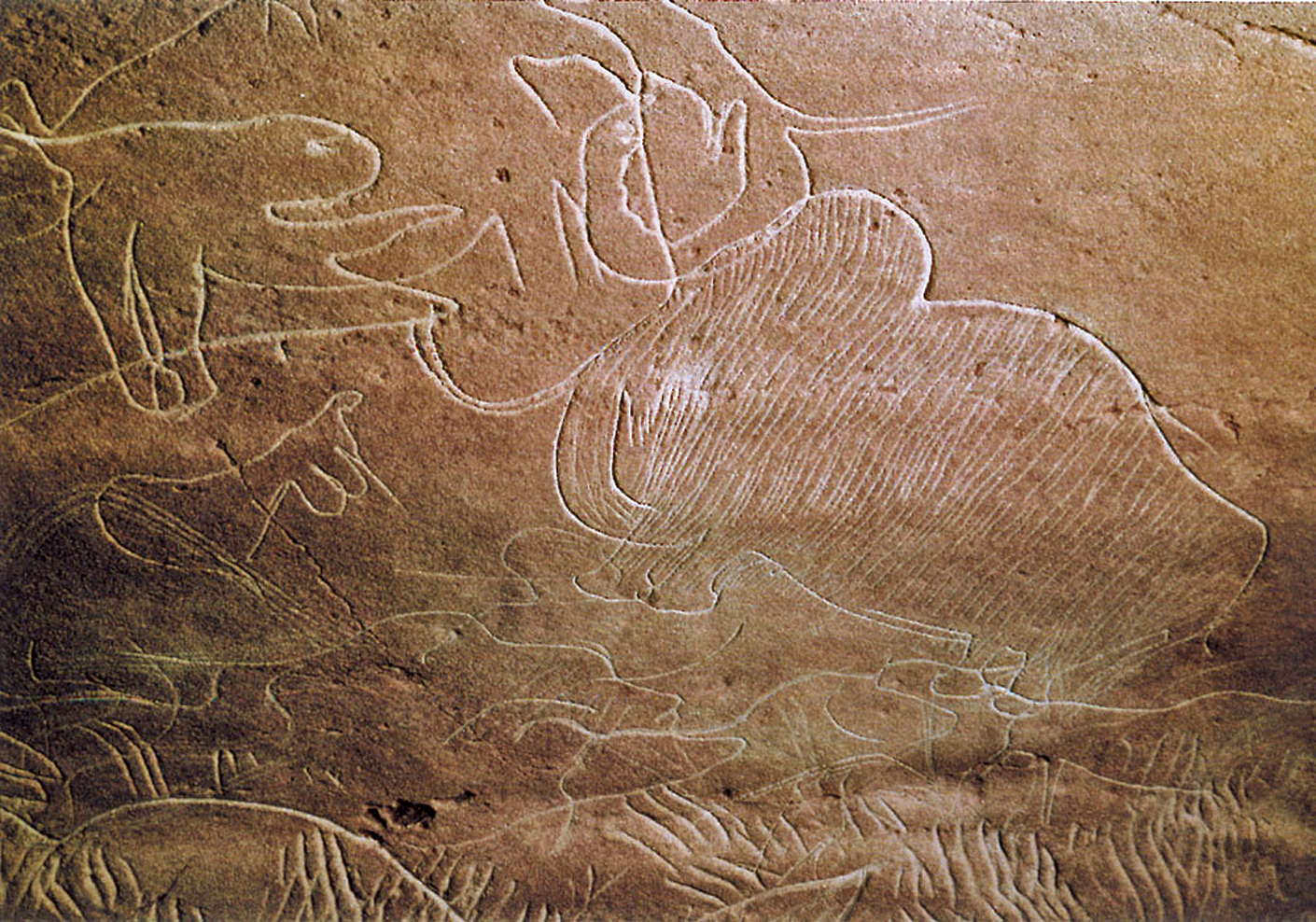
(Mammoth, profile of a woman with exaggerated breasts, and what may be an aurochs - Don)
Photo: (left) Aujoulat et al. (2002), (right) Jaubert (2008)
Always very near the animal or human figures, but often placed at the periphery of the panels, we record the presence of numerous finger tracings, where the surface has a fine grain allowing this form of expression. They differ from figures engraved with a tool by the randomness of the shape, with no possibility of any interpretation.
(note that at Rouffignac such finger tracings, often called "macaroni" have been ascribed to children - Don)
All the figures are engravings, both on the walls and the floors. The visual impact produced by both the colossal size of the representations and the confident broad strokes gives to these figures a monumental profile.
The largest, one of the bisons on the Grand Panel, is not less than 4 metres long. These are the most impressive prehistoric engravings of European cave art.
In addition, the outline of the animals benefits from the particular properties of the surface.
Cussac is a remarkable example of the optimal adaptation of graphical techniques as a result of the mechanical and optical properties of the surface used.
The hardness of the surface is perfect for excellent preservation of the work and yet soft enough that using a bone or flint tool, or even a hard piece of wood, the expression of the artist is not constrained by the properties of the surface.
The trace of the tool runs deep and wide, contrasting with the background more by the colour variations generated by the removal of the ochre patina than the width of the line.
We have found only a few geometric patterns or signs in the left branch, between the second concentration of engravings and the Grand Panel, a suite of fish-like entities aligned over a length of 60 cm, engraved in the gallery on the right wall, between two female figures, and in close proximity to the entrance, a cut out circle. A few finger marks and red dots break this unity.
We have found only a single concentration of traces of pigments, located in the right branch and limited in area to less than 1 m2. At the base of the paintings area, six dashes are aligned on the same line and twice two other identical motifs are drawn immediately above.
There also finger tracings at the top of the area. To this very modest composition, we must add a few dots scattered throughout the sanctuary. This deficiency seems a little strange when we note that there are a number of places with varied colouring material within a few kilometres of this cave. The archaic character of the figures and the lack of perspective, and horns seen from the front translated to a body profile suggest the development of these motifs during an earlier period of the Upper Paleolithic.
An initial graphical analysis shows that there are many similarities with the rock art of Quercy, in particular that of the Grotte de Pech-Merle. They are reflected in both the way that the subjects are addressed in the translation of animal anatomy, but also and above all human anatomy, and in the associations of images, including those of a woman with a mammoth.
This shows that we are dealing with an art that not only has its own characteristics but also shares some data with other cave art and whose range extends over an area located in an area between Lot and Dordogne. Between these two rivers, in fact, was established a set of decorated sites remarkable for the consistency of their themes and groups of figures. These graphical analogies allow us to specify the period of establishment of this cave around 25 000 years before the present.
Some links, although more tenuous, may also be established with the rock art of the Gargas cave in the Hautes-Pyrenees, a site located on the right bank of the Garonne. However, the elements allowing such approximation are essentially limited only to graphics and animal figures, especially those of bison, and the lack of female representation makes this site less comparable.
The reconciliation of this art with those of sites located mainly south of the Dordogne River showed that there is a real limit to the extension of the art of the Quercy region, at least during this early period, while raw materials, including flint, have encountered no obstacle in their distribution between the Garonne and the Vézère.
Human Remains
The human remains are divided between three sectors of the downstream branch network. The bones occupy the bottom of bear wallows dug in clay soil, and are distributed over 100 m, with the first located 175 m from the current entry. None of them is directly associated with an engraved panel. A fourth concentration of bones was found recently in a lair of bears at the foot of the Grand Panel. They have not yet been examined, and it is not known if they are human or animal remains.

Human bones littering the bottom of a cave bear wallow. First Locus.
Photo: Aujoulat et al. (2002)
At Locus 1 (image above, and see the map) on the bottom of the first lair there are several bones (fragments of tibia, femur, humerus, rib, vertebrae, phalanges of the hand) without anatomical connection. A second lair located close to the first is apparently empty of such remains. Other bones including a fragment of a rib, vertebrae and the proximal end of a humerus are present under the overhang of a limestone block located at a lower level than the two bear wallows. A patella and diaphysis fragments were found beside the path at the base of the first concentration.
There is no bone belonging to the head for this skeleton. The categories of identified bones and the stage of ossification of several of them suggest the presence of at least an adolescent. The sediment underlying certain bones of the depression have a slight color whose origin is hypothetical and no objects (tools, ornaments) directly associated with the human remains have been found.

An almost complete human skeleton in a cave bear wallow, coated with silt. Second Locus.
Photo: CNP, Ministère de la Culture
At Locus 2 a nearly complete skeleton of an adult covered with silt occupies an oval depression at the foot of the wall. The craniofacial block is in excellent condition, lying on the right side of the face, facing the wall.
The mandible is not connected to the skull, and was found about eight inches behind the skull. Several other connections have been preserved, however, especially in the lower limbs. Some bones are completely out of the depression of the bear wallow. The arrangement of the bones of the lower extremities indicates that the body was in the prone position. There is no red coloration from ochre, nor artefacts such as tools or personal ornaments.
Locus 3 consists of a bench hidden by a pillar and a stalagmite located above the adjacent path and slope. On the bench, in a depression later concreted, the separated bones included segments of diaphyses of femur, tibia, fibula, ulna, humerus, radius, metatarsals, fragments of scapula, ilium and vertebrae. Beyond, toward the wall, on an irregular wide flat clay surface , there are various incomplete long bones. On the slope below and beside the path, we see a very robust human right humerus, a more gracile proximal fragment of humerus, a left radius, a left clavicle, several hand phalanges, metacarpals, and vertebrae, ribs and a right hemi-mandible. No other vestige of the skull was found. The number of right humerus shows a minimum of three individuals, all adults.
At the top of the slope the silt has a red color whose origin is currently unknown. The first anthropological observations documented three sets of human remains, comprising at least five individuals, four adults and a teenager. The skull and mandible of the skeleton at locus 2 are modern, but the final allocation of the five individuals to Homo sapiens sapiens is yet to be confirmed by a detailed examination of different bones.
These three ensembles of bones have undergone changes of varying extent and the condition of the bone is mixed. Locus 2 retains many connections that argue for a primary deposit. However, the stronger disturbances at loci 1 and 3 do not exclude any one type of deposit.
The alteration and fragmentation of the bones of loci 1 and 3, and their disorder may be partially explained by their deposition in the open air which increased their vulnerability, in contrast to those of the locus 2 where a film of clay protected them. Despite the surface exposure and disruption of the bones, and scarcity of cultural artefacts, an assumption of the non-intentional deposit of the human remains seems implausible.
Lack of archaeological evidence for a determination of the age and the cultural context of these bones, a proximal end of left rib (locus 1), a left rib fragment (locus 2) and proximal phalanx of the hand (locus 3) were collected to perform dating by carbon-14 AMS (Accelerator Mass Spectrometry). Three other samples were reserved for paleogenetic analysis (sex determination, possible family ties...). Each sample was located relative to the bones left in place and those selected for dating were measured and photographed.
The fragment of rib from locus 1, of which the collagen is well preserved, gave a date of 25 120 ± 120 BP (Beta 156643). The result of the dating of the fragment of the rib from locus 2 is not useful due to the alteration of the bone. From the comments of "Beta Analytics", the dating obtained, 15 750 ± 50 BP (Beta 156644), may be too young. The third sample which was devoid of collagen could not be dated. These dates must be confirmed, but already they show that human remains could be a locus of contemporary parietal engravings. Contemporaneity of the two other loci is not established and new samples for dating must be selected later. However, the similarities between the three loci are in favor of contemporaneity.
These preliminary results raise the following comments: Many Gravettian burials have been excavated in Italy and the Czech Republic, but France has so far been very poor in Gravettian human fossils. The most significant anthropological documentations remain those of l'abri Pataud (Dordogne) where six very fragmentary individuals dating to approximately 20 000 BP were uncovered between 1958 and 1963. (Movius 1975)
The human remains from the Grotte de Cussac help bridge this gap and are currently the most complete skeletons and the oldest found in France in a Gravettian context. This is the first time in Europe that the contemporaneity of deposits, probably intentional, discovered in a cave decorated with parietal (wall) engravings may be considered and a relationship between rock art and funerary practices could be discussed.
L'abri du Cap Blanc in France, the grotte de Romito and the grotte du Cavillon in Italy whose walls were adorned with sculptures and carvings, have certainly delivered primary burials, but their contemporaneity with the cave art works has not been demonstrated (Castel and Chadelas, 2000, Fabbri et al, 1989, Vicino and Simone, 1976).
While it is premature without further field investigation to compare the Cussac sets of human remains with other graves in Europe, it must be stressed that its originality is the surface deposition of the unprotected bodies of several individuals. Indeed, in most cases, European Upper Paleolithic burials and in particular those corresponding to the Gravettian involve burial (Henry-Gambier, 2001). These remarks underscore the uniqueness of this discovery and the interest of a thorough study of these anthropological remains for a better knowledge of the Upper Paleolithic European populations and their funerary behaviors.
Objectives
This discovery goes far beyond simply increasing the parietal wealth of the Périgord. Apart from the aesthetic aspect, which certainly will lead to the development of media applications that may make these stories accessible to the general public, the interest in this site is primarily archaeological. The rock art of Cussac has great originality, while retaining a degree of uniformity. But by the graphic conventions and Gravettian themes reproduced here, the major character of this evidence lies in its ability to get a better understanding of all the sanctuaries spread over the Quercy area. These preliminary data suggest the existence of a quasi-contemporaneity between parietal art and funerary activities, in the broadest sense of the term, and could open a new chapter in the possible interpretations of the motivations that prompted the men of the Paleolithic to enter the underground environment.
As a first step and in close collaboration with M. Delluc, we were asked to establish an inventory of the archaeological site, both parietal works and other human artefacts. In a second phase, it will be necessary to proceed to the planning and management of the very anthropic development sectors, which is currently beyond the reach of the observer.
After this first sequence of interventions, more extensive thematic research will require a strengthening of the multidisciplinary team which has already contributed much. The interpretation of the chronological relationships between the Cussac burials and the wall art which seems to be closely associated with it, will be based on the possibilities of absolute and relative dating of a variety of elements that should then be correlated with each other.
With this in mind, we have initiated a series of transactions relating to dating of all the human skeletons, the carbon residue on the floor and walls and on the calcite concretions from the gallery entrance, respectively, by H. Valladas and D. Genty of the laboratoire des sciences du climat et de l'environnement de Gif-sur-Yvette.
The cave has walls 12 metres high, and is one kilometre long. In places the walls are covered with engravings. It is not anticipated that the cave will ever be open to the public. More than 100 engraved figures have been identified in the cave. There are birds as well as women in silhouette, and schematic vulva depictions.
Human skeletons have also been found on the cave's floor, and in a wallow - bears had occupied the cave at some period - there was a human skeleton.
The engravings are in excellent condition. More than 150 incised drawings have been found so far, along with four burial sites filled with bones from seven humans, says prehistorian Norbert Aujoulat of the National Center for Prehistory in Périgueux, who heads the research team. The images are cut unusually deep into the relatively soft cave walls, making them more vivid than most cave art.
The cave floor is of clay, and the limestone walls are unstable, and are susceptible to temperature changes, and easily flake away.
There is a high level of carbon dioxide in the atmosphere of the cave, and scientists can only spend three hours at most in the cave before returning to the surface for fresh air.
See: http://news.bbc.co.uk/1/hi/world/europe/1423021.stm
http://www.cyberspaceorbit.com/Cussac.htm
http://www.archaeology.org/online/news/france.html
http://bric.postech.ac.kr/science/97now/01_7now/010713b.html
http://mc2.vicnet.net.au/home/cara13/web/cussac.html
http://paleo.revues.org/index919.html
http://www.culture.gouv.fr/culture/arcnat/cussac/en/notice7.htm
References
- Aujoulat, N., Geneste J., Archambeau, C., Delluc M., Duday, H., Gambier, S. , 2002: La grotte ornée de Cussac - Le Buisson-de-Cadouin (Dordogne): premières observations, Bulletin de la Société préhistorique française. 2002, tome 99, N. 1. pp. 129-137.
- Castel J., Chadelle J., 2000: Cap Blanc (Marquay, Dordogne). L'apport de la fouille de 1992 à la connaissance des activités humaines et à l'attribution culturelle des sculptures, Paléo 12. p. 61-75.
- Clottes J., 2012: L’art pléistocène dans le monde / Pleistocene art of the world / Arte pleistoceno en el mundo , Actes du Congrès IFRAO, Tarascon-sur-Ariège, septembre 2010 – Symposium 'Art pléistocène en Europe'
- Fabbri P. Graziosi P., Guerri M., Mallegni F., 1989:Les hommes des sépultures de la grotte du Romito à Papasidero (Consenza, Italie). Proceeding of the 2nd Intern. Congress of Human Paleontology Hominidae, Milan. Jaca Book, p. 487-494.
- Henry-Gambier, D., with the collaboration of Courty M., Crubézy É., Kervazo B., 2001: La sépulture des enfants de Grimaldi (Baoussé-Roussé, Italie). Anthropologie et Palethnologie funéraire des populations de la fin du Paléolithique supérieur, Paris. CTHS.
- Jaubert, J., 2008: L'art pariétal gravettien en France : éléments pour un bilan chronologique », Paléo, 20 | 2008, 439-474.
- Lacorre F., 1960: La Gravette, le Gravettien et le Bayacien, Laval, 1960, 369 pp., 26 fig, 78 planches
- Movius H., 1975: Excavation of the Abri Pataud, Les Eyzies (Dordogne) Peabody Museum of Archaeology and Ethnology, Harvard University.
- Peyrony, D., 1950: Notes sur quelques petits gisements préhisto riques, Bulletin de la Société historique et archéologique du Périgord, t. 77, fasc. 2, p. 55-57.
- Vicino, G., Simone S., 1976: Gravures paléolithiques des grottes de Grimaldi. Sites paléolithiques de la région de Nice et grotte de Grimaldi, Livret-Guide de l'Excursion Bl, UISPP, p. 148-157.