Back to Don's Maps
 Back to Archaeological Sites
Figurines and other human made objects from the United Kingdom
John Darvill has made many discoveries of what appear to be objects made by prehistoric humans in various parts of the UK which are very similar to ice age objects from Continental Europe. Because John Darvill is not a university teacher or researcher, these are not available for publication in scientific journals. Note also that the objects were surface-collected and thus currently hold little to no scientific value, but are fascinating nevertheless.
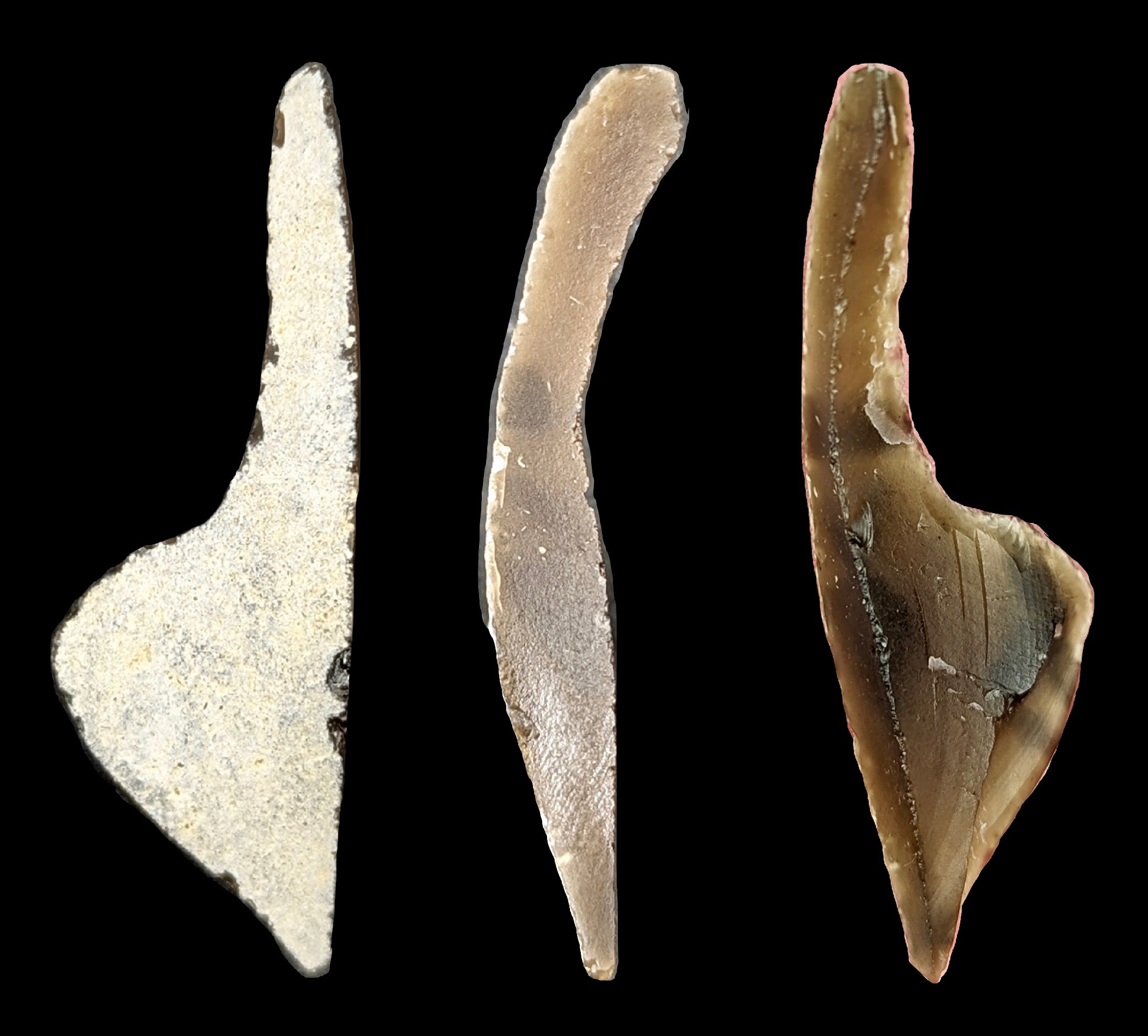
Swanscombe figurine in the Lalinde/Gönnersdorf tradition
A unifacial flint flake in the classic symbolic Lalinde/Gönnersdorf form. 48mm x 15mm x 5mm. This small unifacial flint flake was a surface find from Swanscombe, Kent, UK. The flake was discovered in an area that has produced a significant amount of worked flint tools and other seemingly modified symbolic material.
Collection, photo and text: © John Darvill
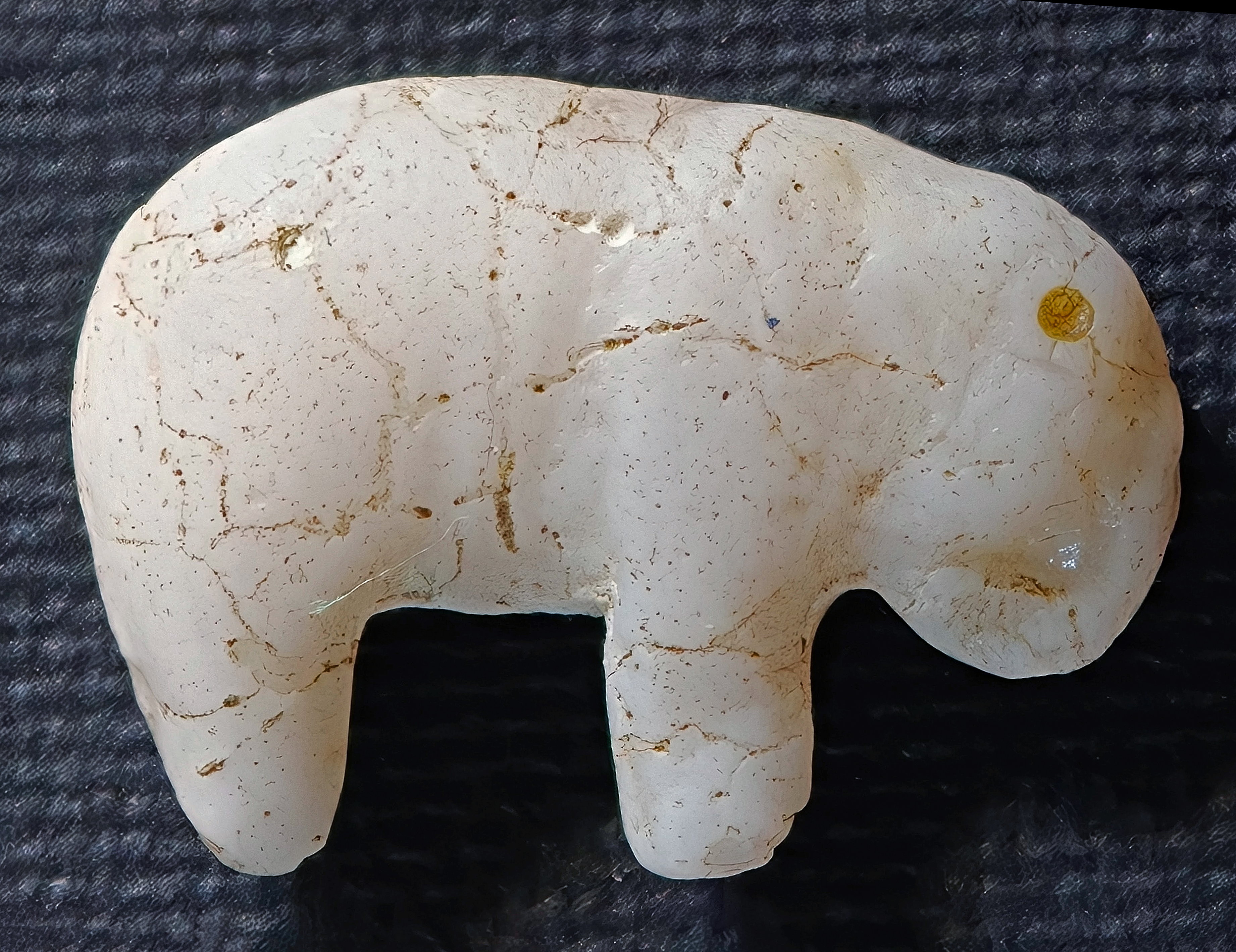
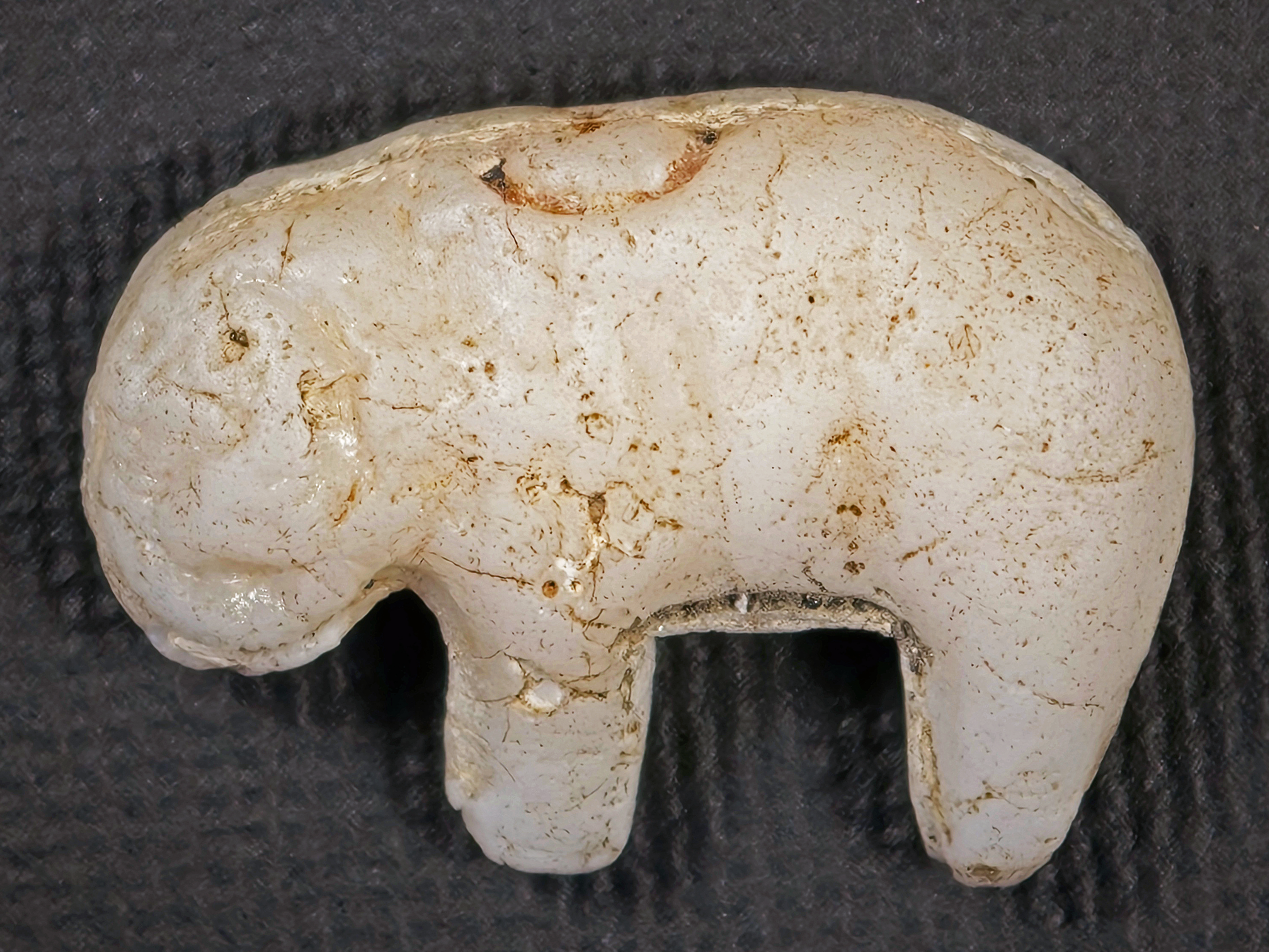
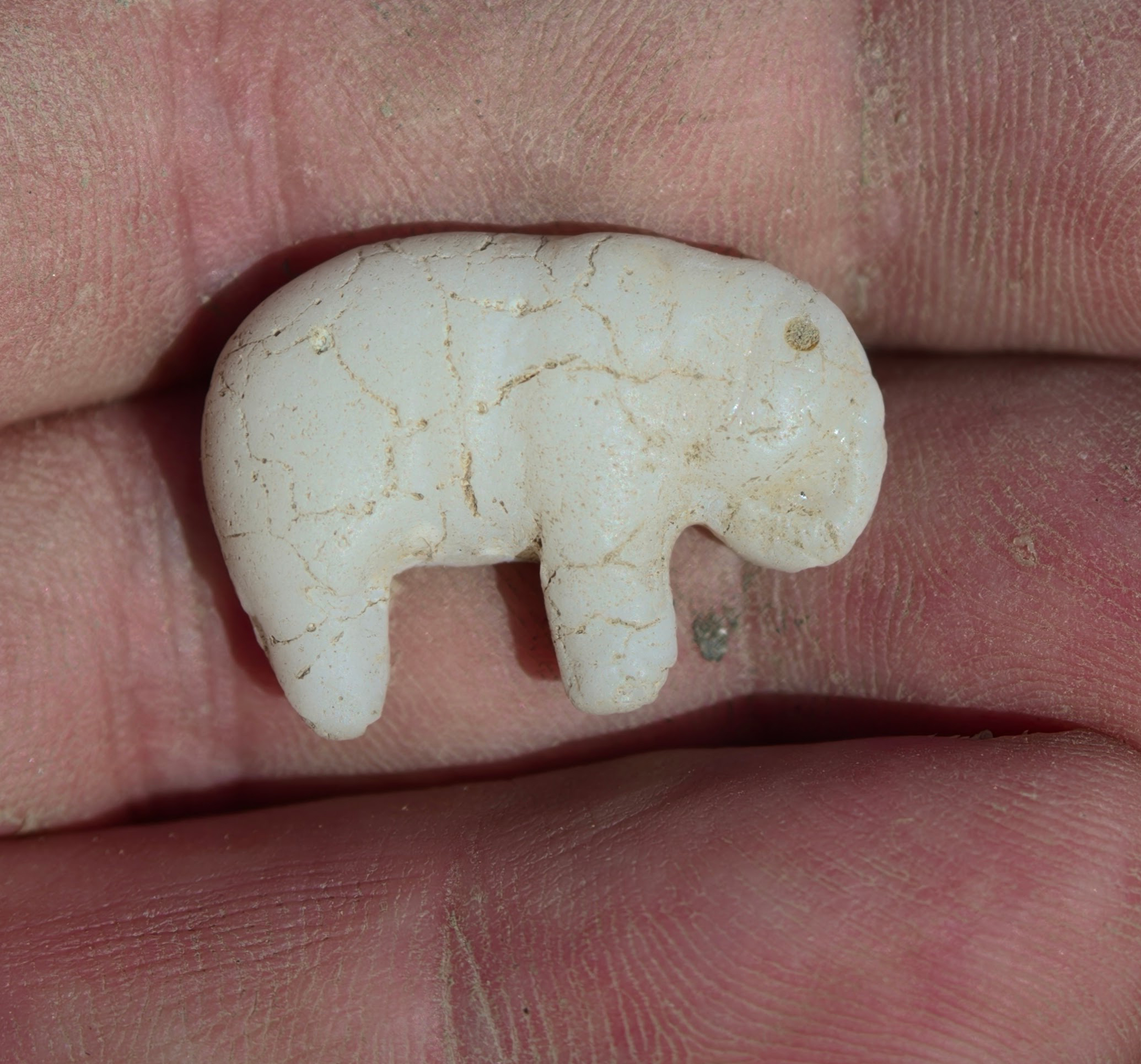
This quartzite figurine resembles a young mammoth. It has a curved, rounded back, unlike an adult mammoth which has a relatively straight back sloping downwards from the head.
The extremely small figurine measures just 17.5 mm high and 25 mm in length, graphically demonstrated in the image shown nestled in a hand at left.
Presumably it was shaped by percussion and pressure flaking, then ground into a rounded shape using water and sand as it was laboriously rubbed on rough flat stones such as sandstone of various dimensions to allow for smoothing the reentrant angles of the shape. Historically, natural British whetstones came from specialised regional deposits far from Kent, such as the Blackdown Hills in Devon.
The Folkestone Formation sandstones do not outcrop at the surface in Swanscombe, which is dominated by Upper Cretaceous chalk and Quaternary river gravels. However, the nearest subsurface or drift-derived fragments of Lower Greensand chert and sandstones appear in local river terrace deposits, while the nearest major regional bedrock outcrop of the Folkestone Formation lies roughly 35 to 40 kilometres to the south and southeast in Kent, such as around the Sevenoaks or Maidstone areas.
This was the basic method used for prehistoric stone tools, as below:
Waisted and Ground Axes: Rough-outs were initially percussion-flaked to form the main shape, then the cutting edges were ground smooth using water and wet sand.
Pestles and Mortars: Hand-held pounding stones were shaped by chipping and finished by rotational grinding in sandy hollows.
Adze Blanks: Flaked core blanks had their working bevels ground down for wood working tasks.
The tiny figure is made of white quartzite and appears to have been polished smooth. It has a detailed trunk and an apparently natural hole on the right hand side that appears to represent an eye, with a similar but less symmetrical hole representing an eye having been carved or ground on the opposite side.
Spherical or rounded holes in natural quartzite are usually small surface pits, as here. They form when softer accessory minerals, or crystals within the quartz matrix, weather out, or when gas bubbles and minor voids are exposed during the cutting and polishing of the stone.
Quartzite is formed when quartz-rich sandstone is buried deep in the Earth and exposed to extreme heat and pressure. This tectonic process causes the original sand grains and silica cement to recrystallise and fuse tightly together into a dense, hard, non-foliated rock.
Collection from a surface deposit in August 2026, photo and text: © John Darvill
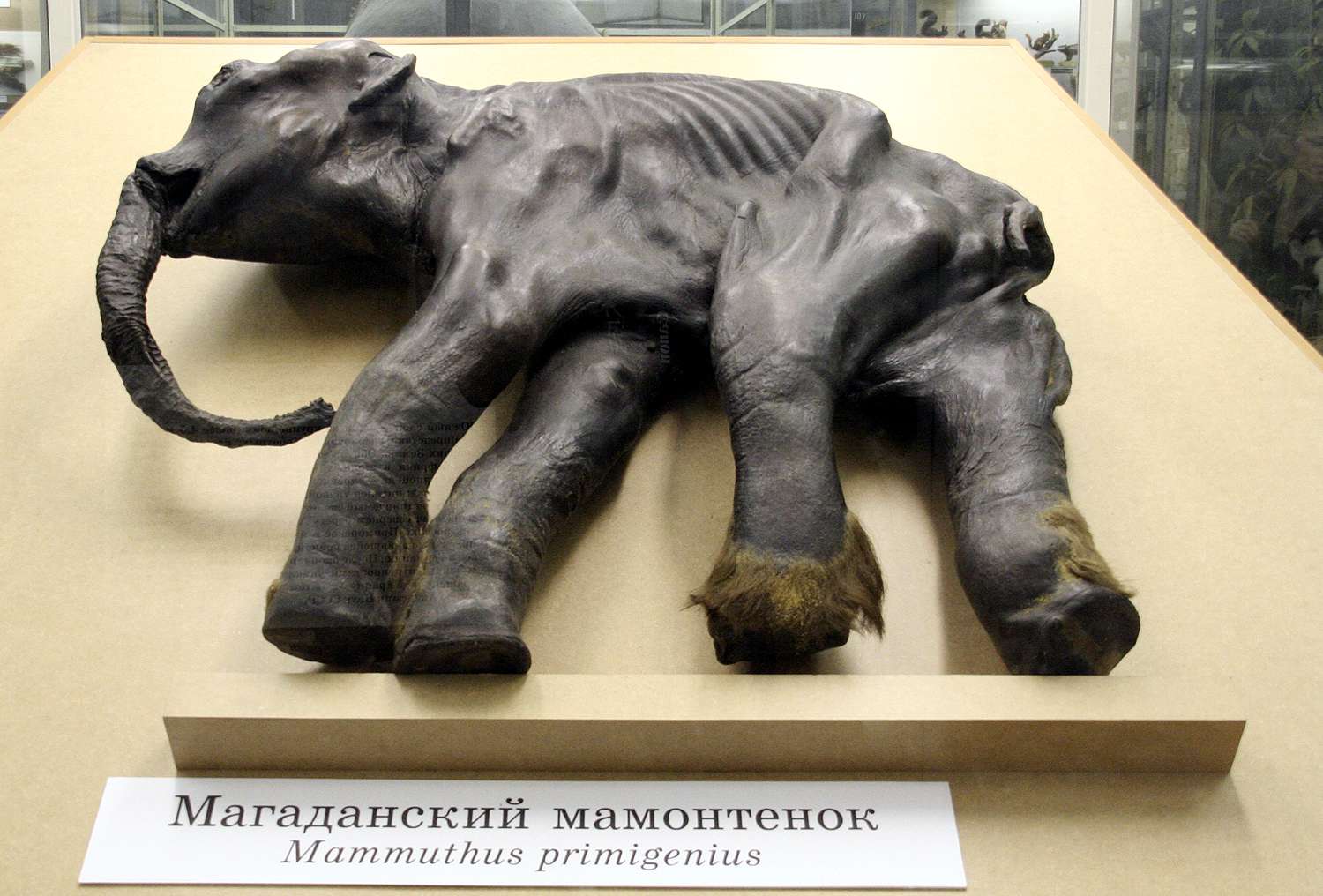
This young mammoth on display in the St Petersburg Zoological Museum appears to have been preserved in a peat bog.
It exhibits the classic black, shiny, flattened form of this method of preservation in anaerobic conditions, seen most often in the very detailed remains of humans preserved in peat bogs in northern Europe.
Photo: © Vladimir Gorodnjanski, 2007
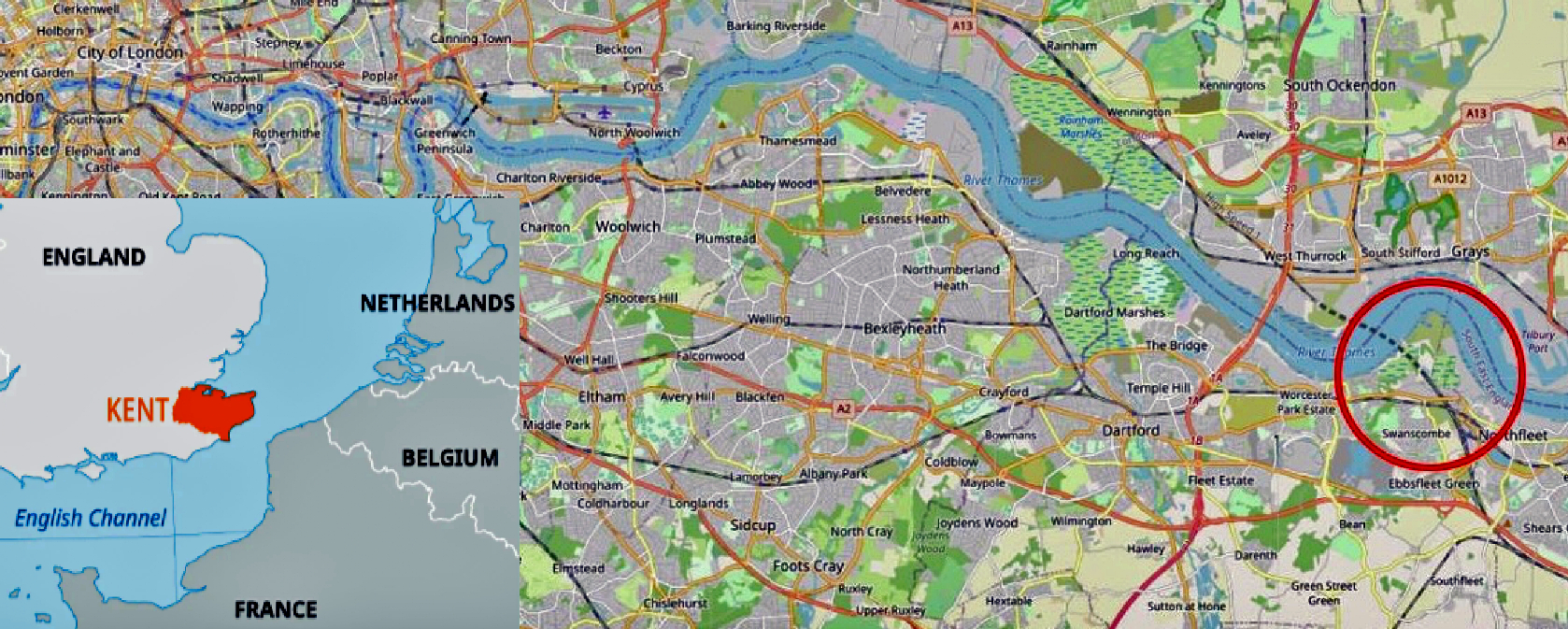
Swanscombe is a town located in North Kent, South East England. The town lies about 32 km east-southeast of Central London, at the base of a promontory bordered by the River Thames.
The site of potential interest is situated on the south bank of the River Thames with commanding views over the river and the Swanscombe Peninsula. The site is close to world-famous quarries. Historically, the area is especially famous for the Swanscombe Heritage Park, where the 400 000 BP 'Swanscombe Man; (early Neanderthal) skull fragments were discovered.
Map with a red circle added by John Darvill from: OpenStreetMap Foundation/ See: https://www.openstreetmap.org/copyright
Permission: Creative Commons Attribution-ShareAlike 2.0 license (CC BY-SA 2.0).
Map with Kent in red: © Britannica AI, https://www.britannica.com/place/Kent-county-England
Text: © John Darvill
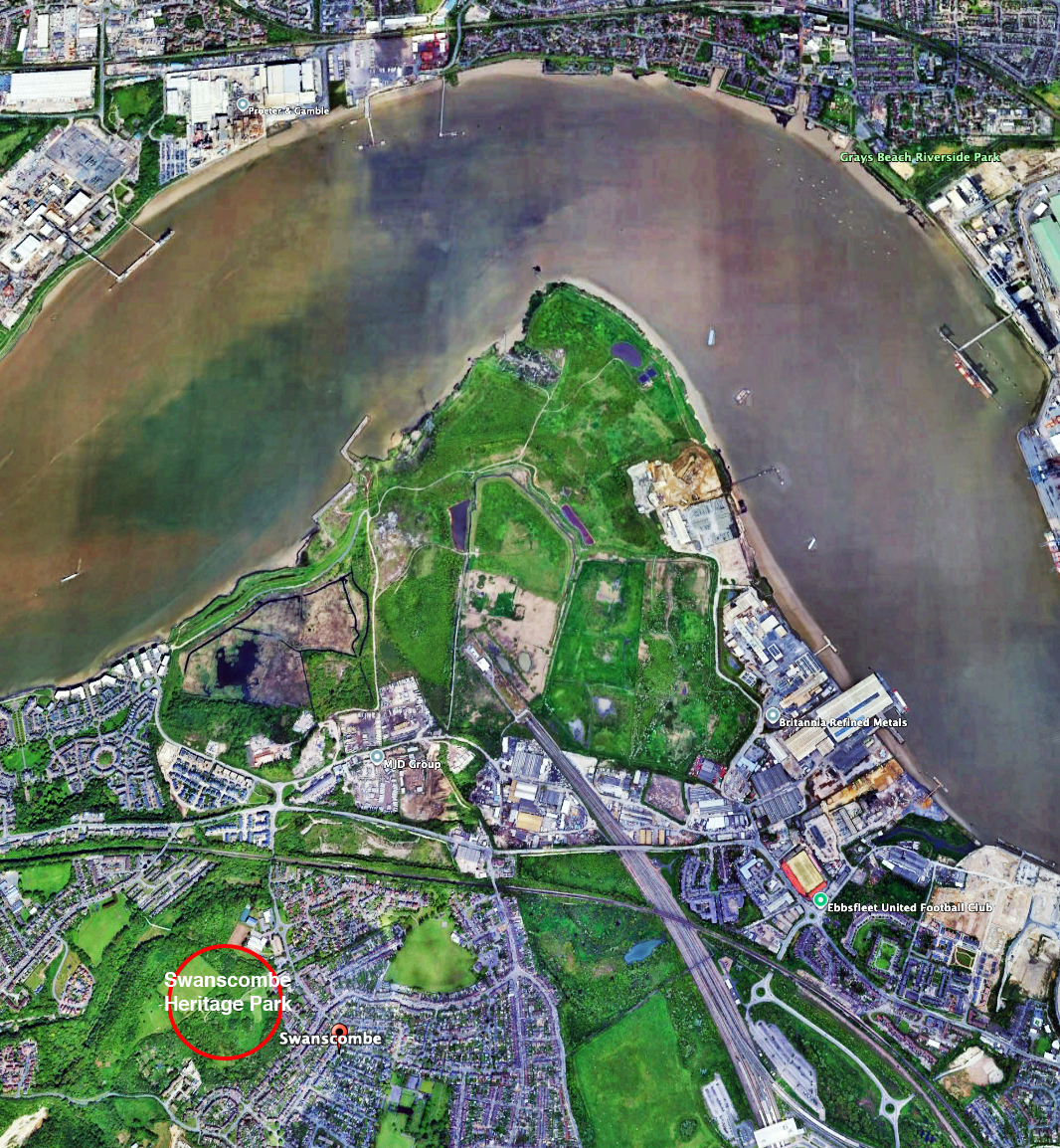
The Swanscombe Peninsula in Kent, showing the position of the Swanscombe Heritage Park.
Photo: © Google Earth
Swanscombe is one of only two sites in Britain where actual human remains of this very early period have been found.
Three different pieces of the same skull - the Swanscombe Skull - were found on separate occasions in 1935, 1936 and 1955.
The Swanscombe Heritage Park, in the former Barnfield Pit quarry, is landscaped across the deposits that contained these finds.
Text above: ©Swanscombe Heritage Park, www.swanscombeheritagepark.co.uk
_____________________________
The geology of the site consists of two main sedimentary formations. Other notable geology features in the area include the Cobham & Swanscombe lignite beds.
Upper Chalk Formation (Cretaceous, 85 million years old): Soft, white limestone rich in flint nodules. Chalk bedrock forms the underlying floor across the area, which led to extensive chalk quarrying in the 19th and 20th centuries.
Thanet Sand Formation (Palaeocene, 56–59 million years old): A bed of fine-grained, greenish-grey to buff marine sand that sits directly on top of the Chalk.
The Cobham and Swanscombe lignite beds are Early Palaeogene (early Eocene, 56 million years old) sedimentary strata. They are celebrated in geology and paleobotany for providing a terrestrial window into one of the most extreme global warming events in Earth’s history: the Palaeocene–Eocene Thermal Maximum (PETM)
The Swanscombe area of interest: A transit camp or main occupational camp?
The immediate area has produced what resemble several hundred humanly worked lithic tools, including worked bone, thermally altered worked flint, ochre and other personal ornaments such as pendants and beads. With the above in mind, it appears that the site of potential interest could arguably be a main occupational site as opposed to a transit camp. Objects such as thermally altered stones would have taken considerable time and effort to produce, thus perhaps suggesting a site of permanent occupation.
Text above: © John Darvill
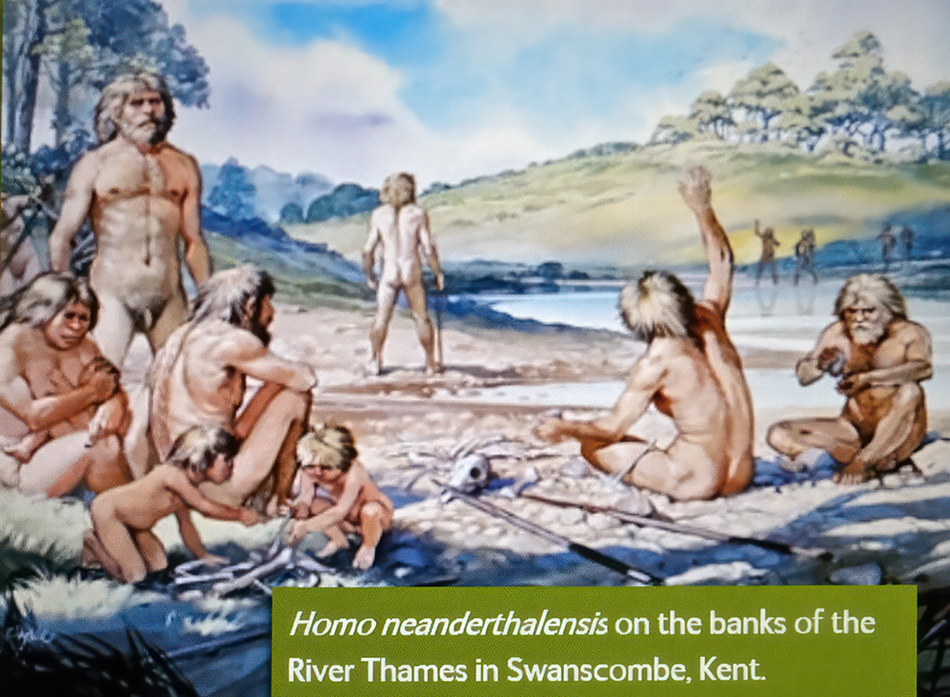
Homo neanderthalensis on the banks of the River Thames in Swansombe, Kent.
Rephotography: Don Hitchcock 2018
Photo: Video frame, Natural History Museum, London
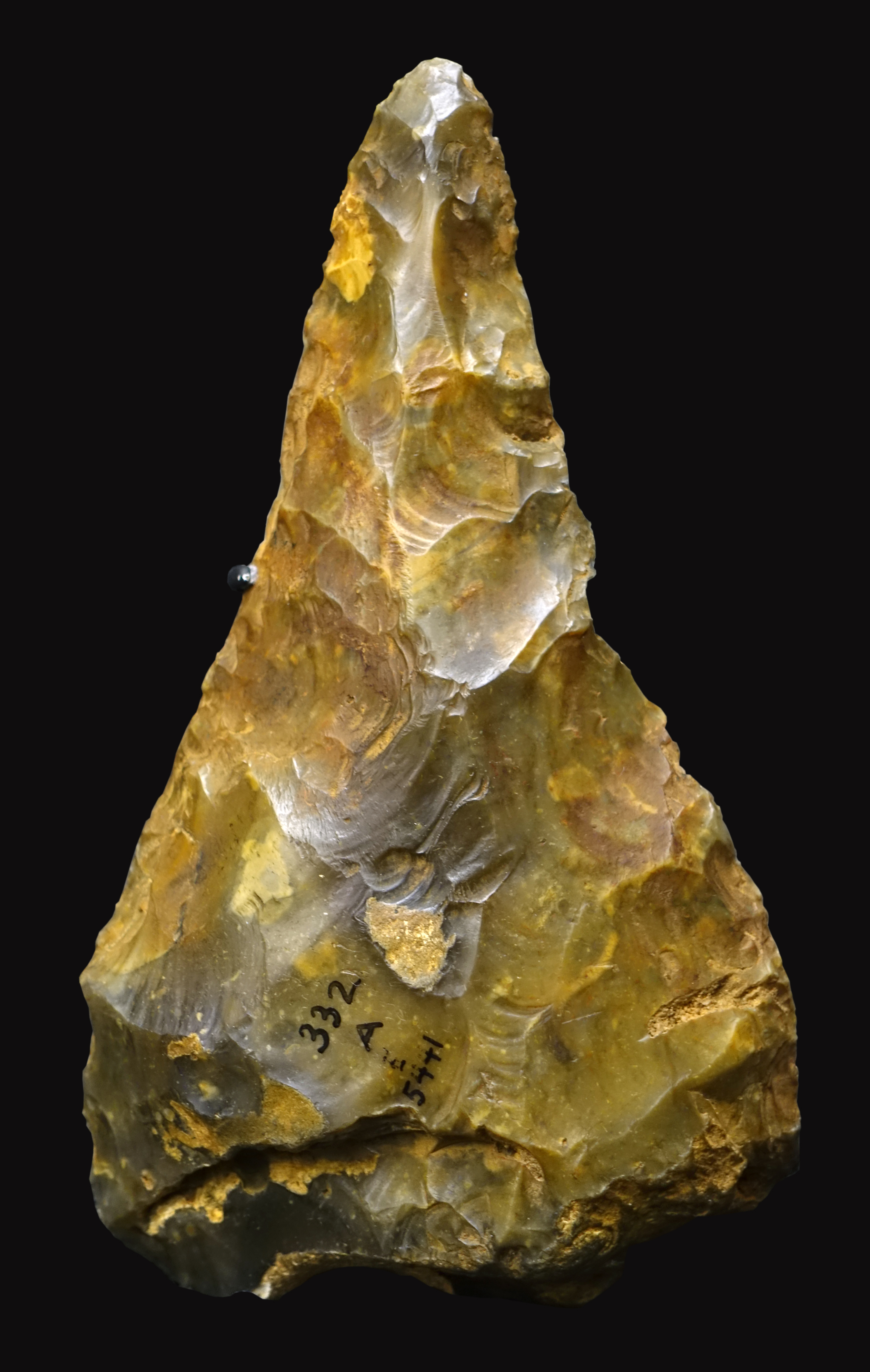
Acheulean handaxe probably used by early Neanderthals, found at Swanscombe, Kent, England.
Age: Circa 400 000 BP.
Photo: Don Hitchcock 2018
Catalog: E5441
Source and text: Original, Natural History Museum, London
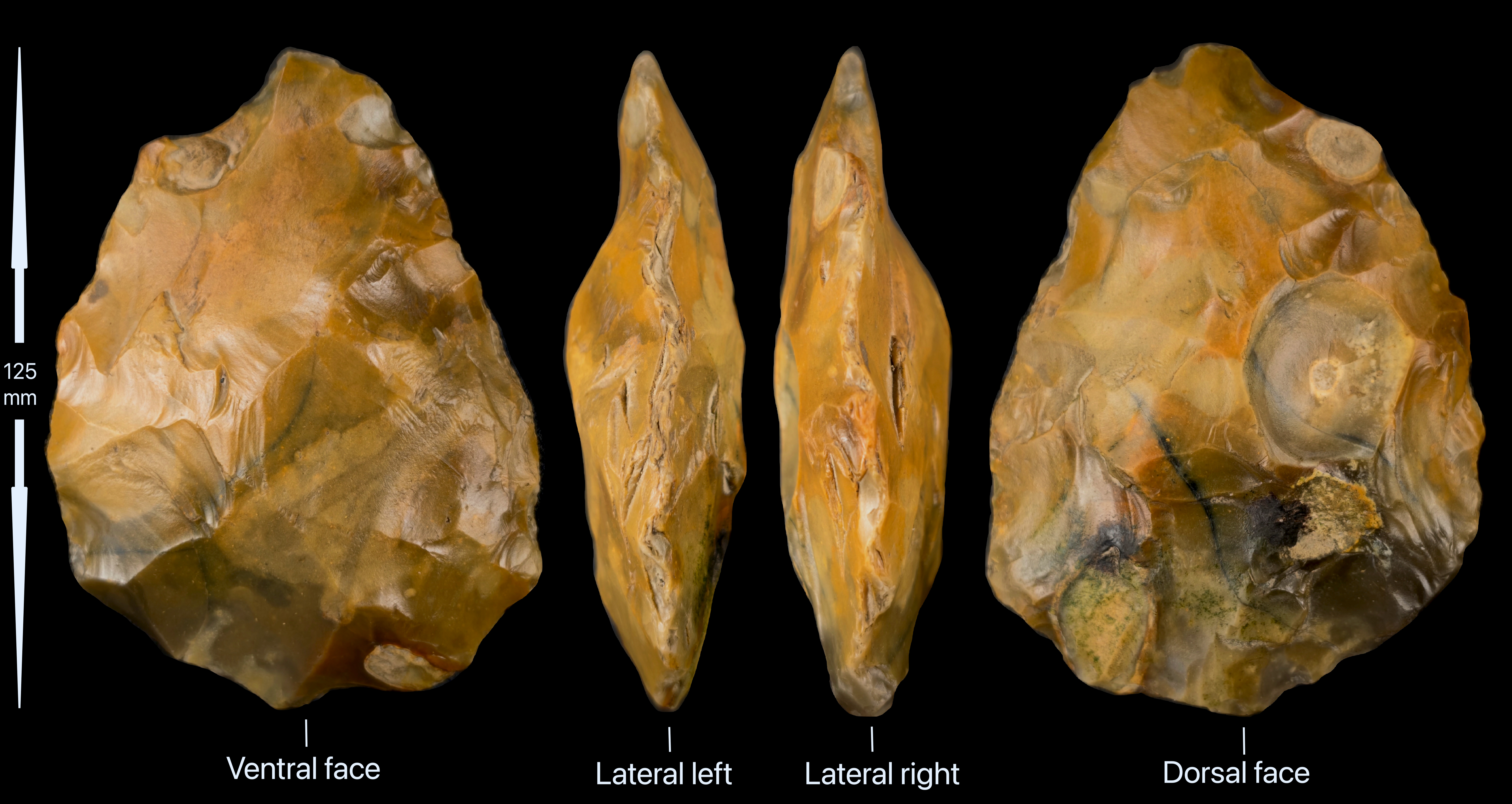
Biface found at Swanscombe by John Darvill.
( This piece and the Acheulean handaxe shown above are, in my opinion, of stone taken from the same quarry, one in the Natural History Museum, and one from John Darvill's fossicking site - Don )
Found at Swanscombe, Kent, England.
Collection, photo and text: © John Darvill
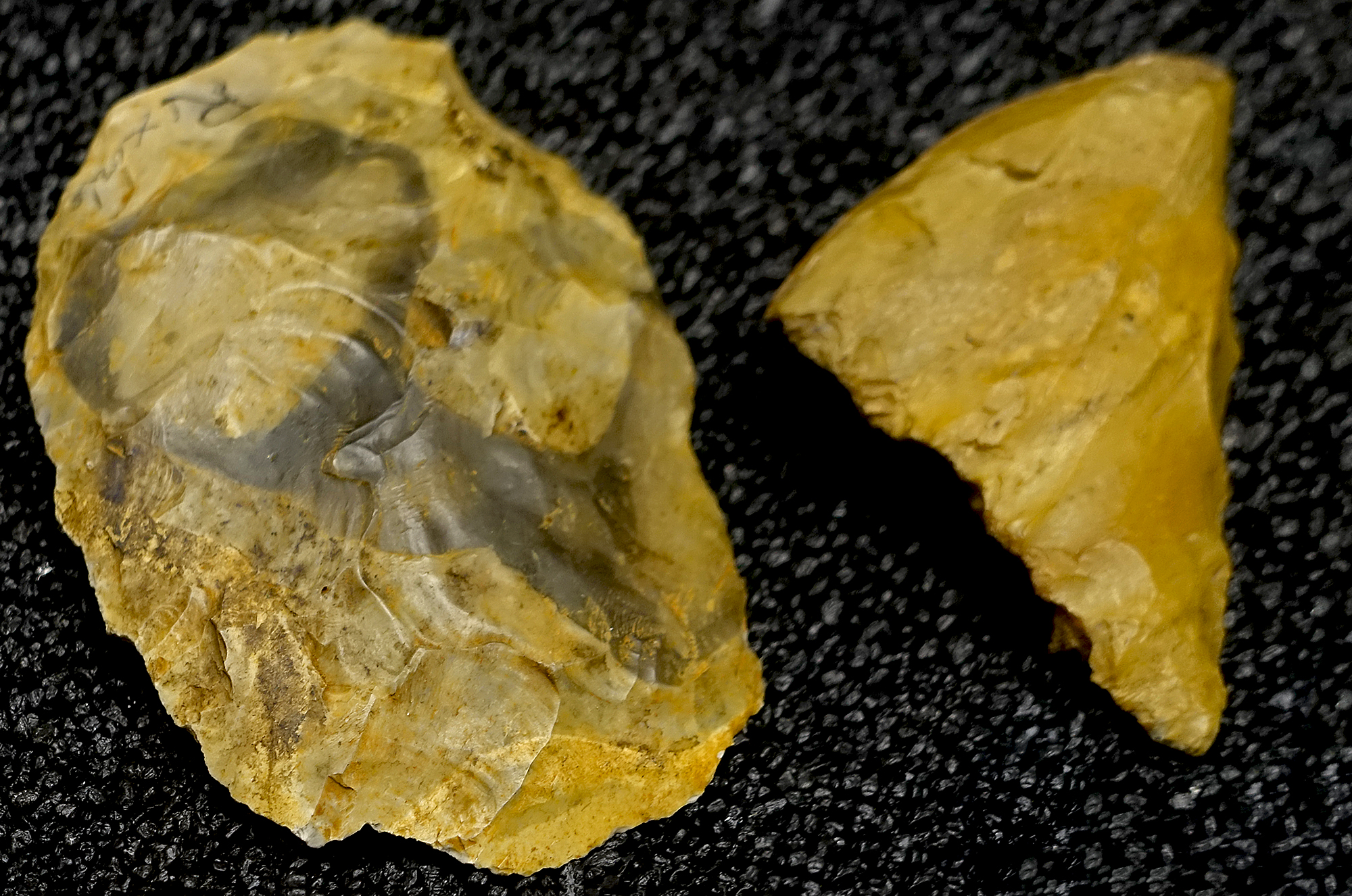
Acheulean handaxes probably used by early Neanderthals, found at Swanscombe, Kent, England.
Age: Circa 400 000 BP.
Photo: Don Hitchcock 2018
Catalog: E4190, E5444
Source and text: Original, Natural History Museum, London
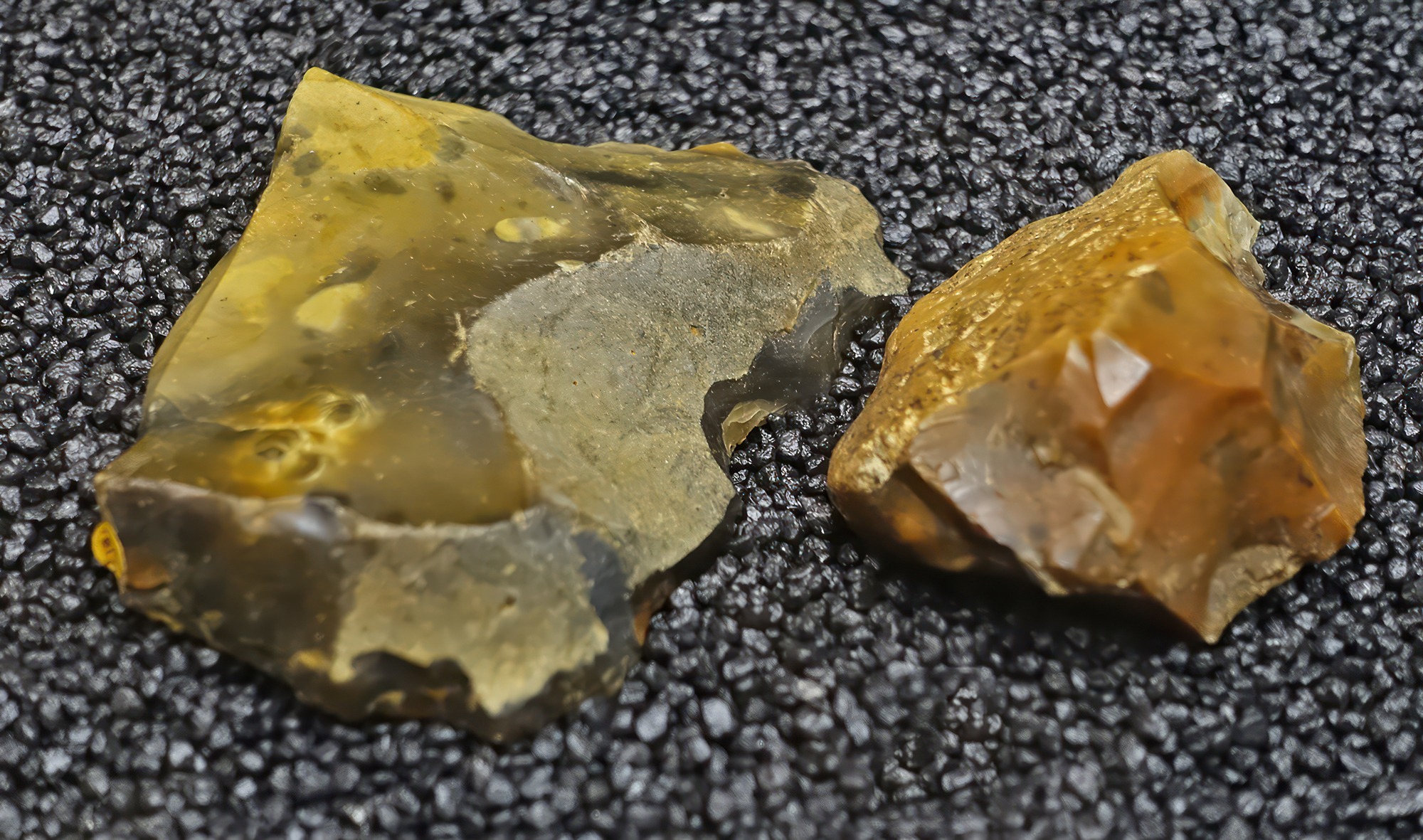
Clactonian stone tools, possibly used by Homo heidelbergenis , found at Swanscombe, Kent, England.
Age: Circa 420 000 BP.
Photo: Don Hitchcock 2018
Catalog: E1817, E3267
Source: Original, Natural History Museum, London
The Stratigraphic Sequence of Barnfield Pit
( Note that the last interglacial period lasted from 130 000 BC to 115 000 BC - Don )
Phase I: The Lower Deposits (Early Interglacial)
The Lower Gravel: This basal layer consists of coarse, heavy river gravels deposited by a fast-flowing, high-energy ancient Thames. It contains thousands of crude, sharp Clactonian flint tools, cores, and flake debris, but completely lacks handaxes.
It preserves massive faunal remains of the extinct straight-tusked elephant (Palaeoloxodon antiquus), along with rhinos and giant deer, indicating a warm, temperate river valley.
The Lower Loam: Deposited as the river's energy slowed down, this is a fine-grained silty mud layer representing overbank flooding or sluggish channels. It contains a wealth of fossilised land and river snails (molluscs).
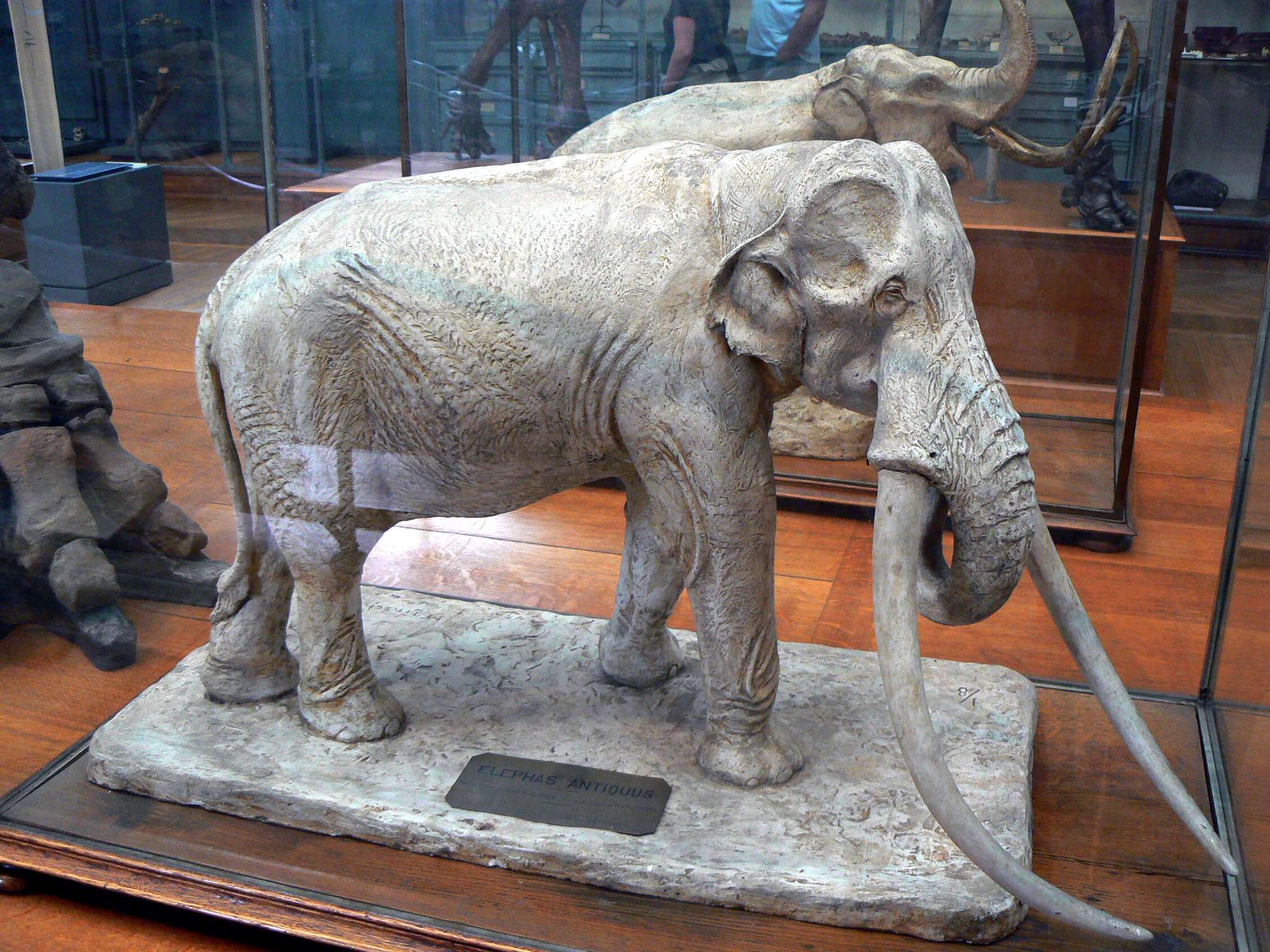
The Straight-tusked Elephant (Elephas (Palaeoloxodon) antiquus or Palaeoloxodon antiquus) is an extinct species of elephant closely related to the living Asian Elephant. It inhabited Europe during the Middle and Late Pleistocene (781 000 – 11 550 years before present). Some experts regard the smaller Asian species Elephas namadicus, as a variant or subspecies of this one.
The creature was 3.70 m tall, and had long, slightly upward-curving tusks. Elephas antiquus's legs were slightly longer than those of modern elephants. It is suggested that this elephant had an 80 cm long tongue that could be projected a short distance from the mouth to grasp leaves and grasses. With this tongue along with a flexible trunk, straight-tusked elephants could graze or browse on Pleistocene foliage about 8 metres above ground.
Straight-tusked elephants lived in small herds of about 5 to 15 individuals. They preferred warm conditions and flourished in the interglacial periods during the Ice Ages, spreading from continental Europe to Great Britain during the warmer periods. It is assumed that they preferred wooded environments. During colder periods the species migrated south. It became extinct in Britain by the beginning of the last ice age, about 115,000 years ago. Eventually it was replaced by the mammoth
Photo and text: Wikipedia - photo taken at the Muséum national d'Histoire naturelle, Paris in August 2006 by 'LadyofHats'.
The photographer has graciously released it into the public domain.
The sculptor appears to have signed as M.F. Linsch, and the sculpture is at 1/8 scale.
Phase II: The Middle Deposits (Full Interglacial)The Middle Gravels & Current-Bedded Sands: This thick, well-stratified layer of fine gravel and cross-bedded river sands points to a shifting, braided river system during the peak of the Hoxnian warm period.
A major cultural shift occurs here. The Clactonian tools disappear, replaced by an abundance of beautifully made Acheulean pointed handaxes.
The Swanscombe Skull: The Middle Gravels are globally famous for yielding three matching fragments of the Swanscombe Skull. Found separately in 1935, 1936, and 1955, they belong to a single individual—an archaic human (Homo heidelbergensis or early Neanderthal) dating back circa 380 000 years.
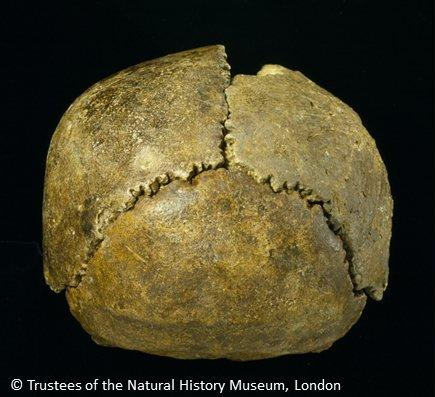
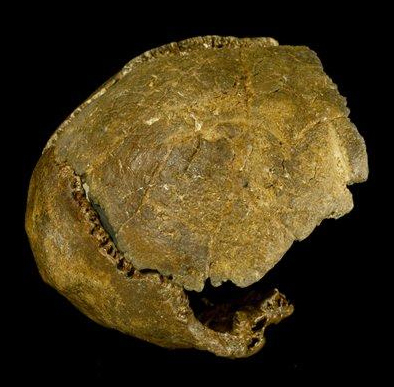
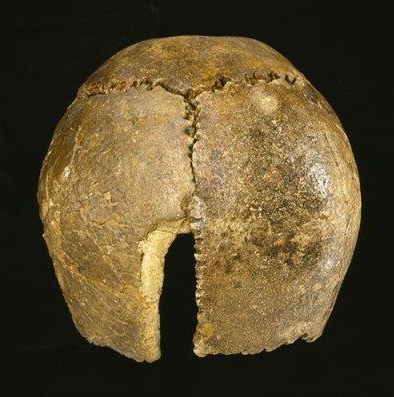
In 1935 and 1936 work at Barnfield Pit by Alvan T. Marston, an amateur archaeologist who visited the pit between quarrying operations to search for flint tools, uncovered two fossilised skull fragments, an occipital and a left parietal, respectively, within the Upper Middle Gravel.
In 1955 another part of a skull, a right parietal, was found by John Wymer at a location more than 24 metres away from the other fragments. These fragments interlock in a way that indicates that all three fragments belong to the same skull. These fragments came to be known as the remains of Swanscombe Man, though it is now suggested these remains belonged to a woman. The Swanscombe skull has been identified as early Neanderthal or pre-Neanderthal.
Permission: Licensed under CC-BY-4.0
All three images are © Trustees of the Natural History Museum, London.
Phase III: The Upper Deposits (Late Interglacial / Cooling)The Upper Loam & Upper Gravel:
These top layers represent the transition out of the warm interglacial stage into a colder, harsher climate (correlated with MIS 11a).
The tool-making tradition shifts subtly once more. The Upper Loam yields a distinct variant of the Acheulean tradition dominated by ovate (oval-shaped) handaxes, many of which display a characteristic asymmetric "twisted edge". This change reflects hominin adaptation and social upheaval as global temperatures dropped.
Text above: Various sources, including White et al. (2019) and material from http://www.swanscombeheritagepark.co.uk/swbc.htm
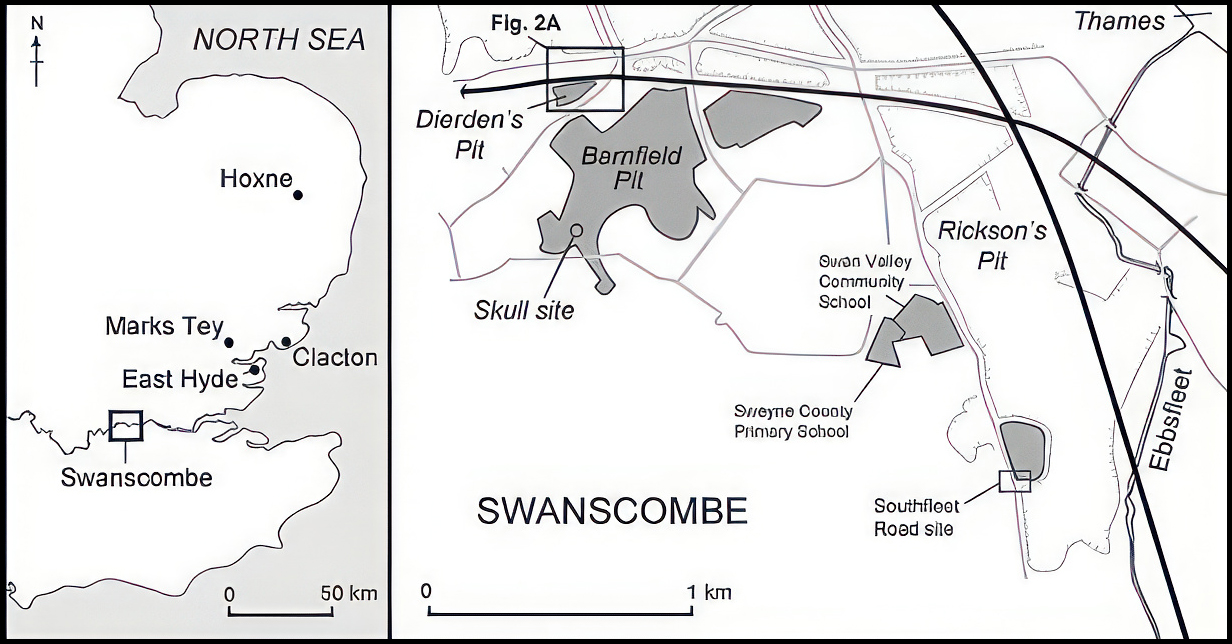
Important sites in the Swanscombe area, including Barnfield Pit, site of the Swanscombe skull.
Image: White (2017)
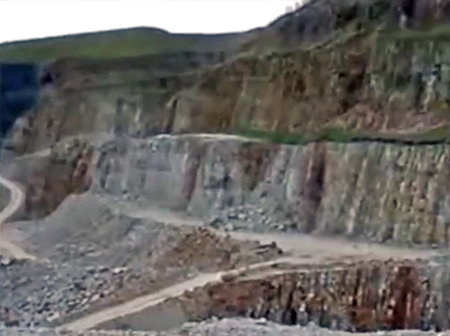
The Barnfield Gravel Pit.
It had been known for decades for the stone tools found there, dating from the Acheulean era and for the fossils of animals from the Middle Pleistocene.
Image: Halabella, https://www.youtube.com/watch?v=L5K30etcIxE
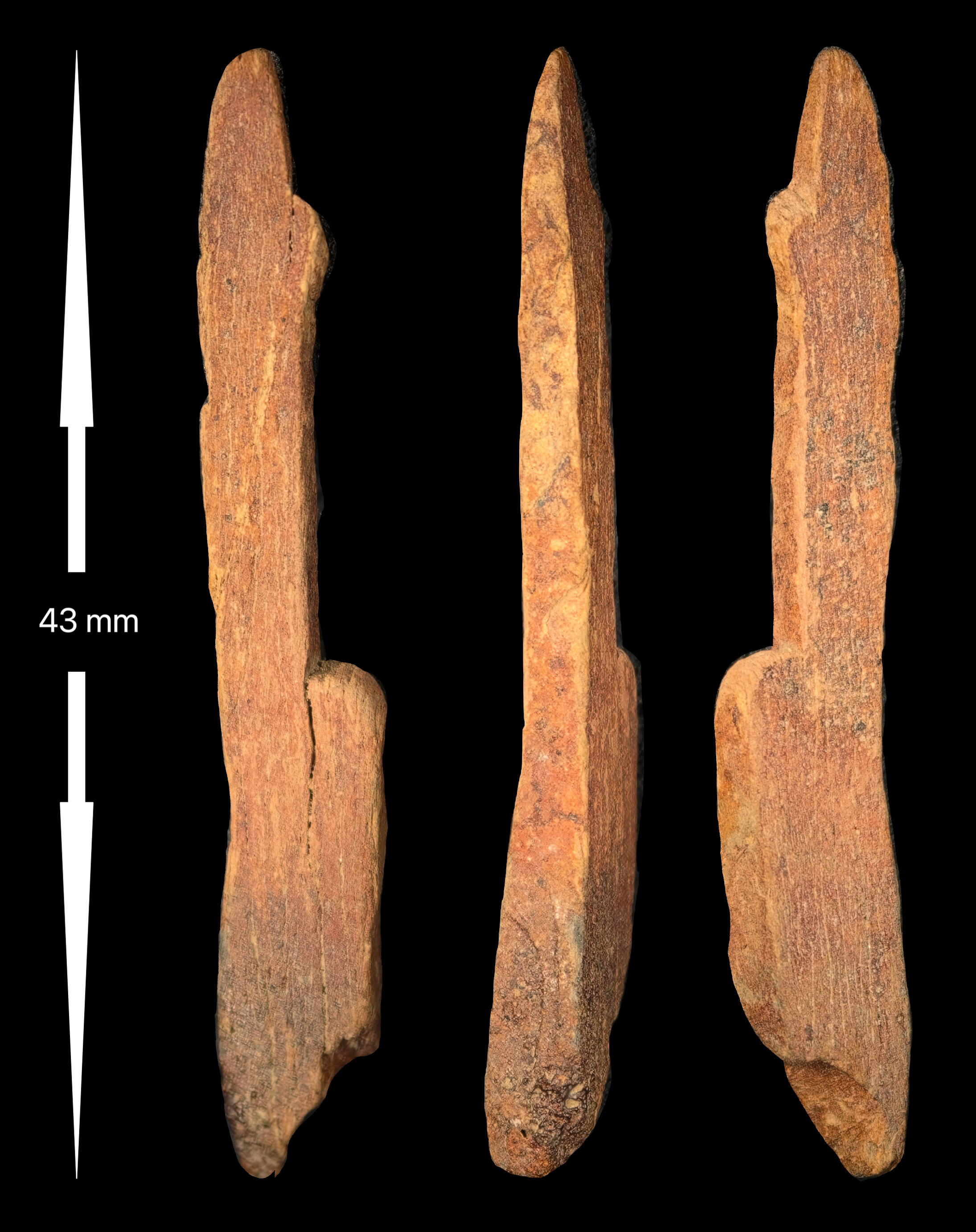
Image of a potential symbolic artefact. It is of the Lalinde form, carved in bone, and it still retains a significant amount of red ochre.
The red staining appears to have been heat-applied, as there are traces of what look like nano-bubbles on the surface. It has a protruding knob on the side at the top (head), as in the example below.
Collection, photo and text: © John Darvill
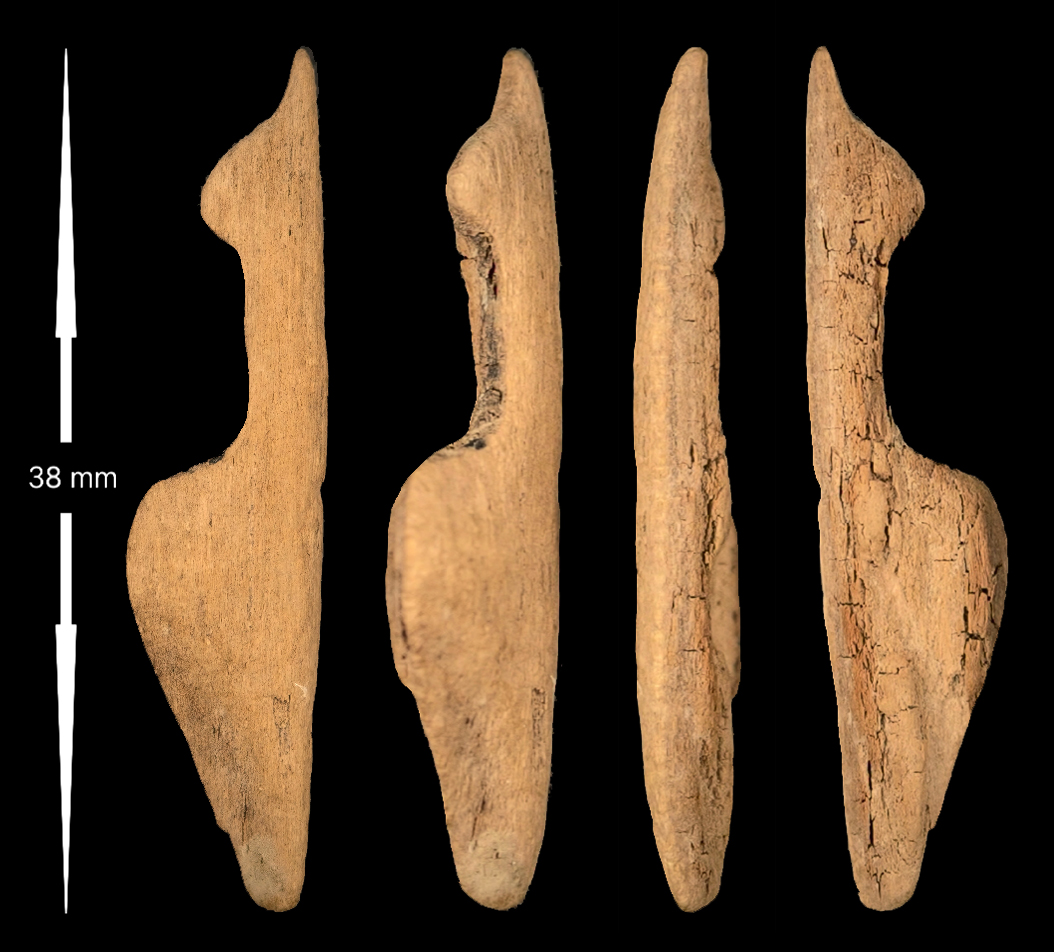
Image of a potential symbolic artefact.
It is of the Lalinde form, and is made of fossilised wood. It has a protruding knop/knob on the same side as the example above, at the top (head).
( Note that Mr Darvill has, in the two examples above, described a protruding knop/knob. If this had been on the other side, as in most Lalinde figures, it would have been described as an indication of breasts. - Don )
Collection, photo and text: © John Darvill
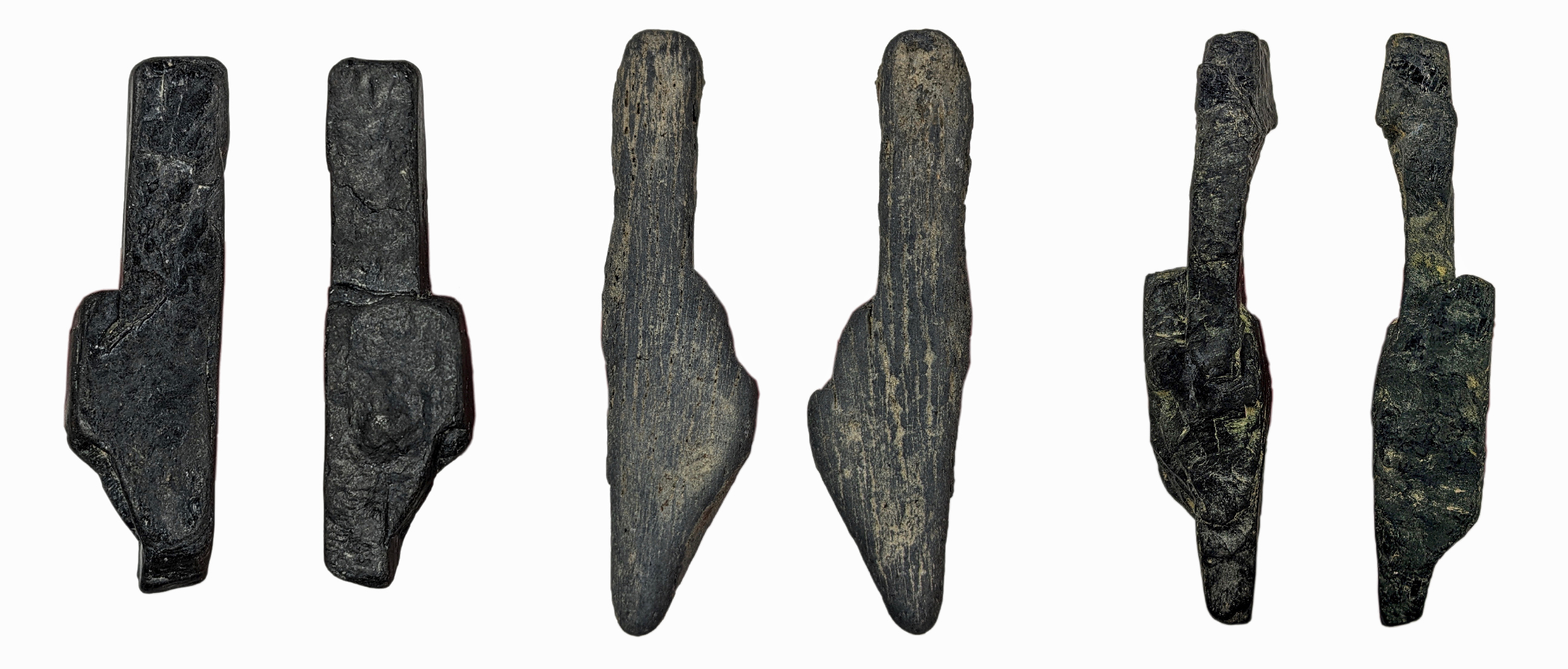
Three modified symbolic representations carved on jet/lignite.
All three share remarkable similarities with Upper Palaeolithic, Magdalenian Lalinde typology figurines from Europe.
All were found at Swanscombe, Kent, England.
Collection, photo and text: © John Darvill
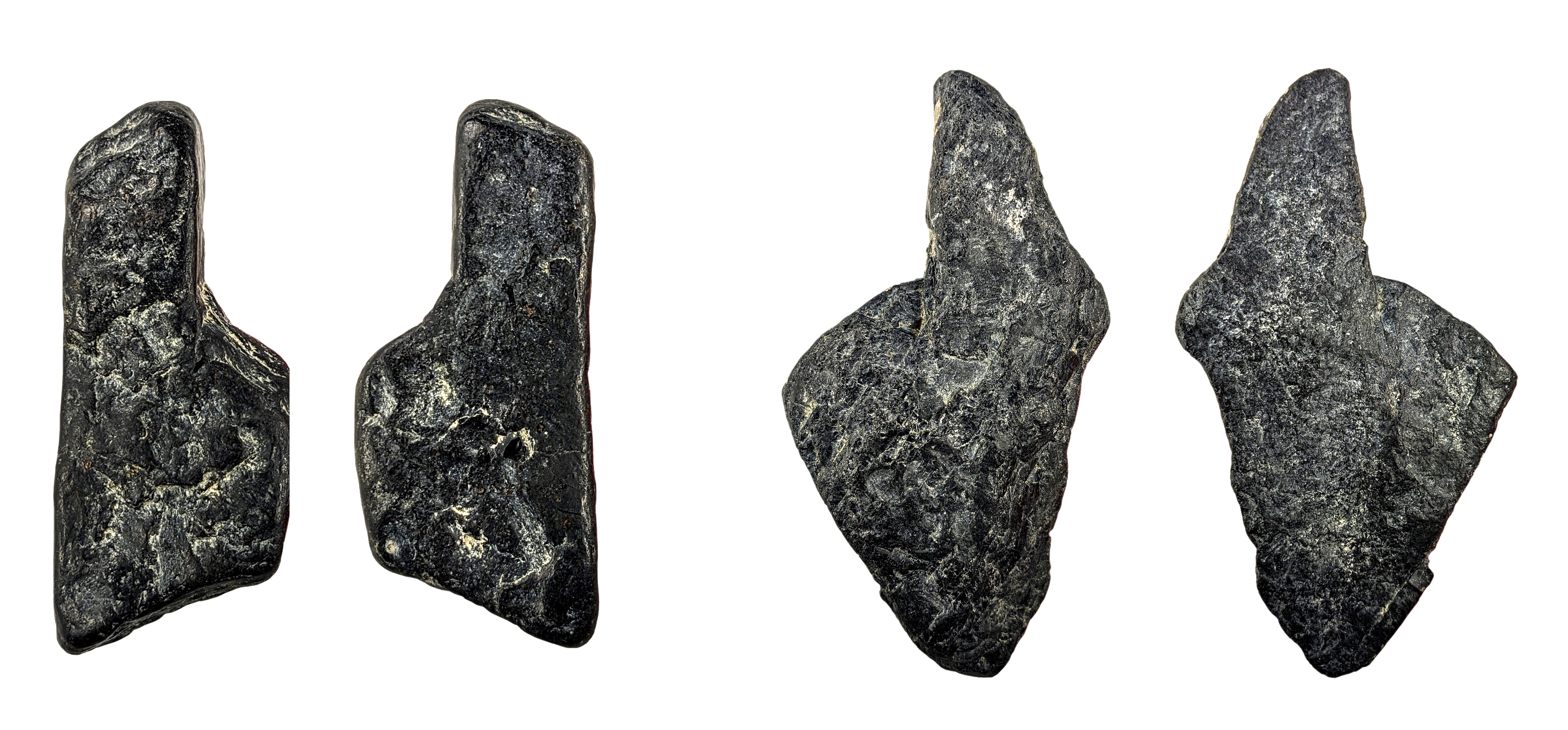
Two modified symbolic representations carved on jet/lignite. These two potential examples share remarkable similarities with Upper Palaeolithic, Magdalenian Gönnersdorf typologies from Europe.
Both were found at Swanscombe, Kent, England.
Collection, photo and text: © John Darvill
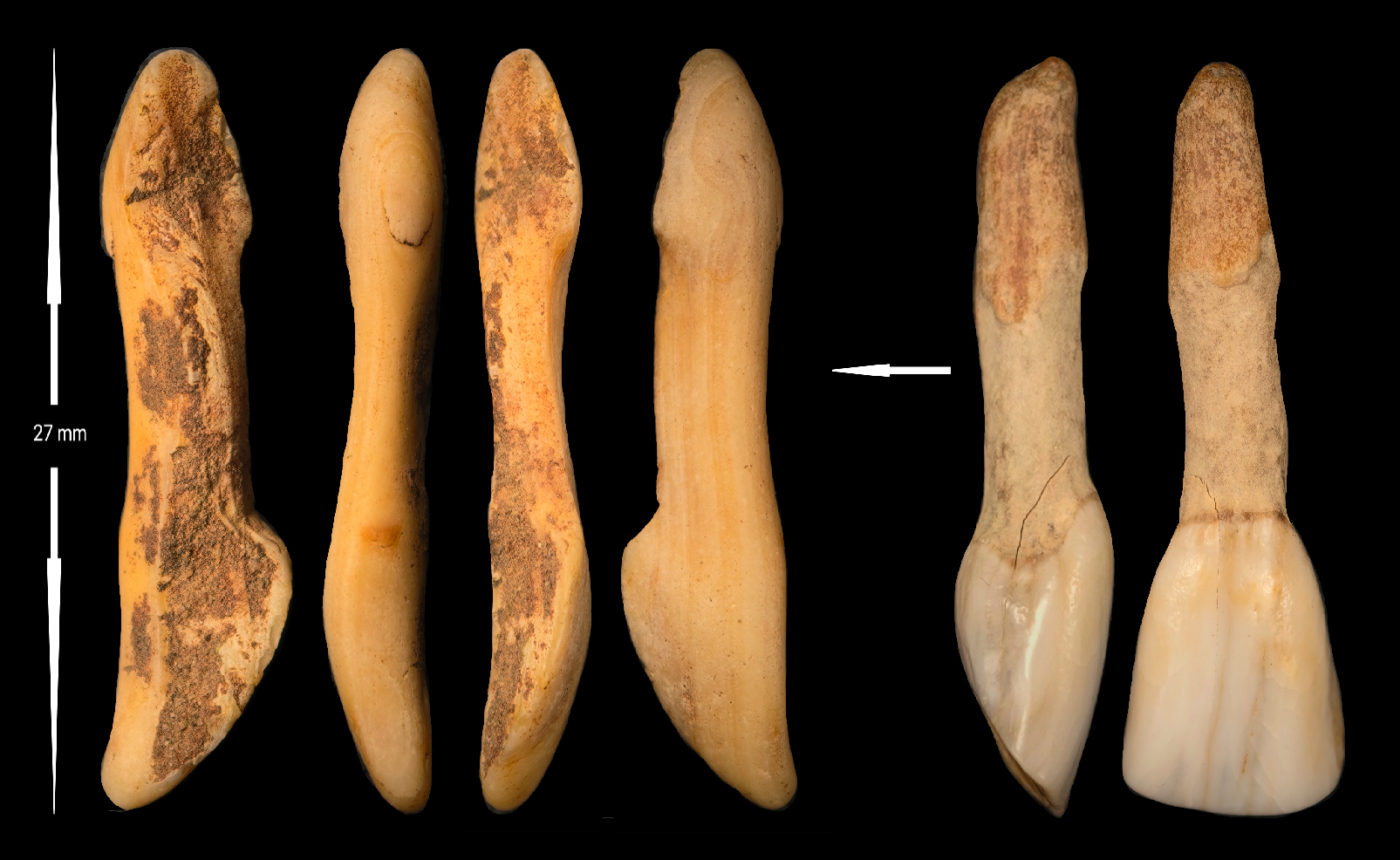
Left: A modified ochre stained deer tooth resembling a Lalinde symbolic form.
Right: A natural unmodified deer tooth.
Both specimens were found at Swanscombe, Kent, England.
Collection, photo and text: © John Darvill
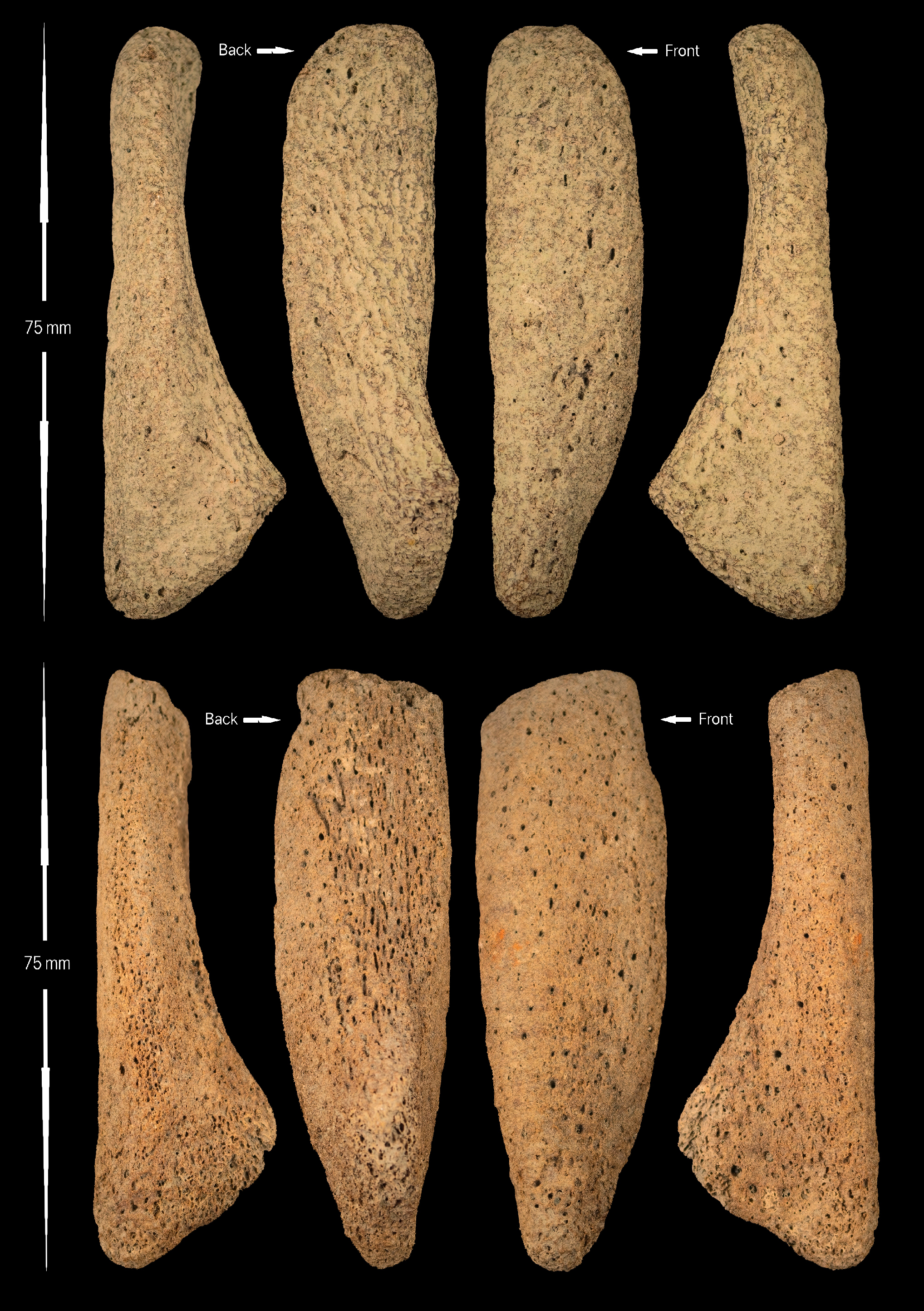
Two examples of symbolic carvings that closely resemble a Gönnersdorf symbolic form.
They are made of what may be cancellous (porous) antler.
The above examples are very similar to each other, and both are 75mm in height.
Given their remarkable similarities, their being of the same material, and their having the same overall shape and height, it is entirely possible that they were made by the same hand.
Both specimens were found at Swanscombe, Kent, England
Collection, photo and text: © John Darvill
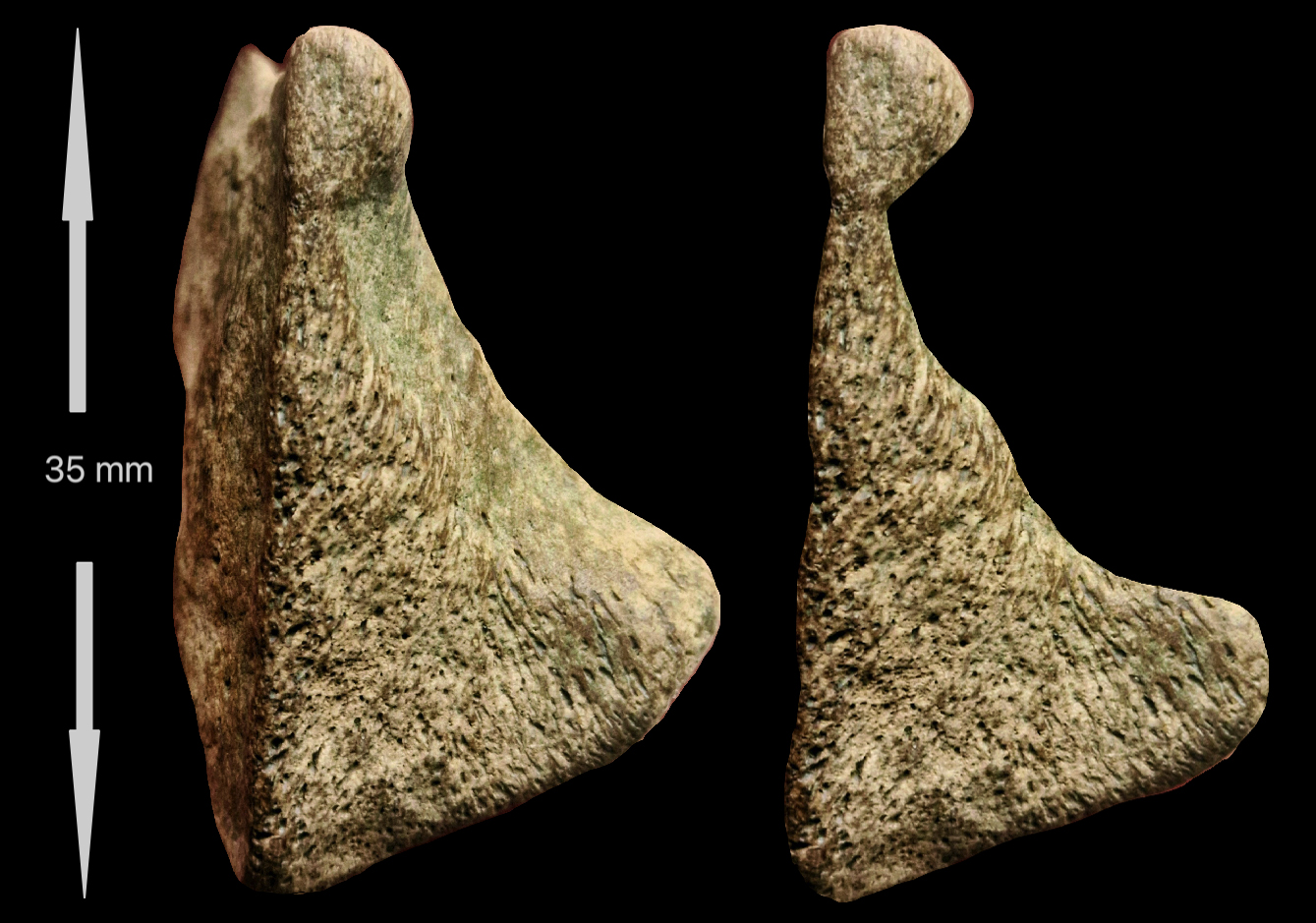
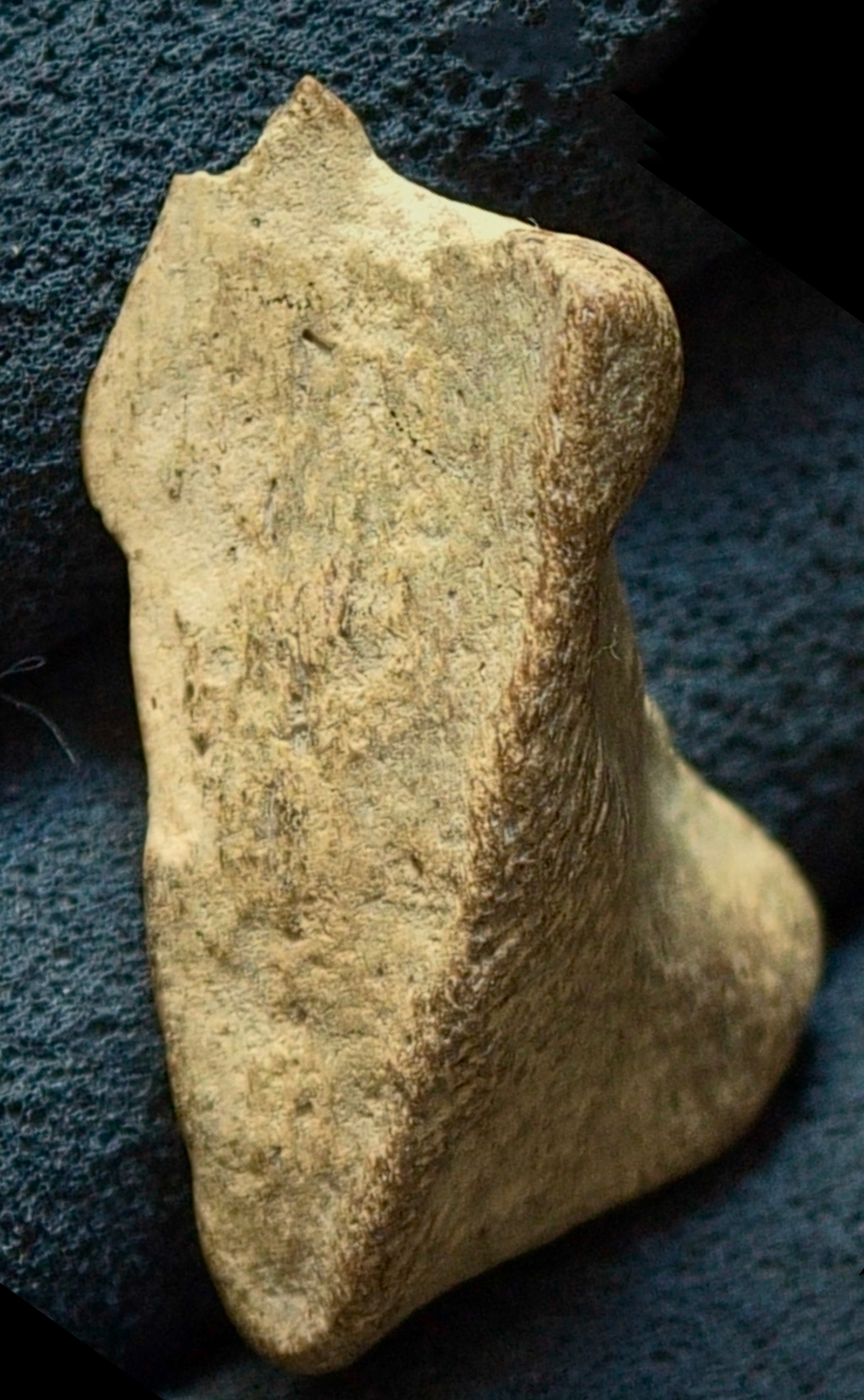
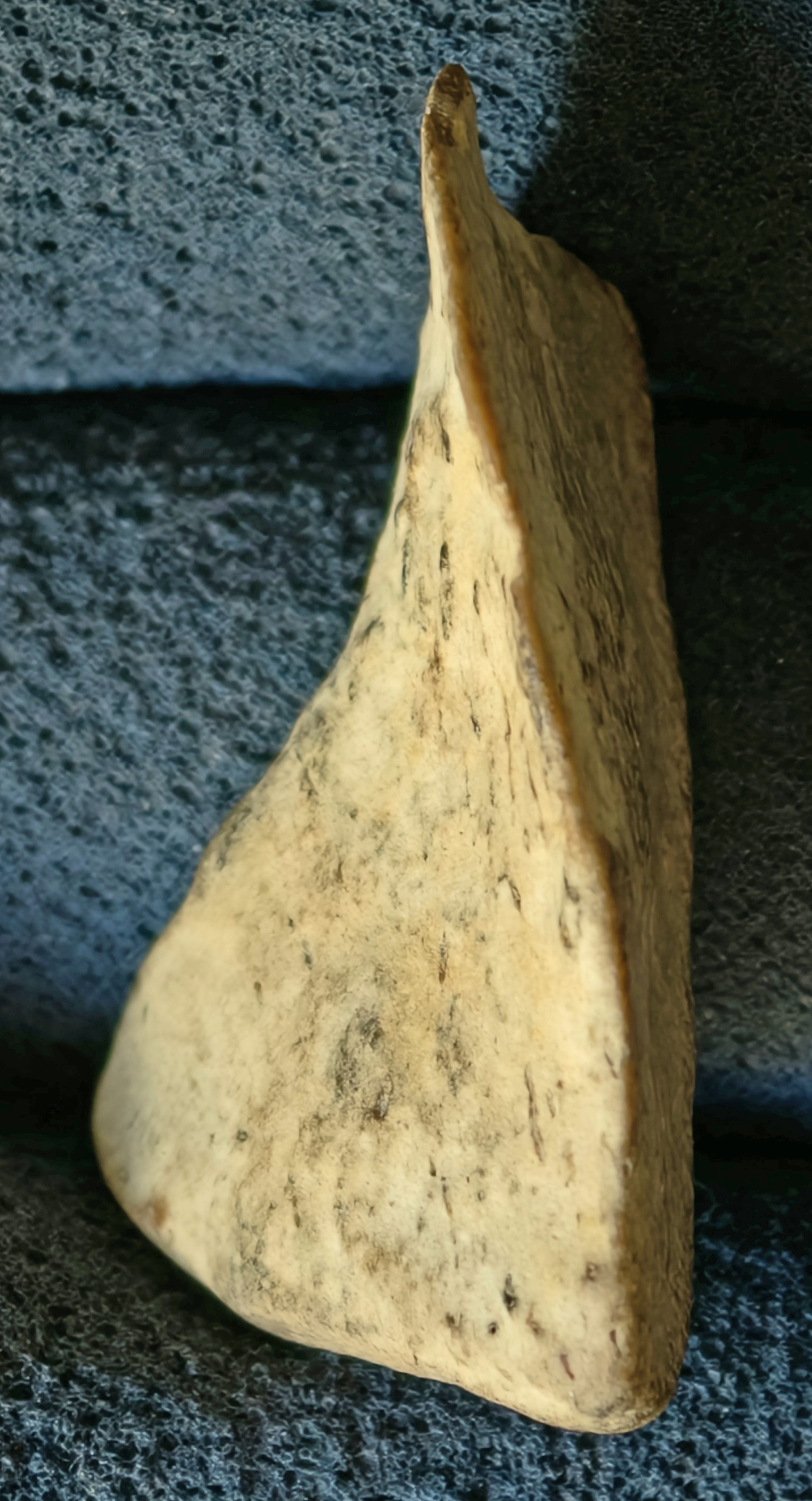
This object appears to have been carved on a small off cut of bone.
Object found at Swanscombe, Kent, England
Collection, photo and text: © John Darvill
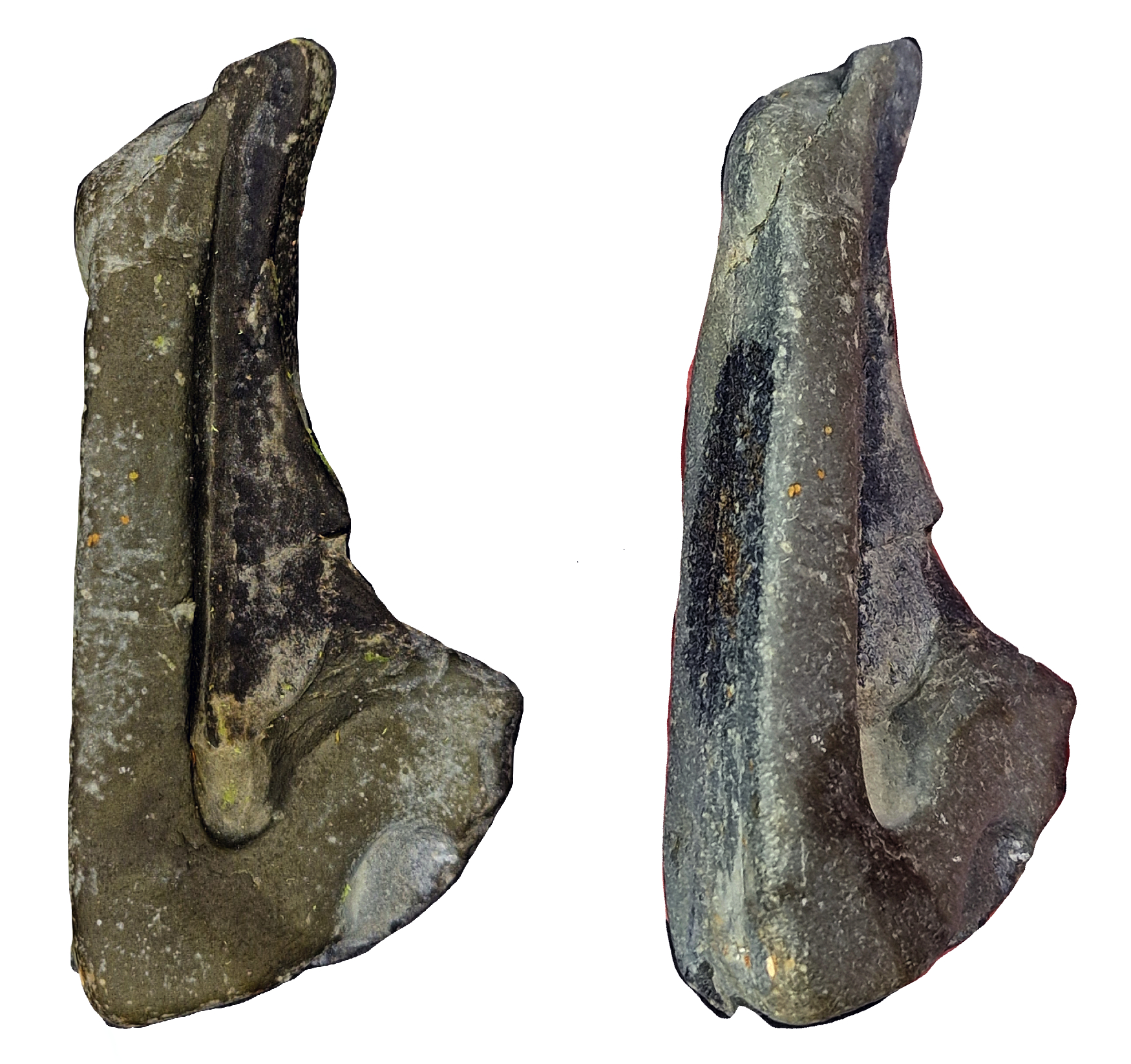
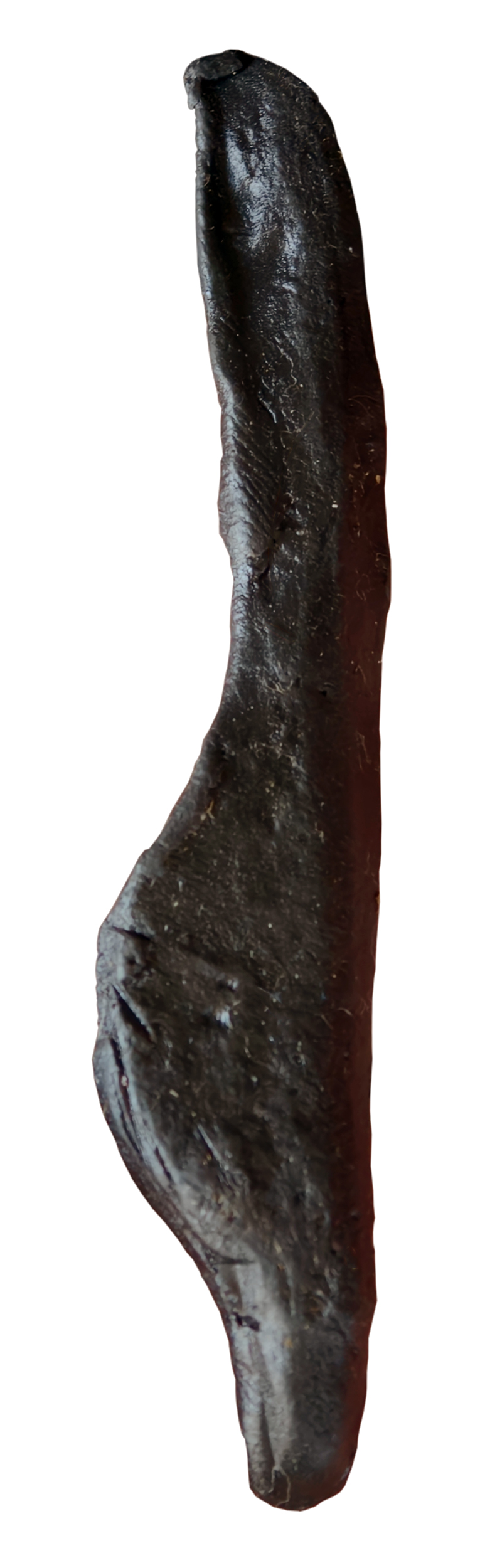
Above is a mould for creating multiple Gönnersdorf figurines from, possibly, birch bark tar, or a mixture of birch bark tar and particulate matter such as sand or charcoal.
The Smithsonian Magazine has reported that experimental archaeology and residue analyses show that adding fine particulate matter to birch bark tar (like sand, quartz grains, or charcoal) served as a mechanical filler or extender. Similar to modern composite resins, these grains added body, reduced excessive stickiness, and modified the structural integrity of the pitch when forming thick grips or heavy-duty bonds.
( Other sources say that ochre was also mixed with birch tar on occasion - Don )
This mould indicates that the Gönnersdorf figurines were important parts of the lives of the inhabitants of the time, and held significance, such that multiple copies of the shape, formed quickly and easily, were considered to be desirable.
The mould is 81 mm long.
The cast (left, of plasticine in this case) is 70 mm long.
The closest natural tar source is at Cinderhill Acid Tar Pits, Denby, Derbyshire, roughly 250 km away from Swanscombe.
Collection, photo and text: © John Darvill
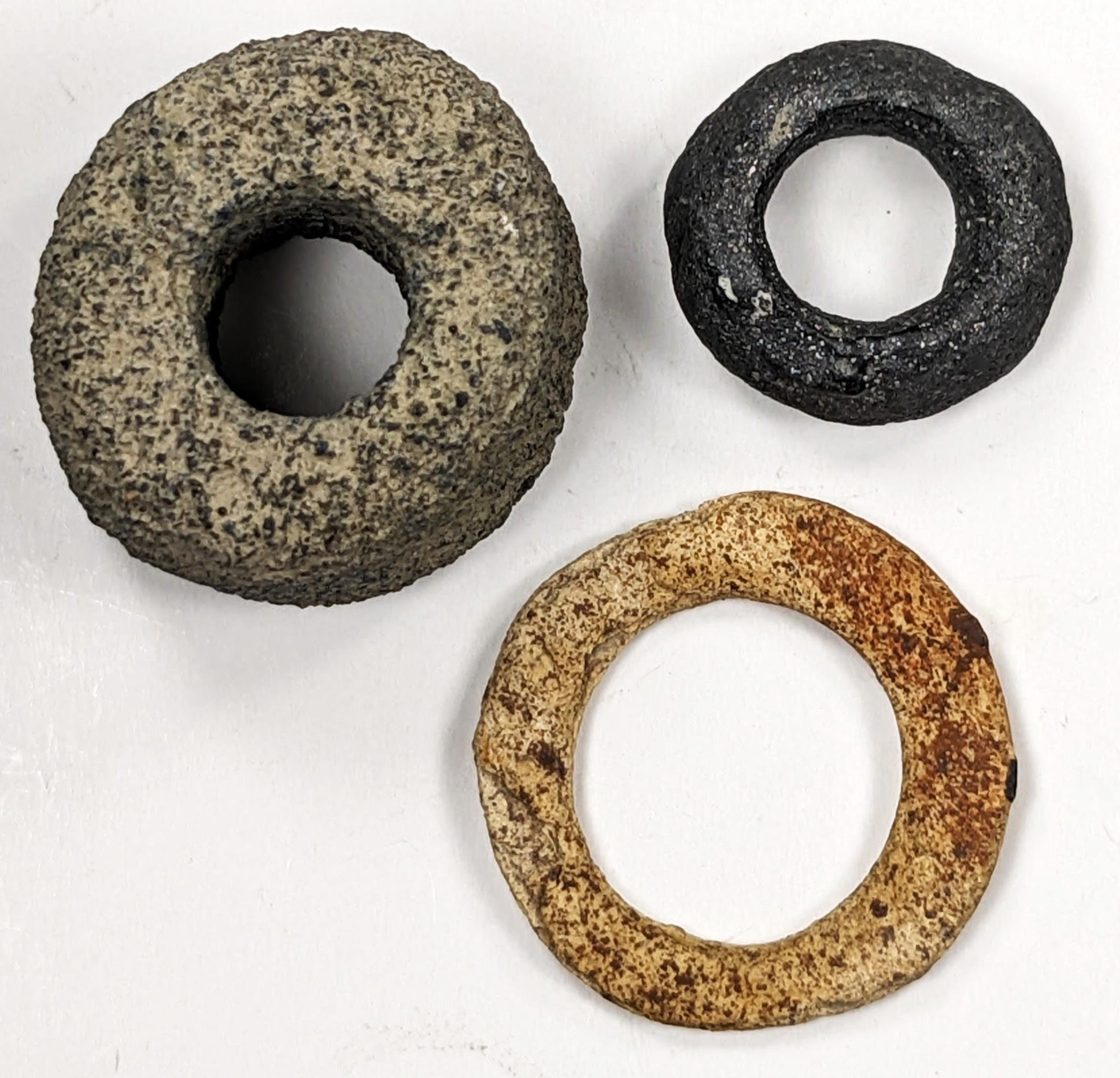
Two lignite beads and a sandstone ringlet. The sandstone ringlet has red staining on both faces, which may potentially be ochre staining.
Found at Swanscombe, Kent, England.
Collection, photo and text: © John Darvill
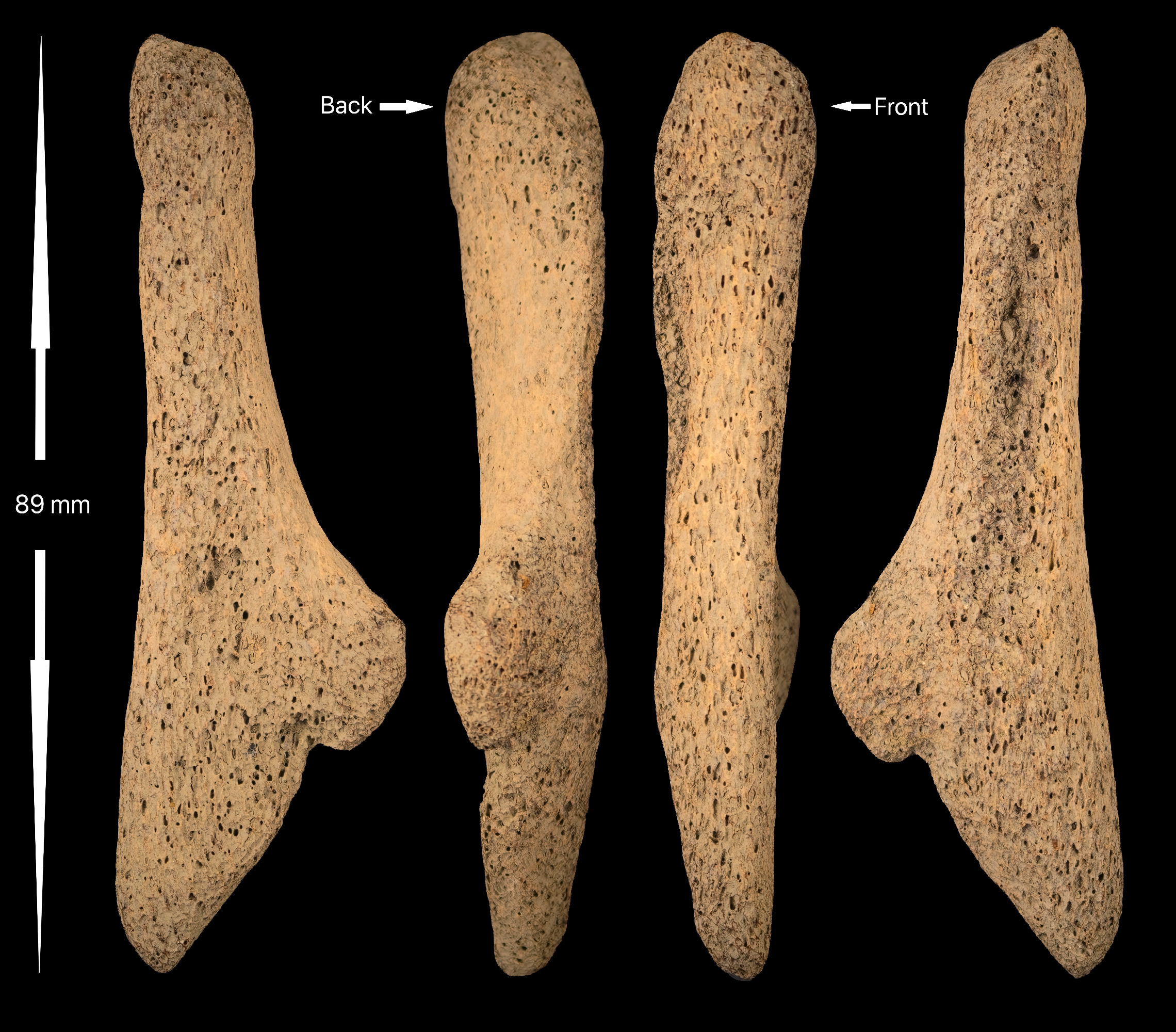
Above: A possible carved antler object that strongly resembles a Gönnersdorf symbolic form.
This possibly modified symbolic figure appears to have been created on the inner cancellous (spongy)
section of an antler. The cortical exterior has been completely carved away down to the
cancellous centre. The possible buttock section appears to have been created on a crown
branch section (tip).
Height 89mm x 30mm width (buttocks) Found Swanscombe, Kent. UK
Found at Swanscombe, Kent, England.
Collection, photo and text: © John Darvill
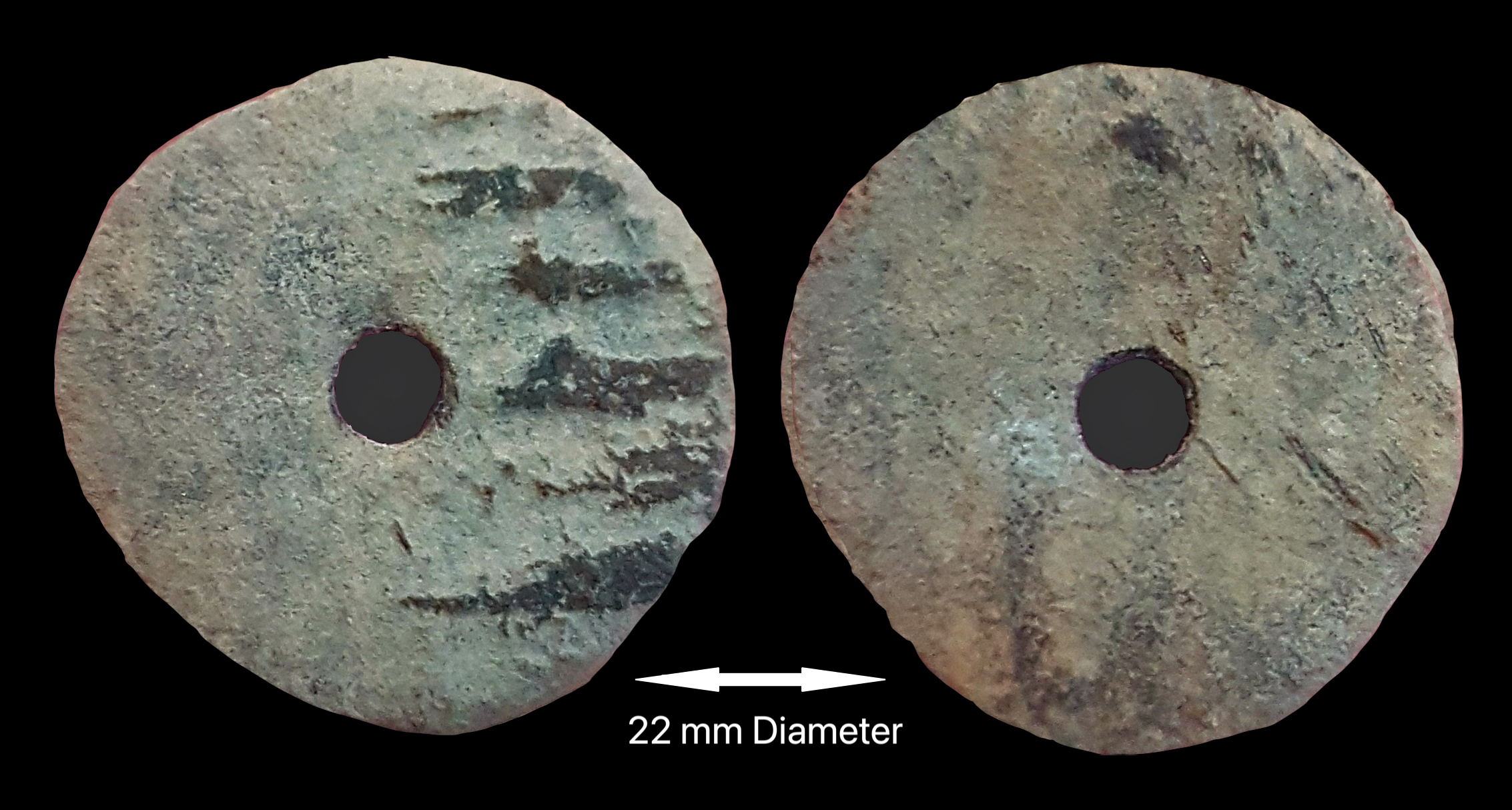
A 22mm diameter bone rondelle with a central perforation.
The object is rather worn. There appears to be some evidence of decoration on one side.
Found at Swanscombe, Kent, England.
Collection, photo and text: © John Darvill
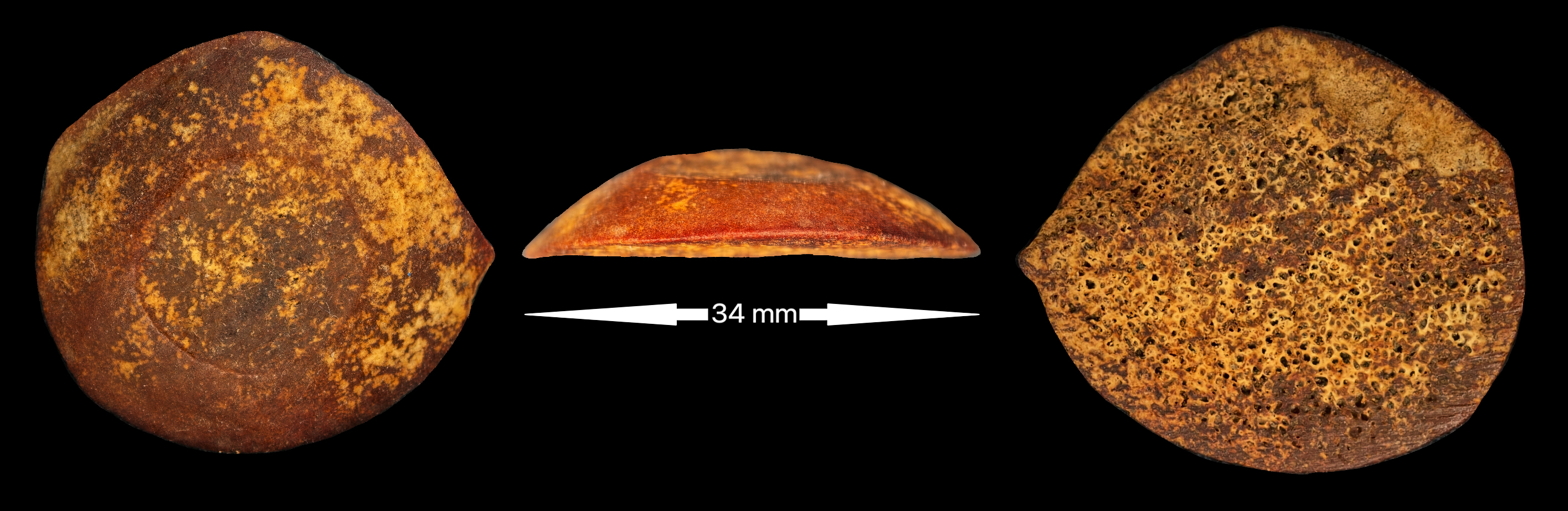
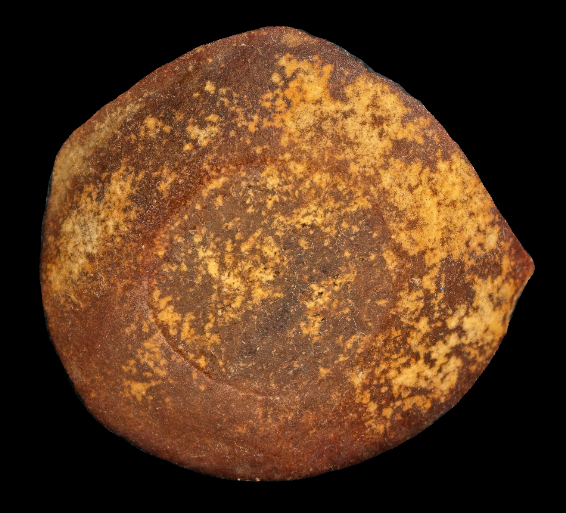
An osseous disc that resembles an Upper Palaeolithic rondelle. It has red pigment staining. There are known examples of rondelles without central perforations, but they are rare. It is therefore possible that this object is an unfinished example.
There are two opposing bulbs on the edge of the disc. The object could perhaps represent an eye.
In addition, the domed side has a central round flat area, perhaps representing an iris, as shown in the closeup at left.
Found at Swanscombe, Kent, England.
Collection, photo and text: © John Darvill
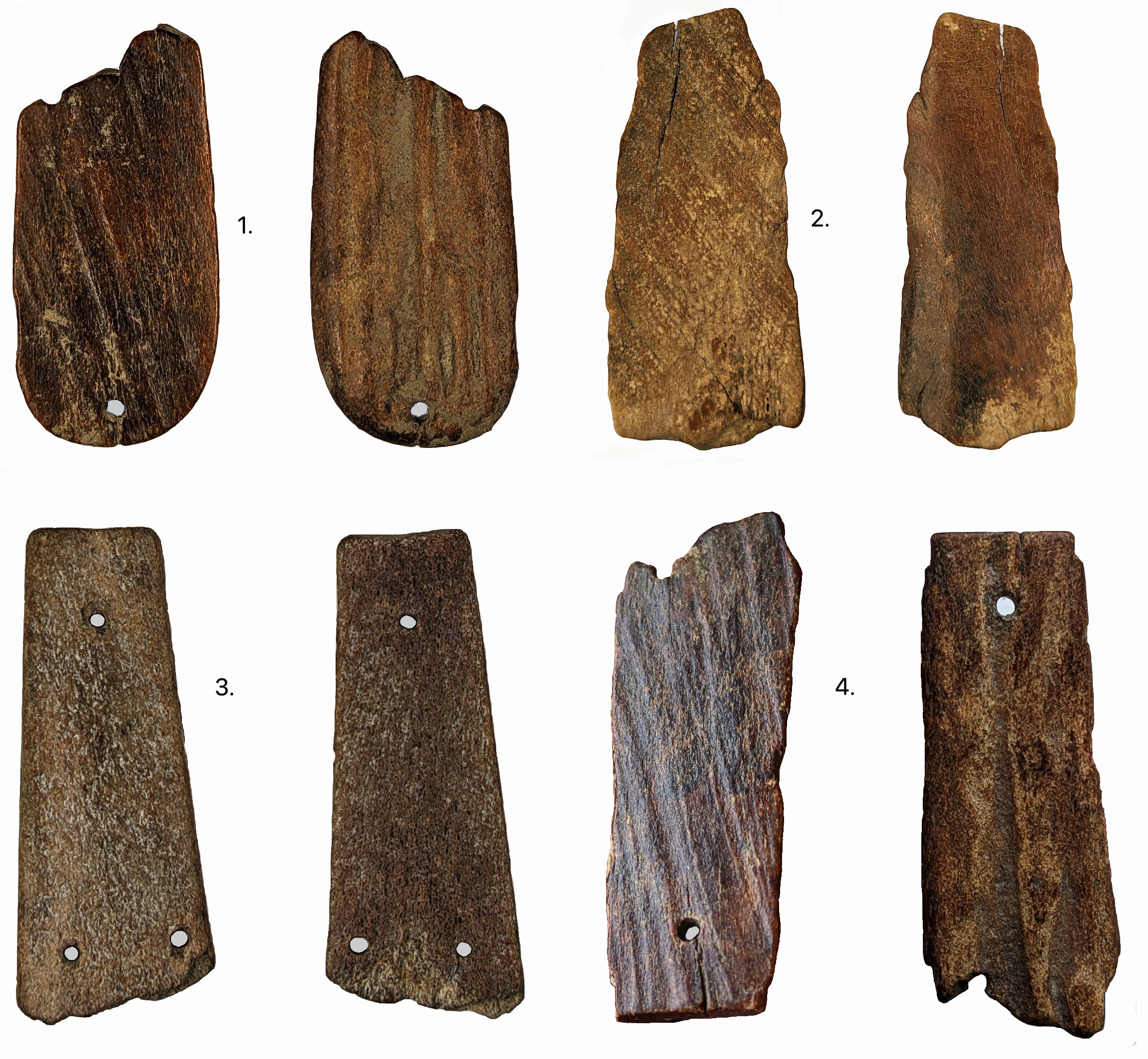
(above) Three of these Swanscombe plaques have deliberate perforated holes at the end.
In addition to this, three of the possible plaques (1, 2, 4) also have what resemble etched decorative grooves.
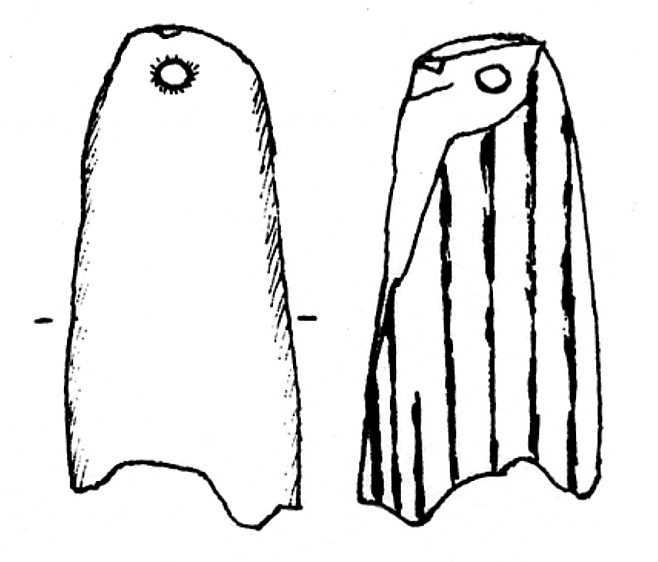
(left) A line drawing of a modified osseous plaque from Pinhole Cave Derbyshire, UK. apparently dating to the Upper Palaeolithic. The Pinhole plaque shares remarkable similarities with potential bone examples from Swanscombe, Kent, England.
Found at Swanscombe, Kent, England.
Collection, upper photo and text: © John Darvill
Lower line drawing: Jenkinson (2023)
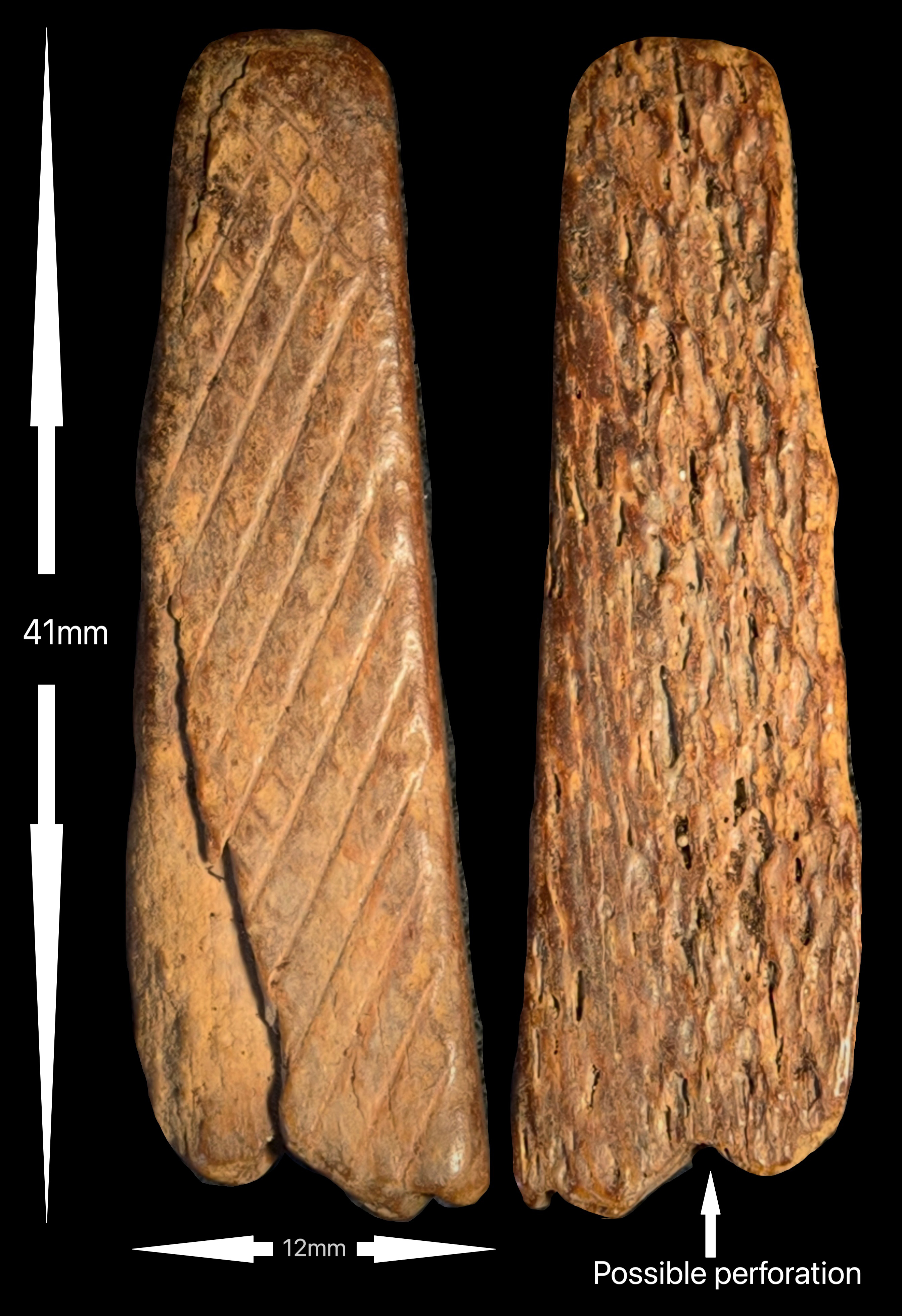
A plaque with diagonally carved grooves. At the very distal tip, two opposing diagonal lines create a crosshatch effect. However, for some reason, it was not finished. On the reverse matrix side at the proximal end there appears to be evidence of a possible perforation. It could be that the perforation may have failed and split the plaque, which is possibly why the object was abandoned.
Found at Swanscombe, Kent, England.
Collection, upper photo and text: © John Darvill
Lower line drawing: Jenkinson (2023)
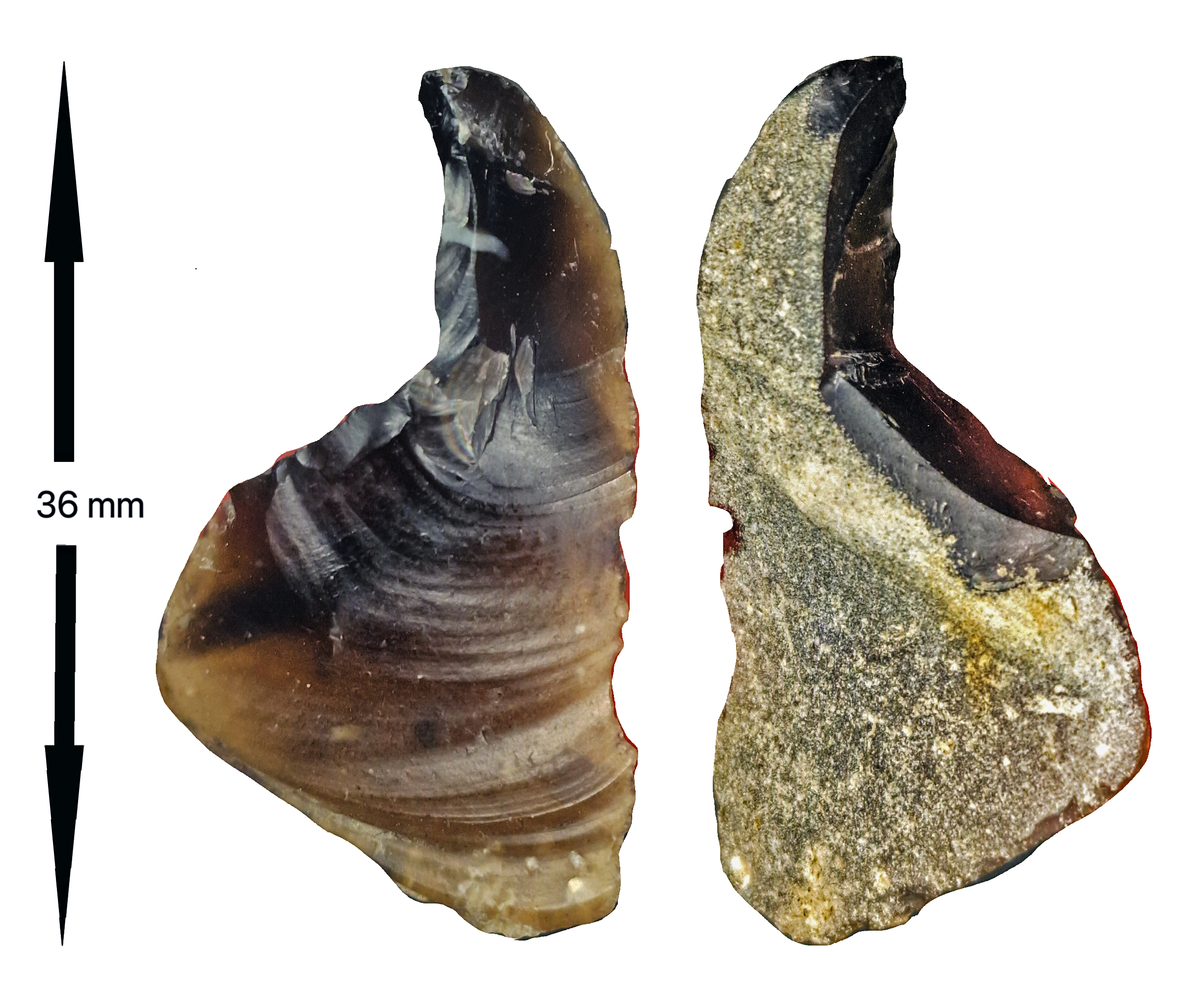
Above: A modified unifacial flint flake resembling a Polish, Wilczyce, symbolic Gönnersdorf form (see images below).
Found at Swanscombe, Kent, England.
Collection, photo and text: © John Darvill
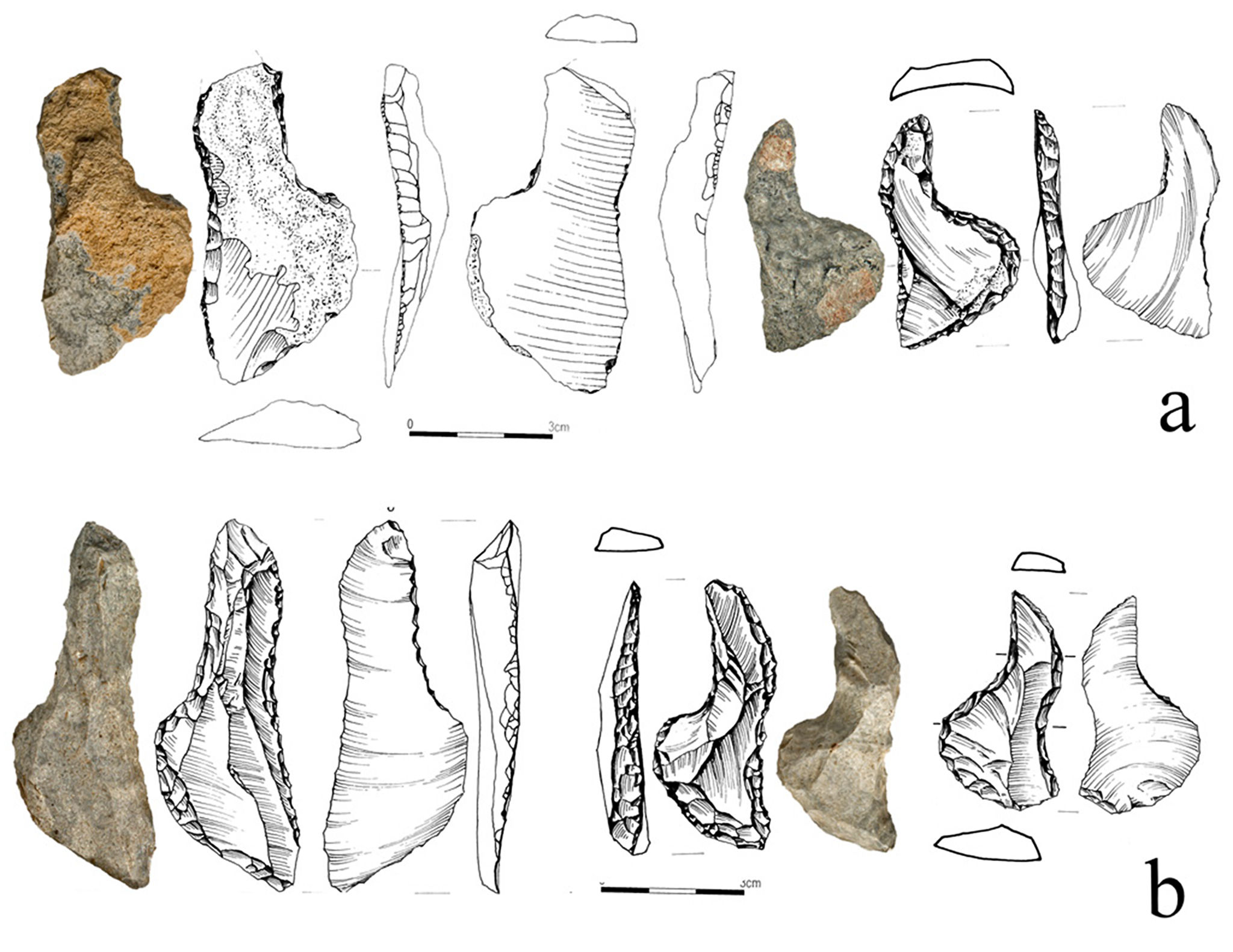
Venus figures in flint from Wilczyce, Poland, circa 15 000 BP.
Photo: Boroń et al. (2012)
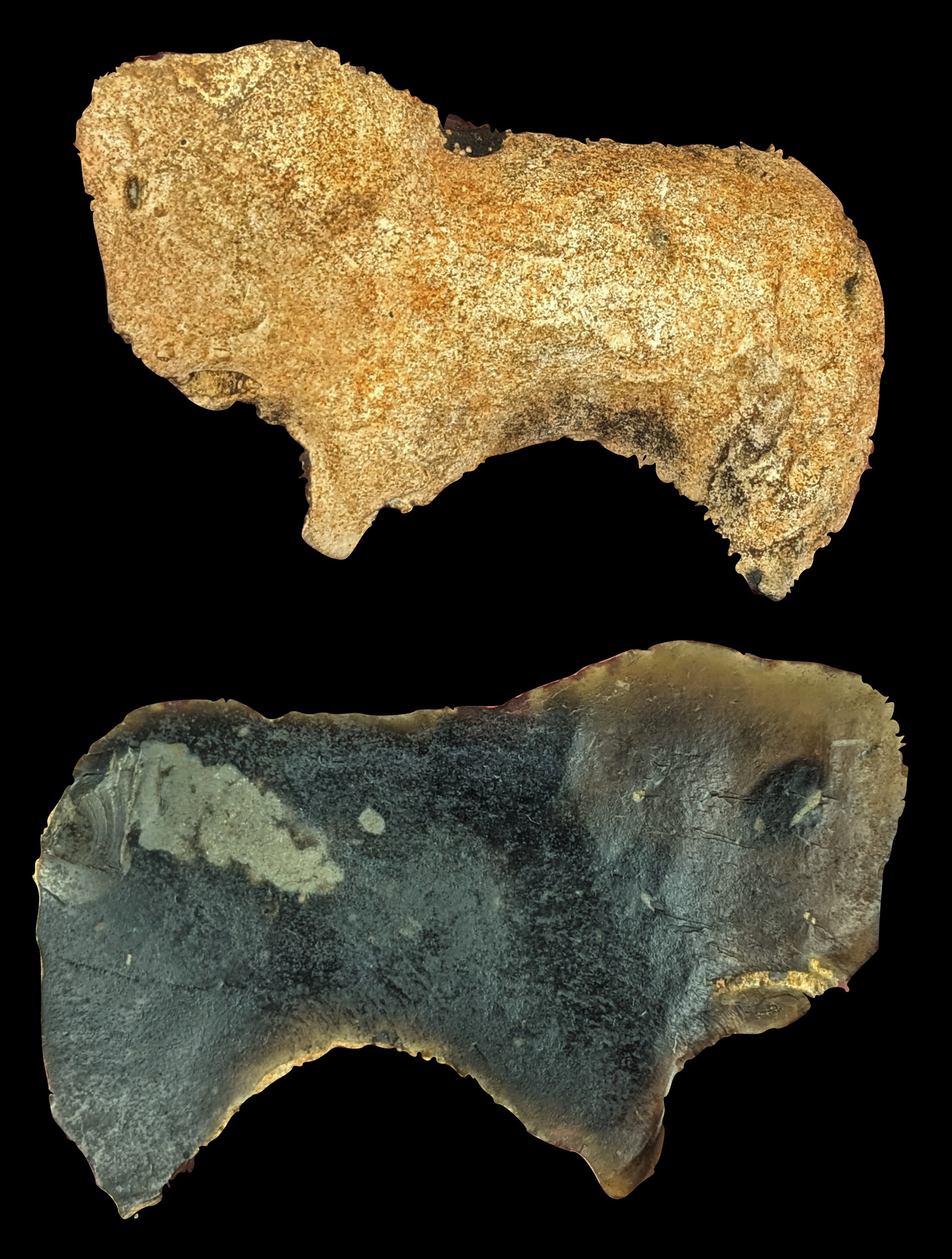
A seemingly human - struck unifacial flint flake resembling a possible lion or bison representation.
The maker appears to have skilfully selected a piece of flint with subtle waves and curves. By doing so, the possible backside and chest area are slightly raised giving the flake representation a 3D appearance.
Length 55 mm, height 42 mm, thickness 3 mm.
Found at Swanscombe, Kent, England.
Collection, photo and text: © John Darvill
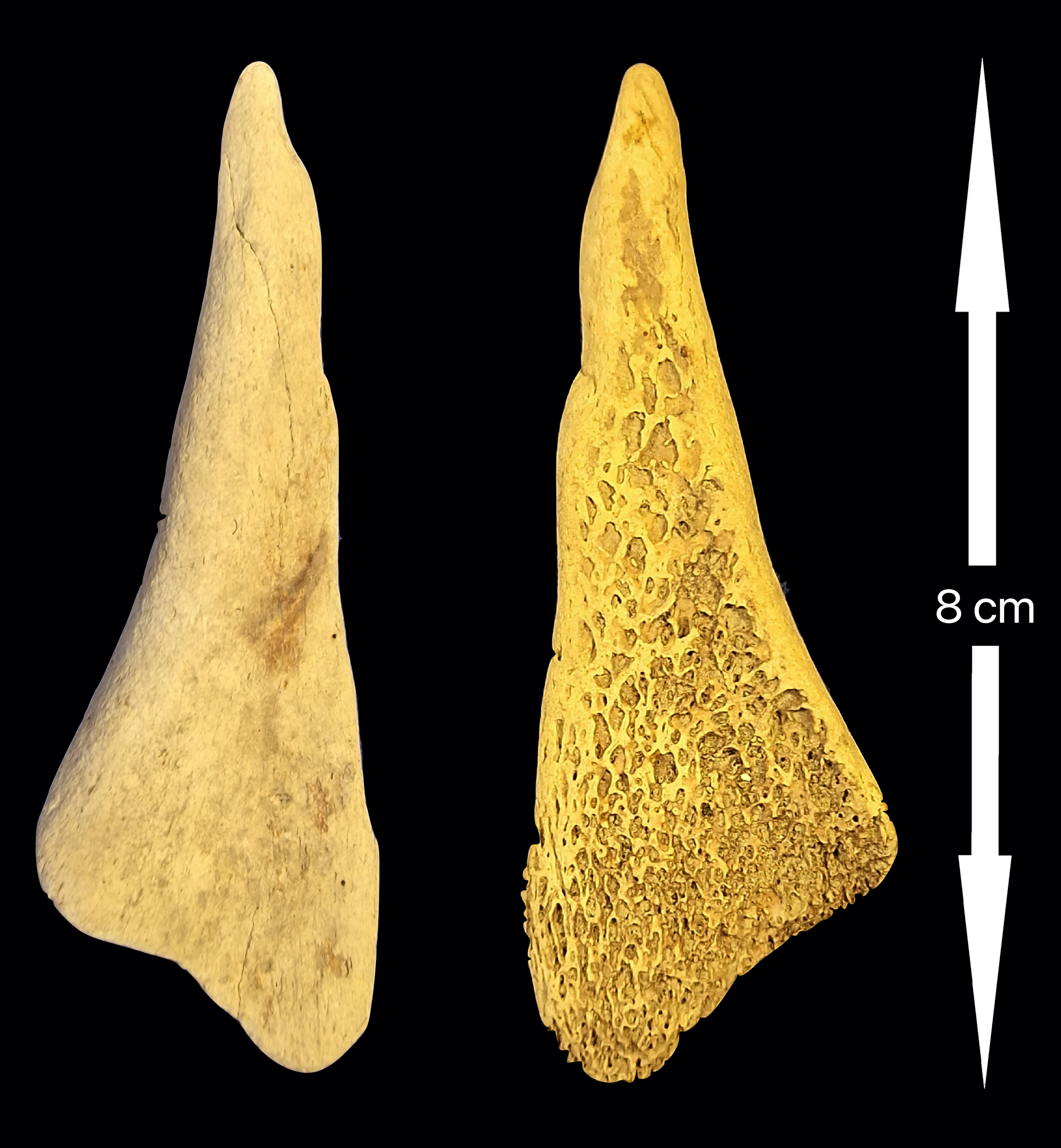
A seemingly human - modified bone object that strongly resembles a symbolic form.
The bone object has been created on a split bone, possibly from a fibula or tibia.
The matrix side of the object has distal thinning at the top section, creating a smooth finish.
Height 80 mm.
Found at Swanscombe, Kent, England.
Collection, photo and text: © John Darvill
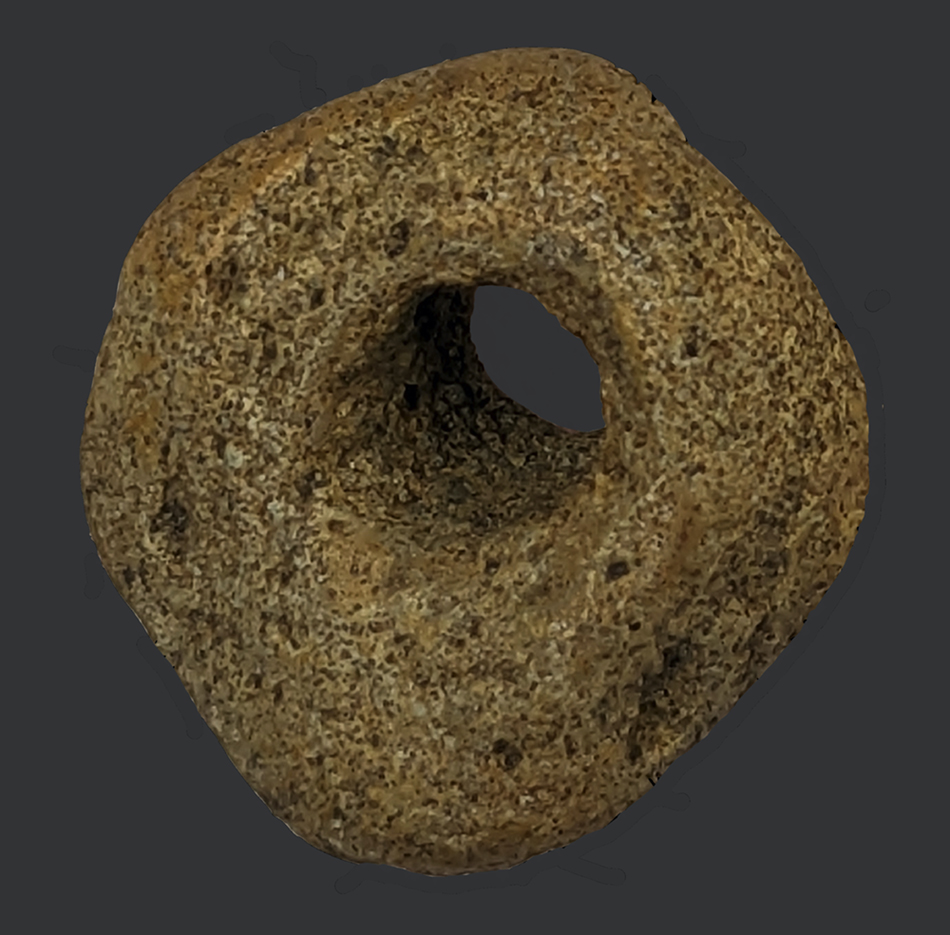
A modified basket style, perforated bone bead.
9mm diameter.
Found at Swanscombe, Kent, England.
Collection, photo and text: © John Darvill
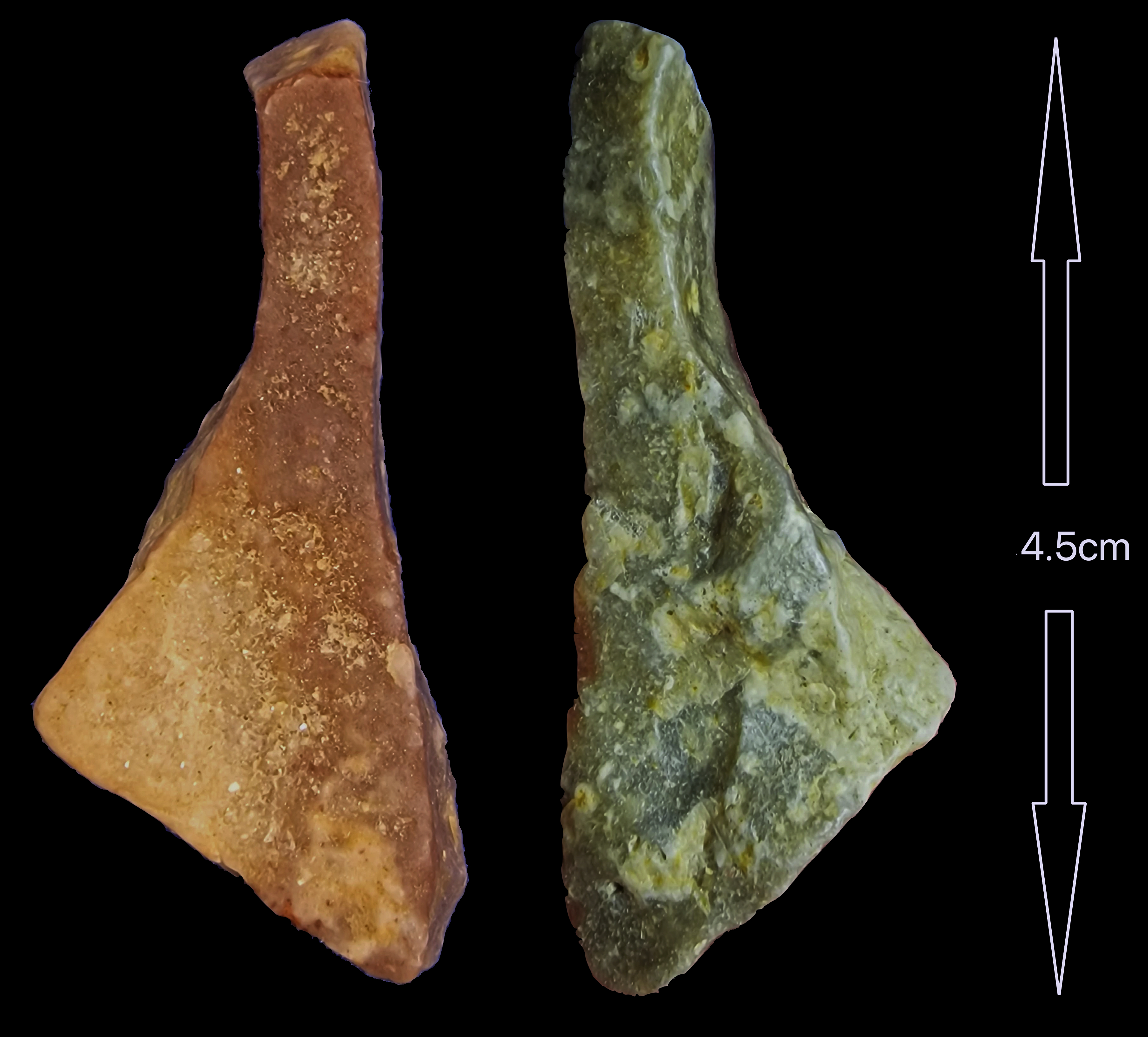
A seemingly modified flint flake that has been detached from a nodule.
The flake is unifacial and strongly resembles a symbolic form.
Height 45mm.
Found at Swanscombe, Kent, England.
Collection, photo and text: © John Darvill
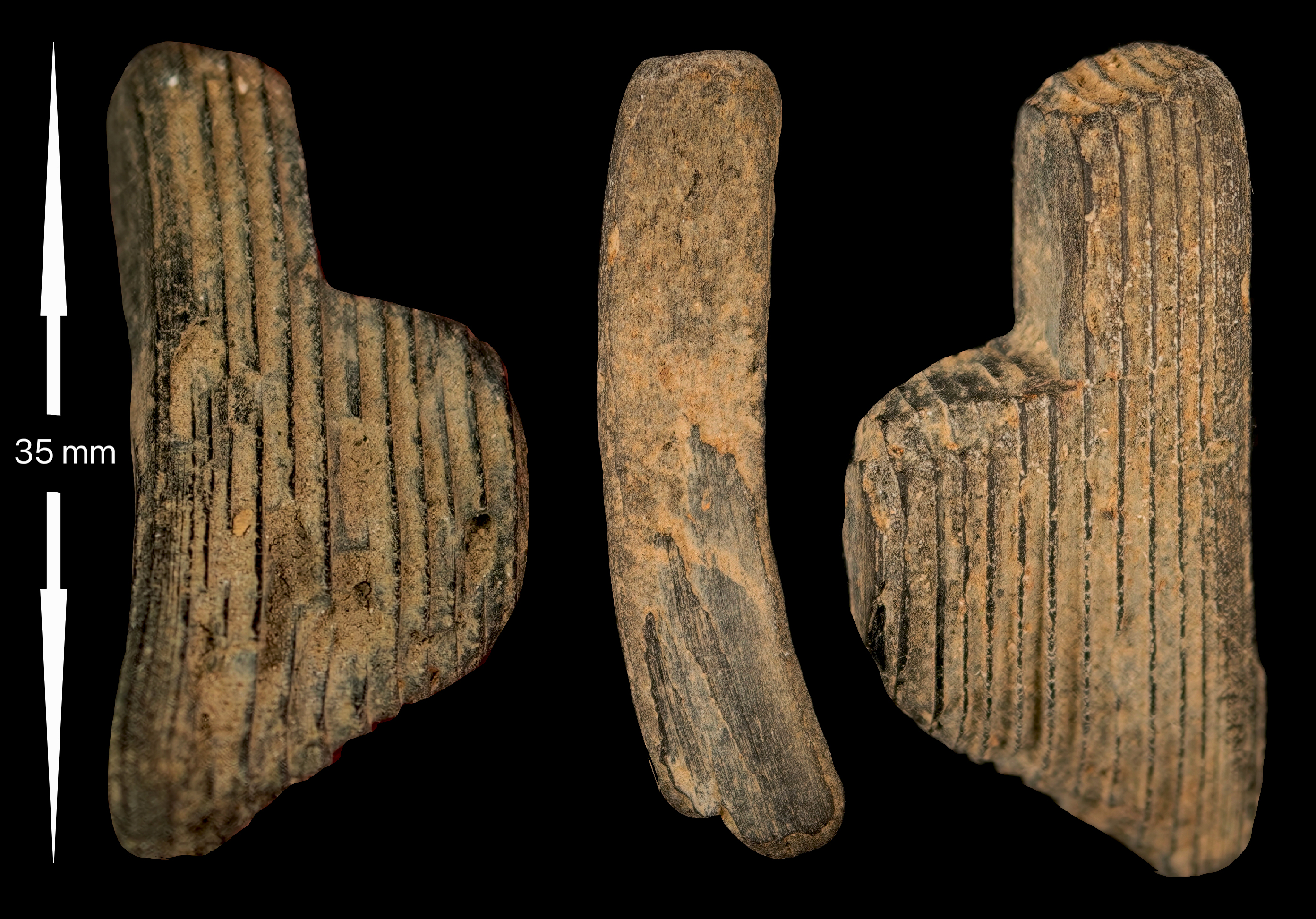
A possible fossil wood lignite carving resembling a Gönnersdorf/Lalinde symbolic form.
Height: 35mm.
Found at Swanscombe, Kent, England.
Collection, photo and text: © John Darvill
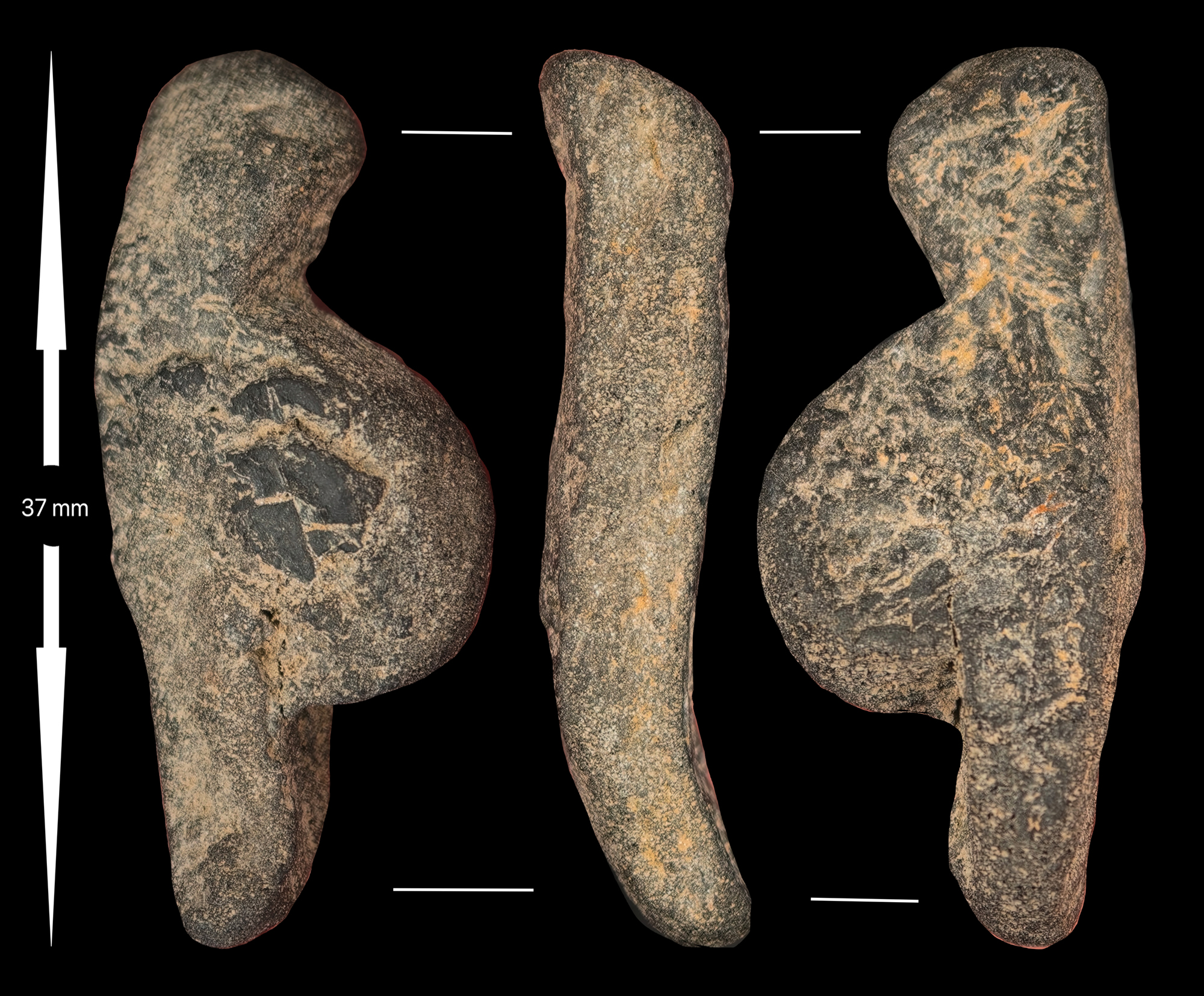
A seemingly modified lignite object of symbolic form.
This object shares strong similarities (see image below) with symbolic examples from Petersfel, Germany. The German examples are also made of Jet/lignite.
Height 37mm.
Found at Swanscombe, Kent, England.
Collection, photo and text: © John Darvill
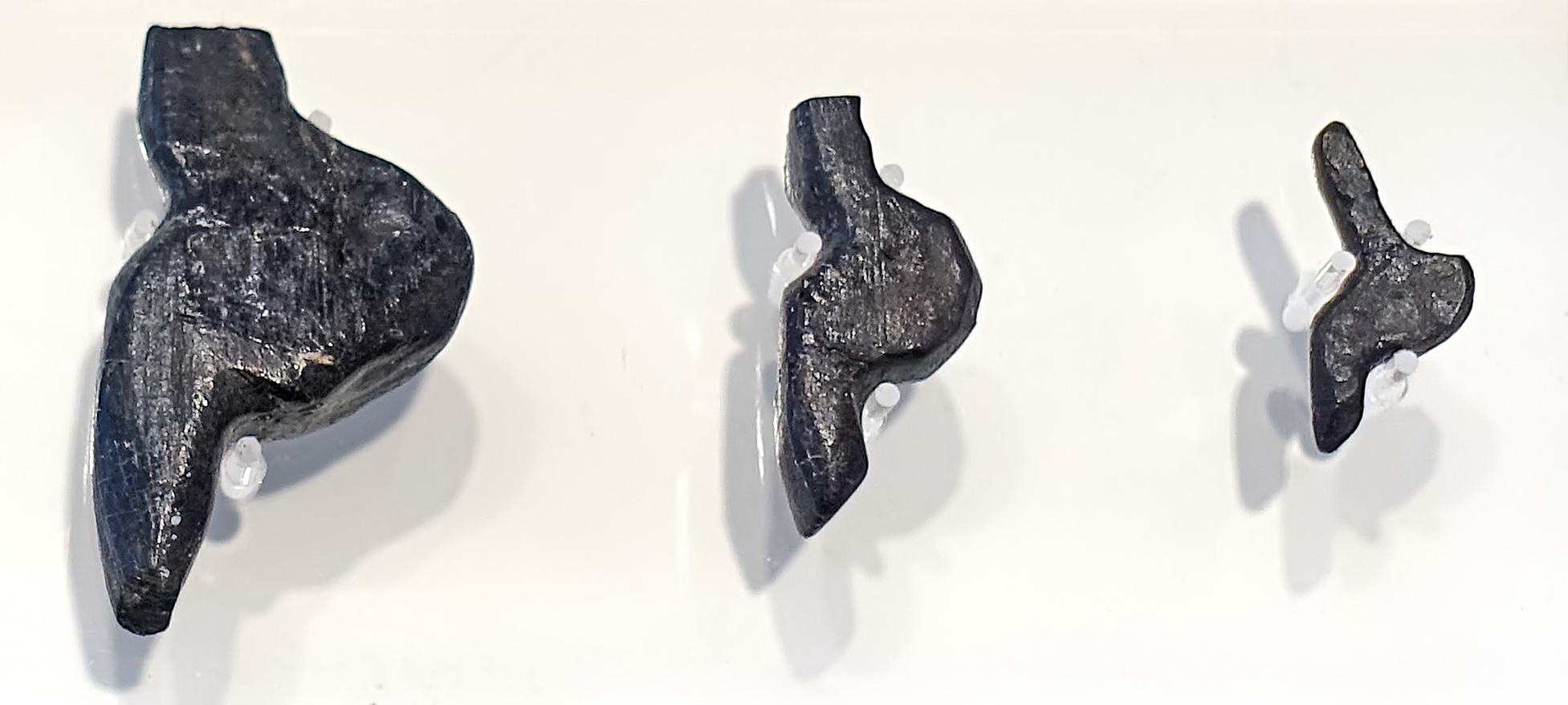
Three venus figures in jet.
From Petersfels bei Engen im Hegau, circa 15 000 BP - 12 000 BP.
Photo: Don Hitchcock 2018
Source: Facsimile, Archäologisches Museum Colombischlössle, Freiburg, Germany
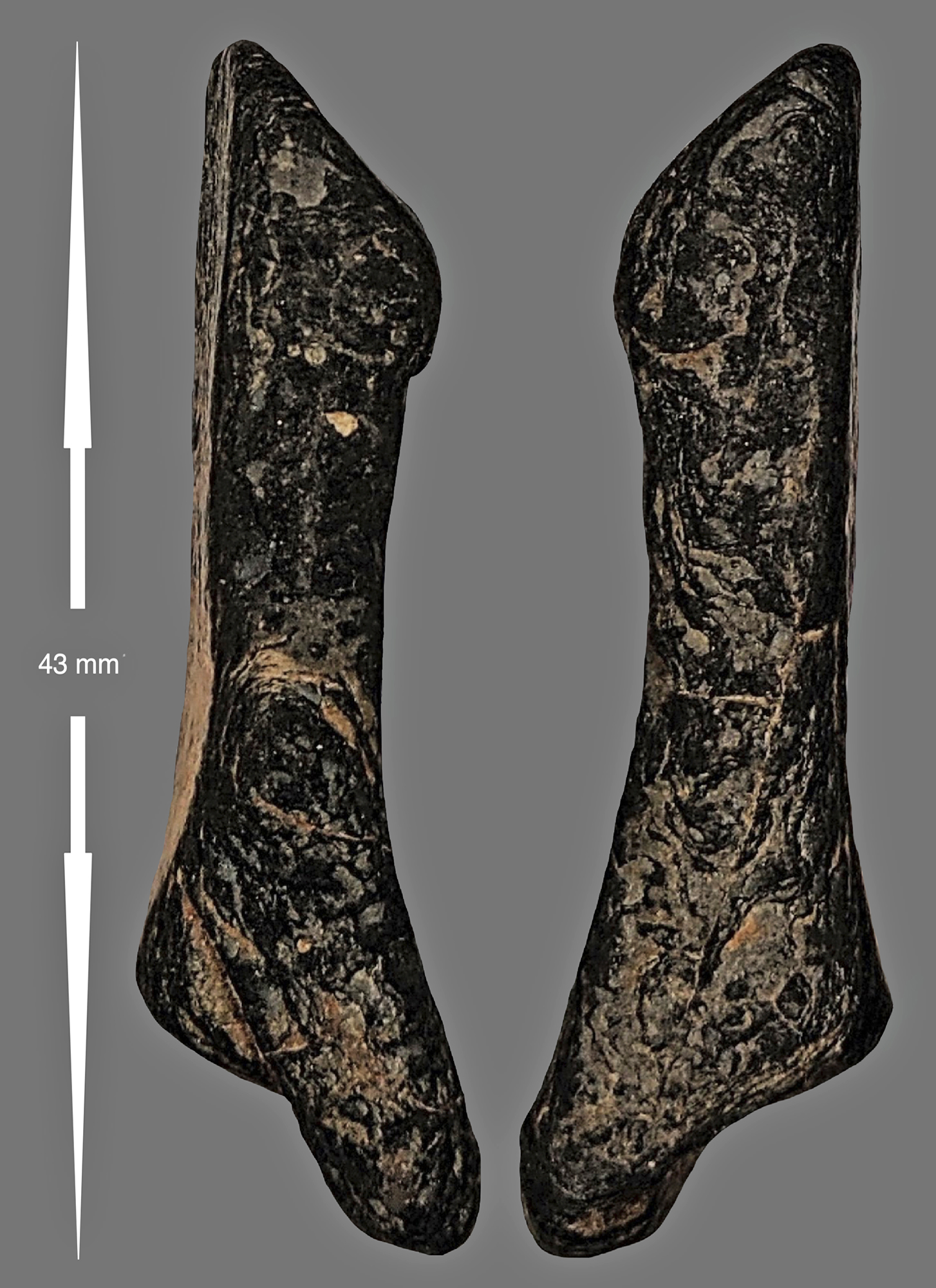
A possible fossil lignite carving resembling a Gönnersdorf/Lalinde symbolic form.
Height 43mm.
Found at Swanscombe, Kent, England.
Collection, photo and text: © John Darvill
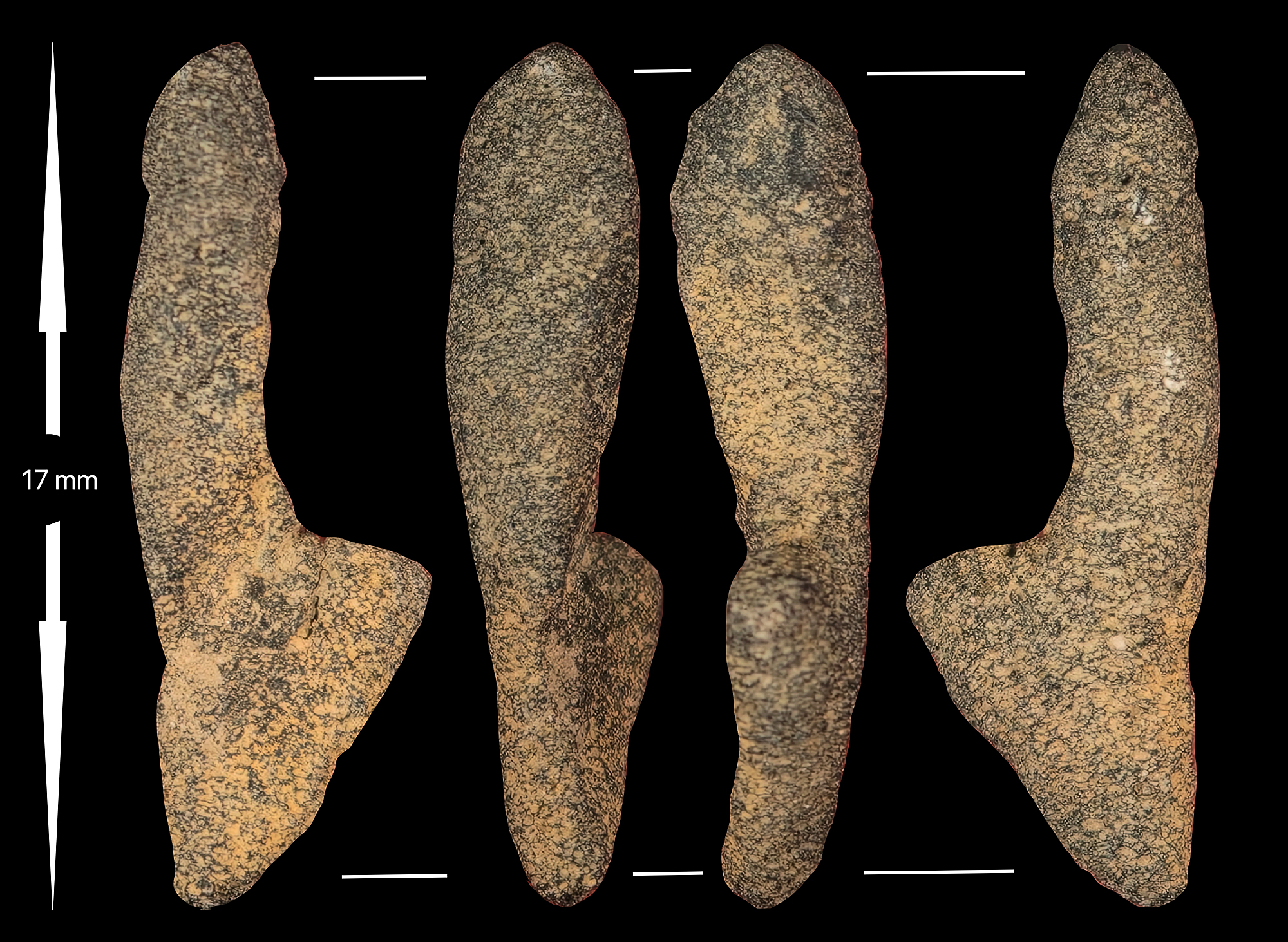
A possible micro lignite carving that closely resembles a Gönnersdorf/Lalinde symbolic form.
Height 17mm.
Found at Swanscombe, Kent, England.
Collection, photo and text: © John Darvill
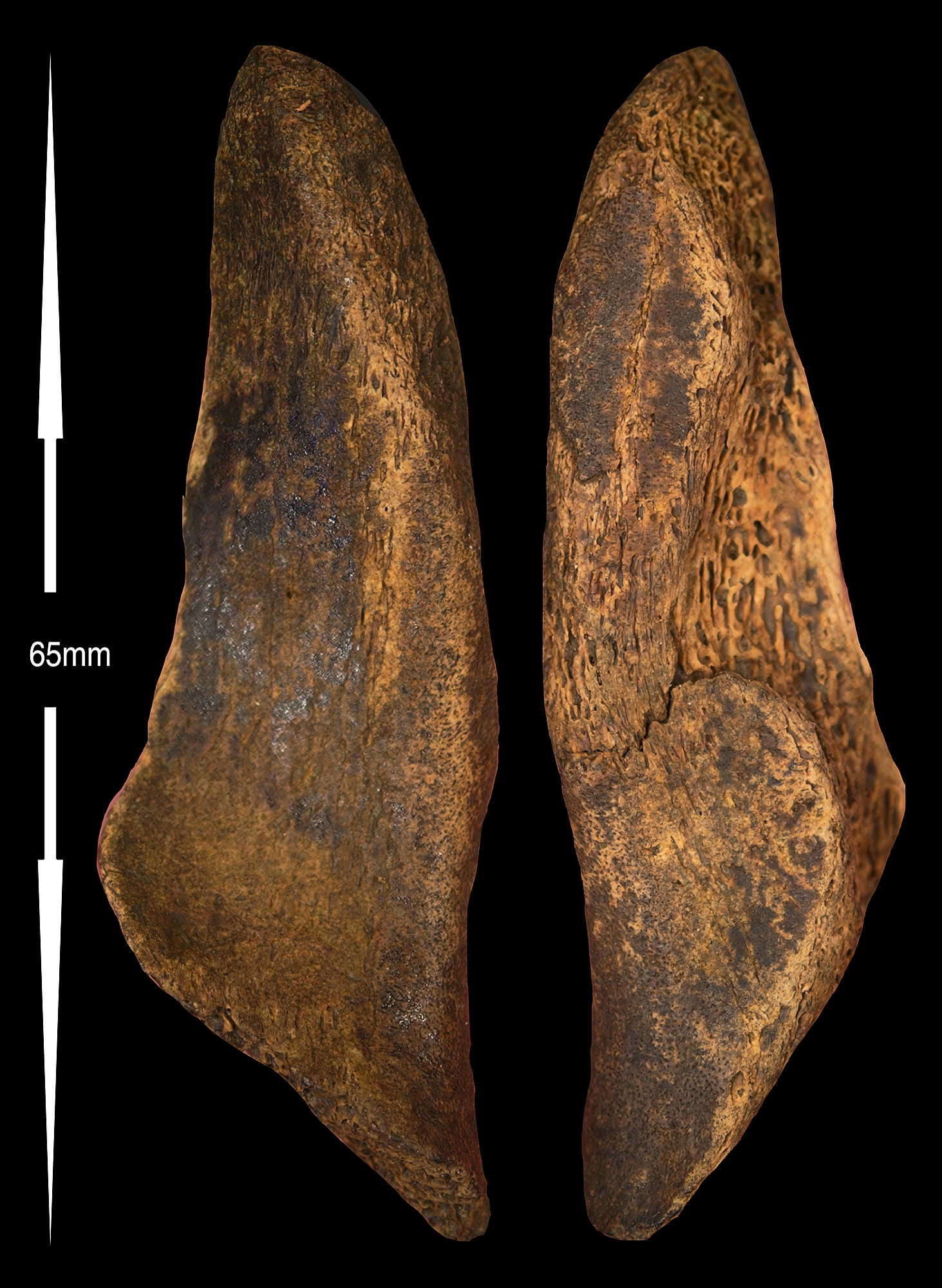
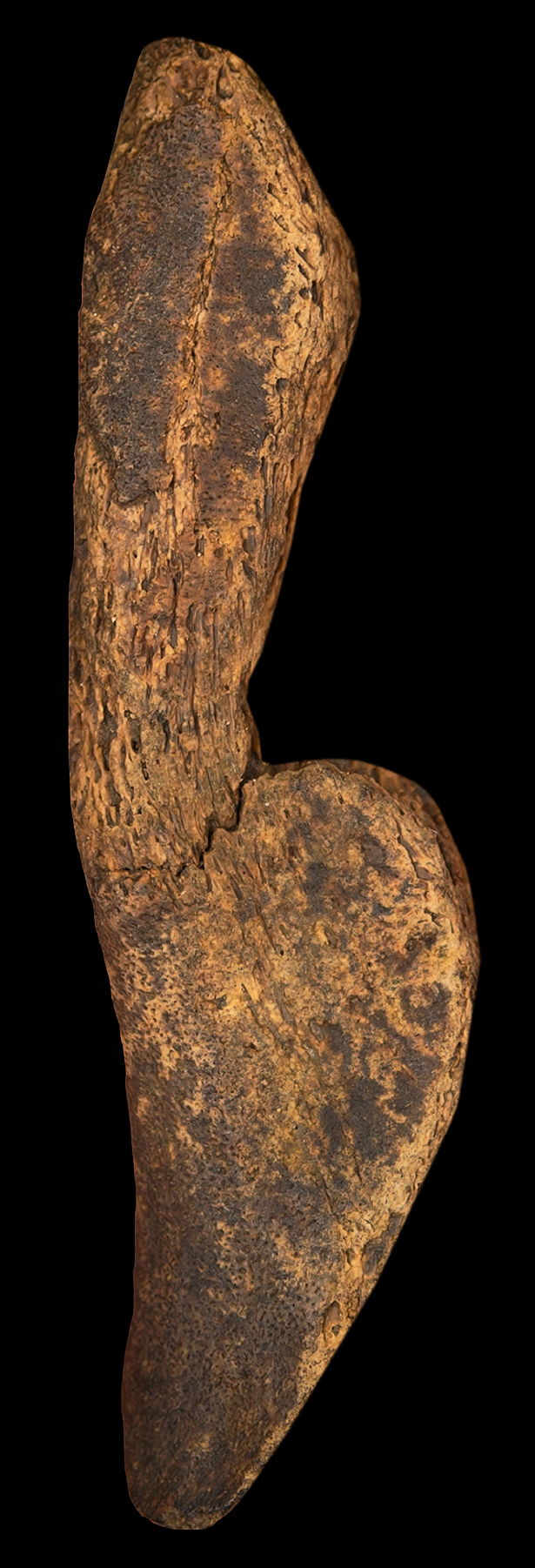
(Left) A seemingly modified bone object with possible red staining still attached in some areas.
With reference to the left hand image of the two sides, one side has a roughly triangular form with no equal sides, whilst the opposing side has what strongly resembles a relief carving of a Gönnersdorf/Lalinde symbolic form.
( On the right, for clarity, a depiction of the resemblance to a relief carving of a Gönnersdorf/Lalinde symbolic form as referred to by John Darvill above - Don )
Height 65mm.
Found at Swanscombe, Kent, England.
Collection, photo and text: © John Darvill
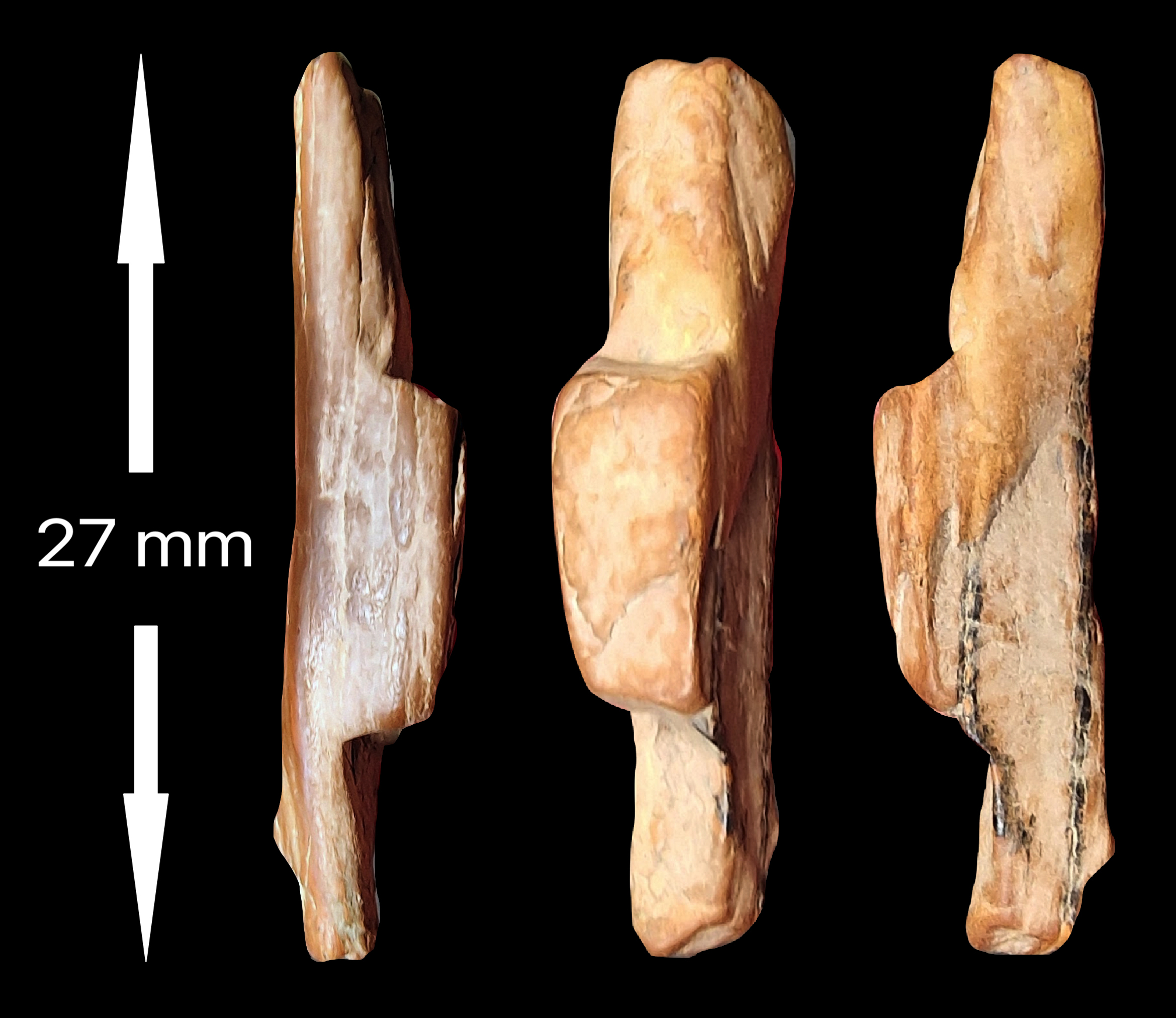
Osseous (tooth) carving.
The small seemingly modified root of a tooth with potential symbolic Lalinde form.
The possible root has very simple working, thin splinters have been removed from the top and bottom sections, leaving a rectangular box-like central area. This feature may represent the rump of a Lalinde figure.
Height 27 mm
Found at Swanscombe, Kent, England.
Collection, photo and text: © John Darvill
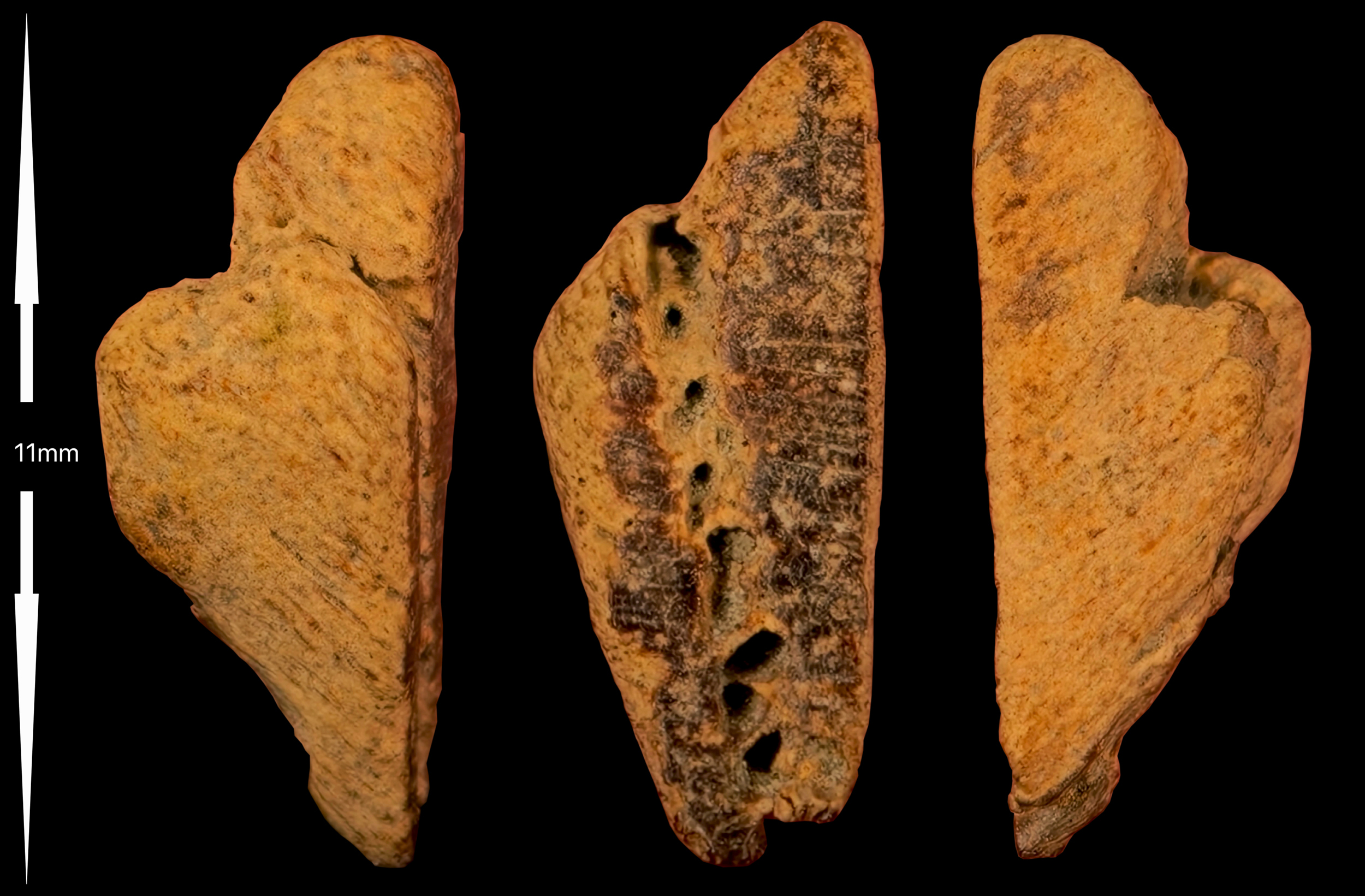
This extremely small (11 mm high) bone appears to have been modified and resembles dual Gönnersdorf forms. The possible Gönnerdorf representation on one side is ever so slightly larger than the opposing figure. This large and small feature is present on almost all potential examples from the UK.
Height 11 mm
Found at Swanscombe, Kent, England.
Collection, photo and text: © John Darvill
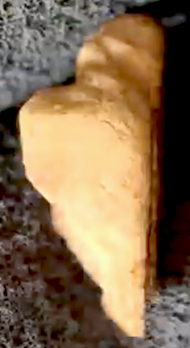
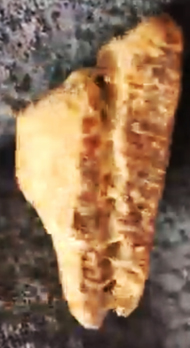
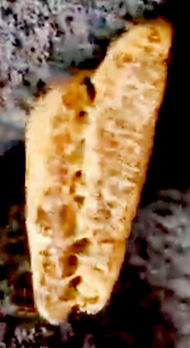
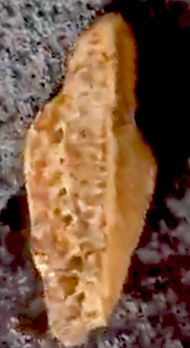
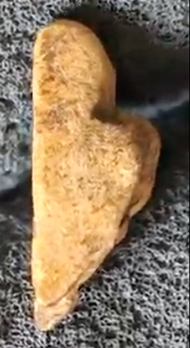
The object is three dimensional, in that there are not just two sides, as is normal in lalinde figures, but it has three sides, and is triangular in cross section.
The images show the object being rolled from right to left to show how the three sides are connected.
Found at Swanscombe, Kent, England.
Collection, photo and text: © John Darvill
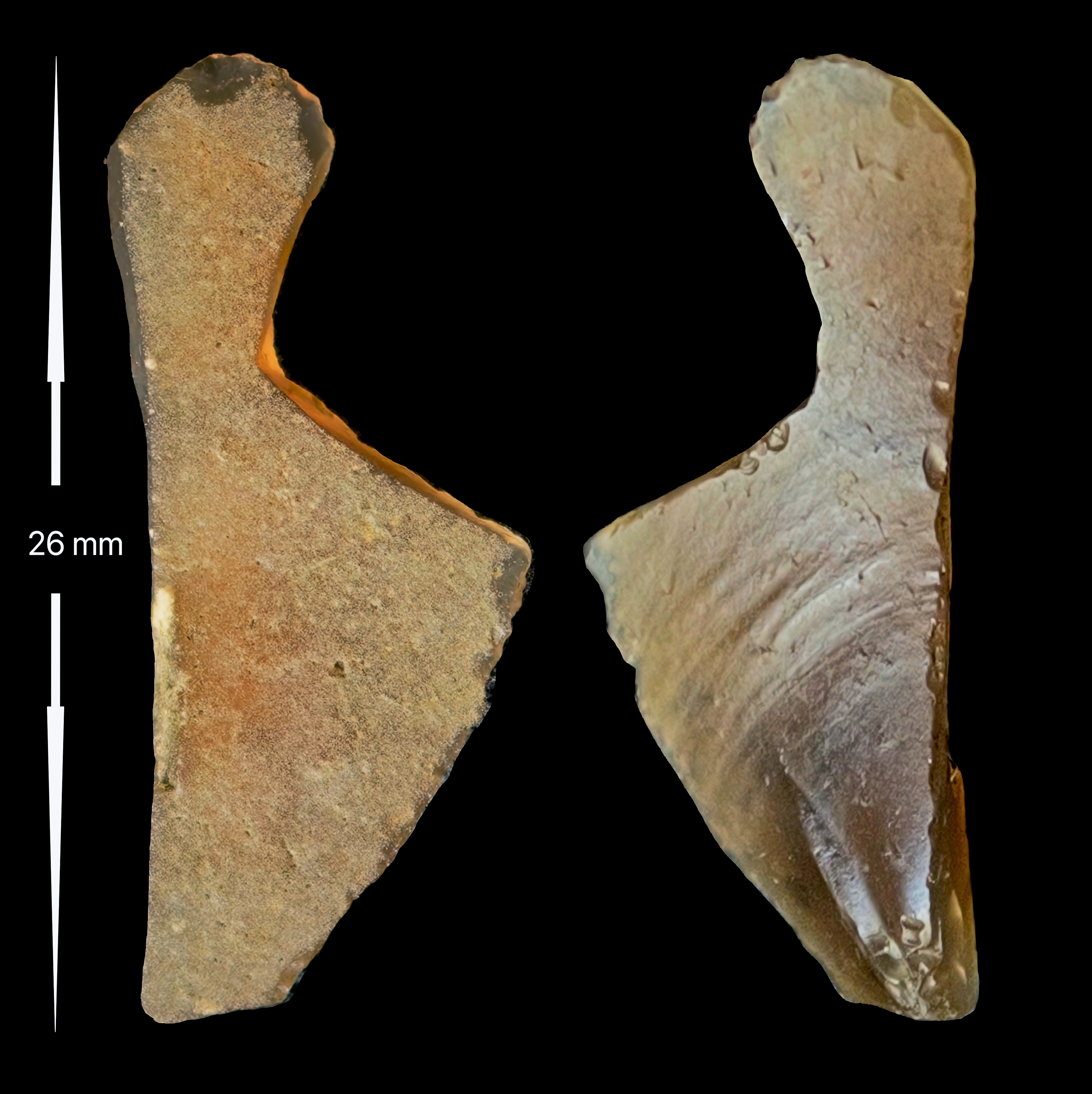
Unifacial flint flake. Representations from Swanscombe show a higher percentage of being unifacial.
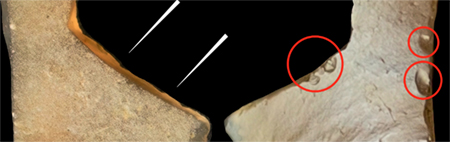
( I was interested in the flat side of the reentrant angle of the piece, not knowing how it had been created, and also the small conchoidal flakes along one side which did not seem to be useful for the formation of the piece, indicated on the image above.
The white arrows point to the flat side, and the conchoidal chips are indicated by red circles.
I contacted info@goknapping.com, a highly regarded site on the topic of knapping, and got a wonderful and illuminating reply from E. Collins, below - Don )
_______
The response:
Definitely a spall created by man. The square base with the white arrows is a natural face that came off of the original block, possibly attempted to be worked but most likely the entire spall was discarded as not ideal by the maker (ancient or modern). I see no indicators of modern, actually the opposite. The flakes in red most likely are damage occurred post spalling, most likely small conchoidal age/damage fractures along the edge from sitting around for a few thousand years. If they were purposeful, they would be punch notches, however the specimen is not yet worked to that stage. Final opinion: Ancient worked piece, early stage uniface discarded spall, white arrows point to natural square/beveled edge not created by man. Red circles most likely not by man, but still conchoidal fractures that can appear as if intended by the maker.
E. Collins
_______
Found at Swanscombe, Kent, England.
Collection, photo and text: © John Darvill
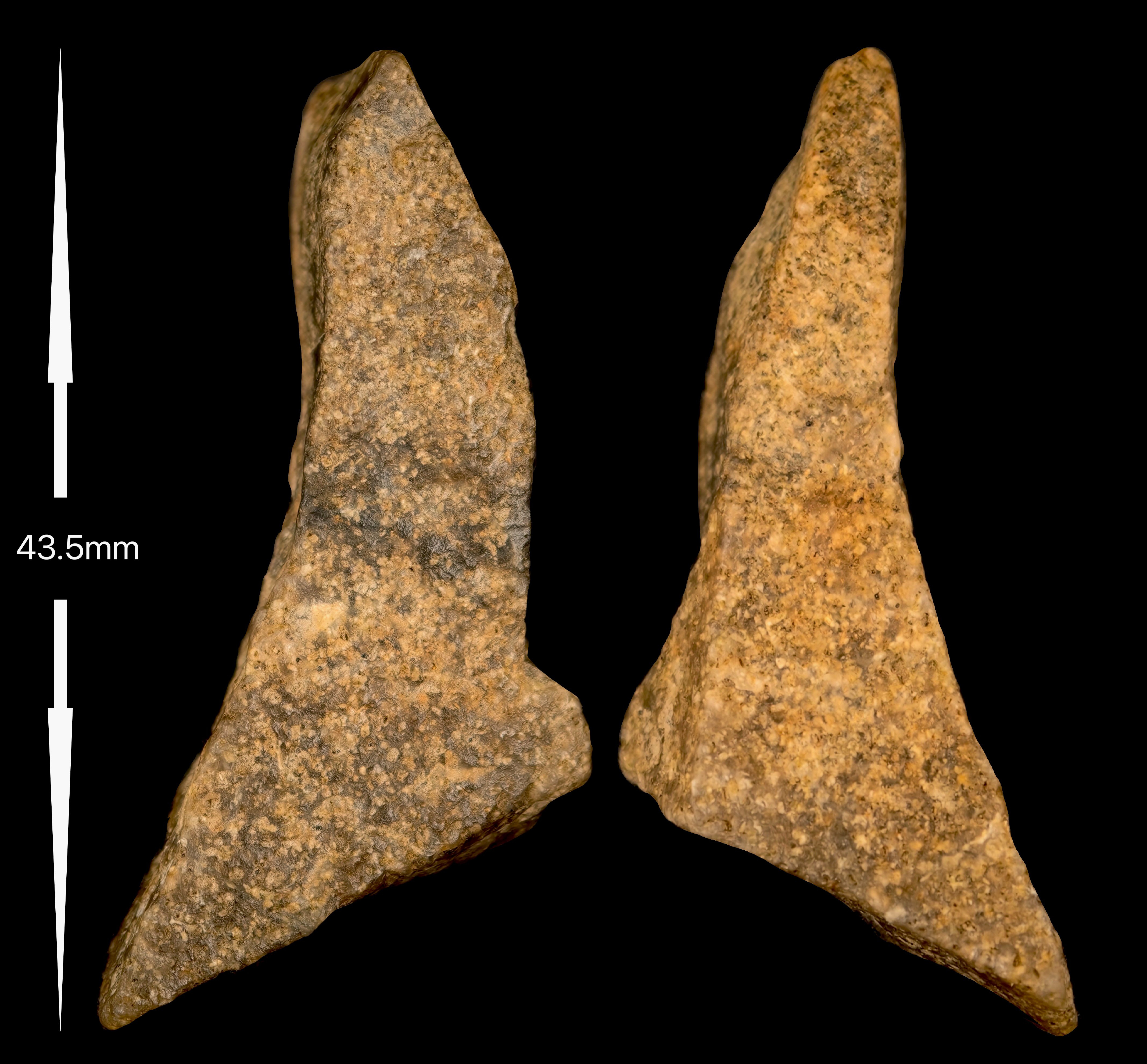
A modified symbolic Lalinde representation in chert.
Found at Swanscombe, Kent, England.
Collection, photo and text: © John Darvill
References
- Boroń T., Królik H., Kowalski T., 2012: Les figurines féminines magdaléniennes du site de Wilczyce 10 (district de Sandomierz, Pologne), in: Clottes J. (dir.) 2012, L’art pléistocène dans le monde, Actes du Congrès IFRAO, Tarascon-sur-Ariège, septembre 2010 – Symposium 'Art mobilier pléistocène'.
- Jenkinson, R.D.S., 2023: A North-Western Habitat: the Paleoethology and Colonisation of a European Peninsula (a comprehensive analysis of excavations in Pin Hole Cave, Creswell Crags), Internet Archaeology 61 (Monograph 3)1, https://doi.org/10.11141/ia.61.1
- Jennett, K., 2008: Female Figurines of the Upper Paleolithic, Texas State University, Honors Thesis presented to the Honors Committee of Texas State University-San Marcos, in partial fulfillment of the requirements for graduation in the University Honors Program by Karen Diane Jennett, San Marcos, Texas, May 2008
- White, M., Ashton N., British Museum, Bridgland D., 2019: Twisted Handaxes in Middle Pleistocene Britain and their Implications for Regional-scale Cultural Variation and the Deep History of Acheulean Hominin Groups Proceedings of the Prehistoric Society, 85:61-81 DOI:10.1017/ppr.2019.1 LicenseCC BY 4.0
- White, T., 2017: Swanscombe. In: Gilbert, A.S. (eds) Encyclopedia of Geoarchaeology. Encyclopedia of Earth Sciences Series, Springer, Dordrecht. https://doi.org/10.1007/978-1-4020-4409-0_109
Back to Don's Maps
Back to Archaeological Sites